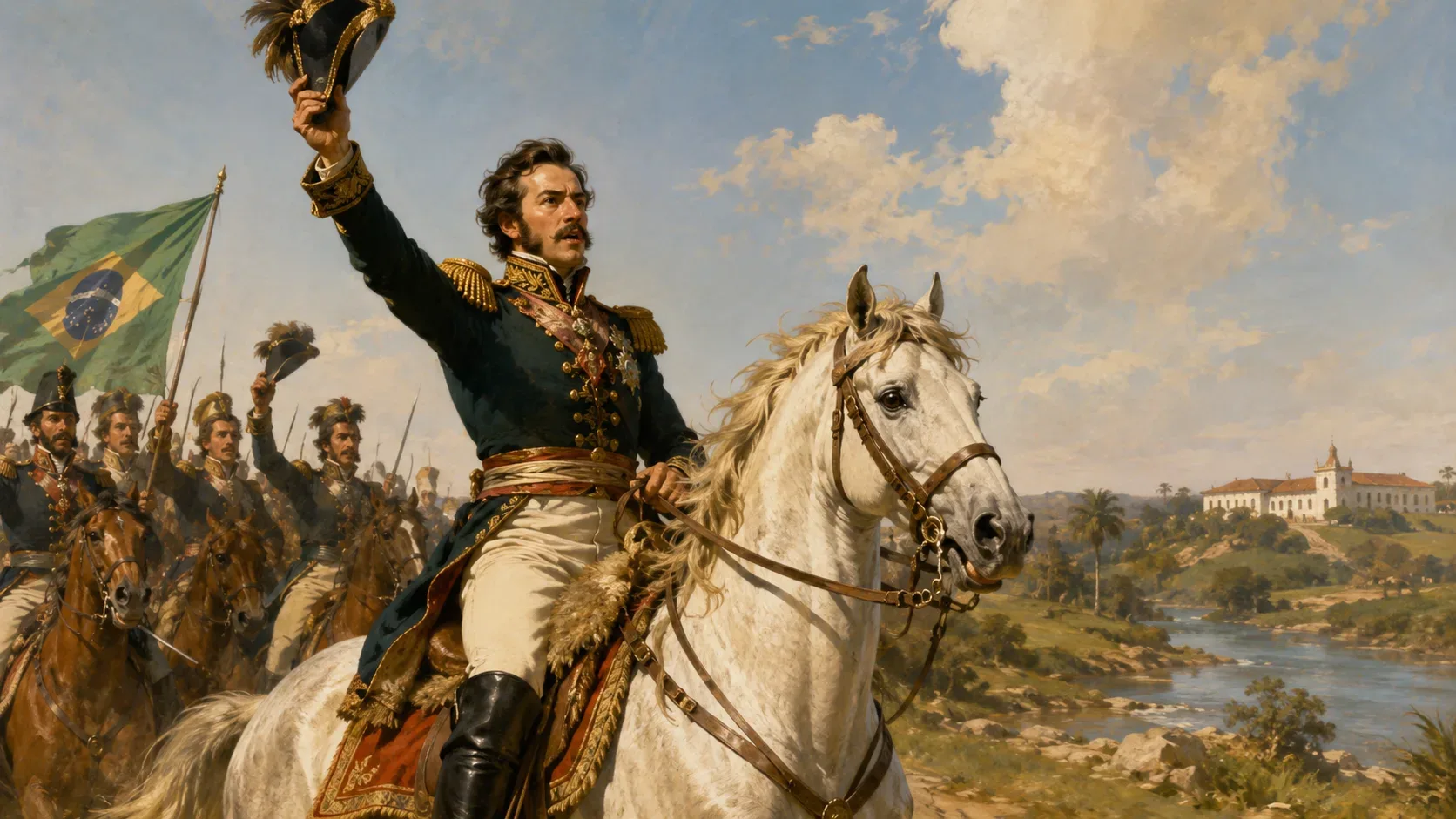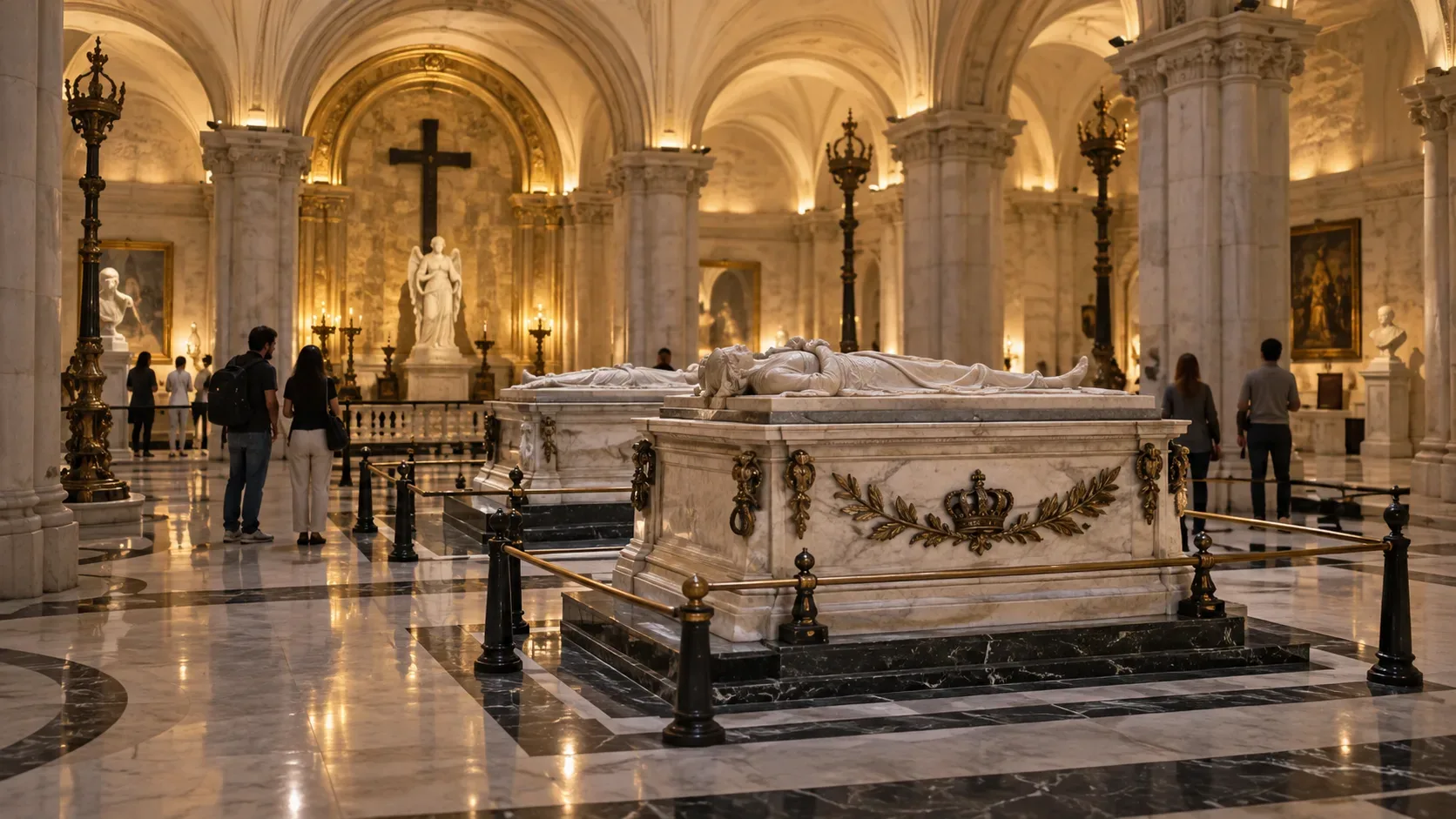
The Imperial Crypt in Independence Park, in São Paulo’s Ipiranga district, reopened to visitors on September 7, 2026, after being closed for almost four years. Walk-in admission is free, with no ticket pickup or advance booking required, and the São Paulo City Museum currently lists opening hours as Tuesday through Sunday, from 9 a.m. to 5 p.m. The crypt is beneath the Independence Monument and holds the remains of Dom Pedro I, Empress Maria Leopoldina and Amélie of Leuchtenberg.
How to visit the Imperial Crypt after the reopening
For a regular visit, the service currently advertised is straightforward: visitors can simply arrive during opening hours. The São Paulo City Museum page for the exhibition “Representações da Nação: O Monumento à Independência e a Cripta Imperial” states that admission is free and that walk-in visitors do not need to book or collect a ticket.
| Item | Current information |
|---|---|
| Location | Imperial Crypt, beneath the Independence Monument, Independence Park, Ipiranga, São Paulo |
| Reference address | Praça do Monumento / Parque da Independência, no street number |
| Days | Tuesday through Sunday |
| Hours | 9 a.m. to 5 p.m. |
| Admission | Free |
| Booking for walk-in visits | Not required |
| Exhibition on view | “Representações da Nação: O Monumento à Independência e a Cripta Imperial,” a long-term exhibition |
| Educational service | Available; groups may request an appointment from the City Museum |
| Brazilian Sign Language interpreter | Available with advance booking through the educational service |
For groups, educational visits or specific accessibility resources, the contact provided by the City Museum is educativomuseudacidade@gmail.com. Because cultural-site schedules can change due to maintenance, events or special operations, it is worth checking the official exhibition page close to the day of your visit.
Who is buried in the Imperial Crypt
The memorial holds three central members of the imperial family associated with Brazil’s independence process. Their remains were transferred to the crypt at different times.
| Person | Who they were | Transfer to the crypt |
|---|---|---|
| Maria Leopoldina | Dom Pedro I’s first wife and the first empress of Brazil | 1954, after she had originally been buried in Rio de Janeiro |
| Dom Pedro I | Brazil’s first emperor | 1972, during the 150th anniversary of independence; his heart remained in Porto, Portugal |
| Amélie of Leuchtenberg | Dom Pedro I’s second wife and Brazil’s second empress | 1982 according to São Paulo City Hall’s reopening release and USP academic research; a historical City Museum page gives 1984 |
The discrepancy over the year in which Amélie’s remains were transferred should be preserved rather than concealed. The official City Hall reopening release gives 1982, as does a University of São Paulo dissertation; the City Museum’s historical crypt page gives 1984. Without further documentation resolving the conflict, it is more accurate not to present either date as universally settled.
What changed in the restoration and revitalization
The reopening followed a R$5.3 million package of works funded by São Paulo City Hall for improvements connected with the Imperial Crypt, the Independence Monument and the Casa do Grito, all linked to the São Paulo City Museum. The figure therefore should not automatically be read as the cost of work inside the crypt alone.
City Hall reported the following interventions in and around the complex:
- new restrooms;
- architectural accessibility and circulation improvements;
- a new air-conditioning system;
- improvements to the exhibition area;
- conservation of bronze elements around the sarcophagi;
- completion of the ceiling with yellow marble and other interior repairs;
- cleaning and conservation of the Independence Monument;
- crack repairs, painting and new exterior access points at the Casa do Grito.
According to City Hall, the remains of Dom Pedro I, Maria Leopoldina and Amélie stayed in their original locations throughout the work. The crypt was closed for about three years and nine months, from late 2022 until its reopening in September 2026.
What to see besides the sarcophagi
The return of public access came with the long-term exhibition “Representações da Nação: O Monumento à Independência e a Cripta Imperial,” curated by historian Marly Rodrigues. The exhibition presents the history of the monument and crypt and examines how these places were designed to create and reinforce national civic landmarks.
Topics described by the City Museum include the competition that selected the monument, the development of Avenida D. Pedro I, the creation of the crypt, intervention projects and technical studies of the sculptural complex. This gives the visit more context than the burials alone: visitors can also understand how the site was constructed as a place of public memory.
Are the Imperial Crypt and the Ipiranga Museum the same attraction?
No. They are in the same Independence Park, but they are different institutions. The Imperial Crypt is beneath the Independence Monument and is part of the São Paulo City Museum, which is run by the municipal government. The Ipiranga Museum is the University of São Paulo’s Museu Paulista. Anyone planning to visit both on the same day should check each institution’s hours, admission rules and tickets separately.
What to confirm before you go
As of this update, the latest São Paulo City Museum information lists opening hours from Tuesday through Sunday, 9 a.m. to 5 p.m., with free admission and no ticket required for walk-in visitors. To reduce the risk of arriving during an exceptional closure or special operation, check the official exhibition page or the São Paulo City Museum’s channels before leaving.