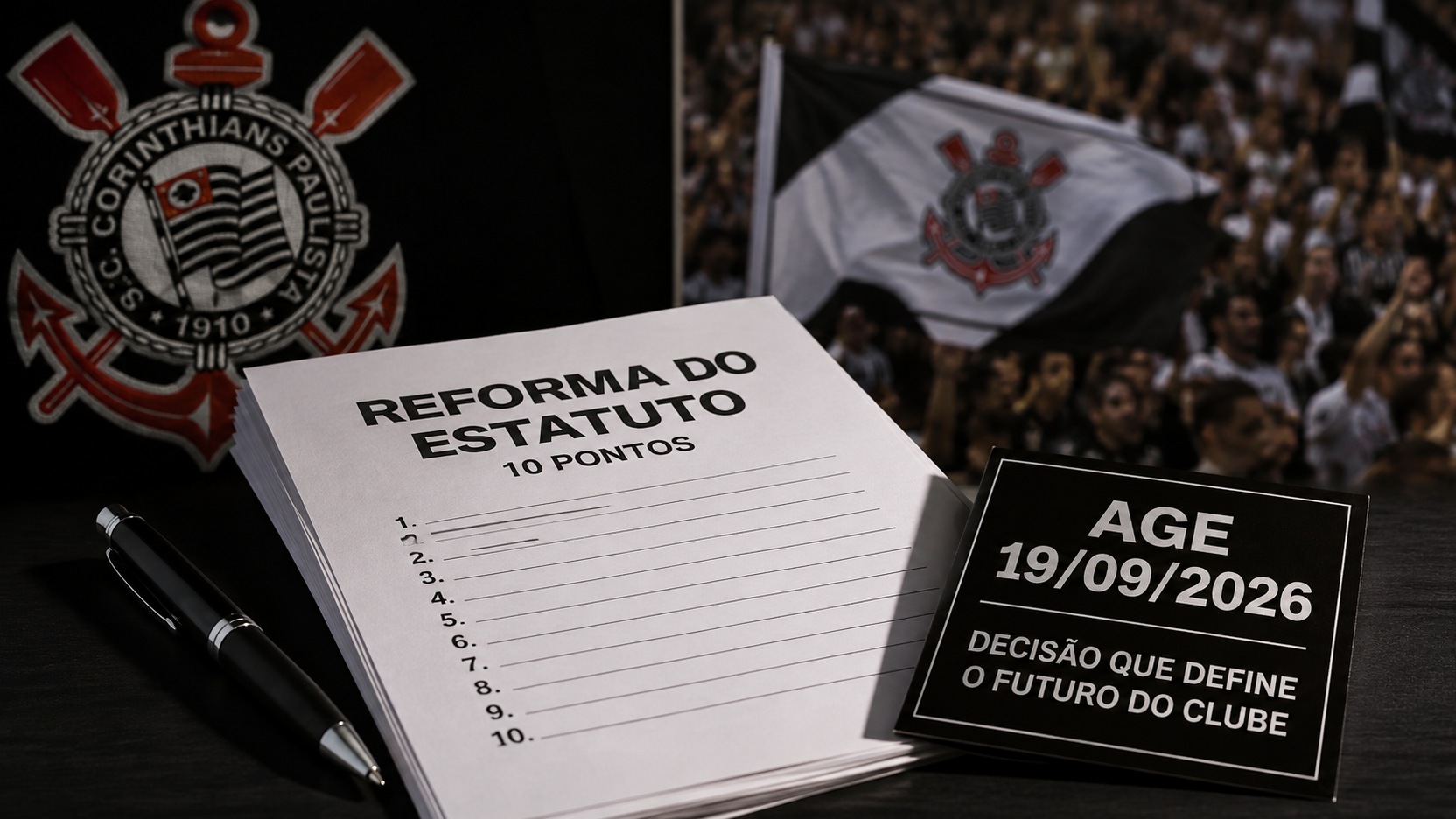
The Corinthians Extraordinary General Assembly scheduled for September 19, 2026 will not take place while the injunction issued by the São Paulo State Court of Justice remains in force. The September 18 ruling suspended both the meeting and the implementation of the bylaw changes that were to be submitted to club members. The key point is that the measure is provisional: it halts the process for now, but it does not definitively settle the dispute over the validity of the reform.
What the September 18 ruling did
Justice Maurício Campos da Silva Velho, the reporting judge in the 4th Chamber of Private Law of the São Paulo State Court of Justice, granted a request filed on appeal by lifetime council members Ademir de Carvalho Benedito, Alexandre Husni and Guilherme Gonçalves Strenger. According to ge's report on the ruling, the order suspended the September 19 assembly and the implementation of the changes until the appeal is decided or a new judicial ruling is issued.
- The vote scheduled for September 19 is blocked.
- The bylaw changes cannot be treated as implemented while the order remains in force.
- The injunction is not the same as a final judgment on the validity of the entire reform.
Why the court blocked the assembly
The appeal challenges the regularity of the procedure used to take the reform to the General Assembly. One of the arguments raised by the appellants is that the role of the Advisory Council, known as Cori, under article 97, item M, of the club's bylaws, in proposing bylaw amendments was not respected. The appeal also raised the controversy over continuing the process after the draft's base text had been rejected by the Deliberative Council.
In granting the injunction, the reporting judge highlighted the risk of serious and hard-to-reverse harm if the assembly approved new rules and the court later invalidated the procedure. That risk carried particular weight because some of the changes would directly affect the 2026 election process and members' voting rights. The logic of the ruling was therefore to preserve the existing situation until the dispute can be examined more fully.
Timeline of the reform suspensions
| Date | What happened | Effect |
|---|---|---|
| April 13, 2026 | A first-instance injunction suspended the assembly then scheduled for April 18 after a challenge alleging significant formal defects in the process. | The vote at that meeting was stopped. Source. |
| June 17, 2026 | The São Paulo State Court of Justice suspended the assembly scheduled for June 20 after an appeal by the same three members who would later challenge the procedure again. | The meeting notice was suspended until a new ruling. Source. |
| August 26, 2026 | The court again suspended the assembly scheduled for September 19 and pointed to indications that the new meeting could circumvent the appellate protection already granted. | The meeting was blocked and similar new calls were prohibited while the order remained in force. Source. |
| September 11, 2026 | A first-instance ruling authorized the September 19 assembly, but limited the vote to the 11 topics already deliberated by the Deliberative Council and excluded the base text. | The meeting became possible again at that point. Source. |
| September 18, 2026 | The appellate reporting judge issued a new injunction and again suspended both the assembly and implementation of the changes. | The September 19 vote could no longer proceed while the new order remained in force. Source. |
What is blocked in practical terms
The immediate effect is straightforward: members will not vote on September 19 on the 11 topics that had been cleared by the September 11 ruling. The reform process included proposals concerning voting rights, the composition and electoral system of the Deliberative Council, and other club governance rules.
Because the injunction also covers implementation of the amendments, none of those changes can take effect as if they had already been approved and incorporated into the bylaws. This is particularly relevant to any rule that could affect the 2026 elections.
What remains in dispute
The suspension does not decide the merits. The regularity of the procedure, Cori's role in the reform process, the effect of the rejection of the base text and the validity of the route used to take specific topics to the General Assembly all remain disputed. The court can also change the procedural situation before a final judgment if a new ruling is issued.
The reasoning behind the injunction itself shows its precautionary nature: the reporting judge sought to prevent a vote from creating electoral effects that could be difficult to undo before the appeal is decided. That does not by itself mean the court has already declared every part of the reform invalid.
What happens next
There is no automatic new date for the assembly. The main next step is the progress of the appeal before the São Paulo State Court of Justice, along with any interim petitions and rulings in the same case. The president of the Deliberative Council said the club would comply with the court order and noted that the suspension remains in place until the appeal is decided or a new judicial ruling is issued.
While the order remains in force, the proposed changes do not take effect. For the 2026 election process, that means a new rule should not be treated as valid merely because it appeared in the reform proposal. In August, before this latest ruling, the Electoral Commission had already announced rules that did not include voting by fan-members because the reform had not yet been approved by the General Assembly, according to information published by ge.
What the ruling does not allow us to conclude
- It is not accurate to say the reform has been definitively annulled.
- It is not accurate to say every argument made by the appellants has already been upheld on the merits.
- The suspension does not necessarily prevent a future assembly if the court later allows the process to continue or the appeal is decided in a way that permits a new call.
- The situation can change through a new judicial ruling before the final judgment.
For members, the safest reading is to separate the immediate effect from the underlying dispute: the September 19 assembly is suspended and the changes cannot be implemented now, but the dispute over the bylaw reform remains open in court.