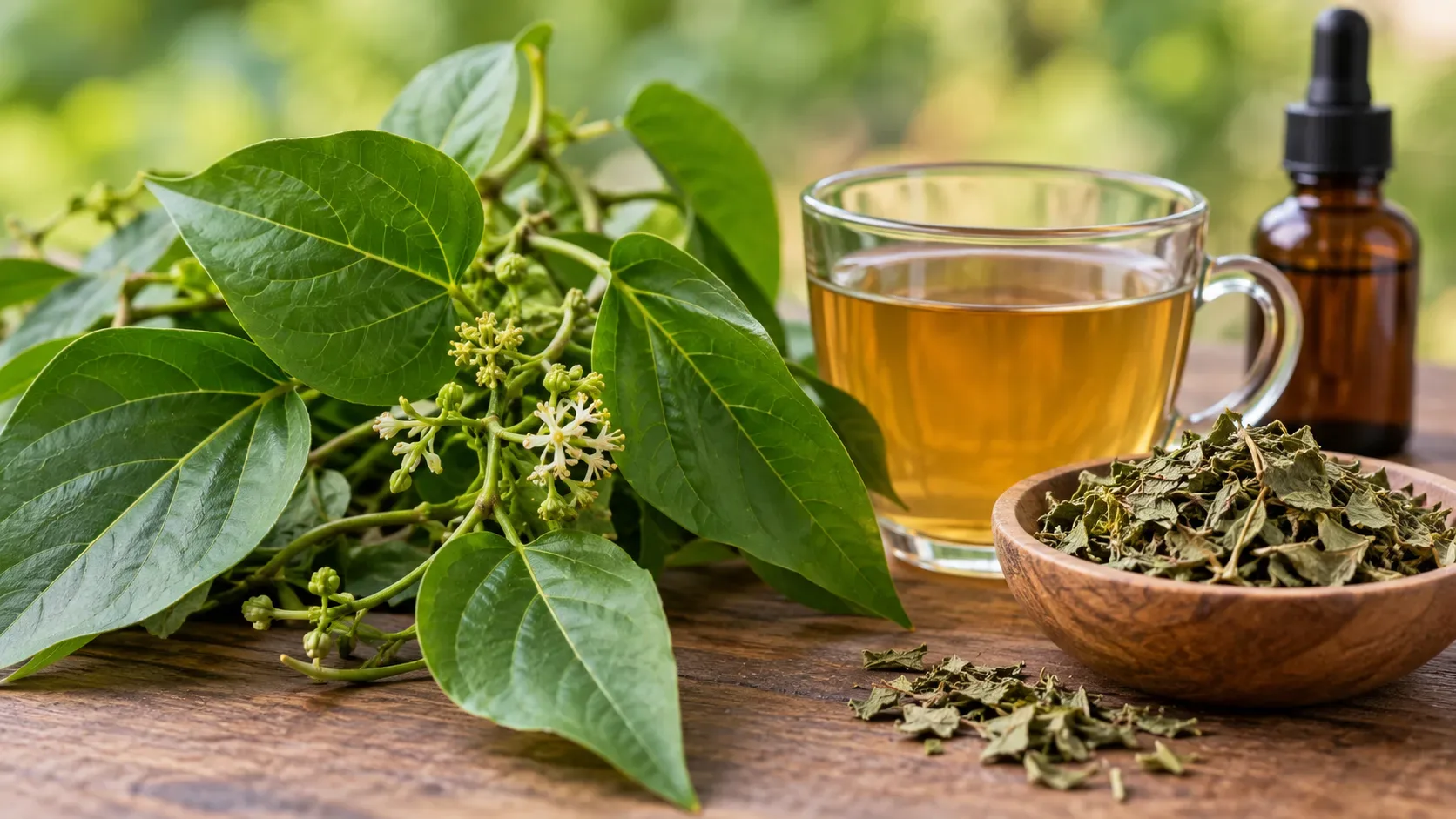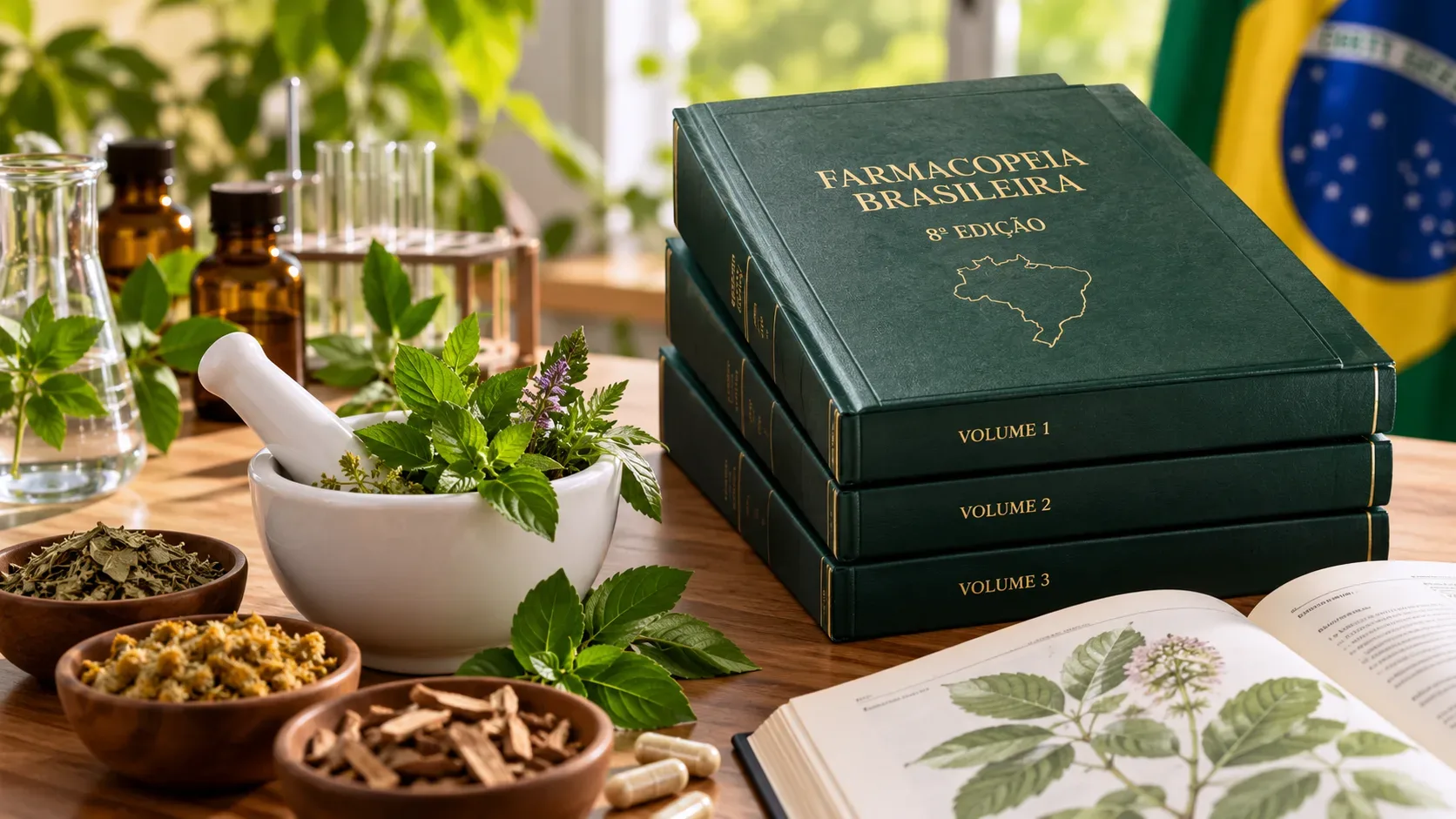

In 2026, the regulatory wording is narrower than many claims made about espinheira-santa. The 3rd edition of the Brazilian Pharmacopoeia Herbal Medicines Formulary (FFFB), in force since July 1, 2026, includes a monograph for Monteverdia ilicifolia and frames its preparations as aids for relieving digestive symptoms, including heartburn and dyspepsia. That is not the same as saying the plant cures gastritis, reflux disease, ulcers, or any other condition.
The key is to separate three things that are often blended together: what the official compendium accepts as traditional use, what clinical studies suggest, and what the evidence still does not support as a therapeutic promise. This distinction matters because Anvisa's own technical assessment concludes that the available clinical data are insufficient to recognize the species' efficacy as a Herbal Medicine, while traditional use does support certain preparations as a Traditional Herbal Product.
The official document in force in 2026
The 3rd edition of the FFFB was approved by Anvisa RDC No. 1,024 of May 14, 2026, effective July 1, 2026. Anvisa's official Herbal Medicines Formulary page explains that monographs describe formulations, preparation, indications, directions for use, and warnings.
For espinheira-santa, the botanical name adopted is Monteverdia ilicifolia (Mart. ex Reissek) Biral. Maytenus ilicifolia Mart. ex Reissek is listed as a synonym. The reference plant part is the leaf.
Recognized, not demonstrated, and caution: the essential table
| Status | Correct interpretation |
|---|---|
| Recognized | Traditional use as an aid to relieve digestive symptoms, including heartburn and dyspepsia, within the preparations and conditions described in the monograph. |
| Not demonstrated | There is no basis for promising a “cure” for gastritis, reflux disease, or ulcers, eradication of H. pylori, guaranteed prevention of gastric injury, or replacement of medical diagnosis and treatment. |
| Caution | Adult use; contraindications and precautions include pregnancy, breastfeeding, hypersensitivity, possible interactions, limits on continuous use, and the need for evaluation if symptoms persist. |
What the monograph recognizes for espinheira-santa
The current monograph covers oral preparations made from dried leaves, including a decoction, an infusion, and a dry extract obtained from an aqueous preparation. Anvisa's 2026 technical assessment, published to support the regulatory classification, records decades of documented use for these forms and identifies the core proposed indication as symptomatic relief of mild gastric disorders, especially heartburn and dyspepsia.
This classification has a specific regulatory meaning: there is enough documentation of traditional use for certain preparation and use conditions. It does not turn every historical, popular, or commercial claim about the plant into an officially recognized indication.
For that reason, responsible coverage should not convert “traditional use for symptom relief” into claims such as “treats the cause,” “heals the stomach,” or “solves gastritis.” Those are different levels of evidence and different levels of promise.
Gastritis, ulcers, and reflux: why the words matter
Anvisa's Monteverdia ilicifolia Assessment Report is especially clear. It acknowledges a history of use for gastritis and ulcers, but states that these are not indications that can be authorized solely on the basis of traditional use. The same report concludes that the available clinical information is insufficient to establish recognized efficacy as a Herbal Medicine.
Reflux requires even more caution. The term appears in surveys of popular use cited in the report, but not as the core regulatory indication adopted for the monograph. Therefore, “it is popularly used for reflux” and “it has an official indication to treat reflux” are not equivalent statements.
There is also no basis for using the word cure. Gastritis can have different causes and contexts; gastroesophageal reflux disease is a distinct diagnosis; and ulcers can involve medications, Helicobacter pylori infection, and a risk of complications. A herbal product aimed at symptom relief does not replace investigation of the cause when that is needed.
What the clinical evidence shows — and where it stops
Anvisa cites a double-blind, placebo-controlled study in people with non-ulcer upper dyspepsia in which a freeze-dried aqueous extract improved dyspeptic symptoms, including heartburn and pain. The report also gathers safety studies in healthy volunteers.
The limitation is the size and quality of the evidence base. The regulatory assessment itself says these are early studies with small numbers of participants and without all the requirements needed to extrapolate results to the general population or recognize efficacy as a Herbal Medicine. In other words, there is a clinical signal consistent with traditional use, but that is different from robust proof for broad disease-treatment claims.
This distinction helps avoid two opposite errors. The first is saying espinheira-santa has “no evidence at all,” ignoring documented traditional use and existing studies. The second is using that limited material to advertise definitive efficacy against gastritis, reflux, ulcers, or other conditions not officially recognized at that level.
Official use warnings that should not be omitted
- Adult use: the current monograph frames these preparations for adults; the formulary does not provide a pediatric regimen.
- Pregnancy and breastfeeding: Anvisa's assessment does not recommend use in these situations because data are incomplete and the literature describes potential risks.
- Hypersensitivity: people with a known allergy to espinheira-santa or other species in the Celastraceae family should not use these preparations.
- Possible adverse effects: dry mouth, taste changes, nausea, and, in some studies, increased urination have been reported. Serious events did not emerge as a consistent signal in the small available studies.
- Excessive doses: because the plant is rich in tannins, excessive use may irritate the gastric and intestinal mucosa, with possible vomiting, cramps, and diarrhea.
- Duration: the technical report retains guidance not to exceed six months of continuous use, with a break before any repeat course.
- Concomitant medicines: interaction warnings are based mainly on experimental data and plausible mechanisms. People taking multiple medicines should discuss use with a health professional rather than assuming every cited interaction is clinically proven for every drug.
- Persistent symptoms: if symptoms do not improve or keep returning, the official guidance is to seek medical evaluation rather than extending self-treatment.
What “protecting the gastric mucosa” does not allow you to conclude
Earlier official documents and Brazilian public-health references use expressions such as “antacid” and “gastric mucosa protector.” Those terms describe an effect or purpose of use; they are not a guarantee that lesions will heal or that complications will be prevented. A substance may reduce symptoms or show gastroprotective effects in certain models without curing the disease behind the symptom.
The same caution applies to animal and laboratory studies. Anvisa's report includes several gastric-protection experiments in non-clinical models, but preclinical data support plausibility and safety; they do not replace robust clinical trials in people for each claimed disease.
How to identify reliable information about espinheira-santa
Three questions help filter claims:
- Is the source talking about a symptom or a disease? “Relief of heartburn and dyspepsia” is a narrower claim than “treating gastritis” or “curing reflux.”
- Is it the same preparation? Leaf tea, dry extract, and commercial products can have different concentrations and standardization. Results from one preparation should not automatically be transferred to another.
- Does the claim come from the compendium, a clinical study, or popular use? All three may be informative, but they do not carry the same weight for efficacy claims.
Botanical identification also matters. “Espinheira-santa” is a common name and may be used imprecisely in commerce. For the monograph discussed here, the reference species is Monteverdia ilicifolia, with Maytenus ilicifolia as a scientific synonym.
When the question is no longer about herbal medicine and requires diagnosis
Occasional heartburn and indigestion are different from frequent, progressive symptoms or symptoms accompanied by alarm signs. Gastrointestinal bleeding, very dark stools, persistent vomiting, unexplained weight loss, difficulty swallowing, or severe pain should not be treated as a simple problem of “choosing the right tea.” These situations require professional assessment.
Even without alarm signs, frequent recurrence can point to a condition that deserves investigation. Within what the Brazilian Pharmacopoeia recognizes, espinheira-santa has a narrow role: helping relieve mild digestive symptoms under defined conditions of use. That wording is less dramatic than promising a cure, but it better reflects the evidence and the current regulatory limit.