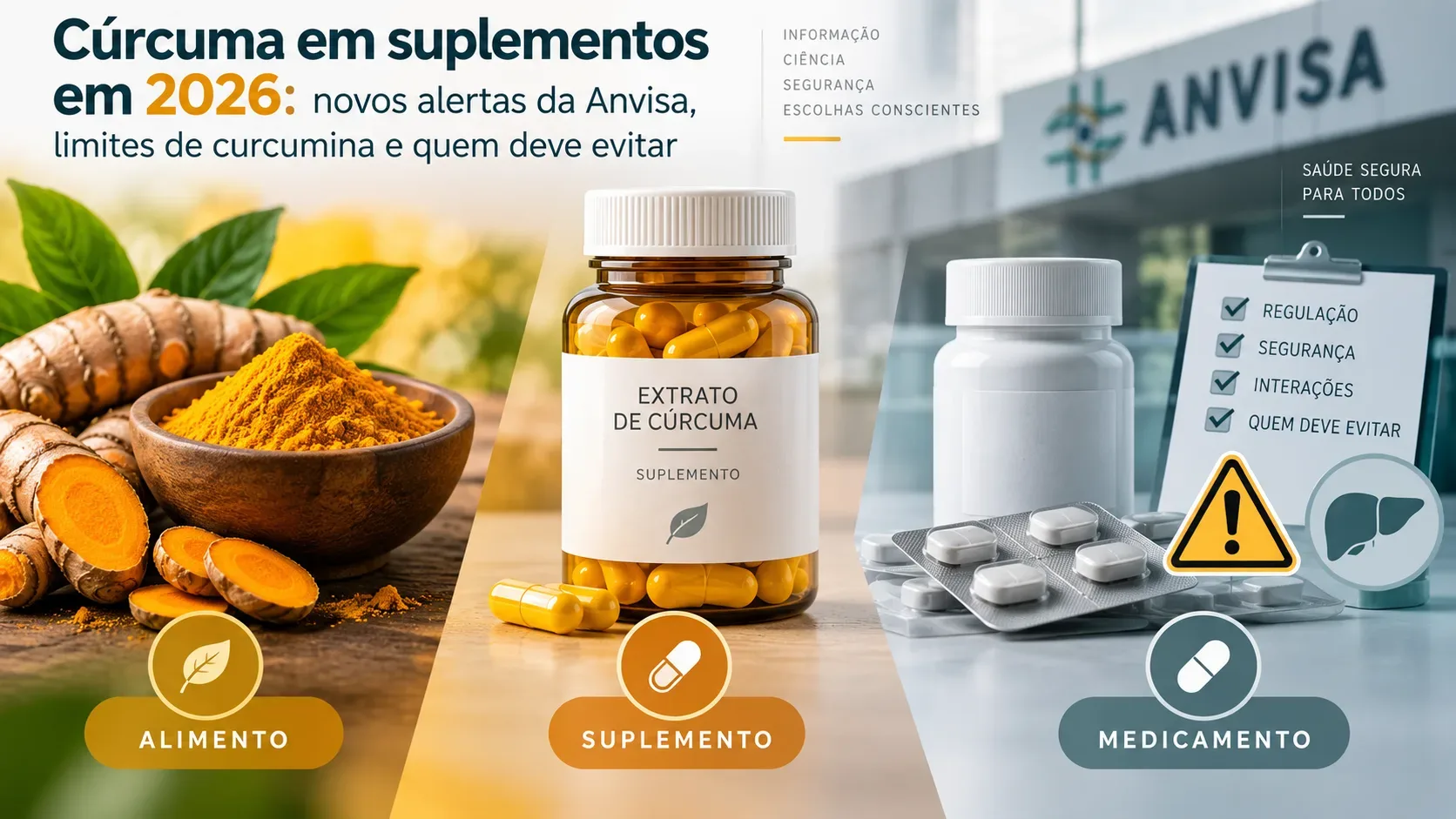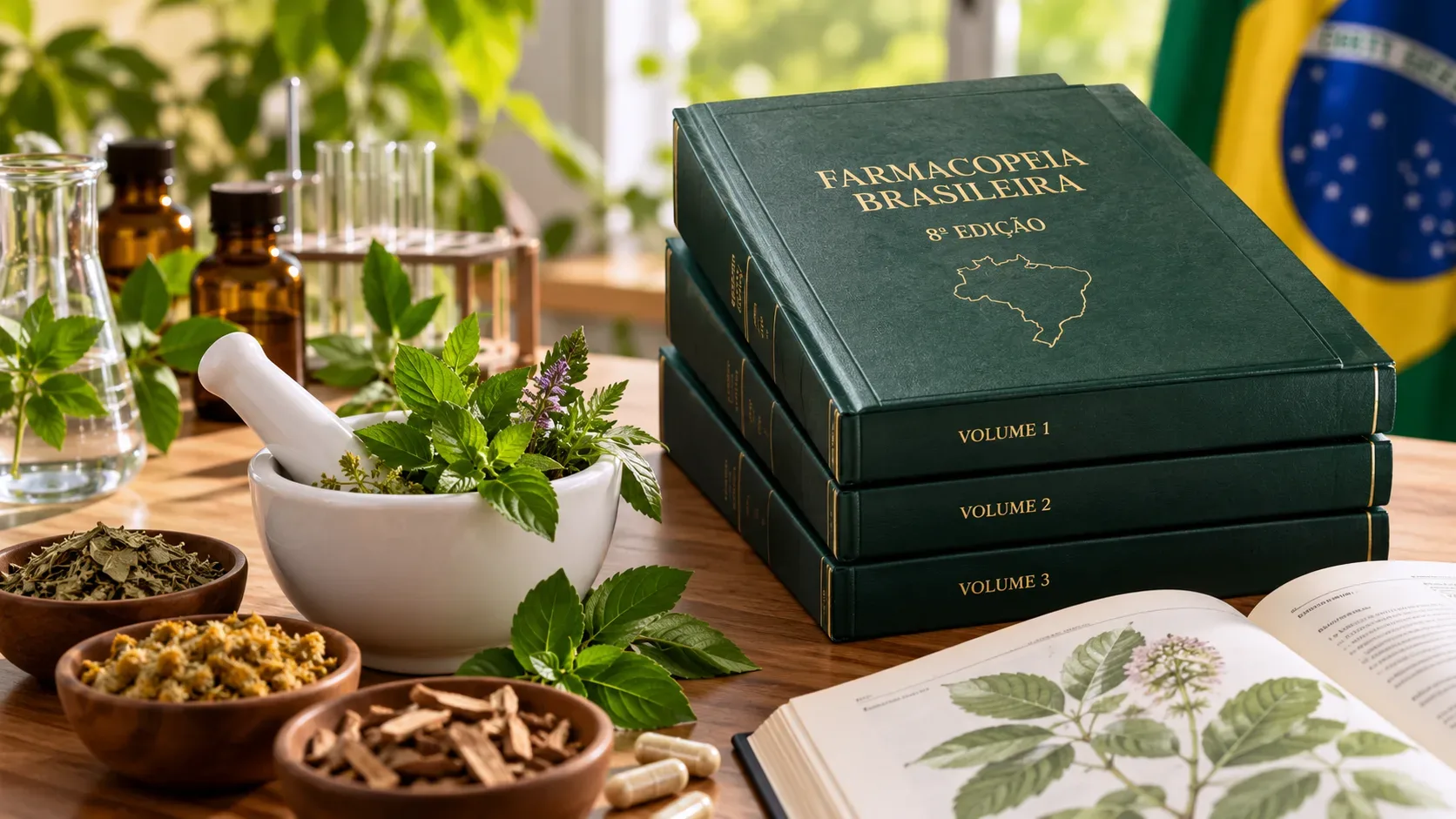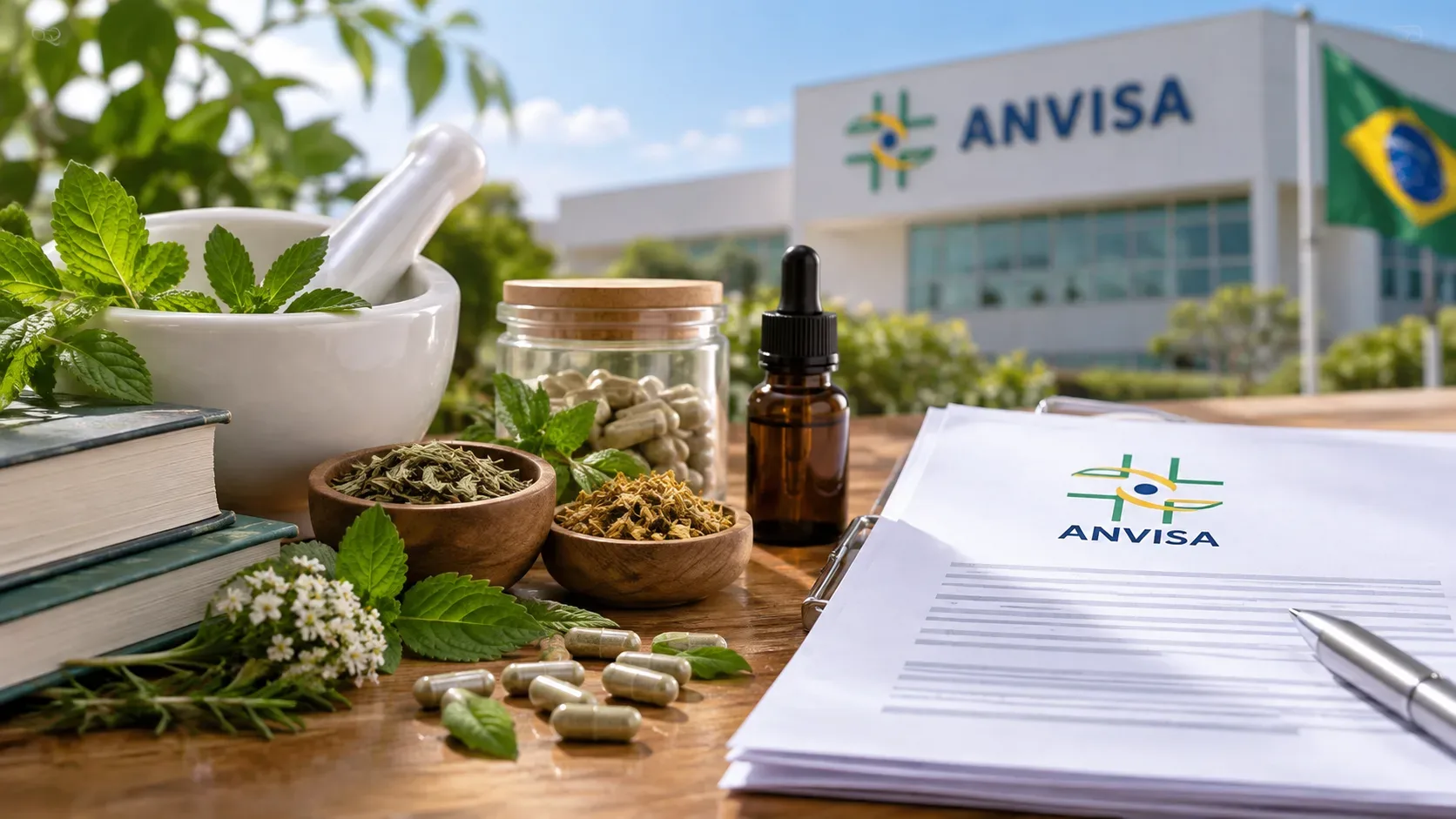
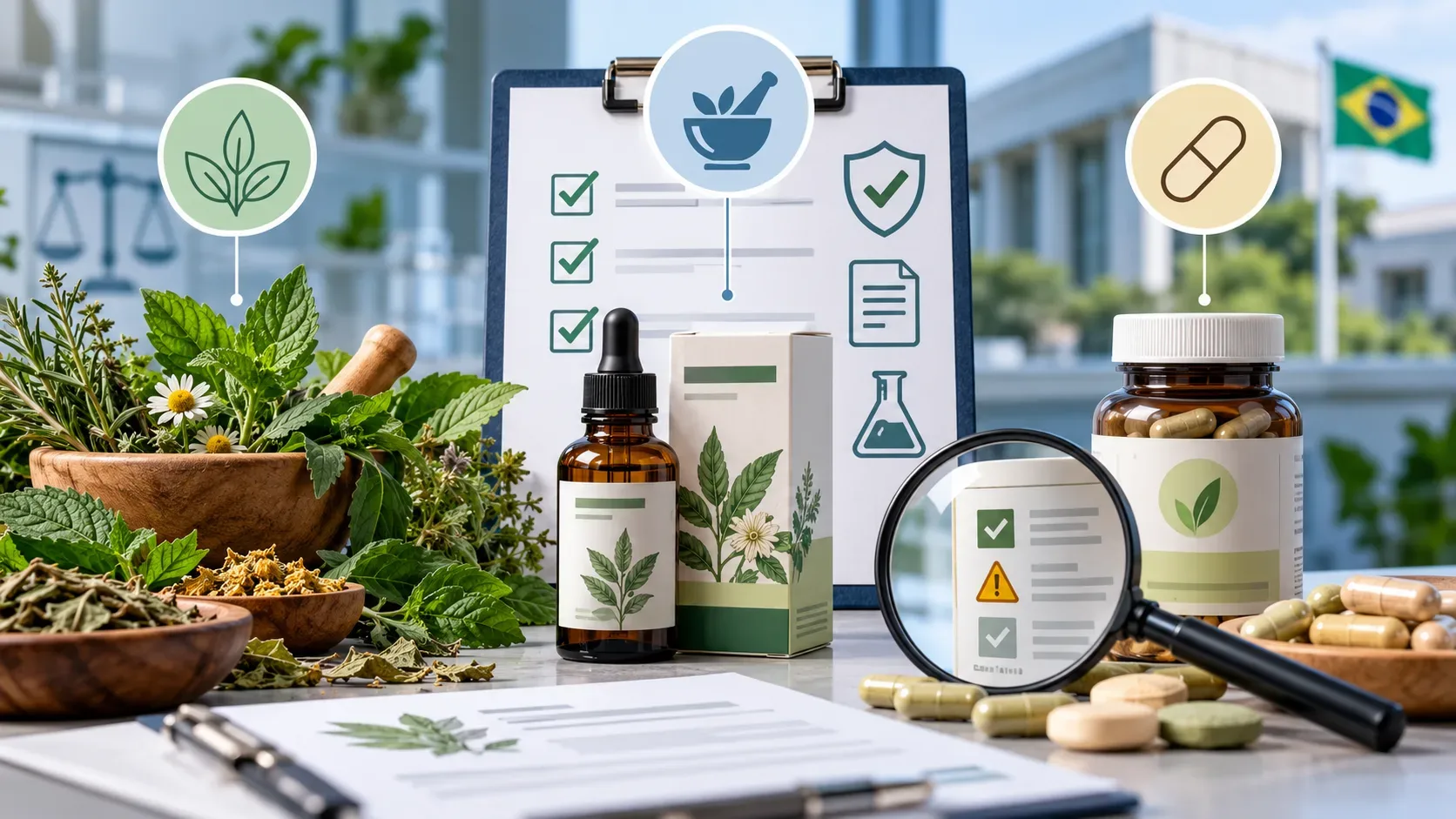
A medicinal plant, a herbal medicine and a food supplement are not equivalent categories under Brazil’s Anvisa rules. A plant is botanical material used for its properties; an industrially manufactured herbal medicine is a medicine subject to medicine-specific quality, safety, indications and authorization requirements; a supplement is a food intended to complement the diet, not to prevent, treat or cure disease. Plant origin, capsule form or the word “natural” alone do not determine its regulatory category.
What changes in classification and assessment?
The starting point is the product’s identity, composition, claimed purpose, manufacturing method and applicable category rules. The same botanical species may occur in different contexts, but authorization or an indication for one product does not automatically transfer to another. In September 2026, Anvisa updated educational materials on plants and herbal medicines following the new framework for industrially manufactured herbal medicines published in December 2025, notably RDC 1,004/2025.
| What it is | Regulatory classification | What to check |
|---|---|---|
| Medicinal plant in its natural form or plant part | Botanical material associated with medicinal use; it is not automatically an authorized industrial medicine or an approved supplement. | Correct species and plant-part identification, origin, appropriate preparation and risks; presentation as a plant does not prove efficacy or safety for every use. |
| Industrially manufactured herbal medicine | Medicine made from active botanical raw materials, under the rules for herbal medicines or traditional herbal medicines; registration or notification applies according to the regulatory route. | Category and current authorization status, authorized indications, package leaflet or use information, warnings, composition and manufacturer. |
| Food supplement, including one with plant-derived ingredients | Oral food intended to complement the diet with permitted constituents, not a medicine for disease; subject to applicable composition, limit, claim, labeling and notification rules. | The term “SUPLEMENTO ALIMENTAR” on Brazilian labeling, ingredients, intended population, restrictions, warnings, permitted claims and status in Anvisa’s food database. |
A medicinal plant is not the same as a finished herbal medicine
A leaf, root or bark identified as medicinal does not by itself provide a standardized dose, industrial quality control or an approved indication. Similar species may be mistaken for one another; the plant part, origin, storage and method of preparation affect risks. The booklet announced by Anvisa stresses the need to know the plant, appropriate part and correct preparation. “Natural” does not mean free of adverse effects, contraindications or interactions with other medicines.
Putting a plant into a capsule is also not enough to turn it into an authorized herbal medicine. Classification depends on the formulation, stated purpose and compliance with regulatory requirements, not packaging appearance.
Herbal medicine: medicinal regulation and category-specific evidence
Industrially manufactured herbal medicines require specific authorization from Anvisa. The framework approved in December 2025 updated registration and notification requirements, including assessment and control of botanical extracts. The rules distinguish herbal medicines from traditional herbal medicines, with pathways and supporting evidence appropriate to each category; traditional use does not mean that every plant-based product has undergone clinical trials.
Check the individual product: authorized indication, registration or notification status, instructions, intended population and warnings. An authorized herbal medicine can still cause adverse reactions and interact with treatments. Do not replace a prescribed medicine with one without professional assessment.
Supplements: food assessment, not authorization to treat disease
Anvisa defines supplements as foods intended to complement the diets of healthy people with nutrients, bioactive substances, enzymes or probiotics. Constituents and claims must be authorized and comply with conditions of use, limits and warnings. Claims to prevent, treat or cure disease are not allowed in this category. A botanical extract in a supplement does not inherit the therapeutic indication of a medicine containing the same plant.
Since September 2024, RDC 843/2024 and IN 281/2024 have established notification of supplements to Anvisa. For products covered by transition rules, the notification deadline ended on September 1, 2026. The agency clarified that products previously communicated to local health surveillance authorities and manufactured by that date may, under the transitional conditions, remain on sale until their expiration date; therefore, the absence of a notification number on the label of an older unit alone does not prove noncompliance. Assessment must consider batch, manufacturing date, expiration date and authorization status. Food notification and medicine registration are different procedures, not interchangeable seals of therapeutic efficacy.
How to read the label and check authorization
- Identify the actual category. Look for “SUPLEMENTO ALIMENTAR” on the food product or medicine information on the herbal medicine. Do not infer the category from drops, tablets or capsules.
- Check the purpose. A promise to cure disease on a supplement is a warning sign; for herbal medicine, compare advertised indications with officially authorized information.
- Read ingredients and restrictions. Check ingredients, botanical species where stated, warnings, groups for whom use is not indicated, expiration date, batch and responsible company.
- Search the appropriate database. Open Anvisa’s public consultation system and select medicines for registered or notified herbal medicines, or foods for supplements. Compare product name, manufacturer, available number and current status. An inconclusive search calls for further verification, not an assumption of authorization.
- Consider the 2026 transition. For an older supplement without a printed number, manufacturing date and transitional rules matter; request traceability documents or consult local health surveillance.
Safety warnings before use or combining products
- Be wary of universal cure promises, claims of “no contraindications” or advice to abandon treatment.
- Tell your healthcare professional about everything you use, including teas, plants, herbal medicines, supplements and prescription or nonprescription medicines.
- Pregnant or breastfeeding people, children, people with chronic diseases and those on long-term medication need individual assessment; do not extend an indication from one group to another.
- Stop use and seek care if a significant reaction occurs; if you suspect an irregular product, retain its package, batch information and purchase receipt and contact health surveillance authorities.
In short: the useful question is not merely “does it come from a plant?” but “what is its regulatory category, what purpose may it claim and what is the status of this exact product?” Checking regulatory data and labels can help identify irregularities, but does not replace individual clinical assessment or authorize a dose or treatment change.
Sources and references
- Anvisa, cartilha e folder sobre fitoterápicos
- Anvisa, novo marco regulatório dos fitoterápicos
- Anvisa, perguntas frequentes sobre suplementos alimentares
- Anvisa, como ler o rótulo de um suplemento
- Anvisa, prazo de transição da notificação de suplementos em 2026
- Anvisa, consulta pública de produtos regularizados
- Anvisa, consulta de medicamentos registrados e notificados