In 2026, the safest way to read the official guidance on guaco is to separate traditional use from broad clinical proof. Anvisa’s monograph for Mikania glomerata Spreng., folium, approved on December 17, 2025, places the accepted preparations under traditional use, not “well-established use.” That distinction defines both what can be said about the herbal product and the limits of any claims.
At the same time, the 3rd edition of the Brazilian Pharmacopoeia Herbal Medicines Formulary has been in force since July 1, 2026. The compendium gathers official formulations and serves as a reference for traditional herbal products and for compounding under the conditions established by Anvisa. For readers, the practical consequence is simple: “guaco” does not mean any syrup, tea, or homemade mixture; the species, plant part, preparation, dose, duration, and warnings all matter.
What Anvisa’s monograph actually recognizes
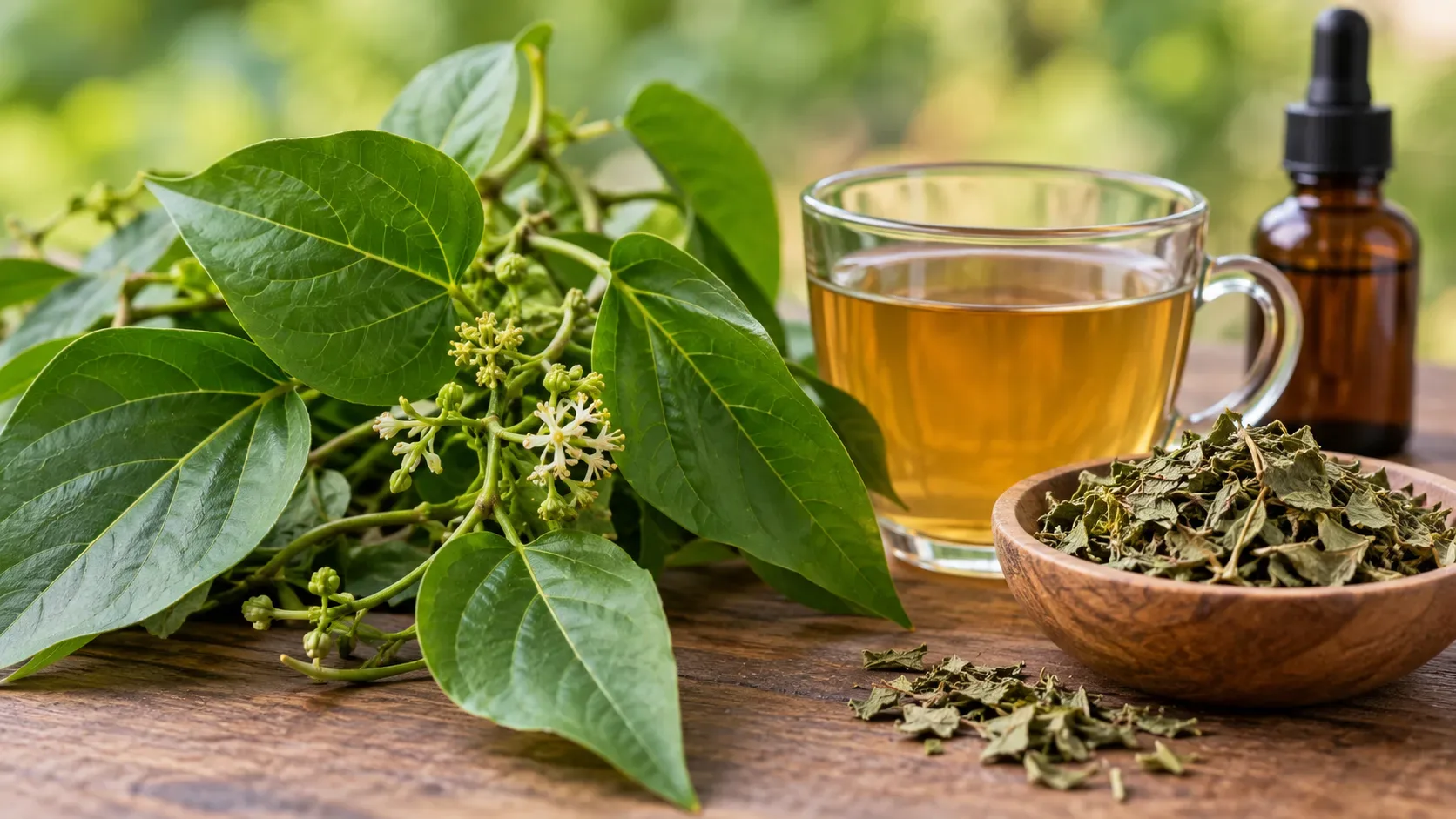
The Mikania glomerata monograph describes guaco leaves and accepts two preparations: cut herbal material for an oral tea prepared as an infusion or decoction, and a tincture with a 1:10 herbal drug-to-solvent ratio using 70% ethanol.
| Point | What is recognized |
|---|---|
| Regulatory basis | Traditional use, supported by a long history of use. |
| Indication | Symptomatic relief of productive conditions of the upper airways. |
| Plant part | Leaves of Mikania glomerata. |
| Covered forms | Infusion or decoction of cut leaves and an oral liquid preparation as a 1:10 tincture in 70% ethanol. |
This wording is narrower than many claims found online. It does not turn guaco into a generic treatment for every cough, nor does it authorize extrapolation to infections, pneumonia, asthma, or other respiratory diseases. The monograph itself states that the traditional herbal product is to be used for the specified indication exclusively on the basis of its long-standing use.
How to use it according to the monograph
Infusion or decoction
For adults and older people, the stated single dose is 2 to 3 g of dried, cut leaves in 150 mL of boiling water, prepared as an infusion or decoction. It should be used soon after preparation, three times a day.
This is different from measuring “a handful” of leaves or using fresh leaves without standardization. The monograph specifies the amount, the condition of the plant material, and the water volume; changing those elements changes exposure and no longer reproduces the evaluated preparation.
Tincture
For the 1:10 tincture in 70% ethanol, the stated dose for adults and older people is 1 to 3 mL diluted in 50 mL of water, three times a day. Alcohol-containing formulations require additional attention to ethanol content and product-specific restrictions.
Duration of use
The guidance is not to use it for more than 15 consecutive days. If needed, treatment may be repeated after a 5-day interval. If symptoms persist during use, the monograph advises seeking guidance from a health professional; if they worsen, it advises seeking medical guidance.
Who should avoid guaco or use extra caution
- Children under 12: use is not recommended because adequate data are lacking. For formulations that do not contain ethanol above the level considered safe, the monograph also lists use below this age as contraindicated.
- Pregnancy and breastfeeding: safety has not been established; in the absence of sufficient data, use is not recommended.
- Hypersensitivity: use is contraindicated in people allergic to components of the formulation.
- Formulations with ethanol above the level considered safe: these are especially contraindicated for people under 18, pregnant or breastfeeding people, people with alcoholism, and people with diabetes because of the alcohol content.
- Higher doses or prolonged use: may cause vomiting, diarrhea, and tachycardia.
The monograph records “none known” under undesirable effects, but that does not mean zero risk. It also instructs users to stop the product and seek medical advice if adverse reactions occur.
Interactions: the warning most easily overlooked
The official document is especially direct about interactions. People taking medicines regularly should not assume that a plant-based product is automatically compatible.
| Medicine or substance | Recorded guidance |
|---|---|
| Nonsteroidal anti-inflammatory drugs | Do not use during treatment. |
| Anticoagulants | Do not use simultaneously; the monograph links the warning to coumarins and vitamin K activity. |
| Antibiotics | Concomitant use should be avoided because of a potential clinical interaction. |
| Lapachol from Handroanthus impetiginosus | Guaco saponins may increase its absorption. |
| Doxorubicin | Caution is advised with concomitant use because of potential enhancement of a mutagenic effect in the evaluated data. |
| Methoxsalen | May inhibit the metabolism of coumarin present in M. glomerata. |
This list is not an invitation to adjust doses on your own. If you use an anticoagulant, anti-inflammatory drug, antibiotic, chemotherapy medicine, or another relevant medicine, adding guaco should be discussed with a health professional.
Why “traditional use” limits the claims
Anvisa’s assessment report on Mikania glomerata helps explain the regulatory choice. The review found few clinical efficacy studies, and their results were described as controversial. For the infusion, one study reported effects consistent with bronchodilator, expectorant, and antitussive actions, but there were limitations in assessing the strength of the result; another study, using a syrup containing a hydroalcoholic extract, did not show activity.
In its final assessment, Anvisa considered the clinical studies too scarce to support a broad clinical-efficacy classification, while the documented history of use met the traditional-use requirements for the herbal material used in infusion or decoction and for the 1:10 tincture in 70% alcohol. The most important takeaway is therefore not “guaco works for everything people say it does,” but rather: there is an officially delimited traditional use, with equally delimited preparation and warnings.
The monograph also does not support claims that guaco “cures” respiratory diseases, acts as an antibiotic, prevents complications, or replaces medical treatment. Its official scope is symptomatic relief, and persistence or worsening of symptoms is specifically a reason to seek professional assessment.
Checklist before use
- Confirm that the product identifies Mikania glomerata and the preparation form.
- Do not convert the official dose into an imprecise household measure.
- Respect the 15-day consecutive-use limit and the 5-day interval before any repeat course.
- Do not use in children under 12, during pregnancy, or while breastfeeding without guidance consistent with the official restrictions.
- Review current medicines, especially anticoagulants, anti-inflammatory drugs, and antibiotics.
- Seek care if symptoms persist, worsen, or are accompanied by warning signs.