As of September 2026, the right question is not simply “does INSS require biometrics?” but which biometric record is accepted in each situation and when the Brazilian National Identity Card (Carteira de Identidade Nacional, or CIN) becomes necessary. Biometric registration has applied to new social security benefit claims since November 2025, but the move toward the CIN is gradual and follows transition rules.
Under the general rule for social security and social protection benefits, people who already have valid biometrics in an official database — such as the CIN, driver’s license (CNH), voter registration or passport, depending on the case — may not need to issue a CIN immediately. The December 31, 2026 cutoff matters especially for people who still need to create or regularize a biometric record: from 2027 onward, new biometric registrations for this purpose must use the CIN, while biometrics already recorded in other databases by the end of 2026 may remain valid during the transition.
Practical summary by situation
| Situation | In 2026 | After 12/31/2026 | From 01/01/2028 |
|---|---|---|---|
| You already have a CIN with biometrics | The CIN biometric record already satisfies the requirement. | Nothing changes merely because 2026 turns into 2027. | The CIN remains the accepted biometric base. |
| You have biometrics in a CNH, voter registration or passport recorded by 12/31/2026 | As a general rule, that record can be used during the transition. | It may continue to be accepted until 12/31/2027 under the general federal rule. | Only CIN biometrics will be accepted for granting, maintaining and renewing benefits. |
| You have no biometrics in an official database | You must regularize the record when the requirement applies to your benefit or procedure. A transition is still in place in 2026. | For a new biometric registration intended for this purpose, the CIN becomes the required route. | The CIN is the only accepted base. |
| You already receive a benefit and have not been called for an update | There is no automatic suspension solely because biometric implementation is underway. | Regularization follows the responsible agency’s procedures and notices. | Maintenance will depend on CIN biometrics, subject to the applicable procedures. |
What exactly changes on December 31, 2026
The 12/31/2026 cutoff separates two situations. The first is a person who already has biometrics recorded in an accepted database. The second is a person who still needs to create a biometric record to satisfy the requirement.
According to the updated Digital Government FAQ, biometrics from a CNH, voter registration or passport recorded by 12/31/2026 may be used for granting, maintaining or renewing benefits until 12/31/2027. Records in those databases created from 01/01/2027 onward do not qualify for that transition: in that case, the CIN must be issued. From 01/01/2028 onward, the general rule accepts only the biometric record linked to the CIN.
This corrects a common misunderstanding: January 1, 2027 does not force every beneficiary to immediately replace an older valid biometric record with a CIN. A person already covered by an accepted biometric record created within the transition deadline may continue using it through the end of 2027.
Does someone applying for a new INSS benefit need a CIN now?
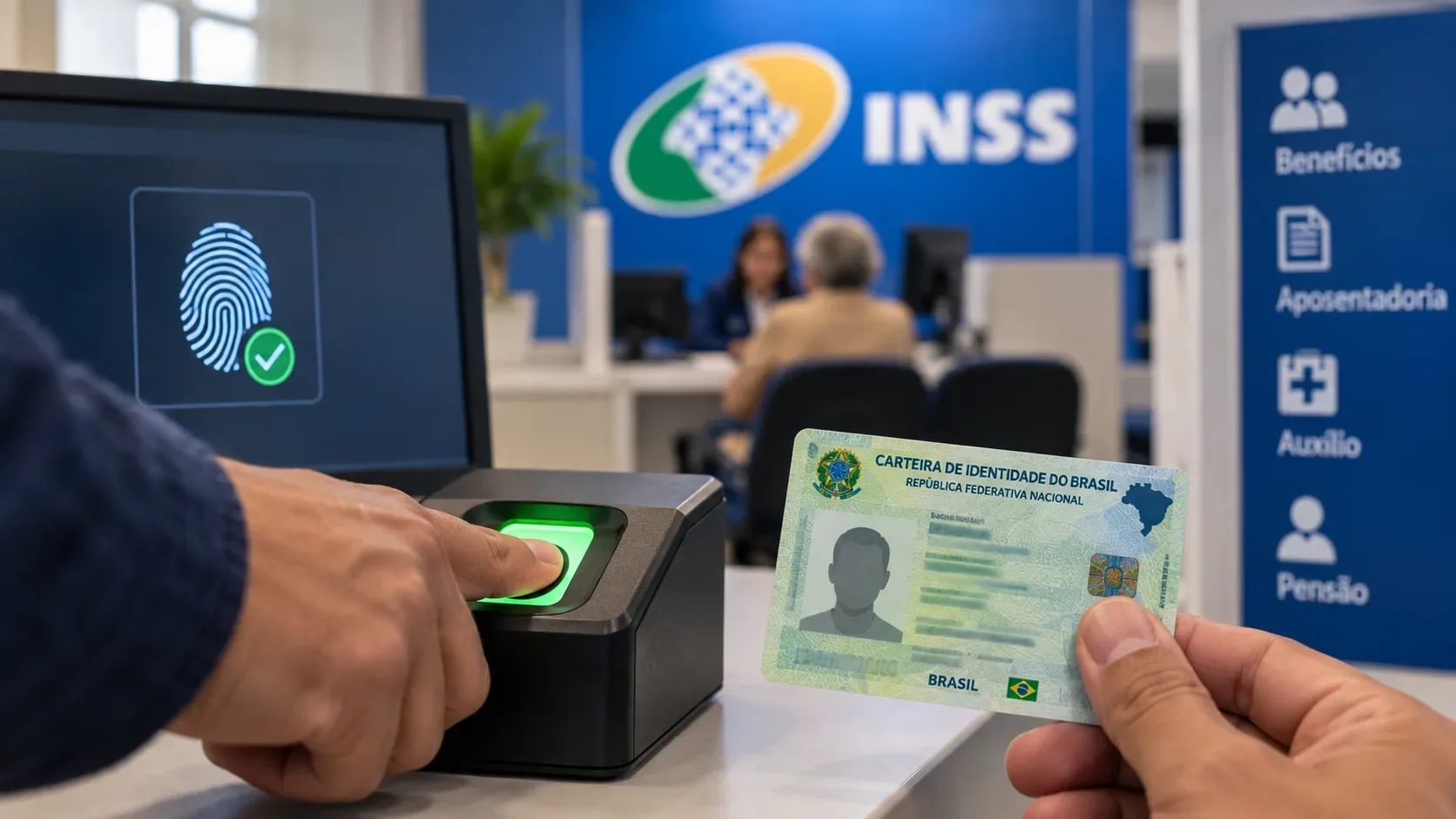
Social security benefits requested from 11/21/2025 onward are subject to biometric verification. In practice, the claim may depend on confirming that the applicant, beneficiary or legal representative has biometrics in an accepted government database, unless a regulatory exemption applies.
A mandatory biometric check does not automatically mean the CIN is mandatory in every case. In 2026, there is still a transition between different official biometric databases. Before issuing a new document solely as a precaution, it is useful to verify whether an existing biometric record can be reused and whether the specific benefit has its own rule.
There are also temporary exemptions while the government does not provide adequate conditions for biometric registration. Federal guidance includes, among other profiles, people over age 80, people living abroad, migrants, refugees and stateless persons, people unable to travel because of health conditions or disability, and residents of hard-to-reach areas, subject to proof when required.
The BPC has its own transition and needs extra attention
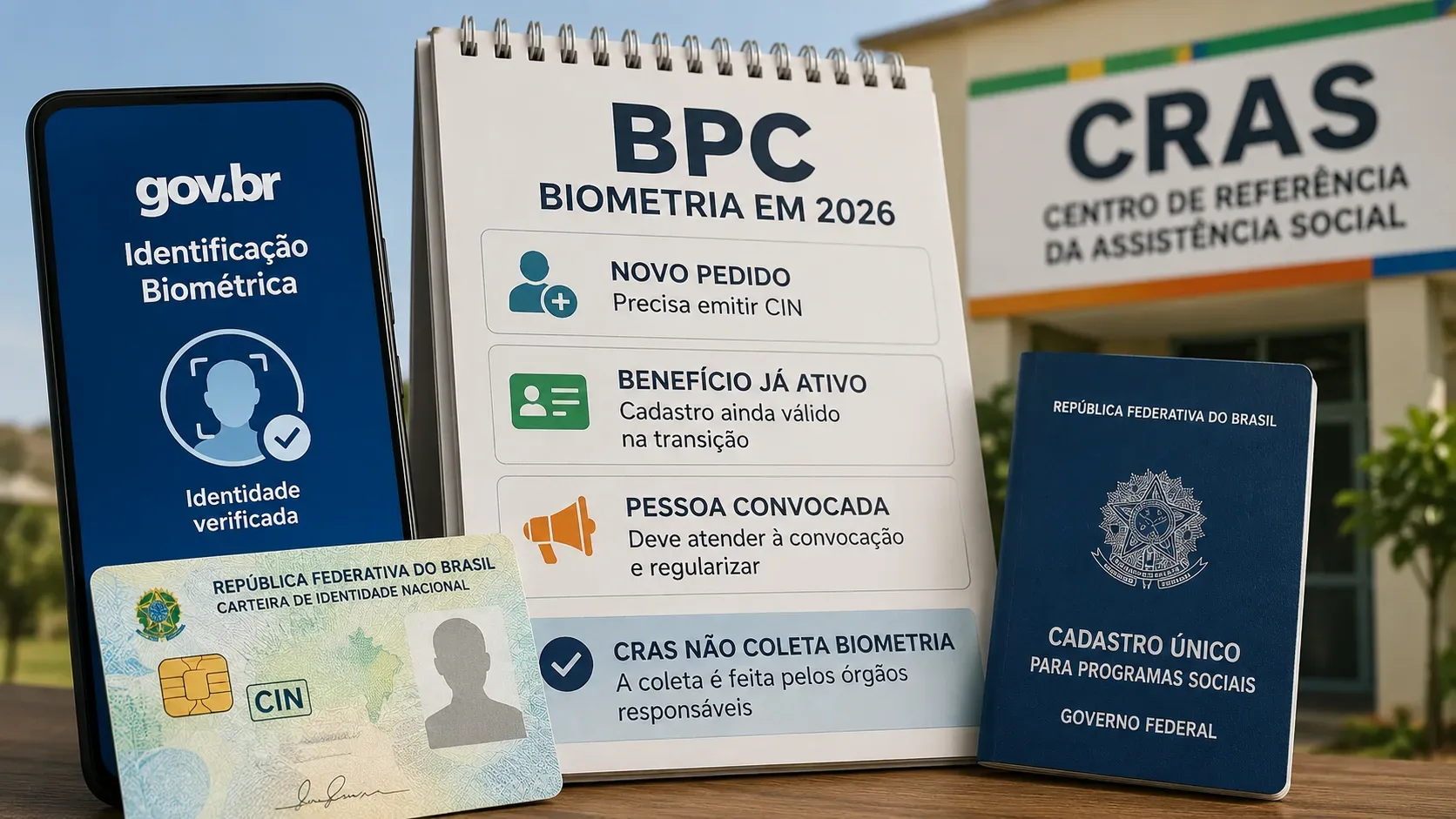
The Continuous Cash Benefit (Benefício de Prestação Continuada, or BPC), administered by INSS, follows a specific operational rule. Joint Ordinance MDS/INSS No. 36 set different dates for using biometric records that already exist outside the CIN.
- New BPC claim: biometrics in databases such as the CNH, Federal Police civil identification or the National Civil Identification/Voter Justice system qualify for the transition only if they were recorded by 04/30/2026. After that cutoff, a new claim that requires biometric regularization makes the CIN central, subject to applicable exemptions.
- BPC maintenance or review: biometrics in those databases may be used if they were recorded by 12/31/2026.
- Current BPC recipients: implementation is gradual. The government states that databases are checked and that people without a valid biometric record are called during the review process according to the applicable schedule.
For that reason, it is not safe to use one answer for “INSS” and “BPC.” The BPC is administered by INSS, but it has its own transition rules that may be more restrictive than the general guidance for other benefits.
If I already receive a benefit, do I need to rush to get a CIN?
Not because of the calendar alone. Digital Government states that active benefits will not be automatically blocked solely because biometric implementation is underway. For maintenance and renewal, the process is gradual and must follow the procedures and communications of the responsible agencies.
In practice, current beneficiaries should first check whether they already have biometrics in an official database and monitor official communications. If an update notice is issued and there is no accepted biometric record for that situation, a CIN may be required. Traveling to an office without a notice or without checking the case first may create unnecessary work.
How to decide what to do now
- Check whether you already have a CIN. If you do, its biometric record is the most stable reference for the coming years.
- If you do not have a CIN, identify whether you have biometrics in a CNH, voter registration or passport and when they were recorded. The registration date matters for the transition.
- Confirm which benefit is involved. The BPC has its own rule; other benefits may have exemptions or specific procedures.
- If you already receive a benefit, check whether an official notice has been issued. Implementation does not mean automatic cancellation.
- If you need a CIN, contact the identification authority in your state. INSS does not issue the Brazilian National Identity Card.
Dates worth keeping
- 11/21/2025: biometric registration began applying to new social security benefit claims, subject to exemptions.
- 04/30/2026: an important cutoff for the BPC transition in new claims when older biometrics in other databases are considered.
- 12/31/2026: a key cutoff for other biometric databases to qualify under the general transition and for BPC maintenance/review.
- 12/31/2027: the last day of the general transition for using certain older biometric records outside the CIN.
- 01/01/2028: under the general rule, the CIN becomes the only accepted biometric base for granting, maintaining and renewing benefits.
Official sources to check before taking action
The rules are detailed and may receive operational updates. Before issuing a document or responding to a requirement, check the Digital Government biometric FAQ, the Social Beneficiary page, the official guidance on the BPC transition and Joint Ordinance MGI/MDS/MPS No. 76, as amended in 2026.
Because this topic affects access to public benefits and involves transition rules, this content should undergo human review before publication and be rechecked if a new rule or official update is issued.