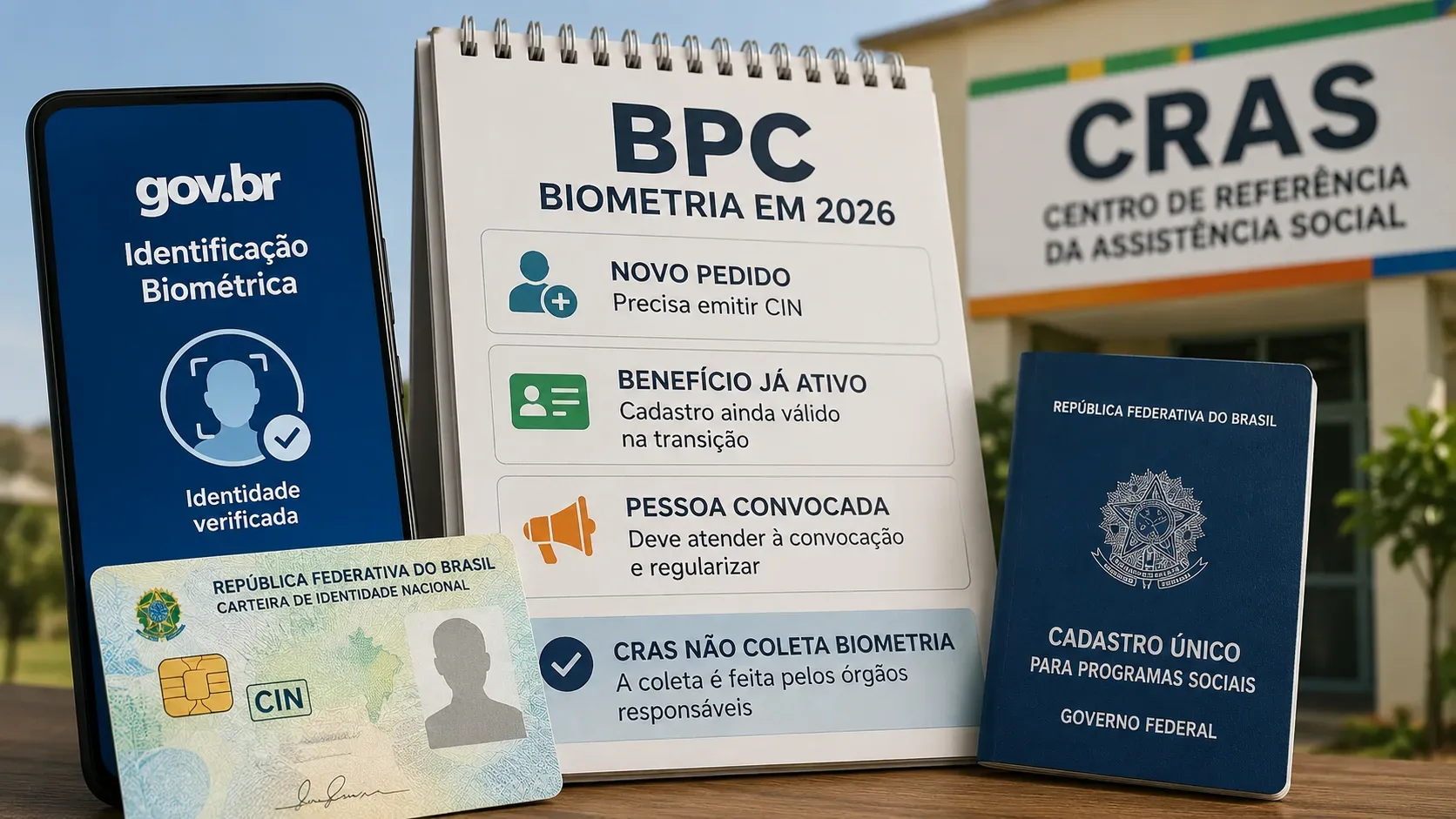
In 2026, biometric identification became part of the rules for granting, maintaining and renewing Brazil's Continuous Cash Benefit (Benefício de Prestação Continuada, or BPC), but that does not mean every beneficiary must immediately rush to obtain the Carteira de Identidade Nacional (CIN), Brazil's National Identity Card. The decisive point is the person's situation: whether they are filing a new application, already receive the BPC, or have been summoned to regularize biometric data and/or the Cadastro Único social registry.
Official guidance combines a permanent rule — the CIN will be the main identity database — with a transition period in which biometric records already held in other public databases may still be used. For the BPC, the Ministry of Development and Social Assistance (MDS) also set specific cutoffs for new applications and for maintenance or review. The correct answer therefore depends on when the biometric record was created and which stage of the benefit is being analyzed.
Quick answer: who needs to obtain a CIN for the BPC in 2026?
| Situation | What to do |
|---|---|
| New application and an accepted biometric record already exists, created within the applicable transition deadline | INSS checks the official databases. If the record is found and accepted, immediate CIN issuance may not be required to complete this step. |
| New application with no accepted biometric record | Obtaining the CIN is the indicated route. The BPC-specific rule establishes that, for new applications from May 1, 2026, people who did not already have valid biometrics in transition databases must use the CIN. |
| Active BPC and biometric record found in an accepted database | There is no automatic suspension solely because the rule changed. Adaptation is gradual and takes place during maintenance or review procedures. |
| Active BPC, no biometric record found | Wait for the official notice and, when it arrives, obtain the document/registration requested. The CIN is the preferred option and becomes increasingly central during the transition. |
| Person who was summoned | Read the notice, check whether there is also a Cadastro Único issue, and comply with each requirement through the correct channel. CRAS can provide guidance and update Cadastro Único, but it does not collect biometric data. |
1. New BPC application: is the CIN mandatory for everyone?
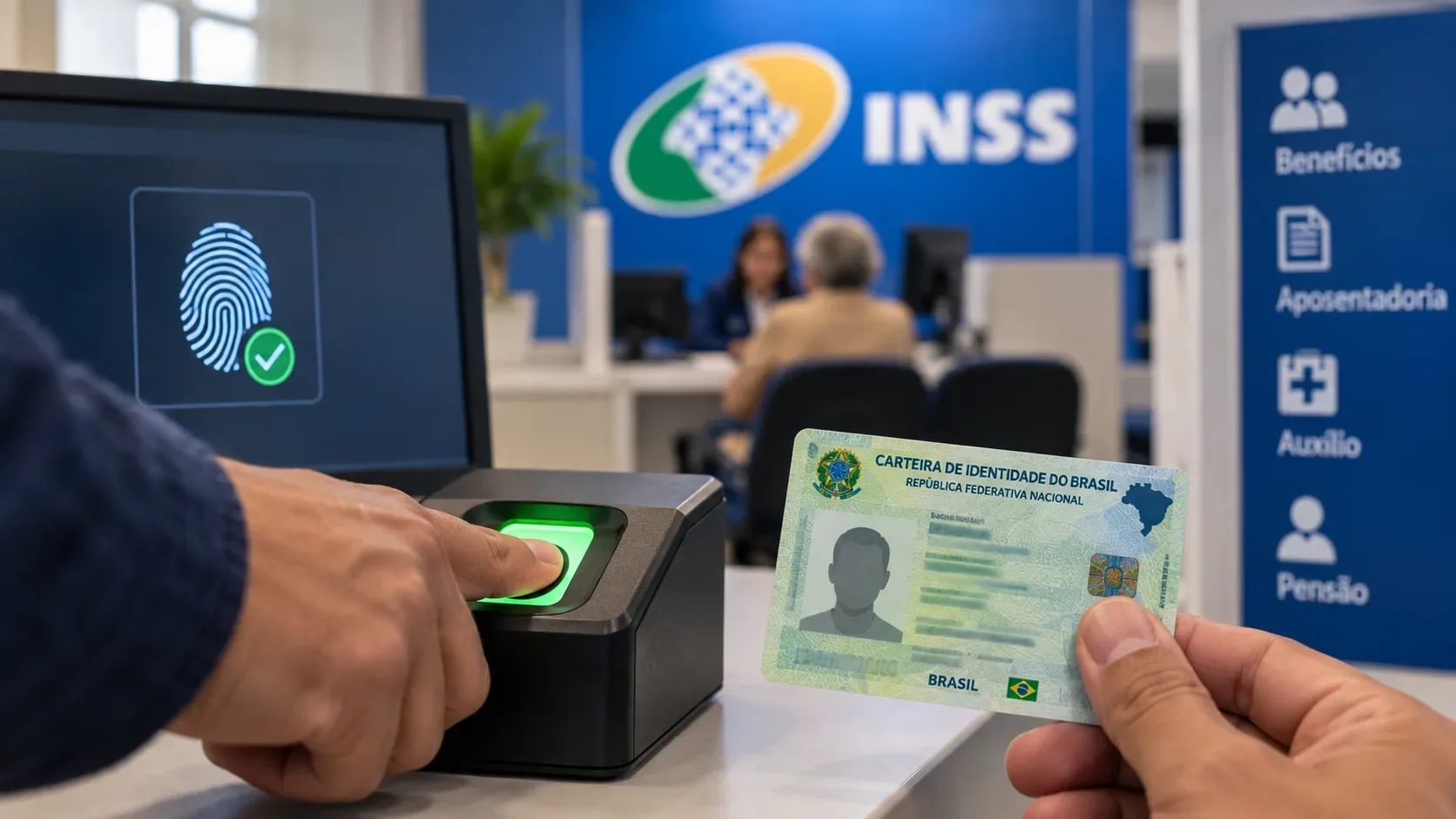
Not necessarily for someone who already had biometrics registered in an accepted database. The official BPC page says the biometric requirement may be met through the CIN or, temporarily, through other recognized public databases, and that INSS verifies biometrics in databases such as the CIN, the Electoral Court (TSE) and the driver's license system (CNH).
There is, however, a BPC-specific transition rule. In guidance published by MDS on Joint Ordinance MDS/INSS No. 36, the government stated that, to apply for the BPC, biometrics in transition databases had to have been recorded by April 30, 2026. Therefore, from May 1, 2026, a person reaching the new-application stage without a usable biometric record must obtain the CIN.
In practice, this creates two situations:
- A valid biometric record already existed before the cutoff: the system may use it during the transition, depending on the database and the applicable rules.
- No valid biometric record existed: the CIN becomes the document that must be obtained to make the new application viable.
The BPC application itself is still filed through INSS channels — Meu INSS, the 135 call center or a Social Security Agency (APS). CRAS can provide guidance on eligibility rules and Cadastro Único, but it does not file the INSS application on the applicant's behalf and does not capture biometric data.
2. Does someone who already receives the BPC need to get a CIN now?
There is also no order requiring every active beneficiary to obtain the CIN at the same time. Brazil's Digital Government states explicitly that active benefits will not be automatically blocked because of the biometric rollout. For benefits already being paid, the requirement follows the maintenance or renewal procedures and deadlines established by the managing agency.
For the BPC specifically, the transition is tied to benefit review and to the Cadastro Único update schedule. The government checks biometric databases automatically and gradually summons people who do not have a usable record.
For BPC maintenance or review, MDS guidance establishes that biometrics in transition databases must have been recorded by December 31, 2026. After the applicable cutoff, anyone without a recognized record will need to move to the CIN according to the implementation stage.
3. Which biometric records still count during the transition?
The CIN is the main reference and the safest option for anyone who needs to create a new biometric record. Official pages, however, use lists with slightly different terminology.
- CIN: it is the main database and remains accepted. From January 1, 2028, general Digital Government guidance says only CIN biometrics will be accepted for granting, maintaining and renewing benefits.
- Electoral Court/TSE (voter registration/Identificação Civil Nacional): it appears among the transition databases that may be checked.
- CNH driver's license: the BPC page says INSS may verify biometric data in this database; transition guidance also treats it as usable under certain conditions.
- Federal Police database/passport: the BPC page refers to the Federal Police database, while the Digital Government FAQ lists a biometric passport among transition records.
- CRNM/DPRNM: MDS transition rules also mention migration documents in specific situations.
Those differences in naming should not be read as permission to choose any document at any time. What matters in an individual case is whether the record is found in an official database and whether it meets the BPC transition deadline that applies. If INSS does not find a usable biometric record, or if the person has none, the CIN is the most direct route.
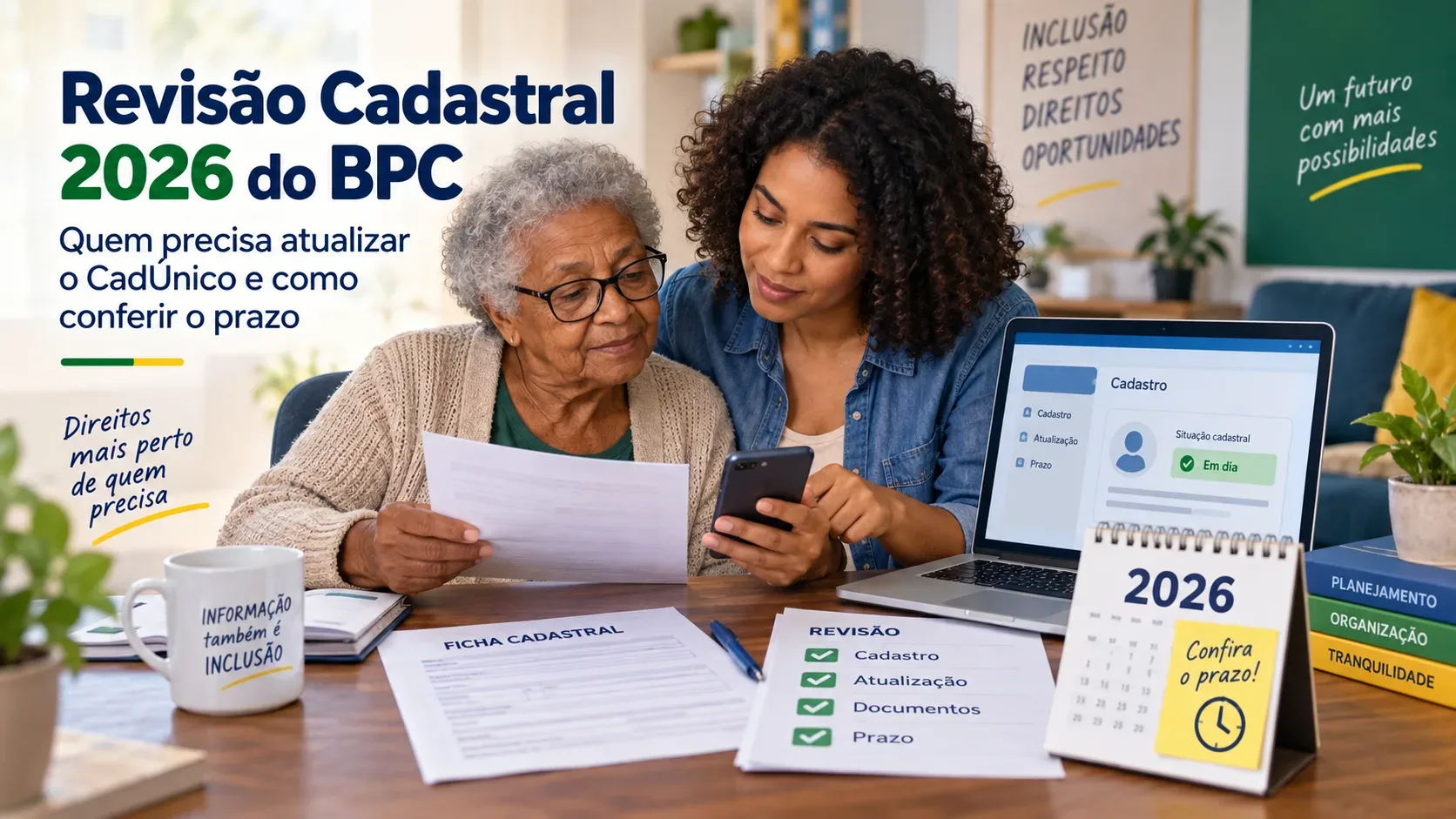
It is also important to separate two things: Cadastro Único and biometric registration are not the same thing. Cadastro Único must be up to date for the BPC, but it does not replace the biometric record required by the rules.
4. How does the summons work for current BPC beneficiaries?
The rollout is gradual. According to MDS, for people who already receive the BPC the government cross-checks databases automatically and summons only those who do not have usable biometrics under the applicable deadlines. The notice is issued as part of the benefit review process and uses the Cadastro Único update schedule as a reference.
If Cadastro Único is also out of date, the two issues may appear together: registry update and biometrics. The official BPC page tells beneficiaries to monitor INSS notices and carry out the action requested.
In the 2026 Cadastro Único Qualification Action, BPC rules provide for communications through official channels such as bank statements, the Meu INSS app, phone or email for the registry issue. Because a biometric summons may be associated with the review process, the safest practice is to check Meu INSS regularly and not ignore official notices about the benefit.
5. Does CRAS collect biometrics for the BPC?
No. MDS has clarified that CRAS does not collect biometric data. CRAS can explain BPC rules and support Cadastro Único enrollment or updates when that service is assigned to the local unit or municipal administration.
Biometric capture for the CIN is carried out by the identity authorities of Brazil's states and the Federal District. Therefore, if a notice says biometric identification is required and the person has no accepted record, they should go to the CIN-issuing authority in their state — not to CRAS to “do biometrics.”
6. Who may be temporarily exempt from the biometric requirement?
Joint Ordinance MGI/MDS/MPS No. 76 provides temporary exemptions while the government does not offer adequate conditions for biometric registration. The groups listed include:
- people over 80 years old;
- migrants, refugees and stateless persons, with the required documentation;
- people living abroad;
- people unable to travel for more than 30 days because of health or disability, with a medical certificate containing the required information;
- people living in locations classified as difficult to access under the regulation.
In addition, the official BPC page states that when the interested person's biometric registration is not possible, biometric identification may be required from their legal representative. An exemption should not be assumed: it depends on meeting and documenting the conditions in the rule.
7. Decision tree: what to do in your situation
You are applying for the BPC now
- Confirm that the family's Cadastro Único was updated no more than 24 months ago and that every family member has a CPF listed.
- Check whether a biometric record already exists in an accepted official database.
- If there is no usable biometric record for the new application, obtain the CIN before filing or as required during the process.
- File the application through Meu INSS, 135 or an APS office.
You already receive the BPC and have not received a notice
- Do not assume the benefit will be blocked immediately.
- Keep Cadastro Único updated and monitor Meu INSS.
- If you already have the CIN, its biometrics are the main reference.
- If you only have biometrics in another database, wait for the verification/notice and observe the transition deadlines.
You received a notice
- Read exactly which issue was identified: biometrics, Cadastro Único or both.
- For Cadastro Único, use the local channel indicated, such as CRAS or a Cadastro Único service point, when applicable.
- For biometrics/CIN, go to the identity authority responsible in your state.
- Keep protocols and proof of compliance and monitor Meu INSS until the regularization appears in the system.
8. Dates that help make sense of the transition
| Date | What it means |
|---|---|
| 04/30/2026 | MDS cutoff for biometrics in transition databases to be usable for new BPC applications. |
| 05/01/2026 | For a new applicant without usable biometrics, the CIN becomes necessary. |
| 12/31/2026 | Cutoff announced for biometrics in transition databases in the context of BPC maintenance or review. |
| 12/31/2027 | End of the general period during which older transition records may be usable in several situations, depending on the applicable regulation. |
| 01/01/2028 | General guidance moves to accepting only biometrics linked to the CIN for granting, maintaining and renewing benefits. |
Official sources to check before taking action
- MDS — official page for the Continuous Cash Benefit (BPC)
- Digital Government — FAQ on biometric registration for social benefits
- Digital Government — Social Beneficiary and biometric transition
- MDS — biometric transition rules for Social Security benefits
- MDS — guidance on biometrics and the role of CRAS
- MDS — Joint Ordinance MGI/MDS/MPS No. 76, updated in 2026
In short: people who already receive the BPC do not need to obtain a CIN immediately just because the rule changed. The government performs automatic checks and the summons is gradual. For a new application without previously usable biometrics, however, the CIN is the key step in 2026. And if a notice arrives, it is essential to separate the channels: CRAS/Cadastro Único for registry matters; the identity authority for biometrics/CIN.