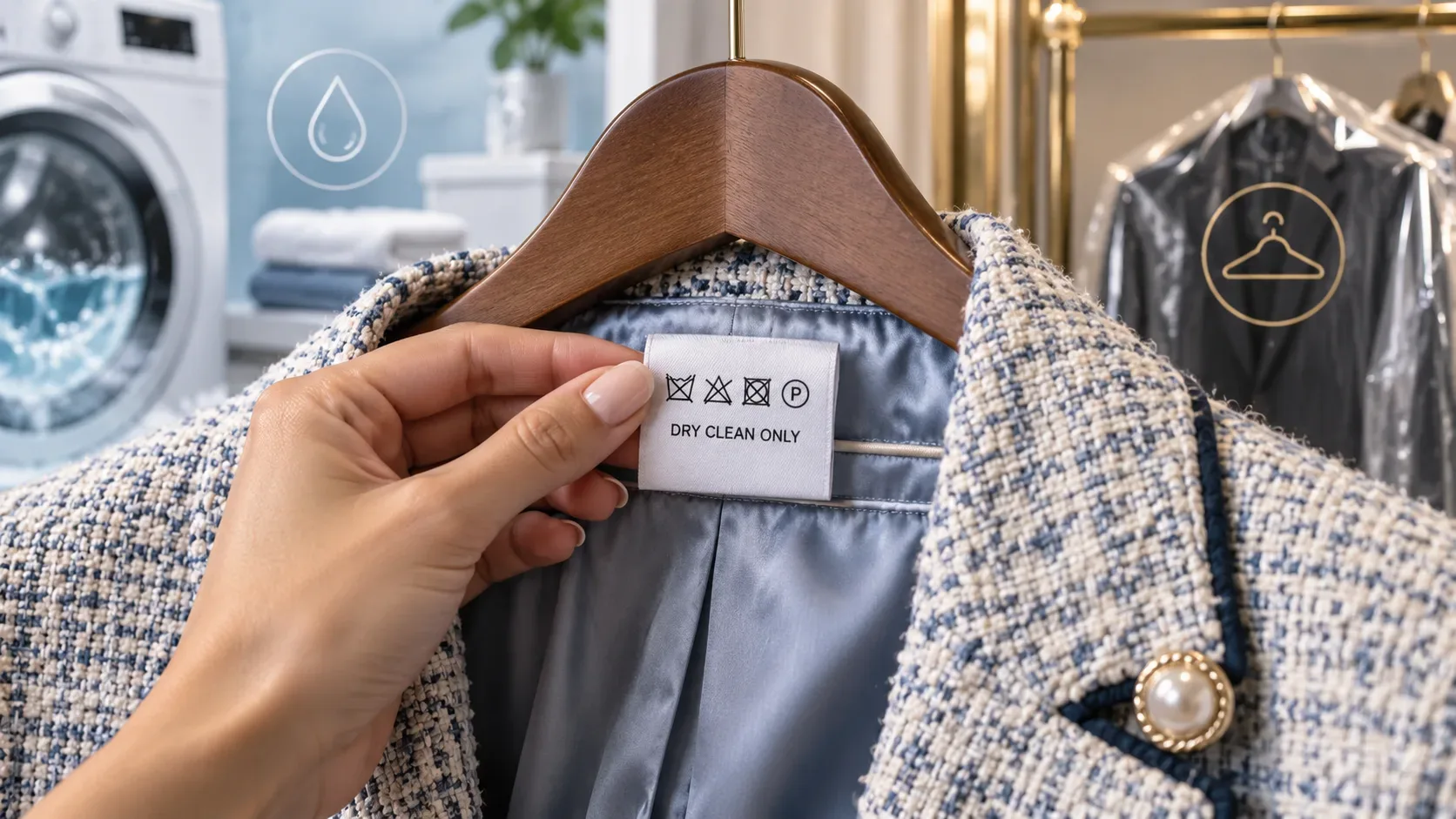
“Dry Clean Only” is not merely a preservation suggestion. Under the U.S. Federal Trade Commission (FTC) Care Labeling Rule, the phrase acts as a warning that the garment cannot be safely washed. To use that warning, a manufacturer or importer must have a reasonable basis, supported by reliable evidence that washing would damage the item. The dry-cleaning instruction itself must also be supported by evidence that the stated process will not cause substantial harm to the garment.
The key point is that the decision is not made by looking only at the main fiber. The FTC requires care instructions to account for the entire garment, including non-detachable linings, trim, buttons, zippers, and other details. That is why two garments made with similar fabric can legitimately have different care instructions.
What “Only” changes in “Dry Clean Only”
The word “Only” turns the instruction into a warning against washing. The FTC guidance on the Care Labeling Rule says “Dryclean Only” may be used only when there is evidence that washing will damage the garment. In other words, it is not enough to prefer dry cleaning or believe it may preserve appearance better.
This distinction also separates several labels that look similar but do not communicate the same thing:
| Label wording | What it communicates | What should not be assumed |
|---|---|---|
| Dryclean | The garment can be dry cleaned under the stated conditions. Without an added restriction, the rule defines a normal dry-cleaning process. | It does not, by itself, mean water washing is prohibited. |
| Dryclean Only | The garment can be dry cleaned and washing is considered harmful. | It is not merely a preference for finish or appearance. |
| Professionally dryclean + modifier | The normal process must be modified, for example by restricting steam, moisture, or another step. | According to FTC guidance, “Professionally dryclean” by itself is not a complete instruction. |
| For best results, dryclean | When truthful and substantiated, it can mean the garment is washable without damage, while dry cleaning may offer better appearance or durability. | It is not equivalent to “Dryclean Only”. |
| Do not wash. Do not dryclean. | The garment cannot be safely cleaned by normal washing or dry cleaning. | It does not authorize experimenting with either method at home. |
Why the fabric alone does not decide
Fiber content tells you what the garment is made from, but a care label answers a different question: how the finished product responds to repeated care. The FTC requires instructions to cover the components of the item and warns that testing components separately may not be enough.
One FTC example is a garment whose parts may tolerate washing on their own, but one component bleeds color onto another when the finished product is washed. The guidance also mentions situations in which beads or other embellishments may be damaged by a particular process. The risk can therefore come from the interaction among materials, dyes, lining, structure, trim, and finishes, not just from the fiber with the highest percentage.
In practice, this explains why a structured garment can require different care from a simple garment made with a similar fiber. Internal seams, interfacings, lining, applications, surface finishes, and differences in stability among components can change how the whole item behaves. The care label is meant to reflect the finished product.
Dry cleaning does not mean a total absence of moisture or heat
The name can be misleading. In the FTC rule, “dryclean” is a machine process that uses solvent and may include controlled moisture addition, hot tumble drying, and restoration by steam pressing or steam-air finishing. The FTC rule in 16 CFR Part 423 describes drying temperatures up to 160 °F, about 71 °C, as part of the defined process.
That is why a label may include modifiers such as “No steam” or identify a safe solvent. These details are not decorative. They indicate that part of the normal process must be avoided or adjusted to protect the garment.
How to read wording and symbols without jumping to conclusions
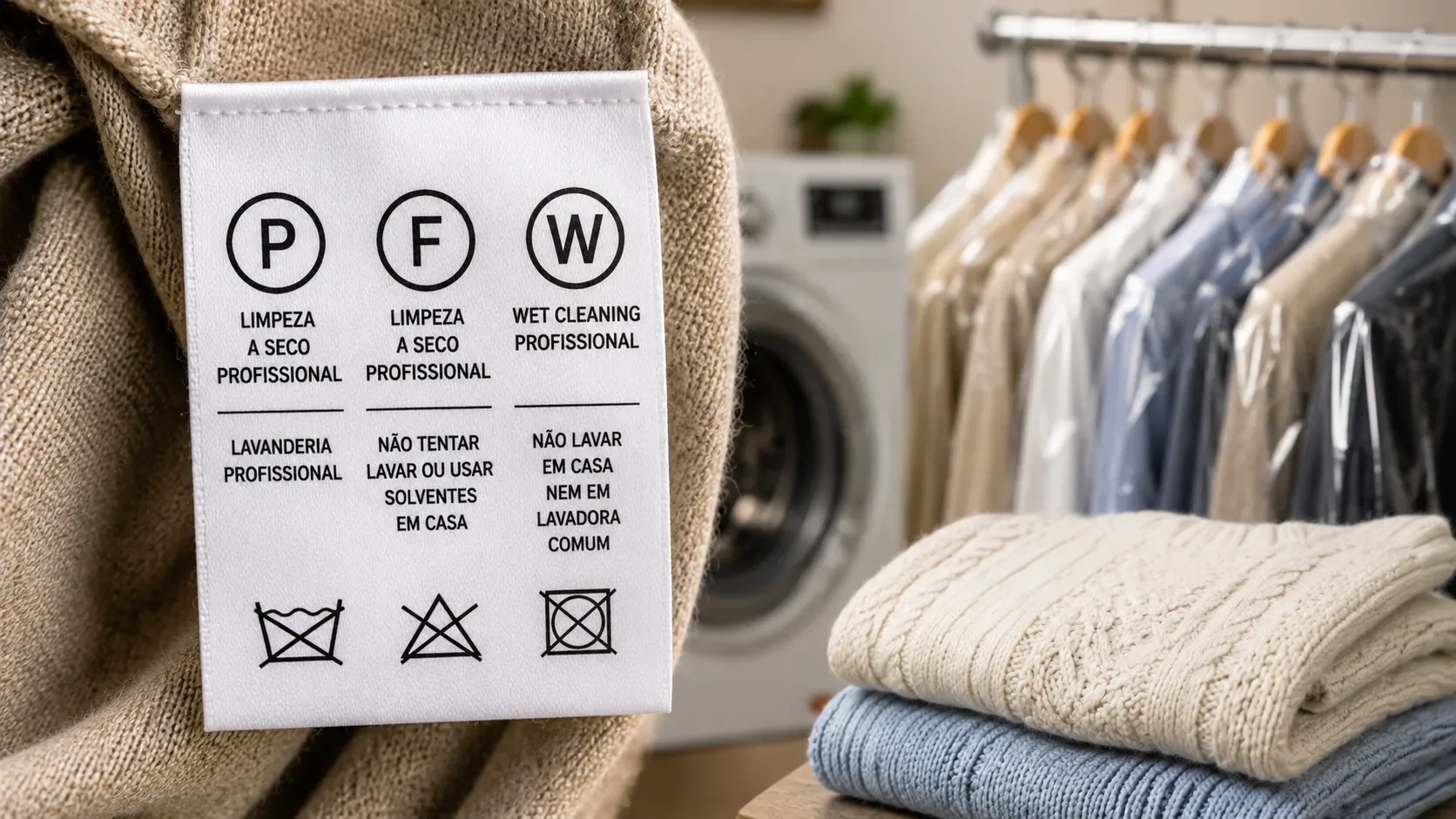
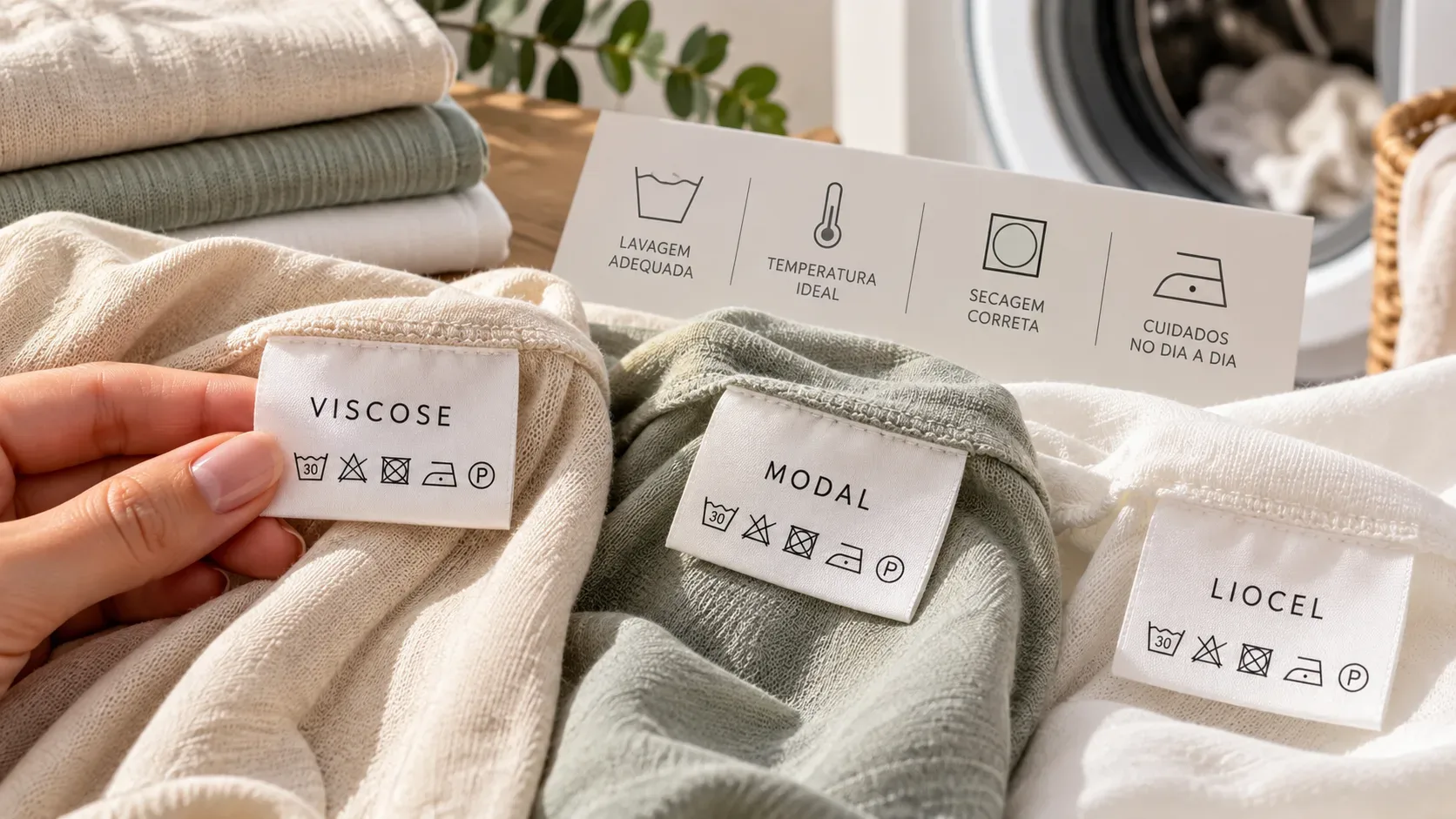
In the United States, the FTC allows care symbols consistent with the ASTM standard accepted by the rule. Other markets commonly use similar international systems. The practical approach is to read the label as a whole: symbols, words, warnings, and specific instructions.
- A crossed-out wash symbol indicates that washing is not part of the permitted care under that symbol system.
- The circle is associated with professional dry-cleaning care, and letters inside it qualify the process.
- Words such as “Only”, “No”, and “Do not” should be treated as warnings, not optional detail.
- If wording and symbols appear contradictory, seek guidance from the manufacturer before trying an alternative method.
On an imported garment, the symbol system may follow a standard different from the one used in the United States. The exact meaning should be read according to the system applied to the label, not by visual similarity alone.
When home washing is not worth testing
If the label clearly says “Dry Clean Only”, the conservative approach is to follow it, especially when the garment is structured, combines several materials, has delicate finishing, a fixed lining, embellishments, or dyes that may migrate. Trying a home wash just to “see what happens” transfers the risk to a garment whose label already warns against that process.
It is also prudent to avoid improvised tests when the item is valuable, difficult to replace, or contains details whose response to water, agitation, heat, or drying is unknown. The fact that an isolated fiber is normally washable does not prove that the finished product is washable.
What if the label seems excessive or inconsistent?
You may encounter a garment with a simple-looking fiber composition that still says “Dry Clean Only”. In its guidance on cashmere, the FTC notes that many cashmere items can be safely washed and that “Dry Clean Only” requires proof that washing would cause harm. This is another reason not to turn a care label into a universal rule about a fiber. See the FTC guidance on cashmere.
Consumers, however, cannot know at home which tests or evidence supported a particular label. If there is a real question, contact the manufacturer or brand owner and ask for written care guidance for that specific model. A professional cleaner can also assess construction, stains, and finishing, but using a method that is not listed on the label carries risk.
Practical summary
- “Dry Clean Only” means do not wash in the FTC rule context and requires a reasonable basis for the warning.
- “Dryclean” without “Only” is not automatically a washing prohibition.
- The whole garment determines care: lining, trim, dyes, structure, and finishes matter along with the fabric.
- Dry cleaning is a technical process that may involve solvent, controlled moisture, heat, and steam.
- Modifiers matter: “No steam”, a specific solvent, and other restrictions change the permitted process.
- Do not use fiber content as a shortcut to override the care label on a finished garment.
Put simply, the label does not answer “can this fabric touch water?”. It answers “can this finished product be cared for this way without substantial harm?”. That difference is why “Dry Clean Only” is a decision about the whole garment, not just the fabric name.