
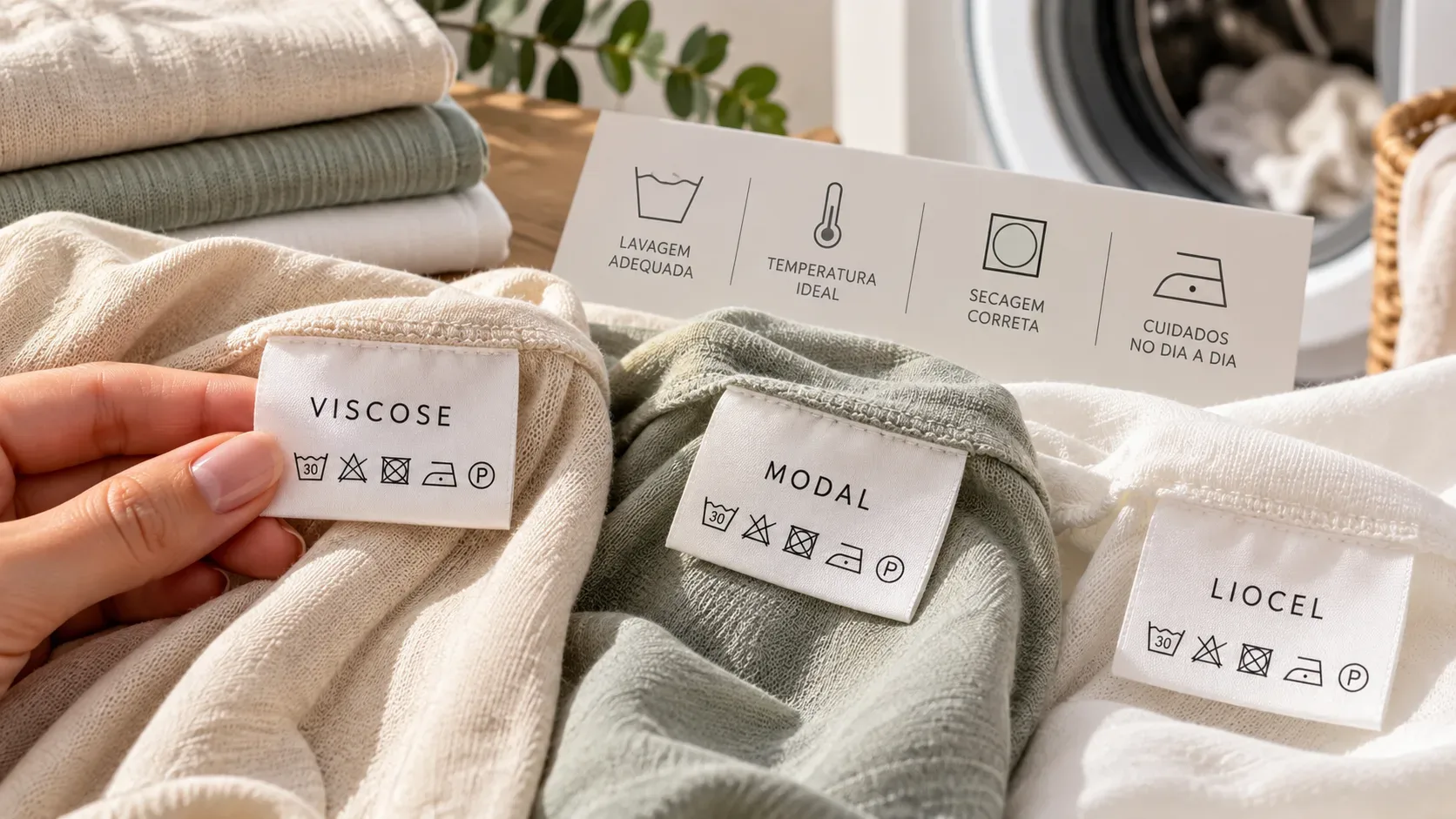
Viscose, modal and lyocell: label differences and washing care
Learn how to distinguish the three fibers by content labels, interpret care symbols and choose a suitable wash for each garment.
Read articleClothes That Last helps identify stains, understand care labels, correct laundry mistakes, and preserve each fabric with practical, responsible guidance.
Explore articlesThe most important content to start with.
Learn how to distinguish the three fibers by content labels, interpret care symbols and choose a suitable wash for each garment.
Read articleOther selected strategic content.
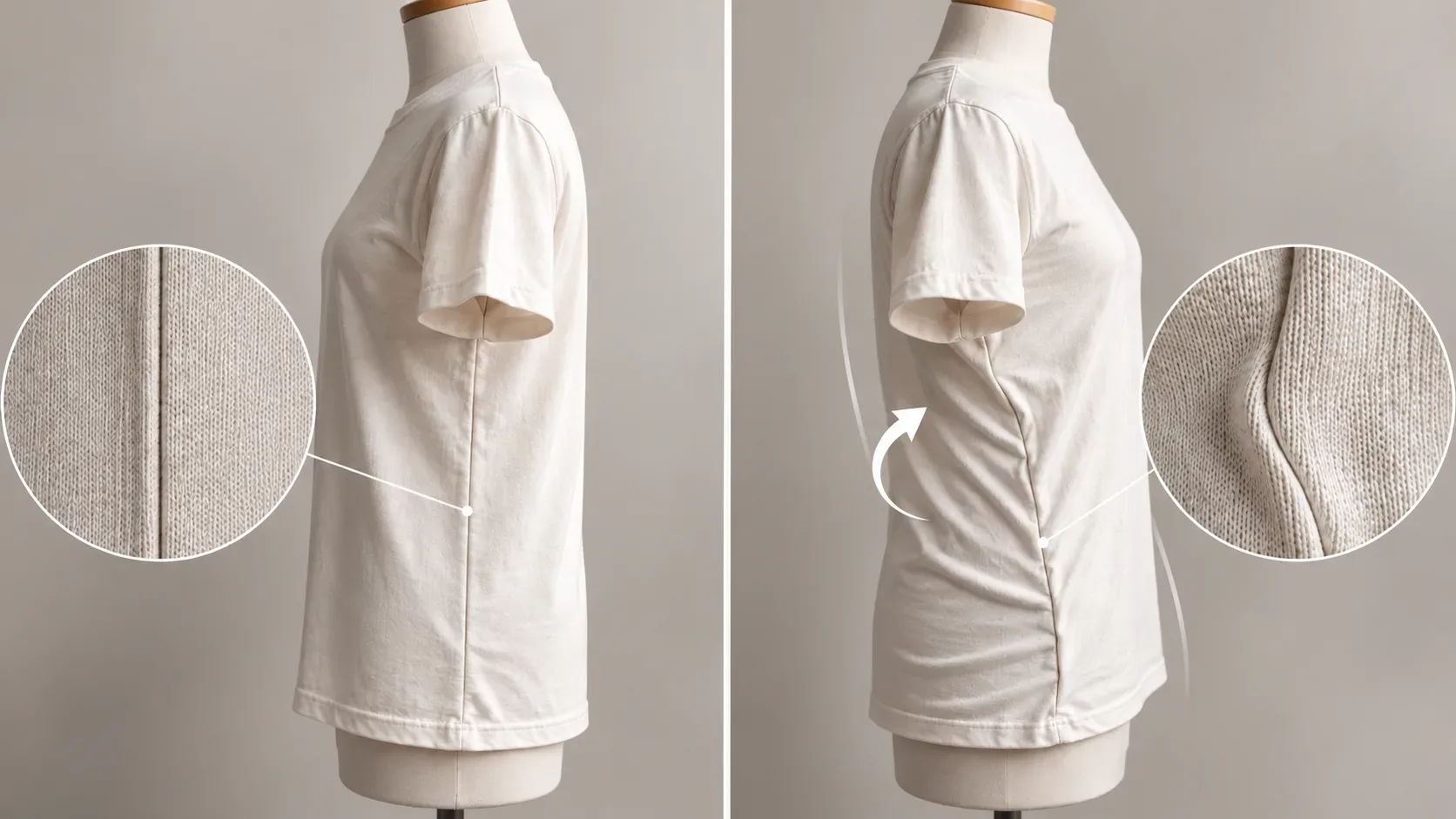
Learn how knit spirality works, how to distinguish fabric torque from cutting or sewing faults, and what to check before and after laundering.
Read article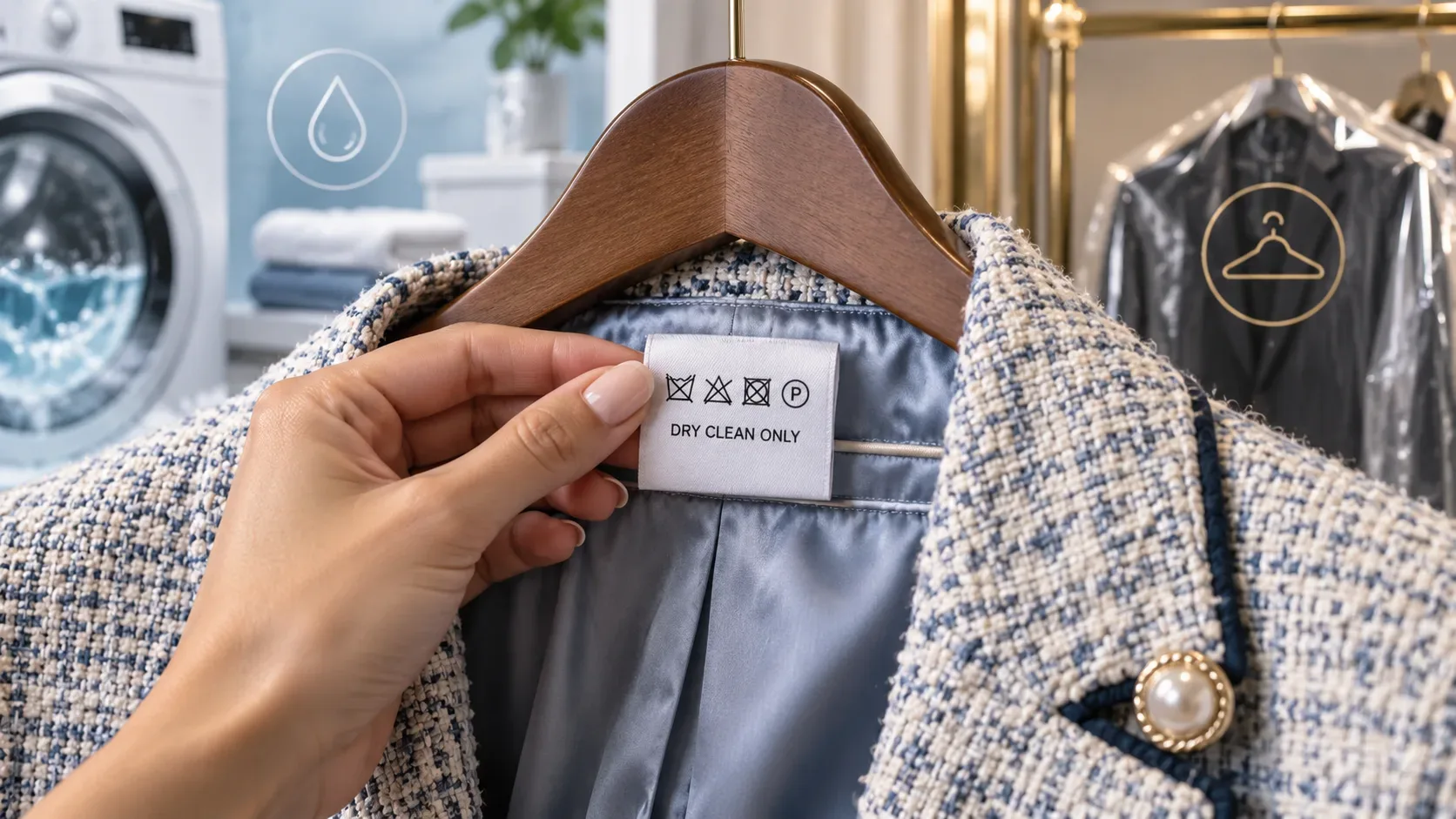
Learn when “Dry Clean Only” truly rules out washing, why the whole garment determines care, and how to interpret wording, symbols, and restrictions.
Read article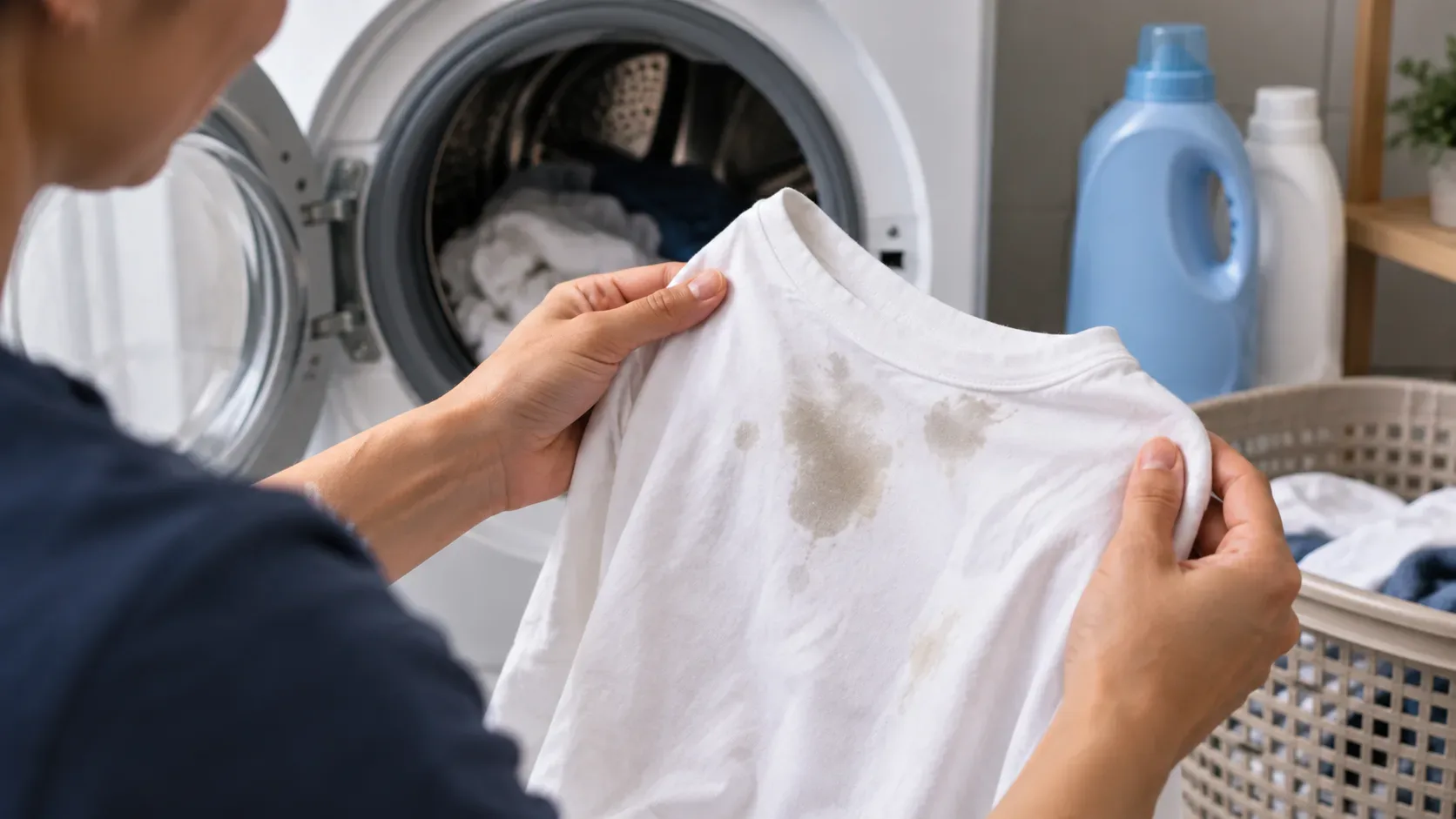
A diagnostic method for oily stains that appear after washing, isolating fabric softener, washer residue and signs that justify service.
Read articleBrowse the blog main topics.
Diagnosis and removal of stains according to substance, fabric, color and contact time.
Labels and Symbols5 articlesPractical translation of washing, bleaching, drying, ironing and professional cleaning instructions.
Washing Errors7 articlesCauses, prevention and possible fixes for shrinkage, fading, residue and deformation.
Fabrics and Materials4 articlesSpecific care for natural and synthetic fibers, mixtures, knits and finishes.
Care & Repair2 articlesDrying, storage, wear prevention, minor repairs and knowing when professional service is needed.
Recent posts and new content.
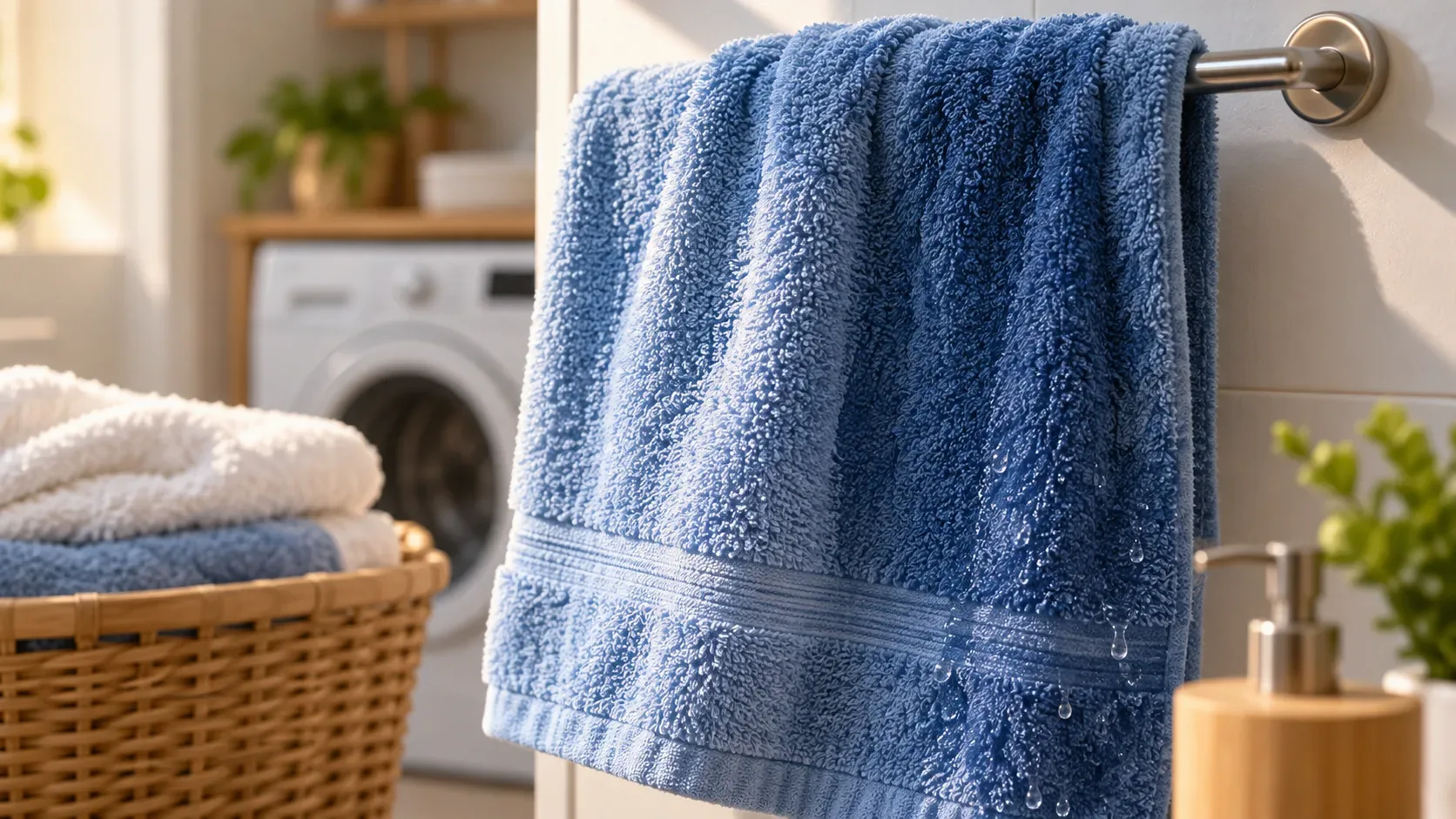
Odor that returns when a towel gets wet can point to slow drying, residue, improper loading, or the washer itself. Learn how to separate the causes and fix them without unsafe chem...
Read article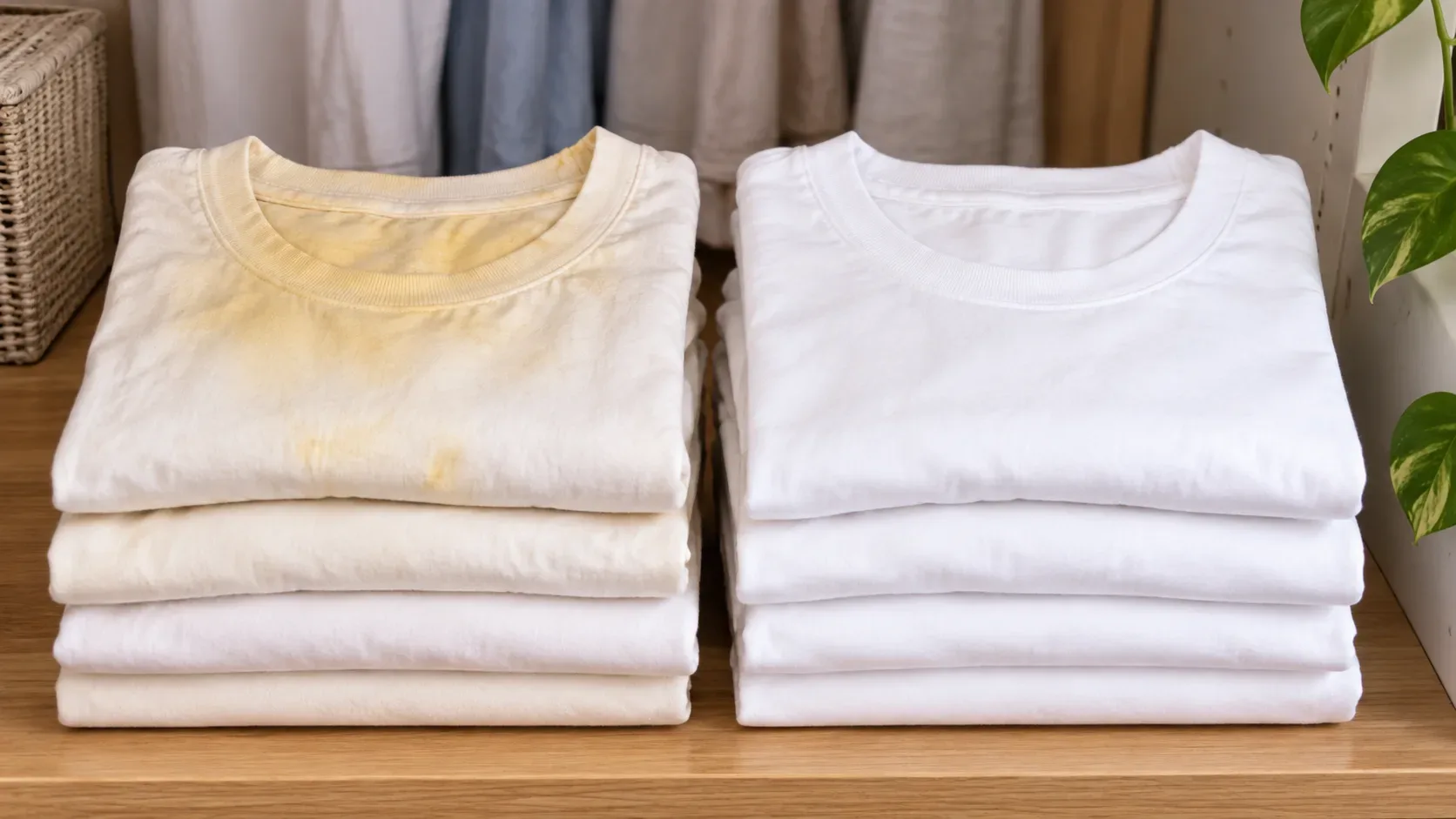
A practical diagnostic guide to separate oxidation, body soil, laundry residue, and chlorine-bleach damage before whitening white clothes.
Read article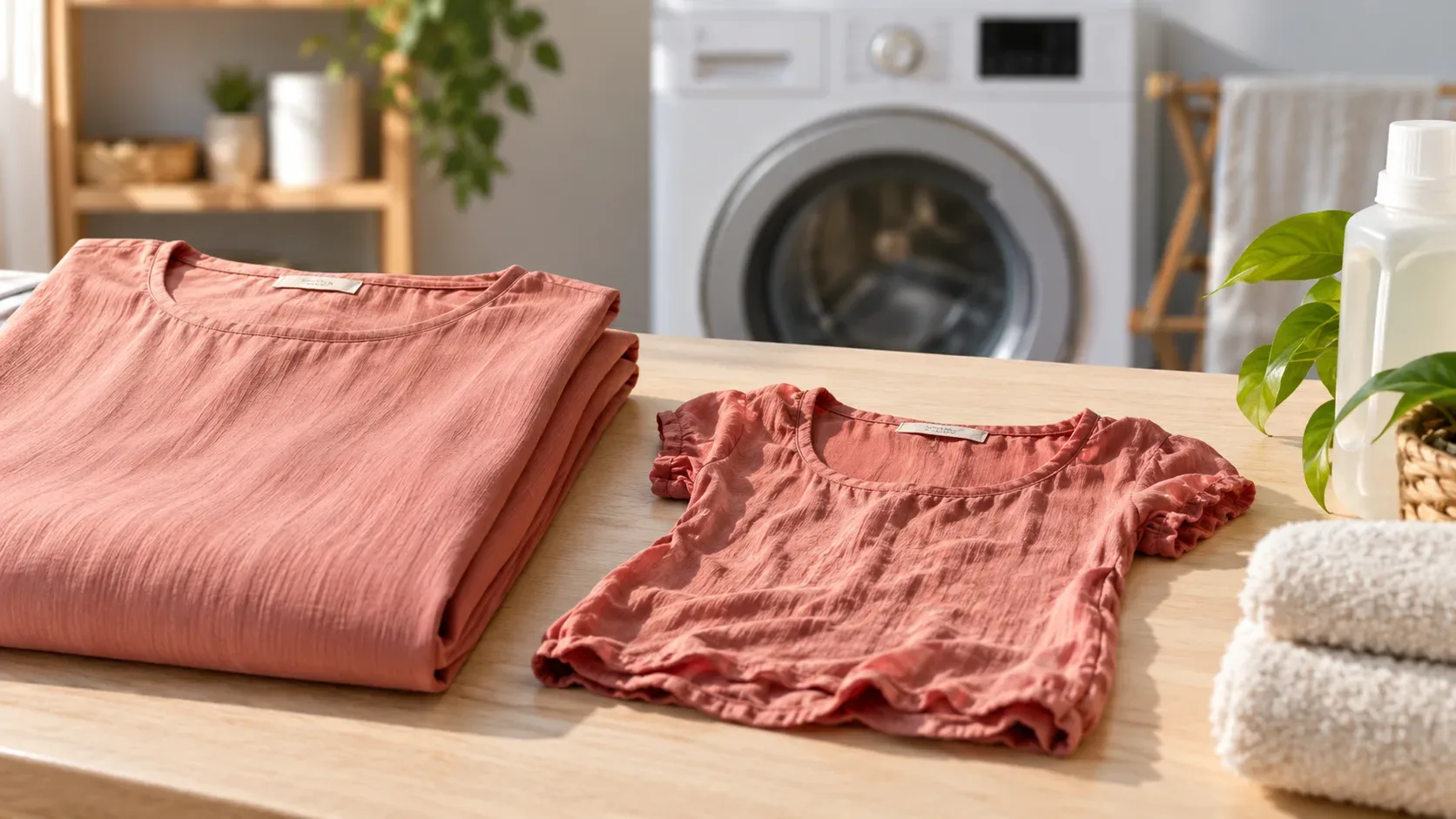
Learn why viscose can change size when wet, how to carefully reshape a washable garment, and how to reduce the risk next time.
Read article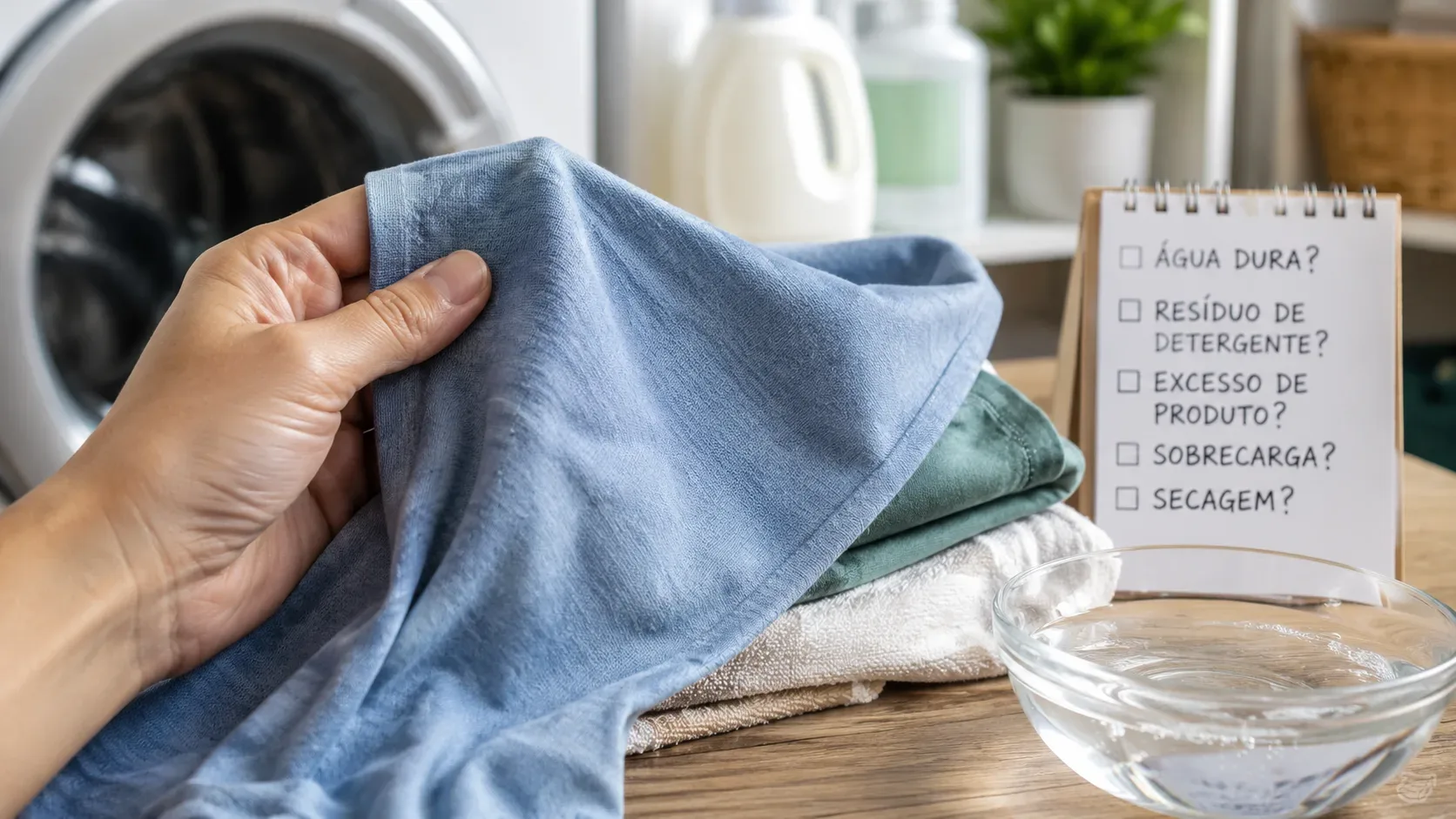
A clue-based diagnosis to tell whether stiff laundry comes from hard water, retained detergent, overloading or drying before reaching for fabric softener.
Read article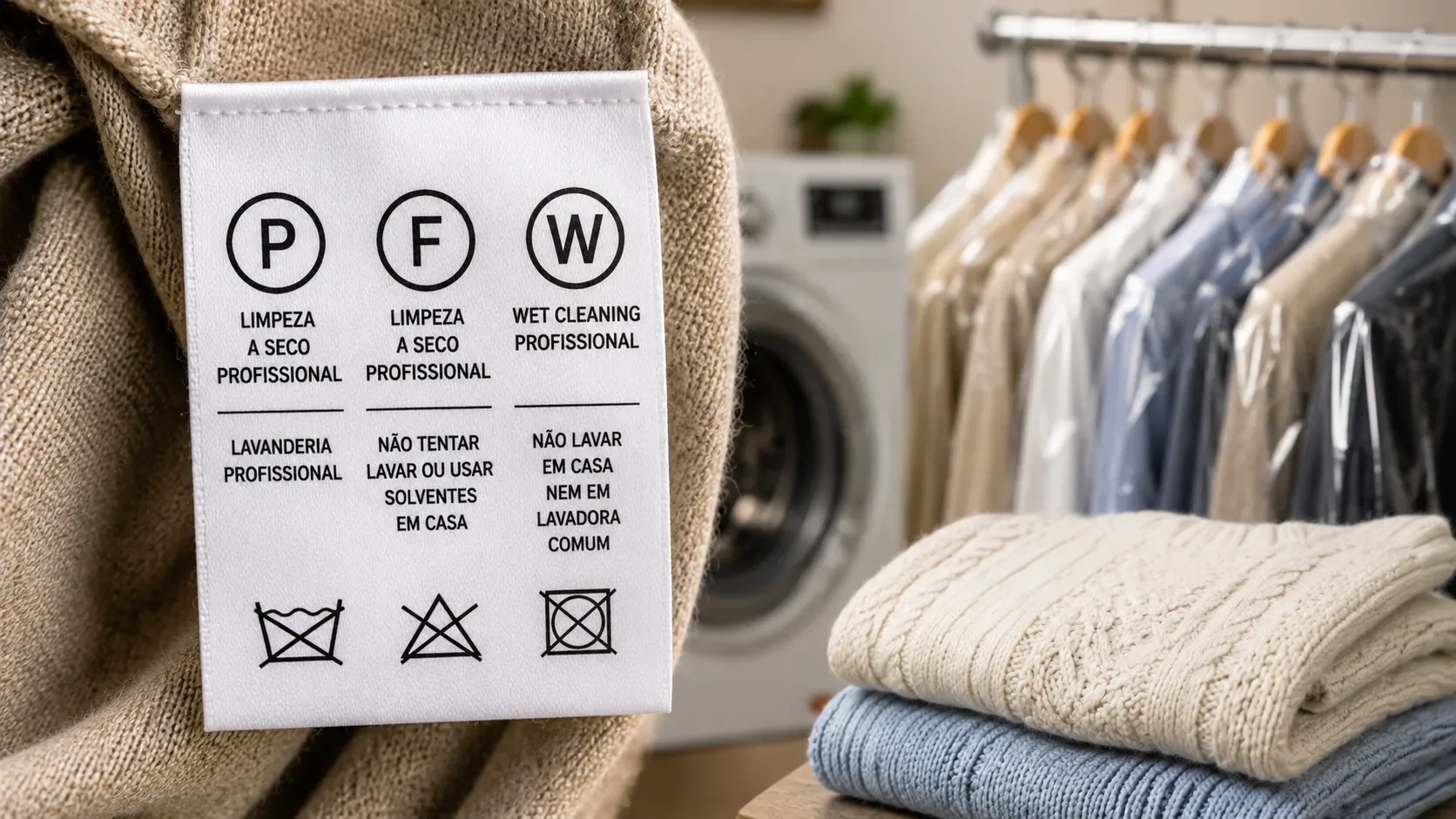
P and F guide professional dry-cleaning; W means professional wet cleaning. Learn what the bars and prohibitions mean and when to use a cleaner.
Read article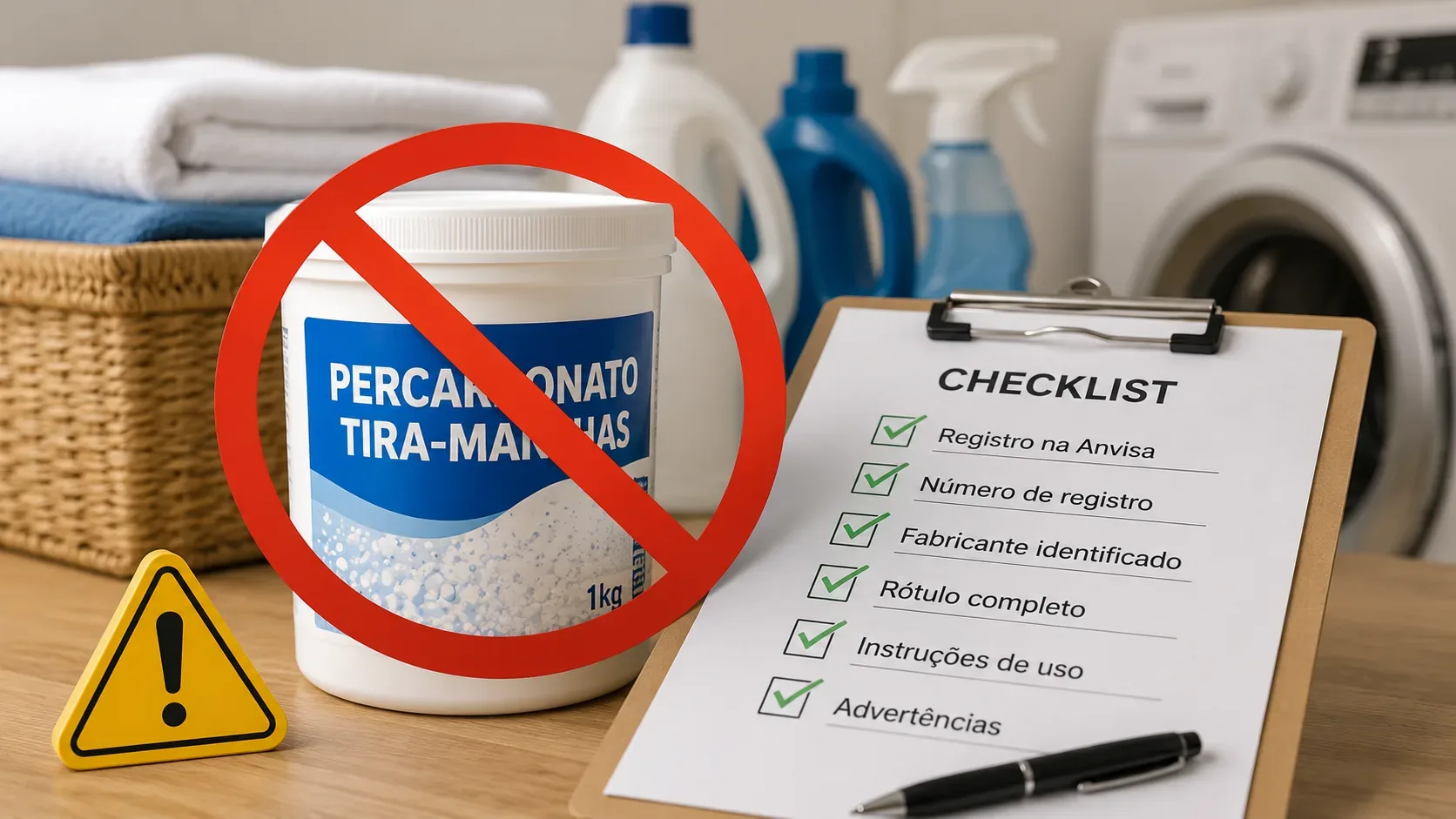
See which 12 cleaning products Anvisa banned in August 2026, how to check the name, brand and registration status, and what to do with a product you already bought.
Read article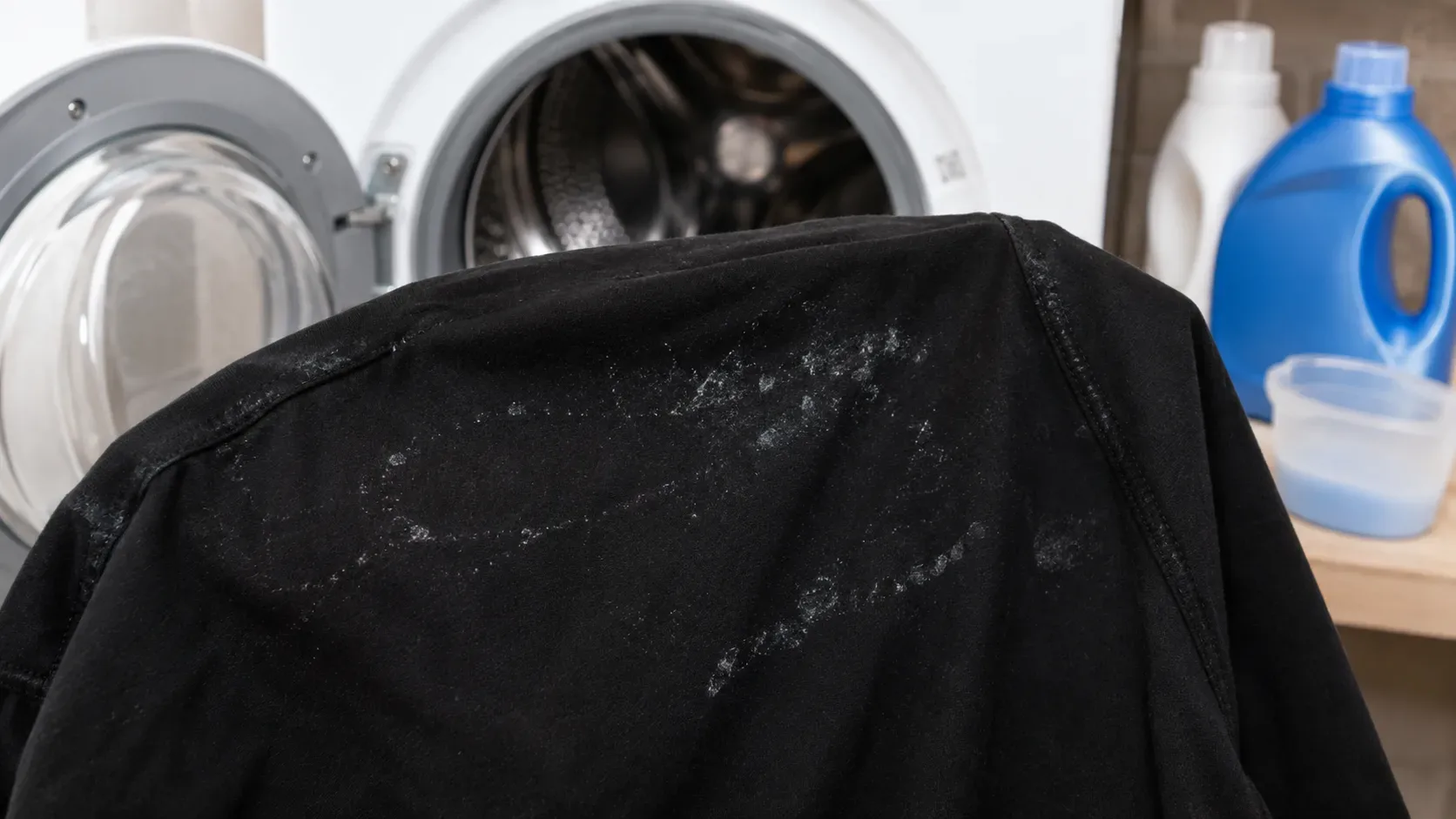
Learn how to tell detergent residue, fabric softener, lint, washer buildup, deodorant and true discoloration apart — and what the safest first step is.
Read article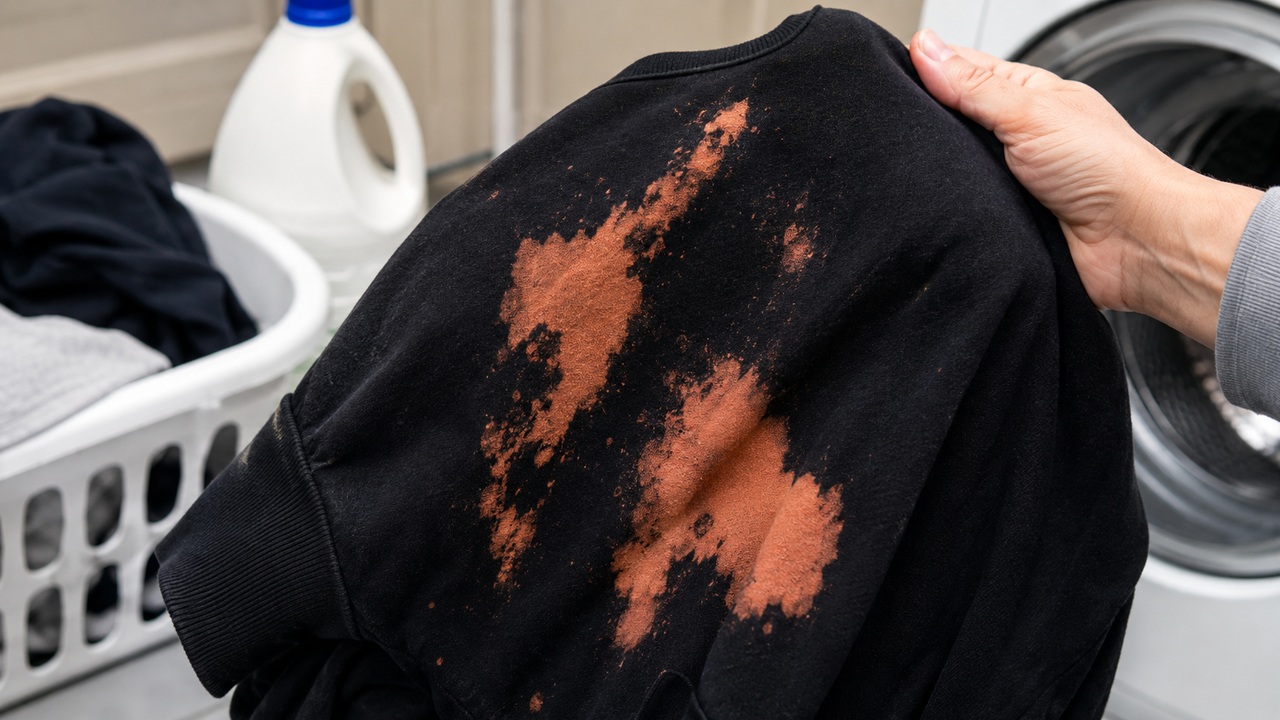
If bleach left orange or pale areas, the problem is usually color loss, not a removable stain. See what to do without dangerous chemical mixtures.
Read article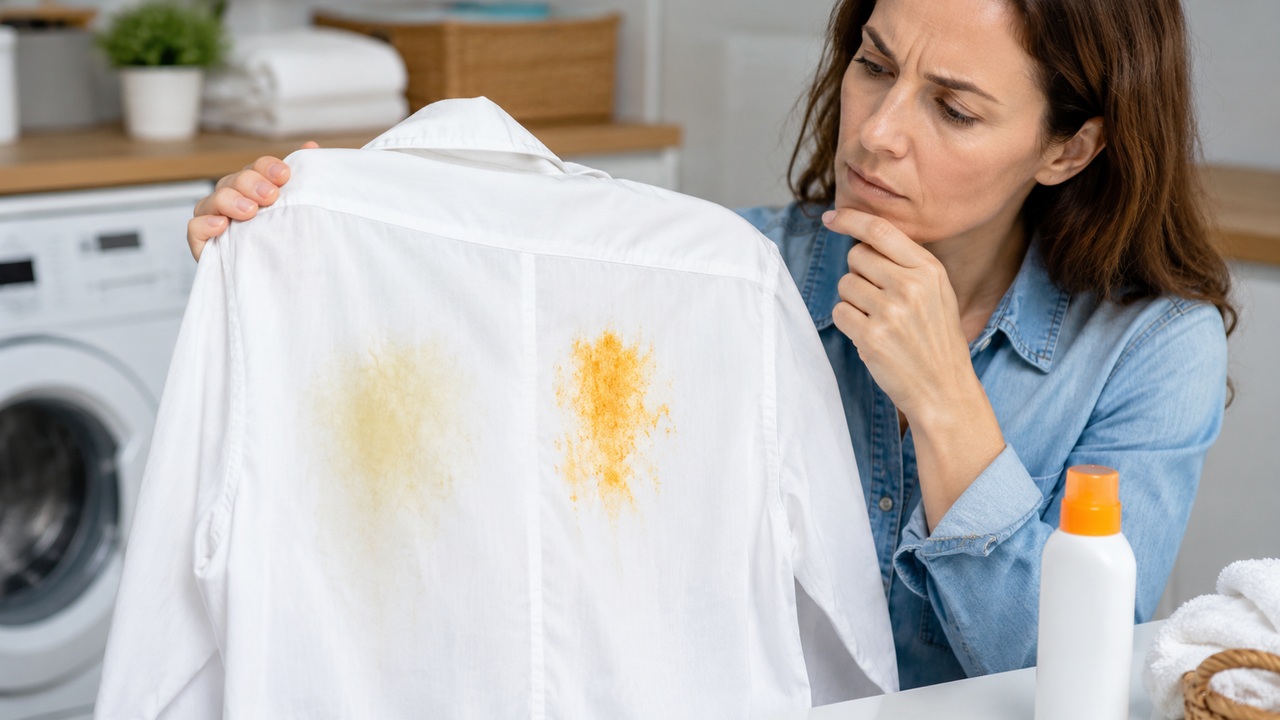
The stain may be only oily sunscreen residue or a reaction between filters such as avobenzone and iron. Learn how to tell the signs apart before choosing a treatment.
Read articleContent with the most views.
Diagnosis and removal of stains according to substance, fabric, color and contact time.
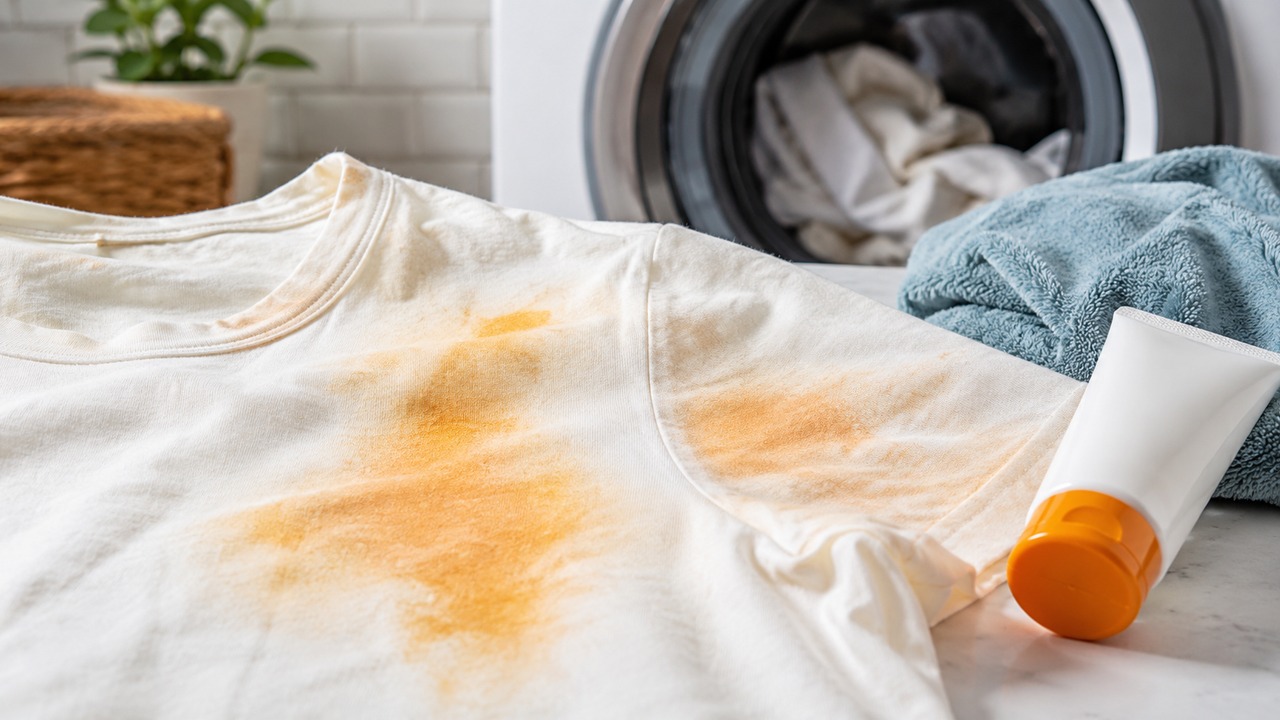
Orange stains after washing may involve sunscreen, iron in the water, and wash-cycle chemistry. Learn how to separate the clues and choose a treatment that fits the care label.
Read article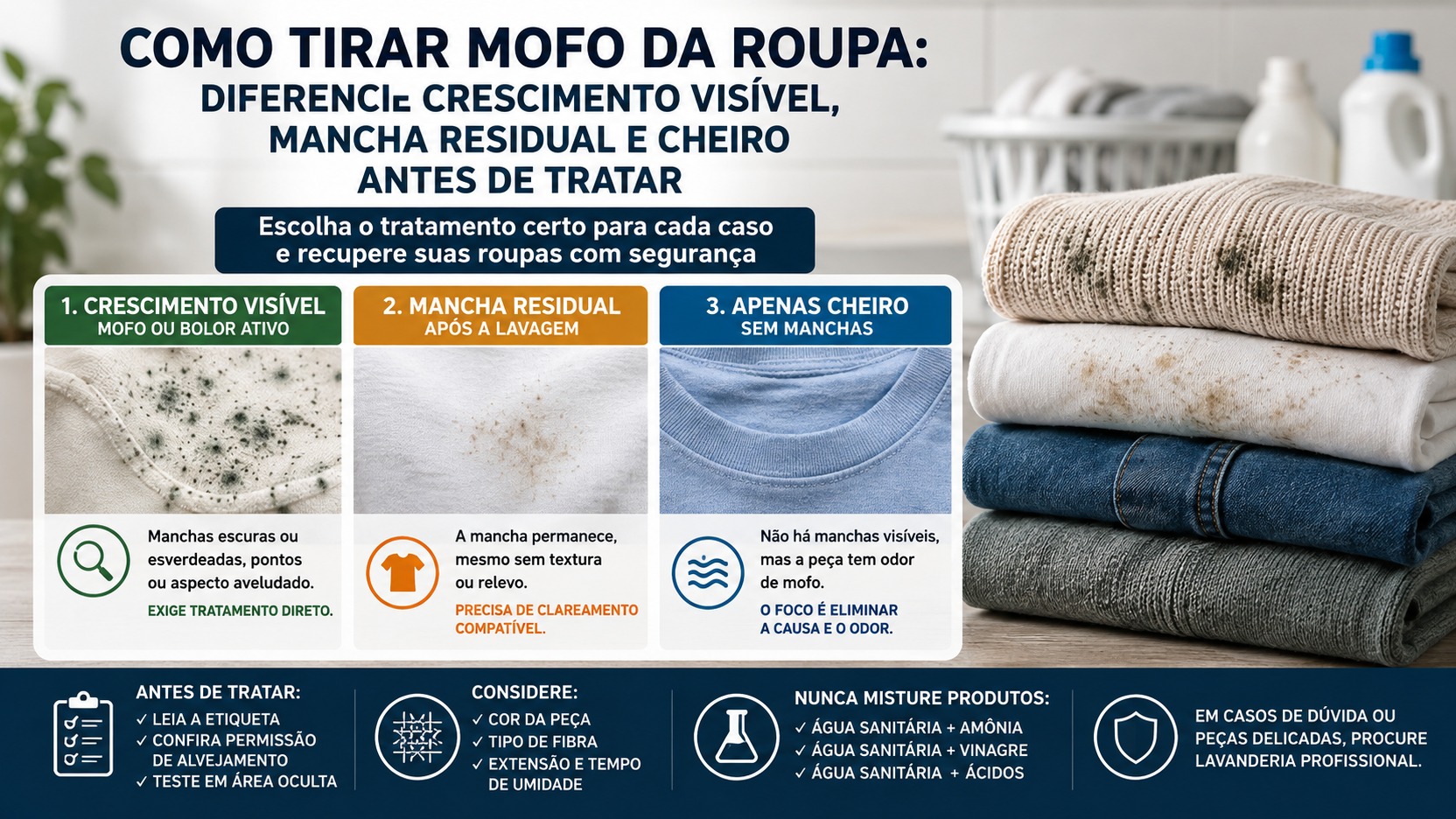
Before applying any product, identify whether there is visible growth, just a stain or just an odor and cross-reference this with the label, color and fiber of the piece.
Read article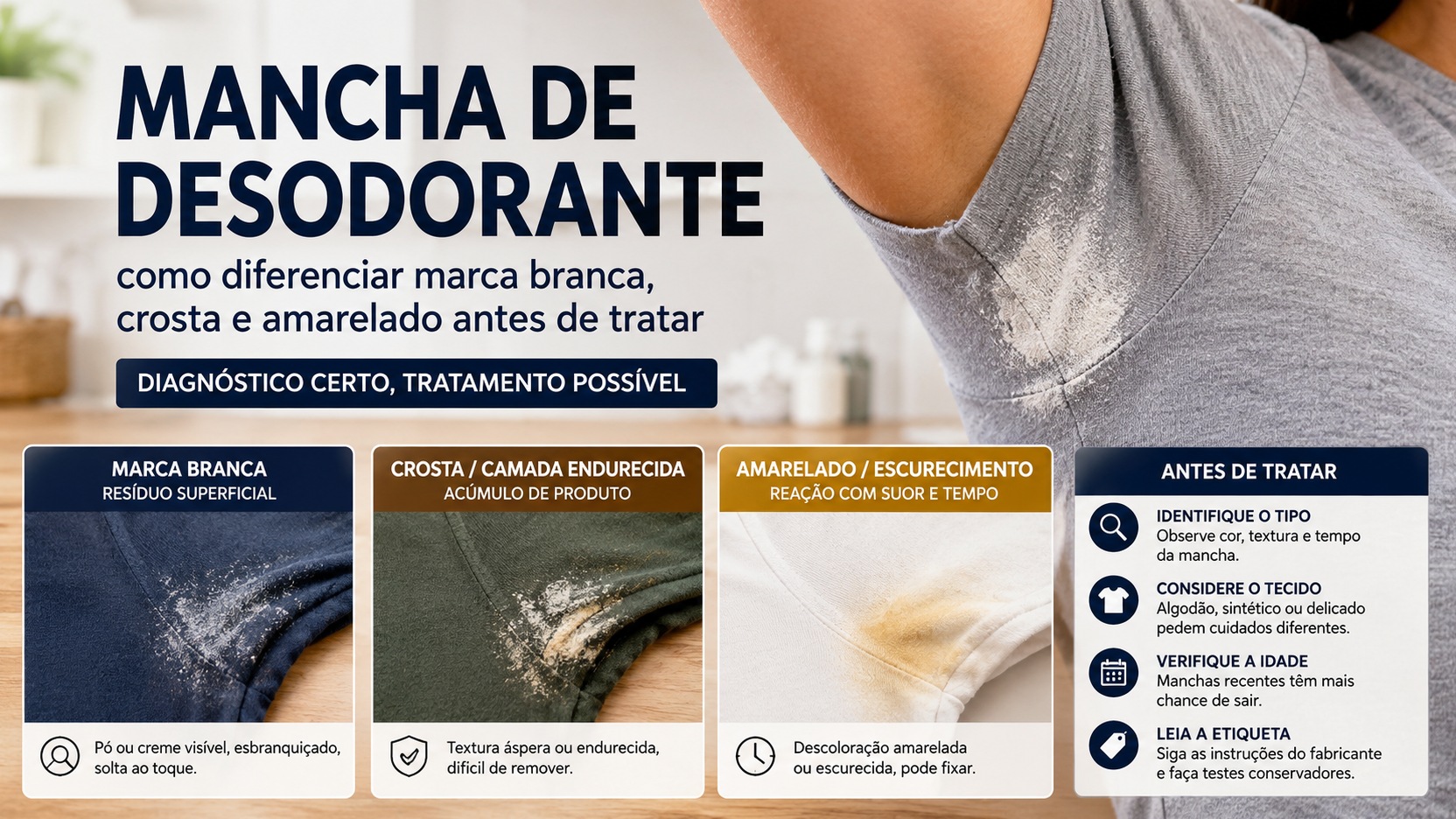
Learn to recognize white residue, hardened crust and yellowing in the armpit area before choosing a treatment compatible with the item.
Read articleA diagnostic method for oily stains that appear after washing, isolating fabric softener, washer residue and signs that justify service.
Read articlePractical translation of washing, bleaching, drying, ironing and professional cleaning instructions.
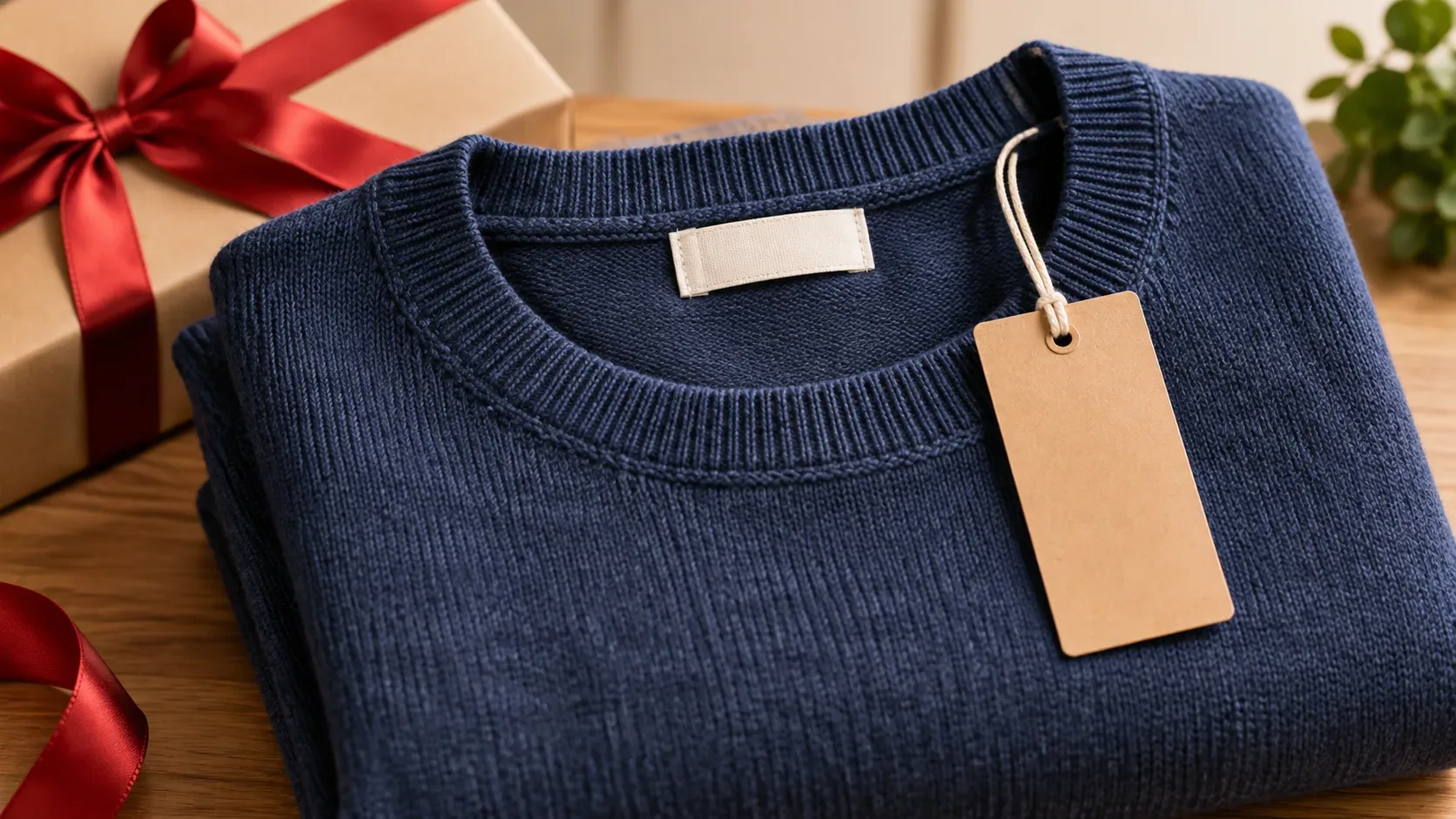
A hanging TAG may accompany the clothing, but does not replace the mandatory permanent marking. See what data Inmetro requires on textile parts.
Read articleLearn when “Dry Clean Only” truly rules out washing, why the whole garment determines care, and how to interpret wording, symbols, and restrictions.
Read articleP and F guide professional dry-cleaning; W means professional wet cleaning. Learn what the bars and prohibitions mean and when to use a cleaner.
Read article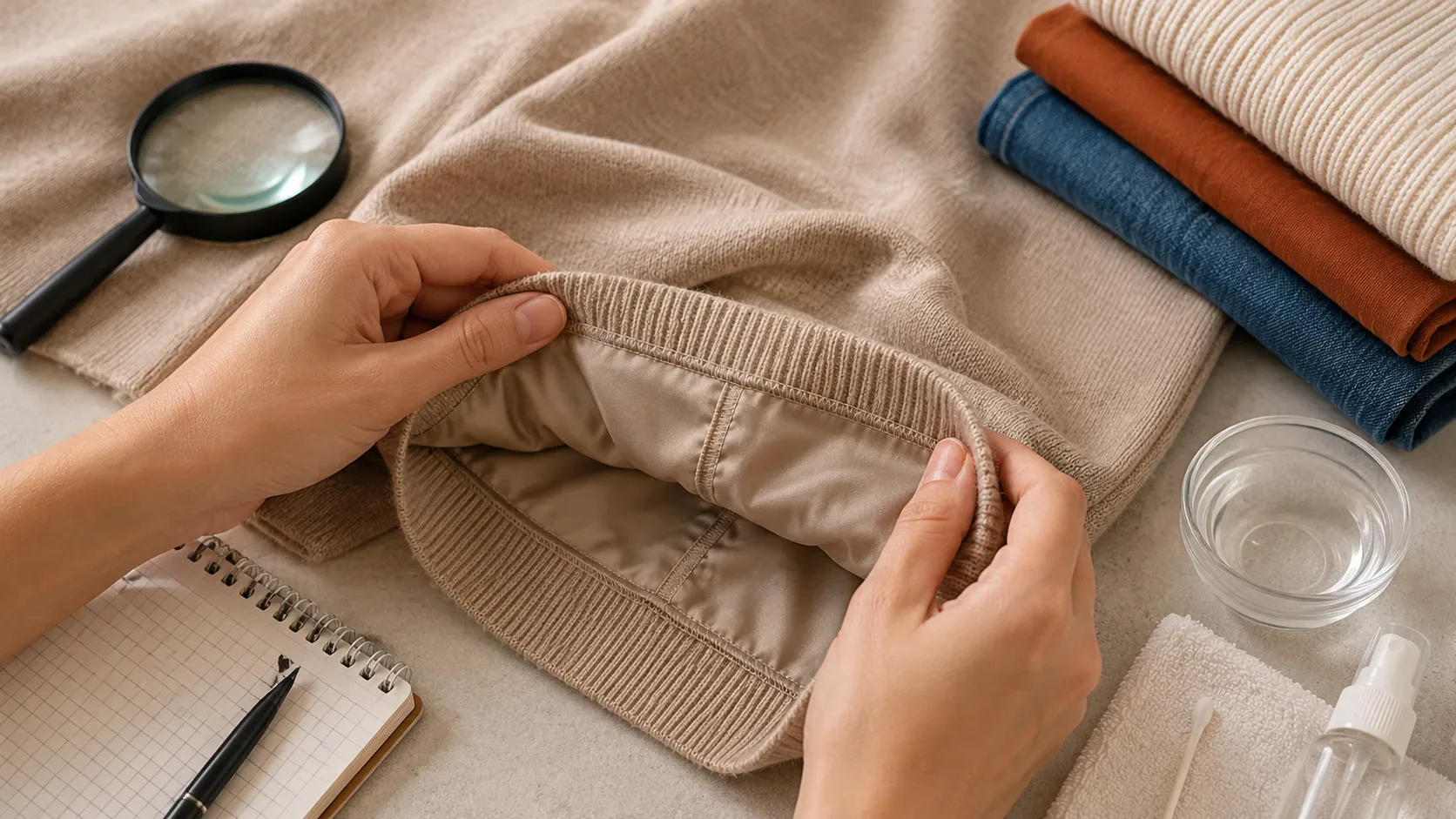
Without a label, the fabric should not be guessed. Use construction, stretch, lining and a discreet test to choose the lowest risk care.
Read articleCauses, prevention and possible fixes for shrinkage, fading, residue and deformation.
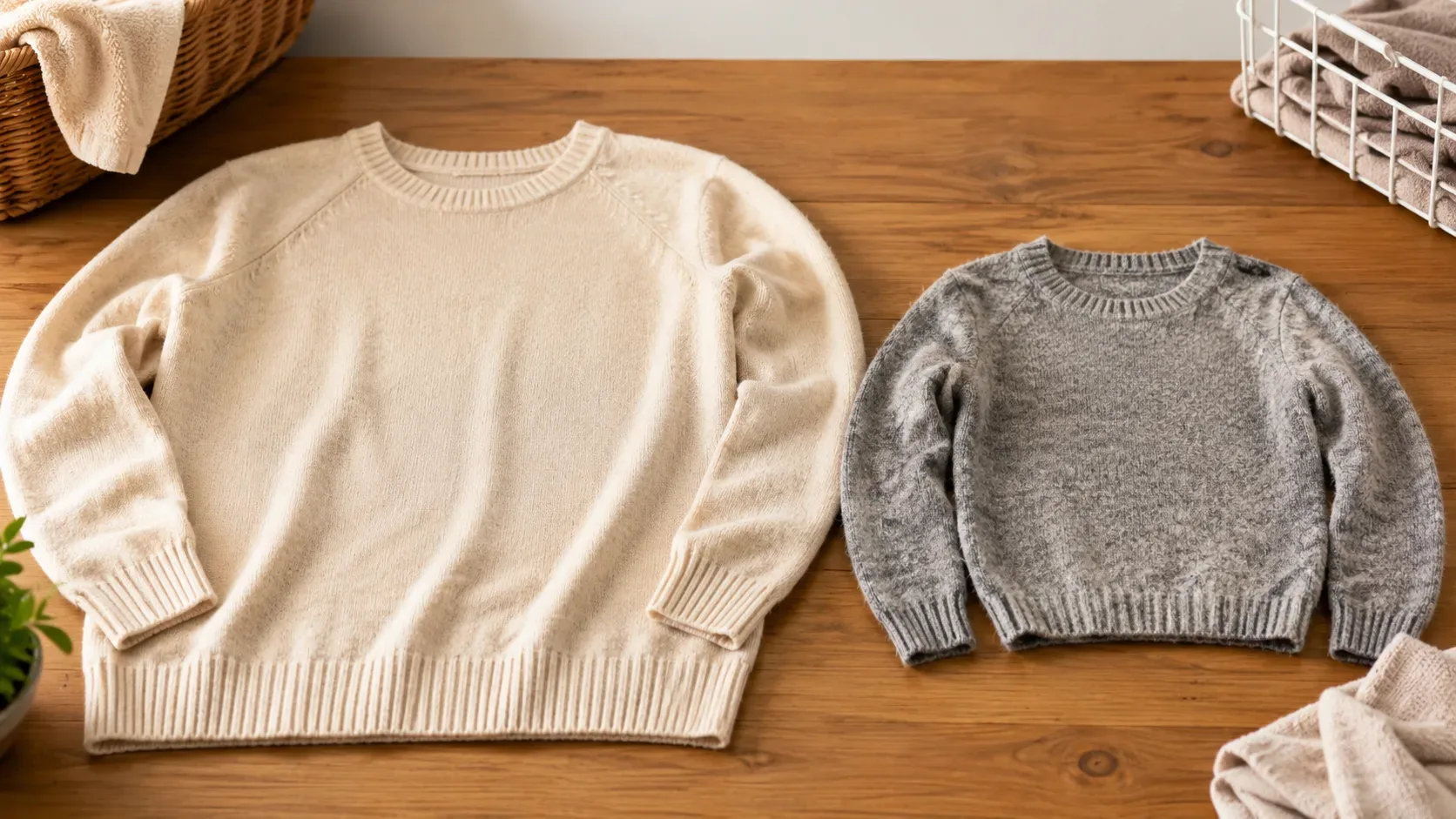
When a garment shrinks, the timing of the change, the composition and appearance of the fabric help separate heat, agitation and structural shrinkage — and know if it's worth tryin...
Read article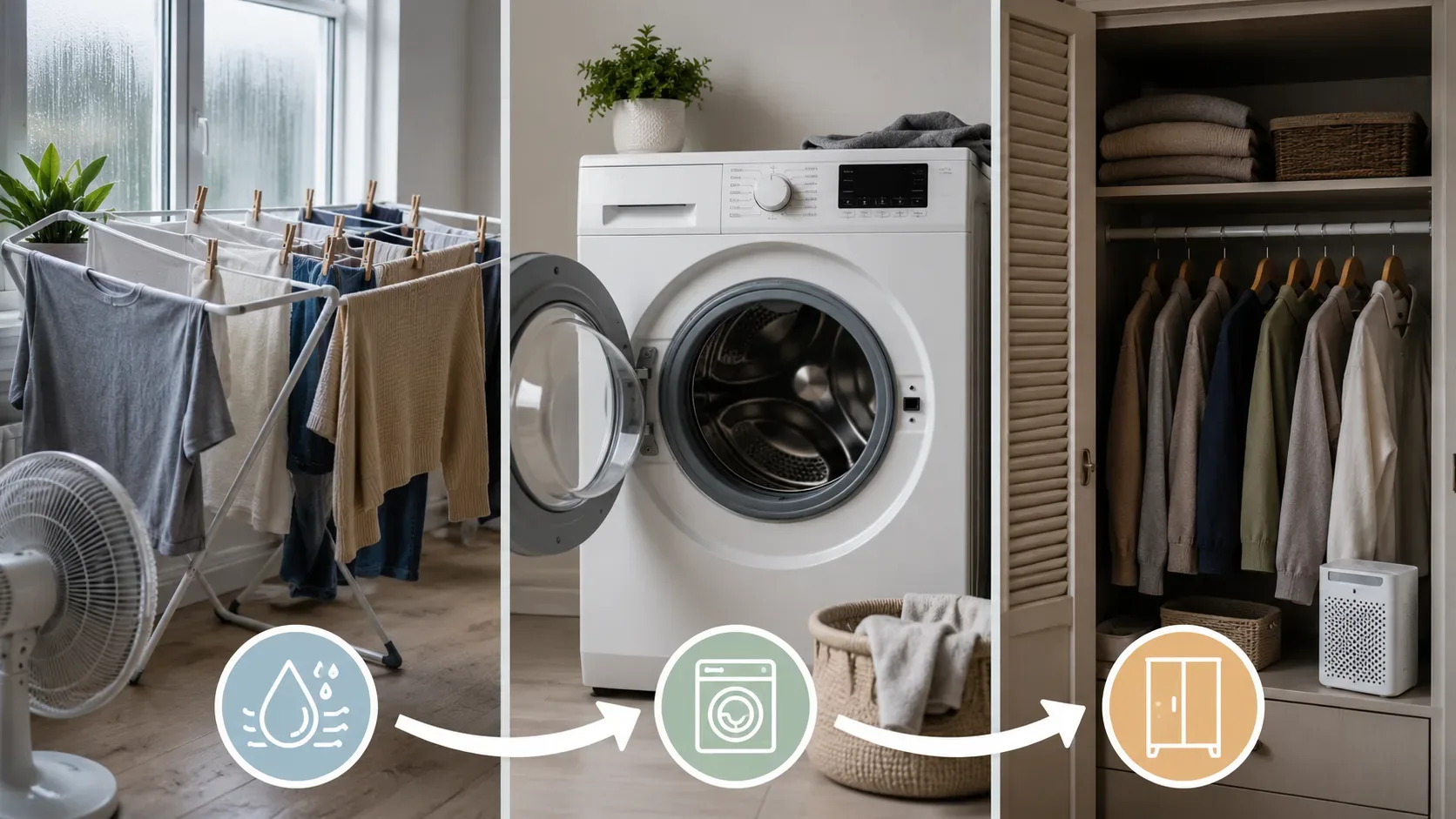
Perfuming does not resolve humidity. See how to find out if the odor comes from slow drying, the washer or the closet and correct it without mixing sanitizers.
Read article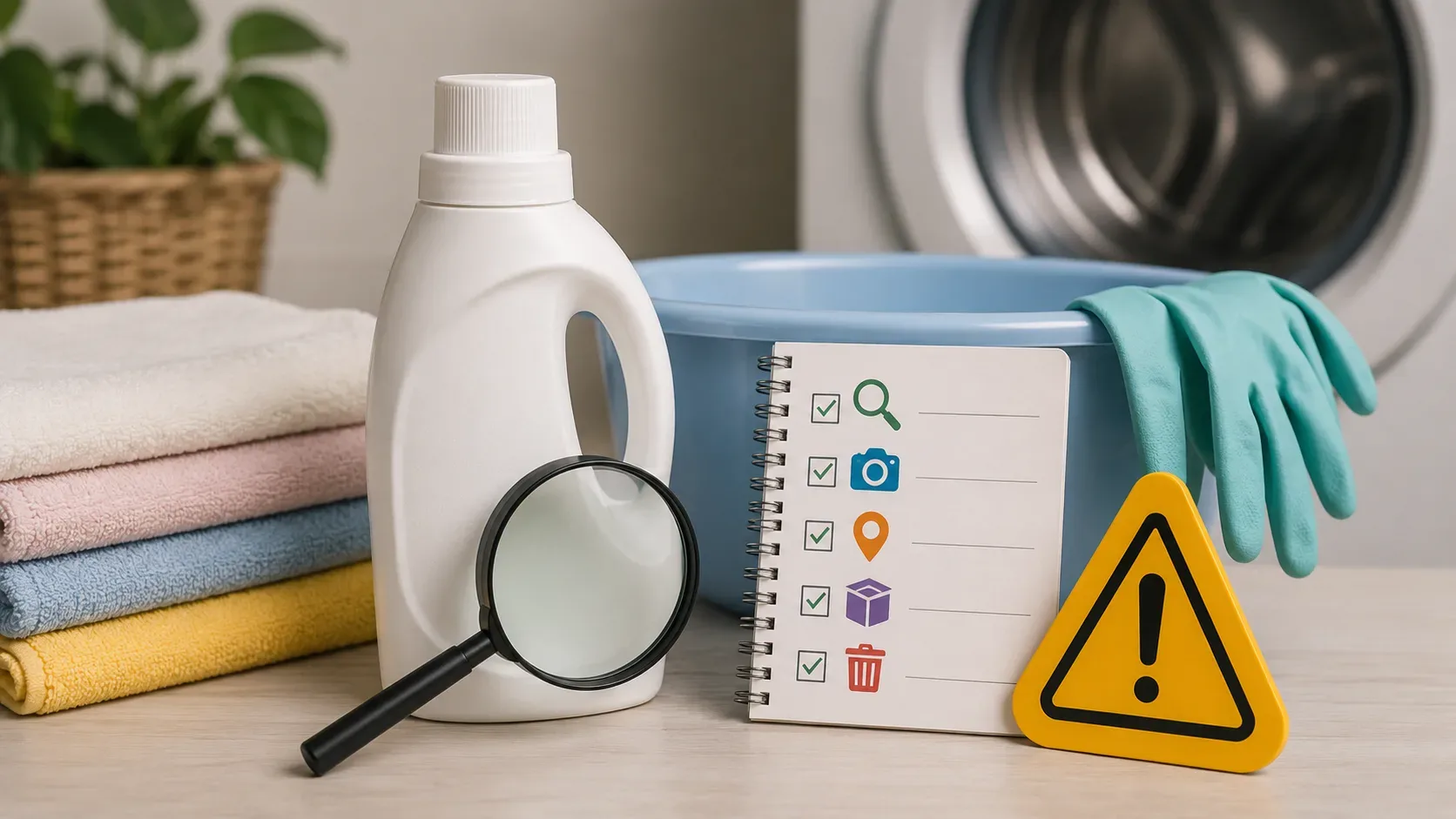
See how to check the type, date and batch of liquid Ypê laundry detergent, separate the bottle safely and request an exchange or refund without mixing chemicals.
Read articleOdor that returns when a towel gets wet can point to slow drying, residue, improper loading, or the washer itself. Learn how to separate the causes and fix them without unsafe chem...
Read articleSpecific care for natural and synthetic fibers, mixtures, knits and finishes.
Learn how to distinguish the three fibers by content labels, interpret care symbols and choose a suitable wash for each garment.
Read articleLearn how knit spirality works, how to distinguish fabric torque from cutting or sewing faults, and what to check before and after laundering.
Read articleLearn why viscose can change size when wet, how to carefully reshape a washable garment, and how to reduce the risk next time.
Read article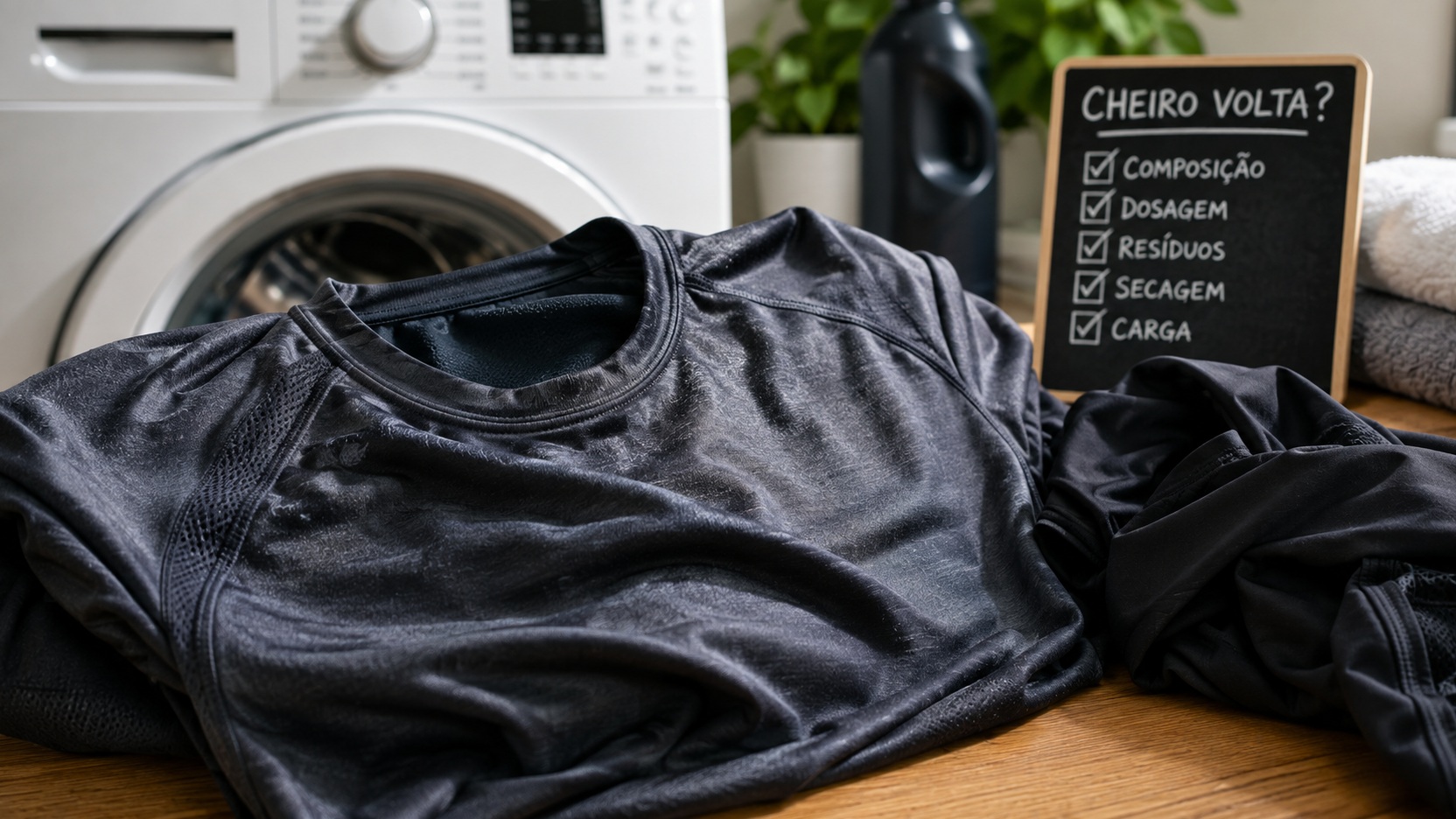
If fitness clothing comes out clean, but smells again when it heats up on the body, polyester and poorly adjusted washing steps may explain why the odor reappears.
Read articleClothes That Last teaches everyday people to make safer decisions when washing, drying, ironing, storing, and attempting to restore a garment. Each recommendation considers fabric composition, care-label symbols, the type of problem, and the risks of the procedure. The blog separates verified information, editorial recommendations, and situations that require professional service. We do not publish universal recipes, dangerous mixtures, or guarantees of recovery.