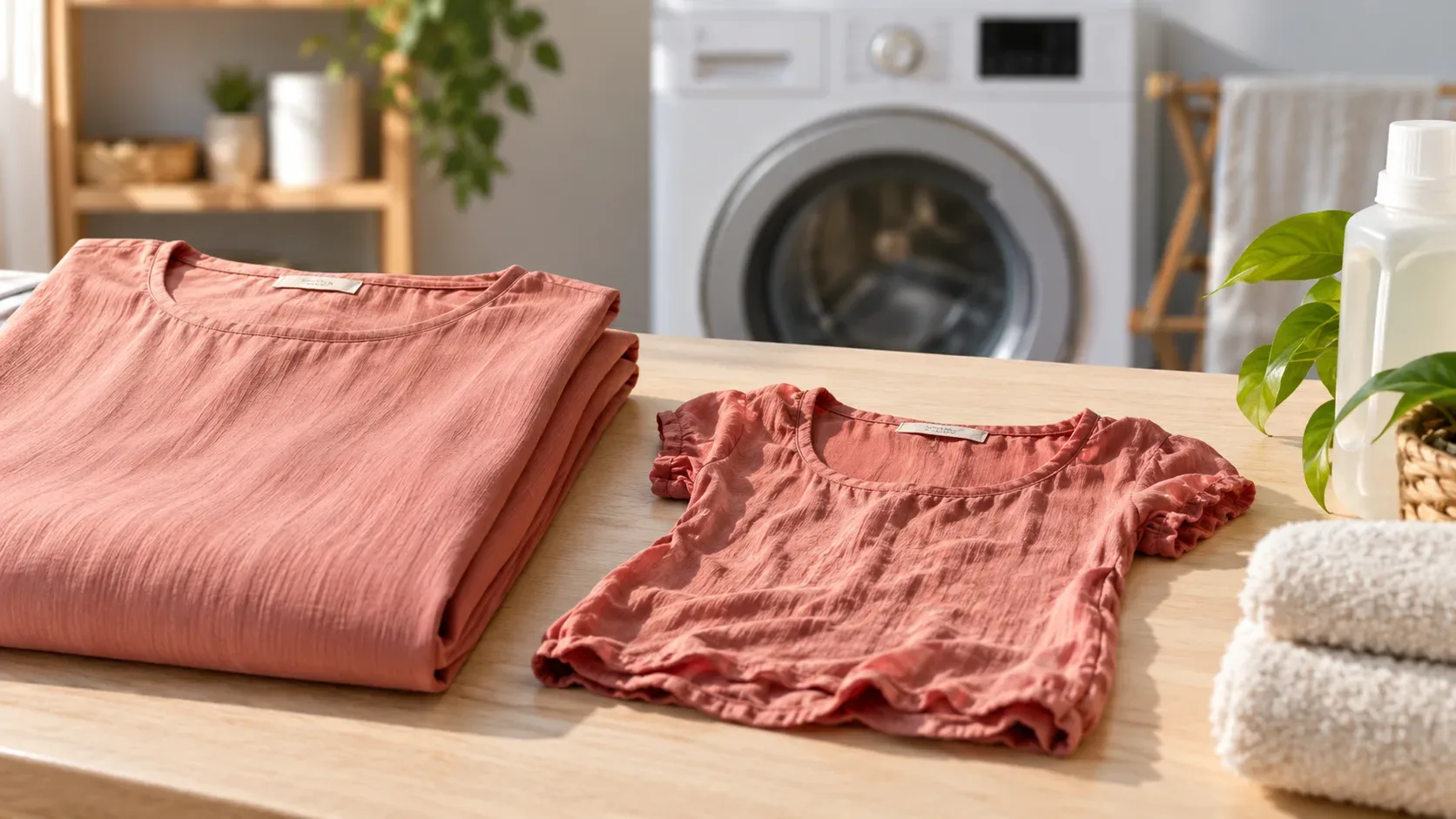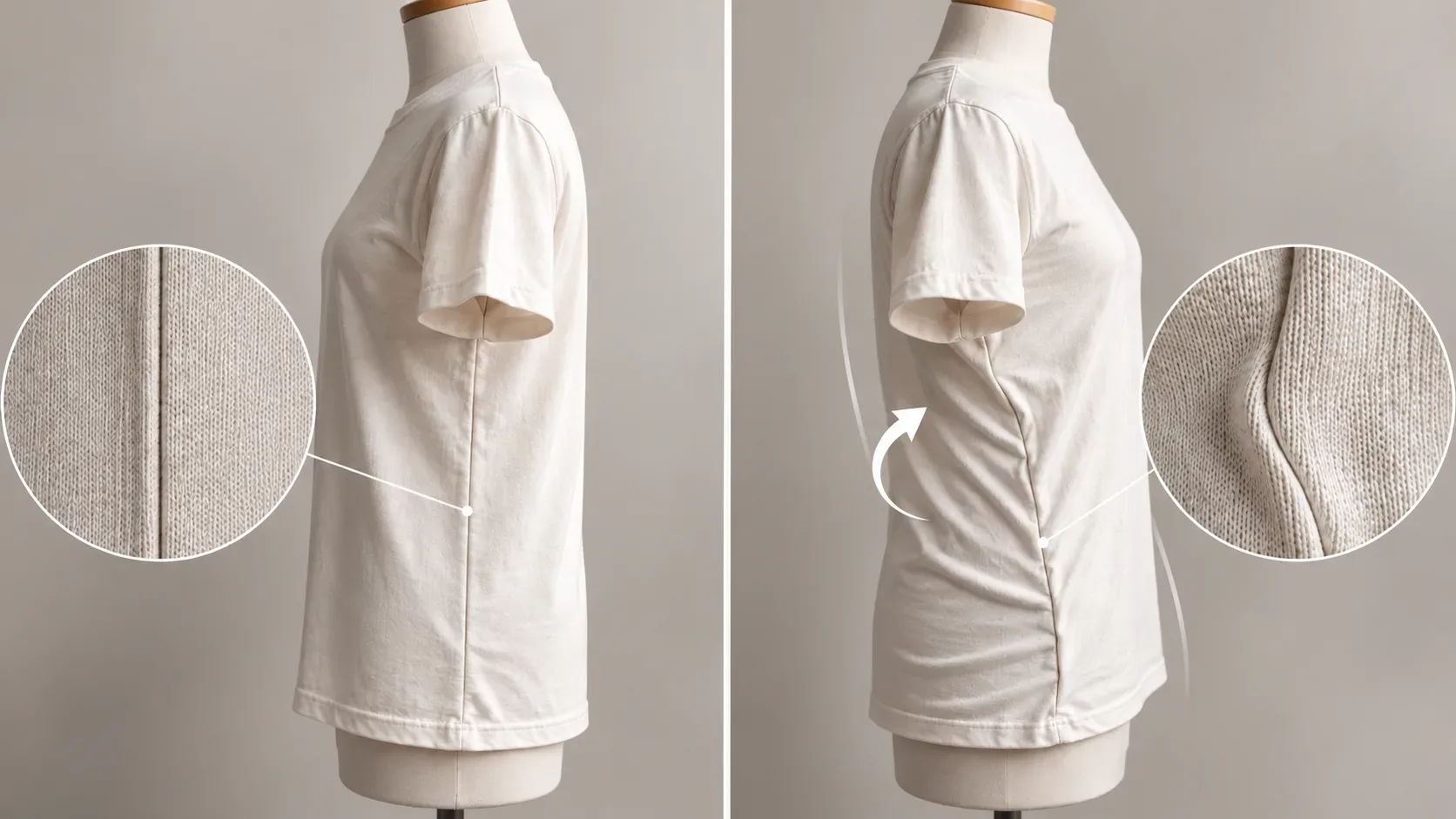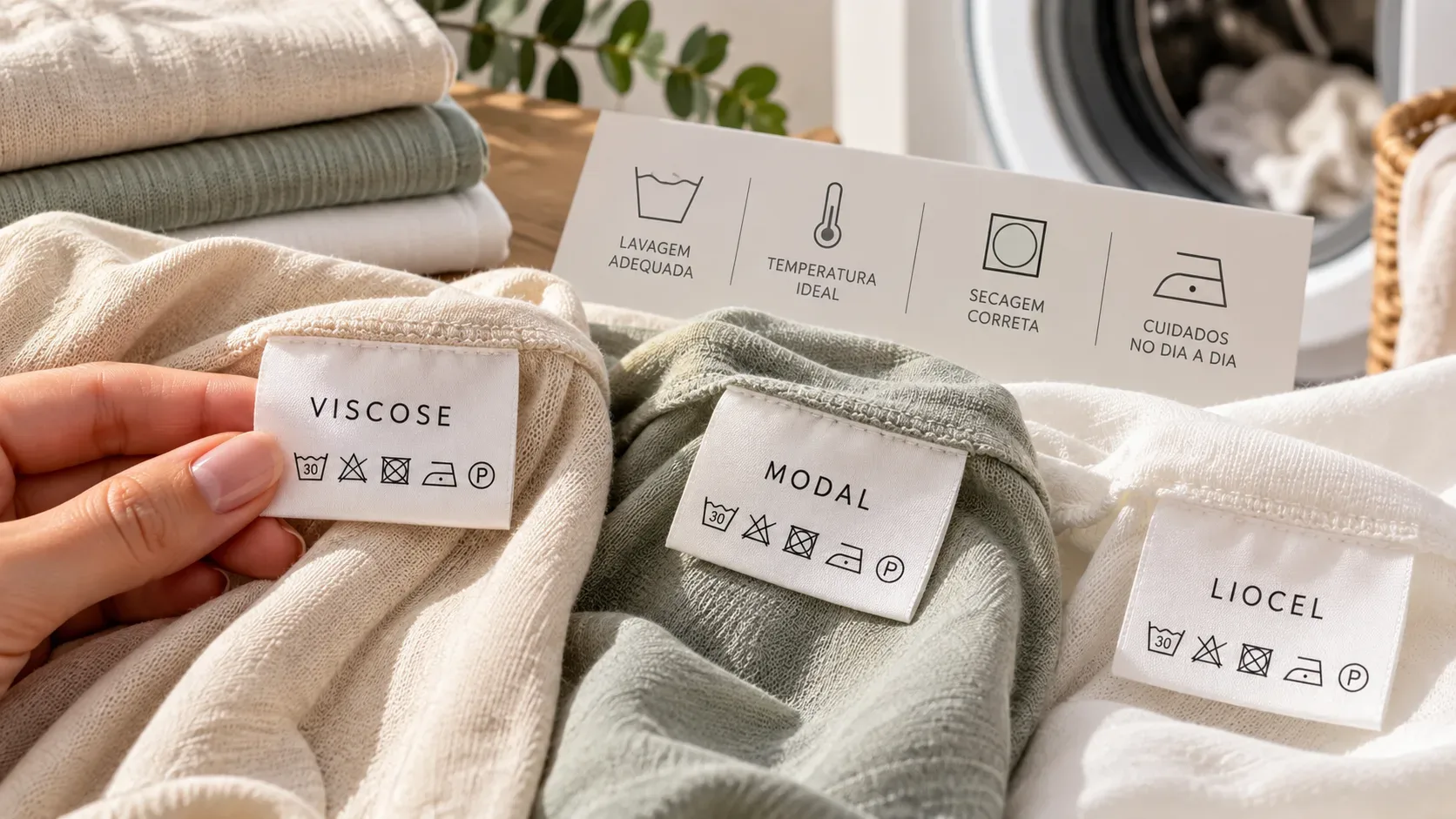
Viscose, modal and lyocell are regenerated cellulosic fibers, but the names are not interchangeable. To identify a garment, first check the fiber-content percentages on its label; for washing, read the separate care symbols. Fiber type can suggest sensitivities, but it does not by itself determine washing temperature, spin speed or tumble drying for the finished garment.
How the three fibers differ
Conventional viscose is made by regenerating cellulose through a particular process. Modal belongs to the same family but is a distinct fiber defined by specific characteristics and processing, associated with improved strength when wet. Lyocell uses another process to dissolve and regenerate cellulose. Fabric construction, dyeing and finishing also affect performance during wear and laundering.
These names identify fibers; they do not guarantee that two garments have the same thickness, strength, feel or care requirements. A modal knit containing elastane, for instance, is a blended garment, not pure modal.
| On the content label | What to identify | Practical implication |
|---|---|---|
| Viscose | Fiber name and percentage; it may be blended. | Take extra care with friction and distortion when wet; follow the label. |
| Modal | Its own fiber name and percentage, distinct from conventional viscose. | Improved wet fiber strength does not override fabric finishing or other materials. |
| Lyocell | Fiber name and percentage; a trademark is not a substitute for checking composition. | Do not assume intensive washing or tumble drying is safe just because of the fiber name. |
Read fiber content and care instructions separately
Find the fiber-content information: “100% viscose” is not the same as “70% viscose, 30% polyester”. Check lining, trims and other components where specified. Then find the care instructions, whether written or shown as symbols; these apply to the finished article, including stitching, color, prints and accessories.
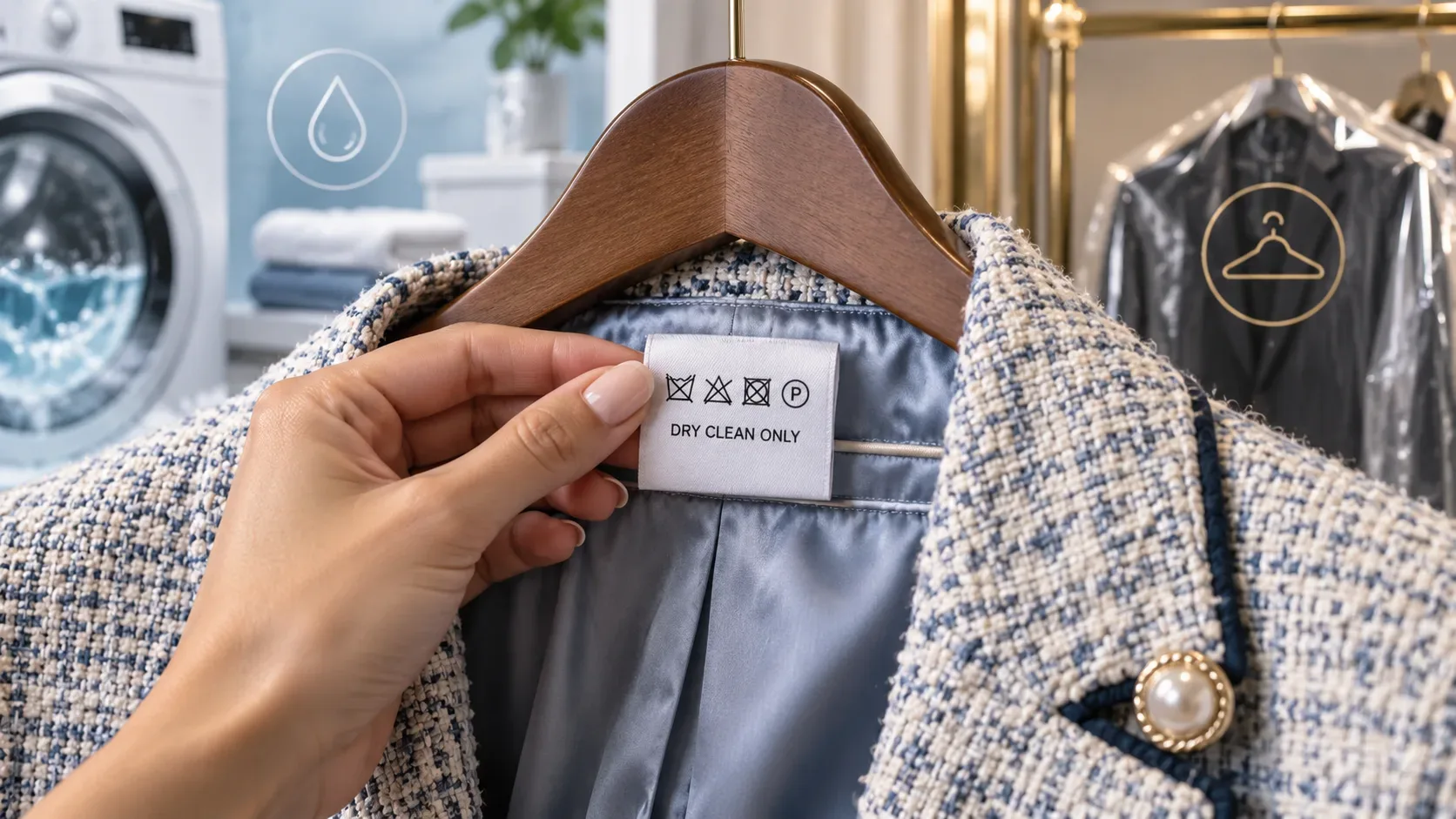
In the customary symbol sequence, the wash tub means washing, the triangle bleaching, the square drying, the iron ironing and the circle professional care. A number in the tub is a maximum temperature, not a required setting. One bar beneath it calls for milder mechanical action; two bars indicate a very mild process. A crossed-out symbol prohibits that treatment. A circle inside a square refers to tumble drying, while a stand-alone circle denotes professional cleaning. The letter P inside a circle is not blanket permission to wash at home.
Choose a washing method for the garment
Start with the permitted method. If the wash tub is crossed out, do not wash in water; check the professional-care instruction. If the label specifies hand washing, do not automatically substitute a machine cycle. If machine washing is permitted, respect both the maximum temperature and the gentleness indicated by the bars. Cooler water does not cancel out excessive agitation.
For garments labeled as suitable for home washing, sorting by color, using a suitable detergent and minimizing friction are prudent measures, especially for viscose and lightweight fabrics. Avoid forceful wringing; remove excess water without stretching. Follow the drying symbol: do not tumble dry when the square containing a circle is crossed out. If flat drying is specified, support the garment to prevent distortion; otherwise follow the indicated method. Check bleaching and ironing instructions as well.
There is no universal rule that all three must be washed at 30°C or that lyocell can always be machine washed. GINETEX gives gentle 30°C and 40°C cycles as possible examples for viscose or modal articles, but the garment’s own label sets its limit.
When fiber composition is not enough
Blends with cotton, polyester, elastane or other fibers, as well as linings, interfacings and embellishments, may impose stricter requirements. A structured garment or one with a delicate finish may need professional cleaning even when the fiber alone tolerates washing in water. If the label is unreadable, do not treat fabric feel as proof of fiber type: ask the manufacturer or seller before applying heat or harsh treatments.
Do not confuse a fiber name with environmental certification. Textile Exchange distinguishes preferred viscose, modal and lyocell using specific sourcing and production criteria; a generic fiber name alone does not demonstrate certified origin, solvent recovery or the product’s environmental impact.
Checklist before the first wash
Read every fiber percentage and any lining information; check the tub and its bars; check whether bleaching is allowed; identify tumble-dryer permission and any specified natural-drying method; review ironing and professional-care symbols. If instructions conflict, are incomplete or cannot be read, ask the manufacturer for garment-specific guidance rather than improvising a cycle.