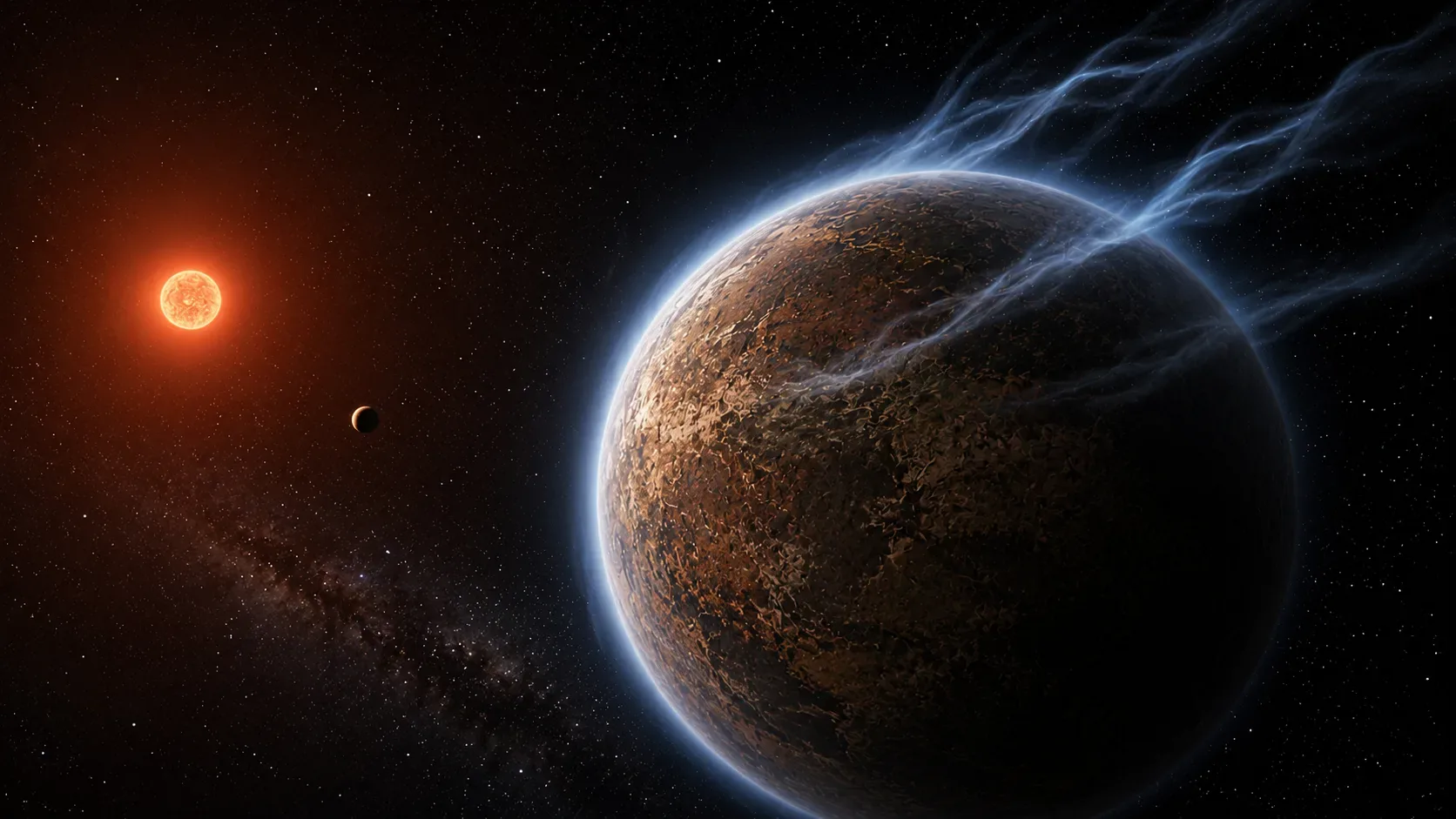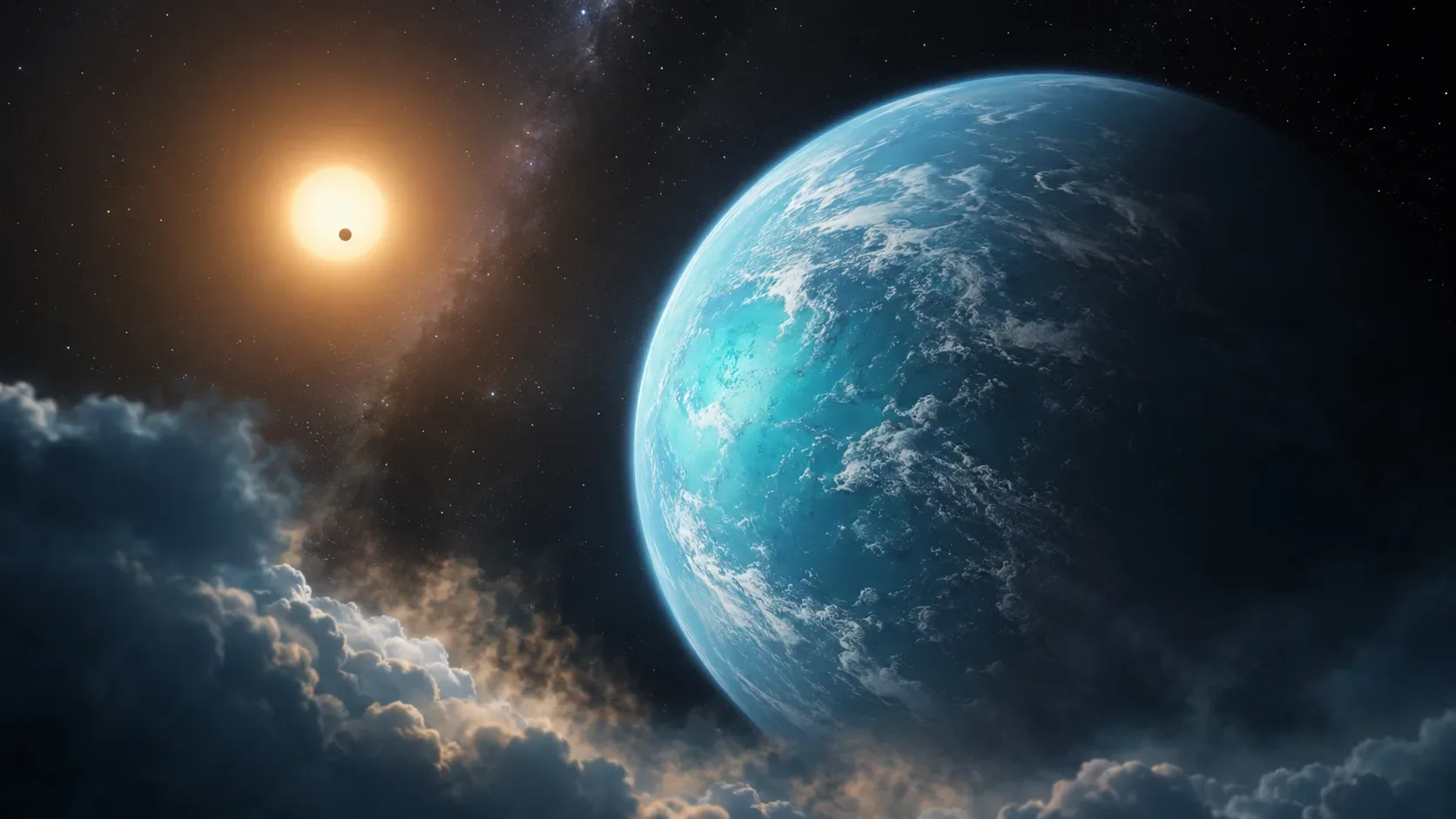
No. DMS or DMDS does not, in itself, mean that there is life on K2-18 b. In the case of this exoplanet, caution needs to begin even earlier: the very presence of these molecules remains in dispute.
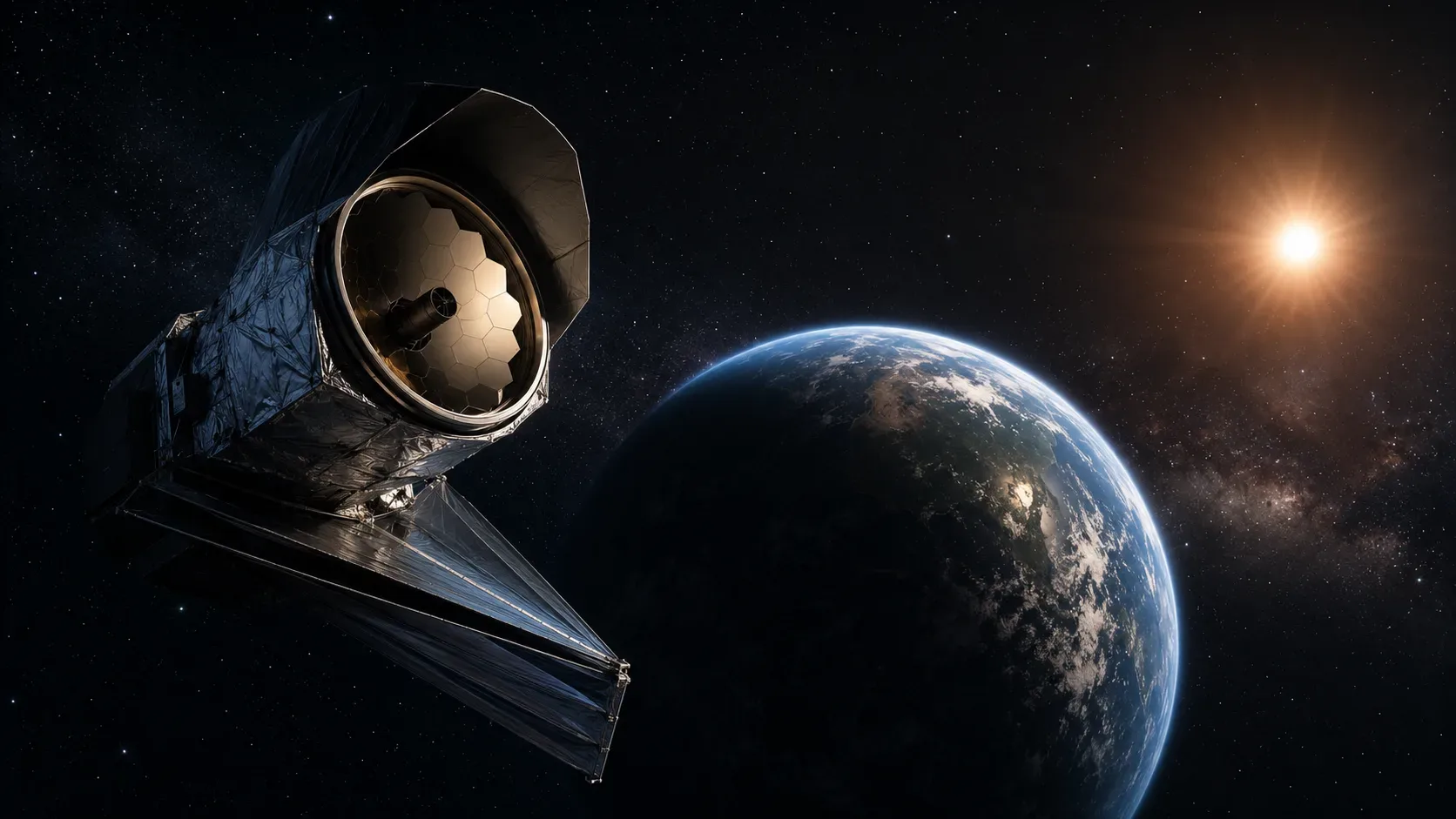
The James Webb Telescope did not sample the atmosphere or directly identify single organisms or molecules. He measured how the spectrum of the star's light changes as K2-18 b passes in front of it. The atmospheric composition is then inferred by comparing this transmission spectrum with models that include different gases. It is precisely at this stage of interpretation that the main disagreements about DMS and DMDS emerged.
As of August 8, 2026, the body of published work does not support a robust detection of DMS or DMDS in K2-18 b, let alone a life detection. There is an interesting signal that has prompted additional observations and research, but different analyzes of the same data have come to different conclusions.
What JWST found first in K2-18 b
In 2023, a team led by Nikku Madhusudhan analyzed observations of K2-18 b made with JWST's NIRISS and NIRSpec instruments, covering approximately 0.9 to 5.2 micrometers. The study reported methane (CH₄) with a significance of about 5 sigma and carbon dioxide (CO₂) with a significance of about 3 sigma. The same work presented only a much weaker indication of dimethyl sulfide, DMS.
The strength of this DMS indication depended on how differences between instrument data sets were handled. In analyzes discussed by the authors themselves, significance could reach approximately 2.4 sigma without certain adjustments, but dropped to less than 1 sigma in another configuration. Therefore, from the first publication, DMS was not at the same level of evidence attributed to methane.
This distinction became even more important later. A large reanalysis published in the Astronomical Journal in 2025 examined 60 treatments of the data and more than 250 atmospheric retrievals. The group confirmed methane at approximately 4 sigma, but found no statistically significant and reliable evidence for CO₂ or DMS in the NIRISS and NIRSpec data. The same study showed that an oxygen-poor mini-Neptune scenario can explain the recovered composition without requiring a liquid surface or life.
Where did the strongest claim about DMS and DMDS come from
The discussion gained another dimension in April 2025, when Madhusudhan's team published observations of K2-18 b carried out with MIRI, a JWST instrument sensitive to mid-infrared. The analyzed spectrum covered approximately 6 to 12 micrometers, a region complementary to previous observations.
In this study, the authors reported that the spectrum presented structure and was incompatible with a featureless spectrum at 3.4 sigma when compared to the model adopted by them. When testing possible molecules, they found evidence of approximately 3 sigma for DMS and/or dimethyl disulfide, DMDS. The data did not allow deciding which of the two molecules would be producing the features.
This detail is essential. A significance of 3 sigma attributed to the model with DMS/DMDS does not mean that the telescope “saw DMS with 99.7% certainty”, much less that it found life. Inference depends on the compared models, the molecules considered, noise treatment and data reduction.
The authors of the 2025 study themselves stated that more observations were needed to increase the robustness of the identification, resolve the degeneracy between DMS and DMDS, improve the laboratory data used to represent their spectral signatures, and investigate possible abiotic sources.
Why other groups challenged the identification
The central problem is not just knowing whether there is an irregularity in the spectrum. It is to demonstrate that that irregularity is produced specifically by DMS or DMDS and not by another molecule, by a combination of gases or by instrumental effects.
A study by Luis Welbanks and collaborators expanded the set of atmospheric models tested. The result was that several models without the molecules presented as possible biosignatures reproduced the data as well or better. The researchers highlighted that the significance obtained for a molecule can change depending on the models chosen for comparison. The work was published in Nature Astronomy.
Another independent analysis, led by Rafael Luque and published in Astronomy & Astrophysics, brought together the data from NIRISS, NIRSpec and MIRI in a spectrum from approximately 0.6 to 12 micrometers. Three reduction pipelines and two different atmospheric recovery codes were used. The group concluded that there was no statistically significant evidence for DMS or DMDS. Molecules with similar chemical groups, such as ethane, could produce equally good fits to the data.
This study also showed how small differences in data reduction changed model preferences. In an estimate based on the best model with DMS/DMDS applied to the published data, the authors calculated that it could take about 25 additional transits observed by MIRI just to achieve a 3 sigma rejection of a flat spectrum in favor of those features. The number depends on the premises of that calculation and should not be treated as a universal quantity of necessary observations.
MIRI noise also entered the discussion
A third front of contention came from an analysis led by Kevin Stevenson, later published in the Astronomical Journal. The researchers reprocessed the public observations and found that the transit spectrum obtained with MIRI was quite sensitive to how wavelengths were grouped during reduction.
Using the team's preferred grouping scheme, 87.5% of atmospheric retrievals did not favor DMS/DMDS. In the combined spectrum analysis, DMS and ethylene (C₂H₄) could occupy interchangeable roles in the fit. The work concluded that correlated noise, and not necessarily a real atmospheric feature, could be affecting the mid-infrared data.
This does not demonstrate that DMS and DMDS are absent. It demonstrates something different and very important: the available data cannot yet reliably distinguish them from other explanations.
What if DMS or DMDS are confirmed in the future?
Even in this scenario, there would still be a considerable logical leap to affirm that life exists.
DMS and DMDS are studied as possible biosignatures because organosulfur compounds may be related to biological processes. But “biosignature” means a possible indicator whose origin needs to be interpreted in the context of the planet, not automatic proof of living organisms.
This caveat gained additional evidence in 2026. A peer-reviewed study published in Astrophysical Journal Letters examined nonbiological chemical pathways for the formation of DMS and DMDS in sub-Neptunes' reducing atmospheres. The researchers found that one of the proposed mechanisms could, in principle, produce observable quantities of these lifeless molecules. The exact efficiency still depends on a reaction barrier that has not been measured experimentally, so the result also carries uncertainty.
The same work showed that hydrocarbons such as ethane can be produced in abundance in these atmospheres and constitute plausible alternatives for some features attributed to sulfur compounds.
Thus, future unequivocal confirmation of DMS would first answer the question “is there DMS in this atmosphere?” The question “was this DMS produced by life?” would require additional investigation into atmospheric chemistry, geological or photochemical sources, physical conditions of the planet, and other independent signals.
K2-18 b needs to be habitable for the biological hypothesis to make sense
There is yet another pre-life uncertainty: the very nature of K2-18 b.
The planet is a sub-Neptune, and its internal structure cannot be observed directly by JWST. The interpretation that it could be a “Hycean” world, with an ocean under a hydrogen-rich atmosphere, has been proposed to explain certain data sets. But other models and reanalyses show that mini-Neptune scenarios without a habitable surface can also reproduce important observations.
Being in an orbital region compatible with moderate temperatures also does not demonstrate the presence of oceans, a habitable surface, or organisms. To evaluate a possible biosignature, it is necessary to understand the environment where that molecule would be formed.
What's left before talking about life
For DMS or DMDS to become really strong evidence in the case of K2-18 b, different steps still need to converge:
- new traffic observations must reproduce the features with the best signal-to-noise ratio;
- the result needs to survive different pipelines, wavelength groupings and independent analysis methods;
- the same molecule must consistently explain its spectral bands in different regions of the spectrum, with sufficiently accurate laboratory absorption data;
- competing molecules and instrumental effects need to be quantitatively tested and disfavored;
- models of the planet must establish under which conditions DMS or DMDS could exist and which abiotic mechanisms would be capable of producing them;
- a biological interpretation would need to be supported by independent evidence consistent with the planetary environment, not just by a single molecule.
This also explains why simply raising statistical significance does not resolve the entire issue. A much stronger identification of DMS would be an important advance, but the significance of detection of the molecule cannot automatically be transferred to putative detection of life.
So what is the state of the evidence?
The safest result is less spectacular than some headlines, but more scientifically interesting: K2-18 b has an atmospheric spectrum that continues to offer important information about the chemistry of temperate sub-Neptunes, and some analyzes have found features that can be tuned by DMS or DMDS.
The identification of these two molecules, however, did not prove to be robust when the data was reanalyzed by different teams and with broader model spaces. There are molecular alternatives, sensitivity to data processing and evidence of instrumental effects that still need to be resolved.
And even if DMS or DMDS are confirmed, recent work shows that abiotic mechanisms need to be considered. Therefore, the answer to the central question is clear:DMS/DMDS would be a relevant chemical clue, not a confirmation of life. In K2-18 b, for now, not even this molecular clue has been confirmed unequivocally.