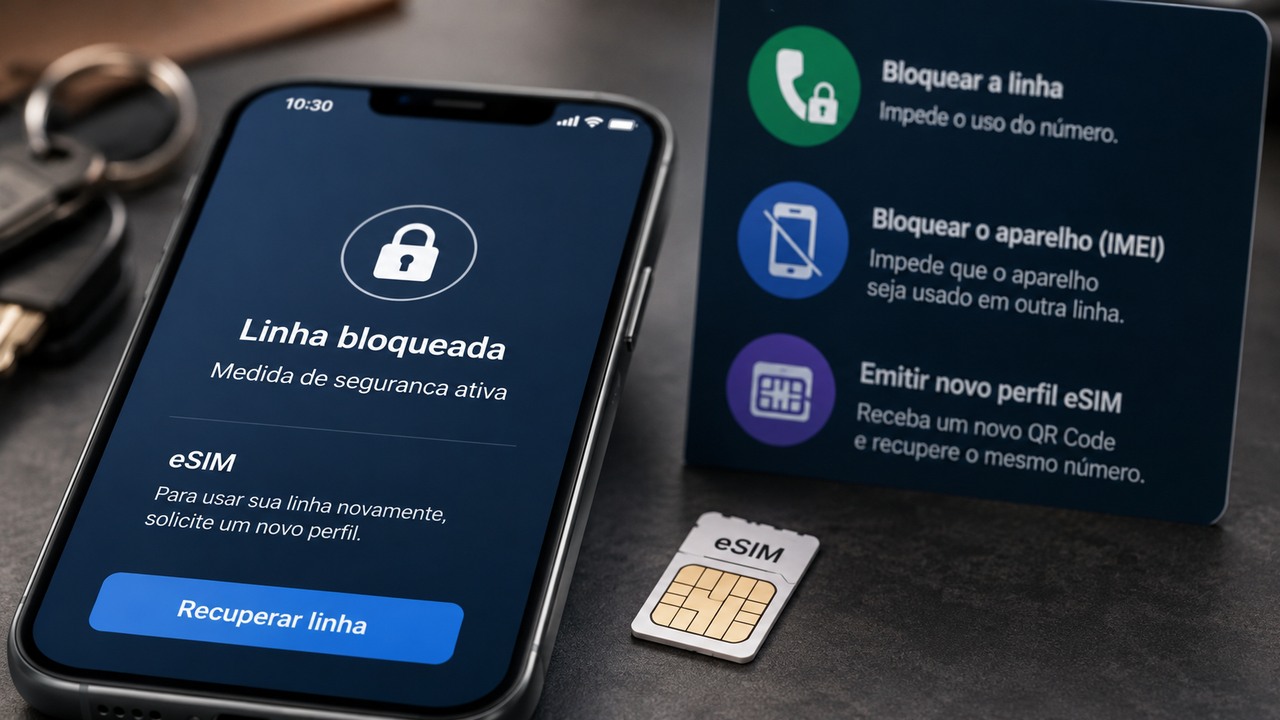
If your phone was stolen or lost and the line was on an eSIM, you do not need to have the old device in hand to recover the same number. The main point is to separate three actions that are often mixed together: blocking the line, blocking or restricting the device by IMEI, and issuing a new eSIM profile for the replacement phone. The number belongs to your line with the carrier; the QR Code or profile installed on the device is only the credential used to activate it on that device.
The safest sequence usually starts by blocking the line, especially when there is a risk that third parties could receive SMS messages, calls, or authentication codes. Then you decide what to do with the device: block the IMEI completely or, when using Celular Seguro and you want to increase the chance of recovery, choose Modo Recuperação (Recovery Mode). Only then comes the step of reactivating the line on another device and issuing a new eSIM, according to your carrier's procedure.
Line, IMEI, and eSIM are not the same thing
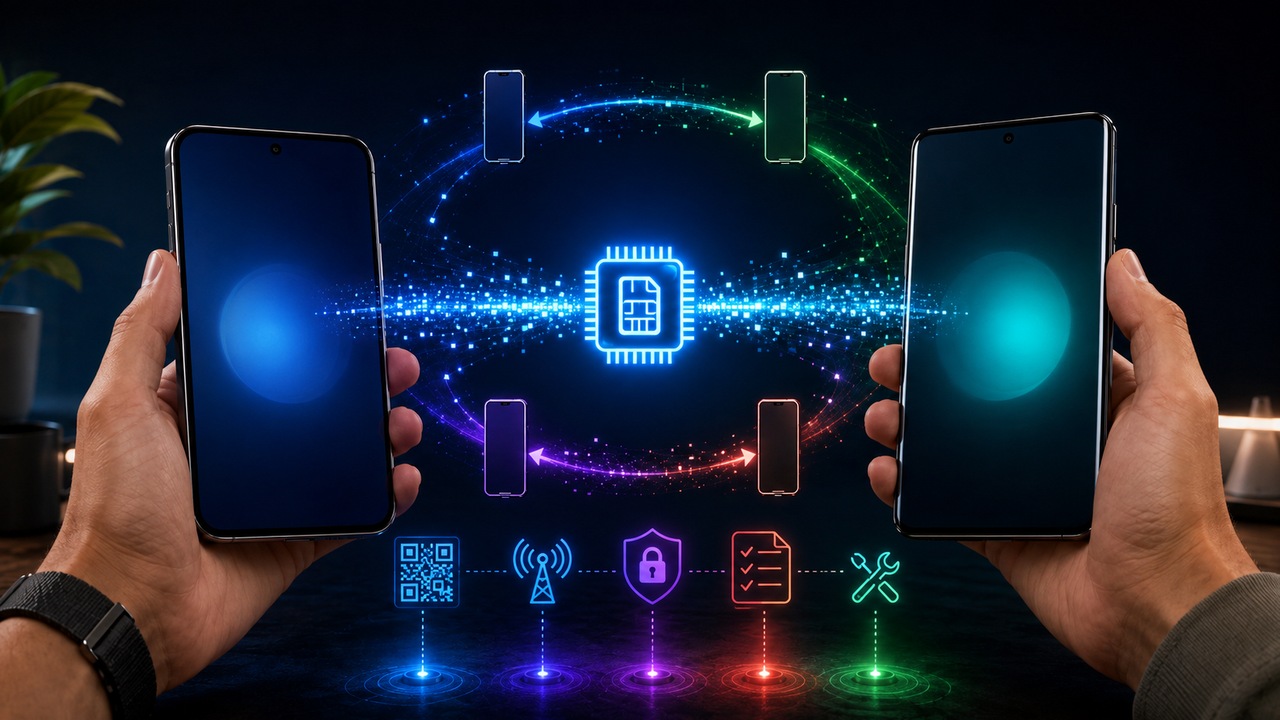
Blocking the line suspends the mobile service associated with your number. It is the measure that protects the line against unauthorized use and should be treated as a priority when the phone disappears. Anatel distinguishes this blocking from blocking the device: blocking the line prevents use of the service, while blocking the device prevents that phone from connecting to Brazilian mobile networks.
The device is blocked through the IMEI, the equipment identifier. When the IMEI is added to the barred-device database, the restriction follows the device even if someone tries to use another SIM. On phones with more than one SIM or more than one network profile, there may be more than one IMEI; Anatel advises that all of them be considered when the goal is to block the device completely.
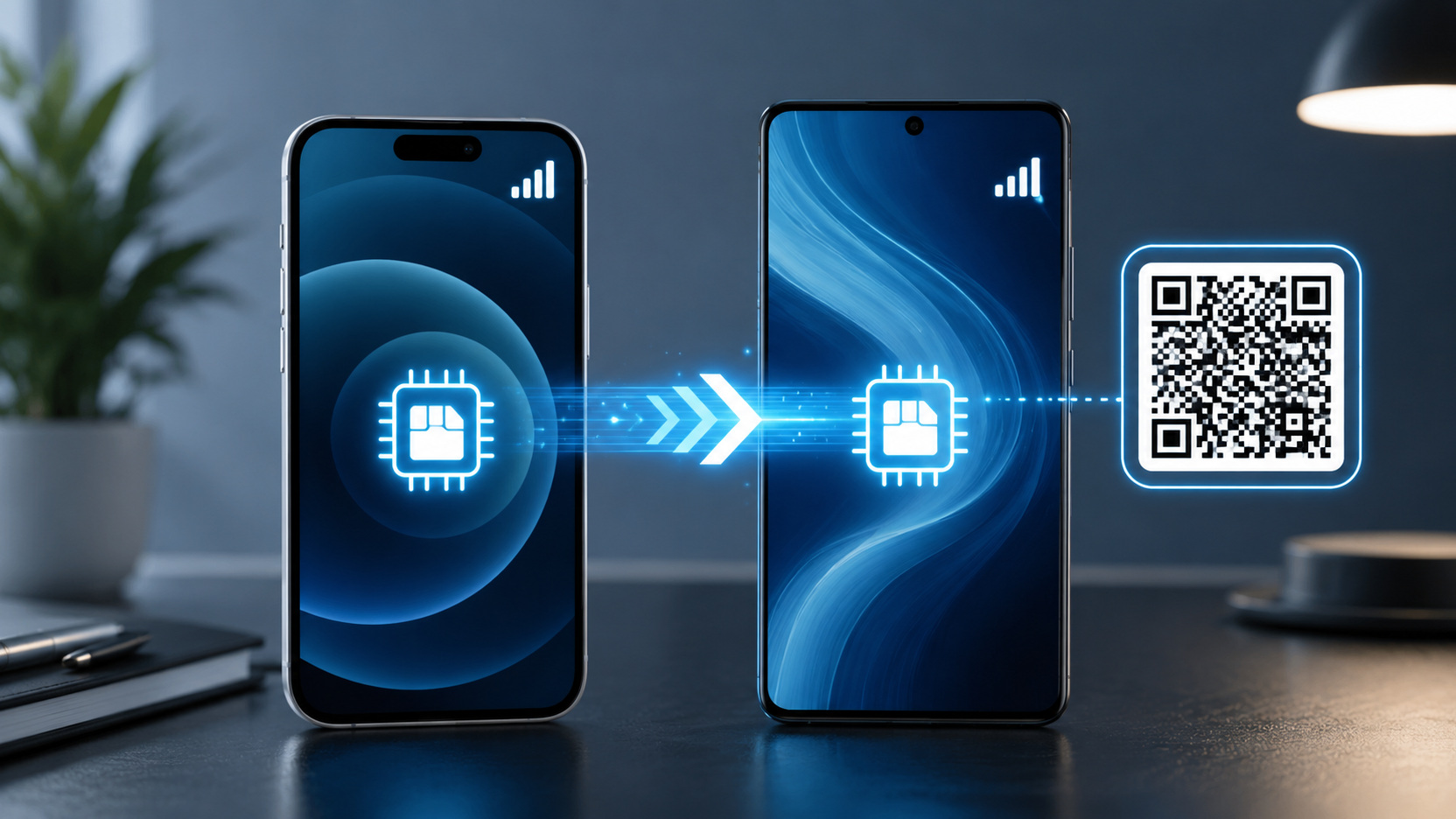
The eSIM is another layer. It replaces the physical SIM card with a digital profile installed on a compatible device. Losing the phone does not mean permanently losing the number. It means that the profile installed on that phone is no longer a reliable way to access the line and should be replaced by a new activation after ownership has been verified.
What to do first when the old device is not available
If the incident has just happened, block the line through the carrier's official channels or, when applicable, through Celular Seguro. Do not wait until you have another phone to start this protection. Anatel recommends contacting the service provider and also filing a police report in cases of robbery or theft.
Next, take care of the device. IMEI blocking is independent from line blocking. If you choose a full device block, it will no longer be able to access Brazilian mobile networks. If there is a real chance of recovering the phone, Celular Seguro offers Modo Recuperação (Recovery Mode), which leaves the IMEI without a full block so that activation of another line on the device can generate useful signals for the recovery process.
Also protect the data. Blocking the line or the IMEI does not automatically erase photos, messages, accounts, or files. Anatel itself recommends using the manufacturer's tools to locate, remotely lock, or erase the device's content when necessary. A device barred from the mobile network may still access the internet over Wi-Fi, so telecommunications blocking does not replace account protection.
How to recover the same number on a new eSIM
After blocking the line, recovering the number is handled as a reactivation or replacement, not as a simple transfer between two phones sitting side by side. This matters because many eSIM tutorials assume that the old device is still available to authorize the transfer.
When the old phone was stolen or lost, the correct path is to ask the carrier for a new profile for the same line. The carrier will verify your identity and determine how that profile will be delivered: through a new QR Code, in-app activation, a process integrated into the device's operating system, or in-person service. The method varies between companies and may change according to the plan, device, and anti-fraud policy.
Do not treat the old QR Code as a universal backup. In some processes it is single-use; in others, the carrier issues a new code when the profile must be recovered. What needs to be preserved is the line and the number, not necessarily the QR Code that was tied to the previous activation.
What TIM, Vivo, and Claro state in 2026
The official channels reviewed in August 2026 show that Brazil's three major carriers separate blocking from recovery, but they do so in different ways. That difference explains why a procedure found for one carrier should not automatically be repeated with another.
TIM
TIM directly addresses the situation of loss or theft with eSIM: the first step is to block the line. Then the customer must go to a TIM store to recover it after identity verification. The company states that a new QR Code will be provided with the same number.
The same help center also says that if the QR Code has been lost in specific situations, there is a SIM replacement portal for obtaining a new code. In the case of a stolen or lost device, however, TIM's highlighted official guidance is to block the line and then go to a store for recovery.
Vivo
Vivo also separates the line from the device. In the loss or theft process, blocking the line temporarily disables the SIM, while blocking the device acts on the IMEI. The carrier states that the line can be unblocked through App Vivo and, after that, if the new device supports eSIM, the line can be reactivated on a virtual SIM.
Vivo's eSIM page adds that App Vivo can activate, reactivate, and transfer an eSIM to another phone. This makes the process potentially remote, although completion depends on device compatibility, authentication, and the options shown for that line in the app.
Claro
With Claro, the line can be blocked through Minha Claro or by calling 1052. The company keeps IMEI blocking as a separate action. To unblock the line and device, its help center instructs customers to go to a physical store with an official ID and, in cases of robbery or theft, the documents required by the carrier's procedure.
For eSIM activation, Claro states that the QR Code can be scanned only once. This reinforces a practical precaution: if the old device disappeared, do not assume that the QR Code used previously will solve the new activation. The replacement must follow the official channel indicated for your line.
Celular Seguro: Modo Recuperação (Recovery Mode) or Bloqueio Total (Full Blocking)
The current version of Celular Seguro offers two different decisions. In Modo Recuperação, the line and accounts at partner institutions can be blocked, but the IMEI does not receive a full block. The idea is to allow the device to reappear on the network if another line is activated on it, helping recovery by the authorities.
In Bloqueio Total, the IMEI is also blocked. This is the option for people who want to prevent new activations on the device and prioritize making it unusable on mobile networks. Brazil's Ministry of Justice and Public Security warns that the choice made when issuing the alert cannot be changed by the user in the app after confirmation.
There is an important nuance in the official documentation. Anatel's page about stolen phones still describes Celular Seguro as depending on prior registration of the device and line. A more recent guidance from the Ministry, however, states that registration can be completed after the incident in certain processes. The Ministry's FAQ, updated on 25 June 2026, continues to require verification of ownership and a registered line for the carrier to carry out line and IMEI blocking. Therefore, if the service does not allow the request to be completed, contacting the carrier directly remains the safe path.
A Celular Seguro alert does not replace a police report. The Ministry itself advises keeping the protocol number and contacting the carrier for unblocking procedures when necessary.
Do you need to know the IMEI to block the device?
Having the IMEI written down helps, especially if the carrier's self-service channel asks for it. It is usually printed on the box, on the purchase invoice, or stored in manufacturer records. Even so, Anatel states that in certain procedures the service provider can identify the IMEI from the line number, the date and time of the incident, and identity verification.
That does not mean every channel will dispense with the IMEI. Claro, for example, maintains processes that ask for this identifier to block the device. The safest guidance is to keep all of the phone's IMEIs recorded when possible and, if you do not have the number, ask the carrier to check the identification alternatives provided through its official channel.
What if the phone is found later?
Recovering the device does not automatically remove the restrictions. If the IMEI was blocked, Anatel states that only the person who requested the block can ask for it to be lifted, following the procedure of the service provider or the authority that registered the restriction.
With Celular Seguro, unblocking is also not done inside the app. The Ministry's FAQ instructs users to go to an official carrier store to deal with the line and IMEI, according to the company's anti-fraud policy. If you also used the manufacturer's remote lock, that layer must be handled separately through the Apple or Google account, or the corresponding service.
The most common mistake is trying to 'transfer' the stolen eSIM
When the old device is not available, think of recovering the line, not transferring the old profile. A traditional transfer usually depends on access to both devices, proximity, confirmation on the previous phone, or credentials that were tied to that activation.
In a theft or loss scenario, the priority is to cut off unauthorized access and then create a new secure link between the line and the replacement device. That is why blocking the line and issuing a new eSIM are complementary steps: the block protects the number at the moment of risk; the new activation returns the service to the account holder on another device.
How to complete the process without leaving a security gap
Before considering the case resolved, confirm that the old line is blocked or that the new activation has already invalidated the previous profile according to the carrier's procedure. Also check that the new eSIM is receiving calls and SMS messages and review the apps that use the number for authentication.
If there was a robbery or suspected account access, change critical passwords and end active sessions when the services allow it. Banks, the primary email account, and accounts that receive SMS codes deserve priority. IMEI blocking protects against use of the device on the mobile network, but it does not replace this digital-security review.
The practical rule is simple: the line, the device, and the eSIM profile are three different objects. Block the line to protect the number, decide separately what to do with the IMEI, and request a new eSIM profile to reactivate the same line on the replacement device. TIM, Vivo, and Claro confirm that recovering the number is possible, but the channel for issuing the new eSIM is not universal. Always use your carrier's current process and do not rely on the QR Code from the device that disappeared.