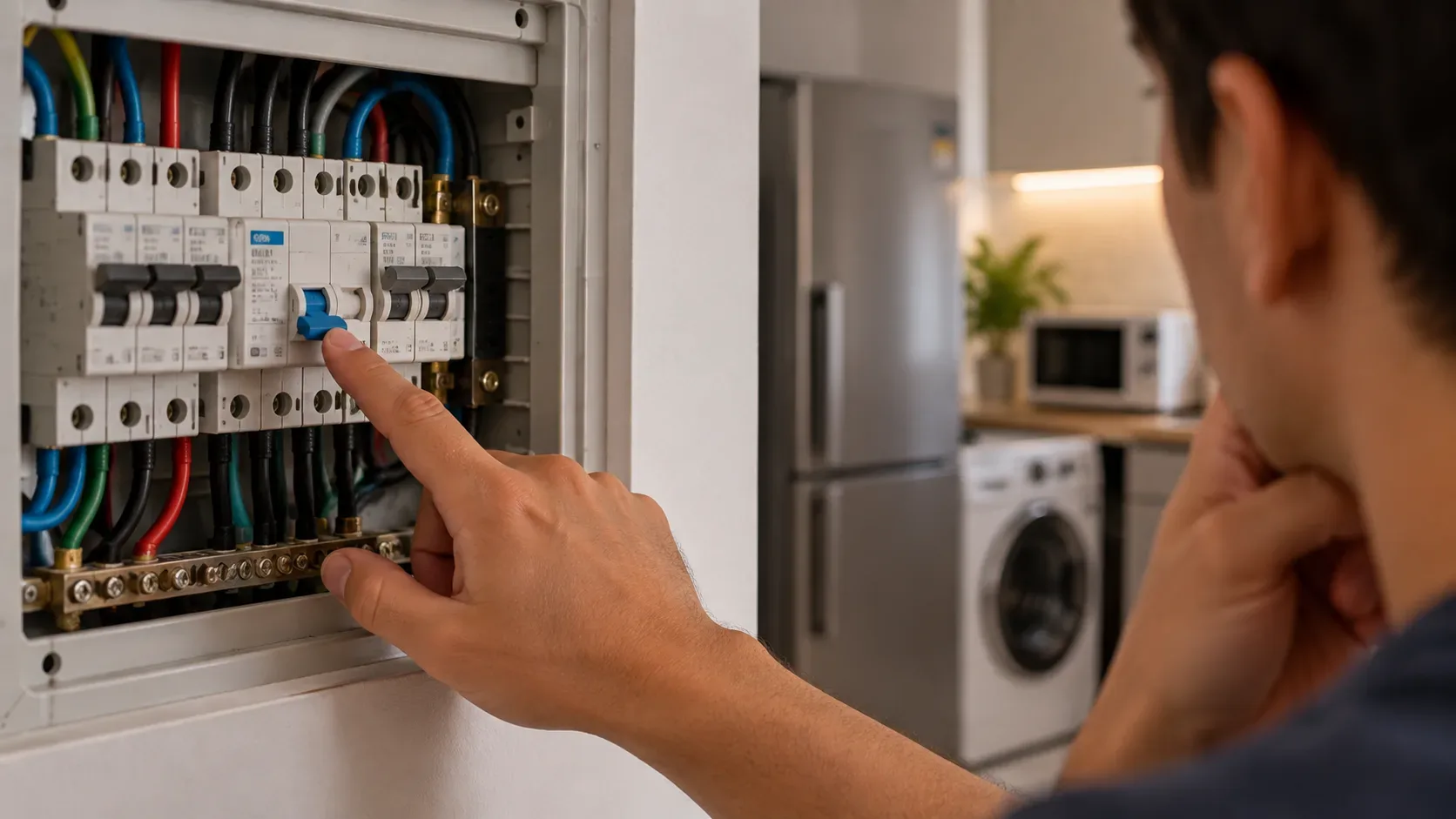
If an RCD keeps tripping, the most important point is not to try to “defeat” the protection. A residual current device monitors whether the current leaving through the live conductors returns through the expected path; when a difference consistent with leakage current appears, it disconnects the circuit. Schneider Electric explains this operating principle and notes that the protection is specifically intended for insulation faults and electric-shock risk.
For a resident, the best diagnosis before calling an electrician is not to open the panel or measure an energized circuit: it is to record when the RCD trips, what was running, and what changed in the environment. That pattern does not prove the cause, but it can greatly shorten the professional investigation.
First: confirm that it is the RCD, not only a standard circuit breaker
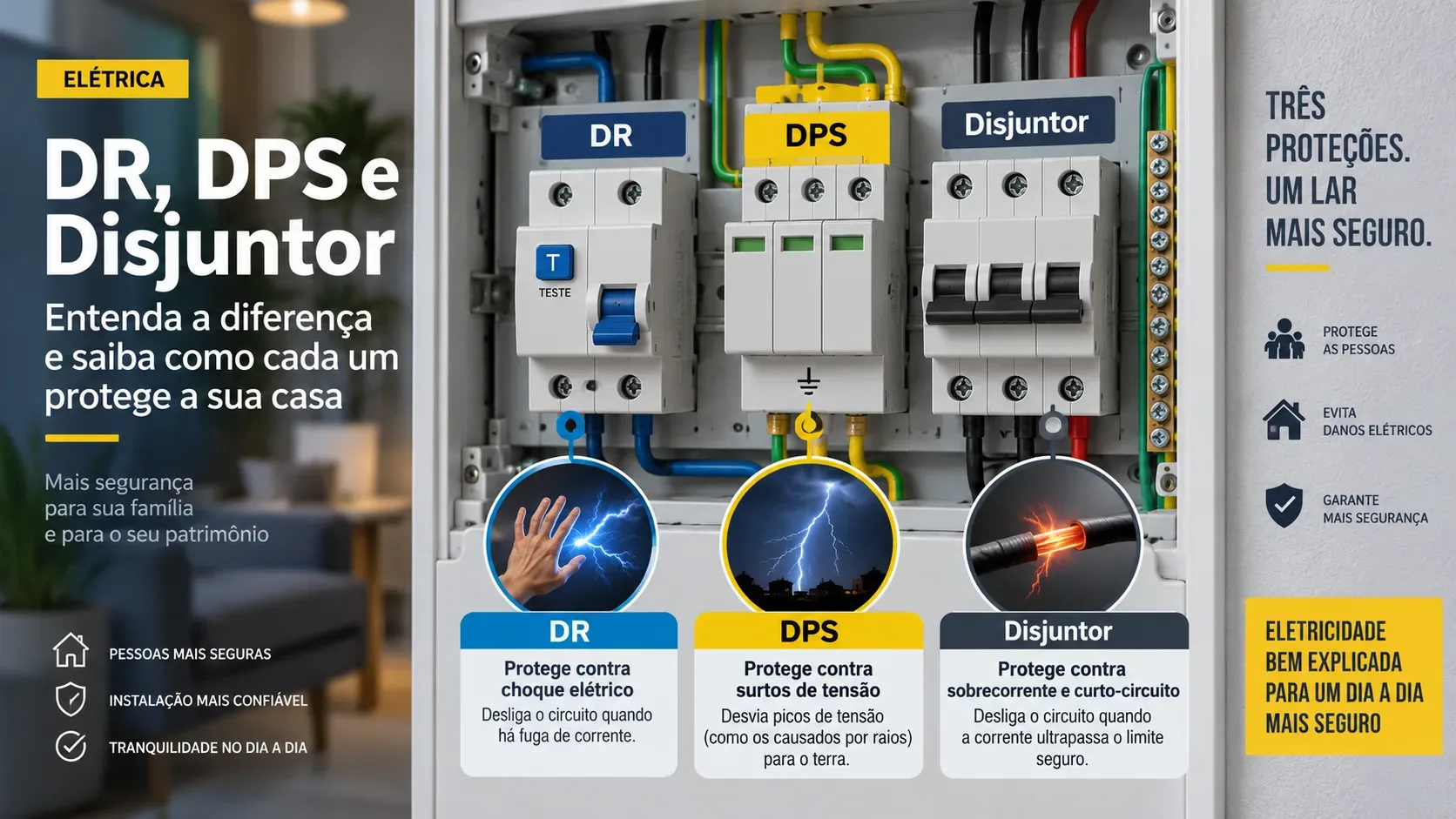
In everyday use, “RCD” is a broad label. An RCCB operates on residual current; an RCBO combines residual-current protection with overcurrent protection. A standard thermal-magnetic circuit breaker mainly responds to overloads and short circuits. So the answer to “what is tripping?” changes the investigation.
Without removing covers, observe only what is visible on the front of the panel: the device identification, test button, lever positions and, if present, a trip indicator. You do not need to dismantle anything to give this information to the electrician.
The safe boundary for a non-electrician
Brazil's Ministry of Mines and Energy recommends that electrical installations, maintenance and repairs be carried out by qualified professionals and highlights the risks associated with moisture, damaged cables and makeshift modifications. The official guidance is in “Saiba como evitar acidentes elétricos dentro de casa”.
- Do not open the panel, remove the internal cover, or touch busbars, terminals or wires.
- Do not disconnect neutral or earth, bridge them together, or remove grounding to “see whether the tripping stops”.
- Do not use a multimeter, clamp meter or test screwdriver on energized parts unless this is part of your professional work.
- Do not hold the lever in place, replace the RCD with a standard breaker, or change the residual-current rating on your own.
- Do not keep resetting it repeatedly. If the RCD trips again, treat the event as an unidentified fault.
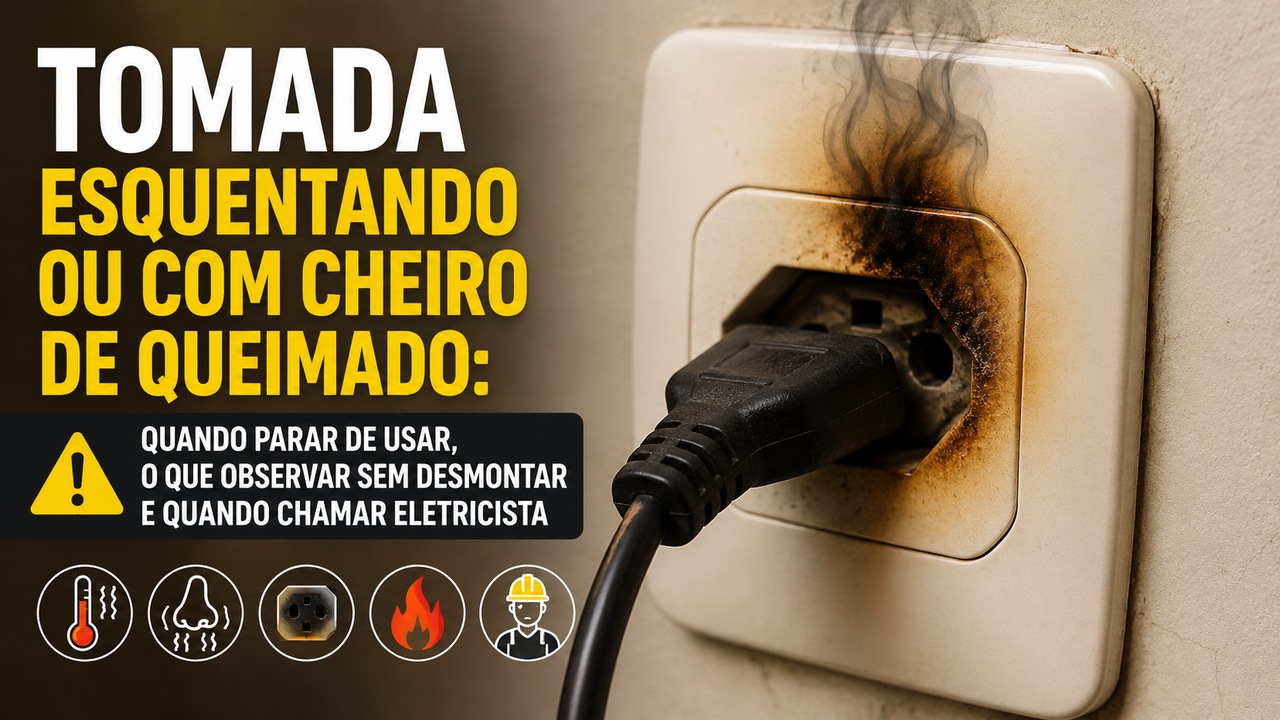
If there is a burning smell, crackling, abnormal heating, scorch marks, water in or around the panel, an electric shock, or tingling on metal parts, stop using the installation and call a professional urgently. In an electrical-shock accident, the Ministry advises interrupting the power when it can be done safely and contacting emergency services.
The tripping pattern: what each situation may suggest
Use the table as a map of clues, not as a diagnosis. Different causes can create the same behavior, and confirmation requires measurements.
| Observed pattern | What may be behind it | What to observe without dismantling anything |
|---|---|---|
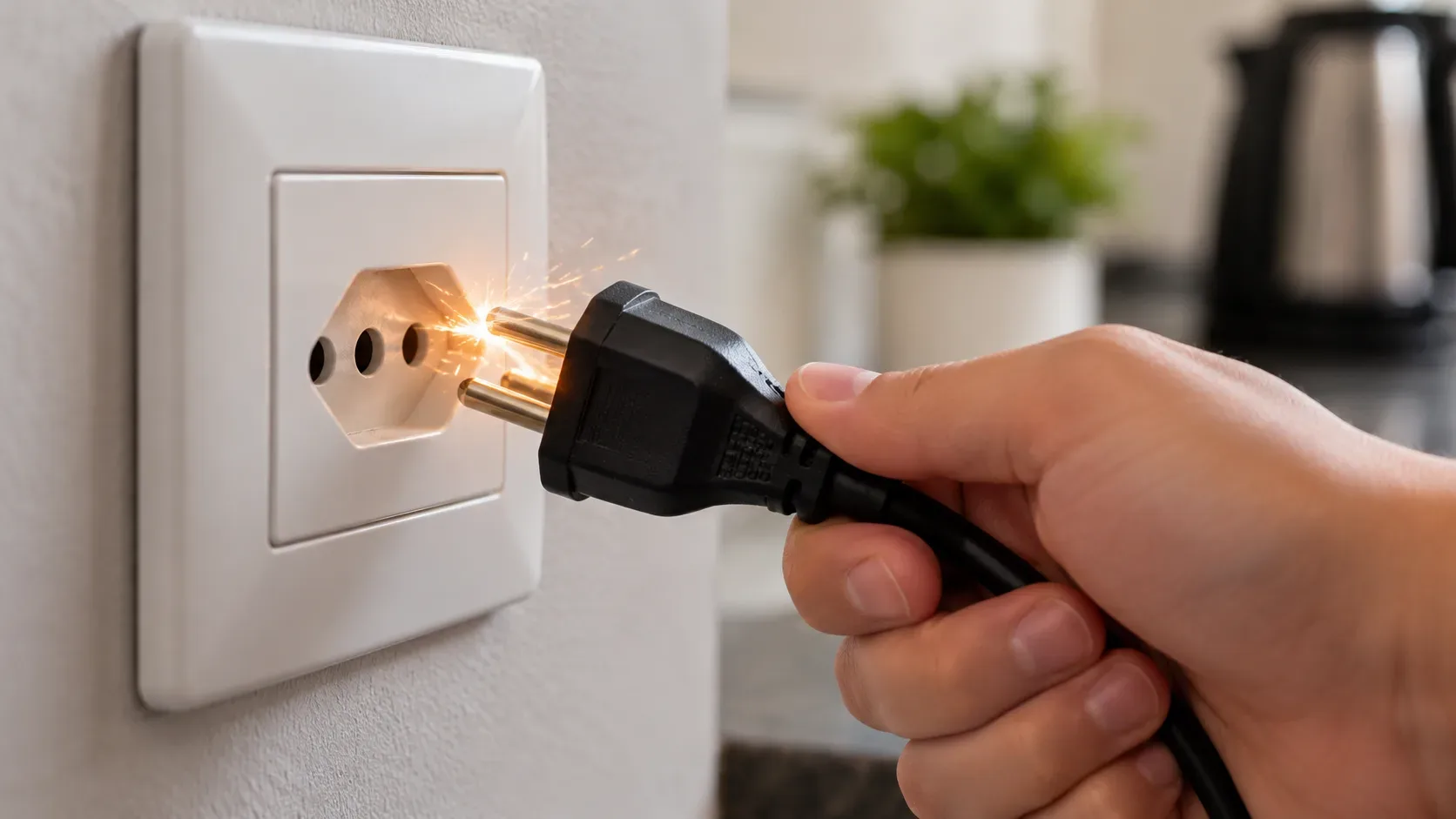
| Trips when one specific appliance starts | Leakage in the appliance, cord, plug, outlet or circuit; an insulation fault that appears at startup or with heating | Which appliance was started, which outlet it uses, and whether there is cord damage, moisture, odor or heating |
| Trips when several appliances run together, but not individually | The sum of small leakage currents from several devices, especially electronics with filters | Which devices were on at the same time and whether the trip coincides with one additional load starting |
| Gets worse on rainy days, after washing, or in high humidity | Moisture or water ingress reducing insulation in an outlet, box, light fitting, outdoor device or section of wiring | Connection with rain, outdoor areas, bathrooms, laundry areas, gardens, air conditioning, pumps or exposed outlets |
| Started after renovation, an outlet change, shower heater, light fitting or other electrical work | Wiring error, mixed neutrals between circuits, an improper neutral-earth connection, or insulation damage | Date of the work, the circuit that was changed, and whether the problem began immediately afterward |
| Occurs when many electronic devices, LEDs, motors or inverter-driven loads start | Transient currents, high-frequency components or capacitive leakage that require checking RCD type and compatibility | Whether the event occurs exactly during switching and which electronic loads are involved |
| Trips with no apparent trigger, even at light load | Intermittent insulation fault, hidden moisture, an appliance that cycles automatically, installation fault or a faulty RCD | Time, frequency, weather, automatic devices that may have started, and any recent change |
| Trips immediately every time power is restored | A persistent downstream fault or another condition that requires professional isolation and testing | Do not create further attempts; record that the trip is immediate and call the electrician |
Why several appliances can trip the RCD without one obvious “culprit”
Installations and equipment can have small leakage currents even under normal conditions. Switch-mode power supplies, interference filters and other electronic components can increase this background current. When many devices are protected by the same RCD, their leakage currents can add together.
The Legrand technical guide on residual-current protection describes this cumulative leakage effect and also cites transient phenomena as possible causes of unwanted tripping. The Schneider Electric Electrical Installation Guide discusses the immunity of different RCDs to disturbances, harmonics and transients.
This does not mean the solution is to replace the device with one that is “less sensitive”. The electrician needs to measure the actual leakage, review circuit division, load types and RCD specification before deciding on any change.
RCD trips when it rains: why this pattern matters
Rain and humidity do not prove where the fault is, but they are a strong clue because water and condensation can create easier leakage paths. The source may be an outdoor outlet, light fitting, junction box, pump, motor, air conditioner, garden equipment or even a section of cable exposed to moisture.
The resident should limit the check to external observation: where water is present, whether any outlet or device was exposed, whether the problem appears only during or shortly after rain, and how long it takes to disappear. Do not open wet boxes or touch suspect equipment with wet hands or while standing on a wet floor.
If the problem started after electrical work
Put this information at the top of your report to the electrician. An RCD measures current imbalance; wiring errors can create paths that make part of the return current bypass the device's sensor. Schneider Electric explains that, after the proper separation point, neutral and earth must not be improperly bonded downstream, because this can create dangerous conditions and interfere with protection.
For a resident, that is only a hypothesis to report — not a connection to correct personally. Finding shared neutrals, neutral-earth contacts or circuit errors requires inspection and controlled testing by a professional.
Could the RCD itself be faulty?
Yes, but that diagnosis comes after load and wiring problems have been ruled out. The test button found on many devices checks the tripping function according to the manufacturer's instructions; it does not measure the actual trip current, locate a leakage path or certify the whole installation by itself.
An electrician can use a dedicated RCD tester, check trip current and time, measure insulation resistance and leakage current, and compare the results with the device specification. If the RCD is out of tolerance or mechanically defective, replacement should preserve the protection required by the design.
What to write down before calling the electrician
- date and time of each trip;
- whether it was raining, very humid or there had been washing nearby;
- which appliances were running and which one had just started;
- whether the event repeats with the same appliance, outlet or room;
- whether there was recent renovation, maintenance, equipment installation or outlet replacement;
- whether only the RCD changed position or another circuit breaker also operated;
- how long the installation ran before the trip;
- any odor, noise, heating, water, damaged cord or visible mark;
- a photo only of what is visible on the front of the panel, without removing covers, including current and residual-current markings if readable.
This history helps the professional decide where to begin without turning the home into a trial-and-error laboratory.
What the electrician will probably investigate
Depending on the pattern, the investigation may include insulation-resistance testing of circuits and equipment, leakage-current measurement, functional and trip-time/current testing of the RCD, circuit separation to locate the source, checks of neutrals, earthing and connections, inspection of moisture-prone points and evaluation of RCD type in relation to electronic loads.
For installations with many disturbances, devices with increased immunity to unwanted tripping are available. Schneider Electric describes its SI class as intended for environments with harmonics, transients and other disturbances. This is a design decision: fitting a “super-immunized” device before locating a genuine leakage fault can simply obscure the investigation.
What never to do to “solve” an RCD that keeps tripping
- remove the earth conductor from an appliance;
- bond neutral and earth together at an outlet or panel;
- replace a 30 mA RCD with a higher residual-current rating solely to stop the trips;
- replace the RCD with a standard circuit breaker;
- hold, wedge or mechanically lock the lever;
- open the panel to “tighten everything” while the installation is energized;
- keep using equipment with a torn cord, signs of water, shock, odor or heating.
Practical summary
The most useful information for the electrician is the pattern: one specific appliance, a combination of loads, rain/humidity, electronic-device startup, a recent wiring change, or a trip with no clear trigger. You do not need to open the panel to obtain that information.
An RCD that keeps tripping may be doing exactly the job it was installed to do. The goal is not to prevent the trip, but to identify why enough residual current exists to trigger it — or, less commonly, to confirm that the device itself is faulty.