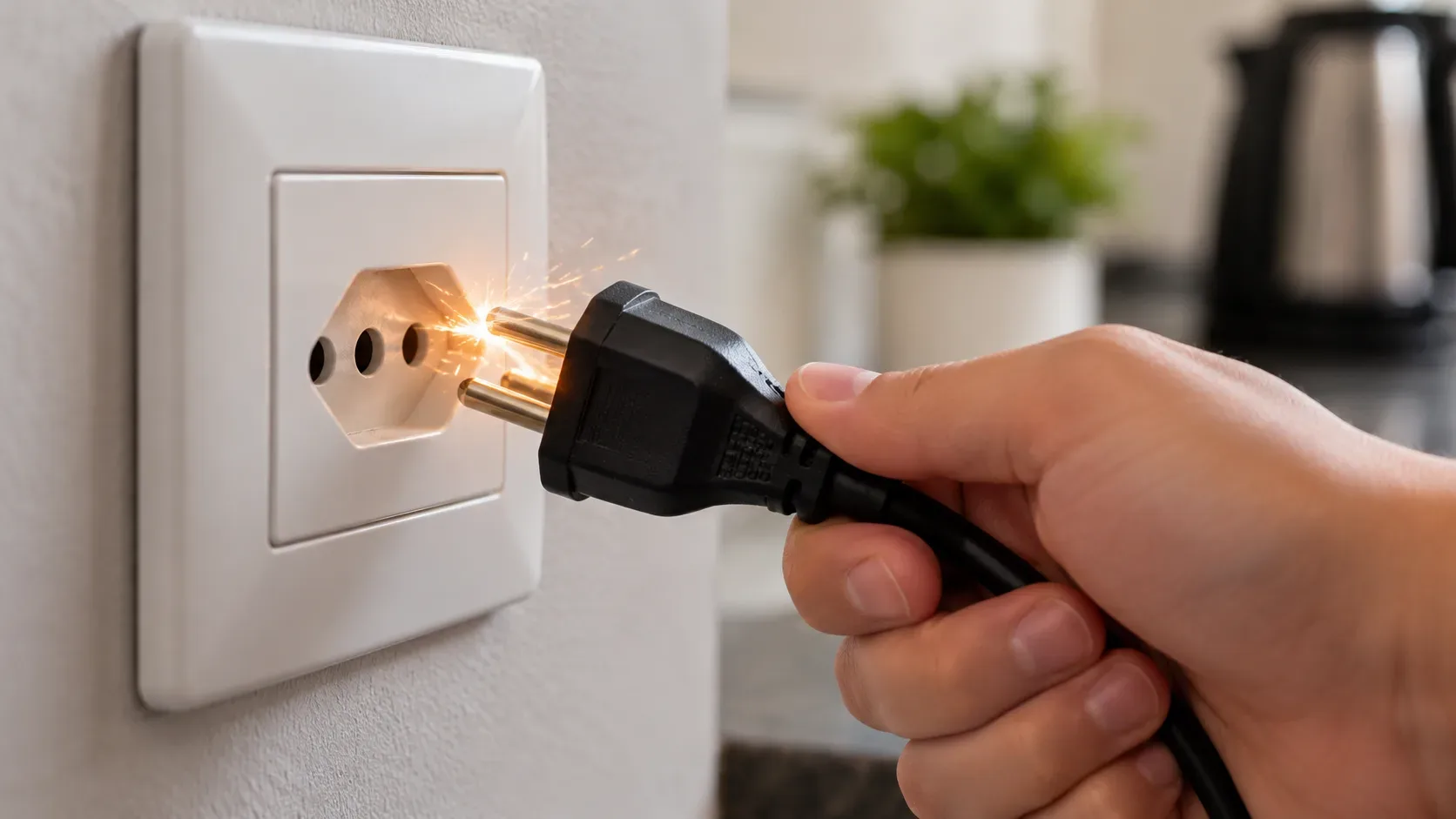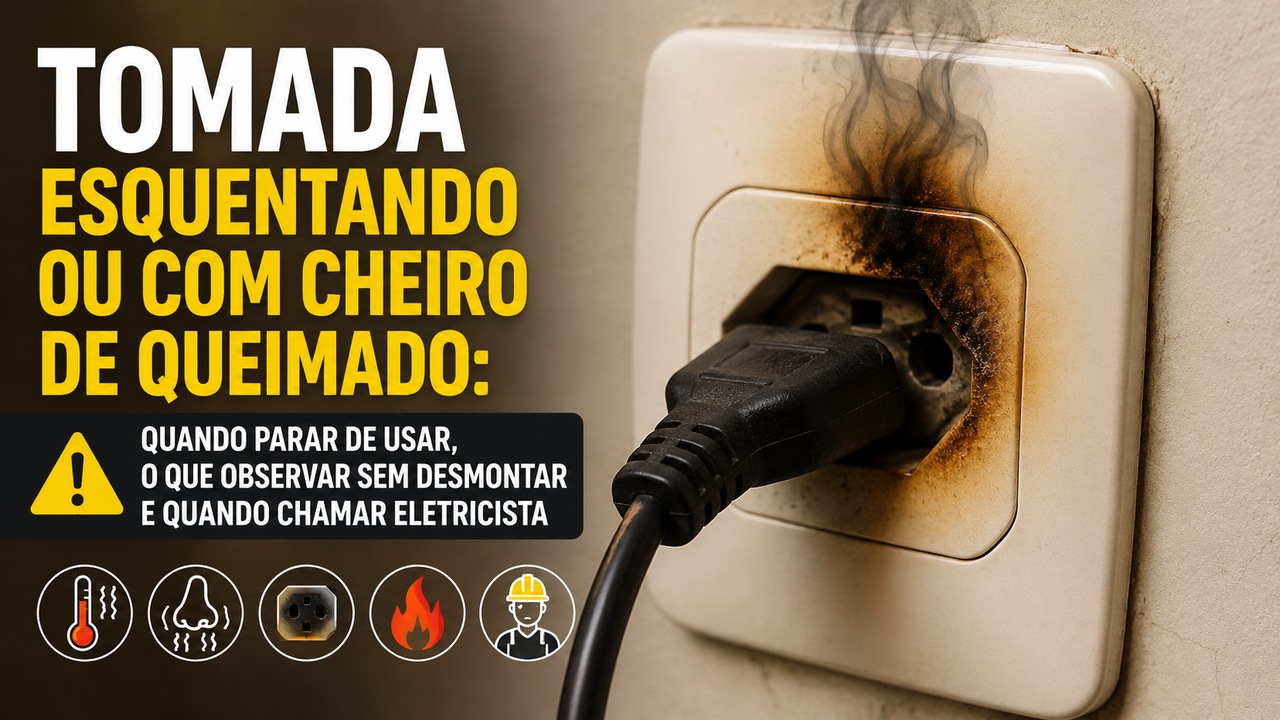
If an outlet is getting unusually hot, smells burnt, shows discoloration, softened or deformed plastic, sparks, crackling, or repeated breaker trips, the safest course is to stop using that outlet. Do not keep plugging in the appliance to see whether the problem "goes away". These signs may be associated with overload, poor contact, a damaged component, or another fault that needs to be evaluated before the outlet is used again.
In July 2026, Brazil's Ministry of Mines and Energy (Ministério de Minas e Energia, MME) again warned about household risks linked to overloaded outlets, damaged cables, and improvised adaptations, recommending a qualified professional for installations, maintenance, and repairs. In February, Maceió Civil Defense (Defesa Civil de Maceió) was even more direct: hot outlets, a burning smell, and tripping breakers indicate that the electrical installation is operating outside safe limits.
When to stop using the outlet
A burning smell is reason enough to stop using the outlet and avoid further tests. The same applies to brown or black marks, deformed plastic, an excessively hot outlet or plug, crackling noises, sparks, or a breaker that trips when that appliance is connected.
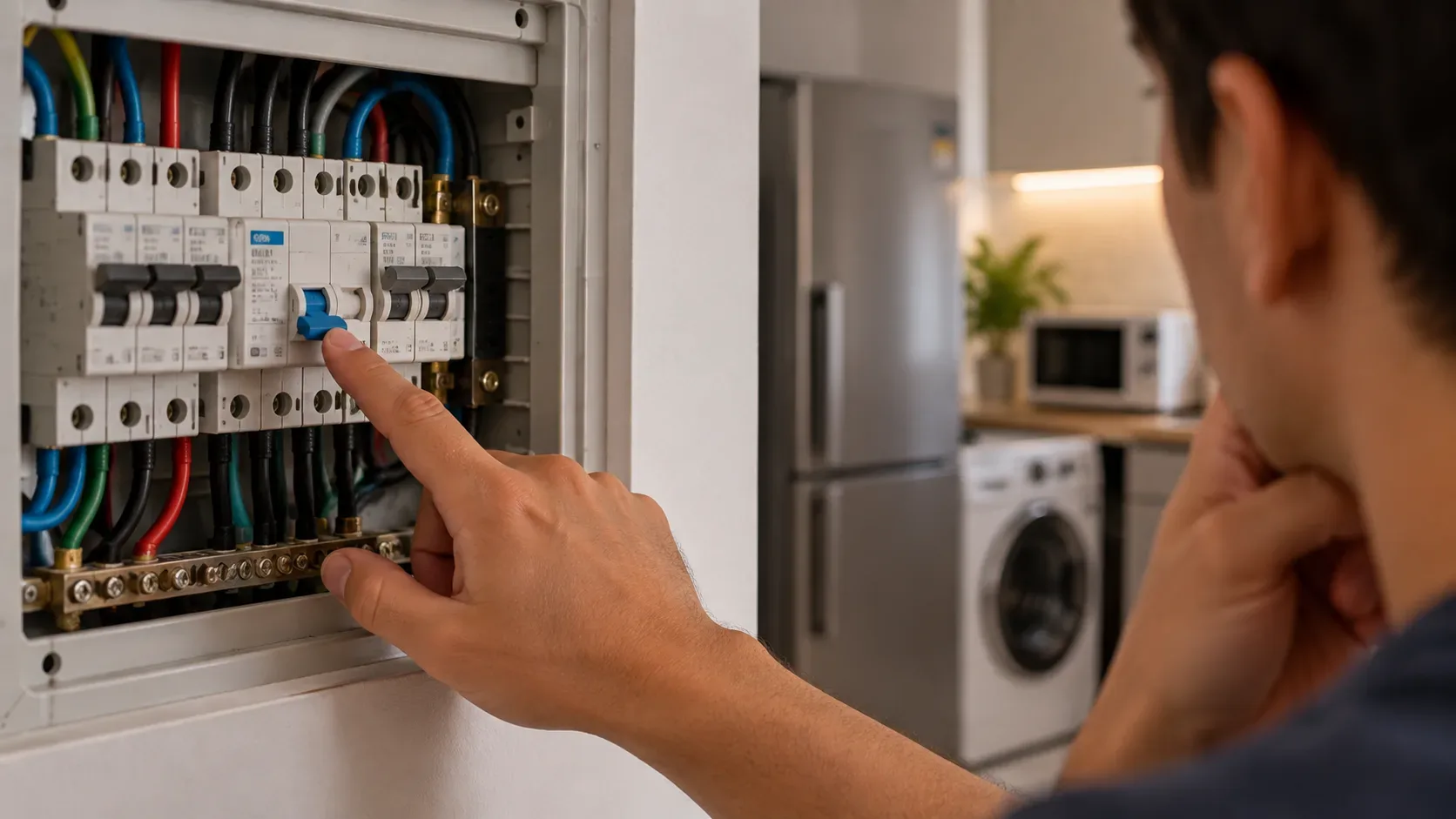
If there is smoke, continuous sparking, melting, or intense heat, do not try to pull out the plug by hand. Move away from the outlet and, only if you can reach the electrical panel without approaching the hazardous area, switch off the circuit breaker or the main breaker. In the event of a short circuit or an incipient fire, Maceió Civil Defense advises switching off the main breaker when this can be done safely, never using water, and calling the Fire Department at 193. The MME also advises calling Samu at 192 when a person has been involved in an accident.
If there is no smoke or fire but there is abnormal heating or an odor, the more conservative option is to de-energize the circuit before handling the plug. Once the circuit is de-energized and the outlet has cooled, you can inspect the point externally. If the plug is
stuck, deformed, or fused to the outlet, do not force it out.
What to inspect without taking anything apart
A safe inspection begins with what is visible. Look at the front of the outlet, the plug, the beginning of the cable, and, when applicable, the body of the power supply or charger. Look for discoloration, cracks, warped plastic, signs of melting, soot, darkened pins, a damaged cable, or obvious looseness between the plug and the outlet.
It is also useful to record the context in which the problem appeared. Which appliance was connected? Was there a multi-plug adapter, adapter, extension cord, or power strip? Was the outlet supplying more than one device? Did the breaker trip? Was the smell present only at that outlet or also near the electrical panel? This information helps the electrician without requiring you to reproduce the fault.
Do not turn the inspection into an experiment. Do not repeatedly reconnect the appliance to see whether the outlet heats up again, do not test another high-power appliance at the same point, and do not touch the outlet over and over to "measure" the heat with your hand. Also, do not remove the faceplate, tighten terminals, or pull wires to look for the cause.
An outlet can heat up for more than one reason
Heat can appear at the contact between the plug and outlet, inside the outlet mechanism, at a connection in the electrical installation, in the plug itself, or in the appliance cable. Overload is one possibility, but it is not the only one. Poor connections, worn components, a damaged plug, and an installation that is incompatible with the load can also produce heating.
That is why the exact place where the heat was noticed is a clue, not a diagnosis. An outlet that heats up only with one appliance may point to incompatibility or a problem in that combination, but this does not justify concluding that the appliance is the only culprit. If several appliances cause the same symptom at that point, suspicion shifts more strongly toward the outlet or circuit, but confirmation still requires technical evaluation.
The Ministry of Mines and Energy recommends that higher-demand equipment, such as air conditioners, be connected to circuits compatible with their power requirements. The same logic applies to any appliance that draws high current: the outlet, conductors, connections, and circuit protection all need to operate compatibly.
10 A and 20 A: what this difference actually tells you
Under the Brazilian standard, Inmetro distinguishes plugs and outlets rated for 10 A and 20 A. Their pins have different diameters specifically to reduce improper combinations. This helps identify when an appliance may require a point with a different rating, but a "20 A" marking on the front of an outlet is not proof that the entire circuit is correctly sized.
If a plug with thicker pins does not fit into a 10 A outlet, do not widen the holes, sand down the pins, or improvise an adapter to make it fit. In a 2026 warning, the Paraná Fire Department (Corpo de Bombeiros do Paraná) recommended not using adapters or widening outlets for appliances with thicker pins. The correction must consider the electrical installation as a whole, not only the visible part on the wall.
Certified adapters exist, and Inmetro provides guidance on their compliance. Even so, an adapter does not increase the electrical capacity of the outlet, wiring, or circuit. If the goal is to power a higher-wattage appliance, the safe course is to have a professional verify that the point is compatible.
Multi-plug adapters and extension cords can hide the cause
The MME recommends avoiding permanent use of extension cords and multi-plug adapters, including the familiar Brazilian "benjamim" or "T" adapter. These accessories can concentrate several devices at a single point and make it harder to determine where the heating began.
If the smell or heat appeared while an adapter, extension cord, or multi-plug adapter was in use, stop using the whole setup. Once it is de-energized and cool, also check whether those accessories show discoloration, deformation, or looseness. Do not automatically rule out the wall outlet as the cause, and do not assume that replacing only the accessory has solved the problem.
When to call an electrician
Call a qualified professional whenever there is a burning smell, discoloration, melting, sparks, an excessively hot outlet or plug, significant looseness, frequent breaker trips, or a recurring problem. An evaluation is also advisable when the outlet is used with a high-power appliance and there is uncertainty about whether the circuit is compatible.
You do not need to wait for the outlet to "burn out completely" before calling. Maceió Civil Defense treats hot outlets, a burning odor, and breaker trips as signs that can precede accidents. In guidance issued in August 2026, Neoenergia Cosern also classifies heated outlets, a burning smell, and frequent breaker trips as indications that the electrical installation needs immediate evaluation.
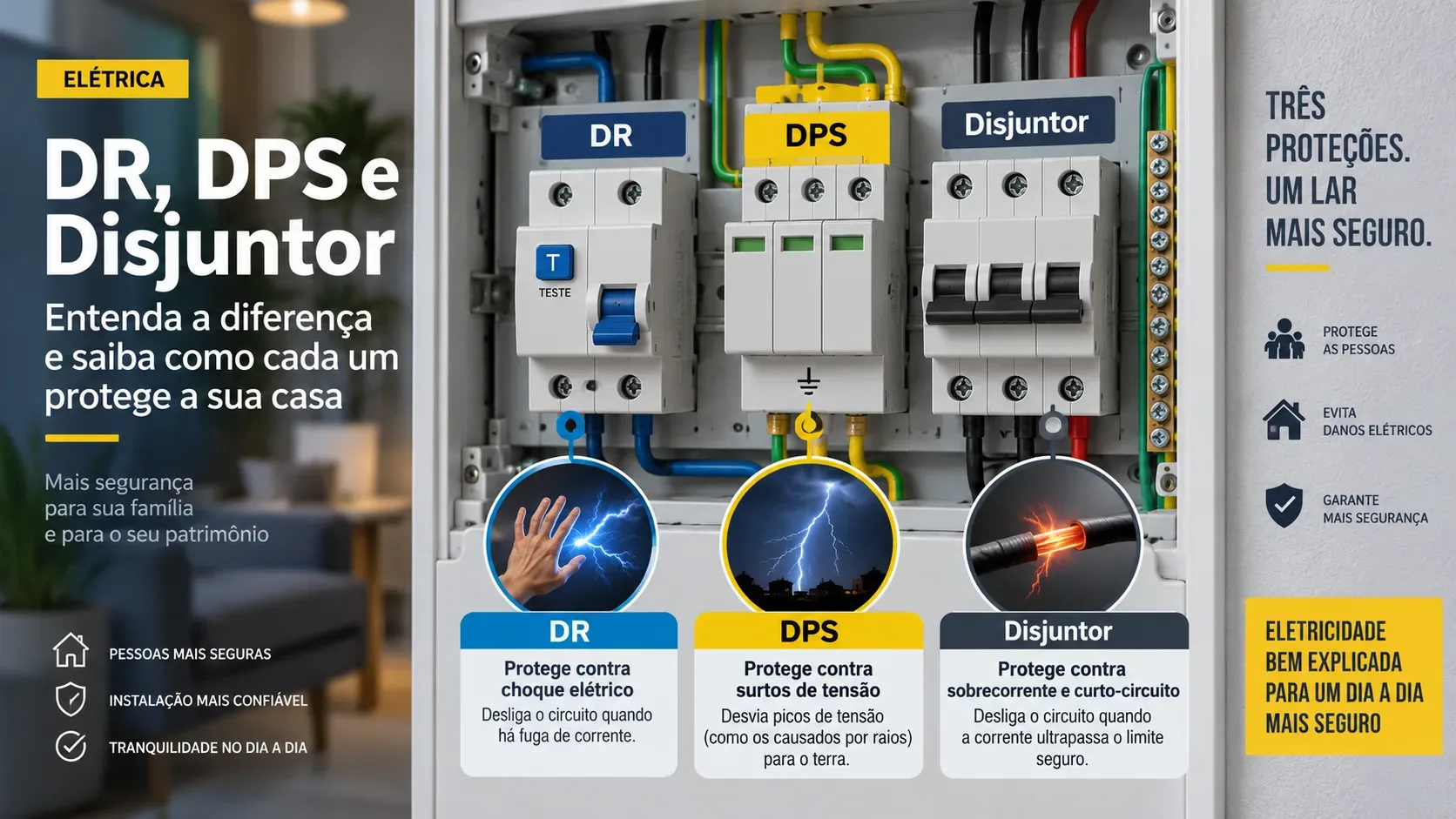
A professional can check things that residents should not test themselves, such as the condition of internal contacts, the tightness and integrity of connections, the condition of conductors, circuit protection, load compatibility, and whether components need to be replaced.
When the situation becomes an emergency
Smoke, fire, a visible electrical arc, intense crackling, or ongoing melting change the priority. Do not approach the area just to save the appliance, and do not throw water on it. If you can safely cut power at the panel without passing near the hazard, switch off the supply. Then call the Fire Department at 193.
If someone has received an electric shock, do not touch the person while there is any possibility that they are still in contact with an energized source. The MME advises interrupting the power supply when possible and calling emergency services, including Samu at 192.
What to tell the electrician
An objective description is more useful than trying to discover the cause yourself. Say which appliance was connected, whether there was an extension cord or adapter, how long the equipment had been in use, where the heat was noticed, whether there was an odor, discoloration, deformation, noise, or sparking, and whether any breaker tripped.
If you know, also say whether the outlet is marked 10 A or 20 A and give the appliance power rating shown on its label or in its manual. You do not need to open the outlet to collect this information.
The practical rule is simple: a hot outlet with a burning smell is not a point to keep using just to "see what happens". Stop using it, keep the area safe, and leave the internal investigation to a qualified professional.