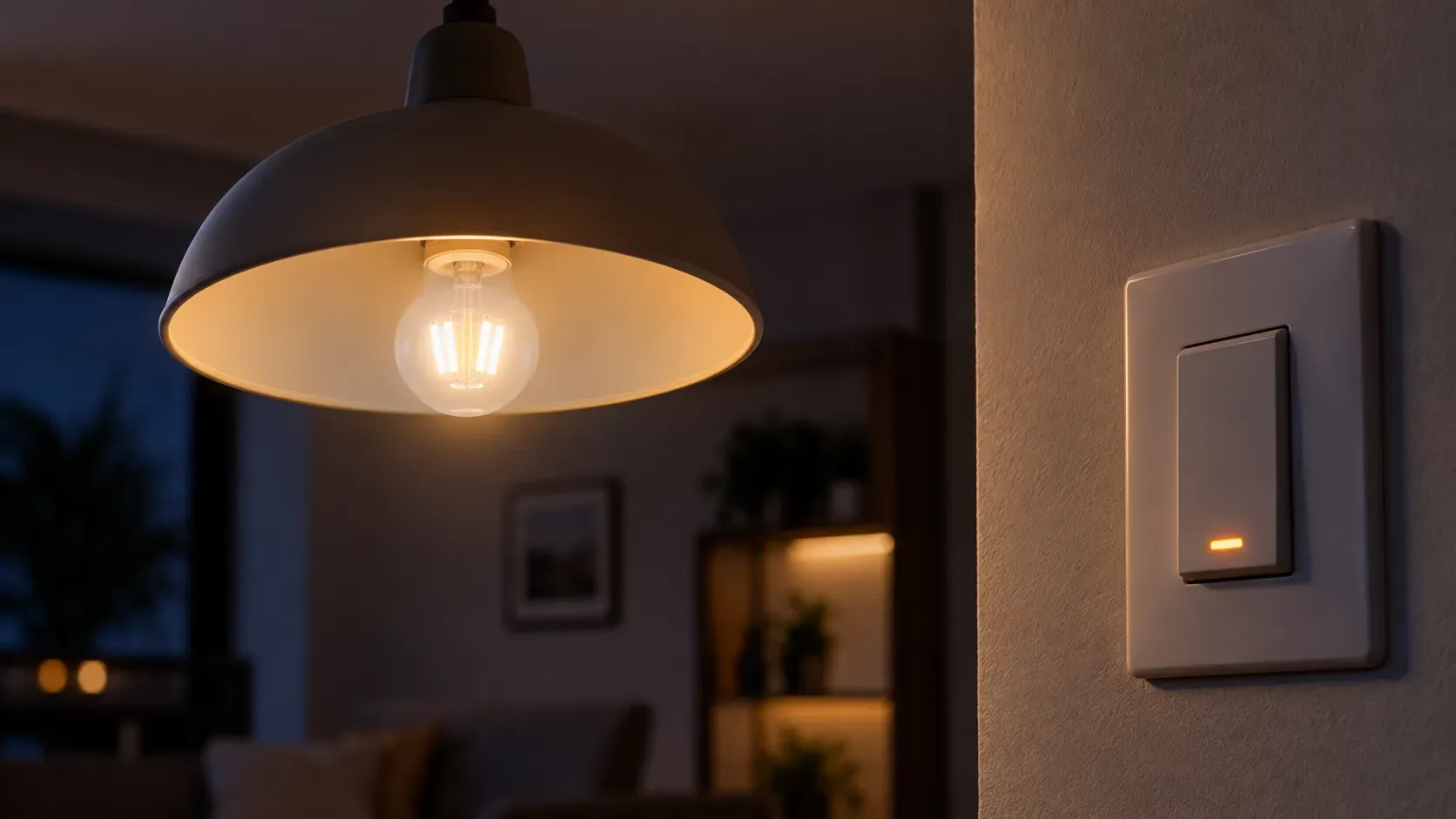
If an LED bulb remains faintly lit, gives occasional flashes, or pulses even when the switch is in the off position, the symptom does not point to a single cause. In many cases, the LED is reacting to a very small current that still flows through the circuit because of the type of dimmer, an illuminated switch, or control electronics. In other cases, flickering can accompany a connection or installation problem that deserves professional evaluation.
A practical rule is to separate a faint steady glow or occasional flash from warning signs such as heat, a burning smell, buzzing, crackling, discoloration, or abnormal flickering at several points in the home. The first group is often related to lamp/control compatibility; the second means testing should stop and a qualified electrician should inspect the installation.
Why an LED can light up even when the switch is off
LED bulbs use little power and contain an electronic circuit, called a driver, to feed the light-emitting diodes. Because of that, a current that would be invisible in an incandescent bulb can be enough to produce a very faint glow in some LEDs.
Lutron describes two typical behaviors with electronic lighting controls. With ghosting, the LED remains on at a very low level in the off state. With periodic flashing, a small leakage current can slowly charge the lamp's power supply; once the charge reaches a certain point, the lamp flashes and turns off again, restarting the cycle. The manufacturer also notes that low-wattage LED loads can be more sensitive to this effect. See Lutron's technical explanation of minimum load, leakage current, and LED behavior in the off state.
Diagnostic tree: observe without opening the installation
1. Does the problem occur with only one bulb?
If only one bulb shows residual glow or flashes while the others in the same area behave normally, that bulb may simply be more sensitive to residual current. Different LED models do not necessarily behave the same way with the same control.
- Observe whether the effect started after the bulb was replaced.
- Check the package or data sheet to confirm whether it is intended for dimmer use, if a dimmer is present.
- If replacing only the bulb is simple and safe, try another compatible model with the power off and follow the manufacturer's instructions.
If changing the LED eliminates the symptom, that strongly suggests a lamp/control compatibility issue, but it is not proof that the wiring is fault-free.
2. Is there a dimmer, smart switch, or electronic control?
Dimmers and smart controls may need a small amount of power to keep their own electronics operating. In some designs without a neutral dedicated to the control, that current passes through the load. Sensitive LEDs can respond with a glow, pulses, or flashes even when the control is set to “off.”
Lutron calls attention to this behavior and recommends checking compatibility between the dimmer and the bulb. Its documentation also links the phenomenon to small LED loads and controls that maintain operating current in the off state. See its guidance on ghosting and LEDs used with dimmers.
For the resident, the test should stop at identification: write down the dimmer/control model and bulb model, then consult the manufacturer's compatibility list. Do not open the wall box or change connections to experiment with fixes.
3. Does the switch have a locator light when it is off?
Some illuminated switches pass a very small current to power the locator light. Leviton defines LED ghosting as a faint lamp glow even when the switch is off and identifies leakage current as a common cause with illuminated switches. On some dimmers, the locator light itself can allow enough current to pass to cause glow or flicker in sensitive LEDs.
Leviton describes this relationship in its explanation of LED ghosting and in its support article on lights that continue glowing when the dimmer is off.
4. Does the effect occur on several lights, or did it change without any component replacement?
When several lights begin to flicker, when the symptom appears in more than one room, or when an installation that used to work normally starts flickering without bulbs or controls being replaced, the explanation may be more than a “sensitive LED.” Loose connections, deteriorated components, and other installation problems can also cause flickering.
In that situation, do not troubleshoot by trial and error on the wiring. The Electrical Safety Foundation International (ESFI) lists lights that flicker or dim among signs that justify inspection by an electrician, especially when accompanied by heat, buzzing, discoloration, or a burning smell.
How to interpret the symptom pattern
| Observed pattern | Possible cause | Safe next step |
|---|---|---|
| Faint continuous glow with the switch off | Residual current, dimmer/electronic control, or illuminated switch | Identify models and check compatibility; try another compatible bulb without opening the installation |
| Single flash every few seconds or minutes | Lamp driver slowly charging from a small leakage current | Check whether there is a dimmer, smart control, or illuminated switch; compare with another compatible LED |
| Flickers while on and also when off | Dimmer incompatibility, lamp/driver issue, or possible installation problem | Stop testing if there are other abnormal signs and request professional evaluation |
| Several lights flicker or change brightness | A broader supply or connection problem is possible | Call an electrician, especially if the behavior is new or recurring |
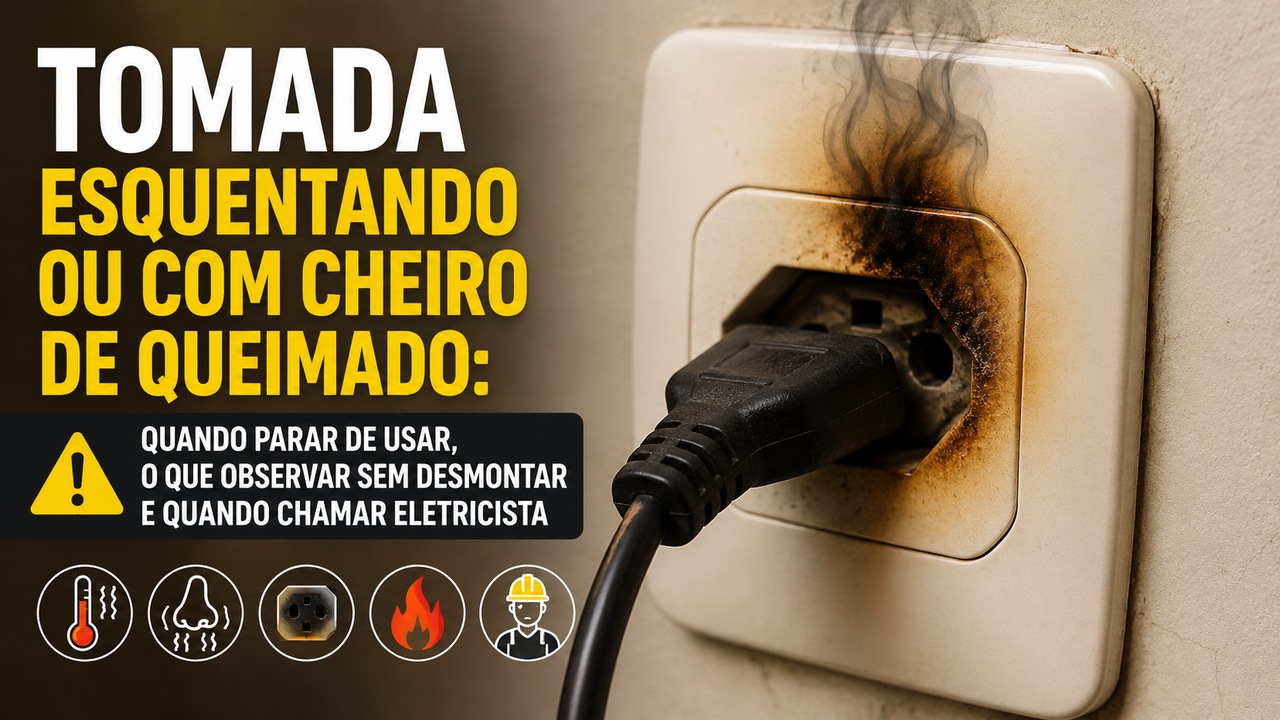
| Smell, heat, crackling, buzzing, dark marks, or shocks | Sign of a possible electrical fault | Stop using the circuit and contact a qualified electrician |
What you can check without touching the wiring
- When it started: after replacing the bulb, installing a dimmer, or changing the switch?
- How many points show the symptom: one LED, one circuit, or several rooms?
- What type of control is used: standard switch, illuminated switch, dimmer, or smart control?
- Whether the LED is dimmer-compatible: if there is a dimmer, check the lamp specification and the control manufacturer's compatibility list.
- Whether other warning signs are present: noise, heat, smell, discoloration, breaker trips, or shock.
These observations already give an electrician a more focused starting point. Avoid removing wall plates, opening boxes, measuring voltage, installing capacitors or resistors, or changing connections yourself.
When to call an electrician
Call a professional if the issue persists after checking lamp/control compatibility, if flickering occurs at several points, or if you cannot safely identify the installed switch or dimmer type.
Stop testing and seek prompt professional help if any of these signs are present:
- a switch or outlet plate feels hot;
- a smell of burning plastic or insulation;
- crackling, sizzling, or unusual buzzing;
- dark marks or discoloration;
- a shock or tingling sensation when touching equipment or a switch;
- a breaker trips repeatedly;
- several lights flicker or dim without an obvious cause.
ESFI recommends professional inspection when lights flicker or dim, or when there is heat, unusual noise, or a burning smell. See ESFI's list of electrical warning signs.
What the electrician is likely to investigate
Without assuming the cause before inspection, the professional may check lamp/dimmer compatibility, the type of control installed, the presence and correct use of a neutral where applicable, the condition of connections, the integrity of the socket and fixture, and whether residual current is enough to excite the LED driver.
In some cases, the solution is simply to use a lamp/dimmer combination tested by the manufacturer. In others, the control may need to be replaced with a model suited to the LED load. If there is a connection or installation defect, the correction should address the source of the problem rather than hide it with improvised modifications.
Does residual glow mean danger?
Not necessarily. A faintly glowing LED caused by residual current can be a compatibility issue and, by itself, is not proof of a dangerous installation. But the same symptom cannot be used to rule out electrical faults. Context matters: if the behavior appeared suddenly, affects several points, or comes with heat, noise, odor, breaker trips, or shock, treat it as a possible fault and request an inspection.
In short: an isolated faint glow usually calls for a compatibility check; abnormal electrical warning signs call for an electrician. Safe diagnosis starts with observation, component identification, and knowing when to stop.