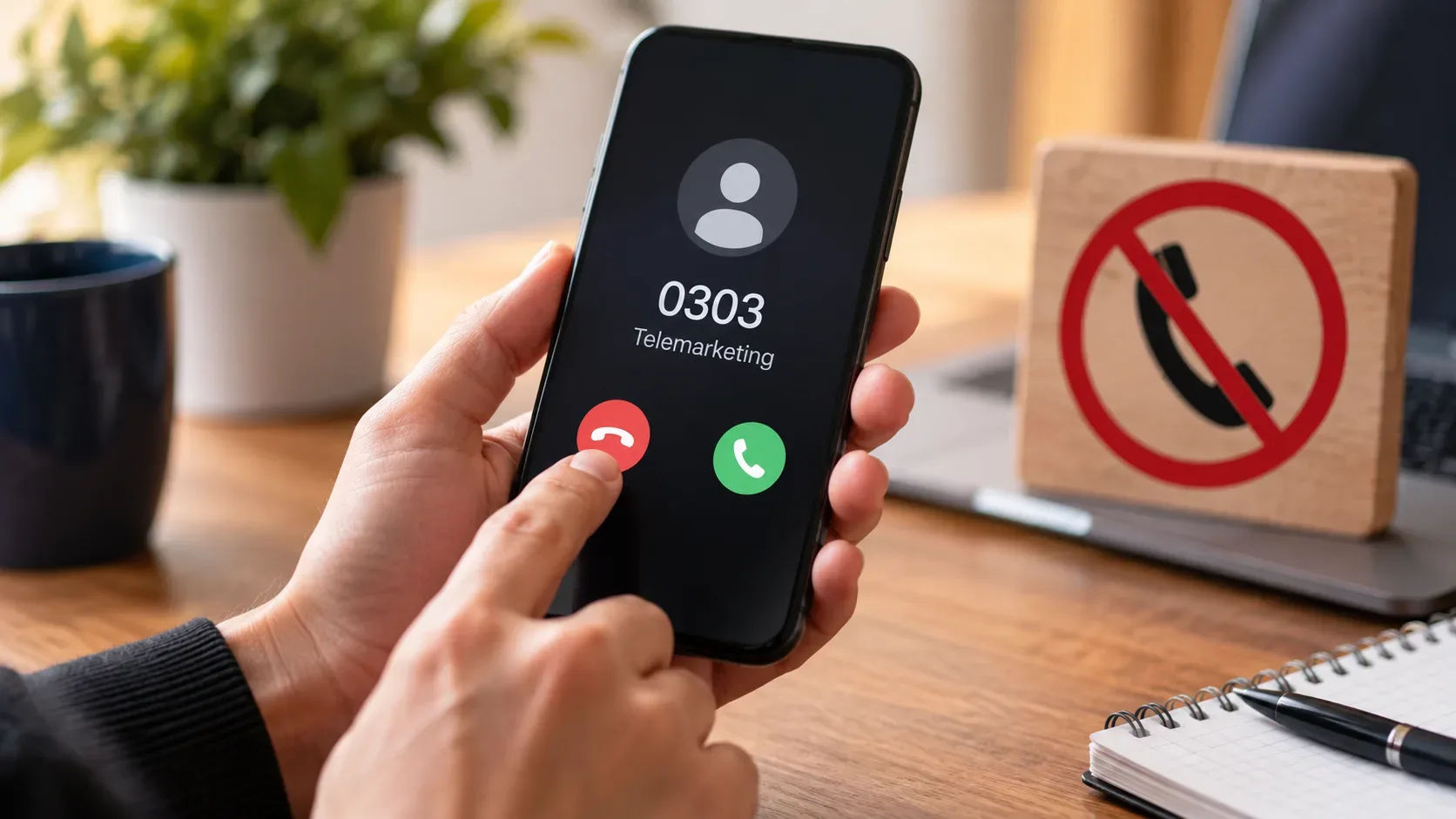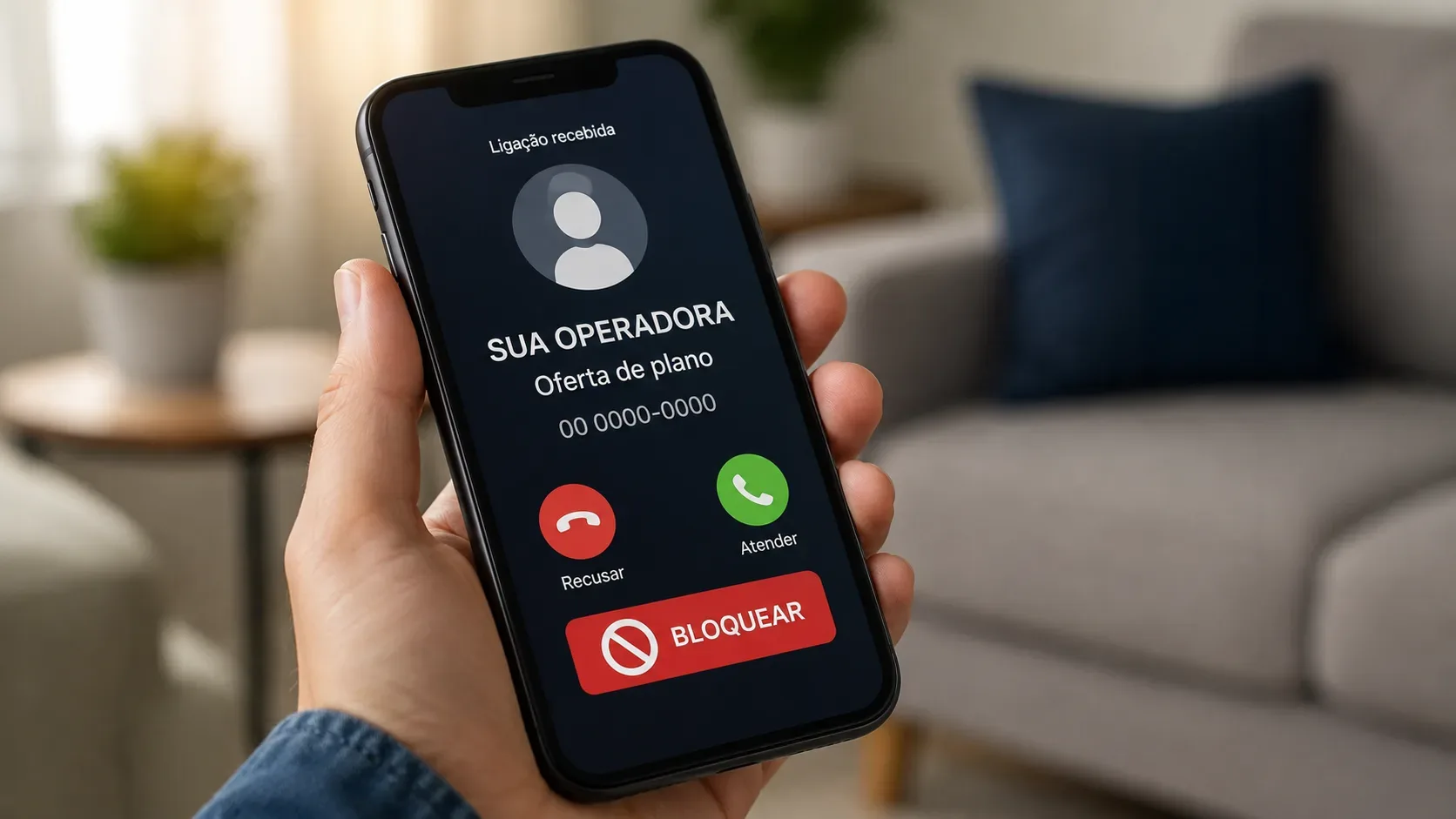
Automatic blocking of abusive calls now follows common rules set by Anatel for carriers' own filtering mechanisms. The change does not create a single technology or require every company to use the same system: Decision Order No. 82/2026/RCTS/SRC, published on August 17, 2026, establishes principles, criteria and safeguards for solutions adopted by carriers.
In practice, there are two different flows. People receiving calls may have the protection enabled by default and can opt out. People placing calls whose number has been blocked may request information and challenge the block directly with the carrier responsible for it.
How automatic network-level blocking works
Filtering takes place in the carrier's network, rather than depending on a manual block on the phone. A carrier may analyze traffic characteristics, such as whether call volume, duration and purpose are compatible with appropriate use, to identify potentially abusive mass-calling patterns.
Anatel requires these mechanisms to follow proportionality, good faith and non-discrimination. The agency did not prescribe a mandatory app, algorithm or supplier: each carrier may choose its technology as long as it complies with the regulatory criteria and safeguards.
This also means automatic blocking should not be understood as one universal, identical list across all carriers. A number may be assessed according to the mechanism and criteria applied by the network receiving the call.
Who blocks, how to opt out and how to challenge a block
| Situation | Who acts | What to do | Main deadline or rule |
|---|---|---|---|
| Consumer receives potentially abusive calls | Consumer's carrier, if it adopts the solution | Protection may be enabled by default | No additional charge |
| Consumer does not want to use the filtering | Consumer | Request an opt-out through the simple and accessible method provided by the carrier | The company must give advance notice of activation and its effects |
| A legitimate number had its calls blocked | Call originator | Use the specific channel or procedure of the carrier that imposed the block and request information and possible unblocking | The carrier has up to 10 calendar days to respond or unblock when appropriate |
| Essential or public-utility service number | Carrier | Apply safeguards to prevent improper blocking | The rule cites, among others, public security, fire services, civil defense and health |
How to opt out of automatic protection
If a carrier adopts the mechanism, activation must be the default for its consumer base, with no additional charge. Before activation, the company must notify customers and explain its effects.
Consumers have the right not to use the filtering. Anatel requires the opt-out to be offered through a simple and accessible method, and the company's customer-service channels and website must provide clear information about the existence and general operation of the solution.
The order does not establish one button or web address that applies to every company. The practical path may therefore vary among an app, website, call center or another channel defined by each carrier. The regulatory point is that opting out cannot depend on an obscure or inaccessible procedure.
How to challenge a false positive
The challenge process is for a user placing calls who believes the number was blocked incorrectly. That user may ask the carrier that applied the block for information about the measure and for possible unblocking.
- Identify the network or carrier where the block occurred, when that information is available.
- Find the specific channel or procedure published by the company for numbers blocked by its anti-spam mechanism.
- Provide the information needed to identify the number and the legitimate calling activity.
- Request review of the block and, where appropriate, unblocking.
- Keep the protocol number, date and documents submitted so the deadline can be tracked.
According to Anatel, the carrier has 10 calendar days to provide a response or unblock the number when it finds that the calls do not meet the criteria in the order or have characteristics that justify differentiated treatment.
The rule does not mean every request will lead to unblocking. The carrier may keep the measure in place if the calling pattern still meets the criteria for inappropriate or abusive use, provided the review follows the applicable guidelines.
Essential services have specific safeguards
The order requires safeguards to prevent the mechanism from blocking communications from numbers used by essential and public-utility services. Anatel expressly mentions public security, fire services, civil defense and health.
This protection matters because traffic-pattern filters can produce false positives. The regulatory design seeks to reduce that risk without preventing carriers from fighting mass calls that cause nuisance or misuse of the network.
Automatic blocking is not the same as blocking a number on your phone
The new rules cover mechanisms operated by the carrier in its own network. That is different from manually blocking a number on a phone or using an app installed by the user.
It also does not replace other measures against unwanted calls. Anatel maintains guidance on abusive calls, including device-level blocking, identification tools and services such as Não Me Perturbe, each with its own scope.
What to check with your carrier
- whether it has already adopted its own automatic blocking mechanism;
- how it communicates activation and which calls may be filtered;
- where the opt-out is located for customers who do not want the protection;
- which challenge channel is available to blocked call originators;
- which data or documents are required for the review;
- how to track the request within the 10-calendar-day deadline.
Because Anatel set common parameters but not a single technology, these operational details may vary by carrier. For practical decisions, use your carrier's official channels and keep service records, especially in a false-positive case.