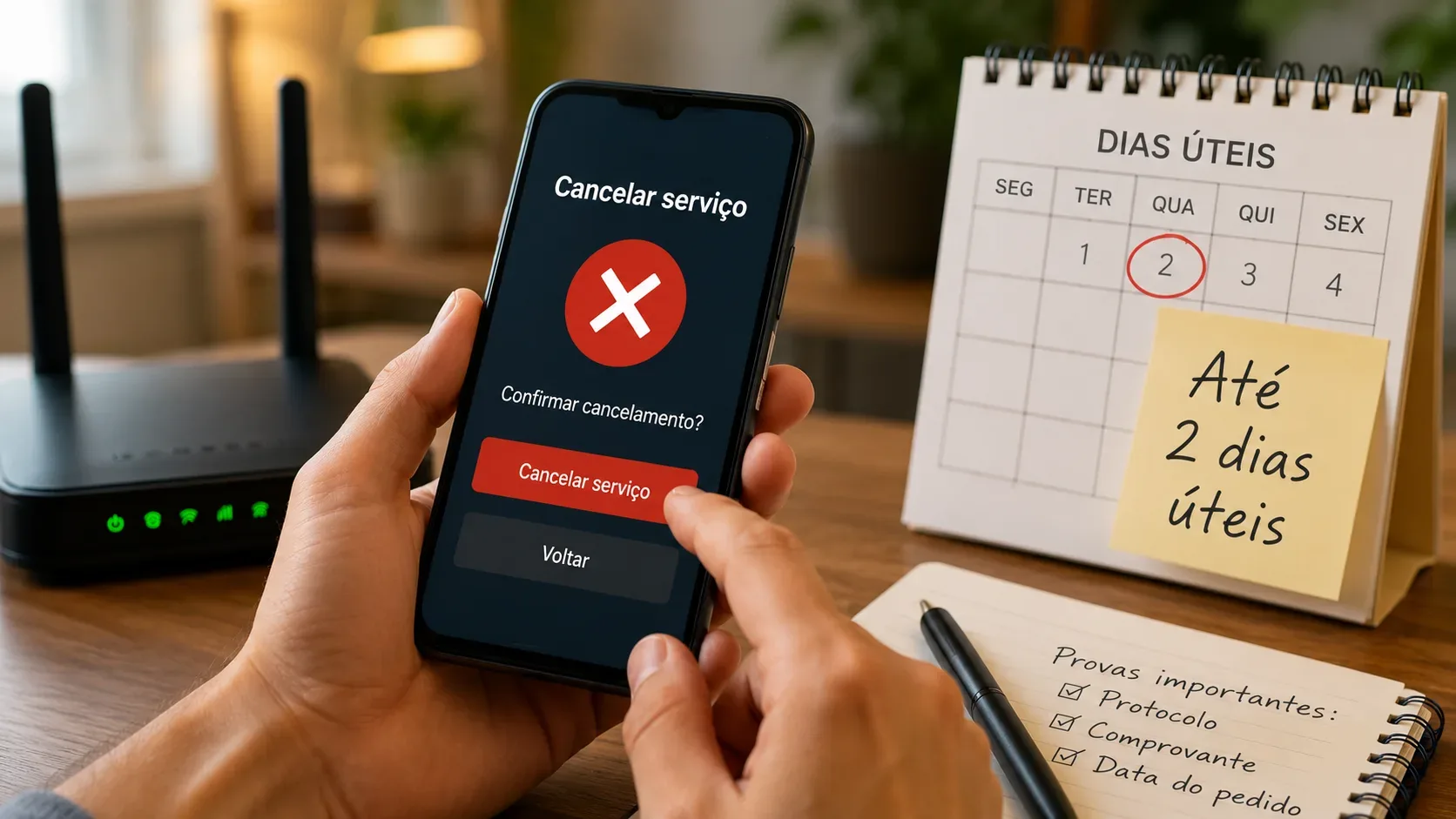
If you asked to cancel your internet service through an app and the service did not end immediately, that alone does not mean the provider broke the rules. Under Brazil's Anatel General Regulation on Consumer Rights in Telecommunications Services (RGC), the key question is whether a customer-service representative intervened in the cancellation. A request processed automatically, without an attendant, may take up to 2 business days to take effect. A cancellation processed with an attendant, however, must take effect immediately, even if the company's systems still need time to finish technical steps.
This difference also changes what may be charged after the request. For an assisted cancellation, the provider may not charge for services supplied after the request. For an automatic cancellation, the consumer may be charged for services used during the processing period. These rules appear in Articles 82 to 85 of the RGC and are summarized by Anatel on its updated page about cancelling telecommunications services.
The app alone does not determine the deadline: what matters is whether an attendant was involved
Saying “I canceled through the app” still leaves an important question: was the request made through a self-service screen, or was it processed by a person? The RGC separates requests precisely on the basis of that intervention.
| Channel used | When cancellation takes effect | Evidence worth keeping | What to check if you are charged |
|---|---|---|---|
| App or website self-service, without an attendant | Within up to 2 business days after the request | Screenshots, date and time, protocol number and electronic confirmation | Whether service was billed after cancellation took effect or the contract stayed active beyond the deadline |
| Automated phone menu, without speaking to an attendant | Within up to 2 business days | Protocol number, call time and confirmation sent by the provider | Whether charges extend beyond the processing period |
| Phone, chat or another channel where an attendant processes the termination | Immediately | Protocol number, transcript or available recording, confirmation message | Any charge for service supplied after the request |
| Physical store with an attendant | Immediately | Protocol number or service receipt | Any charge for service after the request |
In other words, a cancellation button in an app will usually fall into the no-attendant flow. But if the app sends the customer to a chat and an attendant actually processes the termination, the rule for requests with attendant intervention applies. The regulation does not create a special deadline simply because the channel is digital; it distinguishes how the request is processed.
Why self-service can take up to 2 business days
Article 84 of the RGC states that requests without attendant intervention must be processed automatically and take effect after 2 business days from the request. Anatel's consumer guidance presents this as a deadline of up to 2 business days. During that period, the consumer may withdraw the cancellation request and must pay for services used while cancellation is still being processed.
This is not permission for the provider to keep the contract active indefinitely. Once the applicable deadline has passed, service should not continue to be billed as if the cancellation did not exist. Because the period is measured in business days, weekends and holidays can push the effective date later on the calendar; that is why keeping the exact date and time of the request is more useful than looking only at invoice dates.
When cancellation should be immediate
Under Article 83 of the RGC, requests processed with attendant intervention must take effect immediately, even if technical processing still requires some time. The practical consequence is straightforward: the provider may not charge for services supplied after an assisted termination request.
This applies to a cancellation completed with an attendant by phone and also to other channels where an attendant actually processes the termination. If the company says it needs a few days merely to “close the request in the system,” that operational need does not change the date when the termination became effective.
What may still appear on the bill after the request
Not every charge issued after a cancellation request is automatically improper. A final bill may include amounts that were already due before cancellation, remaining debts and, where applicable, a charge linked to a minimum-stay commitment. Article 82 requires the provider to inform the consumer about these conditions when termination is requested.
- Cancellation with an attendant: there should be no charge for service supplied after the request.
- Cancellation without an attendant: the provider may charge for services used during the processing window of up to 2 business days.
- Earlier debts: they do not disappear simply because the contract ended.
- Minimum-stay or loyalty fee: this is a separate issue from the operational cancellation deadline. A possible fee does not turn an immediate cancellation into a 2-day cancellation.
The consumer may request termination at any time and through the channels available for the contracted offer, even if there is an outstanding debt. The provider therefore should not make the simple registration of cancellation conditional on prior payment of overdue bills.
Equipment return cannot hold up cancellation
If the internet service uses a modem, router or other provider-owned equipment, returning it does not change the termination date. The RGC states that processing the cancellation is independent of equipment pickup. The provider or an authorized third party has up to 60 days from the request to arrange pickup at no cost; the consumer may also choose to deliver the equipment to a location indicated by the company.
So if the provider says that “the contract will only be canceled after the modem is collected,” that explanation does not match the rule described by Anatel.
What evidence to keep when canceling
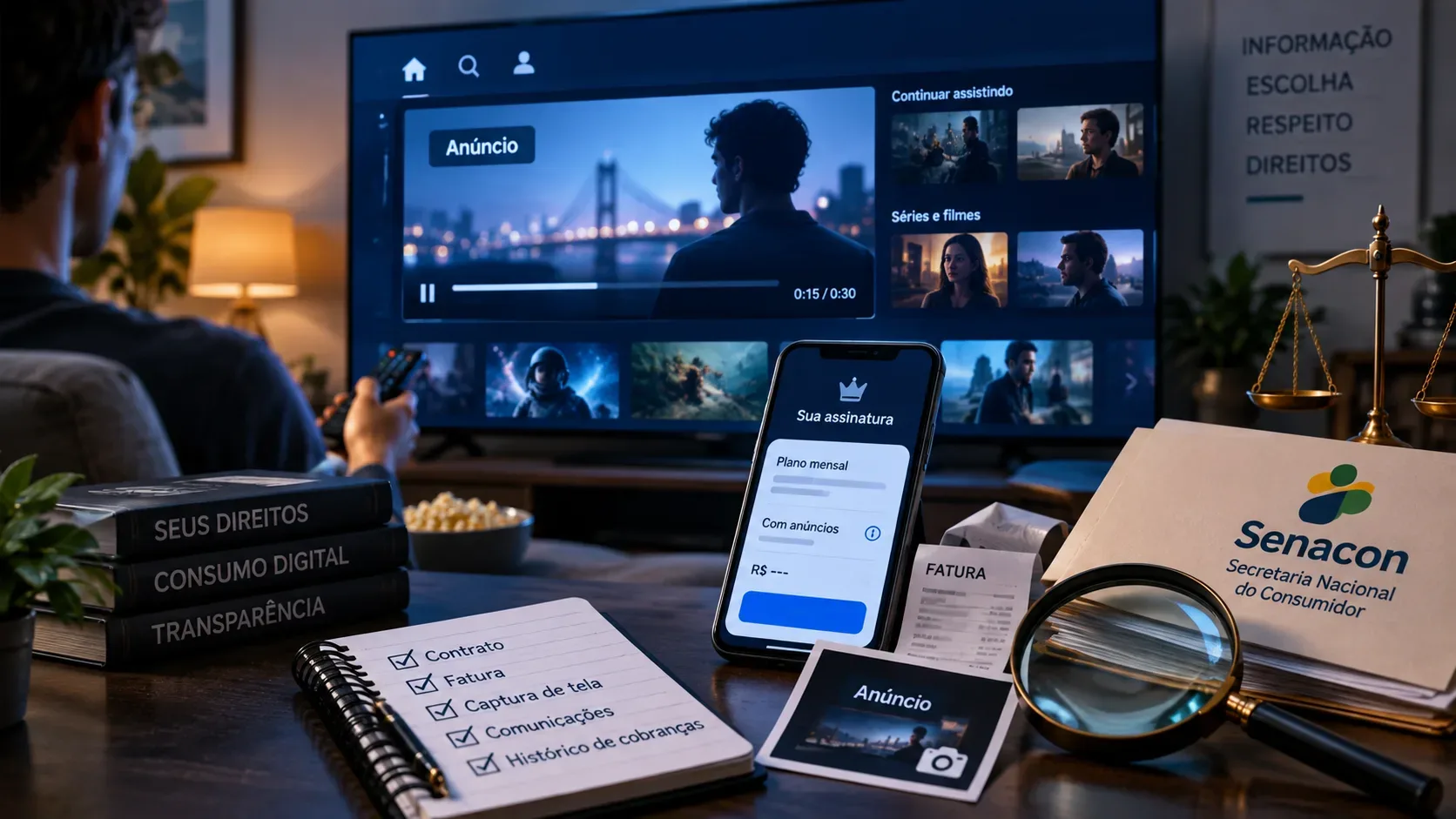
Article 85 requires the provider, in every case, to make proof of the termination request available by correspondence or electronic means, according to the consumer's choice. To reduce the risk of a later dispute, it is useful to keep more than one form of evidence:
- protocol number;
- screenshot of the confirmation in the app or website;
- date and time of the request;
- email, SMS or confirmation message;
- chat transcript, if an attendant was involved;
- the previous bill and the first bill issued after cancellation.
The receipt matters because the request date is the reference point for deciding whether cancellation should have been immediate or whether the up-to-2-business-day window still applied.
Charged afterward? Compare the request date with the effective date
Before disputing the bill, identify which flow you used. If an attendant was involved, challenge service charges after the moment of the request. If it was self-service, check whether the amount refers to the period in which cancellation could still be processing or to a later period after it should already have taken effect.
On its page about billing and disputes, Anatel states that consumers may dispute charges with the provider. When the disputed amount has not yet been paid, collection of that portion must be suspended and the company must make available a document containing the undisputed amounts. The provider has up to 30 days to analyze the dispute.
When filing the dispute, describe the facts objectively: date and time of the request, channel used, whether an attendant was involved, protocol number, the date the termination should have taken effect and which bill entries you consider to be after that point.
If the provider does not resolve it, escalate with your protocol numbers
Anatel's current guidance is to contact the provider first and keep the protocol number. If the issue is not solved, the next step is the provider's ombudsman. If the problem remains, a complaint can be filed through Anatel Consumidor, using the earlier protocol numbers. The complaint is forwarded to the provider, which has 10 calendar days to respond.
For the legal basis, Articles 82 to 85 can be read in Anatel Resolution No. 765 of November 6, 2023, which approved the new RGC. Most of the updated regulation took effect on September 1, 2025.
A practical rule for separating the deadline from a loyalty fee
The most useful approach is to separate two questions. The first is when the service stops producing effects and generating service charges: immediately when an attendant is involved, or within up to 2 business days when the request is automatic. The second is whether contractual amounts remain payable, such as earlier debts or a possible minimum-stay fee. One does not change the other.
If you kept the confirmation and know whether the cancellation was assisted or automatic, you already have the two main pieces of information needed to check the final bill and dispute a charge that goes beyond the correct deadline.