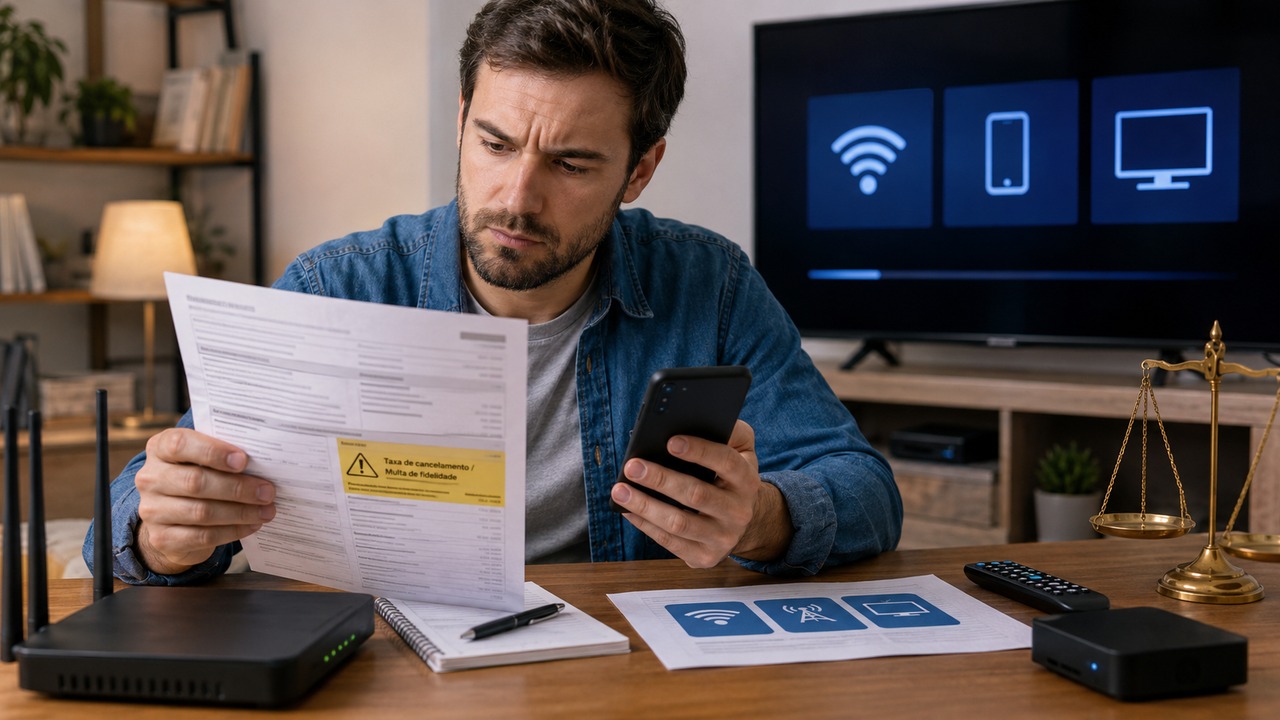
The loyalty penalty is not an automatic fee for canceling a service. In Anatel's current rules, it is linked to a period of stay accepted in exchange for a benefit and can only be required within specific limits. For individuals, this period is a maximum of 12 months. If there is contractual or legal breach by the provider, the collection of the fine is prohibited under the conditions provided for by the General Regulation on Consumer Rights of Telecommunications Services, the RGC.
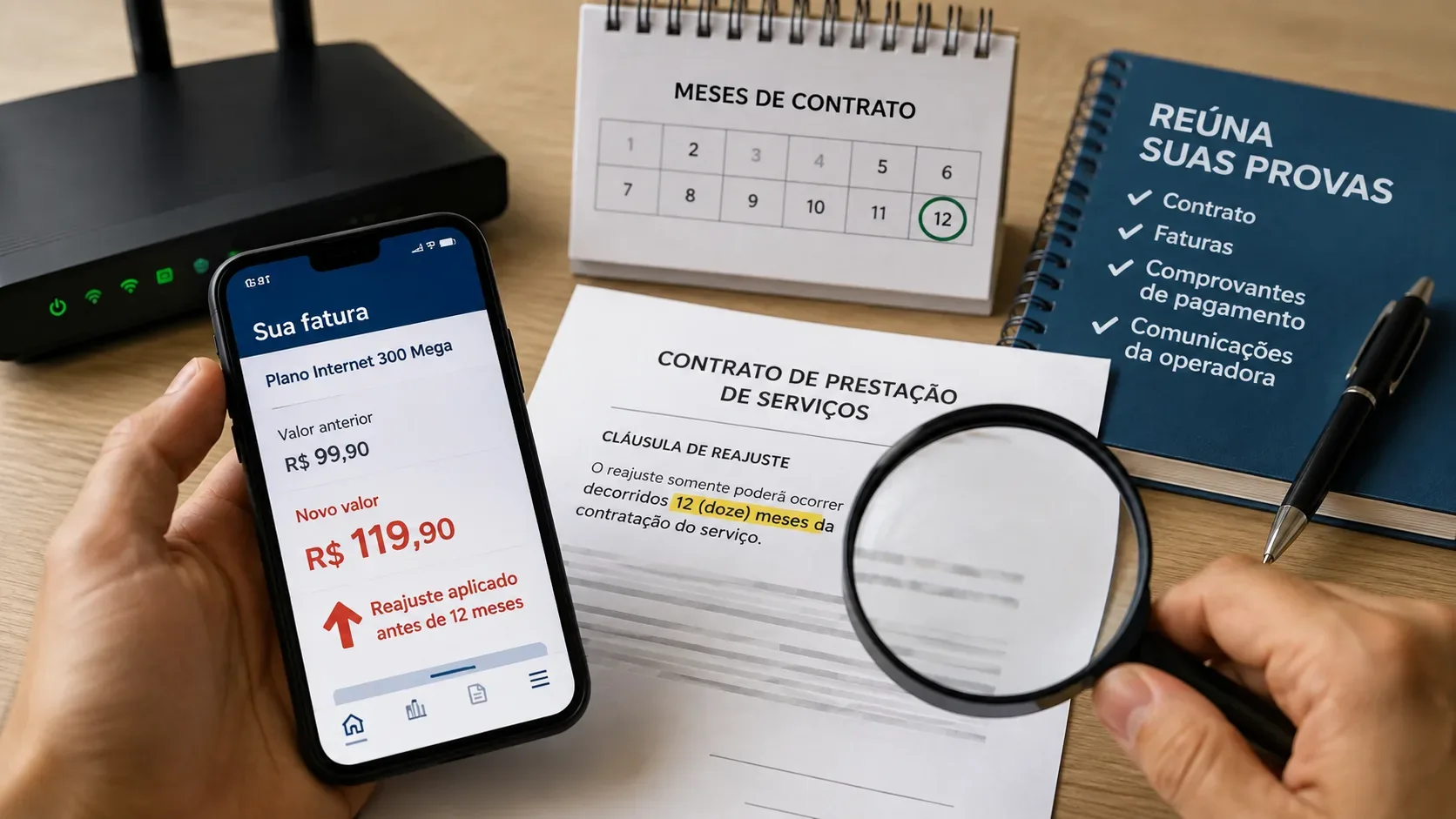
Therefore, before accepting the charge or discussing just the value, it is worth reconstructing the contract. The starting point is to identify which benefit justified loyalty, when the term began, how much time is left and which calculation rule appears in the contract. Then comes the decisive question: is the cancellation just a result of the customer's choice or a fault on the part of the operator itself?
First filter: is there a valid and identifiable loyalty?
The offer may provide for a retention period when the consumer receives consideration. This benefit may appear, for example, as a discount on the monthly fee, free installation, reduced cost of equipment or another advantage linked to the contract. The RGC requires that the loyalty period, the description and value of the benefit and the amount of the fine for early termination be clearly informed.
If the invoice or service mentions a fine, but the consumer cannot identify which benefit he received, what the value of this advantage was or what deadline was assumed, there is a relevant basis for asking the provider to demonstrate the origin of the charge. The discussion should not begin with the generic argument that "every plan has loyalty", but with the documents of the offer actually contracted.
The regulation also determines that, when the provider offers an option with a period of permanence, there must be an alternative with equivalent conditions of enjoyment and without a period of permanence. For legal entity consumers, the maximum period may be longer than 12 months; the 12-month limitation is the reference for individuals.
Be careful with renewing loyalty
Automatic renewal of an offer with a new duration cannot be imposed without consent. Anatel's current interpretation allows renewal when there is prior and express authorization from the consumer, given at the time of contracting or later. If the operator claims that loyalty has "restarted", ask for a record of the authorization that would have created the new period.
Second filter: is the deadline still running and is the fine proportional?
Even when the loyalty is valid, canceling before the end does not authorize any value. The RGC determines that the fine is proportional to the remaining time of the stay and does not exceed the value of the benefit granted.
This means that the operator needs to be able to explain the calculation memory. The amount cannot function as a fixed penalty, regardless of the number of months already served. The longer the time that has already elapsed, the smaller the weight of the remaining period should be in the calculation. Beyond
Furthermore, the ceiling remains linked to the benefit that justified loyalty.
Imagine a 12-month contract in which the reported benefit has a value of R$600 and the contractual fine has been structured up to that limit. If cancellation occurs after five months, seven months remain. A simple proportionality for the remaining time would lead to a ceiling of R$350 in this example. The contract may provide for a lower value, but loyalty cannot be used to exceed the benefit granted or ignore time already served.
If the deadline has already expired, there is no breach of loyalty to justify this fine. If the document presents a term exceeding 12 months for an individual, or if the account shows a value that does not decrease with the remaining time, these points deserve specific dispute.
Third filter: is the cancellation due to operator error?
Here is the most important difference. The RGC prohibits the collection of a loyalty fine when termination results from non-compliance with a contractual or legal obligation on the part of the provider. The rule also establishes that it is up to the operator to demonstrate that the consumer's allegations are unfounded.
This does not transform any dissatisfaction into cancellation without penalty. A preference for another company, a cheaper promotion from the competition or the simple decision to no longer use the service, in itself, does not constitute non-compliance on the part of the provider. It is necessary to point out the obligation that was not fulfilled and relate it to the termination request.
Persistent performance failures, non-compliance with conditions promised in the offer, problems not corrected after repair requests or other concrete violations may form this situation, as the case may be. For fixed broadband, the RGC itself provides for mechanisms linked to quality regulations and considers the downgrading of the provider to D or E quality seal in the municipality after contracting to be a breach of contract, under certain conditions.
In combination, the failure of one service can affect the loyalty of the whole
If internet, telephone and TV were contracted together, the rule is especially relevant. The RGC provides that the prohibition of fines for non-compliance by the provider applies to service contracts provided jointly, even when the failure does not cover all services in the package.
This prevents the consumer from being stuck with the combo just because one of the components works correctly. Even so, the relationship between the failure, the contract and the termination request must be objectively described in the service.
Pay TV has an additional hypothesis
In the cases provided for by the RGC to change the list of pay TV channels, termination can also occur without a permanence fine. This is a regulation-specific hypothesis and should not be confused with any programming change or personal preferences about content.
Proof: even with the burden on the provider, documenting avoids a vague dispute
The rule on burden of proof does not make it unnecessary to record the problem. In practice, the more accurate the history, the easier it is to demonstrate why the cancellation request is linked to the operator's non-compliance and not just the desire to end the contract.
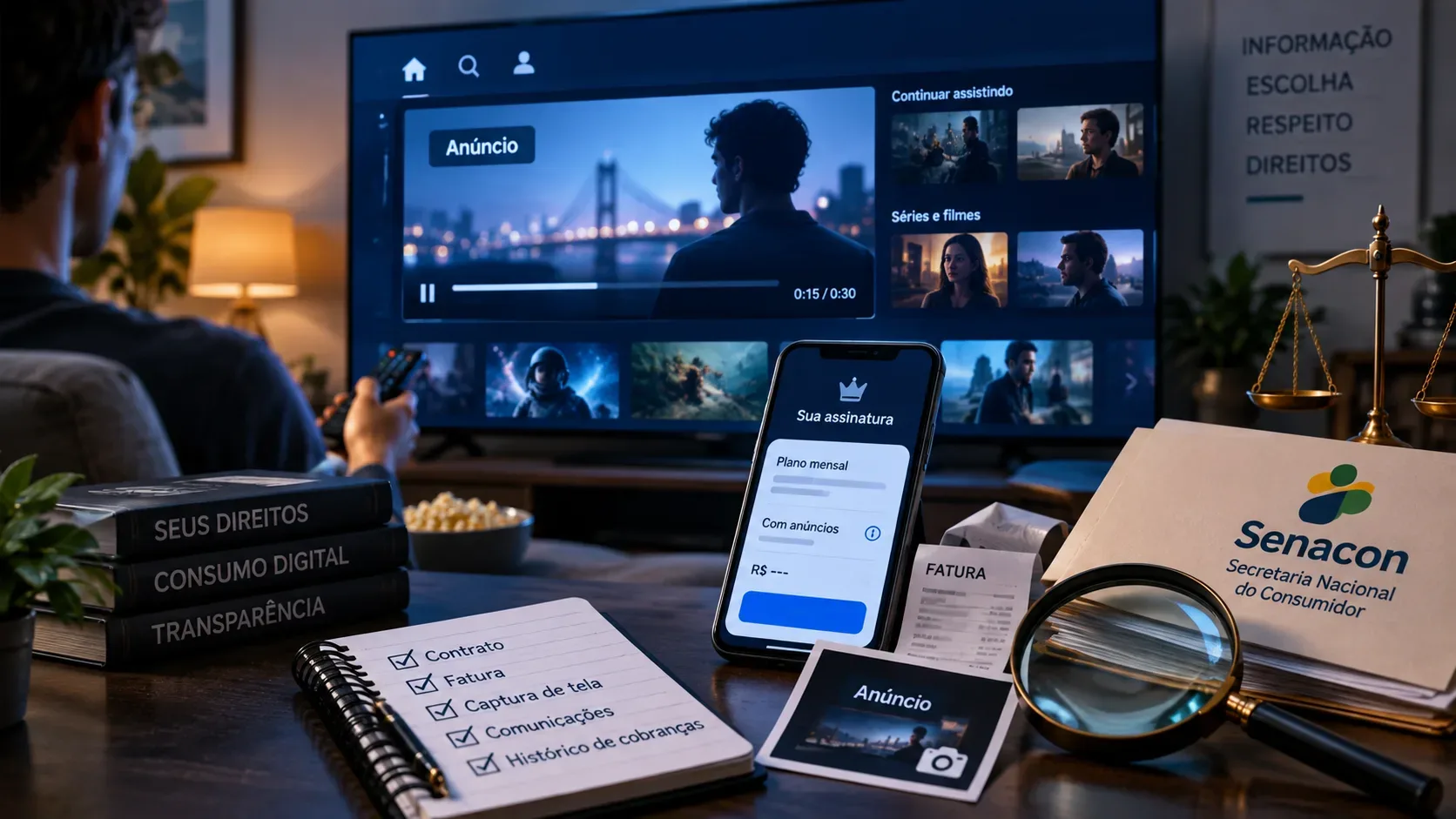
Save the contract, Standard Offer Label, invoices, service protocols, repair records, messages, emails and application screens. For quality or unavailability issues, note the dates, times and duration of failures. If there are official measurements or tools applicable to the service, preserve these results as well. The objective is not to produce an excessive dossier, but to create a timeline that connects obligation, failure, attempted correction and cancellation.
When speaking to the operator, formulate the request specifically. Instead of just saying "I want to cancel without penalty because the service is bad", identify the problem, cite previous protocols and ask that the termination be recorded as resulting from the breach you described. If the fine is maintained, request justification and calculation memory.
How to cancel: attendant and automatic channel have different effects
The consumer can request cancellation at any time and through all service channels available for the offer, even if there are outstanding debts. Previous debts do not prevent the cancellation request; they can still be charged according to the applicable rules.
When the cancellation is processed with the intervention of an attendant, including by telephone or in person, the effects are immediate. The provider cannot charge for services provided after the order has been placed, even if the technical processing takes some time.
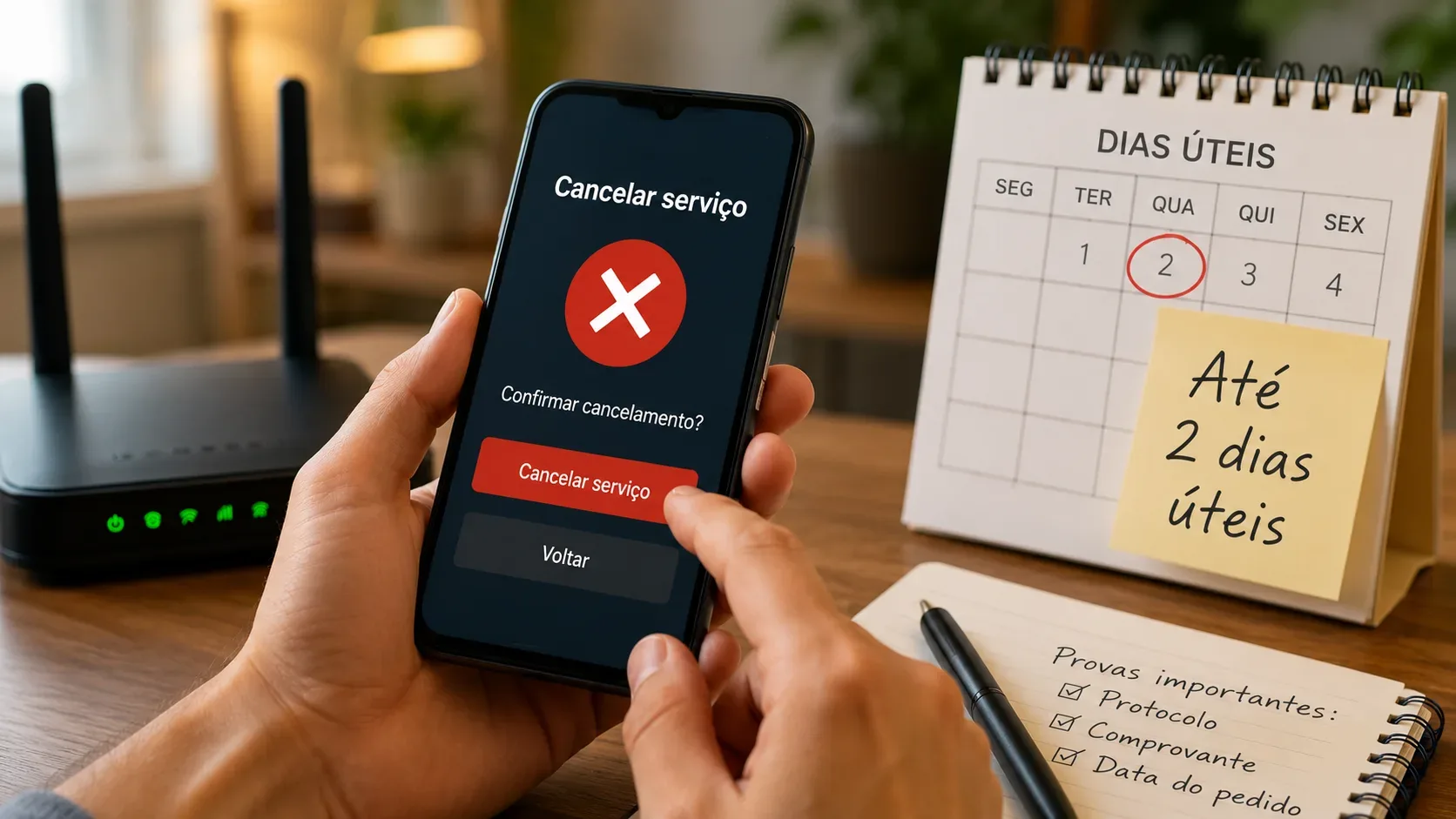
When cancellation is made without customer intervention, as in automatic digital flow, the order must be processed automatically and takes effect after two business days. During this interval, the services used may be charged. The consumer must also be able to cancel the order during this period.
In any case, demand and keep proof of the termination request. The RGC determines that it be made available by mail or electronic means, at the consumer's choice.
Returned equipment is not a condition for cancellation
Router, modem, decoder and other equipment provided by the provider cannot be used to stop the order. Cancellation does not depend on the removal of these items. The provider or authorized third party must arrange collection within 60 days, free of charge, and the consumer can also choose delivery to a designated location.
If the provider does not remove the equipment within this period, the RGC ends the consumer's responsibility for their custody and integrity. For safety, keep proof of scheduling, pickup or delivery.
Cancelling without a fine does not mean erasing all charges
There is an important distinction between loyalty fines, amounts already owed for the service and equipment installments. Even in cases where the permanence fine is waived due to the operator's fault, the consumer remains responsible for the unpaid installments of equipment purchased from the provider.
There may also be proportional values referring to the period actually used before the date on which the cancellation takes effect. Therefore, when you receive the last invoice, check that the charge corresponds to the service actually provided, any equipment installments and the correct time of termination, without mixing these items with a fine that has been removed.
Change of address or better offer from another company: does the fine disappear automatically?
No. The regulations do not generally transform any change of address or exchange for a cheaper offer into an automatic exemption. If the consumer only decides to leave during a valid loyalty period, a proportional fine may be due.
The situation changes if the change of address reveals that the provider is unable to fulfill an obligation assumed in the contract or if there is another relevant breach. In this case, the analysis stops being just "I moved house" and starts considering what the offer promised, the service area, the moving conditions and the response given by the operator. It is an example of a situation in which the contractual document and the protocol make a difference.
If the operator insists on the fine, organize the complaint in three layers
First, dispute directly with the provider and keep the protocol. Service must allow demand to be tracked. Ask for the answer to address the specific points: which benefit justified the loyalty, when the period began, how much is left, how the fine was calculated and why the company understands that there was no non-compliance on its part.
If the solution does not come, contact the operator's ombudsman with the previous protocols. The ombudsman exists precisely for demands that have already gone through common assistance and have not been resolved satisfactorily.
If the problem persists, Anatel recommends that the consumer register a complaint after trying to resolve it with the provider and its ombudsman. The complaint is forwarded to the operator, who must respond to the consumer within the deadline informed by the Agency. This path does not prevent the use of other consumer protection instruments when necessary.
The decision tree for not paying a fine without checking
The final question is not simply “am I loyal?”. The correct sequence is to check whether there was an identifiable benefit, whether the period of stay is valid and still ongoing, whether the fine was calculated proportionally and whether the cancellation is due to non-compliance by the provider.
If there is a clear benefit, a valid term and no non-compliance by the operator, a proportional fine may be due. If the term has expired, if the charge exceeds the limits of the benefit and the remaining time, if there was renewal without express authorization or if the termination is due to contractual or legal non-compliance by the provider, there is a basis to contest the fine or demand cancellation without this charge, depending on the hypothesis.
The safest step is to leave the service with two records: proof of cancellation and a specific answer about the fine. With these documents, it is much simpler to check the latest invoice and, if necessary, take the dispute to the ombudsman and Anatel.