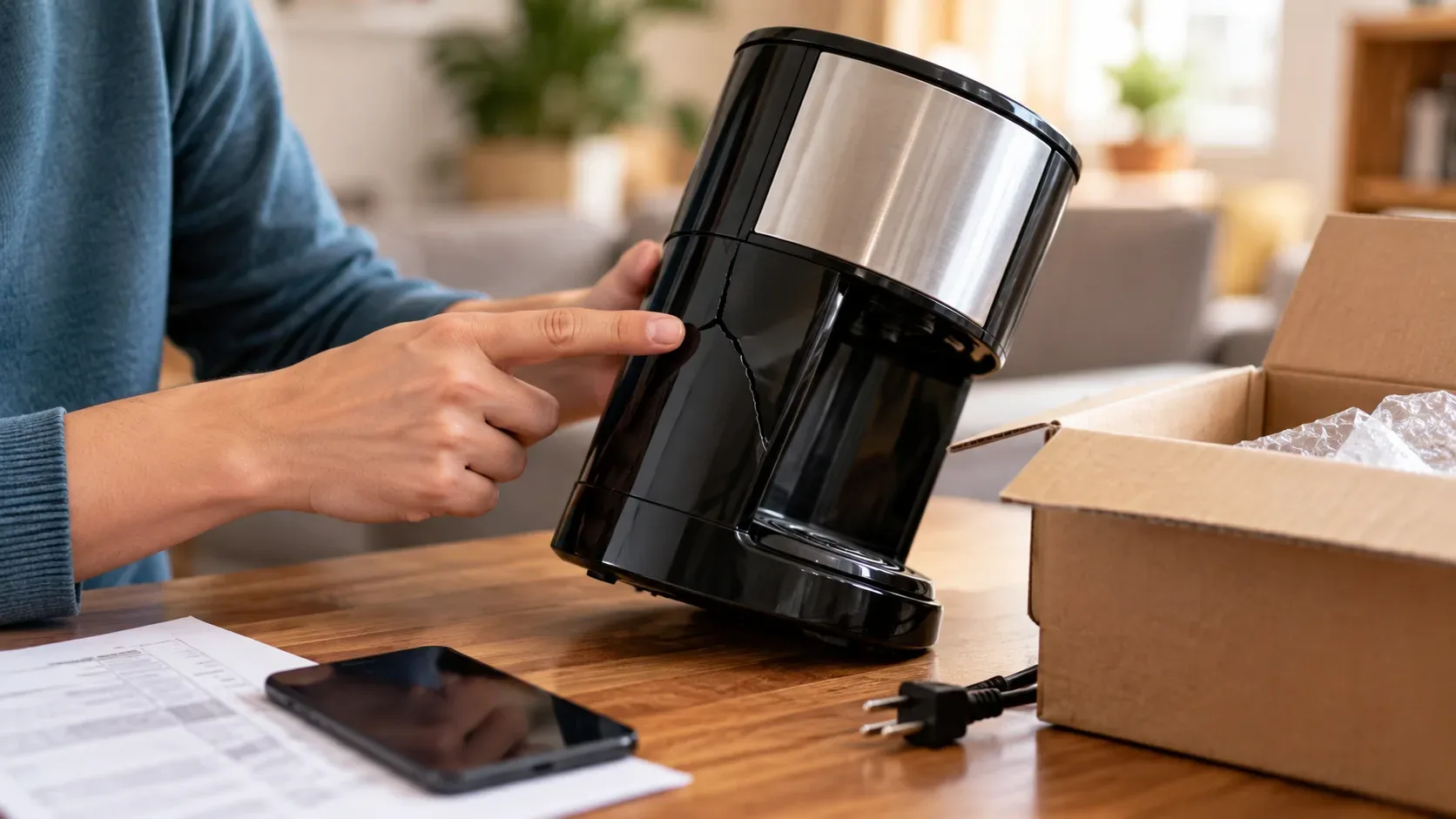
In Brazil, the statutory warranty, the supplier's contractual warranty and extended warranty insurance are not three names for the same right. The first arises from the Consumer Protection Code (CDC); the second is additional coverage offered in writing by a supplier; and the third is usually optional insurance purchased for a premium. The key is to distinguish the deadline for reporting a product defect from the term of a commercial promise and the coverage period of an insurance policy.
Comparison: origin, term, documents and responsibility
| Type | Origin | Term and starting point | Document | Who is responsible | Example of a latent defect |
|---|---|---|---|---|---|
| Statutory | CDC, Articles 18, 24 and 26; no separate purchase required. | For an apparent defect, 30 days for non-durable goods or services and 90 days for durable ones, from actual delivery or completion of the service. For a latent defect, the complaint period starts when it becomes apparent. | Proof of purchase and records of the problem; no warranty certificate is required. | Suppliers in the chain, such as the retailer and manufacturer, jointly and severally for product defects. | An internal manufacturing fault discovered after the commercial warranty may still fall under the CDC, taking the product's expected useful life into account. |
| Contractual | An additional undertaking by the manufacturer or supplier, supplementing statutory rights. | The term and starting point stated in the written warranty; there is no uniform duration for every product. | Warranty terms, proof of purchase and service records. | The party providing the coverage and its designated service provider, without removing the supply chain's statutory liability for defects. | A covered fault arising during the promised term invokes that warranty; its expiry does not erase a possible statutory claim for a latent defect. |
| Extended | Optional insurance purchased for a premium, with covered risks and exclusions set out in the policy or insurance certificate. | As a rule, risk coverage starts when the supplier's warranty ends. Optional supplementary coverage, if purchased, may start alongside it. | Policy or insurance certificate, purchase invoice and policyholder identification. | The insurer, through the channels indicated at purchase. | A fault after the supplier's coverage ends is assessed under the policy; insurance does not replace statutory rights against suppliers. |
Legal basis: CDC, particularly Articles 18, 24, 26 and 50. Insurance rules: Susep guidance on extended warranty insurance.
When does each clock start?
Statutory warranty: the type of defect matters
The 30 or 90 days in Article 26 are deadlines for filing a complaint about an apparent or readily detectable defect, not a promise that every product loses protection after that interval. They run from actual delivery of the product or completion of the service. A complaint demonstrably filed with the supplier prevents the limitation period from expiring until an unequivocal negative response, under Article 26, paragraph 2, item I.
Contractual warranty: read the terms, not only the advertisement
Article 50 of the CDC requires a written instrument and states that a contractual warranty supplements statutory rights. It must explain the coverage, duration, place and procedure for claiming, and any costs borne by the consumer. Check the starting date against the written terms and delivery evidence. Do not assume that “12 months” allows dates to be added without reading the offer: decisions of Brazil's Superior Court of Justice (STJ) recognize that, for an apparent defect in a durable product, the statutory complaint period does not run during the contractual warranty.
Extended warranty: a policy in force is not the same as active risk coverage
According to Susep, the insurance contract may be in force from signing the proposal or issuing the certificate, but basic risk coverage starts immediately after the supplier's warranty ends. Optional supplementary coverage protects against additional risks from the same period as the supplier's warranty, if provided for. The product category and exclusions must appear in the policy or certificate. This is not a new statutory warranty, and its purchase cannot be made a condition of buying the product.
What changes when the product develops a problem?
A product defect in this context may be a refrigerator that no longer cools properly. Under Article 18 of the CDC, suppliers are jointly and severally liable. As a rule, if the defect is not remedied within a maximum of 30 days, the consumer may choose a replacement, a refund or a proportionate price reduction. The law allows these alternatives immediately in certain cases, including essential products or defects serious enough to compromise product characteristics. This repair period is different from the 30- or 90-day complaint deadline.
Where extended insurance coverage is active and the event is covered, the claim goes to the insurer or its designated channel. Susep provides for claim settlement within 30 days from the applicable date when the item and basic documents are submitted, or from notification when collection or home service is needed. Settlement methods include repair, replacement or payment in cash, under the regulation and contract. A policy exclusion does not become a restriction on statutory rights.
Example: a refrigerator fails after 18 months
Imagine a refrigerator with a 12-month contractual warranty that develops a previously undetectable internal fault at 18 months. A technician may assess whether this is an inherent defect, ordinary wear or misuse. If it is a latent defect, Article 26, paragraph 3, starts the 90-day complaint period when the defect becomes evident, not automatically on the purchase date. The STJ recognizes the product's expected useful life as a criterion for assessing responsibility for latent defects even after the contractual warranty expires. This does not mean indefinite coverage or that every breakdown is necessarily a manufacturing fault; the facts and evidence matter.
If the buyer also purchased extended warranty insurance, they should check whether the policy's coverage start date and specific covered risks include the fault. A statutory claim against suppliers and an insurance claim against the insurer may both arise, each under its own legal basis and procedure.
How to check the coverage and lodge a complaint
- Gather proof of purchase, delivery date, written warranty, any insurance policy or certificate, photos or videos of the issue and service orders.
- Record when the defect became apparent and use a complaint channel that issues a reference number; describe the symptoms without assuming a technical cause.
- Identify whether you are invoking the CDC, the contractual warranty or an insurance policy. The responsible parties and procedures may differ.
- Request a written reply and keep diagnoses, dates and records. If refused, seek advice from a local Procon consumer protection office or file a complaint through Consumidor.gov.br if the company participates in the platform.
For more detail on apparent and latent defects and suppliers' responsibilities, consult the Brazilian Ministry of Justice's official course on defects in products and services. An individual case depends on the dates, warranty terms, insurance policy and nature of the fault.