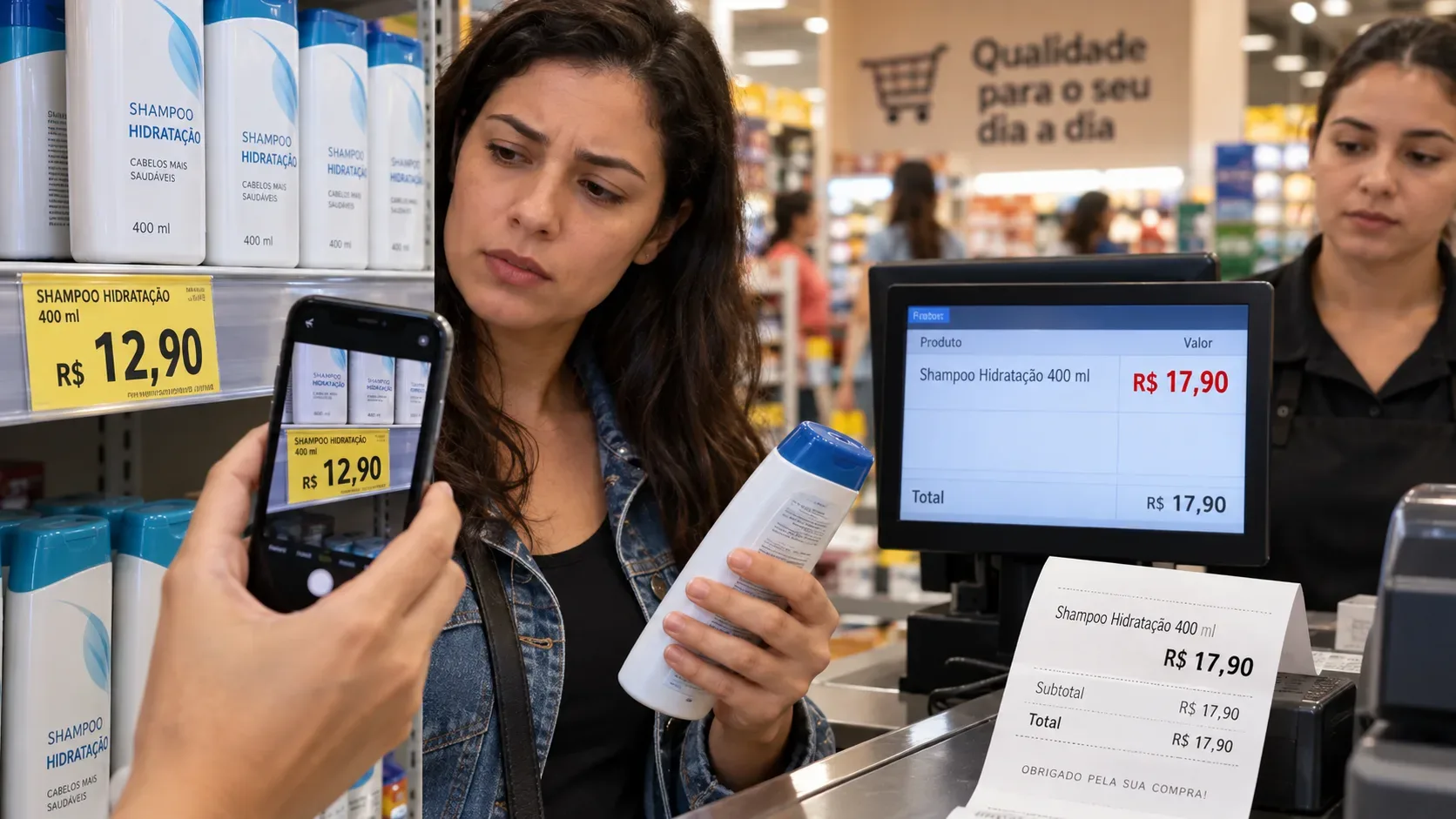
If the shelf, label, or another store price-information system shows a lower amount than checkout for the same product, the consumer should pay the lower price. This rule appears in Article 5 of Brazilian Law No. 10,962/2004. In 2026, a Procon-SP supermarket guide reinforced that when the system, shelf, and checkout show different prices for the same item, the lowest price prevails. Before challenging the charge, however, confirm that it is truly the same product under the same offer conditions.
What to do in 60 seconds at checkout
- Speak up before completing the purchase. Say that the shelf or label showed a lower price and ask for it to be checked.
- Confirm the item. Compare brand, version, weight, volume, quantity, product code and, where applicable, the promotional condition.
- Record the offer. Photograph the product next to the label and take a wider photo showing where the label was placed. Include readable validity dates and rules.
- Ask for the correction. If the cashier cannot change the price, ask for a store supervisor.
- If you already paid, keep the receipt. Preserve the receipt or tax invoice and request a refund of the difference.
In guidance published on August 13, 2026, Patrocínio's Procon consumer-protection office recommended checking product, brand, quantity, and offer conditions and keeping photos of the label, shelf, flyer, or advertisement.
Why the lower price applies
Law No. 10,962/2004 provides that when there is a price discrepancy for the same product among the price-information systems used by the establishment, the consumer pays the lowest one. In practice, this covers differences between the shelf, a price-check system, and checkout.
Procon-SP's 2026 guide says that if the store system, shelf, and checkout display different prices for the same product, the lowest amount prevails; it also notes that the discrepancy remains an irregularity even when the store corrects the charge.
Brazil's Consumer Protection Code adds another layer. Article 30 says sufficiently precise information or advertising binds the supplier. If the supplier refuses to honor the offer, Article 35 provides alternatives such as requiring performance, accepting an equivalent product or service, or rescinding the transaction under the applicable legal conditions.
Is it the same product and the same offer?
Not every nearby price label automatically gives a right to the lowest number. The decisive point is whether the information refers exactly to the product taken to checkout and whether the offer conditions are identical.
| Situation | What to check | Practical reading |
|---|---|---|
| Similar package, but different weight or volume | Quantity, version, and product code | If the label belongs to another size, it is not the same offer. |
| Price exclusive to a loyalty club or registration | Whether the condition is clear and whether you meet it | Regular and club prices may coexist if the conditions are clearly disclosed. |
| Discount based on payment method or payment term | Pix, cash, card, installments, or another condition | Brazilian law allows price differences if they are visibly disclosed. |
| Promotion with a defined period or limit | Date, time, per-customer limit, and other rules | Document the conditions before concluding that there is a discrepancy. |
| Shelf shows less and checkout charges more for the same item | Identical product, quantity, and conditions | This is the typical case in which the lower price prevails. |
What evidence to keep
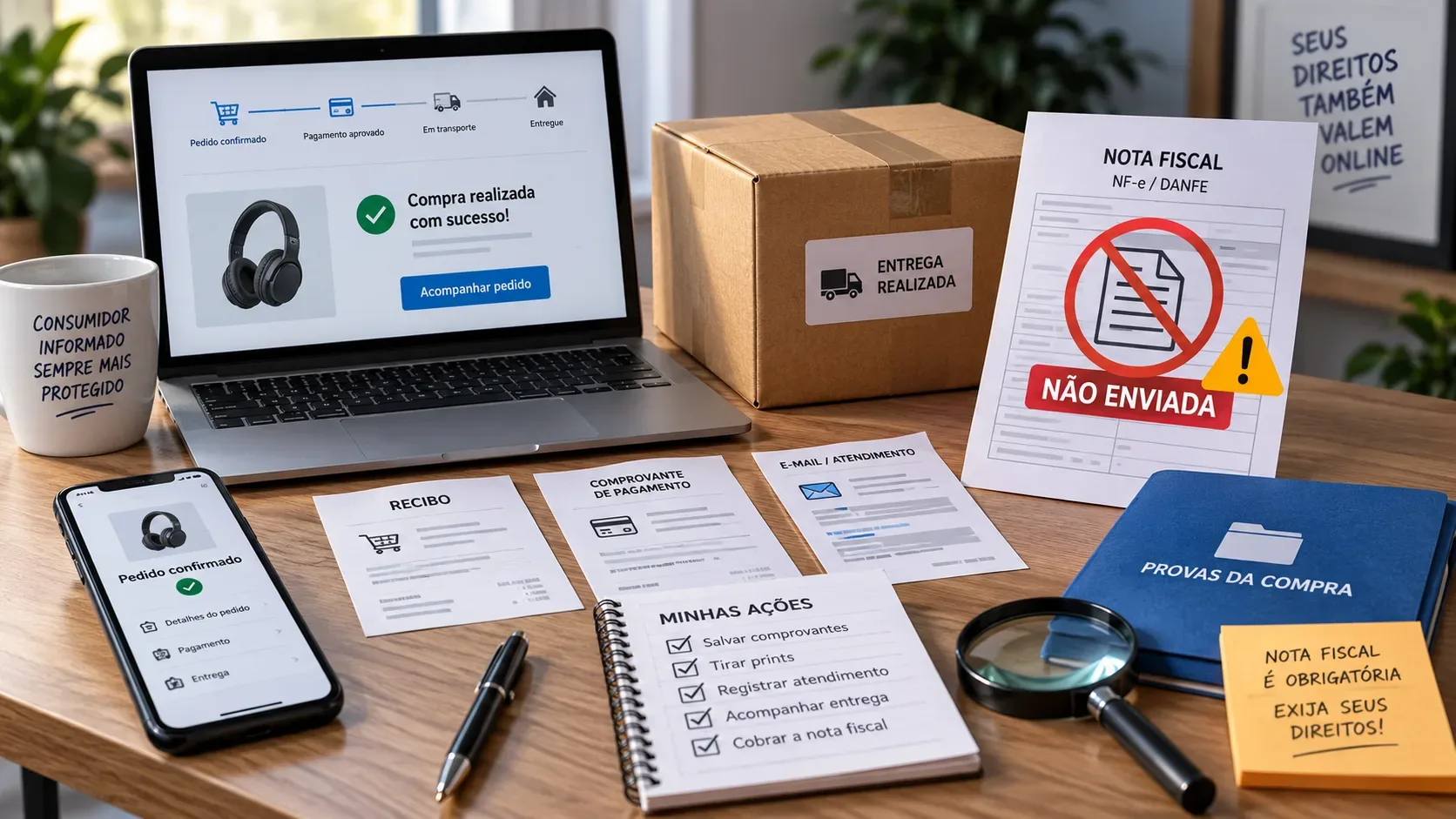
Good evidence connects the price to the product and the offer. The most useful set usually includes:
- a photo of the product next to the price label or sign;
- a wider photo of the shelf or display;
- the SKU, product code, or barcode when it helps identify the item;
- the promotion validity period and loyalty-club or payment rules;
- the flyer, advertisement, or screenshot of the offer;
- the receipt, tax invoice, or payment proof showing the amount charged;
- a service protocol or other record of contact with the store.
Avoid relying only on a photo of the number without identifying the merchandise. You also do not need to photograph employees; focus on the product, the offer, and the receipt.
If the store refuses to correct the price
Saying “the system requires the checkout price” does not override the lower-price rule when it is the same product under the same conditions. Show the label or photo, ask for another check, and request the correction. If the store refuses, keep your evidence and ask for a protocol or another record of the refusal.
You can then contact your local or state Procon. If the company participates in Consumidor.gov.br, you can also file a complaint and attach documents. The service is digital and only accepts complaints against companies registered on the platform.
If you only notice after leaving the store
The receipt or tax invoice becomes central evidence. Compare the amount charged with the photo, flyer, or other record and ask the store to refund the difference. If the issue is not resolved, gather the purchase proof, proof of the offer, date, store location, and the remedy you are requesting.
Exceptions that require care
An item without a displayed price does not become free. Procon-SP's guide distinguishes lack of pricing from a discrepancy between two prices.
Conditional prices must be identified as such. Loyalty-club, registration, or payment-method discounts must have their conditions clearly presented. Law No. 10,962/2004 requires discounts based on payment term or instrument to be displayed in a visible place and format.
A manifestly implausible price error may be treated differently. In its general guidance, Procon-SP recognizes that an obvious, gross pricing error can be assessed in light of good faith and balance in consumer relations. This does not allow a store to label every ordinary shelf-versus-checkout discrepancy an “error.”
A simple rule
Ask three questions: is it exactly the same product? are the offer conditions the same? can I prove the advertised price? If all three answers are yes, the lower-price rule applies. Try to correct the amount before paying; if the purchase has already been completed, keep the receipt and request the difference. If the store refuses, document the refusal and take the evidence to the appropriate consumer-protection channel.