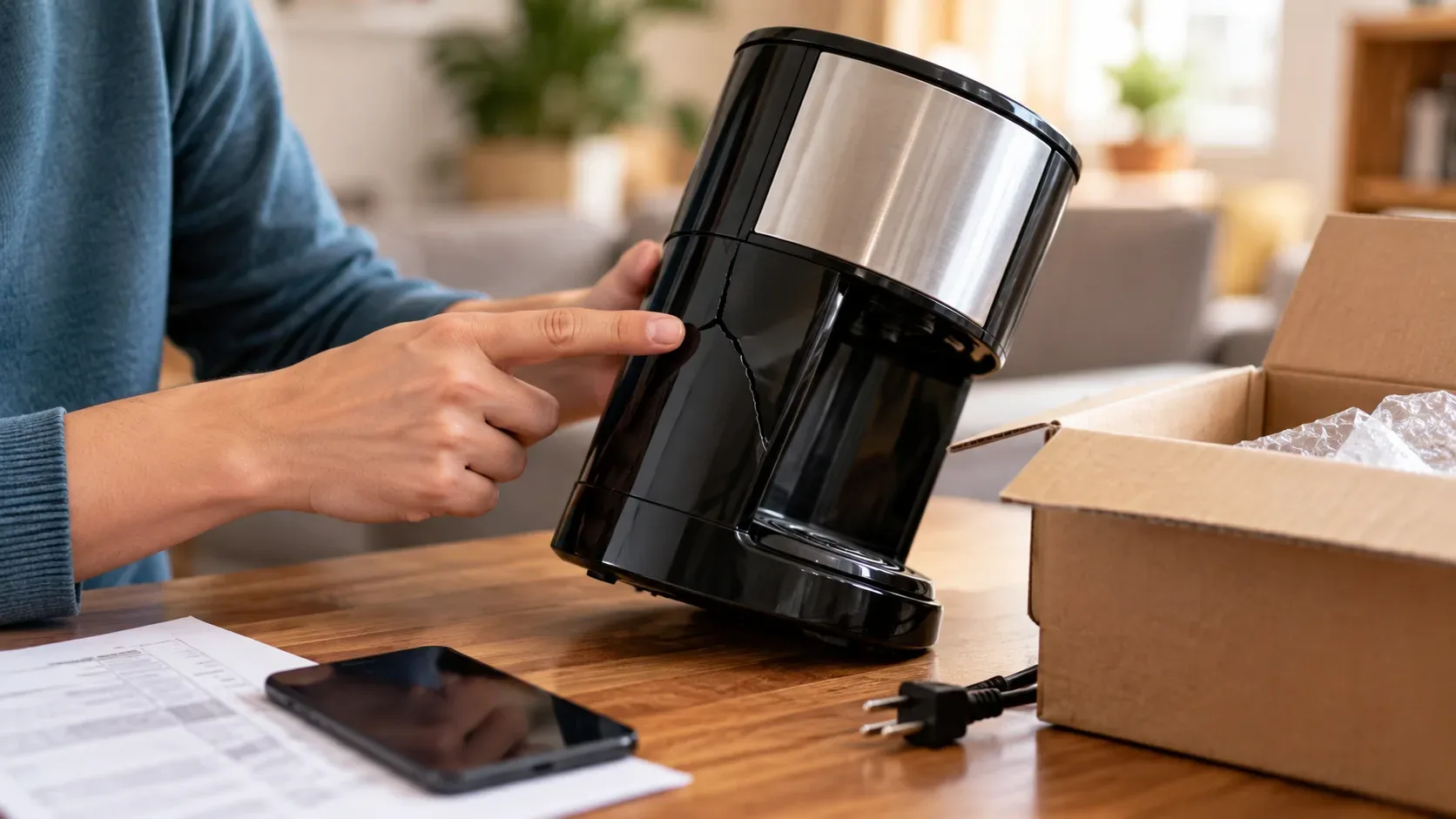
In Brazil, the 30 days in Article 18(1) of the Consumer Protection Code (CDC) are the maximum time a supplier normally has to remedy a product nonconformity, not a period that automatically starts on the purchase date. According to São Paulo’s consumer protection agency, Procon-SP, the period is counted only once, starting when the product is handed over to an authorized repair center or, if it is repaired at the consumer’s home, when the problem is reported to the supplier. A service order or case reference documents the relevant date.
There are exceptions: in the situations covered by Article 18(3), the consumer may immediately choose replacement, a refund or a proportional price reduction. The time limit for reporting a nonconformity is a different matter governed by Article 26. Confusing the two periods leads to mistaken conclusions.
When does the 30-day repair period begin?
The clearest starting point is the date on the service order when the product is delivered to an authorized repair center. For a repair carried out at home, Procon-SP uses the date the nonconformity is reported to the supplier. This is a 30-calendar-day period, not 30 business days; it should not be confused with the invoice date, the day the consumer noticed the problem or an informal response time promised by the store.
Also record any earlier complaint to the retailer or manufacturer and any delay in accepting or forwarding the product. Suppliers are jointly liable for product nonconformities under Article 18, so referral to a repair center does not remove the retailer’s responsibility. If the starting date is disputed, the paper trail helps Procon or the competent authority assess the particular case; do not assume that an undocumented phone call or a new service order erases what happened before.
Practical decision path: complaint, repair and remedy
- Identify and document the nonconformity. Describe what stopped working or fails to meet the expected condition, take pictures and retain proof of purchase. Check the Article 26 deadline for reporting it, explained below.
- Notify the supplier and document the interaction. Obtain a case reference and, when handing the item to an authorized repair center, a dated service order identifying the product and the problem. If a technician comes to your home, retain the message requesting the visit.
- Check whether a statutory exception applies. An essential product, or a repair that would undermine its quality, characteristics or value, may allow immediate selection of the remedies under Article 18(1), without waiting 30 days.
- If the general rule applies, follow the repair. Keep the dates of handover, return and any subsequent submissions. Procon-SP explains that the 30 days are granted only once; repeated repair attempts do not automatically create a new period.
- If the problem remains unresolved by the deadline, state your choice. Request replacement, a refund or a price reduction in writing, according to your preference, and retain the reply. If the nonconformity persists or returns after repair, document it alongside the earlier service orders.
When can the consumer act without waiting 30 days?
Article 18(3) allows immediate use of the statutory remedies where, because of the extent of the nonconformity, replacing parts would compromise the product’s quality or characteristics, reduce its value, or where the product is essential. Procon-SP gives examples such as food, medication and equipment necessary for life, safety or subsistence. Whether a product is essential depends on the item and the circumstances; not every flaw in every item automatically gives rise to an immediate refund.
The exception does not require the supplier first to exhaust a repair attempt. To support it, explain concretely why the item is essential or why the intervention would affect its characteristics, quality or value, and keep the available evidence.
What can the consumer demand after the deadline?
If the nonconformity is not remedied within the applicable period, Article 18(1) gives the consumer a choice among three alternatives. The supplier cannot simply impose another repair as though the clock had restarted. Procon-SP also says that the consumer is not required to accept a product repaired after the 30 days have expired.
- Replacement with another product of the same kind in proper working condition.
- Immediate refund of the amount paid, adjusted for inflation, without prejudice to any additional losses and damages.
- Proportional price reduction, if the consumer prefers to keep the product in that condition.
The repair deadline is not the complaint deadline
For apparent or readily detectable nonconformities, Article 26 of the CDC sets 30 days for non-durable goods and 90 days for durable goods. As a rule, these limits begin upon actual delivery; for a hidden nonconformity, the clock starts when the problem becomes apparent. By contrast, Article 18’s 30 days concern the opportunity to remedy the problem after it is submitted for resolution, in the circumstances described above.
Under Article 26(2)(I), a provable complaint to the supplier prevents the claim period from expiring until an unequivocal negative response. This is why the date and evidence of a complaint matter even if the product has yet to be sent to a repair center. The statutory guarantee does not depend on a written certificate (Article 24); any contractual warranty should not be confused with these statutory periods.
Can the supplier change the 30-day period?
Yes, but not unilaterally. Article 18(2) allows the parties to agree to shorten or extend the period, with a minimum of 7 and a maximum of 180 days. In standard-form contracts, the time-limit clause must be agreed separately through the consumer’s express assent. A generic customer-service statement or an extension imposed by the repair center is not, by itself, such an agreement.
What records should be kept, and where can an unresolved case be reported?
Keep a timeline containing the invoice or other proof of purchase, photos or videos of the problem, messages and case numbers, service orders, the date of handover to the repair center, any technical report or explanation, return dates and later repair attempts, and the remedy you communicated to the supplier. Check that the service order accurately describes the problem; do not hand over the product without a receipt.
If the company does not resolve the case, file a complaint with Procon. Another channel is Consumidor.gov.br if the company participates. According to Brazil’s national consumer secretariat, Senacon, a company has up to 10 days to respond through that platform; this administrative response deadline neither replaces nor restarts Article 18’s 30-day repair period. If the dispute continues, Procon, the Public Defender’s Office or a Small Claims Court can provide guidance on available procedures.
The 30-day period does not extinguish the right to claim damages
In a decision published on May 27, 2025, the Fourth Panel of Brazil’s Superior Court of Justice (STJ) held that Article 18’s repair period does not restrict compensation for proven material losses to days beyond the first 30. This does not mean automatic compensation or a general duty to provide a loaner product: the loss must be assessed and established. The 30-day rule governs the remedies for a nonconformity; it does not authorize uncompensated harm during repair.
Sources and references
- Brazilian Consumer Protection Code (Law 8,078/1990), especially Articles 18, 24 and 26
- Procon-SP: guidance on nonconformities, authorized repair, deadlines and recurring problems
- STJ: May 27, 2025 decision on material losses during the repair period
- Senacon: how to file a complaint on Consumidor.gov.br (July 10, 2026)