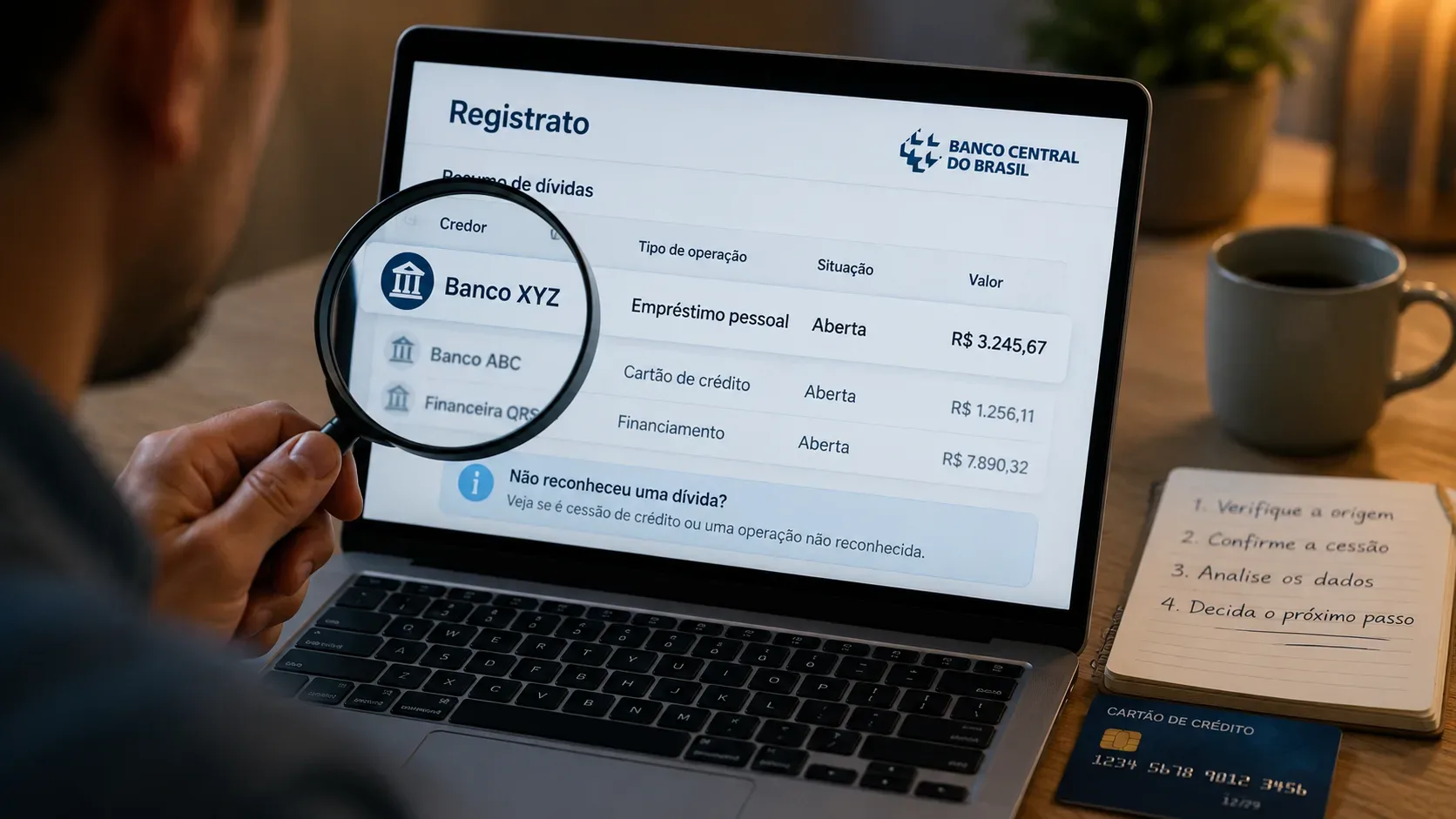
Seeing a debt in Brazil's Registrato/SCR attributed to a bank you do not recognize is not, by itself, enough to conclude that fraud occurred. Brazil's Central Bank (BC) points to two important explanations: the credit operation may have been sold or assigned to another institution, which then becomes the creditor and the party responsible for reporting it to the SCR; or someone may have taken out credit in your name without authorization. With credit-card debt, there is another possible source of confusion: the report may show the issuing bank rather than the administrator or brand you normally associate with the card.
The safest approach is to treat the unfamiliar name as a signal to trace the origin of the operation. Before paying, negotiating, or alleging fraud, compare the credit type, reference month, balance, and SCR history with contracts, card statements, and bank records you already know. Then ask the institution listed in the report to identify where the credit came from and keep the service protocol number.
First, confirm exactly what the SCR is showing
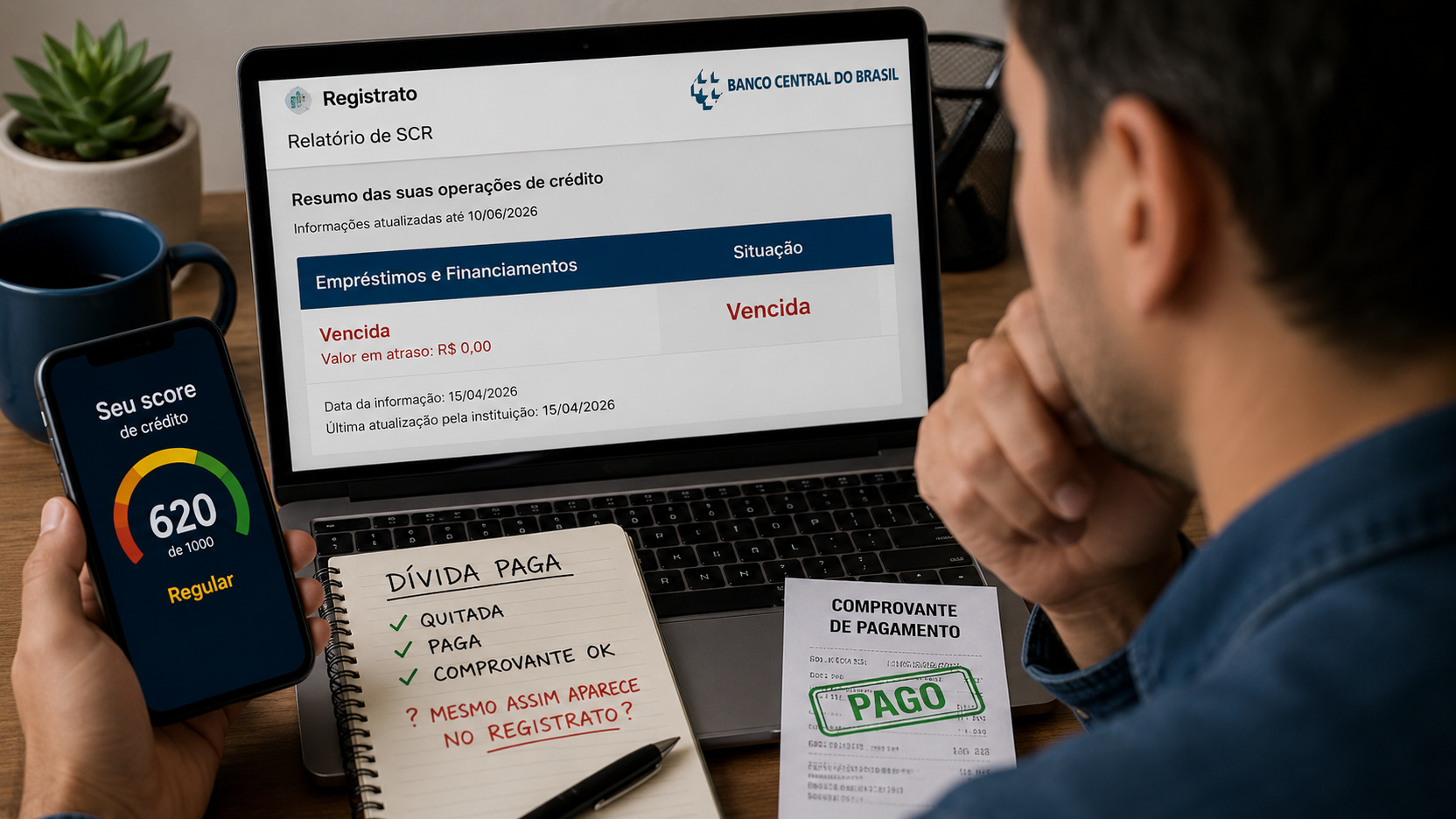
The Loans and Financing Report (SCR), accessed through Registrato, brings together debts and other credit commitments reported to the Central Bank by financial institutions. Among other data, it shows the outstanding balance, type of operation, and whether the obligation is current or overdue. Institutions submit information periodically, and the historical record is not erased simply because a debt was later paid.
Before investigating the unfamiliar bank, write down:
- the name of the institution responsible for the entry;
- the type of credit, such as a loan, financing, or card-related credit;
- the balance and status shown for the reference date;
- the month of the information, because the SCR is not a real-time account statement;
- whether the entry appears only in older months or also in the most recent available position.
This last point prevents a common mistake: a historical entry may remain visible for the months in which the operation existed or was overdue. If your question concerns a current debt, focus mainly on the latest available position while still using the history to identify when the operation began.
How to distinguish an assigned debt from possible fraud
The signs below are a screening guide, not automatic proof. Confirmation comes from documentation and from the response of the institution responsible for the SCR entry.
| What you find | What it suggests | Next step |
|---|---|---|
| You recognize the debt, approximate amount, period, and product, but not the current bank. | Consistent with an assignment or sale of the credit to another creditor. | Ask the current bank to identify the previous creditor/originator, the contract, and the transfer date. |
| The current bank can link the entry to a contract you recognize and identifies the institution of origin. | Strengthens the assignment explanation, provided the amounts and status also make sense. | Compare balance, installments, and history before negotiating or paying. |
| The debt is card-related and the SCR shows a bank name different from the company or brand you associate with the card. | It may simply be the issuing bank appearing in the report. | Check card statements, the contract, and the issuer's identification. |
| You do not recognize the product, date, amount, institution of origin, or any related transaction. | Raises suspicion of an unauthorized credit operation. | Formally dispute it and request the documents supporting the operation. |
| In addition to the debt, there is an account, banking relationship, or Pix key you never opened or registered. | An additional sign of possible misuse of your personal data. | Broaden the Registrato review and contact the institutions involved immediately. |
What to ask the bank listed in Registrato
Use the institution's official channels and request a clear explanation of the origin of the entry. A useful request includes:
- the contract or operation number/identifier;
- the date and channel through which it was contracted;
- the type of credit contracted;
- the original amount and current outstanding balance;
- the name of the originating institution, if the credit was assigned;
- the date on which the operation was assigned or acquired, when applicable;
- documents or evidence connecting the transaction to your CPF taxpayer ID;
- an explanation of the balance if the amount does not match what you recognize.
Keep protocol numbers, screenshots, emails, and any documents you receive. If the contact began through an unexpected message, call, or payment slip, do not use the contact details in that message to “confirm” the institution. Check the Central Bank's official institution directory and use the official service channels.
If it looks like an assignment, confirm the chain before paying
With a credit assignment, the key issue is not merely the new bank's name: you need to connect the current obligation to a debt you actually contracted. The Central Bank explains that an operation may be sold or assigned and that the new institution then becomes the creditor and the party responsible for reporting the data to the SCR.
Before making a payment or agreement, confirm at least three elements: what the original operation was, who the previous creditor was, and how the current balance derives from that contract. If those elements match your records, the unfamiliar name in Registrato may be a normal consequence of the transfer rather than evidence of a new credit operation.
Even then, discrepancies in balance, installments, dates, or status should be questioned. “It was assigned” explains why the creditor changed, but it does not automatically make every reported amount correct.
If you do not recognize the operation, treat it as suspected fraud
If the institution cannot link the debt to a contract you recognize, or if it presents a credit agreement you say you never entered into, formalize the dispute. In cases where debt may have been created without authorization, the Central Bank advises customers to contact the institution, block or cancel suspicious transactions when necessary, file a police report, review statements and other financial reports, and strengthen passwords and security measures.
In addition to the SCR, you can check Registrato's Accounts and Relationships Report (CCS), which can reveal an unfamiliar banking relationship, and the Pix Keys Report, which lets you check keys linked to your CPF/CNPJ. Other relationships you do not recognize do not prove fraud by themselves, but they increase the urgency of the investigation.
How to request correction or deletion of an SCR entry
The institution listed in the report is responsible for the SCR data. If you disagree with the information or do not recognize the operation, the Central Bank advises first contacting the institution's primary service channels, such as a branch or customer service center. If the issue is not resolved, take it to the institution's ombudsman.
When an error is identified and the institution sends a correction to the SCR, the Central Bank says the corrected data may be reflected in Registrato within up to seven calendar days. This is different from the normal update after a payment or renegotiation, which follows the monthly reference cycle and may only be visible the following month.
If the problem continues, you can file a complaint with Brazil's Central Bank. The BC states that it does not resolve individual disputes, but it forwards the complaint to the institution for a response and uses complaints in its supervisory work. Consumer-protection channels may also be used when appropriate.
Quick checklist before calling it fraud
- Confirm the reference month and whether the entry is current or only historical.
- Compare the credit type, amount, and period with loans and cards you have actually used.
- Consider a credit assignment and, for card debt, the difference between the issuing bank and the brand/administrator you recognize.
- Contact the institution listed in the SCR through an official channel and request documentary identification of the operation's origin.
- If it links to a debt you know, validate the balance, dates, and assignment chain before paying.
- If there is no recognizable link, dispute the transaction, request correction/deletion, and extend the review to CCS, Pix keys, and bank statements.
- Keep all protocol numbers and, if necessary, escalate to the ombudsman, the Central Bank, and consumer-protection bodies.
In short, an unfamiliar bank in Registrato is the beginning of the investigation, not the diagnosis. A legitimate credit assignment should leave a trail connecting the new creditor to a real debt you recognize; suspected fraud arises when that documentary connection cannot be established or when the underlying credit operation itself is unknown to you.
Official sources consulted: BC — Debt with a bank you do not recognize; BC — Questions about the Loans and Financing Report (SCR); BC — Correcting SCR information.