The key calendar change is straightforward: Normative Instruction SEGES/MGI No. 129 of March 30, 2026 amended Article 63 of Normative Instruction SEGES/MGI No. 512/2025 and set its effective date for November 30, 2026. IN 512 regulates the competitive dialogue procedure under Article 32 of Law No. 14,133/2021 for Brazil's direct federal administration, federal agencies and federal foundations. Until the new date, federal bodies have additional time to prepare governance, teams, documents and use of Compras.gov.br before applying the regulated procedure.
What changes on November 30, 2026
Law No. 14,133 already provides for competitive dialogue as a procurement method. What IN 512 adds, within its federal scope, is a detailed operating procedure. The rule organizes the process into three phases, defines documents, regulates confidentiality and interaction with bidders, requires system records and details the transition from defining the problem to the final competition.
IN 129 did not rewrite the substance of the regulation. It postponed its effective date to November 30, 2026. The practical effect for federal bodies is therefore mainly preparatory: procurement processes intending to use the method after that date must be aligned with the procedural design established by IN 512.
When competitive dialogue may be used
Article 32 of Law No. 14,133 restricts the method to procurements in which the Administration faces a need that cannot be adequately addressed through a conventional ready-made specification. The situations listed include technological or technical innovation, the need to adapt solutions available on the market and the inability to define technical specifications with sufficient precision.
IN 512 preserves this focus. The public body must justify the choice of method and describe the problem to be solved. The dialogue may be used to identify the most appropriate technical solution, technical requirements, the legal or financial structure of the contract and other means capable of meeting the administrative need.
This means competitive dialogue is not a generic alternative for every complex procurement. The justification must show why the need falls within the legal situations and why structured engagement with the market is useful to build the solution before the competitive phase.
How the three phases work
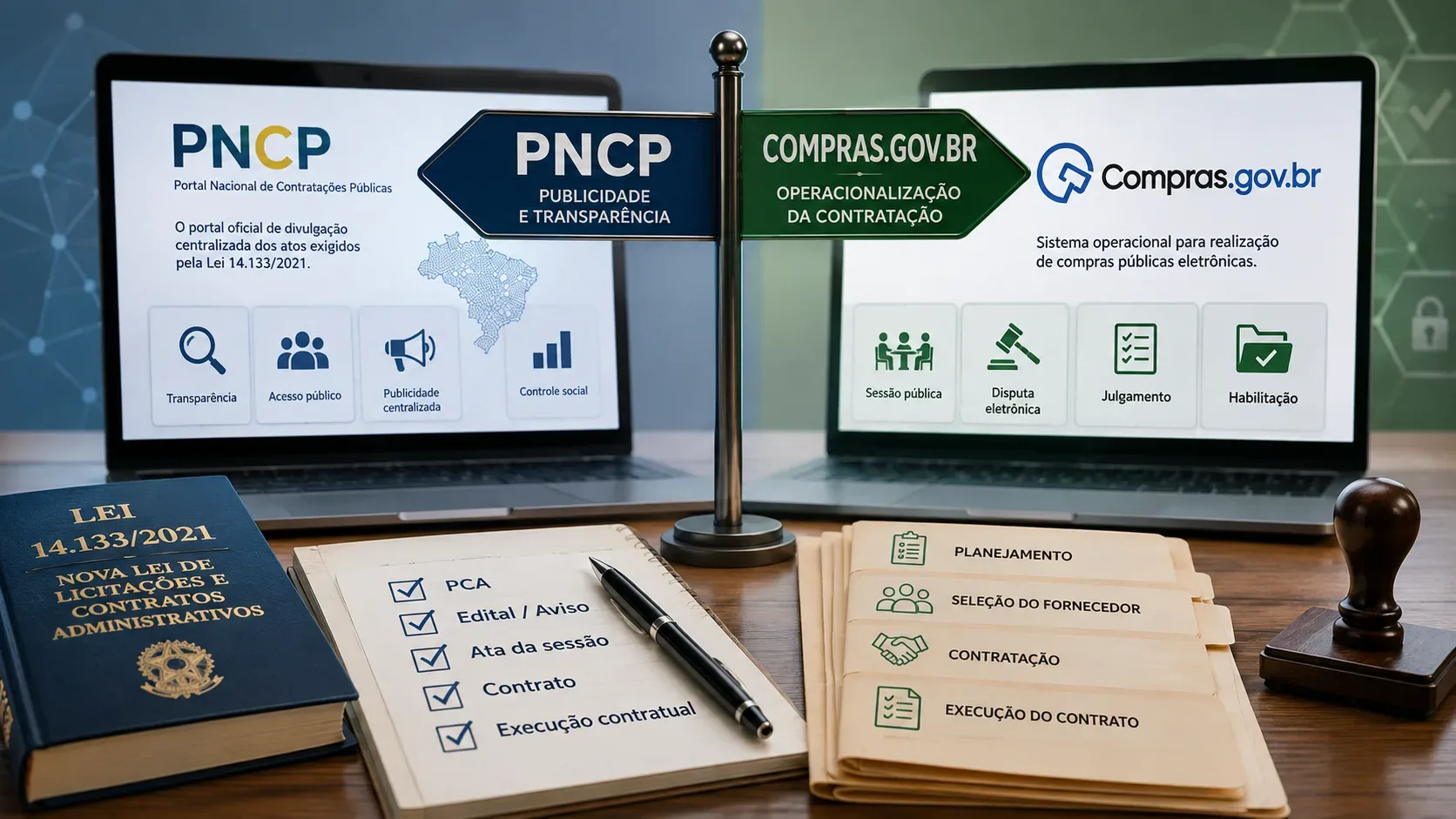
IN 512 requires the procedure to be conducted through the Federal Government Procurement System, Compras.gov.br, and structures the flow into three main phases.
1. Pre-selection
The process begins with preparatory work, a pre-selection notice, participation requests, assessment and appeals. The rule provides for a simplified preliminary technical study at the start, describing the need, the public interest and the justification for adopting the method. The notice must establish objective minimum criteria for pre-selection and rules for the dialogue phase.
Law No. 14,133 and IN 512 set a minimum period of 25 business days for expressions of interest. All applicants who meet the defined objective requirements must be admitted to the dialogue phase.
2. Dialogue
In the second phase, the Administration holds meetings with pre-selected participants to explore alternatives and identify suitable solutions. The process must preserve equal treatment and confidentiality. The Administration may not disclose a participant's proposed solutions or confidential information to other participants without consent, subject to the specific exceptions established by the regulation.
IN 512 also requires careful record keeping. Dialogue continues until the committee considers the necessary discussions exhausted and identifies one or more solutions capable of meeting the need. Only bidders who remain pre-selected and present solutions considered appropriate may proceed to the competitive phase.
3. Competitive phase
Once the dialogue ends, the Administration completes procurement planning based on the solution or solutions considered suitable. The preliminary technical study is completed, the procurement must be included in the annual procurement plan and the terms of reference are structured for the final competition.
Under Law No. 14,133, the competitive-phase notice must allow at least 60 business days for pre-selected bidders to submit their proposals. Selection follows objective criteria disclosed in advance. IN 512 allows, when justified, mechanisms such as samples, proof of concept or technical visits to verify technical criteria.
What federal bodies should prepare before the effective date
The postponement creates additional time for institutional readiness. A practical checklist can be organized into seven areas:
- Case mapping: identify demands in which innovation, adaptation of solutions or technical uncertainty genuinely support use of the method.
- Justification: standardize how the problem, applicable legal conditions and reasons for choosing competitive dialogue are documented.
- Committee: plan the appointment of a procurement committee with at least three permanent civil servants or public employees, as required by the Law and the regulation.
- Training: prepare the team to conduct meetings, assess solutions, document the procedure, protect confidential information and transition to the competitive phase.
- Confidentiality and intellectual property governance: establish procedures for confidential information, disclosure consents and intellectual assets associated with proposed solutions.
- Documents and controls: review templates for preliminary technical studies, notices, meeting records, legal review and competitive-phase documents.
- Systems: align internal workflows with Compras.gov.br and the publication requirements for PNCP and other required channels.
Why planning evolves during the procedure
An important feature of competitive dialogue is that part of the procurement planning matures after structured interaction with the market. IN 512 allows the process to begin with a simplified preliminary technical study. After the dialogue phase, that study is completed with the elements required by Law No. 14,133 and incorporates the solution or solutions considered suitable.
The regulation also provides that the estimated procurement value and inclusion in the annual procurement plan are addressed after the dialogue phase, connected to the maturation of the solution. This requires clear controls so that procedural flexibility is not confused with a lack of planning.
Confidentiality does not mean lack of transparency
Competitive dialogue combines public disclosure of the procedure with protection for solutions and sensitive information submitted by participants. IN 512 prohibits discriminatory disclosure of information and protects proposals, information and solutions, including after the dialogue has ended, unless consent is given or a specific regulatory exception applies.
At the same time, the external phase begins with publication of the notice on the National Public Procurement Portal, together with other required disclosures. Meetings and acts must be documented. The governance challenge is to distinguish what must be public from what must remain protected to safeguard competition, intellectual property and confidential information.
The new date should be treated as a readiness milestone
For federal bodies covered by IN 512, November 30, 2026 is more than a regulatory date. It is a milestone for having people, templates, controls and systems ready for a procedure that requires more interaction and documentation than traditional procurement methods.
Before launching a specific case, the body should confirm that the need actually falls within Article 32 of Law No. 14,133, document the justification, appoint the committee and establish from the outset the rules for confidentiality, dialogue, assessment and final competition. The method can be useful when the Administration understands the problem but still needs to work with the market to build the technical, legal or financial path to solve it.