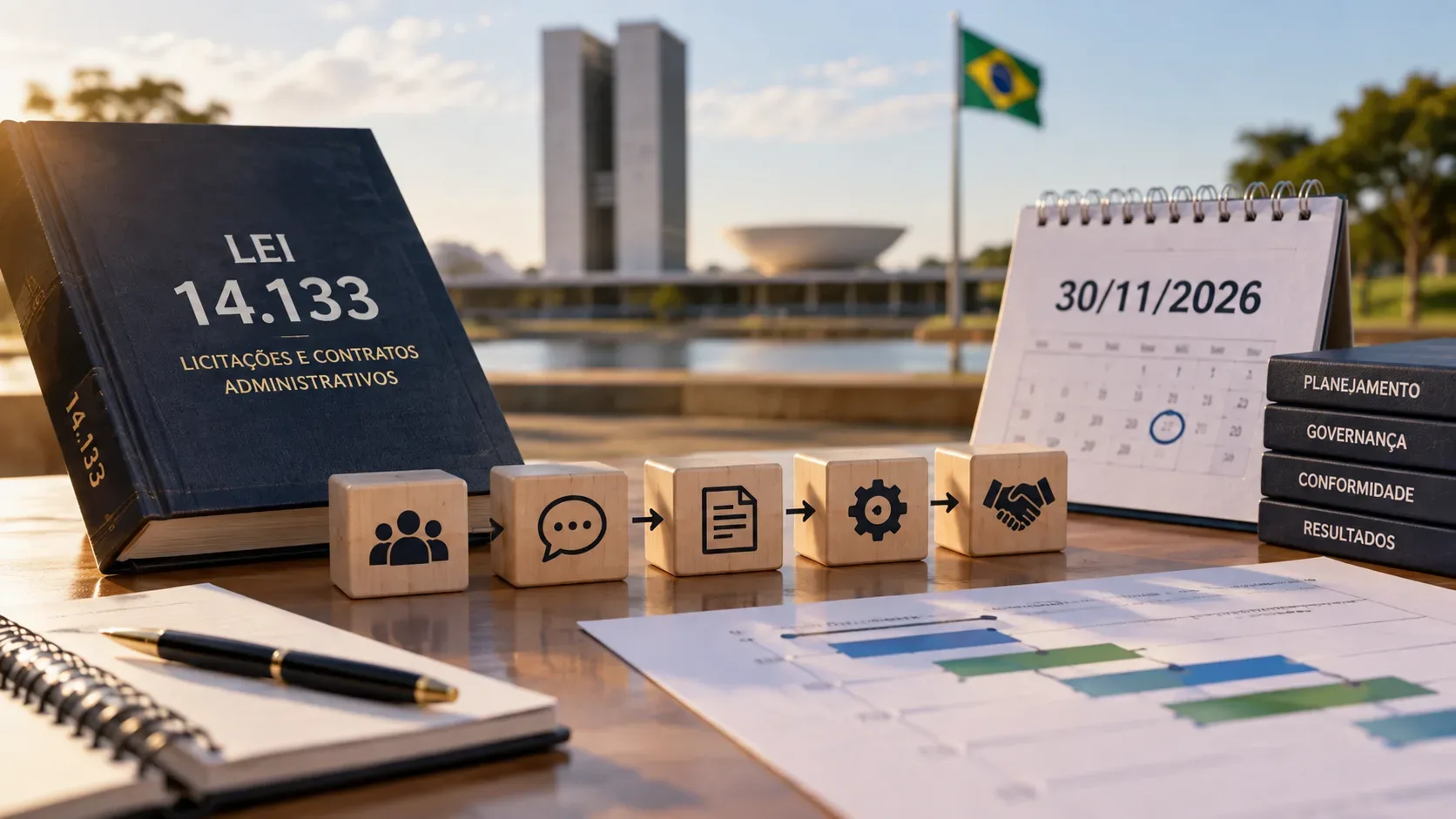
The correct effective date, under the official text in force on September 11, 2026, is November 30, 2026. SEGES/MGI Normative Instruction No. 512 of December 3, 2025 initially stated April 1, 2026 as its effective date, but SEGES/MGI Normative Instruction No. 129, published on March 31, 2026, replaced it with November 30, 2026. References that still point to April 1 are therefore outdated. IN 129/2026 took effect on its publication date, but its main purpose was to postpone the effective date of IN 512/2025.
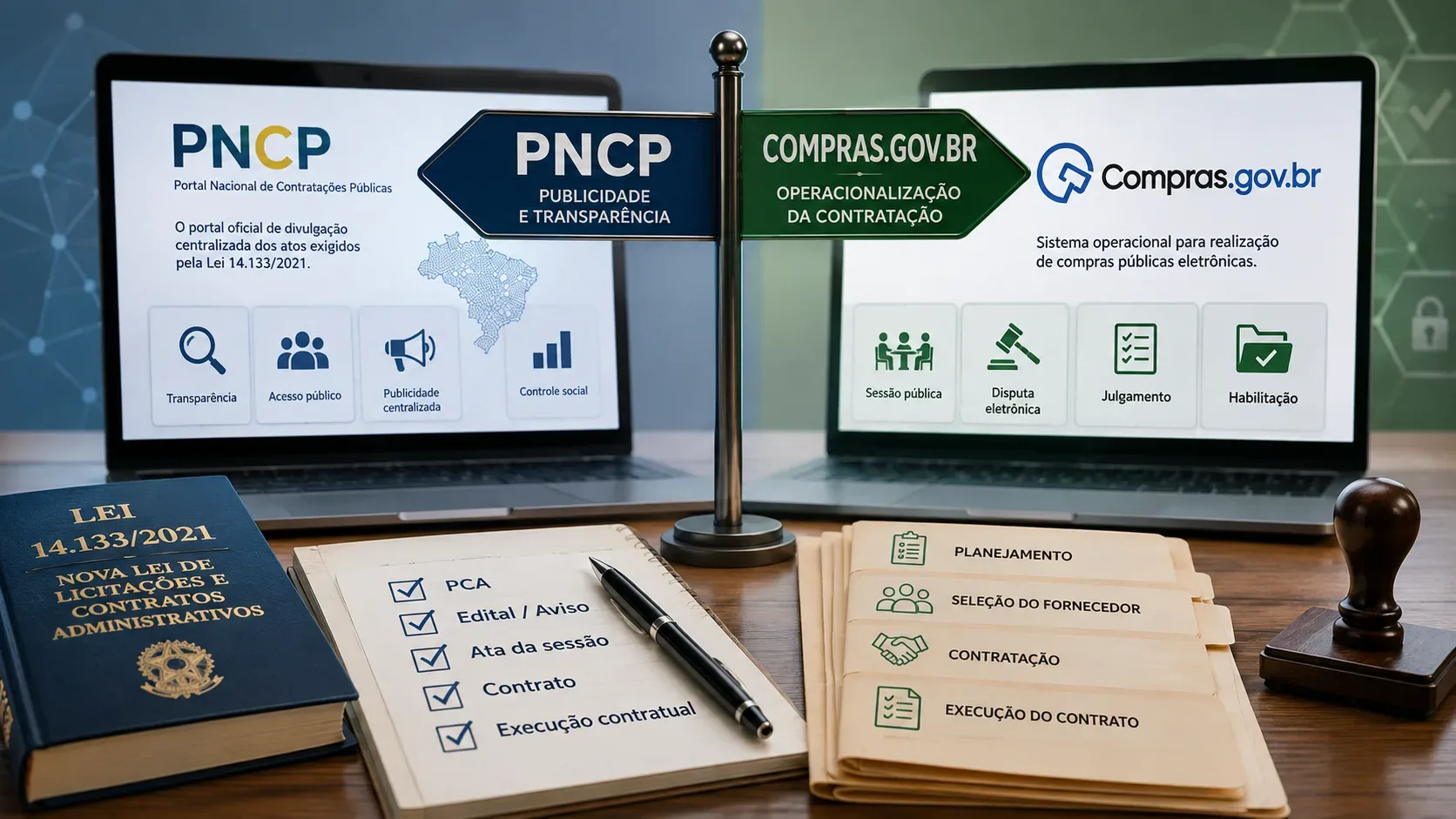
This does not mean competitive dialogue itself begins only in November 2026. The procurement method is already provided for in Law No. 14,133/2021. What changes on November 30 is that the federal regulation detailing how the method is structured and carried out takes effect for the federal direct administration, autonomous agencies and foundations, with the procedure to be conducted through the Federal Government Procurement System — Compras.gov.br.
What IN 512 regulates — and who it covers
IN 512 regulates Article 32 of Law No. 14,133/2021 for the federal bodies and entities within its scope. It organizes competitive dialogue into a specific procedure with documents, phases, deadlines, confidentiality rules, appeals and procurement-planning acts. States, the Federal District, municipalities and entities outside the scope described in Article 1 of the instruction need to verify their own applicable regulations and systems.
The choice of competitive dialogue must be justified. Under IN 512, the procurement must have at least one of these characteristics: technological or technical innovation; the impossibility of meeting the public body's need without adapting solutions available on the market; or the impossibility of defining the technical specifications with sufficient precision. The dialogue can also be used to define technical requirements or the legal or financial structure of the contract.
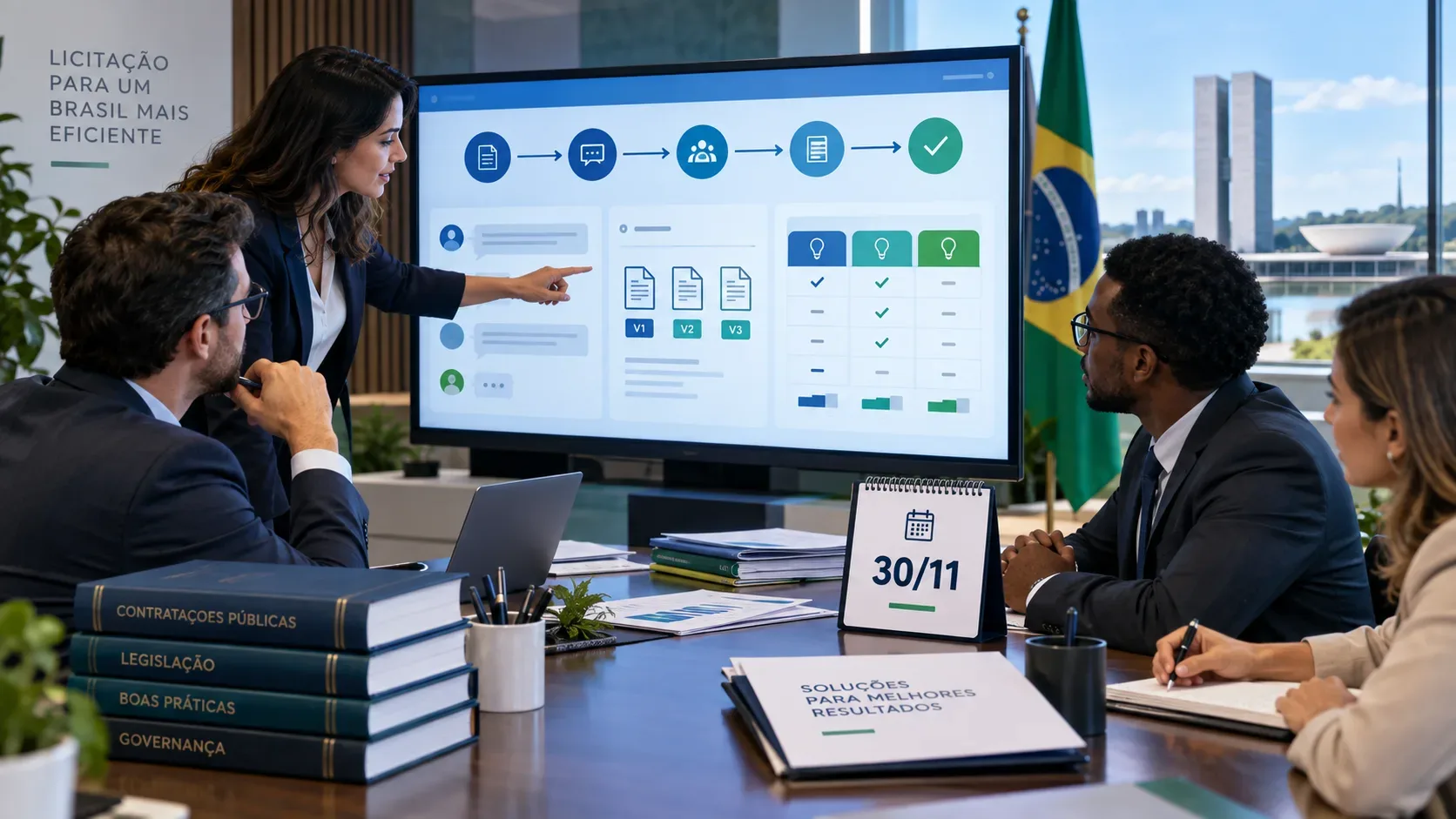
The Compras.gov.br workflow has three phases
| Phase | What happens | What the team should watch |
|---|---|---|
| I — Pre-selection | Preparation, publication of the notice, participation requests, evaluation and appeals. | It starts with a simplified preliminary technical study, justification for the method and objective criteria. The pre-selection notice must be published on PNCP and the participation period cannot be shorter than 25 business days. |
| II — Dialogue | Separate meetings with pre-selected bidders, development of solutions, identification of suitable alternatives and appeals. | Meetings must be documented in minutes and recorded in audio and video. Confidentiality, equal treatment and protection of proposed solutions are central requirements. |
| III — Competitive phase | Preparation of the final competition, publication of the final notice, receipt and evaluation of bids, appeals and closing. | The preliminary study is completed, the terms of reference reflect the identified solution or solutions, and the deadline for final bids cannot be shorter than 60 business days. |
During pre-selection, the team does not need to have the entire solution defined
An important practical difference is the timing of procurement planning. The process begins with a simplified preliminary technical study focused on the procurement need, the public interest and the justification for using competitive dialogue. IN 512 expressly provides that the study will be completed during preparation of the competitive phase.
Some information that normally appears early in other procurement procedures is also shifted to a later moment. The estimated contract value and inclusion in the annual procurement plan occur after the dialogue phase, while identification of the budget appropriation is optional during pre-selection. Governance teams therefore should not treat the procedure as an ordinary competition in which the object is fully specified from the start.
The pre-selection notice must anticipate the rules for phases I and II: objective admission criteria, deadlines, confidentiality rules, dialogue procedures and, when applicable, payment or awards for participants whose solutions are selected. It must also address the management of economic and intellectual property rights, including assignment or licensing, use of technologies, trademarks, patents and software and, when relevant, delivery of source code and technical documentation.
The committee must manage dialogue, confidentiality and meeting records
Competitive dialogue must be conducted by a procurement committee composed of at least three tenured civil servants or public employees from permanent staff. External professionals may provide technical advice, but they must sign confidentiality commitments and avoid conflicts of interest.
During the dialogue phase, invitations are sent separately and sessions must be scheduled on different dates and times for each bidder. The Administration may request clarifications and adjustments as long as they do not discriminate or distort competition. The dialogue may continue until a reasoned decision identifies one or more solutions capable of meeting the need — or concludes that none is suitable.
Meetings must be recorded in minutes and captured using audio and video technology. At the same time, the regulation imposes strong protection for information and proposed solutions. Bidder identities must remain confidential until the conclusion of the proposal evaluation in the competitive phase, and confidential solutions or information cannot be improperly disclosed.
Not every pre-selected bidder will necessarily reach the final competition
At the end of the dialogue, only bidders that remain pre-selected and have presented solutions deemed suitable may advance to the competitive phase. IN 512 considers a solution suitable when it cumulatively meets the minimum requirements in the notice, is technically and economically feasible, can meet the Administration's need and includes relevant estimates of price, implementation time, maintenance costs and useful life, when applicable.
The committee may close the dialogue and move to the competition, convert the procedure into a direct award based on sole-source grounds when the legal requirements are met, or terminate the process if all solutions are unsuitable. These decisions must be reasoned and do not eliminate the specific legal requirements of any direct award.
Planning is completed in the competitive phase
After the dialogue, the Administration completes the preliminary technical study, includes the procurement in the annual procurement plan, prepares the estimated value in a separate document and structures the terms of reference based on the solution or solutions deemed suitable. IN 512 also requires another prior legality review by the legal advisory body at the end of this preparatory stage.
The final selection and bid-evaluation notice is published on PNCP. The deadline for admitted bidders to submit final proposals cannot be shorter than 60 business days. The regulation allows the evaluation criteria provided for in Law No. 14,133 according to the procurement structure and permits samples, proof of concept or technical visits when justified.
Appeal windows and public sessions belong in the schedule
IN 512 provides opportunities to state an intention to appeal during pre-selection, after the dialogue and in the competitive phase. In the corresponding public sessions, the period to state the intention cannot be shorter than 10 minutes, while appeal reasons generally must be filed within three business days. Procurement teams therefore need to reserve time not only for dialogue rounds but also for public sessions and appeal windows between stages.
What teams should prepare before November 30
- Review the pipeline of complex procurements: identify cases in which the need is clear but the technical, legal or financial solution cannot yet be defined precisely.
- Appoint and train the committee: the committee will conduct the process from pre-selection through final approval.
- Prepare study and notice templates: pre-selection requires a simplified preliminary study and specific clauses on confidentiality, intellectual property, dialogue rounds, proof of concept and possible compensation.
- Plan records and confidentiality controls: recorded meetings, minutes, restricted access to documents and handling of confidential information need to be designed before the external phase begins.
- Build a realistic schedule: the regulation sets at least 25 business days for pre-selection participation and at least 60 business days for final proposals, in addition to evaluation, meetings and appeals.
- Track Compras.gov.br guidance: the instruction requires the method to be conducted in the system, but the official pages reviewed for this article do not, as of September 11, 2026, provide a dedicated operational manual describing the new screens and user roles. Teams should check official notices and materials close to the effective date.
Bottom line: November 30 brings a regulatory and operational change
On November 30, 2026, unless the rule is amended again, IN 512 will take effect and turn the competitive dialogue procedure already established by Law No. 14,133 into a detailed federal operating framework. For covered teams, the central change is not merely opening another procurement method in Compras.gov.br: it is structuring a process in which the Administration starts from the need, conducts controlled and confidential dialogue with market solutions and only then consolidates the object for the final competition.
Because this is a legal-administrative topic and the effective date was still in the future when this article was updated, any concrete use should be reviewed by legal counsel and checked against later official acts, manuals or changes published before the procedure starts. Official references: SEGES/MGI IN 512/2025, SEGES/MGI IN 129/2026 and the Competitive Dialogue topic page on the Federal Procurement Portal.