
If the cocktail was shaken, a Hawthorne is the most common starting point. If it was stirred in a mixing glass, a Julep strainer is the traditional choice. A fine-mesh strainer comes in as a second barrier when you want to catch tiny ice chips, pulp, seeds, herbs or other particles that pass through the first strainer. That rule solves most situations, but the vessel, ice and desired texture can change the decision.
Quick answer: choose by method and by what needs to stay out of the glass
- Hawthorne: best suited to cocktails shaken in a tin. The coil helps hold back spent ice and some of the fragments or solids created during shaking.
- Julep: best suited to cocktails stirred in a mixing glass. Its perforated bowl holds back larger ice cubes but filters fewer small particles than a well-fitted Hawthorne.
- Fine-mesh strainer: usually does not replace the first strainer. It is used after it, in a double strain, to refine texture and remove very small particles.
Difford's Guide summarizes the convention directly: Hawthorne for shaken drinks and Julep for stirred drinks. The same source notes that the Hawthorne coil helps catch ice and fruit particles, while the Julep works especially well inside a mixing glass.
What each strainer actually does
Hawthorne: control over the shaker
A Hawthorne has a perforated plate surrounded by a coil. That coil conforms to the rim of the vessel and creates a more effective barrier against ice, leaves, fruit pieces and other debris than a simple perforated tool. On models with a finger rest, pressing the strainer can narrow the gap between the coil and the shaker wall, giving more control over the pour and catching smaller particles.
That is why it is the most versatile strainer for shaken drinks. It can also handle a stirred drink when the mixing was done in a shaker tin or another vessel where a Julep does not fit well. The mixing method is an important clue, but the fit between tool and vessel still matters.
Julep: simple service from a mixing glass
A Julep strainer looks like a broad perforated spoon. It sits inside the mixing glass to hold back the ice used for stirring while the liquid is poured. Because stirred cocktails usually contain less pulp, herbs and small debris, this lighter filtration is normally enough.
The name can be misleading: having “Julep” in the name does not mean the tool is required to make a Mint Julep. The association is historical. In modern cocktail practice, its most common role is straining stirred, translucent drinks such as Martinis, Manhattans and other spirit-forward formulas prepared in a mixing glass.
Fine-mesh strainer: the second strain
A fine-mesh strainer is held between the primary strainer and the serving glass. The liquid first passes through the Hawthorne or Julep and then through the mesh. The goal is to catch tiny ice crystals, fibers, pulp, seeds and herb fragments that could affect the surface or mouthfeel.
The Difford's Guide article on double straining notes that shaken cocktails served without ice often benefit from this extra step, especially when a clean appearance and particle-free texture are the goal. The same source notes that a fine strain is usually unnecessary for stirred, thrown or rolled drinks.
Practical matrix: which strainer to use in each situation
| Situation | Expected debris | Texture goal | Suggested strain |
|---|---|---|---|
| Shaken drink, no muddled fruit, served without ice | Small ice chips | Clean surface and smoother sip | Hawthorne; add fine mesh if you want a more polished finish |
| Shaken drink with fruit, herbs or muddled ingredients | Pulp, seeds, leaves and ice | Remove noticeable solids | Hawthorne + fine mesh |
| Shaken drink served over fresh ice | Spent ice and sometimes small solids | Separate shaker ice from serving ice | Hawthorne; fine mesh only if unwanted particles are present |
| Drink stirred in a mixing glass | Mainly large cubes | Maintain clarity and controlled flow | Julep |
| Drink stirred in a shaker tin | Mainly large cubes | Practical fit and control | Hawthorne |
How ice changes the decision
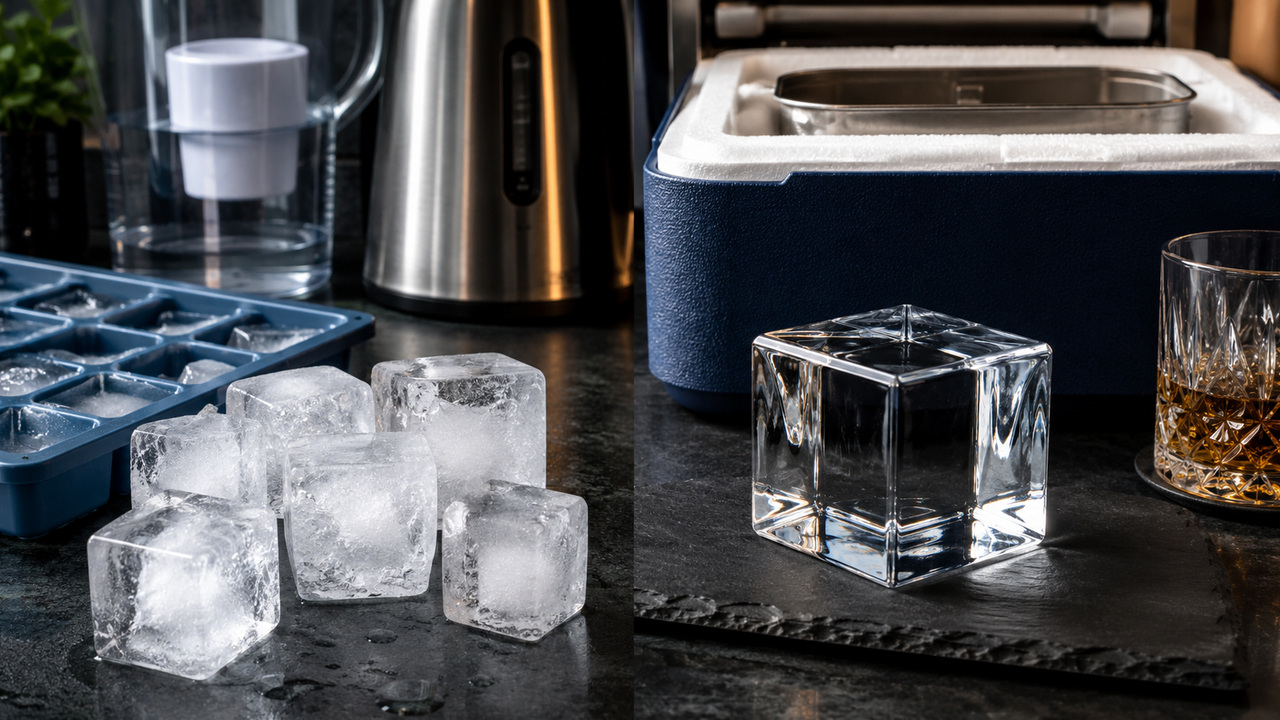
The basic job of a strainer is to separate the drink from the ice used for mixing. Shaking creates more movement, collisions and fragmentation, so the Hawthorne gains an advantage from its coil. The Difford's Guide two-piece shaker guide specifically directs bartenders to use a coiled strainer after shaking.
Ice size matters too. Very small or fragile ice tends to produce more fragments and speeds dilution; larger ice generally needs a longer shake to reach a similar level of dilution. In practice, a vigorously shaken cocktail with plenty of fractured ice gives you more reason to use a well-fitted Hawthorne and, if the drink will be served without ice, consider a fine-mesh second strain.
In a stirred cocktail made with large, intact cubes, there is less debris to catch. In that setting, the Julep does exactly what is needed: it holds back the cubes, lets the drink flow and keeps service simple.
When double straining is worth it
Double straining is especially useful in three cases: shaken drinks served without ice, recipes with muddled fruit and recipes with herbs or other ingredients that leave particles behind. A Daiquiri, Sidecar or another shaken sour can be fine-strained when the goal is a surface free of ice chips. A drink with muddled strawberry, passion fruit, mint or basil has an even clearer reason: keeping seeds and fibers out of the glass.
That does not mean every cocktail should be fine-strained. Mesh that is excessively tight can clog with thick pulp and slow service. Bartenders also debate how very fine filtration changes the feel of a freshly shaken drink. Difford's Guide presents both sides and reports that, with an appropriate strainer, the most obvious difference is the removal of ice and fruit particles rather than a perceptible loss of foam.
At home, the decision can be simple: use a fine mesh when there is something specific you want to remove. If the drink is already clean, was stirred or will be served over plenty of fresh ice without solids, the extra step may add little value.
Examples of useful combinations
- Martini, Manhattan and Negroni stirred in a mixing glass: Julep. The main goal is to hold back the cubes and pour a clear drink.
- Daiquiri, Sidecar and Cosmopolitan: Hawthorne after shaking; add a fine mesh if the drink is served without ice and you want to remove tiny chips.
- Whiskey Sour: Hawthorne as the primary strainer. A fine mesh can be used when you want to minimize ice crystals and small debris without giving up the foam.
- Drink with muddled berries or herbs: Hawthorne + fine mesh, because the first barrier holds back the ice and the second catches seeds, fibers and smaller leaves.
- Shaken drink served over fresh ice: Hawthorne. Fine mesh is optional and depends on whether pulp, herbs or particles are present.
If you can buy only one, start with a Hawthorne
For a compact home bar, a Hawthorne covers the widest range of tasks. It is the natural choice for shaken drinks and can also strain a stirred drink when needed. In a comparison published by Liquor.com, bartenders point to that versatility as a reason to choose a Hawthorne if you plan to own only one strainer.
A practical buying order is Hawthorne first, fine mesh second and Julep once you use a mixing glass regularly. That way each new tool solves a new problem instead of simply duplicating a function you already have.
Cleaning also affects performance
The Hawthorne coil and fine mesh trap residue easily. Rinsing them immediately after use keeps sugar, pulp and herbs from drying in the gaps. Fine mesh deserves extra attention because trapped particles change flow and can carry aromas into the next drink. Follow the manufacturer's cleaning guidance and let the mesh dry completely before storing it.
A final rule for choosing without memorizing recipes
Ask four questions: was the drink shaken or stirred? What vessel is it in? What kind of debris remains with the ice? Do you want a more rustic or a cleaner texture? If it was shaken, start with a Hawthorne. If it was stirred in a mixing glass, start with a Julep. If small particles are still present and you do not want them in the glass, add a fine-mesh strainer. That logic is more useful than trying to assign one strainer to every individual recipe.