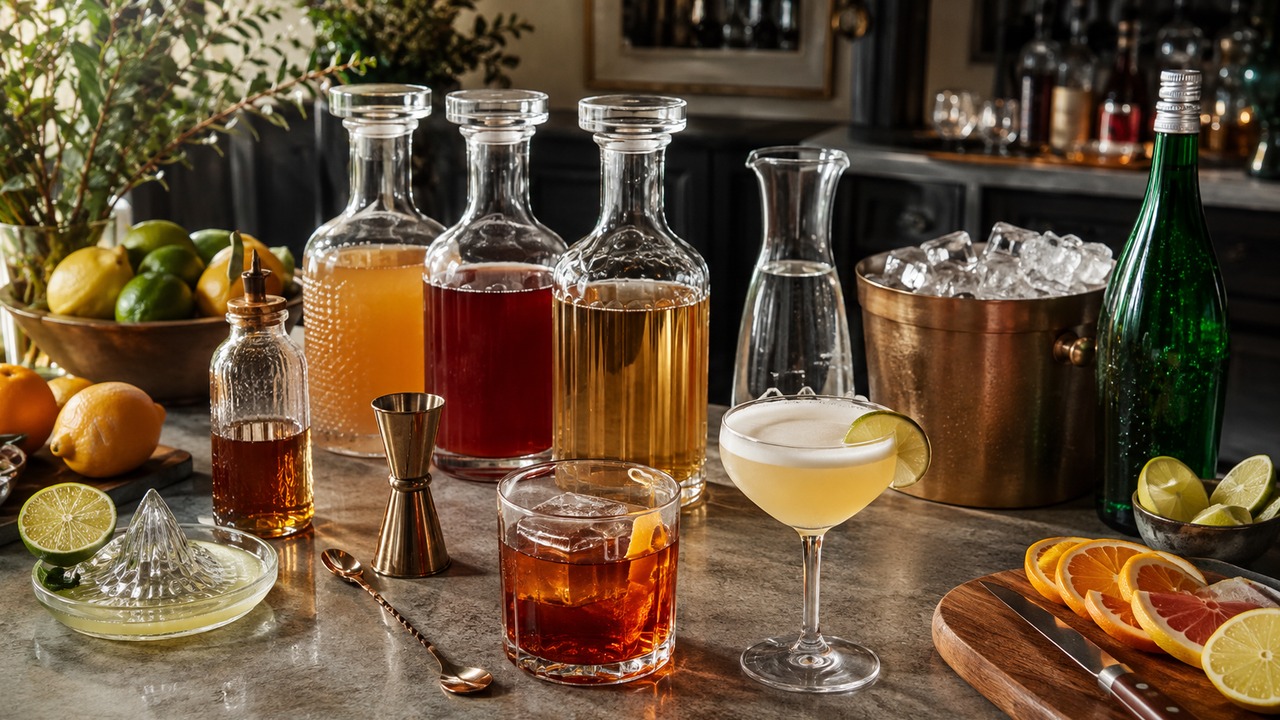
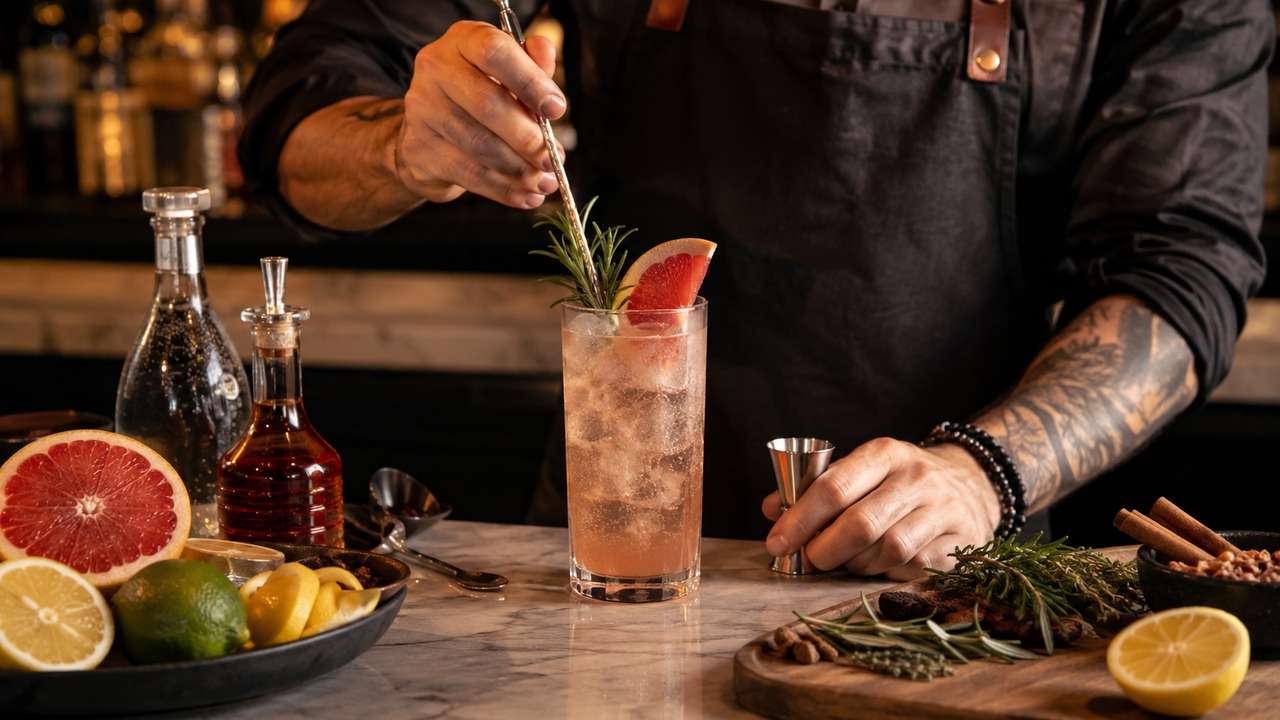
A mocktail is interesting when each element has a function, not when the recipe just accumulates juices and syrups. The most reliable way is to think of balance as a system: sweetness adds volume and rounds; acidity creates contrast; bitterness and aroma lengthen the flavor; body avoids the sensation of flavored water; dilution and carbonation control weight, intensity and aftertaste. When a drink looks like “sweet juice,” it is almost always possible to identify which of these axes is dominating or missing and correct it in small steps.
The idea is not to seek a universal proportion. Fruits change acidity, teas vary with infusion time, syrups have different concentrations and temperature changes the way the whole is perceived. Therefore, it is worth formulating it with a simple base, tasting it in the glass in which it will be served and making one adjustment at a time. This sequence preserves the diagnosis: if you change sugar, acid, water and bitterness at the same time, you don't know which change solved or worsened the problem.
Balance begins with concentration, not decoration
Before thinking about garnish, foam or final aroma, observe the concentration of the liquid. A drink can have enough lemon and still be cloying if the syrup and sweet juice load is too high. Likewise, it can seem aggressively acidic when what is missing is not sugar, but body or aroma that continues the sip.
In practice, treat sweetness and acidity as forces that modulate each other. Sensory studies with sucrose and organic acids show that the presence of acid can reduce the perceived intensity of sweetness, but the interaction depends on the concentrations and type of acid. This explains why a few drops or a few milliliters of an acidic component can “open up” a sweet mocktail, but also why simply pouring in more lemon is not an infinite solution.
The first test should answer a simple question: is the drink sweet because it lacks contrast or because there is too much sugar? If the sweetness is just dominant, a little
increased acidity or bitterness can reorganize the whole. If the liquid already feels viscous, sticky, or leaves a long sugary finish, the problem is one of concentration. In this case, reducing the sweet component or increasing the unsweetened portion often works better than trying to hide the excess with more acid.
Too sweet: fix in two steps
First change the structure, then the acidity
When the recipe is still under construction, reduce the syrup before compensating with any other ingredients. To an already assembled glass, a useful correction is to add a small amount of unsweetened part, such as cold tea, filtered water or sparkling water, and taste again. The objective is to lower the overall concentration without turning the drink into flavored water.
Only then adjust the acidity. With fresh citrus, make small changes, for example 5 ml at a time in an individual glass. This step size is large enough to be noticed and small enough not to destroy the balance. If the drink has gone from sweet to sour, go back a step and work on another dimension, such as aroma, bitterness or dilution.
Acidity doesn't have to mean more lemon flavor
Lemon and lime are easy tools, but they also change the aroma of the drink. When the profile calls for another direction, naturally acidic ingredients, such as passion fruit, tamarind or some fruit juices, can fulfill part of the function. In more technical formulations, food acids suitable for culinary use make it possible to separate acidity from aroma, but require careful measurement and compliance with the manufacturer's instructions.
The important point is not to confuse pH with perception. Two drinks can have similar chemical acidity and appear different because sugar, aroma, temperature and texture change the experience. At home, the best instrument remains a controlled adjustment, followed by comparative testing.
Shallow or “juicy” taste: create length of flavor
A mocktail can be correctly sweet and tart and still seem incomplete. This happens when the sip starts with fruit, becomes predictable in the middle and ends with nothing to support the flavor. The fix doesn't have to be more syrup. Often what's missing is a second aromatic layer or a little bitter tension.
The interaction between sweet and bitter is known in sensory science: when they appear together, one can partially suppress the perceived intensity of the other. In practice, this means that a well-dosed bitter note can contain the sensation of sweetness and create a more adult finish. The goal is not to make the drink “bitter”, but to give it an edge that prevents the sugar from dominating the entire course.
Black tea, oolong, more structured green tea, low dose coffee, citrus peels without excess white part, spices and herbs are useful ways to build this length without adding alcohol. The infusion should be included as an ingredient, not as random water: prepare it more concentrated than the drink you would drink pure, cool it and use in a measured volume. If the tea is too astringent, the solution may be to reduce the infusion, not compensate with sugar.
Aroma also helps add complexity without increasing actual sweetness. Citrus peel, rosemary, basil, mint, ginger and spice oils change what the brain interprets as
flavor. Aromas associated with sweet foods can even increase the impression of sweetness in certain matrices, which is why ingredients such as vanilla should be used with intention when the goal is to make the drink less sweet to the palate.
Aqueous: increases body without returning to syrup
When a mocktail appears watered down, the automatic reaction is often to add more sugar. This resolves viscosity, but may recreate the initial problem. First, find out if there is really a lack of texture or a lack of concentration of flavor.
For concentration, use a more intense base: stronger tea, cold coffee diluted in a controlled way, fruit puree in small quantities, less diluted juice or a concentrated aromatic infusion. For texture, ingredients with pulp or pectin naturally increase the sensation of body, although they also contain fruit sugars. The choice must consider the whole, not just the absence of added sugar.
Viscosity and sensory perception are related, but “body” in drinks is broader than thickness. The astringency of tea, the creaminess of a non-alcoholic foam, the density of a fine pulp and the aromatic persistence can make a drink seem more structured even without being sweeter. The goal is to give resistance and continuity to the sip, not to turn the glass into nectar.
Heavy: use water and gas as formulation tools
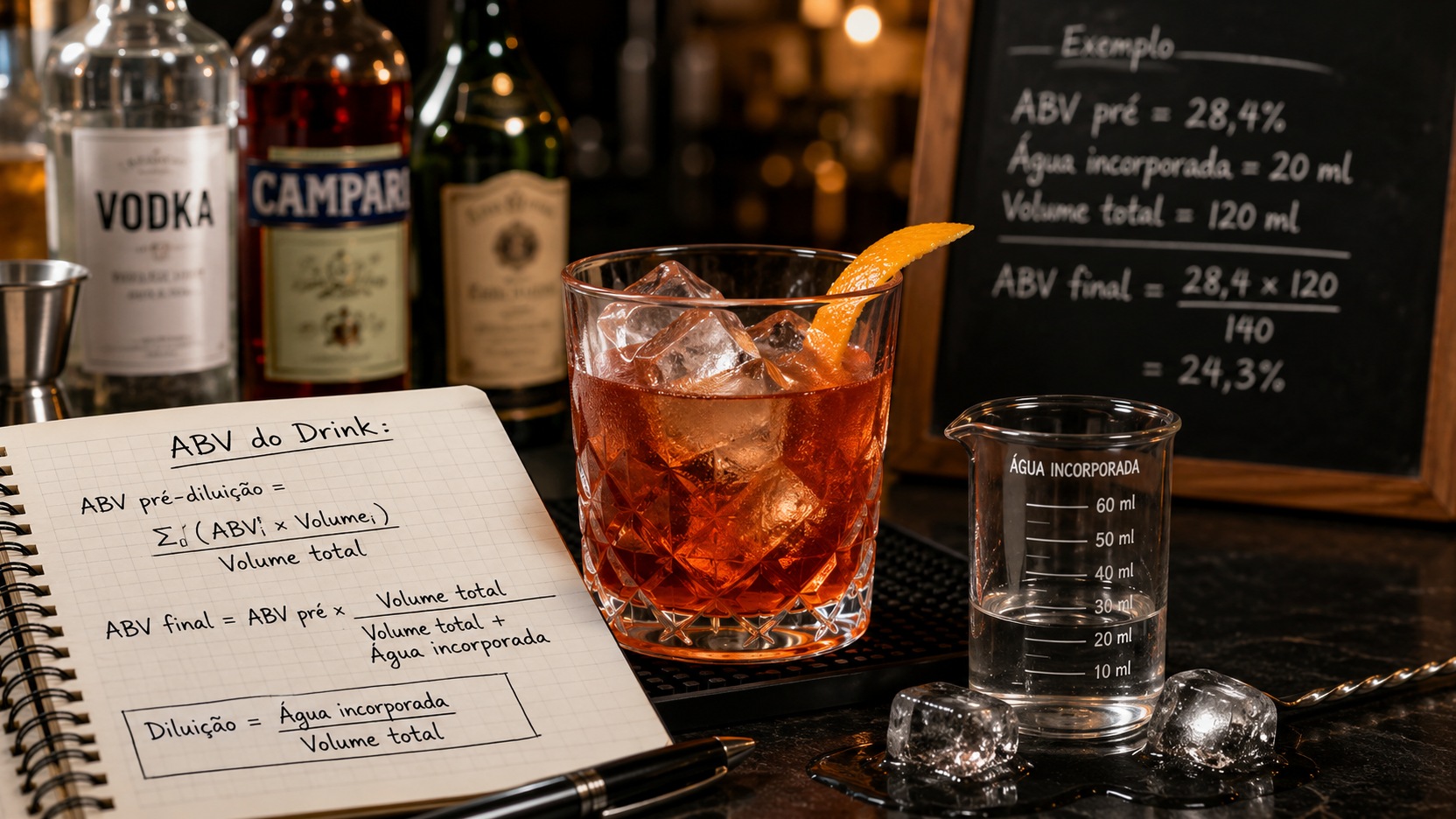
Dilution is not the enemy of a mocktail. Water simultaneously reduces the concentration of sugar, acid, bitterness and aroma. Therefore, it can repair a charged base, but it can also extinguish a drink that was already weak. Adjustment should be made after the concentrated base is reasonably balanced.
Carbonation adds another dimension. Sensory studies with carbonated drinks observed a reduction in perceived sweetness, an increase in perceived acidity and changes in the release and perception of aromas. This helps you understand why topping off a heavy mocktail with sparkling water can make it livelier without requiring more lemon or more bitterness.
To fix an individual glass, add sparkling water in steps of 20 to 30 ml and taste. If the drink becomes more refreshing and defined, continue until the desired point. If it starts to lose scent or appears “empty”, you are past its prime and the base needs more concentration before diluting.
A diagnostic matrix to fix without guessing
If it's too sweet
First assess whether there is a real excess of sugar. If there is, reduce the sweet part or increase the unsweetened fraction. If the concentration is good and the sensation is still sweet, test 5 ml of acidic component or a small source of bitterness. Test again before making any other changes.
If it's shallow
Don't start with sugar. Add a layer of aroma, spice, tea or light bitterness. A citrus peel expressed in the glass, a few milliliters of strong tea or a note of ginger can change the finish more than an extra 10 ml of syrup.
If it is watery
Avoid simply “sweetening to thicken”. Reinforce the base in small steps with concentrated tea, more intense juice, strained puree or another ingredient that already belongs to the profile. Then reevaluate acidity and sweetness, because increasing concentration also increases the intensity of the other components.
If it's heavy
Test dilution and carbonation before removing ingredients. Sparkling water in small increments is often a clean fix because it reduces concentration and adds stimulation without new sugar. If the drink loses identity quickly, the base needs to be rebuilt with more aroma or concentration, not just diluted.
Three test bases to learn the adjustments
Base 1: citrus, black tea and fizzy
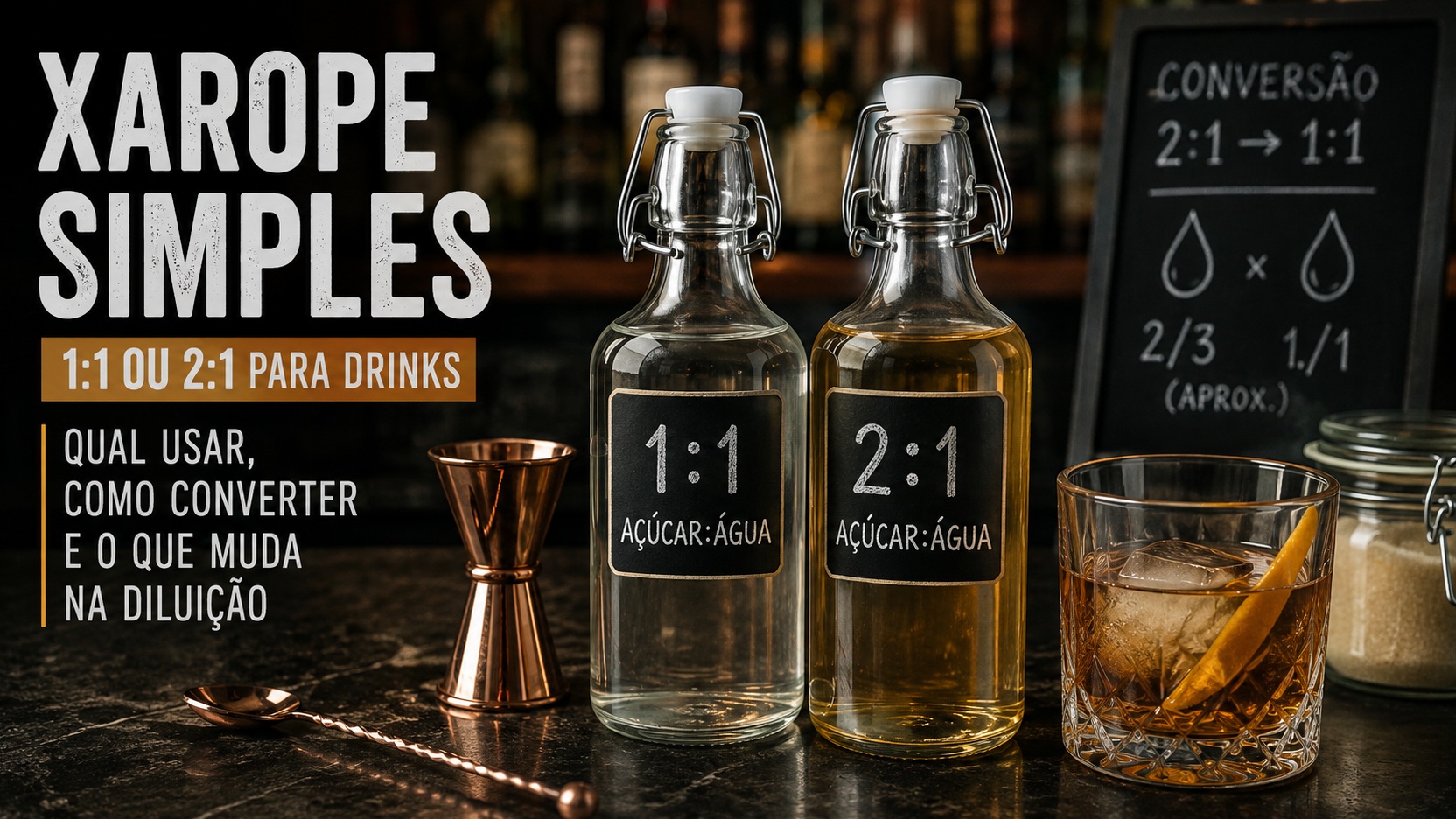
Mix 25 ml lemon juice, 15 ml simple syrup in a 1:1 ratio, 60 ml cold strong black tea and ice. Top up with approximately 80 ml of sparkling water. This base serves to understand how acidity, tea tannins, sweetness and carbonation work together.
If it tastes sweet, add 5 ml of lemon or 20 ml of sparkling water and compare the two routes. If it becomes aggressively acidic, test 5 ml of syrup, not 15 ml at once. If it appears shallow, increase the tea by 10 ml or use a lemon peel expressed over the surface. The learning is in changing one axis at a time.
Base 2: passion fruit, oolong and spice
Mix 30 ml of strained passion fruit juice or pulp, 10 ml of simple syrup, 70 ml of cold strong oolong tea and ice. Top up with approximately 80 ml of sparkling water. A small piece of macerated ginger in the base or a light ginger infusion can add aroma and spice without requiring more sugar.
If passion fruit dominates, increase the tea by 10 ml. If the drink becomes too bitter or astringent, reduce the tea concentration in the next round before adding the syrup. If it is heavy, add gas in 20 ml steps. This base shows that “bitterness” and “body” do not need to come from an alcoholic bitter.
Base 3: apple, lemon and toasted tea
Mix 60 ml of whole apple juice with no added sugar, 15 ml of lemon juice, 60 ml of cold strong black tea or roasted tea and ice. Top up with 70 to 90 ml of sparkling water. Start without syrup. The apple itself provides enough sweetness and body for the first test.
If it tastes sweet, increase the lemon by 5 ml or the gas by 20 ml. If it becomes thin, increase the tea or apple by 10 ml, noting that more apple also increases sugar. If the finish is missing, use lemon peel, short-steeped cinnamon, or another compatible spice instead of automatically sweetening.
0.0% and “non-alcoholic” are not exactly the same thing
In Brazil, Decree No. 12,709, of 2025, classifies as non-alcoholic drinks those with an alcohol content of less than 0.5% by volume, with a specific exception for grape must. Therefore, “non-alcoholic” is a legal category that may include a trace amount of alcohol; does not necessarily mean 0.0%.
If the formulation needs to be strictly 0.0%, confirm each ingredient by the label or technical sheet. This is especially important for fermented or dealcoholized products and for extracts, tinctures and bitters, because the composition varies from product to product. The three test bases above can be assembled with water, sparkling water, juices, teas, sugar, herbs and non-alcoholic spices, as long as the ingredients chosen are in fact 0.0%.
The method is worth more than a perfect recipe
A balanced mocktail is not born from a fixed formula, but from a process that makes errors legible. Too sweet requires a concentration diagnosis first and then contrast. Shallow calls for aromatic or bitter length. Aqueous calls for concentration or texture. Heavy requires dilution and, often, carbonation.
When you record quantities and make small changes, you stop “saving” a cup on the spur of the moment and start building a repeatable recipe. This is the point at which the drink stops being a sum of juices and syrups and starts to have its own structure: each ingredient has a function, and each adjustment has a reason.