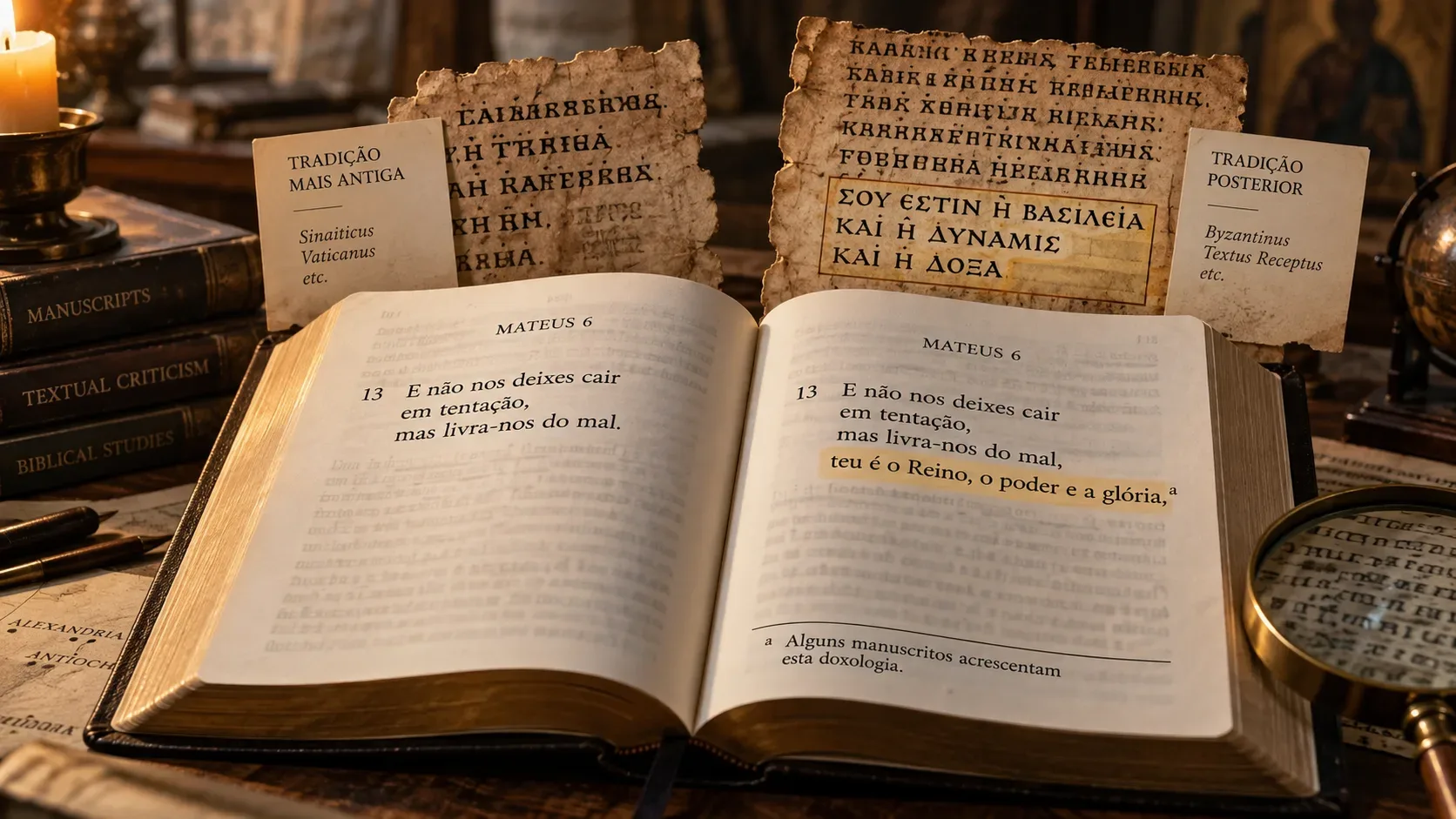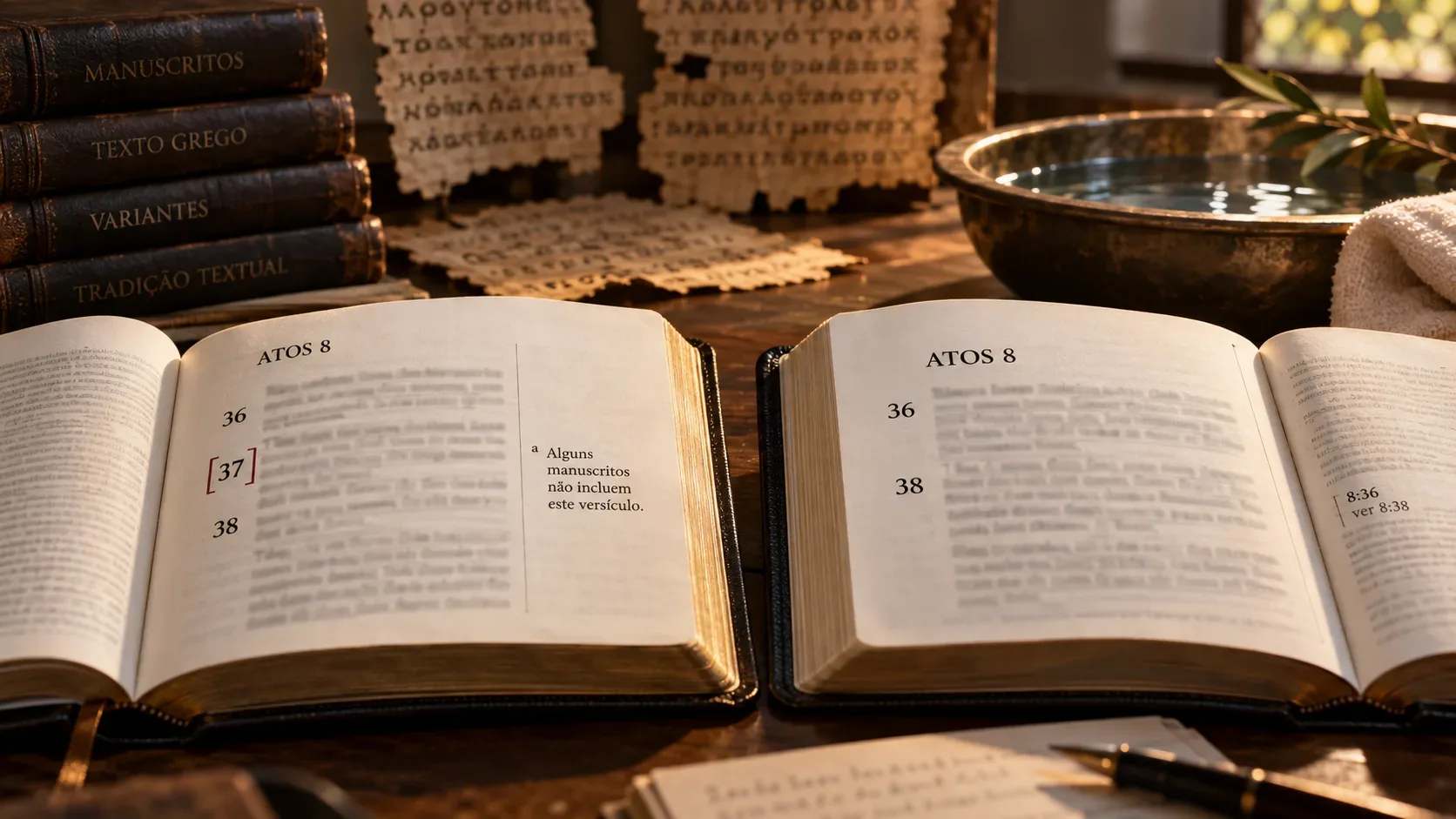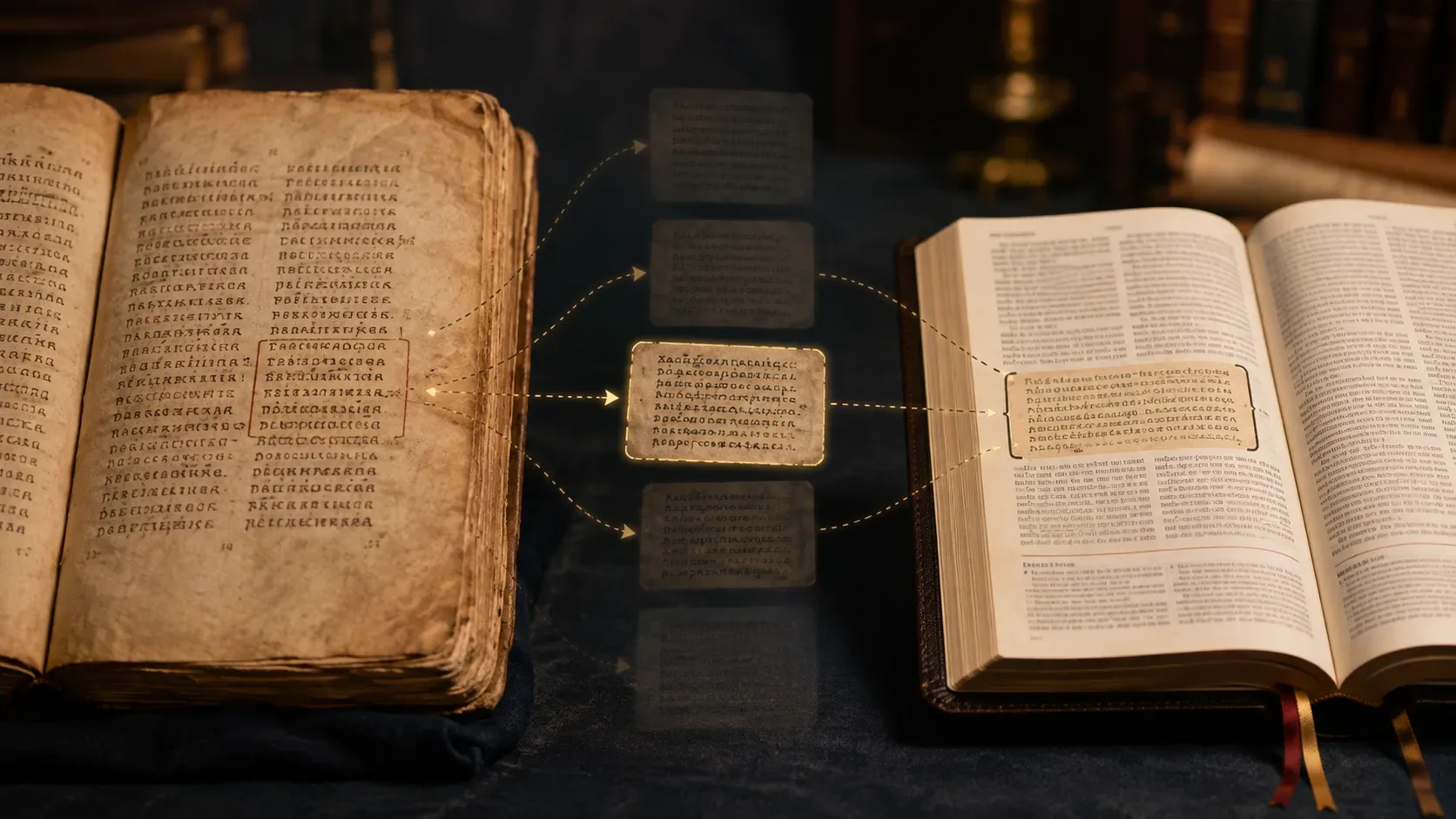
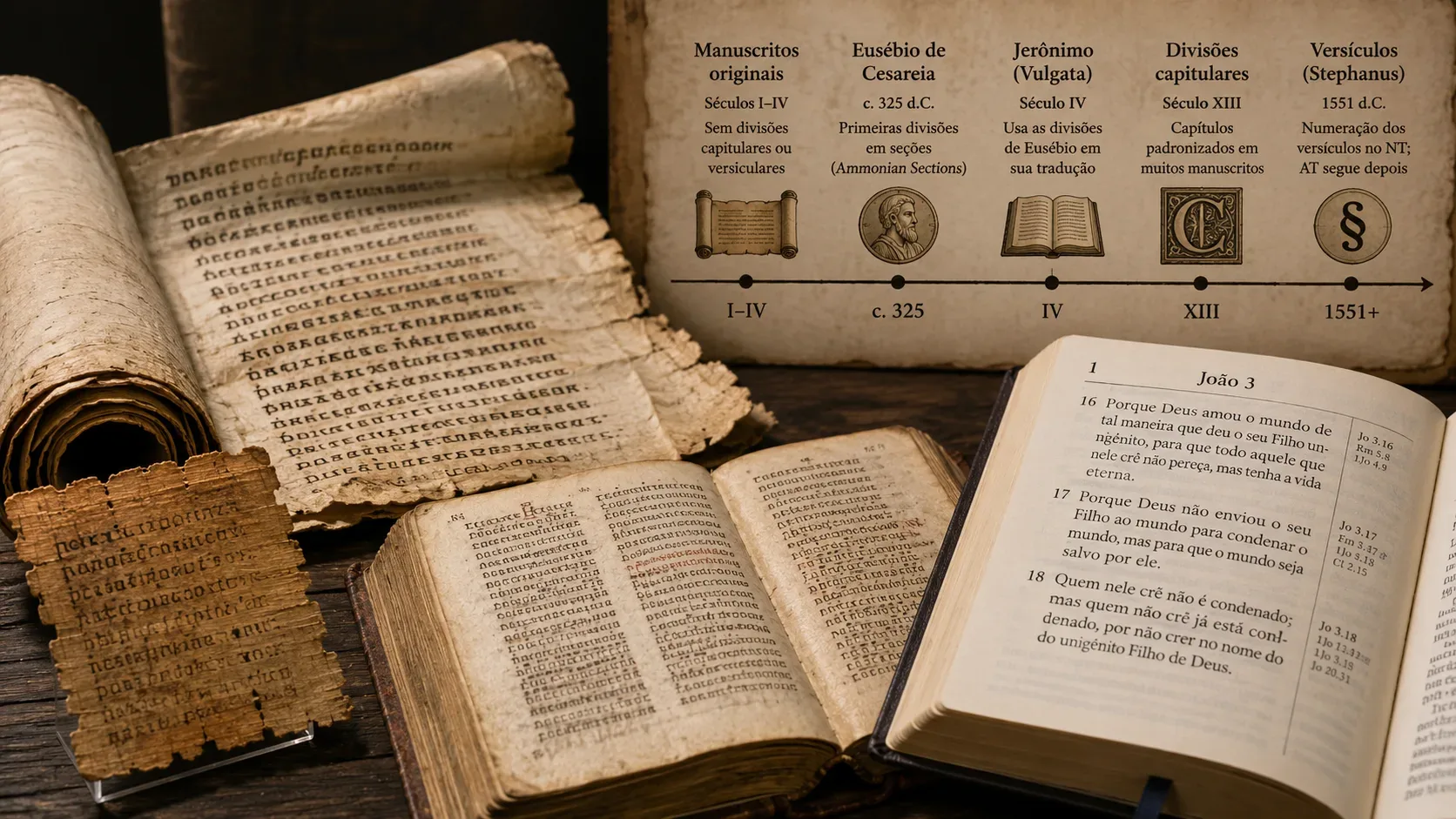
The modern numbering of Bible chapters and verses was not part of the original composition of the biblical books. It was created much later to locate passages, compare texts, and organize study, teaching, and printing. That does not mean ancient manuscripts were always an undivided block: Jewish and Christian scribes used spaces, signs, paragraphs, section lists, and other reference systems long before the standard that now appears as “John 3:16.”
The short answer
Today’s chapter divisions are generally associated with Stephen Langton in the university culture of early-thirteenth-century Paris. The modern numbering of New Testament verses was introduced by Robert Estienne (Stephanus) in his 1551 Greek-Latin edition. In the Hebrew text, verse divisions are much older than printed numbering: the Masoretic tradition already preserved verse boundaries and reading signs. So the statement that “chapters and verses were added later” is correct for the modern numerical system, but it compresses a history that included many earlier systems.
Before the numbers, there were already divisions and navigation tools
The key distinction is between the biblical text and its editorial layers of navigation. Ancient authors did not write their works using the modern numerical grid, but readers and copyists developed tools for finding and organizing passages over the centuries.
- Sense divisions and paragraphs: manuscript traditions used spacing, signs, and breaks to mark reading units.
- Verses in the Hebrew text: the Masoretic tradition preserved boundaries of pesuqim (verses), linked with systems of accentuation and recitation. This predates printing a number beside each verse.
- Gospel sections: in late antiquity, the so-called Ammonian Sections and Eusebian Canons provided a way to locate and compare parallel episodes in Matthew, Mark, Luke, and John.
- Kephalaia and capitula: different Christian manuscripts also carried section lists or headings that do not necessarily match today’s chapters.
A material example is the Codex Alexandrinus, a fifth-century Greek manuscript preserved by the British Library. Its catalogue records Eusebian canons and Ammonian sections in the Gospels, along with kephalaia as running heads. It is clear evidence that the text was being organized centuries before the modern system — but according to a different logic.
Timeline: from ancient systems to modern references
| Period | System or milestone | What changed |
|---|---|---|
| Antiquity | Composition and copying of biblical books | There is no modern chapter-and-verse numbering; different traditions use various ways of segmenting and reading the text. |
| 3rd–4th centuries | Ammonian Sections and Eusebian Canons | The Gospels receive a cross-reference system for locating parallel passages. |
| 5th century | Manuscripts such as Codex Alexandrinus | They show ancient sections, canons, and headings already integrated into manuscript use. |
| Early 13th century | Chapters associated with Stephen Langton and the Paris Bible culture | A chapter division very close to the later standard spreads through the Latin West and then into other printed traditions. |
| Medieval Masoretic tradition | Verse boundaries in the Hebrew text | Verses are traditional units of reading and accentuation; this is not yet the modern printed numbering system. |
| 1528 | Santes Pagnino’s Latin Bible | An important predecessor of printed versification; his New Testament scheme was not the one that became standard. |
| 1551 | Robert Estienne’s New Testament | The Greek-Latin edition introduces the New Testament verse numbering that, in substance, prevailed. |
| Mid-16th century onward | Spread through printed Bibles | Numbered chapters and verses become an increasingly stable reference technology across editions and languages. |
Who created today’s chapters?
The most common answer is Stephen Langton, a theologian connected with the University of Paris who later became archbishop of Canterbury. Reference works such as the Oxford Dictionary of the Christian Church describe the present chapter division as probably going back to Langton. The word “probably” matters: standardization took place within a broader culture of biblical study and book production in Paris, not as a single act that instantly replaced all earlier systems.
That setting explains why the thirteenth century was decisive. Research on the medieval Bible shows that by the first decades of that century complete one-volume Bibles in a more portable format became a hallmark of Parisian production. Frans van Liere’s study from Cambridge University Press places this material and intellectual transformation in the same environment where more uniform location systems were especially useful for lectures, preaching, concordances, and consultation.
And the verses: did Estienne invent all of them?
No. Here the Old Testament/Hebrew Bible and the New Testament need to be distinguished.
In the Hebrew text, verse division predates print. The Masoretic tradition marks verse endings and counts verses in its systems for preserving the text. It is therefore misleading to say that a medieval rabbi simply “invented the Old Testament verses”: medieval scholars could use and number units that already existed as traditional divisions. The historical overview in the Jewish Encyclopedia explicitly distinguishes ancient Masoretic verse division from the later adoption of printed numbers.
In the New Testament, there were proposals before Estienne. Santes Pagnino’s 1528 Latin Bible is an important predecessor. But it was the fourth edition of Robert Estienne’s Greek New Testament, published in Geneva in 1551, that introduced the modern verse numbering that spread widely. The bibliographic record of the National Library of Spain identifies this edition and notes its significance for structuring the New Testament in verses; a study by William Weaver examines Estienne’s system as a reference technology characteristic of Reformation print culture.
What the numbering changes in reading
Chapters and verses are extremely useful for citation, teaching, research, and comparing translations. The problem arises when a number is treated as though it were a literary boundary created by the author. A chapter break can fall in the middle of a scene, argument, poem, or chain of images. A verse number can separate a sentence from its continuation.
| Example | What the division can hide | A better way to read |
|---|---|---|
| Genesis 1:1–2:3 | The seventh day is in Genesis 2 even though it completes the sequence that begins at 1:1. | Read 1:1 through 2:3 as a unit before moving to what begins at 2:4. |
| Isaiah 52:13–53:12 | The poem many readers look for under “Isaiah 53” begins four verses earlier, at 52:13. | Start at the beginning of the poetic unit, not the chapter number. |
| Matthew 16:28–17:8 | The chapter changes immediately before “after six days,” a time marker linking the transfiguration with the preceding context. | Read the closing verses of chapter 16 together with the opening of chapter 17. |
These examples do not establish any particular doctrinal interpretation. They show a more basic point: literary structure can cross numerical structure.
How to use chapters and verses without being trapped by them
- Use the numbers to reach the text, not to decide where the thought ends.
- Read before and after the reference. In letters and speeches, a full paragraph or section is often the smallest useful unit.
- Watch for connectors and markers: “therefore,” “because,” “then,” “after this,” pronouns, and time references often cross numerical breaks.
- Compare paragraphing in two translations. Translations may retain the same numbers while grouping verses differently.
- For deeper study, follow the literary unit. In poetry, narrative, and argument, the main question is where the text changes topic, scene, voice, or structure — not merely where the number changes.
Why did numbering prevail despite its limitations?
Because it solves a real problem. A reference such as “Romans 8:28” is short, reproducible, and works across editions whose pagination, typography, and page size may be completely different. That made more efficient concordances, indexes, cross-references, academic citations, and today’s instant digital search possible.
The best use of numbering is therefore twofold: precision for locating and flexibility for interpreting context. The number is an editorial address; the unit of meaning still has to be reconstructed by reading.
Sources and documents for further reading
- British Library — Codex Alexandrinus, New Testament volume: catalogue of a fifth-century manuscript with Eusebian canons, Ammonian sections, and kephalaia.
- The Metropolitan Museum of Art — Gospel Book: an example of canon tables used to compare Gospel passages.
- Frans van Liere, An Introduction to the Medieval Bible, Cambridge University Press: material and intellectual context for the medieval Bible and Parisian production.
- Oxford Reference — “Chapters, Biblical”: summary of the attribution of the present chapter system to Stephen Langton.
- National Library of Spain — Robert Estienne’s 1551 New Testament: bibliographic record of the edition that spread modern New Testament versification.
- William Weaver, “The Verse Divisions of the New Testament and the Literary Culture of the Reformation”: academic study of the editorial function of Estienne’s verses.
- Jewish Encyclopedia — “Verse-Division”: historical overview of Hebrew verse tradition and its later numbering.