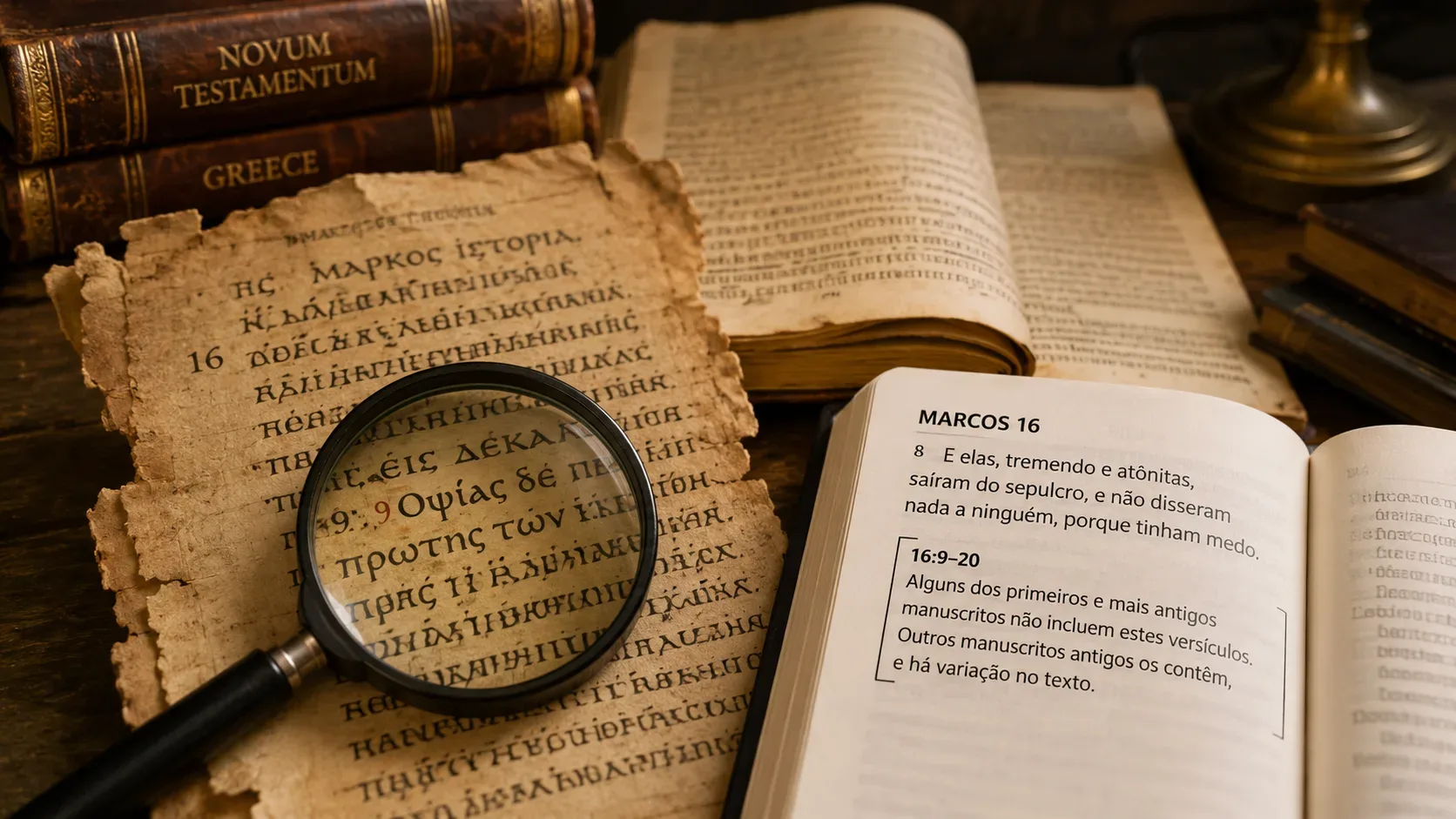
Short answer: Mark 16:9–20 is flagged in some Bibles because the ancient witnesses do not agree on how the Gospel of Mark ends. Two of the oldest complete Greek manuscripts that preserve the end of Mark, Codex Sinaiticus and Codex Vaticanus, stop at 16:8. Most surviving Greek manuscripts, however, contain verses 9–20, and this “longer ending” was already known by the late second century. There is also a “shorter ending” and an expanded form of the longer ending in particular witnesses. Brackets, headings, and footnotes are editorial ways of showing readers that textual variation.
Why do some Bibles put Mark 16:9–20 in brackets or add a note?
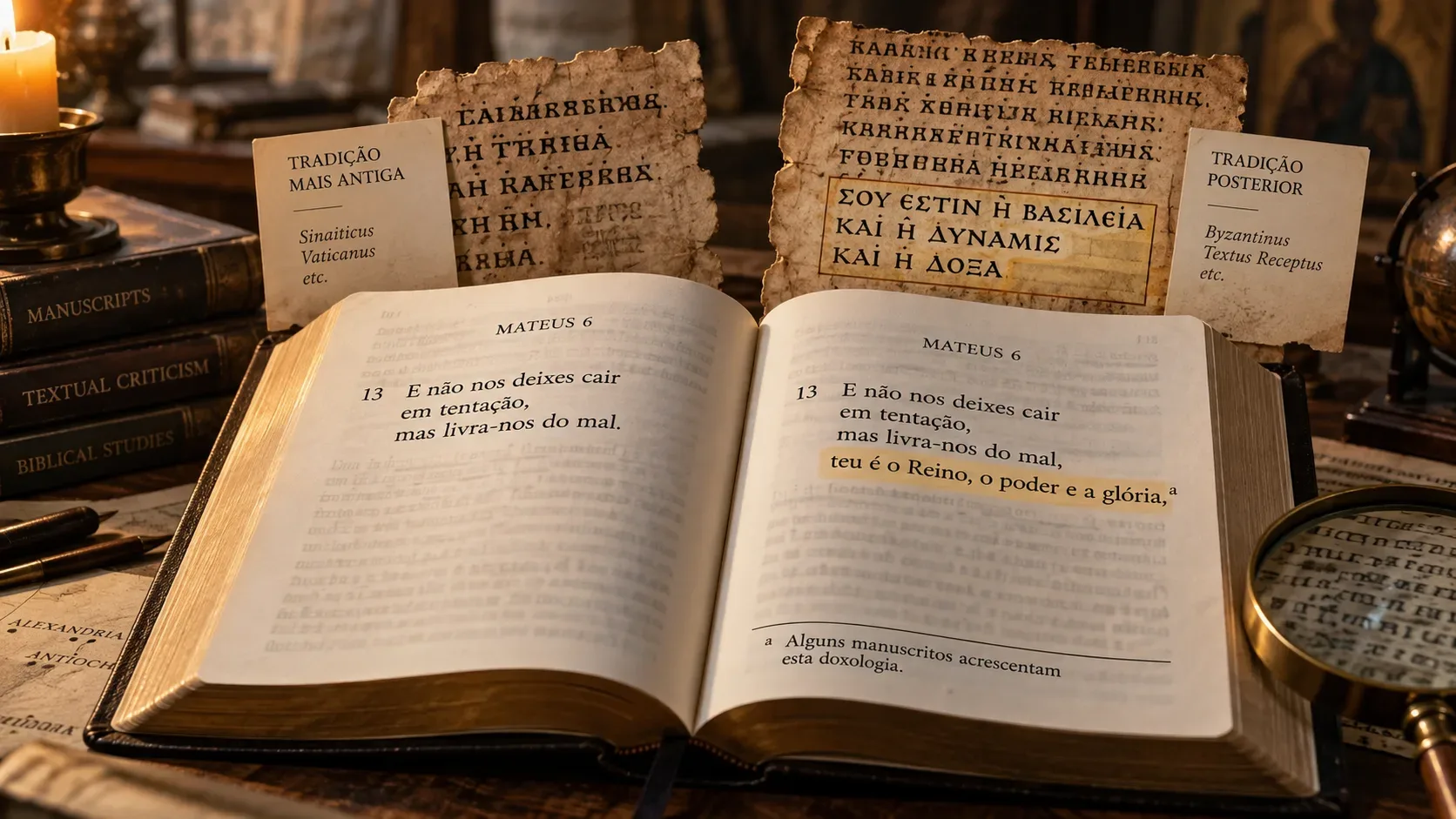
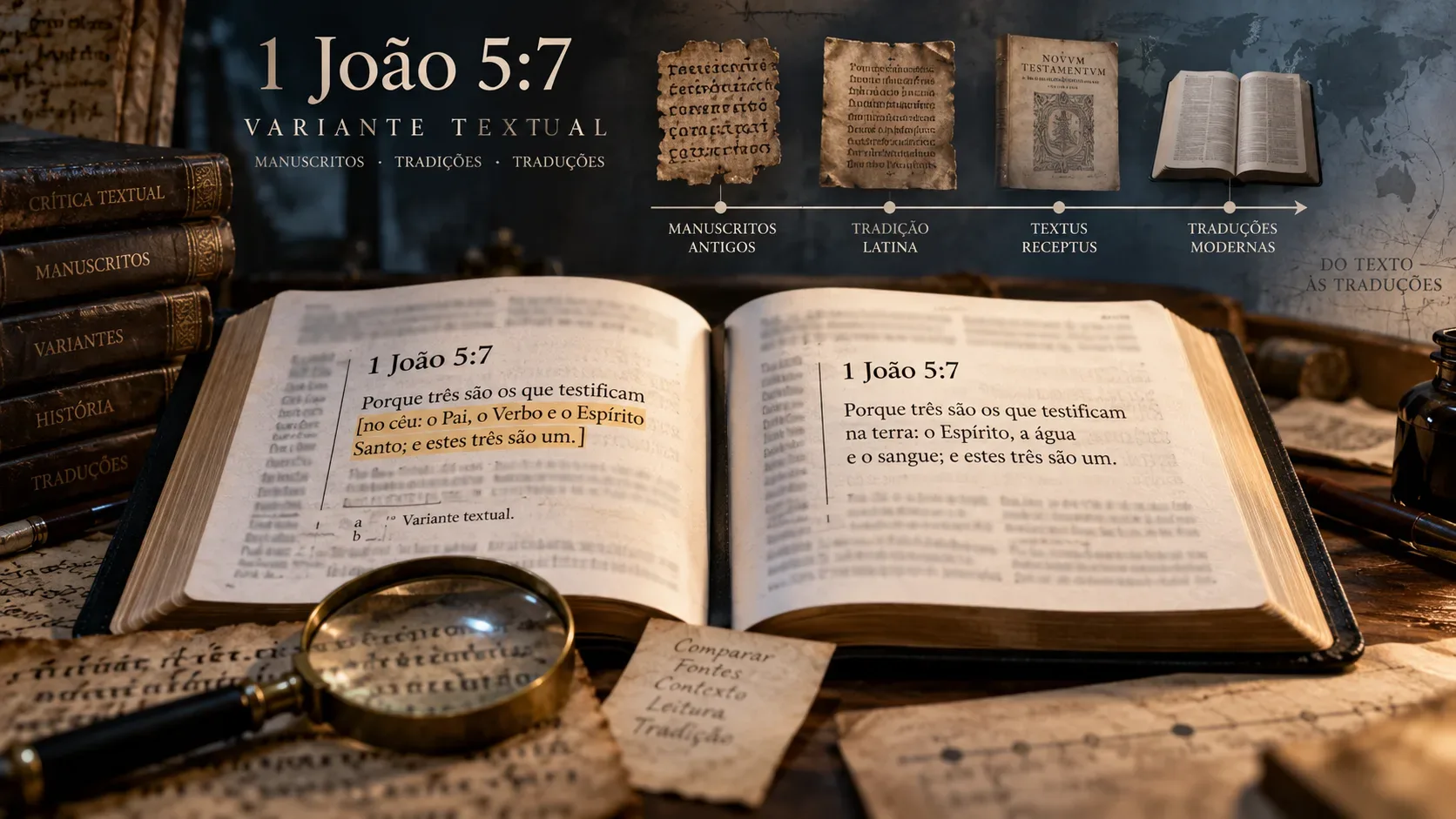
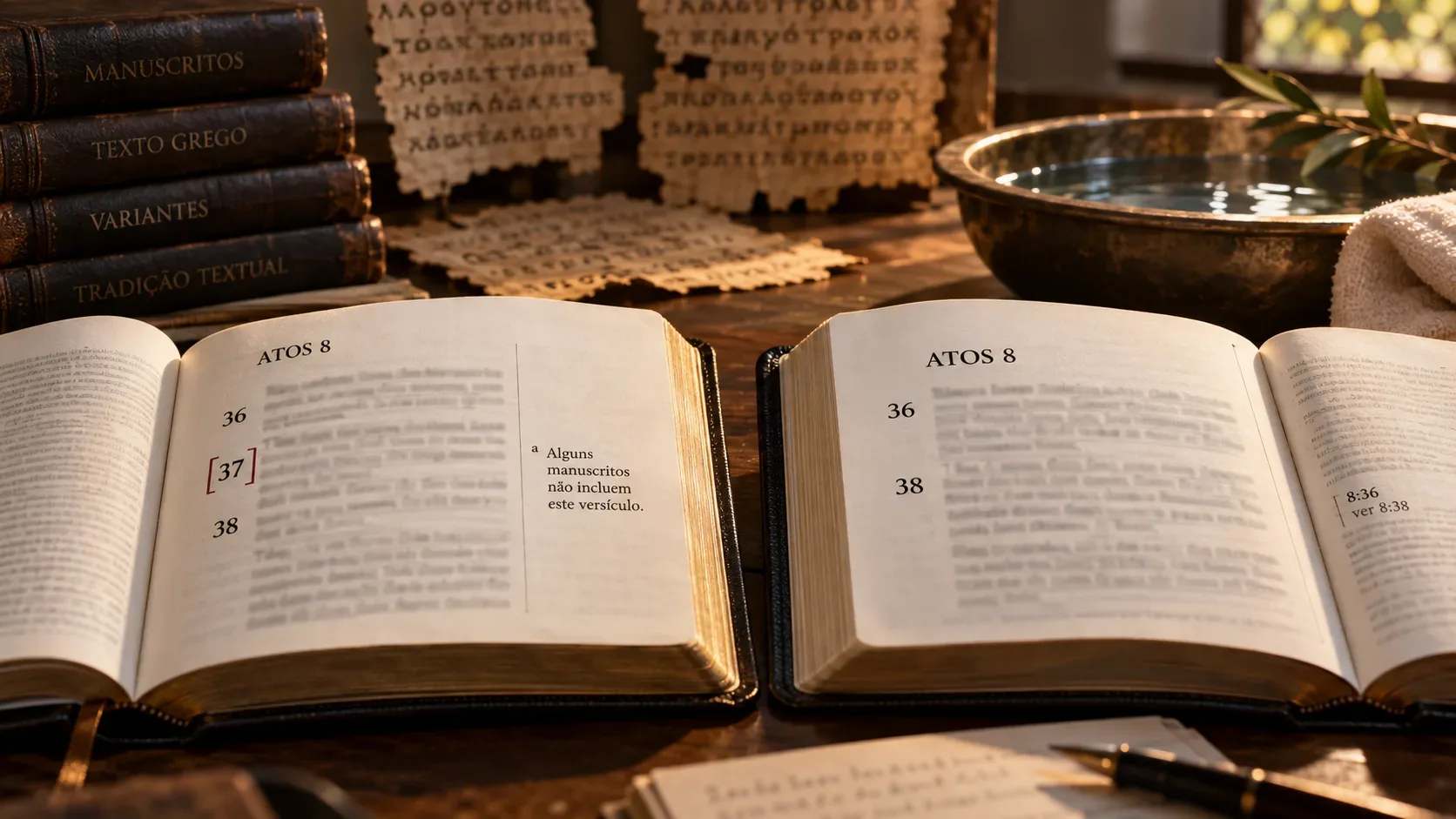
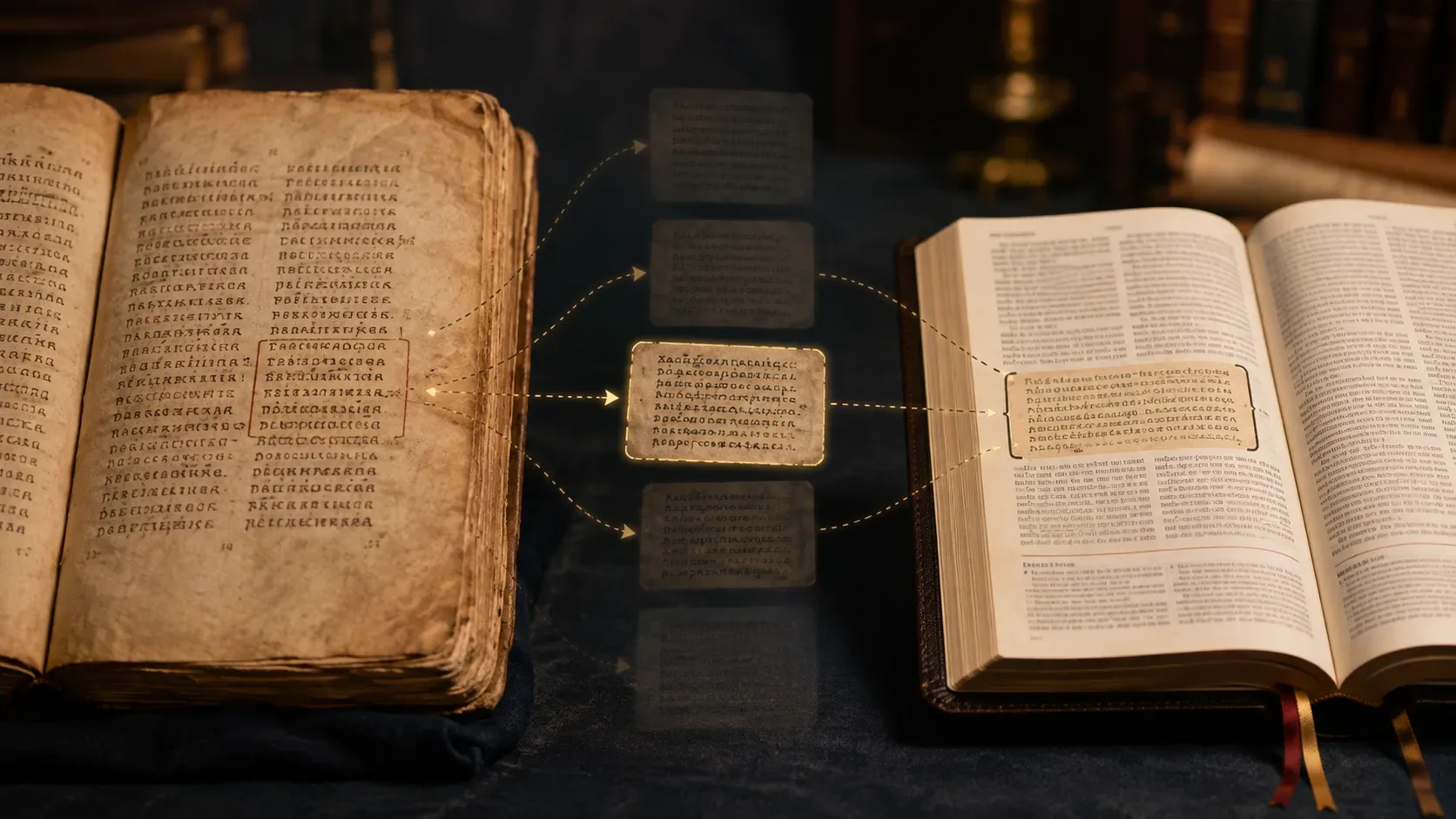
Because a modern translation does not work from a single manuscript. Editors compare Greek copies, ancient versions, and citations in early Christian writers to reconstruct the history of the text. When an important passage appears in different forms across significant witnesses, a translation may keep it in the main text while also alerting the reader to the textual question.
That is what happens in Mark 16. The ESV and NIV, for example, retain the verses but flag the fact that ancient manuscripts do not all contain them. The NRSVue explicitly labels the section “The Long Ending of Mark” and supplies notes about other endings. The visual treatment varies by edition: brackets, a divider, a heading, or a footnote. The editorial point is the same: readers should know that the manuscript tradition is not uniform.
What forms of the ending appear in the witnesses?
| Form of the ending | Witnesses and features | What the evidence shows |
|---|---|---|
| Ending at 16:8 | Codex Sinaiticus and Codex Vaticanus, both fourth-century manuscripts, end Mark after “for they were afraid.” The digitized Sinaiticus moves from Mark 16:8 directly to Luke 1. | There is an early and important form of the text in which 16:9–20 is absent. |
| Longer ending: 16:9–20 | It appears in most surviving Greek manuscripts and in a range of ancient witnesses. It summarizes resurrection appearances, the commission, signs, the ascension, and the disciples’ preaching. | The longer ending has broad transmission and should not be described as a late medieval invention. |
| Shorter ending | A small group of witnesses places a brief paragraph after 16:8 about the message reaching Peter and the proclamation of the gospel. In several of these witnesses, the longer ending follows it. | Some scribes or textual traditions received a Mark that appeared to stop abruptly and transmitted another closing paragraph. |
| Longer ending with an addition | Codex Washingtonianus contains 16:9–20 but inserts extra material between 16:14 and 16:15, commonly called the Freer Logion. | There are significant variants even within the tradition that preserves 16:9–20. |
Why Codex Sinaiticus and Codex Vaticanus matter
Sinaiticus and Vaticanus receive special attention because they are among the oldest nearly complete Greek manuscripts of the New Testament. In Sinaiticus, the page available through the Codex Sinaiticus digital project shows Mark 16:1–8 followed by the closing title and then Luke 1:1.
This is strong evidence, but it needs precise wording. It does not mean that “the oldest Bible manuscripts” in general prove that Mark ended at 16:8. Papyrus P45 is older than those codices and preserves portions of Mark, but not chapter 16. For this particular passage, the earliest complete Greek manuscripts available to us are fourth-century codices.
Nor is manuscript counting enough by itself. Most surviving Greek copies contain the longer ending, but many are later. Textual criticism weighs age, independence among textual families, geographical distribution, scribal habits, and internal coherence rather than treating the evidence as a simple vote.
The longer ending is ancient — and that matters
The absence of 16:9–20 from Sinaiticus and Vaticanus does not make it a medieval creation. Irenaeus of Lyons, writing in the late second century, quotes Mark 16:19 and presents it as part of the conclusion of Mark’s Gospel. The passage can be checked in Against Heresies 3.10.5. This places knowledge of the longer ending well before the surviving fourth-century complete codices.
That testimony establishes one point with considerable confidence: a form of Mark containing at least material from the longer ending circulated in the second century. What it does not establish by itself is who wrote all twelve verses, exactly when they entered the Gospel, or whether they belonged to Mark’s first published form.
Why do many textual critics consider 16:9–20 secondary?
In addition to manuscripts ending at 16:8, there are internal arguments. The transition from 16:8 to 16:9 is abrupt: attention shifts from the women to Jesus; Mary Magdalene is reintroduced even though she has just appeared in the narrative; the other women disappear from view. The passage also uses vocabulary and constructions that are unusual elsewhere in Mark.
These observations help explain why many scholars understand the longer ending as an ancient conclusion attached to a text that, in the form available to a scribe, stopped at 16:8. The textual note in the NET Bible summarizes this line of reasoning while also recording the shorter ending and other witnesses.
Internal evidence is not interpreted unanimously, however. Nicholas P. Lunn, in The Original Ending of Mark, argues that vocabulary and style differences have been overstated and presents a case for the authenticity of the longer ending. The continuing debate is precisely why it is useful to separate the raw data — which witnesses contain which ending — from conclusions about authorship.
If 16:9–20 is not original, did Mark intend to stop at 16:8?
That is a second question and should not be confused with the first. Even among scholars who regard 16:9–20 as secondary, there is disagreement about what happened to Mark’s original ending. Three proposals recur:
- 16:8 was intentional: the women’s fear and silence form an open literary ending.
- the original ending was lost: Mark wrote a continuation, but it disappeared before the copying stage that generated part of the surviving tradition.
- the Gospel was left unfinished: a historically proposed option, though difficult to demonstrate.
Robert H. Stein, for example, argued that 16:8 was unlikely to be the intended ending because Mark 14:28 and 16:7 point forward to a post-resurrection meeting of Jesus and the disciples in Galilee. His argument is summarized in “The Ending of Mark”. Still, arguing that an original ending was lost is not the same as proving that 16:9–20 is that lost ending.
Why keep the verses in the text at all?
Because their antiquity, broad transmission, and enormous importance in the history of reading Mark make it inadequate simply to hide them. Many editions choose editorial transparency: print the passage and mark the variant. The Reformation Study Bible captures the reason for the debate: some important early manuscripts lack 16:9–20, others contain it, and still others preserve alternative endings; at the same time, the longer ending is cited early and dominates the later manuscript tradition.
Brackets therefore do not mean “forbidden text,” and a note does not mean that a translation has “removed” the passage. They indicate that the editor is distinguishing between printing the text and confidence about its place in the earliest recoverable form of Mark.
What the manuscript evidence allows us to say with the greatest confidence
- There is real variation at the end of Mark. It is not a controversy invented by recent translations.
- 16:9–20 is ancient. Irenaeus shows that material from the longer ending was known in the second century.
- The two oldest complete Greek manuscripts that preserve the end of Mark stop at 16:8.
- Most surviving Greek manuscripts contain 16:9–20. Numerical majority, however, is not the only criterion in textual criticism.
- Alternative endings and additions exist. The transmission history is more complex than a simple “present or absent” choice.
- Authorship of 16:9–20 is a critical conclusion, not a statement written in the manuscripts themselves. Many scholars reject Markan authorship; others defend it.
What textual criticism does not settle by itself
Textual criticism asks which form of the text is earlier or best explains the rise of the other forms. By itself it does not determine how a church should define canon, liturgical authority, doctrine, or pastoral use. Christian communities can assign theological weight to the longer ending while acknowledging the authorship and transmission question; others prefer not to build a doctrine exclusively on a passage with this degree of textual uncertainty.
Keeping those questions separate avoids two extremes: treating the note in a Bible as evidence of fraud, or pretending that the manuscript variation does not exist.
How to read your Bible’s note without claiming more than it says
- Check whether the edition says “some of the earliest manuscripts,” “the earliest manuscripts,” or simply “some manuscripts.” Those statements are not identical.
- Read the full note: many editions explain the shorter ending, the longer ending, and possible additions.
- Compare two or three translations. Differences in layout usually reflect editorial policy, not a different manuscript discovery.
- Separate three questions: Is the passage ancient?, Was it in the earliest form of Mark?, and How does my religious tradition receive it? They can have different answers.