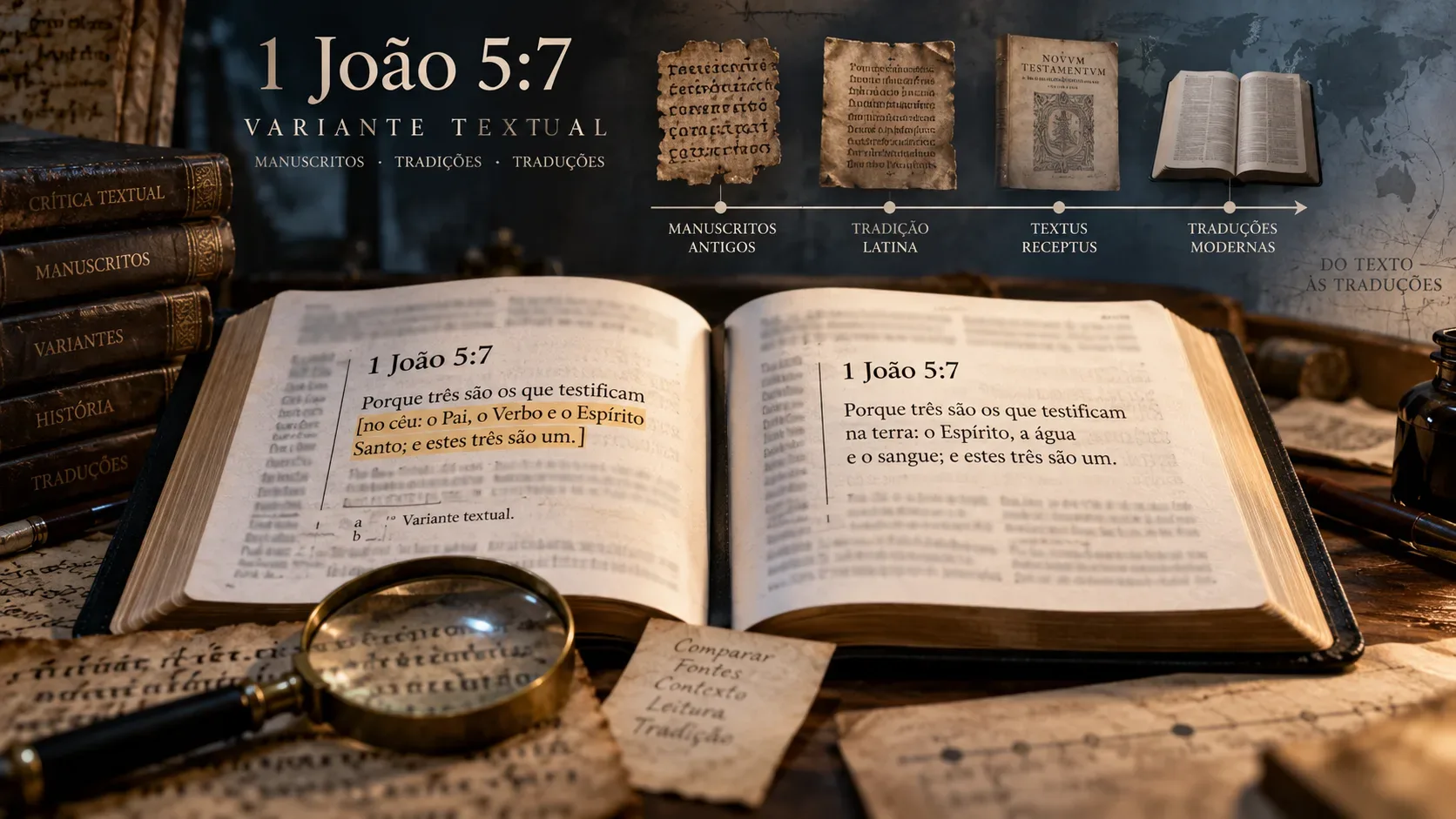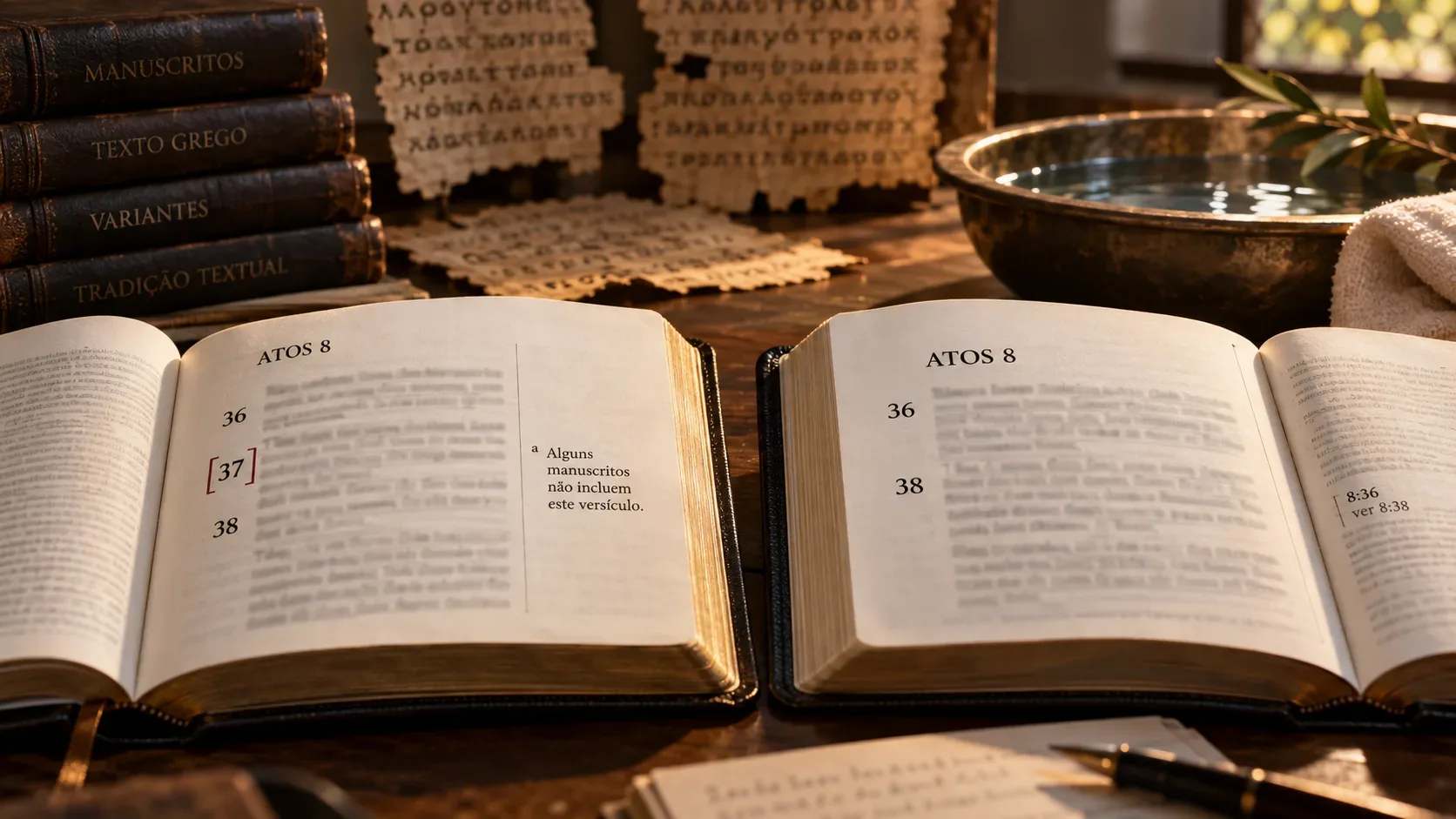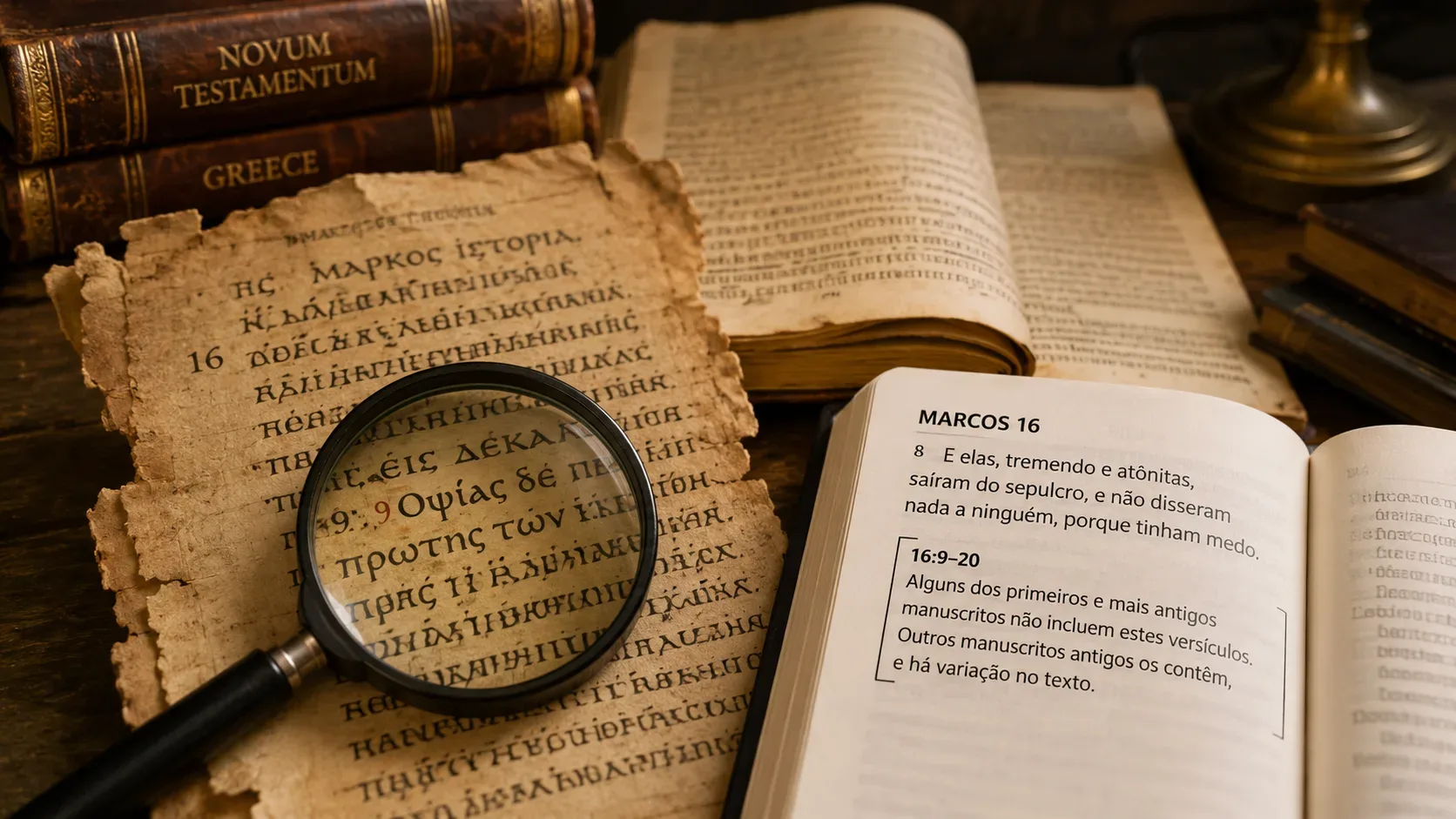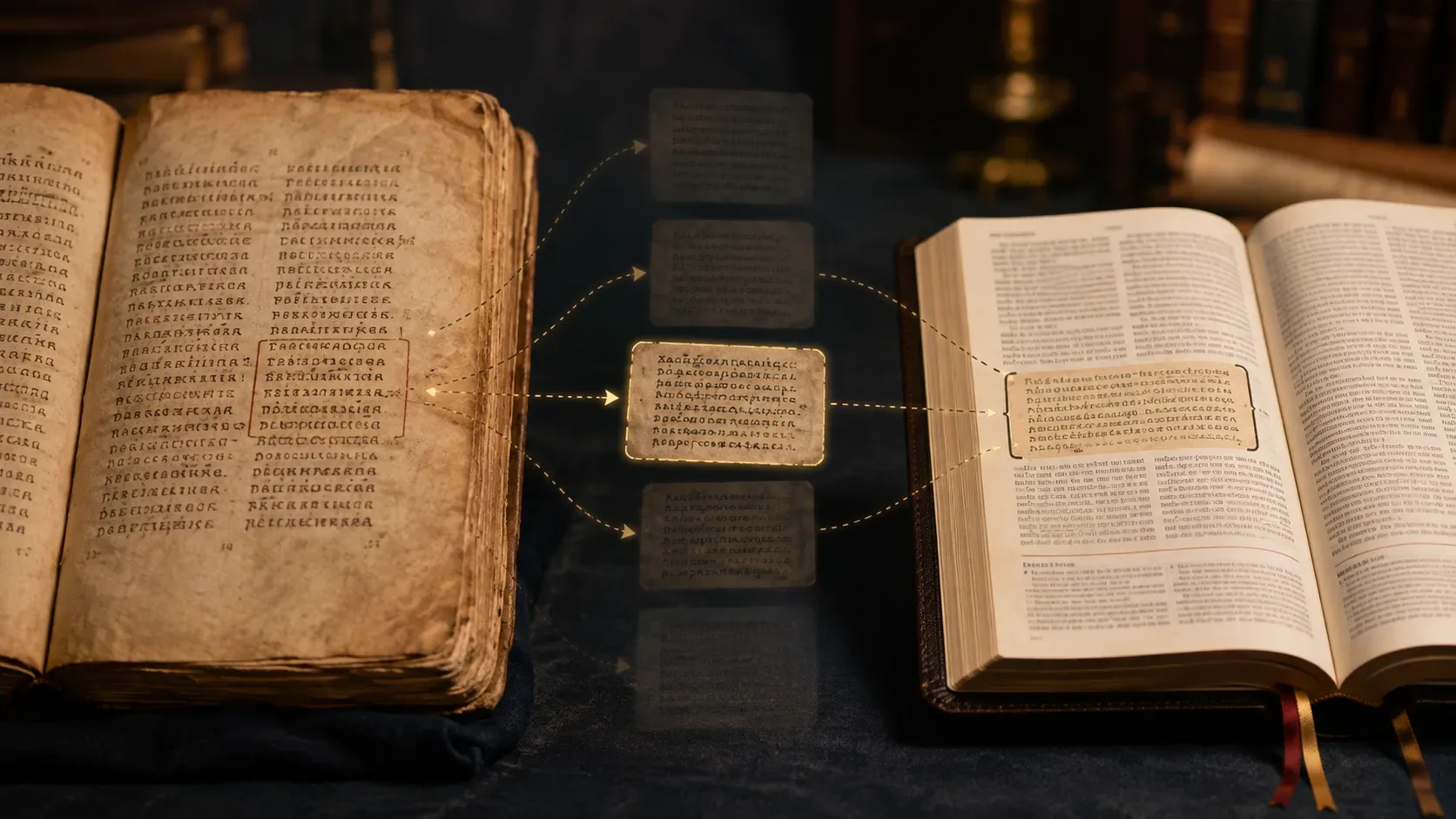
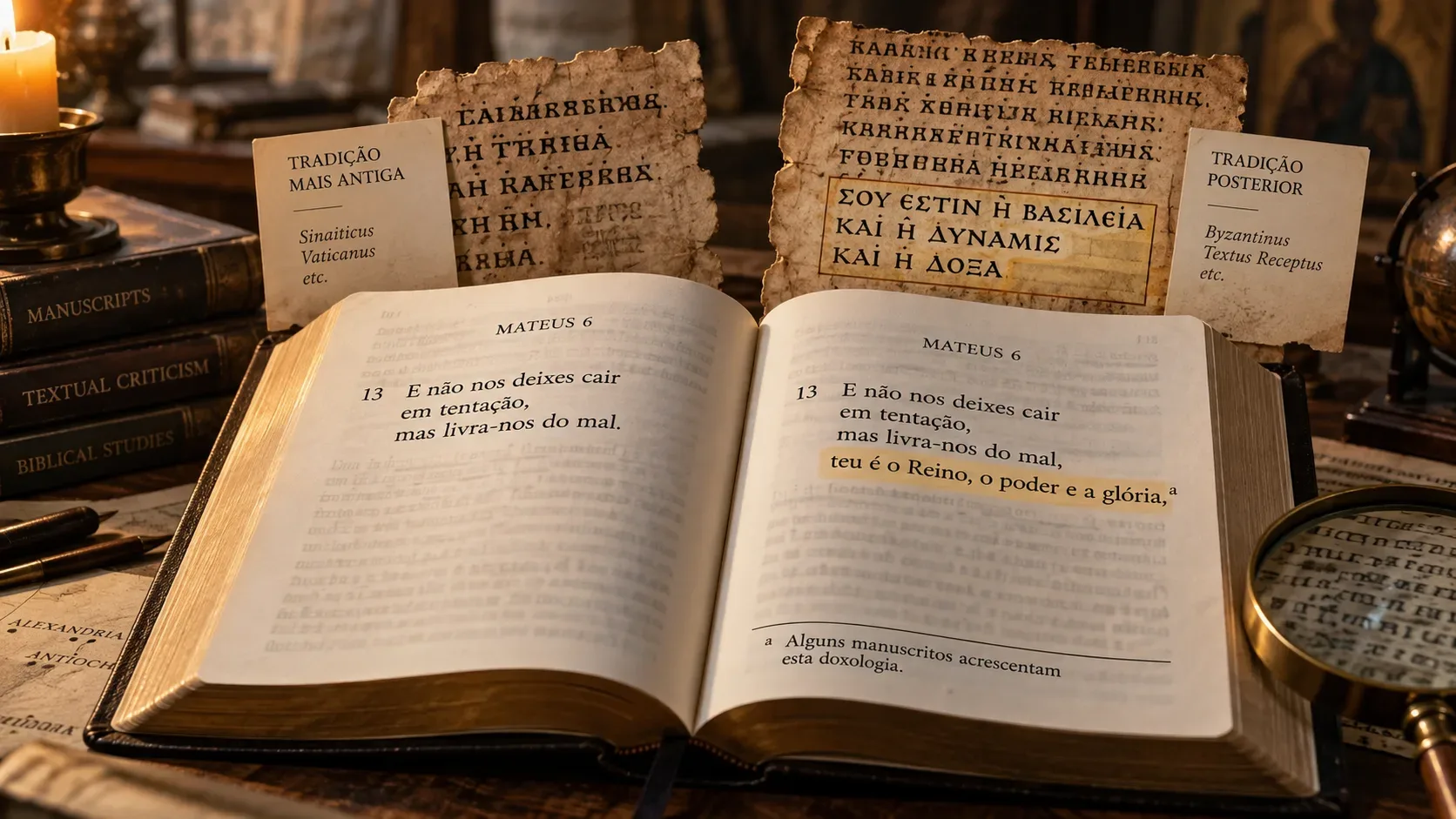
The line “for yours is the kingdom and the power and the glory forever. Amen” at the end of Matthew 6:13 is a textual variant: it is present in many manuscripts and in part of the Bible translation tradition, but it is absent from ancient witnesses considered especially important for reconstructing the text of Matthew. That is why some Bibles print it in the verse, others put it in brackets or a footnote, and others end the prayer with “deliver us from evil” or “the evil one.”
This does not mean that a translation “removed a prayer from the Bible” for theological reasons. The question is more specific: which form of Matthew 6:13 is most likely to represent the earliest recoverable text? At the same time, the liturgical history matters because a similar doxology appears very early in Christian practice.
What exactly varies in Matthew 6:13
Readers mainly encounter two forms. The shorter form ends with the petition to be delivered from evil or the evil one. The longer form adds a doxology commonly rendered “for yours is the kingdom and the power and the glory forever. Amen.”
| Form | What happens at the end | Type of evidence |
|---|---|---|
| Shorter reading | The prayer ends after “deliver us from evil/the evil one.” | It is attested by important ancient witnesses, including Codex Sinaiticus and Codex Vaticanus, along with other witnesses cited in textual apparatuses and notes. |
| Longer reading | Adds “kingdom, power and glory” and, in many forms, “forever. Amen.” | It is widespread in the later manuscript tradition and occurs with small variations in wording. |
| Early liturgical parallel | The Didache ends the Lord’s Prayer with a doxology of “power and glory,” but not in exactly the same full form found in many Matthew manuscripts. | It shows that a doxological ending is early, but it does not by itself settle the original wording of the Gospel. |
The NET Bible textual note on Matthew 6:13 summarizes the contrast clearly: many manuscripts contain the longer phrase, while ancient witnesses highly valued in textual criticism do not. The note concludes that the shorter reading better explains the rise of the longer form.
Why critical editions usually prefer the shorter reading
Textual criticism does not count manuscripts as if the issue were a simple vote. It compares age, geographic distribution, relationships among witnesses, textual quality, and the historical explanation that best accounts for the variants.
For Matthew 6:13, two arguments are especially important. The first is external: the omission of the doxology is documented in relevant early witnesses. The second is internal: it is easy to understand how a familiar and fitting liturgical conclusion could enter the written text during transmission, especially when the prayer was recited publicly. It is harder to explain why scribes in different settings would broadly remove a perfectly orthodox devotional formula.
There is another useful clue: the doxology circulated in different forms. Some witnesses have “power and glory”; others also include “kingdom”; still others contain expanded wording. That diversity fits a liturgical formula that developed relatively stable forms in different traditions before or while entering part of the manuscript tradition.
Does the Didache prove the phrase was original to Matthew?
No. It proves something different — and important. The Didache, an early Christian manual, transmits the Lord’s Prayer and closes it with a doxology equivalent to “yours is the power and the glory forever.” The text can be read in Didache 8.
This shows that ending the prayer with praise is a very early Christian practice. But the Didache wording is not identical to the familiar longer form in Matthew because it does not include “the kingdom” in that passage. It is therefore strong evidence for the history of the prayer and its liturgical use, not automatic proof that the longer wording already belonged to the original text of Matthew.
Where may the language “kingdom, power and glory” come from?
The doxology fits biblical language of praise very naturally. A frequently noted parallel is 1 Chronicles 29:11, where kingdom, power and glory are associated with God’s rule. That helps explain why the formula sounds at home in Jewish-Christian prayer and why it could readily be adopted in worship.
Two questions must be kept distinct. “Does the phrase express a biblical idea?” and “Was the phrase part of the earliest wording of Matthew 6:13?” are not the same question. The first can be answered positively without forcing the second to have the same answer.
Why modern translations handle the line differently
Translations are not divided simply into “old Bibles” and “modern Bibles.” They may follow different Greek editions, use different editorial policies for well-known variants, and make different decisions about whether a traditional reading belongs in the main text, brackets, or a note.
| Example | Treatment of Matthew 6:13 | What readers should notice |
|---|---|---|
| Portuguese NIV (NVI) | Prints the doxology in the text and notes that some manuscripts do not contain it. | The variant remains visible in the main text while the textual uncertainty is disclosed. |
| Portuguese Easy-to-Read Version (VFL) | Ends the main text before the doxology and notes that some manuscripts add it. | The shorter reading is in the text and the longer reading is preserved as textual information. |
| Portuguese NTLH | Presents the doxology in brackets. | The page layout itself marks the passage as textually special. |
| NIV and ESV in English | End the main text without the doxology and record it in a footnote. | They follow the shorter reading in the text while preserving the longer tradition for the reader. |
| KJV and traditions associated with the Textus Receptus | Include the doxology in the running text. | They reflect a Greek form in which the expansion is part of Matthew 6:13. |
These examples can be compared directly in Portuguese translations of Matthew 6:13 and in the English NIV and ESV. The key point is that the footnote is part of the editorial answer: it tells readers that translators are dealing with a known variant rather than concealing it.
Textual history and liturgical use are not the same thing
A church may recite the doxology in worship even when the Bible edition it uses prefers the shorter reading in Matthew. That is not contradictory. Liturgy and a critical edition answer different questions.
The Catechism of the Catholic Church, in its discussion of the Lord’s Prayer, distinguishes these layers: it acknowledges the early liturgical use of a doxology, mentions the form in the Didache, and notes the development of later formulas. The Byzantine tradition likewise preserves its own doxological conclusion in worship.
So the phrase can be very old and fully legitimate in liturgical use without requiring a textual critic to judge it part of the earliest recoverable form of Matthew’s Gospel.
Does omitting the doxology change the doctrine of the passage?
There is no need to treat the variant as though a Christian doctrine depended on it. God’s kingdom, power and glory are expressed widely in Scripture, including 1 Chronicles 29:11. The textual decision in Matthew 6:13 concerns where this formula stood in the transmitted text, not whether the language of praise is theologically acceptable.
Two statements can therefore be true at once: the doxology is an ancient, biblically coherent and widely used Christian prayer; and the shorter reading of Matthew 6:13 may have stronger support as the earliest form of the Gospel.
How to read the footnote in your Bible
- If the doxology is in the text and the note says some manuscripts omit it, the translation chose to preserve the traditional form in the main text.
- If the prayer ends with “deliver us from evil” and the note says some manuscripts add the doxology, the translation adopted the shorter reading in the main text.
- If the line appears in brackets, the edition is making the textual uncertainty visible on the page itself.
- In every case, read the note as information about textual transmission, not as evidence of fraud, censorship, or doctrinal alteration.
In summary
“Yours is the kingdom, the power and the glory” appears in some Bibles and not others because Matthew 6:13 has come down to us in more than one manuscript form. Important ancient witnesses favor the shorter ending, while many later manuscripts preserve the doxology. At the same time, the Didache shows that a doxological ending to the Lord’s Prayer is very early in Christian worship. The clearest way to understand the issue is therefore to distinguish the textual history of Matthew from the liturgical history of the Lord’s Prayer — and to use a translation’s notes to see which editorial decision it has adopted.