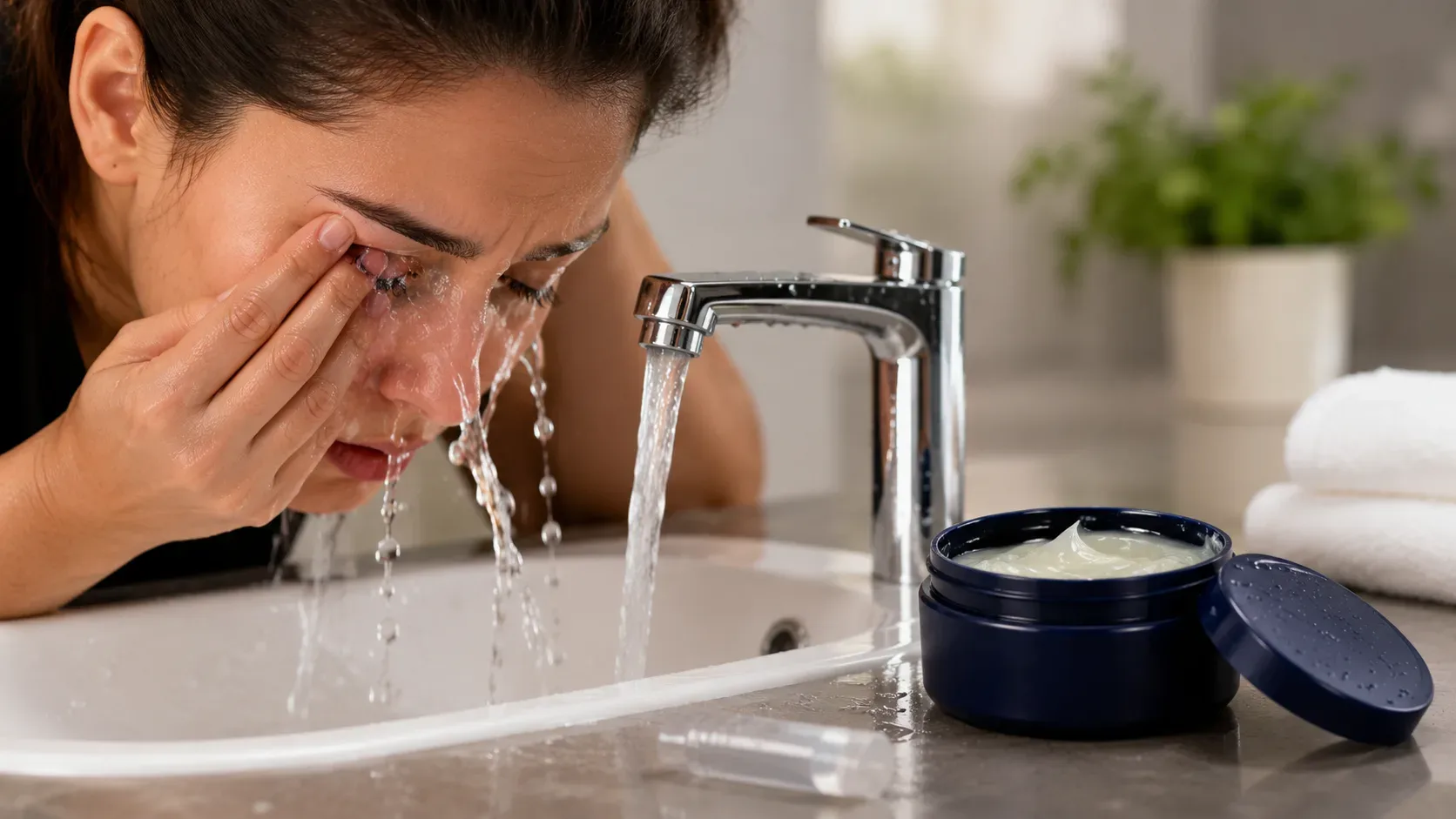
When a hair ointment gets into the eye, the priority is not to discover the brand, look for eye drops or wait for the burning to pass. Immediately begin flushing the eye with running water for at least 15 minutes. Then, evaluate symptoms, preserve the packaging, and seek assistance when there is any sign of injury. Washing is a first aid measure to remove the product; it does not replace a medical evaluation when there is pain, redness, swelling or changes in vision.
Hair ointment on the eye: what to do immediately
1. Start washing without waiting
Place the affected eye under clean running water, at a gentle flow, and keep washing for at least 15 minutes. Do not interrupt the procedure to look for the packaging, call someone or research the ingredients. In ocular exposures, removing the product quickly is the first step.
Water can come from a clean tap, shower, or container. Keep your eyelids open as much as possible and blink while washing. If only one eye was hit, tilt your head to the side of that eye, reducing the possibility of water carrying the product into the other.
Running water available at that moment is more important than looking for a special solution. Saline solution suitable for ocular use can also be used when immediately at hand, but washing should not be delayed to find it.
2. Remove the contact lens, if that's easy
Anyone wearing contact lenses should remove them during washing, as long as it is possible to do so easily. Removal should not delay the start of irrigation. If the lens appears stuck or the person cannot open the eye, do not force it: continue washing and seek care.
The lens used at the time of the accident should not be replaced without professional advice. Even when the burning sensation improves, the ocular surface may remain irritated.
3. Do not rub or apply products yourself
Rubbing the eye can increase irritation and worsen possible damage to the ocular surface. You should also not apply eye drops for redness, antibiotics, anesthetics, boric acid water or other solutions without guidance from a healthcare professional.
Do not use milk, oil, tea, vinegar, bicarbonate, soap or homemade recipes to try to “neutralize” the ointment. After a chemical or cosmetic exposure, general first aid guidance is to limit irrigation to clean water or adequate saline and not to apply eye medications on your own.
4. Observe the symptoms after washing
After completing the minimum washing period, check for:
- pain or burning;
- intense redness;
- tearing that does not subside;
- sensation of sand or foreign body;
- difficulty keeping the eye open;
- swelling in the eyelids or around the eye;
- blurred vision, loss of sharpness or any other visual change;
- abnormal sensitivity to light.
These signs appear among events associated with styling ointments and may indicate significant irritation, corneal inflammation, or other injury that needs to be examined. Anvisa includes keratitis, ocular hyperemia, burning and temporary blindness among the adverse events already reported with these products.
When to seek medical care urgently
Seek emergency care, emergency services or an ophthalmologist right after washing when there is pain, persistent irritation, redness, swelling, foreign body sensation or any change in vision. Anvisa advises the search for medical services in the face of these symptoms.
Don't wait to see if it gets better on its own when:
- the pain is severe;
- vision is blurry, reduced or different from normal;
- there is a lot of sensitivity to light;
- the person is unable to keep their eye open;
- symptoms are intense from the beginning;
- the product is unknown, unlabeled or appears irregular;
- the exposure was extensive;
- symptoms worsen or reappear after initial improvement.
Toxicological guidelines also recommend urgent eye examination when pain, visual changes, redness, swelling or tearing persist after irrigation. In severe symptoms, seeking care should not be delayed.
Improved burning after water does not confirm that the eye is free of damage. The cornea and conjunctiva require clinical examination when symptoms persist or when there is a visual change.
Do not stop washing to look for the packaging
Packaging is important, but it comes after initial decontamination. Once the wash is complete and the person is safely transported, gather the product information.
Anvisa recommends photographing the packaging, including when the application took place in a salon, and taking the images or the container to the health service, when possible. This data helps the care team and Health Surveillance to identify the cosmetic involved.
What to preserve
| Information | What to log |
|---|---|
| Product name | Full name displayed on label |
| Manufacturer | Corporate name, brand and contact details available |
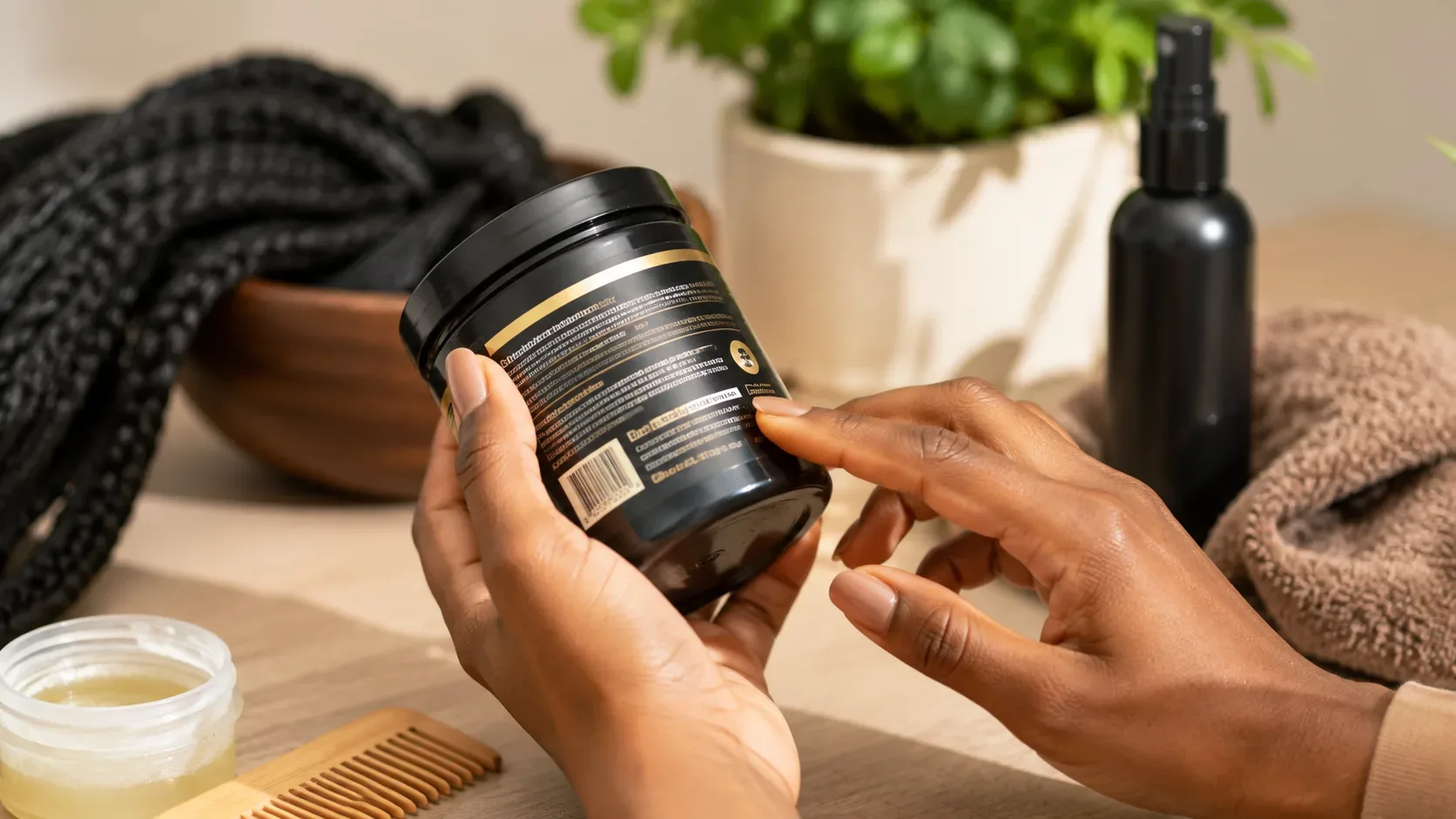
| Batch and validity | Photograph or take notes without discarding the container |
| Process number | Authorized ointments present process started by “25351” |
| Place of purchase or application | Shop, website, seller, salon or professional |
| Date and time | Time of application, eye contact and onset of symptoms |
| Circumstance | Direct contact, sweat, rain, swimming pool, shower or hair washing |
| Evolution | Burning, pain, redness, swelling and changes in vision |
The process number and the official list can be used later to check whether the ointment was authorized. This check should not delay assistance and does not replace eye assessment.
Do not throw away the product, do not transfer its contents to another container and do not change the label. If the packaging is open, keep it closed and separate from food, medicines and personal objects.
What not to do after the accident
Some attempts to quickly relieve discomfort may make it difficult to assess or worsen the irritation. Therefore:
- do not rub or press the eye;
- do not apply eye drops, ophthalmic ointment or over-the-counter anesthetic;
- do not use home recipes;
- do not try to “compensate” for the ointment with another substance;
- do not use contact lenses again;
- do not resume applying the cosmetic;
- do not discard the packaging before recording the data;
- be sure to seek care when symptoms occur.
It is also not recommended to mix the ointment with other products. Anvisa warns that combinations outside the instructions for use may cause unexpected reactions.
Why hair ointment can reach and injure the eyes
Pomades and styling pastes are long-lasting products: they stay on the hair for hours or days and can run off in sweat, rain, swimming pools, sea or during washing. For this reason, Anvisa itself considers the possibility of eye contact to be foreseeable and requires that the finished product undergo an assessment of the potential for irritation or eye damage for registration purposes.
On June 4, 2025, the Agency published the Manual for Proving the Skin and Eye Safety of Hair Ointments, aimed at companies. The document requires studies and information to demonstrate the safety of the formulation, including laboratory assessments of eye irritation and corrosion. Its creation was motivated by the history of reports of serious eye poisoning related to these products.
It is important to differentiate the functions of the publications: the 2025 manual is a regulatory document for manufacturers, not a first aid manual for consumers. The practical guidelines for washing with running water for at least 15 minutes, seeking assistance and notifying the event are in the alerts and public guidance materials published by Anvisa.
Even an authorized product is not made for application inside the eyes. Regularization indicates that the item complied with applicable administrative and technical requirements, but does not eliminate the risk of irritation due to inappropriate use, accidental contact or conditions different from those predicted on the label.
How to obtain toxicological advice
After starting or completing the wash, you can seek advice from Poison Hotline, 0800 722 6001. According to Anvisa, the call is free and directs the user to toxicological information and assistance centers, which guide the population and health professionals about exposure to potentially toxic substances.
The Ministry of Health also maintains a list of Toxicological Information and Assistance Centers, CIATox, with specific telephone numbers per state. These services provide guidance on risks, first care and the need for in-person assessment.
Connection to CIATox should not delay washing or replace urgent care when there is severe pain, visual changes or other signs of severity.
How to notify Anvisa of the problem
Medical care comes first. After the situation has been assisted, the adverse event can be reported to Anvisa. The notification contributes to monitoring products, identifying recurring problems and adopting sanitary measures.
Citizens with a CPF and gov.br account can use e-Notivisa to report adverse events and technical complaints related to registered cosmetics. If the product is not authorized or there is a suspicion of irregularity, the guideline is to use Anvisa's general channels and also notify the municipal or state Health Surveillance.
In the notification, inform the details of the packaging, batch, expiration date, manufacturer, place of purchase or application, circumstances of contact, symptoms presented and care received. Legible photos increase case traceability.
Frequently asked questions
Can tap water be used?
Yes. Anvisa's guidance is to wash immediately with running water for at least 15 minutes. Don't expect to find filtered water, eye drops or serum to start. Use clean water, at a comfortable temperature and with a gentle flow.
The burning went away after washing. Do I still need help?
If symptoms have completely disappeared and there is no visual change, get guidance from CIATox and follow the label information. Seek care if pain, redness, foreign body sensation, tearing, swelling, or vision changes persist, return, or worsen.
Can I use lubricating or redness eye drops?
Do not use eye drops or eye ointments on your own after exposure. Some medications may increase discomfort, mask important signs, or may not be appropriate for the type of injury. Only use what is recommended by a professional who knows the case.
Do I need to find out if the ointment is authorized before going to the doctor?
No. Consulting the Anvisa list is useful for investigation and to decide whether a health complaint is appropriate, but it should not delay washing or care. Photograph the packaging and check after health arrangements are in place.
Quick checklist
As soon as the ointment reaches the eye:
- Start washing with running water.
- Keep washing for at least 15 minutes.
- Remove the contact lens if it comes off easily.
- Do not rub or apply eye drops or homemade recipes.
- Seek care if you experience pain, redness, swelling or visual changes.
- Preserve and photograph the packaging.
- Record batch, expiration, manufacturer, time and symptoms.
- After medical care, report the event to Anvisa.
This guide provides general first aid and health safety information. Does not diagnose or replace medical or ophthalmological evaluation.