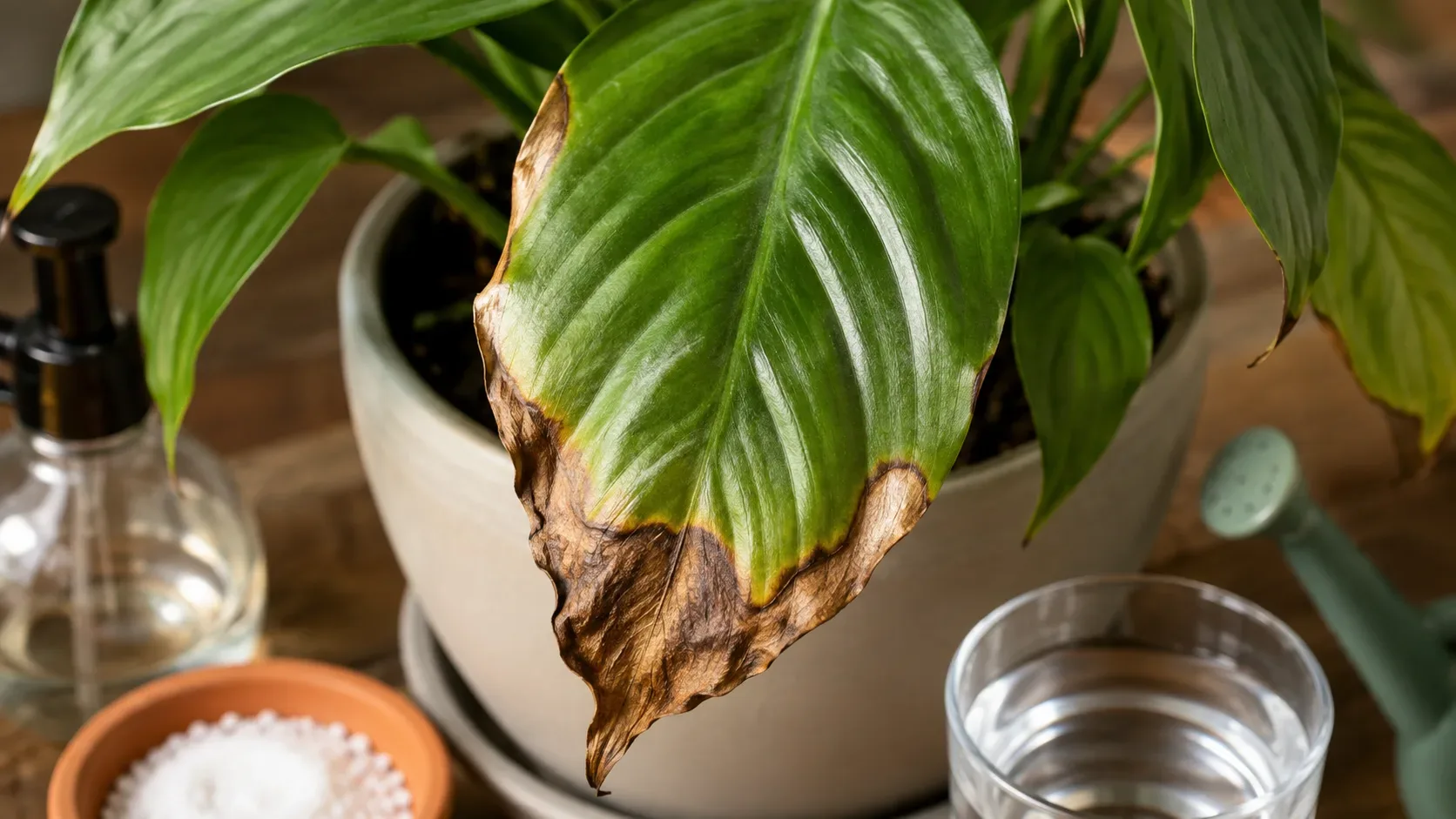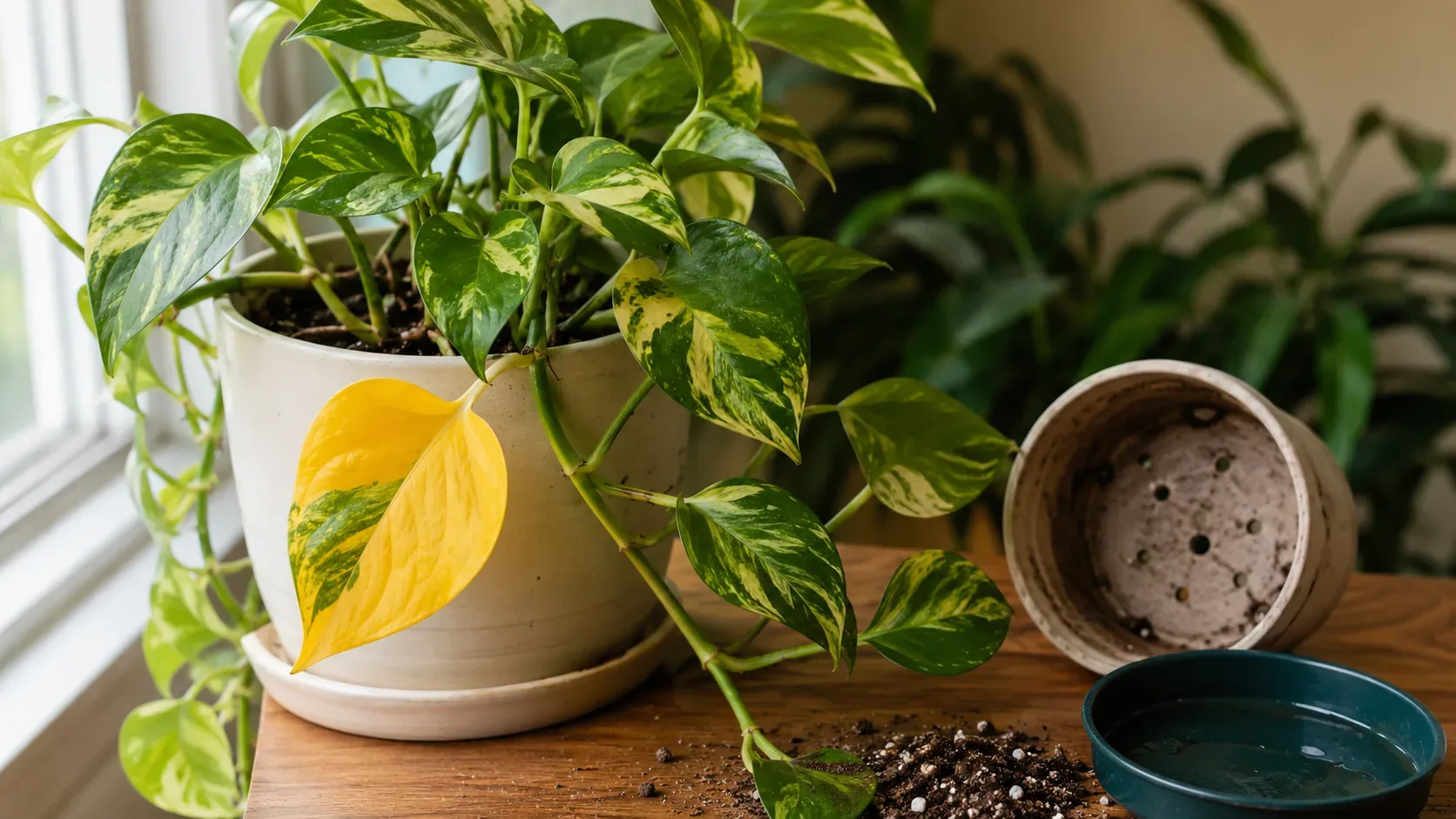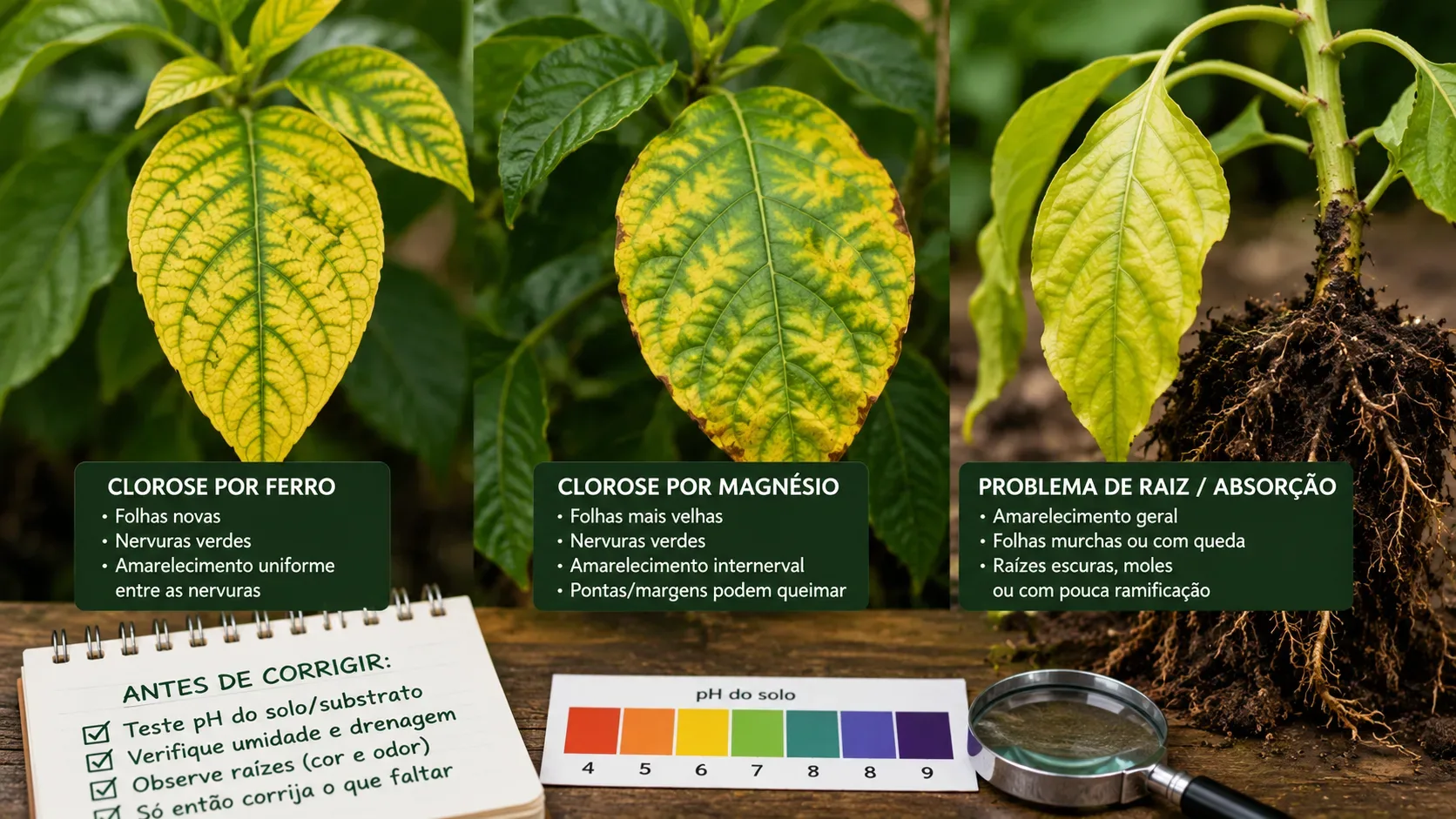
A yellow leaf with green veins shows interveinal chlorosis: tissue between the veins loses chlorophyll before the veins lose their green color. This pattern is useful, but it does not identify the cause by itself. Iron, magnesium, manganese, root problems, unsuitable pH and other stresses can produce similar signs. The more useful question is therefore not “which fertilizer is missing?” but “which leaves showed symptoms first, and what is preventing the plant from producing or maintaining chlorophyll?”
The first practical distinction is the age of the affected leaves. Iron deficiency usually appears first on new growth; magnesium deficiency tends to begin on older leaves. A root or uptake problem, by contrast, can yellow leaves of different ages and often comes with other signs such as wilting, slow growth, leaf drop, persistently waterlogged potting mix or damaged roots. The Royal Horticultural Society notes that leaf position and accompanying symptoms are important clues when separating causes of chlorosis.
The most useful visual test: new leaf or old leaf?
| Clue | Iron | Magnesium | Root/uptake problem |
|---|---|---|---|
| Where it tends to start | Young leaves and new growth | Older leaves, often lower on the plant | Variable; may affect several leaf ages |
| Typical pattern | Yellow tissue between veins that remain green | Interveinal yellowing on older leaves; may progress to scorched margins or patches | No exclusive leaf pattern; it can mimic nutrient deficiency |
| Additional clues | High pH, alkaline soil/media, excess water or compaction can reduce availability | Older lower leaves affected first; nutrient imbalances can reduce uptake | Wilting, stalled growth, poor drainage, dark/soft roots or weak root development |
| Next step | Check pH and root conditions before applying iron | Check pH and management; use soil/tissue testing when needed | Inspect roots, moisture, drainage and compaction before adding fertilizer |
This rule works because nutrients differ in their mobility within the plant. Iron is poorly mobile: when the plant cannot make it available properly, new growth shows chlorosis first. MU Extension describes iron deficiency as interveinal chlorosis of young leaves, with veins remaining green except in severe cases. Magnesium is mobile; when supplies are limited, the plant can redistribute it from older tissues toward new growth, so symptoms tend to appear first on older leaves. The University of Maryland Extension describes magnesium deficiency as interveinal and marginal chlorosis beginning on older foliage.
When the pattern points more strongly to iron
Suspect iron first when the newest leaves become yellow or very pale while their veins remain green, and older leaves are relatively normal. In advanced cases, new tissue can become almost white and may develop necrosis.
This does not necessarily mean there is no iron in the pot or soil. Iron may be present but unavailable to the roots. Alkaline pH is a classic reason: at higher pH, iron can shift into forms that some plants cannot readily take up. The Colorado State University Extension explains that alkaline soils often contain enough iron, yet susceptible plants may be unable to access it. Adding more iron without measuring pH can therefore miss the real cause.
Other factors can also aggravate iron-like chlorosis, including too much or too little water, compaction, low soil oxygen, root injury and conditions that restrict functional rooting volume. The CSU Extension recommends evaluating irrigation and soil conditions because these factors can produce or intensify chlorosis even when there is no absolute shortage of iron.
When the pattern points more strongly to magnesium
Magnesium moves higher on the list when older leaves are the first to yellow between the veins. As the problem advances, reddish areas, necrotic patches or browned margins may appear, depending on the species. The age of the affected foliage is generally a more useful clue than trying to judge the exact shade of yellow.
Here too, “deficiency” does not automatically mean that magnesium is absent from the growing medium. Uptake can be reduced by pH or nutrient imbalances. In July 2026, the University of Minnesota Extension noted in vegetable crops that magnesium-deficiency symptoms can occur even when the nutrient is present in soil because excess calcium or potassium can interfere with plant access.
That is why using Epsom salt as an automatic response is not a good diagnostic test. If the real cause is damaged roots, unsuitable pH, salinity, disease or another nutrient problem, magnesium may not help and can further complicate the nutrient balance.
When to investigate roots and uptake before any nutrient
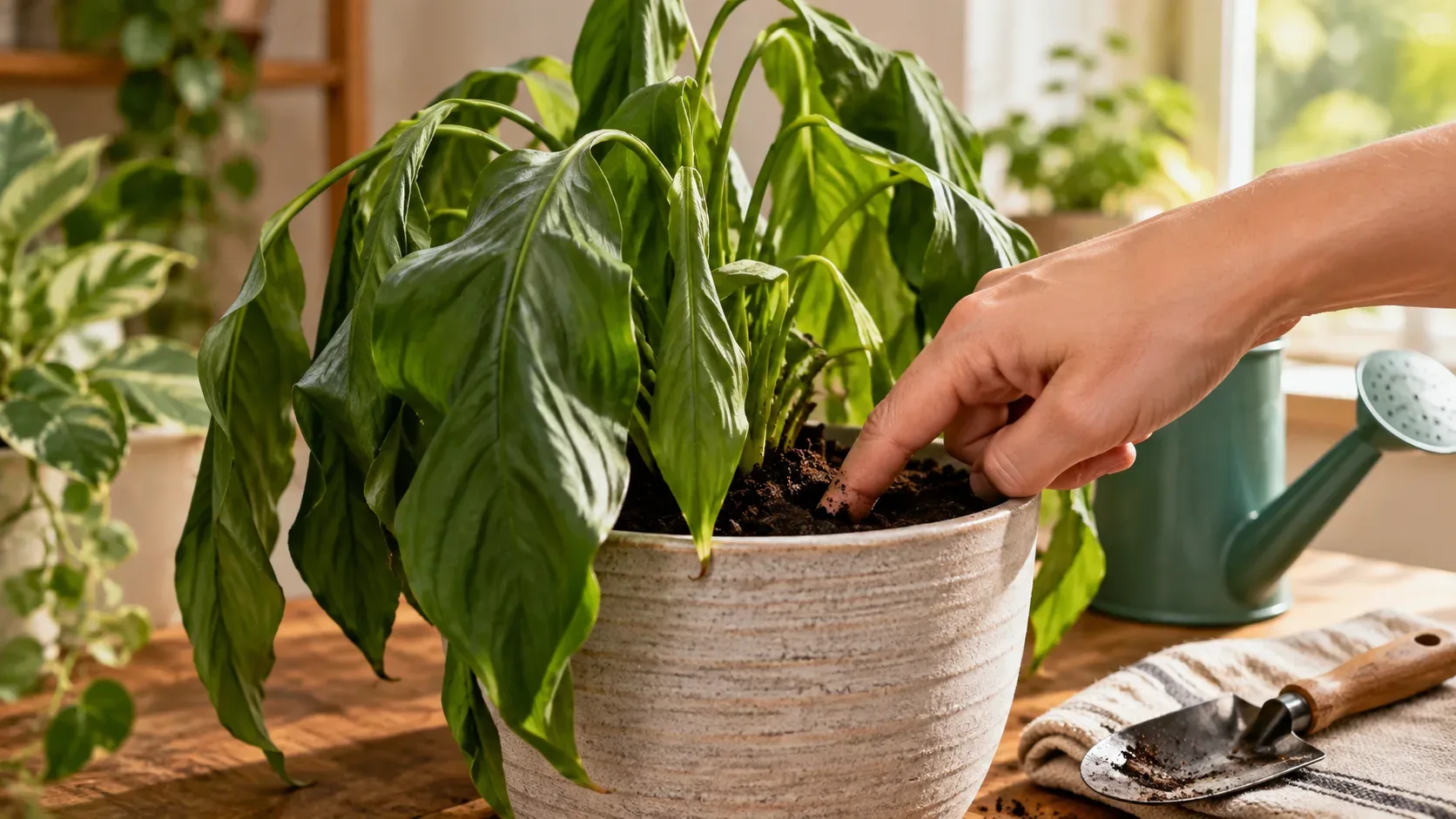
Root problems should move to the front of the investigation when yellowing is accompanied by wilting, stalled growth, leaf drop, potting mix that stays wet for too long, unpleasant odor or visibly compromised roots. Unlike iron or magnesium, “root problem” has no single leaf signature. It can simply reduce the plant's ability to absorb water and nutrients and therefore imitate a deficiency.
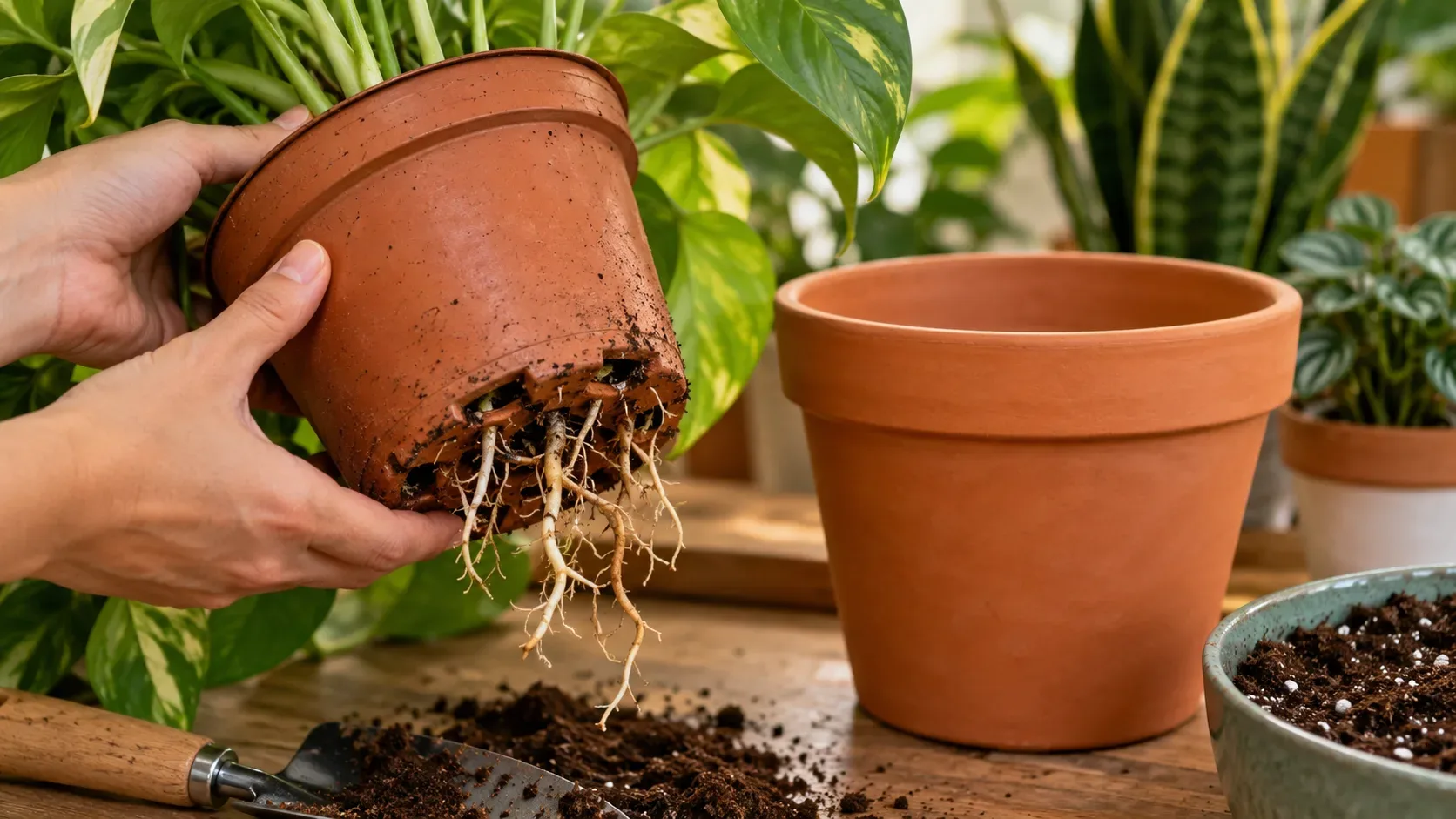
For container plants, carefully slide out the root ball when it is safe to do so and inspect the root system. In species whose healthy roots are normally pale, dark, soft roots, sloughing outer tissue or a lack of active root tips are warning signs. Penn State Extension lists darkened roots, loss of white active roots and limp root tissue among signs used when diagnosing root rots, while also noting that normal root color varies among plants. The University of Maryland Extension likewise recommends checking root color and firmness in indoor plants that wilt or may be overwatered.
If a pot dries very slowly, does not drain freely or lacks an effective drainage outlet, correct the root-zone environment first. In garden soil, compaction, poor drainage, deep planting and physical root injury can also reduce nutrient uptake. The University of Maryland Extension notes that chlorosis can be associated with poor root growth, root rot, root damage and inadequate drainage.
A five-question decision key
- Are the newest leaves clearly the yellowest? If yes, iron moves toward the top of the list, especially with sharply green veins.
- Are the oldest leaves affected first and most severely? If yes, magnesium becomes more likely, though other mobile nutrients and stresses still need consideration.
- Is there wilting, loss of vigor or leaf drop in addition to chlorosis? If yes, investigate roots, water, drainage and disease before concluding that a nutrient is missing.
- Is the soil or potting-medium pH appropriate for the species? If pH is outside the plant's tolerated range, a nutrient may be present but unavailable.
- Has the plant received heavy fertilization? Excess nutrients can cause salinity or antagonisms and create symptoms that look like a deficiency.
How to test pH without turning one number into a diagnosis
Measure soil or potting-medium pH with an appropriate method and compare it with the recommended range for the species you are growing. There is no single ideal pH for every plant. The number is useful because it helps show whether the chemical environment could be reducing availability of iron, magnesium or other elements.
For container plants, also consider irrigation-water quality and how the potting mix has changed over time. Alkaline water, salt buildup and decomposition of the medium can alter root-zone chemistry. In gardens, laboratory soil testing usually provides better interpretation than a simple kit when chlorosis is persistent or valuable plants are involved. In difficult cases, plant-tissue analysis can help separate a true nutrient shortage from limited availability or another stress.
Why blind fertilizing is risky
Applying iron, magnesium or a “complete” fertilizer without checking the cause turns fertilization into trial and error. If iron is tied up by high pH, adding an unsuitable iron source may do little. If roots are stressed by waterlogging, adding salts does not restore oxygen. If the symptom truly involves magnesium, unbalanced fertilization can make competition among nutrients worse.
Visual diagnosis should be used to choose the next test, not to skip directly to treatment. That caution matters because interveinal chlorosis can also result from manganese deficiency and other disorders. The RHS lists iron, magnesium and manganese among common nutritional causes, while the University of Maryland Extension warns that nutrient symptoms can be difficult to distinguish from disease, insects, improper irrigation and adverse soil conditions.
Checklist before correcting anything
- Compare young and old leaves on the same plant.
- Confirm that yellowing is truly between the veins rather than stippling, mosaic, discrete spots or only scorched margins.
- Assess overall vigor, wilting and growth rate.
- Check watering frequency and whether water drains freely from the container.
- Inspect roots when practical, taking the species' normal root appearance into account.
- Measure soil/media pH and compare it with the plant's requirements.
- Review recent fertilization and possible excesses.
- If the plant is valuable, the problem persists or the pattern is unclear, consider soil/tissue analysis or a plant-health diagnosis.
Bottom line: use the leaf as a map, not a lab report
A yellow young leaf with green veins favors iron deficiency or iron unavailability. Interveinal chlorosis starting on old leaves favors magnesium. Chlorosis plus wilting, poor growth and root-zone warning signs calls for investigation of root health and nutrient uptake. None of these clues, however, is definitive on its own.
The safer approach is to combine leaf age, yellowing pattern, root condition, moisture and drainage, pH and fertilization history. Only then should you choose a specific correction. This sequence reduces the chance of treating a “nutrient deficiency” when the real problem is that the plant cannot absorb what is already there.