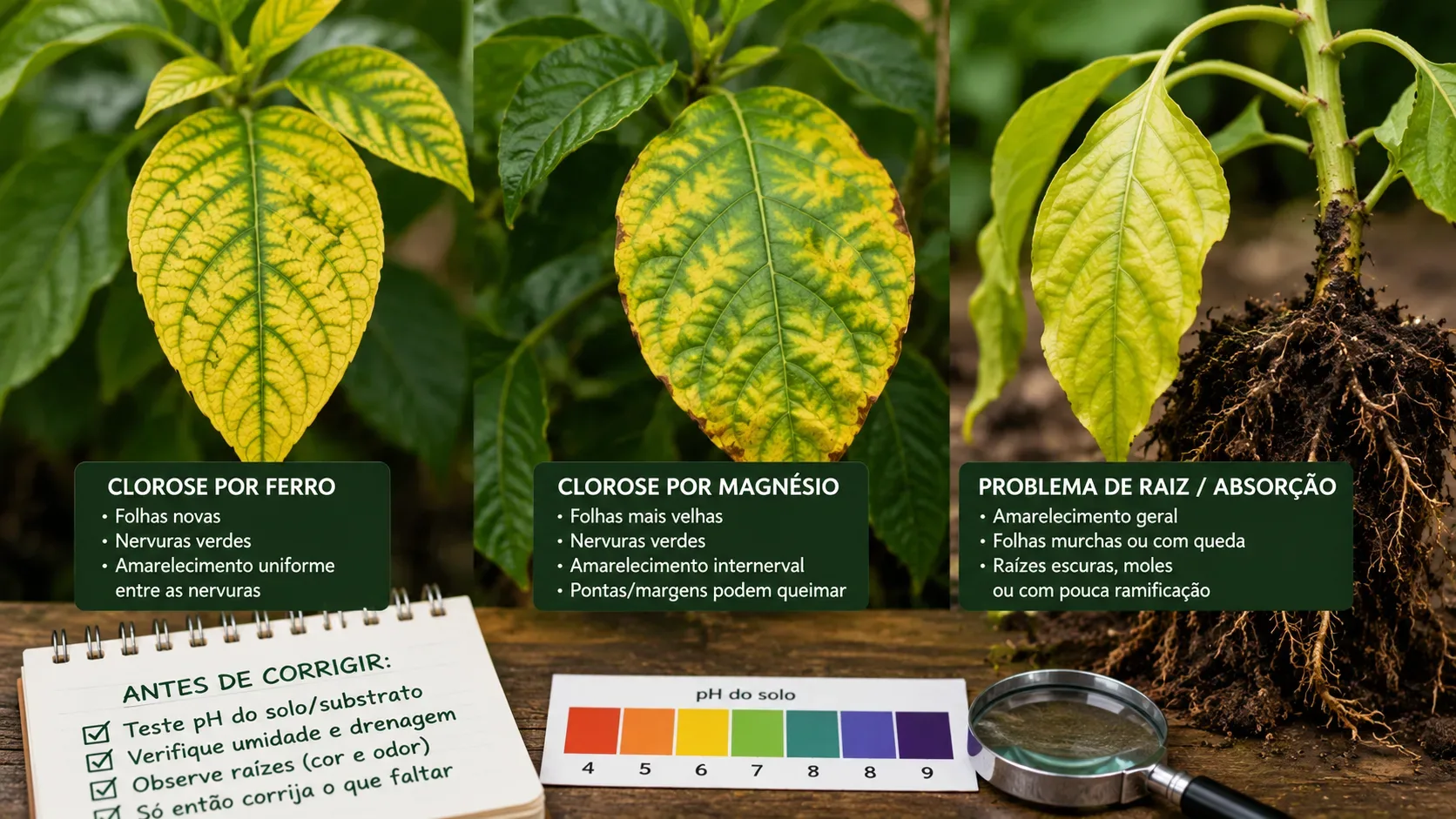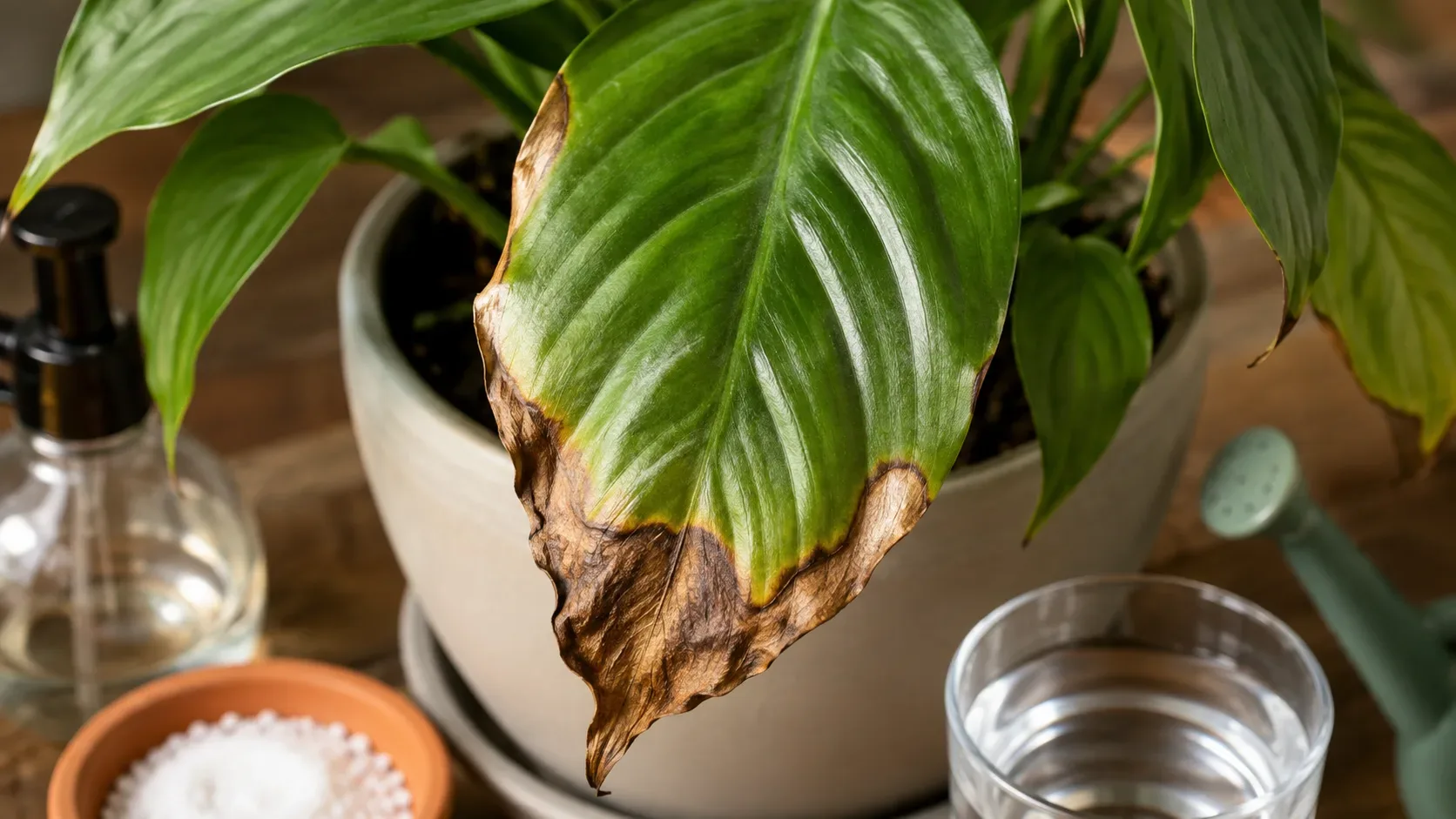
A brown tip is a symptom, not a diagnosis. Dry air, periods that are too long without water, excess salts in the substrate and certain water quality problems can produce a very similar appearance. In some plants, more than one of these factors may still be acting at the same time.
Therefore, increasing watering or adding fertilizer as soon as the leaves begin to dry can attack the wrong cause. The safest way is to first look at the substrate, the environment, the fertilization history and the water used in the pot.
Four similar causes, but with different clues
No single signal closes the diagnosis. What helps is looking for a set of clues.
| Possible cause | Clues that increase suspicion | What to check before acting |
|---|---|---|
| Dry air | Dry and brittle tips and margins, especially in species that prefer more humidity; plant near air conditioning, heater or dry air flow | Measure the relative humidity with a hygrometer and observe the microclimate where the plant is located. |
| Irregular watering | The substrate spends too much time dry, the pot becomes too light or the plant wilts between waterings; then receives a large amount of water | Check the humidity of the substrate and the weight of the pot instead of following a fixed calendar. |
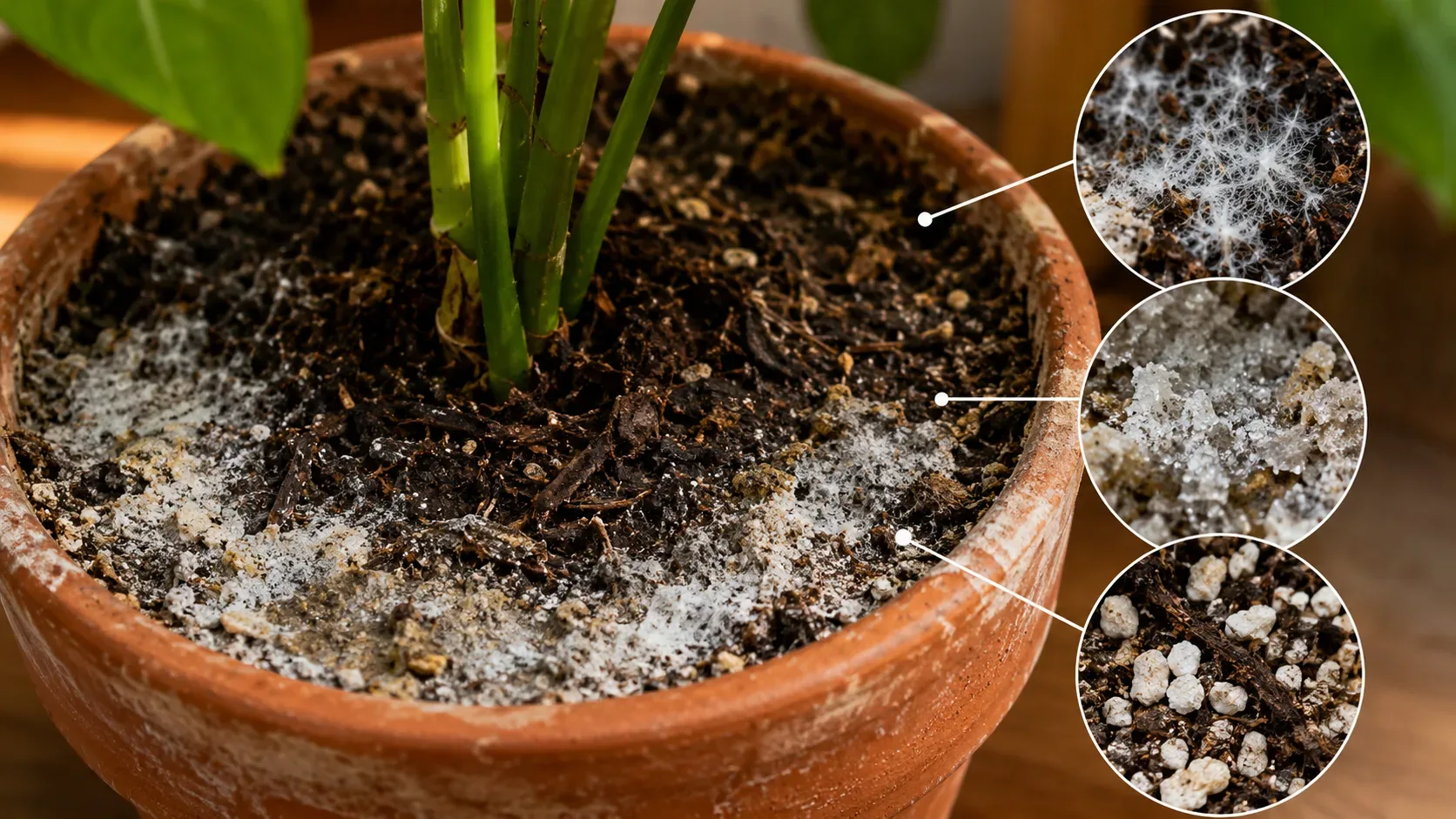
| Excess salts | White crust on the substrate, on the edge or in the hole of the pot; frequent or concentrated fertilization; plant can wilt even with moist substrate | Review fertilizer dose and frequency, drainage and possibility of washing the substrate. |
| Water quality | Persistent problem in sensitive plants, use of highly mineralized water or water softened by ion exchange; symptoms continue even after correct management | Discover the source and treatment of the water and, if consistently suspected, test a suitable source with fewer dissolved salts. |
The table serves to raise the most likely hypothesis. Before correcting any of them, it's worth delving deeper into each sign.
Irregular watering leaves a history in the vase
Brown tips may appear when the plant is left dry for too long repeatedly. This does not mean, however, that every dry end is a lack of water.
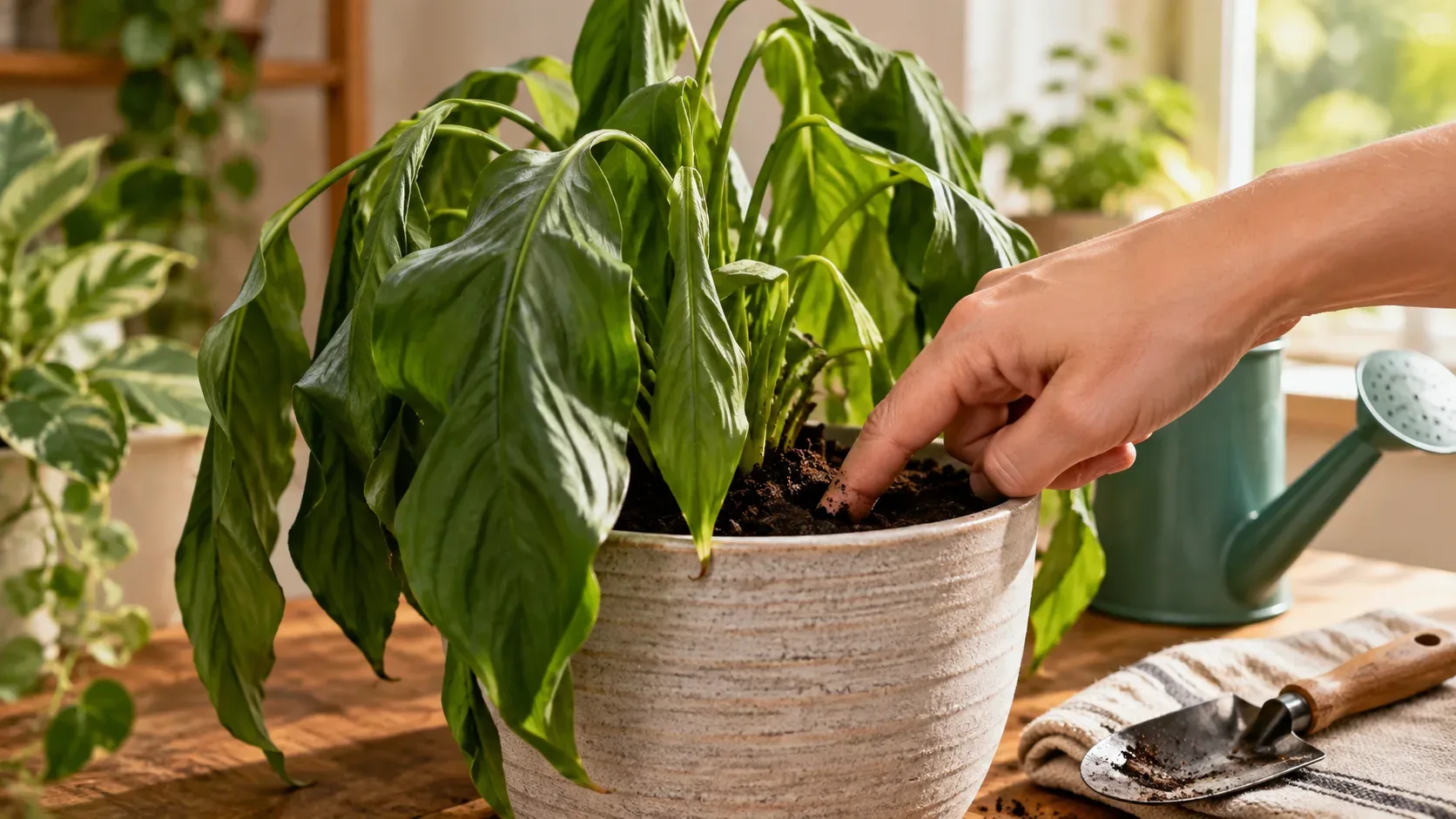
The required frequency changes depending on species, light, temperature, humidity, pot size and substrate composition. Therefore, automatically watering on a certain day of the week tends to be less reliable than checking the plant. Iowa State University recommends combining signals such as the feel of the substrate, the weight of the pot, the color of the growing medium and the condition of the foliage to decide when to water. When water is needed, the substrate must be wetted evenly and the excess must be able to escape from the bottom.
A substrate that has dried out too much can also retract and move away from the walls of the pot. In this case, water can run down the sides and quickly exit through the hole, giving the impression that there has been complete watering when the root ball remains partially dry.
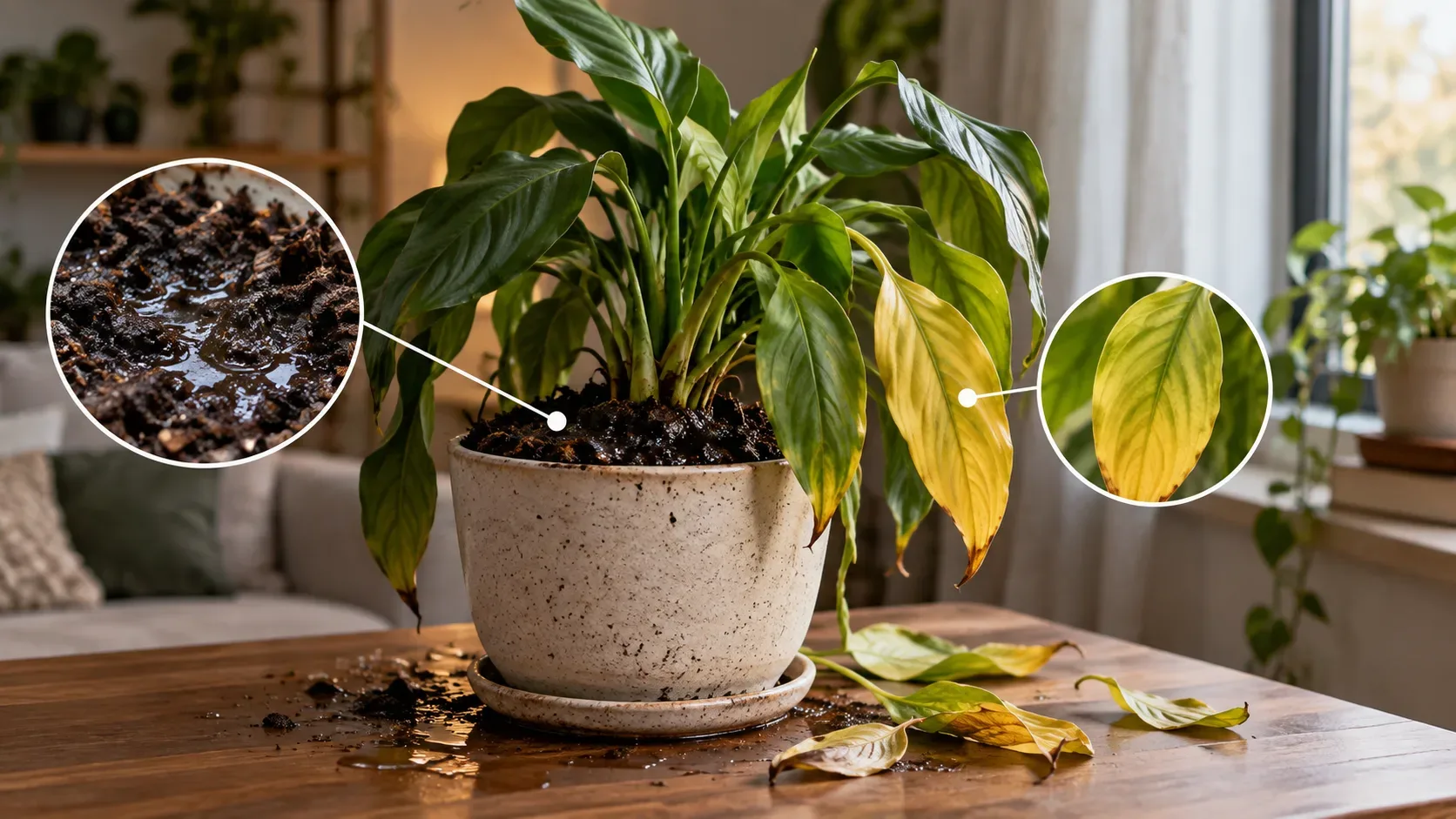
The opposite also needs to be considered. If the substrate remains waterlogged and the roots are damaged, the plant may have difficulty absorbing water even when in a damp pot.. Watering even more does not solve this situation and can make it worse.
When dry air gains strength as a hypothesis
Low air humidity is a recognized cause of brown tips and margins on many plants grown indoors. The evidence becomes more convincing when a species known to prefer humidity is in a dry environment, close to an air conditioning outlet, heater or other source of hot, dry air.
In this case, adding water to the substrate does not directly correct the humidity in the air. If the soil is still damp, watering because of the brown tip may only increase the risk of overwatering.
A simple hygrometer helps replace guesswork with measurement. However, there is no single ideal relative humidity for all plants: species from different environments have different requirements.
If the room is truly dry, a humidifier offers more consistent control. Grouping plants together can also improve the immediate microclimate. Spraying water on the leaves is not an efficient solution to increase humidity for relevant periods; Iowa State notes that the effect is short-lived and that the practice can still encourage the spread of some diseases.
Excess salts can look like a lack of water
Fertilizers contain soluble salts, and excessive or frequent applications can increase their concentration in the substrate. When this happens, the roots find it more difficult to absorb water. Possible symptoms include brown tips and margins, reduced growth and wilting, even when there is still moisture available in the pot.
A white or crystallized crust on the surface of the substrate, on the edge of the pot or near drainage holes is an important clue. It does not alone prove that fertilizer is to blame: minerals in water can also form similar deposits.
If the history shows fertilizers that are stronger or more frequent than recommended, there is no point in responding to brown tips with another dose of fertilizer.
In pots with adequate drainage, passing good quality water through the substrate can help remove some of the accumulated salts. Severe cases may require changing the substrate. Washing should not be done in a container with no outlet for water, as the salts need to effectively leave the vessel.
Water quality should not be automatically blamed
For most indoor plants, common sources of drinking water are suitable. Therefore, seeing a brown tip and immediately changing all the water used on the plants is usually a leap forward in diagnosis.
Suspicion increases in some specific situations. One of them is the use of water softened by ion exchange systems that add sodium. University extension sources advise against this type of water for plants because of the sodium and potential for salt accumulation.
Another situation involves species that are particularly sensitive to certain elements. Iowa State cites, among others, chlorophytes, dracaenas, marantas and calatheas as plants in which water components, including fluoride, may be associated with tip burning. In dracaena, technical guidelines from the University of Florida also relate necrosis of tips and margins to high levels of fluoride, boron or soluble salts.
Water with many dissolved minerals can also contribute to substrate deposits. This is where “water quality” and “excess salts” stop being completely separate explanations: water may be precisely the origin of part of the salts that accumulate in the toilet.
If this hypothesis makes sense, use an appropriate source with a lower mineral load or recommended for the species and monitor the next development. Simply letting the water sit will not solve problems caused by sodium or other dissolved minerals.
How to investigate before watering or fertilizing more
- Check the substrate and drainage first. See if the root ball is really dry, constantly wet or drying unevenly. Make sure there is an outlet for excess water.
- Reconstruct the last waterings. If the plant tends to wilt or becomes very dry before receiving water again, the irregularity gains strength as an explanation. If it remains wet for long periods, check the roots before adding water.
- Observe the environment. Measure air humidity and check proximity to air conditioning, heaters and drafts. Dry air is more convincing when the environment confirms the hypothesis, not just because the leaf is brown.
- Check fertilizer and deposits. Look for whitish crusts and check how much and how often the plant was fertilized. As long as excess salts are suspected, do not increase the dose to “strengthen” the plant.
- Only then investigate the water. Find out if it is softened, very mineralized or if the species has known sensitivity. If necessary, change one variable at a time and see if the damage stops advancing.
This last point is important: if a humidifier, new water, watering change and fertilizer change are all done on the same day, the plant may even improve, but it will be difficult to discover which factor was actually causing the problem.
Not every brown tip fits into these four causes
Excessive heat, inadequate light, decayed roots, physical damage and other stresses can also cause leaf browning. RHS recommends evaluating additional signs because browning occurs in different problems and should not be interpreted in isolation.
If the four main hypotheses do not match the plant's history, expand the investigation rather than compensating with more water or fertilizer.
The rule of thumb is simple: treat the cause demonstrated by the set of signs, not the color of the leaf tip. After the correction, especially monitor whether the darkening stops advancing and how the following leaves develop.