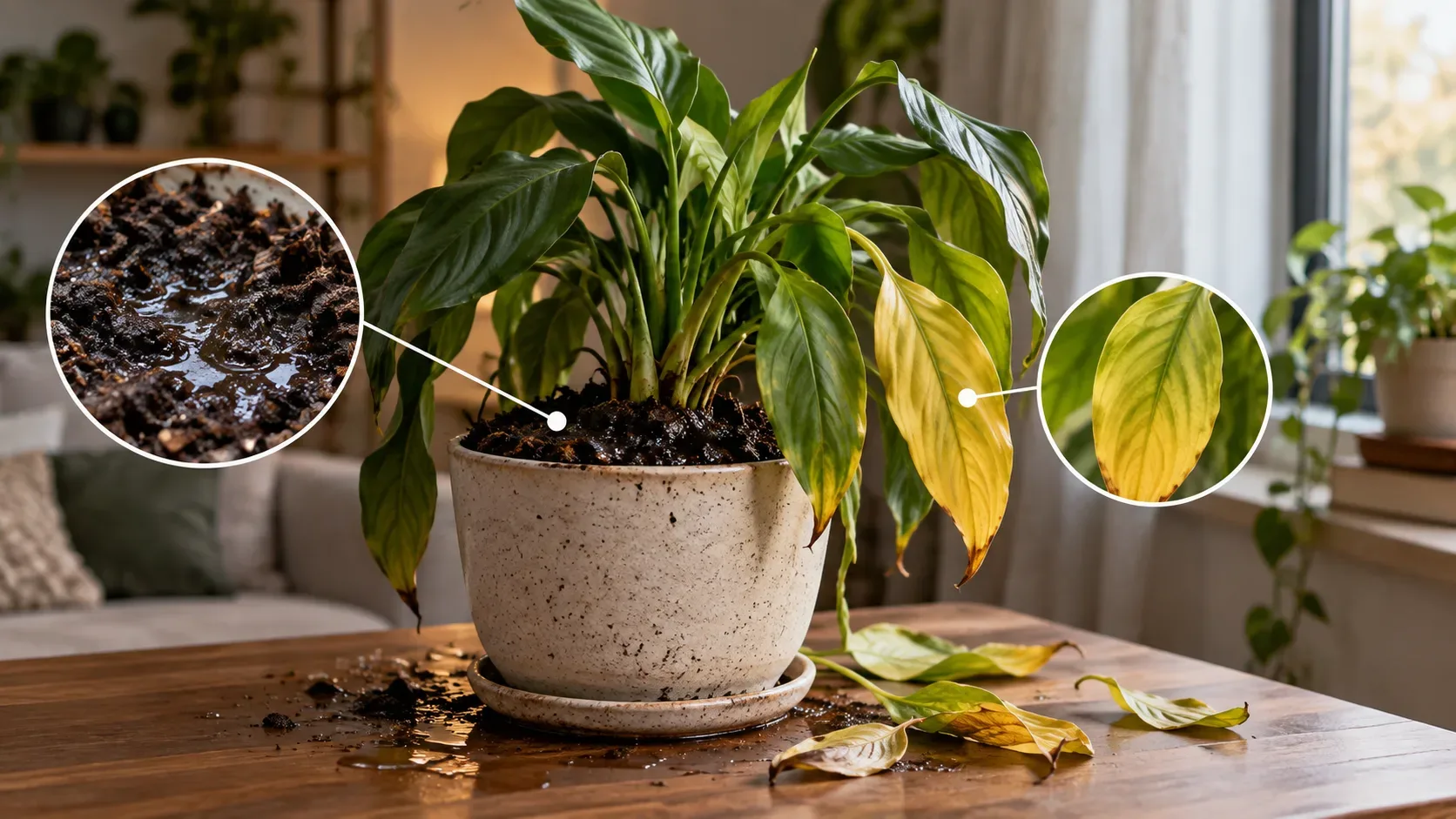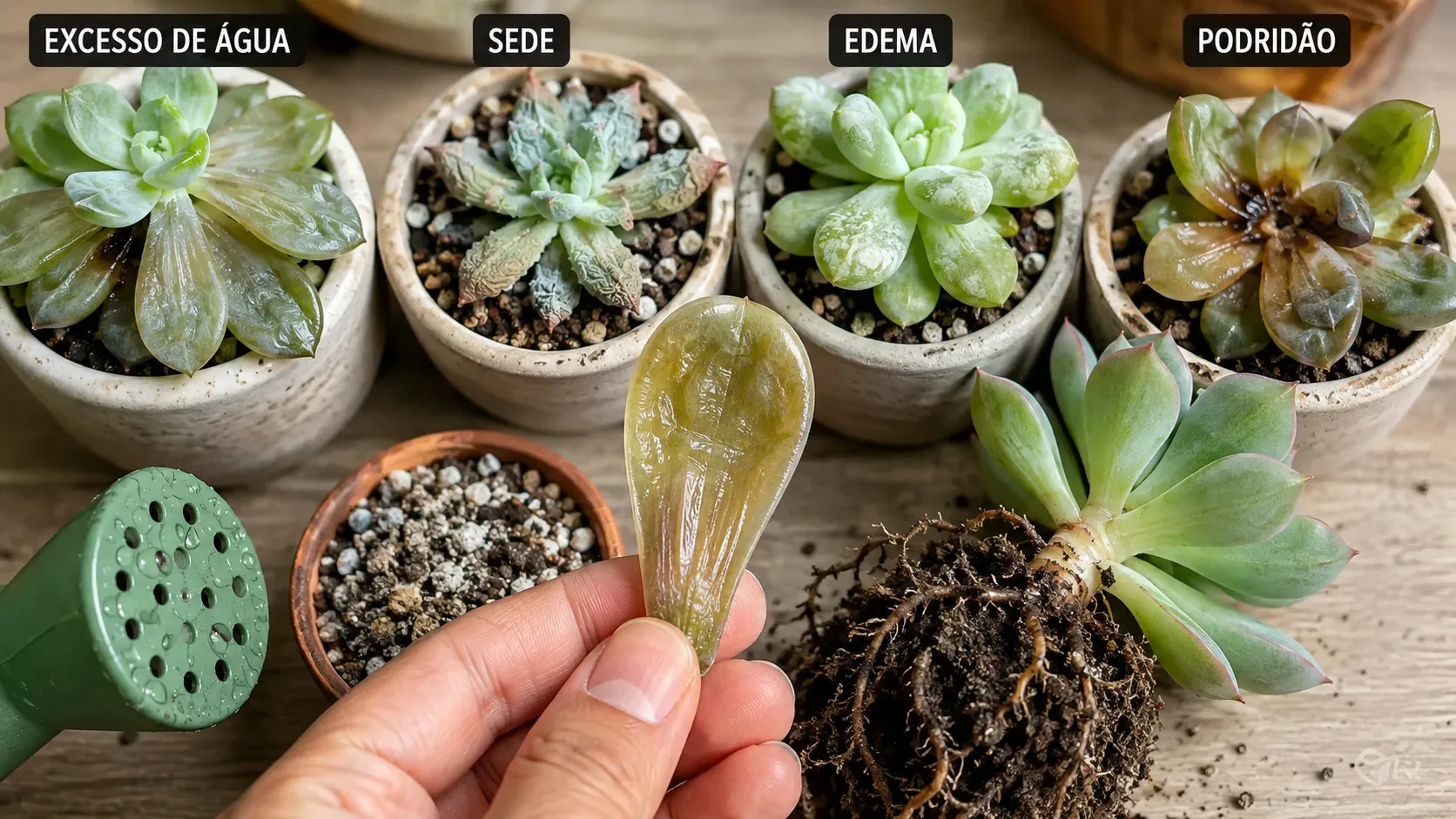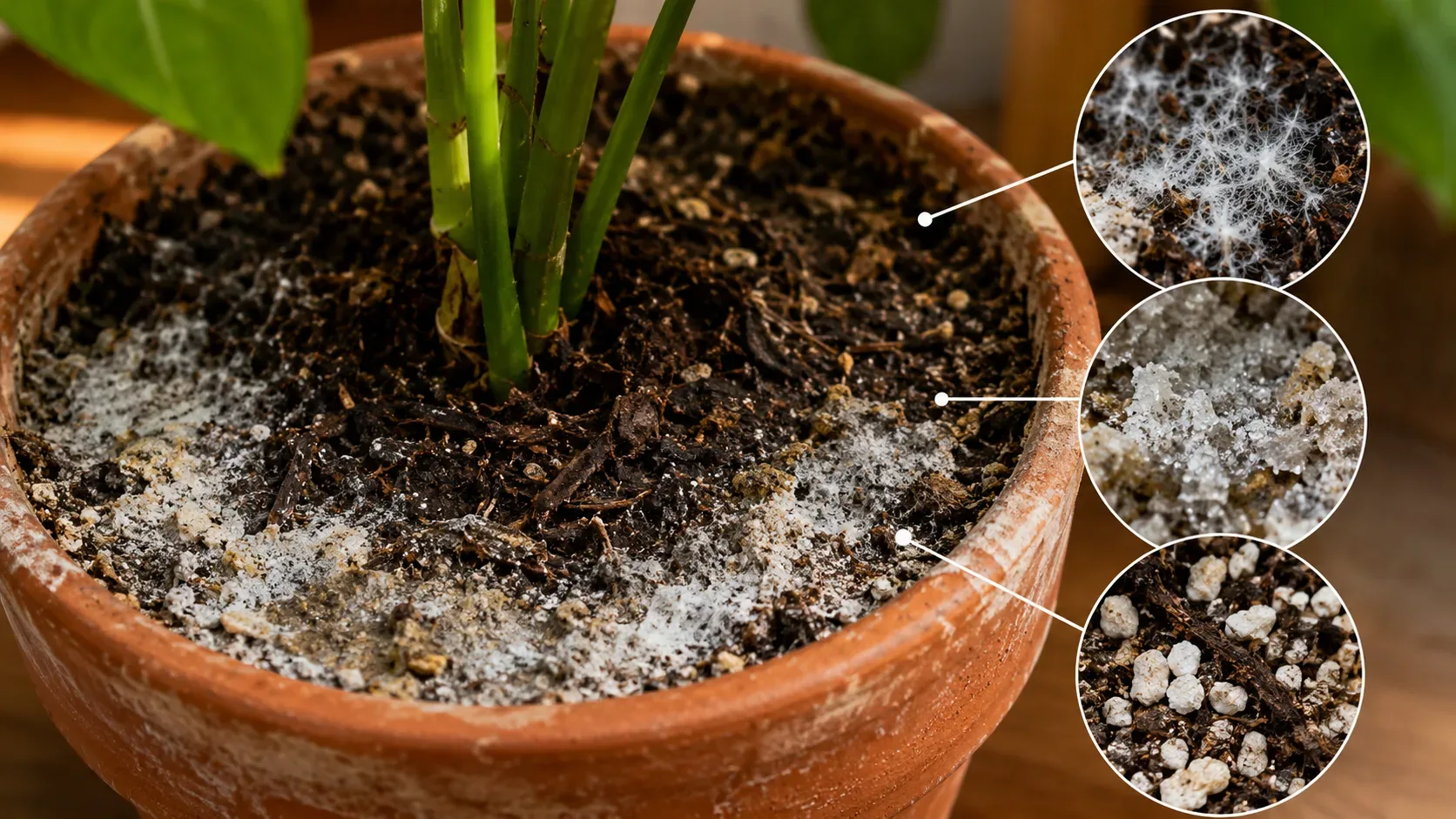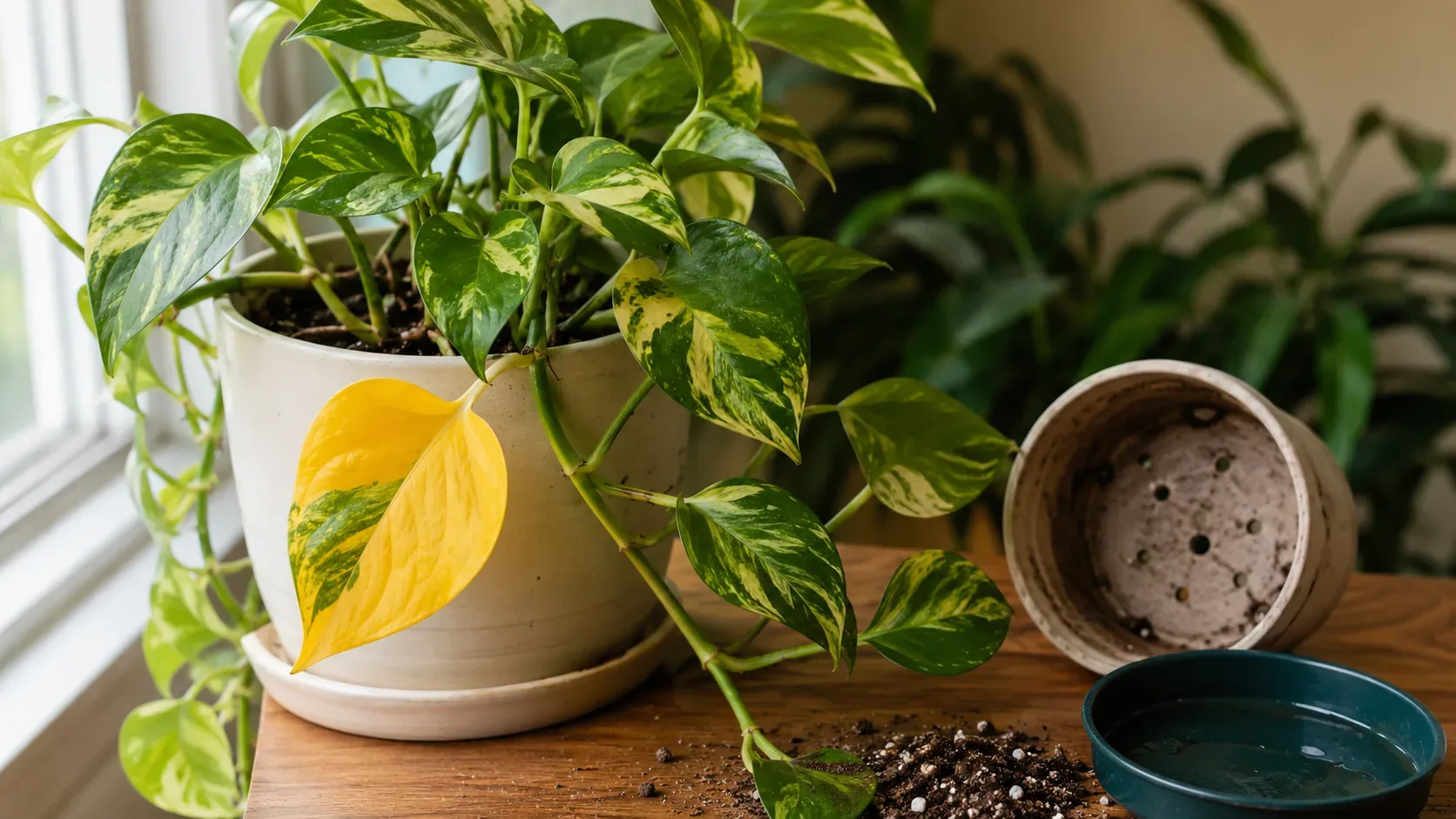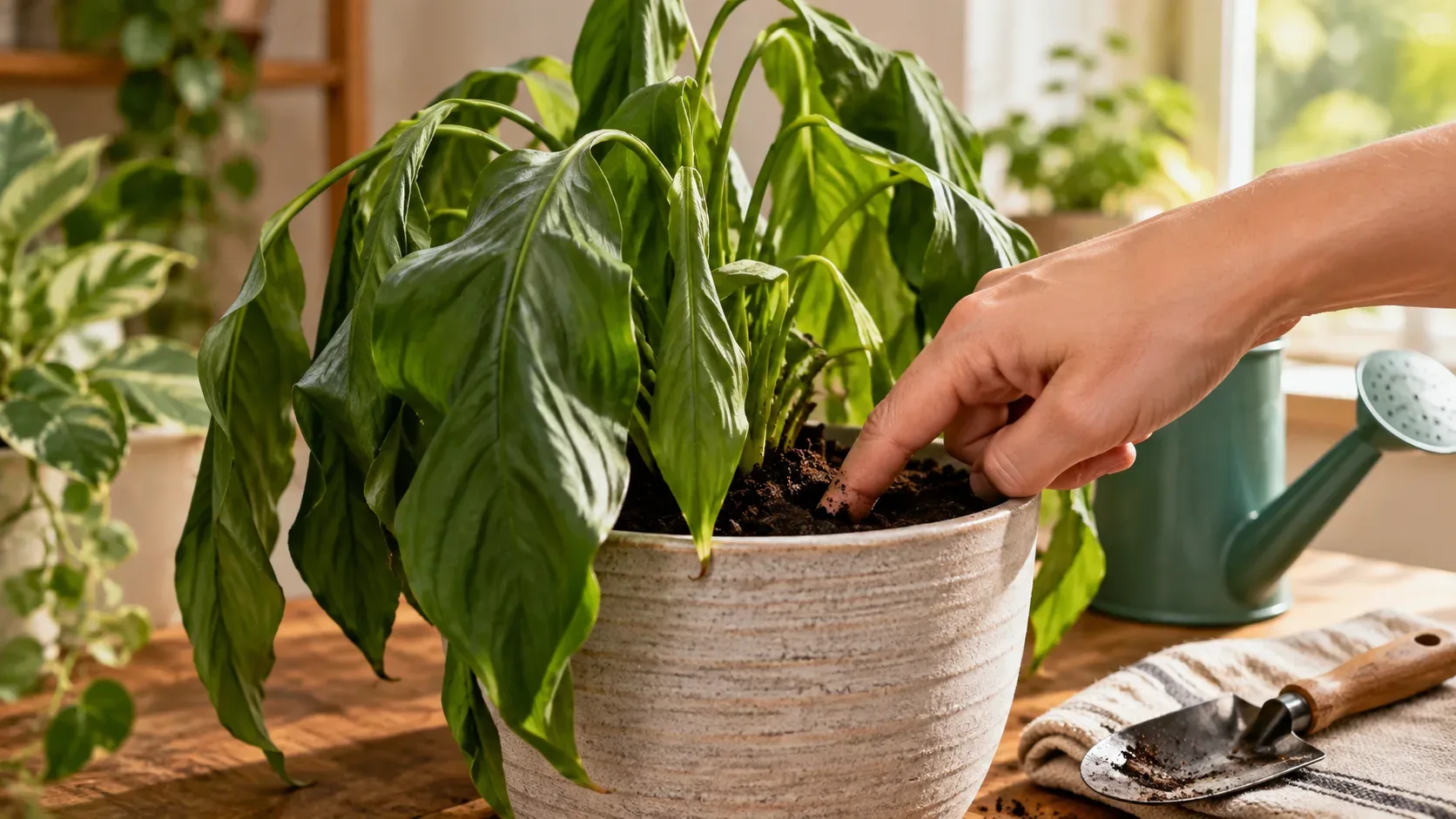
If a plant is wilted but the potting mix is still moist, do not use wilting alone as a signal to water again. Excess water can reduce oxygen in the potting mix, damage fine roots, and make water uptake less efficient. The result can look contradictory: the plant loses turgor even though moisture is abundant. University of Maryland Extension guidance describes this overlap between symptoms of excess moisture and drought stress.
First step: confirm whether the plant actually needs water
Before reaching for the watering can, run a simple check. The right interval varies with species, potting mix, container size and material, temperature, humidity, and growth stage, so a fixed schedule can easily miss the plant's real needs.
- Check moisture below the surface. For many houseplants, inserting a finger a few centimeters into the mix helps reveal whether only the top has dried while the interior remains wet. Succulents, cacti, and other low-water plants are exceptions and generally need the mix to dry more thoroughly.
- Lift the pot. A container that still feels heavy compared with its dry weight suggests that plenty of water remains in the mix.
- Use a stick or dowel in deep pots. Moist potting mix tends to cling to or darken the stick, giving you information from layers your finger cannot reach.
- Check the drainage path. The container should drain properly, and water collected in a saucer or decorative cachepot should be discarded. Keeping roots continuously in standing water increases the risk of problems.
These checks are recommended in University of Maryland Extension guidance on watering indoor plants and overwatered indoor plants.
Why a plant can wilt while the soil is wet
Roots need water, but they also need oxygen. When the pore spaces in a potting mix remain filled with water for too long, oxygen availability drops. Fine roots can be damaged and become less able to transport water. That is why adding more water to an already saturated pot can worsen the mechanism causing the wilt.
Excess moisture can also increase the risk of root rots. When roots are compromised, the shoots may wilt because the plant can no longer move water to the leaves effectively, not because the container lacks water.
How to distinguish excess water from other causes
| Likely situation | Useful clues | What to do now |
|---|---|---|
| Excess water | The mix stays moist for a long time; the pot remains heavy; lower leaves may yellow; the most recent watering has not dried down. | Do not water again just because the plant is wilted. Empty standing water and track how the mix dries before the next watering. |
| Poor drainage | No drainage holes, water does not run out freely, the mix is very compacted, or a decorative outer pot traps water. | Correct the drainage problem. If it is structural, consider moving the plant to a container with holes and a more porous potting mix. |
| Heat or intense sun | Wilting appears during the hottest part of the day despite available moisture and improves when temperatures fall. | Do not automatically respond with more water. See whether the plant recovers outside peak heat and confirm that its light exposure fits the species. |
| Transplant shock | Wilting began soon after repotting or root disturbance; some leaf drop may occur. | Keep conditions stable, provide suitable light, and maintain species-appropriate moisture without turning the mix into mud to “compensate” for stress. |
| Damaged or rotting roots | Wilting persists despite moist mix; on inspection, diseased roots are dark and soft rather than light-colored and firm. | Intervene only after confirming damage: remove clearly rotted tissue and repot healthy sections in clean, well-drained mix. |
Heat can cause wilting without meaning the pot is dry
On a hot day, leaves can lose water faster than roots can replace it at that moment. University of Maryland Extension notes that a plant can wilt temporarily even when the potting mix contains adequate moisture and may regain firmness when demand falls. That is different from a container that has truly dried out.
The pattern is more suggestive of heat stress when wilting coincides with peak heat, the mix remains moist, and the plant improves later. If it stays limp while the pot remains soggy day after day, attention should shift toward aeration, drainage, and root health.
Recent repotting also changes how you read wilting
Repotting disturbs the root system and can create temporary stress. Illinois Extension notes that houseplants may wilt or lose some foliage after transplanting. That does not turn every drooping leaf into a request for more water.
After repotting, the goal is stability: species-appropriate light, free drainage, and suitable moisture. A container that is much larger than the previous one can hold a volume of wet mix that the roots are not yet using, increasing the risk of excess moisture. More space is not always safer.
When it makes sense to remove the plant and inspect the roots
You do not need to dismantle the root ball every time a leaf droops. Root inspection makes more sense when wilting persists while the mix stays wet, drainage is poor, or the plant is progressively declining.
According to the University of Maryland Extension guide to diagnosing indoor plant problems, healthy roots tend to be light-colored and firm, while diseased roots may be dark and soft. When rot is confirmed, removing affected portions and replanting healthy tissue in well-drained potting mix may be appropriate. A severely damaged plant may not recover.
What not to do on impulse
- Do not water again only because the leaves are drooping. Check the potting mix first.
- Do not leave water standing in a saucer or cachepot. Excess water needs a way out.
- Do not repot or heavily prune roots without evidence. Repotting itself adds stress; reserve major intervention for poor drainage, a problematic container, or genuinely damaged roots.
- Do not move the plant into a much larger pot as a default fix. Excess potting mix can stay wet longer.
- Do not treat a fixed watering frequency as universal. Water demand changes by species and environment.
When to water again
There is no number of days that works for every plant. Water when the degree of drying is appropriate for the species and the pot shows that the previous water has been used or drained. For many common houseplants, checking a few centimeters below the surface, comparing pot weight, and observing drainage are more dependable than watering on a particular weekday.
When watering is actually needed, apply enough for water to move through the mix and leave the drainage holes, then discard the excess. University of Maryland Extension recommends not allowing houseplants to remain sitting in water.
Quick checklist before reaching for the watering can
- Is the potting mix moist below the surface too?
- Does the pot still feel heavy?
- Is water standing in the saucer or cachepot?
- Are there drainage holes, and do they work?
- Did wilting appear during peak heat and improve later?
- Was the plant repotted recently?
- Has wilting persisted for days in wet mix, or are roots dark and soft?
If the first answers point to abundant moisture, the safer decision is usually not to add water at that moment. The next step is to identify why the plant cannot keep its leaves firm—and then correct that cause.
Sources consulted
- University of Maryland Extension — Overwatered Indoor Plants
- University of Maryland Extension — Watering Indoor Plants
- University of Maryland Extension — Drought Stress to Indoor Plants
- University of Maryland Extension — Diagnose Indoor Plant Problems
- Illinois Extension — Tips for Repotting Houseplants