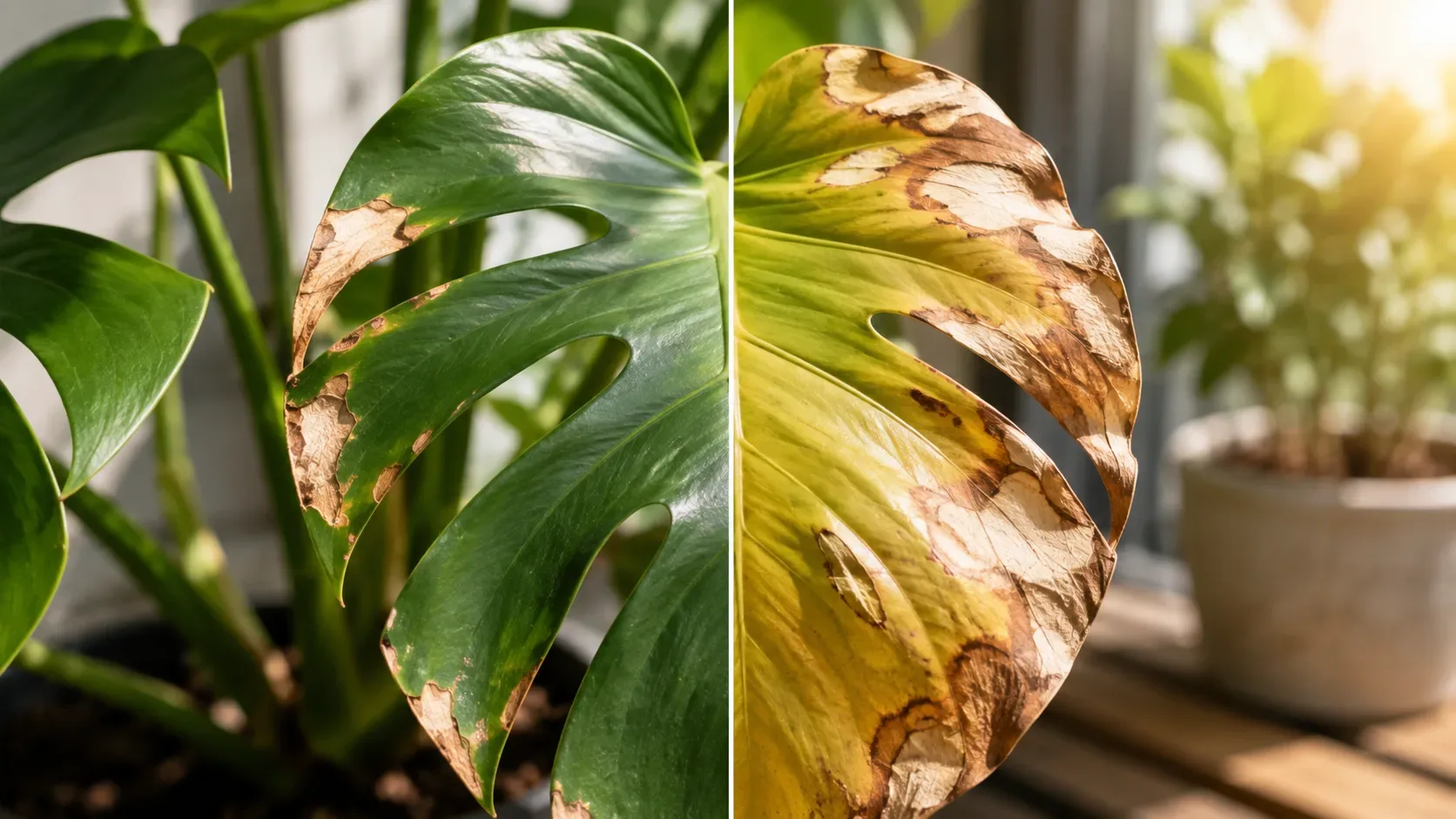
If a leaf turned white, beige, or brown soon after the plant was moved to a much brighter spot, sunburn is a strong possibility — especially when the damage appears on the parts most exposed to light. A sudden jump in light intensity is a classic cause of leaf scorch in houseplants. In this situation, “lack of acclimation” is not a separate disorder: it is the process that left the leaf without enough time to adjust to the new light level.
What usually points to sunburn
Sunburn from excess light often appears after a clear change in environment: from a room to a balcony, from a shadier window to one with direct sun, or from a protected indoor location to outdoors. Iowa State University Extension describes leaf scorch as a type of “sunburn” and warns that a rapid transition to a very different light intensity can cause scorching and leaf drop. The recommendation is to make the transition gradually. Source: Iowa State University Extension.
The most compatible signs include:
- areas that first lose color and become pale, yellowish, whitish, or beige;
- tissue that later becomes dry, brown, and brittle;
- stronger damage on the side or leaves that received direct light;
- symptoms appearing soon after the plant was moved to a much brighter place;
- older damaged leaves that do not return to their original appearance even after exposure is corrected.
University of Minnesota Extension also describes sunscald as a problem in which exposed parts can bleach to yellow or white and, in more severe cases, become brown and brittle. Source: University of Minnesota Extension.
Are sunburn and lack of acclimation the same thing?
Not exactly, but they are directly connected. Sunburn is the visible tissue injury. Lack of acclimation is one of the most common reasons that injury occurs when a plant suddenly receives much more light than it did before.
A plant that spent months in indirect light may not immediately tolerate hours of direct sun, even if the species can eventually grow in brighter conditions. Iowa State recommends never moving a houseplant directly into full sun and starting the adjustment in shade, then increasing light gradually. Source: Iowa State University Extension. University of Minnesota gives similar guidance: during the initial transition, protect plants from wind and direct sunlight so the leaves have time to adjust. Source: University of Minnesota Extension.
How to distinguish sunburn from drying and other stress
| Sign | More compatible with | What to check |
|---|---|---|
| Pale, beige, or white patch that later dries and darkens | Sunburn | Check whether the area matches the most exposed side and appeared after a sudden increase in light. |
| Brown tips and edges on several leaves | Low humidity, inconsistent watering, or salt buildup | The pattern often starts at margins and is not necessarily limited to the illuminated side. |
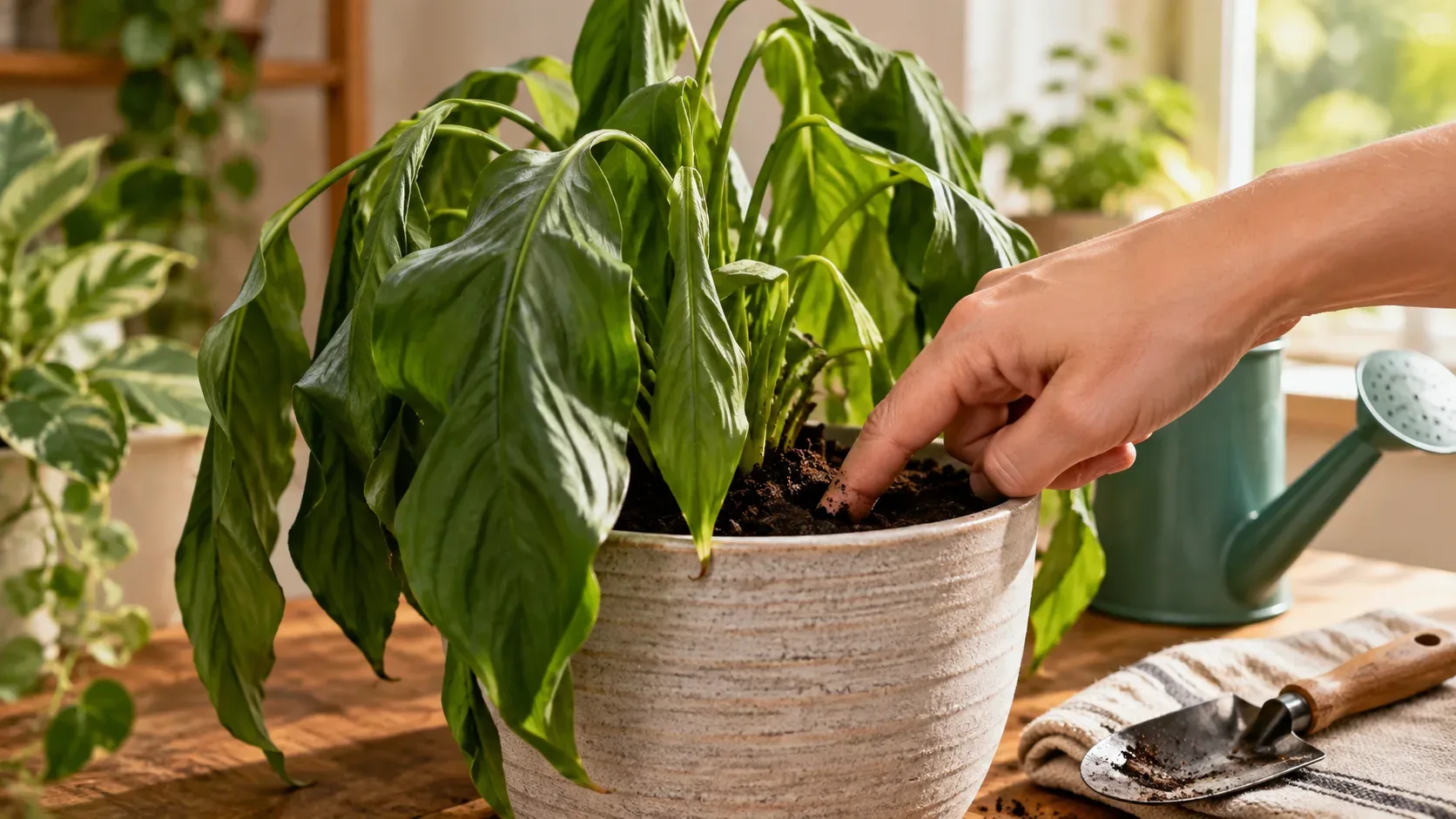
| Wilted leaf and very dry potting mix | Underwatering | Check the root ball; stronger light can make the pot dry out faster. |
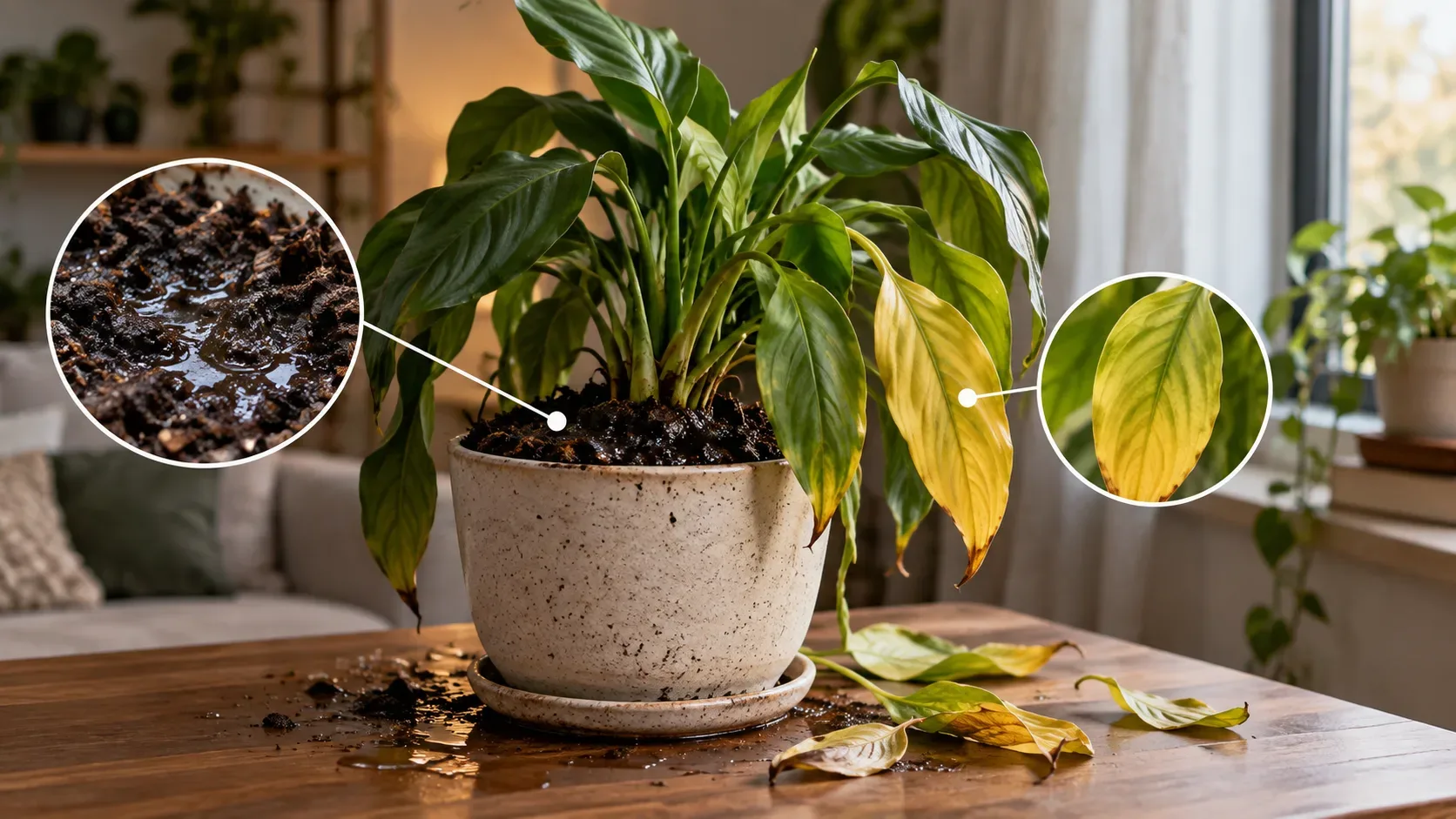
| Yellowing, wilting, and persistently soggy mix | Overwatering or root problems | Damaged roots can reduce water uptake even when the pot is wet. |
| Brown spots that enlarge, have defined margins, rings, or a lesion-like appearance | Possible leaf spot disease | Look for progression unrelated to sun exposure, wet leaves, and other signs. |
Iowa State notes that brown tips are often associated with low humidity, inconsistent watering, salt buildup, or water quality, while general yellowing and browning can have many causes. Brown color alone therefore does not confirm sunburn. Source: Iowa State University Extension.
Disease is also worth considering when spots keep enlarging, appear randomly, or develop dark centers, concentric rings, or fungal growth. Iowa State notes that different fungi, bacteria, and viruses can cause leaf spots and that moisture, air circulation, and lesion progression help with diagnosis. Source: Iowa State University Extension.
What to do when the light change seems to be the cause
- Move the plant out of the harshest sun. Return it to bright indirect light or a protected location without putting it in total darkness.
- Do not expect already burned tissue to heal. Necrotic tissue will not turn green again. Judge recovery by new growth.
- Check the potting mix before watering. A brighter, warmer location may dry the pot faster, but the mix should not stay constantly wet.
- Avoid several major changes at once. If possible, do not combine a sharp change in light with heavy fertilizing, severe pruning, or other major care changes.
- Watch the plant for several days and assess new leaves. If new lesions continue to appear without direct sun, investigate water, roots, pests, or disease.
How to acclimate the plant more safely
The goal is to increase exposure in stages. For a plant that was indoors, start in full outdoor shade or strong indirect light. Then introduce short periods of gentler direct sun, preferably early in the morning, increasing the duration gradually as the species responds.
There is no single schedule that fits every plant. Illinois Extension suggests increasing outdoor time each day and describes an adjustment period of about one to two weeks; other university extension guidance recommends gradual transitions over several weeks when the light difference is large. Source: Illinois Extension. The key is to avoid moving directly from low light to intense sun.
Even after acclimation, a plant may not tolerate full sun. Many common houseplants evolved in forest understories and prefer bright indirect light. Final tolerance depends on species, climate, time of day, and temperature. Source: Iowa State University Extension.
When the pattern is not enough for a confident diagnosis
A white or brown leaf is not, by itself, enough to confirm sunburn. The hypothesis becomes stronger when three elements occur together: a recent move to brighter light, damage concentrated on exposed areas, and a bleached/dry appearance consistent with burned tissue.
If the problem appeared without a change in light, affects new and old leaves randomly, keeps progressing after exposure is reduced, or comes with persistent wilting, dark roots, pests, or enlarging spots, the plant needs a broader assessment. In those cases, identifying the species, watering pattern, potting mix condition, affected side of the leaf, and progression of the spots is more reliable than diagnosing by color alone.