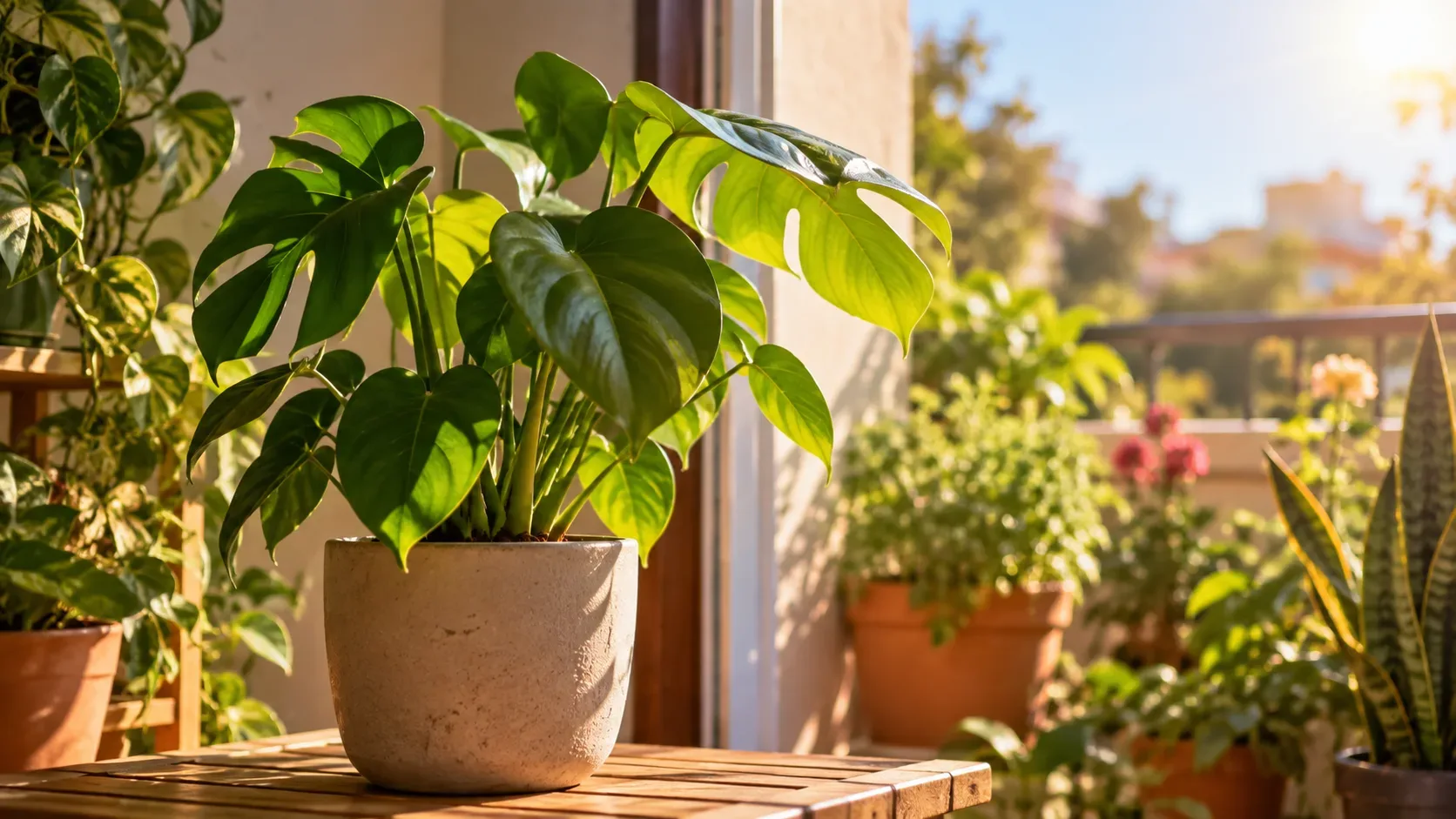
Yes, some houseplants can take direct sun in spring — but not all at once and not at every time of day. Leaves that developed under indoor light are adapted to much lower intensity than they may encounter outdoors or next to a very sunny window. A sudden change can cause pale, dry or scorched patches and, in some species, leaf drop. University extension sources recommend a progressive transition, usually over roughly one to two weeks, rather than moving a plant straight into strong sun.
Acclimation has an important limit: it helps a plant adjust to a new light level, but it does not turn a shade-loving species into a full-sun plant. If a species prefers filtered light, the realistic goal may be a brighter position or only some gentle morning sun.
Why spring can raise the risk of leaf scorch
In spring, days lengthen and available light increases. A plant that spent months in an indoor corner, behind a curtain or far from a window may suddenly receive much more light when moved to a balcony, patio or sunny windowsill. University of Minnesota Extension notes that a plant comfortable in bright indoor light can scorch quickly if exposed to direct outdoor sun without an adjustment period.
The key issue is not simply “spring versus summer,” but the difference between the old environment and the new one. The larger the jump in light intensity, the more conservative the transition should be. Wind, temperature and faster pot drying can also change when a plant moves outdoors.
A flexible 7–14 day acclimation framework
This schedule is an adjustable example, not a universal rule. Iowa State University Extension recommends starting houseplants in full outdoor shade and increasing light over 10 to 14 days; Illinois Extension describes gradual acclimation over about one to two weeks. Species, weather, pot size and sun intensity may require a slower process.
| Phase | Suggested exposure | What to watch |
|---|---|---|
| Days 1–3 | Bright indirect light or open shade in a spot protected from wind and midday sun. | If the plant wilts quickly, drops leaves or becomes noticeably paler, stay at this stage longer. |
| Days 4–6 | Introduce short periods of direct early-morning sun, then return the plant to filtered light. | Look for bleached patches, dry spots or crisping leaf edges. |
| Days 7–10 | Gradually extend morning sun only if there are no signs of light stress. | On very hot, dry or windy days, progress more slowly and check potting mix moisture. |
| Days 11–14 | Move toward the final planned exposure. For shade-loving species, the final position may still be filtered light or only gentle morning sun. | If new scorch marks appear, step back rather than pushing the plant harder. |
If you want to compress the process to about seven days, use the same phases more briefly only when the plant was already growing in strong light and the new spot is not a dramatic increase. When in doubt, a longer transition is safer.
Morning sun is usually safer than afternoon sun
University of Minnesota Extension recommends favoring exposure before noon and avoiding hot midday or afternoon sun for most houseplants. In practice, an east-facing or morning-sun position is often a more forgiving transition than several hours of strong late-day sun.
That does not mean every houseplant can remain indefinitely in direct morning sun. The point is to use gentler light as part of the adjustment and respect the species' natural limit. If leaves continue to scorch despite a slow transition, lower the intensity with a sheer curtain, shade cloth, tree canopy, pergola or another form of filtered light.
How to recognize sun scorch on houseplant leaves
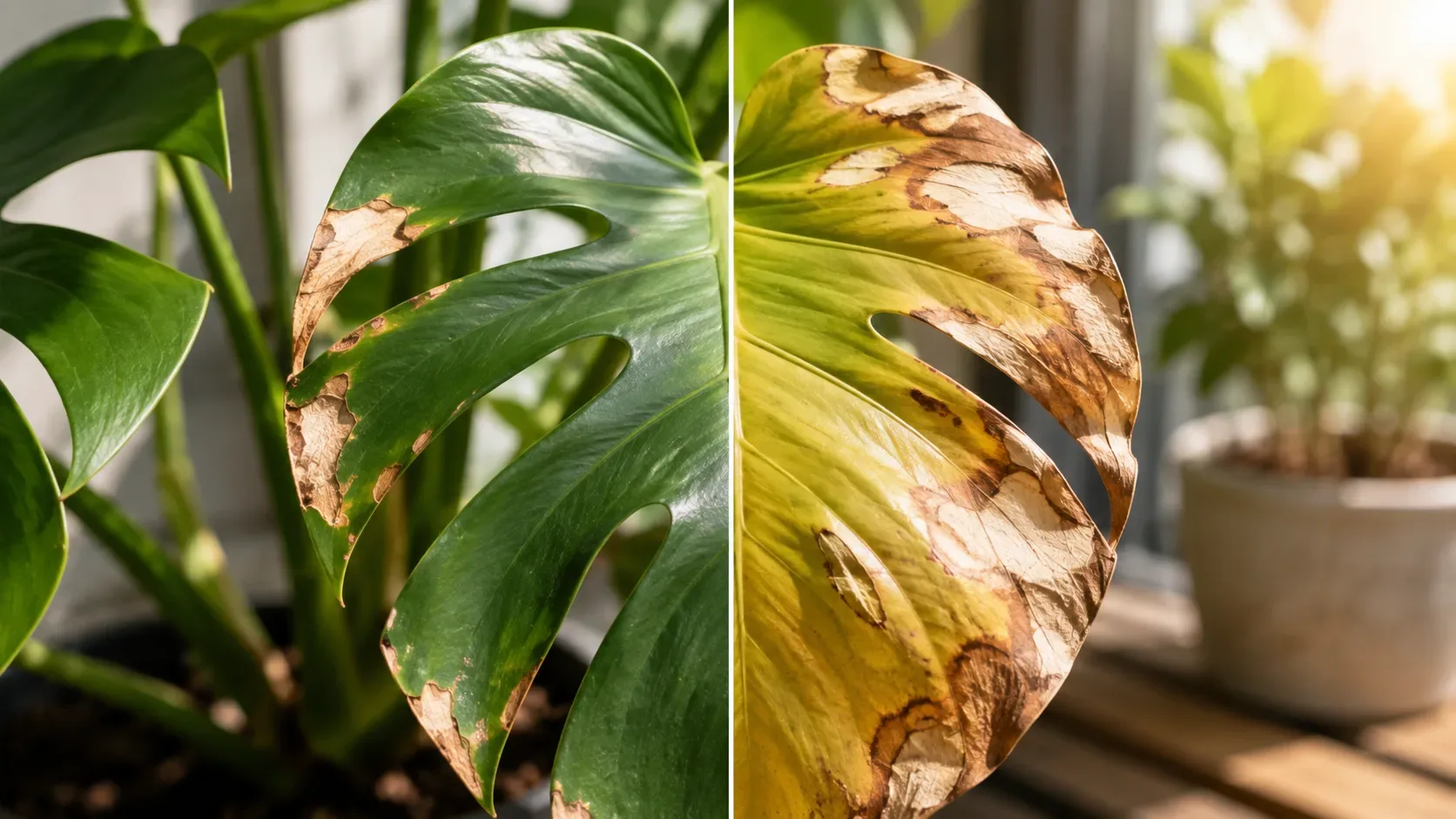
Light scorch often appears after a plant is moved to a much brighter location. Extension sources describe signs such as pale or bleached areas, dry patches, crisp edges and leaf drop. Some plants, including weeping fig and tropical hibiscus, may respond to a light change by dropping leaves rather than showing obvious burn marks.
Context matters. If the damage started soon after the plant was placed in direct sun and is strongest on the most exposed leaves, excess light is a strong possibility. General wilting can also result from too little or too much water, so leaf color alone is not enough for a diagnosis.
What to do if the plant is scorched
- Reduce exposure: return the plant to bright filtered light or to an earlier stage of acclimation.
- Avoid more abrupt changes: do not swing from strong sun to deep darkness and back again; keep conditions steadier.
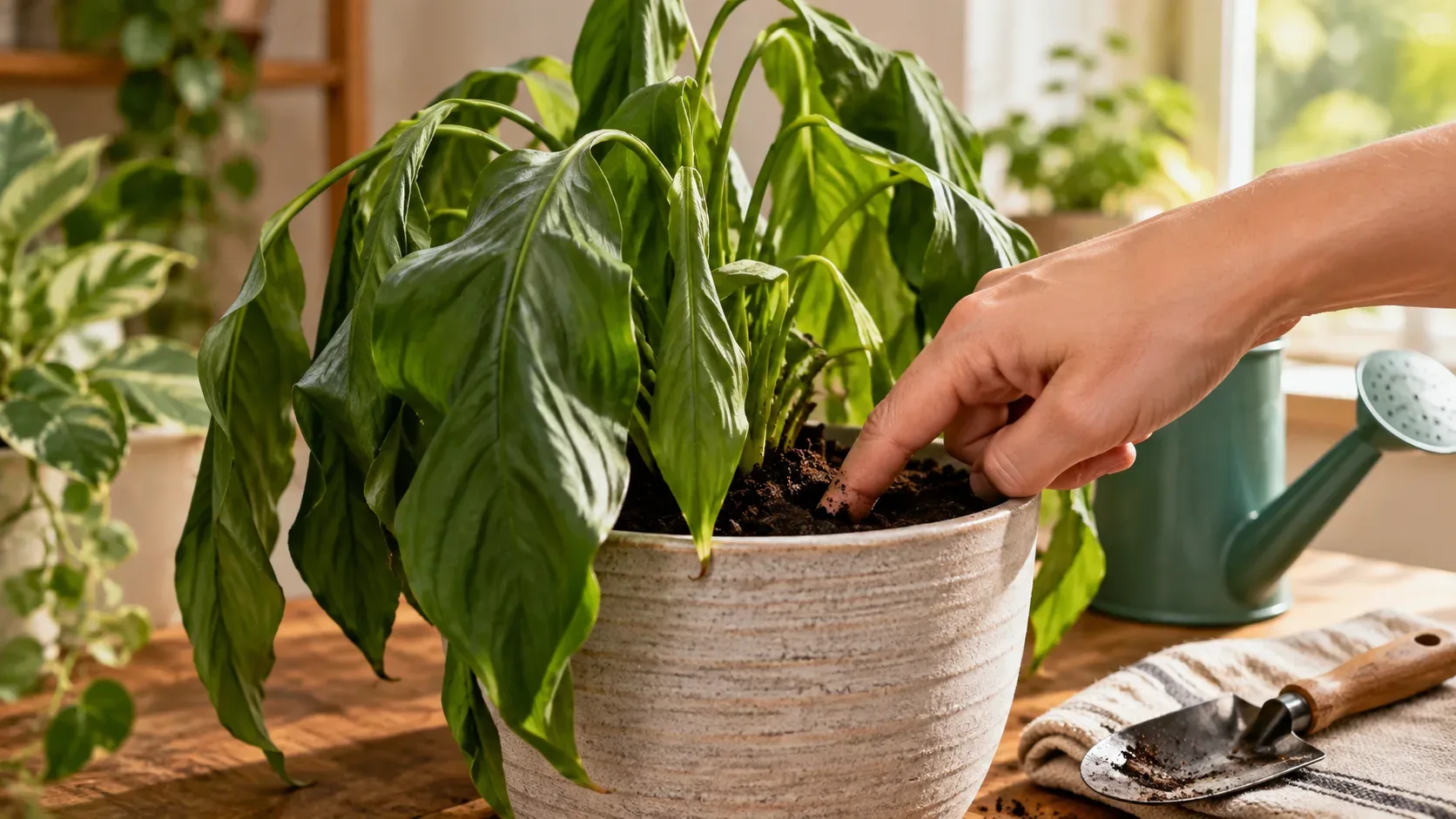
- Check the potting mix: pots in brighter, warmer and windier conditions can dry faster. Water according to actual moisture, not a fixed calendar.
- Watch new growth: already scorched tissue will not return to its original appearance; the better sign of successful adjustment is healthy new foliage under the corrected light level.
Sensitivity checklist: which plants need more caution?
There is no perfect list for every cultivar, but extension guidance gives useful clues about which groups deserve a more conservative approach.
- Use extra caution: calatheas, fittonias and peperomias are cited by University of Minnesota Extension as plants that may be better kept indoors during the brightest part of the year. Ferns and peace lilies also tend to prefer filtered light.
- Common foliage plants still need a slow change: pothos and philodendrons can scorch when moved too quickly from lower light into strong sun.
- More sun-tolerant does not mean immune: cacti and succulents may handle brighter sites, but they can also burn when moved directly from indoor light into intense sun. Acclimation still matters.
More light also changes watering needs
With more sun, heat and airflow, a pot may lose water faster. University of Minnesota and Iowa State University Extension advise checking moisture more frequently when houseplants move outdoors. That does not mean watering automatically every day: check the potting mix and adjust frequency to the actual drying rate.
This matters because two stresses can occur at the same time. A plant moved into strong sun without acclimation may suffer light damage while also drying out faster. Fixing watering alone will not correct excessive light exposure.
When acclimation is not the solution
If a shade-loving plant keeps scorching even after a slow transition, the problem may be the final location, not the speed of the change. Iowa State University Extension recommends reducing light intensity when symptoms show that conditions are too bright. In that case, use filtered light, open shade or only mild morning sun.
In other words, acclimation helps a plant cope with a reasonable change; it is not a way to force a species to live in conditions outside its normal tolerance.
Quick questions
Can a houseplant scorch behind glass?
Yes. The light reaching a window can change substantially by season and time of day. If you move a plant much closer to a sunny window, make the change gradually, especially where direct sun lasts for several hours.
Are seven days enough?
Sometimes, but there is no guarantee. The 7–14 day range is a practical framework; extension sources commonly describe about one to two weeks and, in some situations, longer. Sensitive plants or plants coming from low light may need more time.
Will a scorched leaf recover?
In general, tissue that has already become necrotic or dry will not turn green again. The priority is to prevent new injury and see whether new leaves develop normally under the adjusted light level.
Can succulents go straight into full sun?
That is not a safe general rule. Even succulents can scorch when moved directly from indoor conditions to intense sunlight. Increase exposure gradually and follow the plant's response.