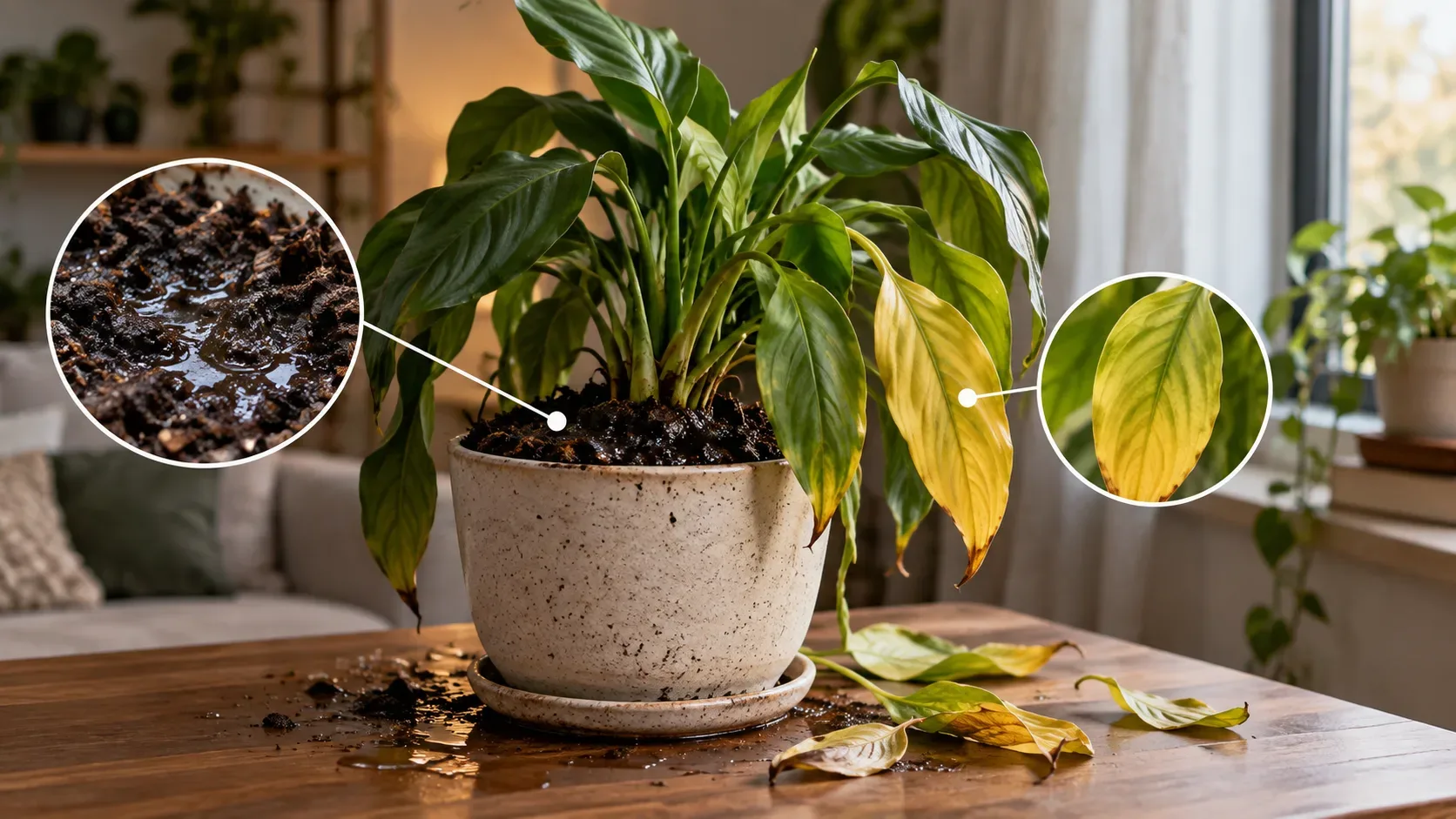
Wet potting mix and fallen leaves do not, on their own, prove overwatering. Low light can also yellow leaves and cause leaf drop; by slowing growth and water use, it can leave the mix wet for longer. The most useful diagnosis combines three observations: moisture below the surface and pot drainage, the pattern of leaf damage, and the amount of light suitable for the species. Check these signs together before watering again.
Why the two problems can look alike
Roots need both water and air. When potting mix stays saturated, air in its pores is displaced and roots may lose their ability to take up water; an overwatered plant can therefore look wilted. The Royal Horticultural Society (RHS) identifies wilting, yellowing and leaf drop as symptoms shared by different growing problems.
Insufficient light reduces the energy available for growth. Weak, stretched shoots, pale leaves and the loss of lower leaves can point to inadequate light. Both problems can occur together: in a dark spot a plant uses less water, while watering at the previous rate keeps the pot wet longer.
Read the combined clues, not one leaf
Use the following clues for initial assessment, not as a definitive diagnosis. An occasional lower leaf may yellow naturally; several affected leaves together with changes in the mix and growth warrant a closer look.
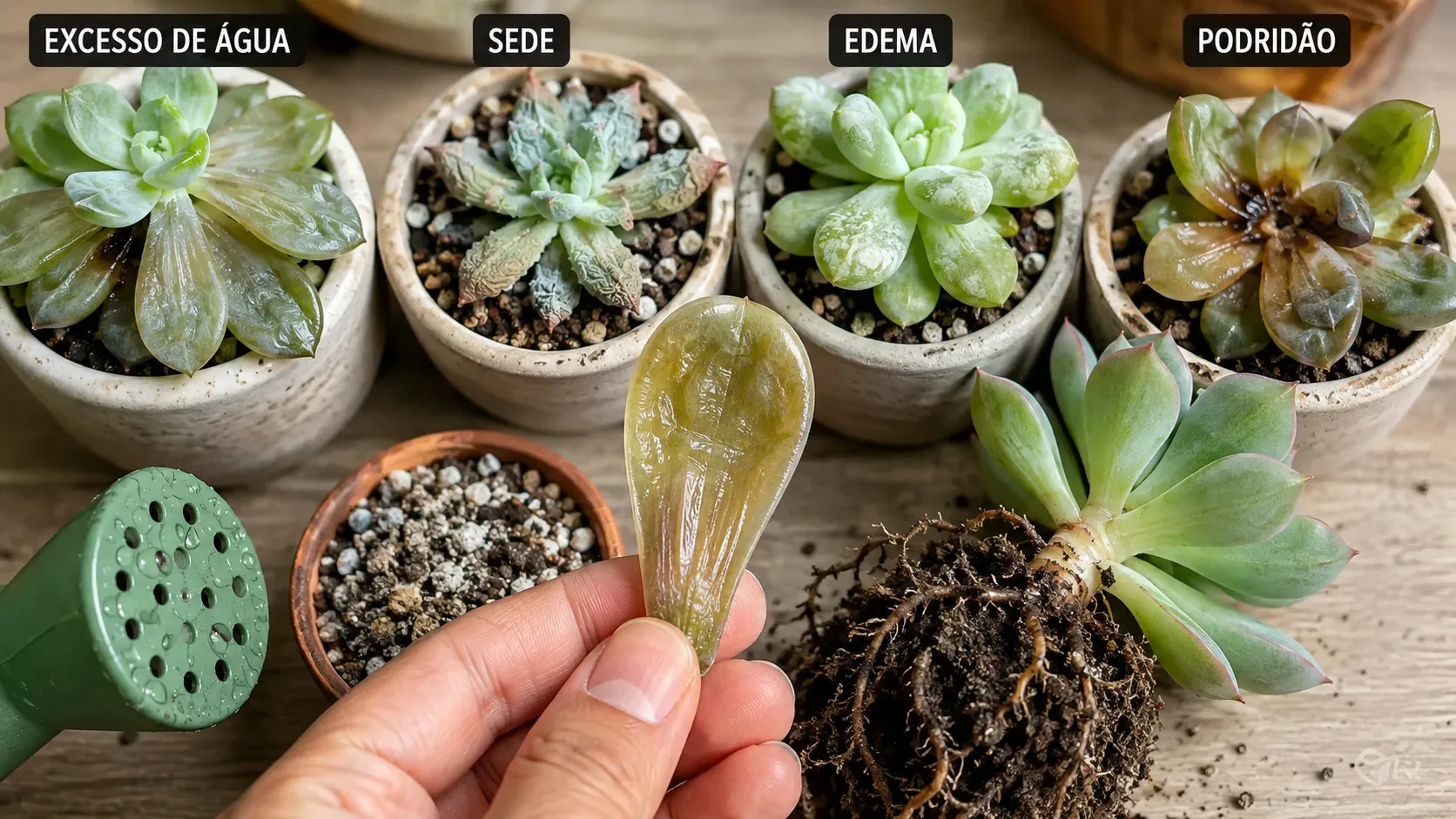
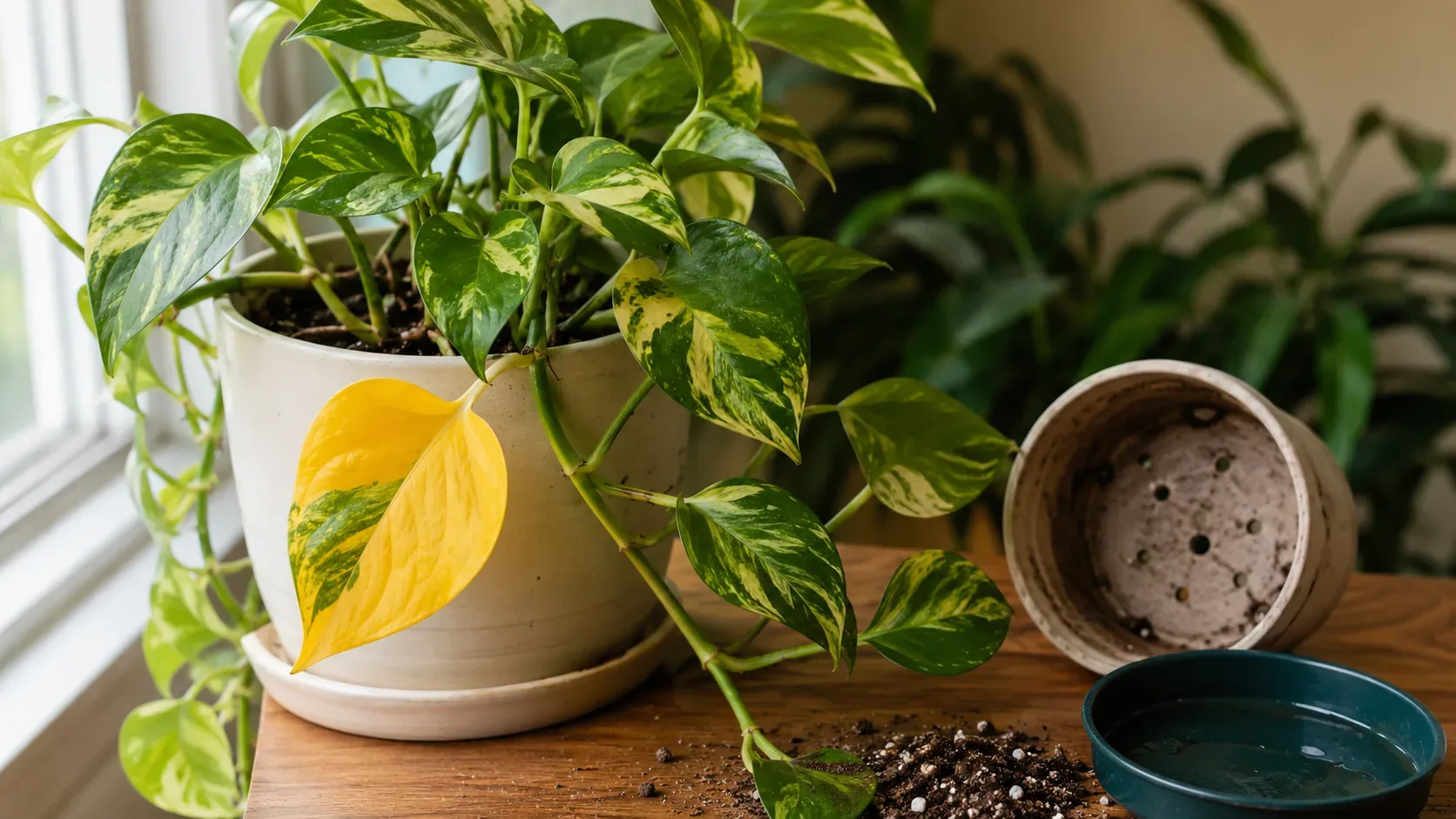
- More consistent with excess water: mix staying wet for a long time, water trapped in an outer pot or saucer, wilting despite wet mix, yellowing of both old and new leaves, a soft stem base, or dark, mushy roots.
- More consistent with low light: thin shoots stretching toward a window, wider spacing between leaves, smaller or paler new leaves, slow growth and loss of lower leaves without clear signs of rot.
- Possible combination: a dim position, potting mix that dries slowly and yellowing leaves. Changing watering frequency alone may not address the environmental cause.
Check safely before changing how you water
Start without removing the plant from its pot or applying fertilizer or pest treatments. Note what you find so you can compare its progress over the following days.
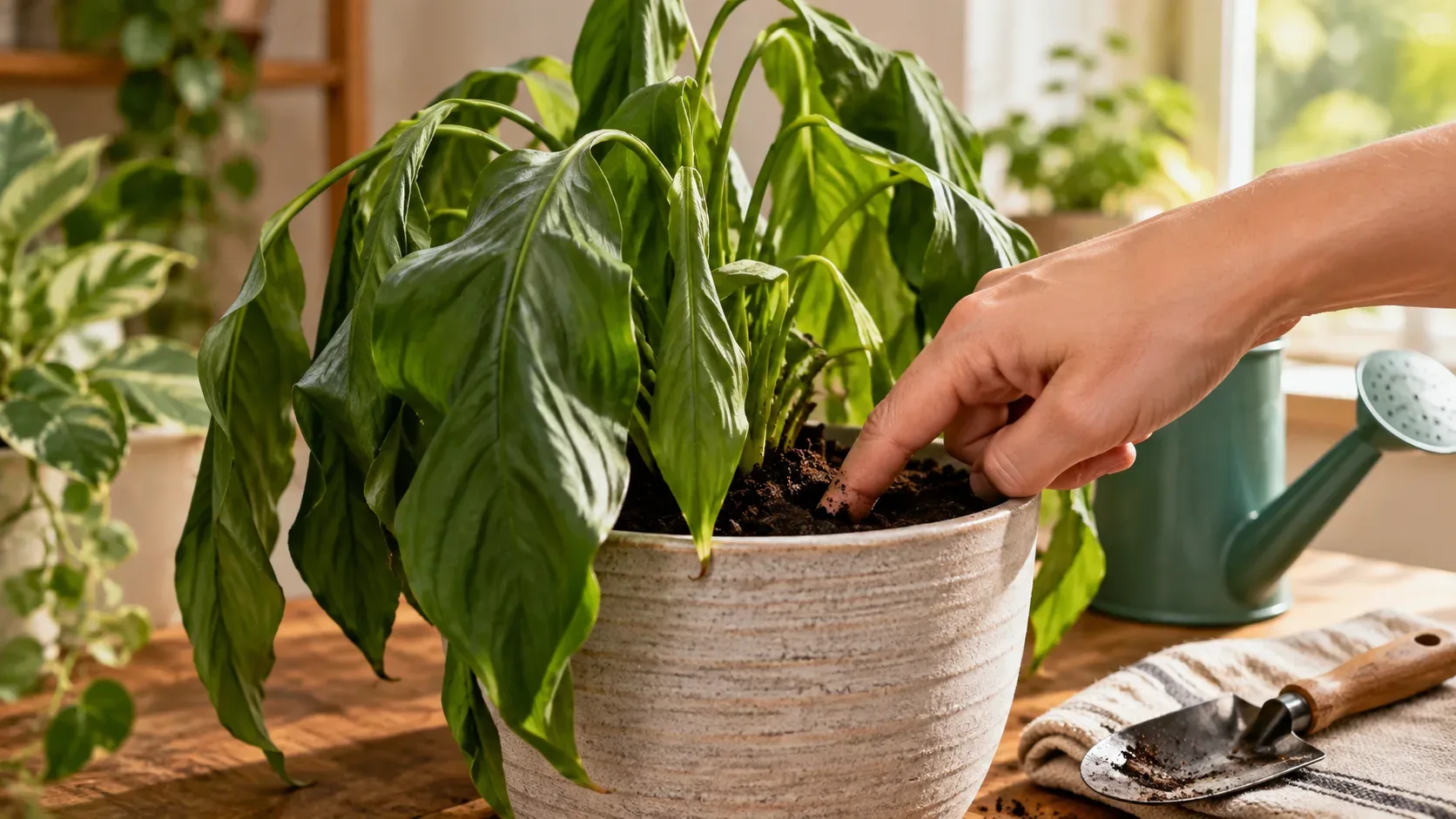
- 1. Check below the surface. Gently insert a finger a few centimetres into the mix where possible and assess the pot’s weight. The top layer may dry while the root zone stays moist; the appropriate depth and degree of drying depend on the species and potting mix.
- 2. Check where water goes. Look for drainage holes and whether the inner pot is sitting in water inside a decorative outer pot or saucer. Empty standing water. A decorative container without holes is not the same as a draining pot.
- 3. Look at light and growth. Check distance from the window, obstructions and the appearance of recent shoots. Compare conditions with the species’ light requirements. Bright indirect light is different from direct sun, which can scorch sensitive plants.
- 4. Inspect leaves and the stem base. Note which leaves fall, any soft or dark areas, and signs of pests. Do not assume every yellow leaf is caused by watering.
What to do with the findings
If the mix remains waterlogged, do not add water to counteract wilting. Empty the saucer or outer pot, ensure drainage and wait until the mix reaches the moisture level appropriate for the species. If root rot is suspected, carefully slide out the root ball to inspect it: very dark, mushy roots indicate damage. Whether repotting is needed depends on root condition, container size and mix structure. A pot much larger than the root system can stay wet for too long.
If low light is the main clue, move the plant gradually closer to a light source suitable for its species, rather than abruptly exposing it to strong sun. Reassess water needs in the new position instead of following a fixed schedule. When low light and persistent wetness coexist, address both and watch new growth in particular; fully yellow leaves will not turn green again.
When to seek help and what to avoid
Consult a gardening professional if the plant keeps declining, the stem base is soft, roots are extensively damaged, or the species and its care requirements are uncertain. Avoid using fertilizer as the first response to damaged roots, watering more solely because the plant is wilted, or moving it straight into intense sun. Leaf drop can also involve cold, drafts, sudden changes or pests; if the clues do not fit, widen the inspection before settling on a cause.