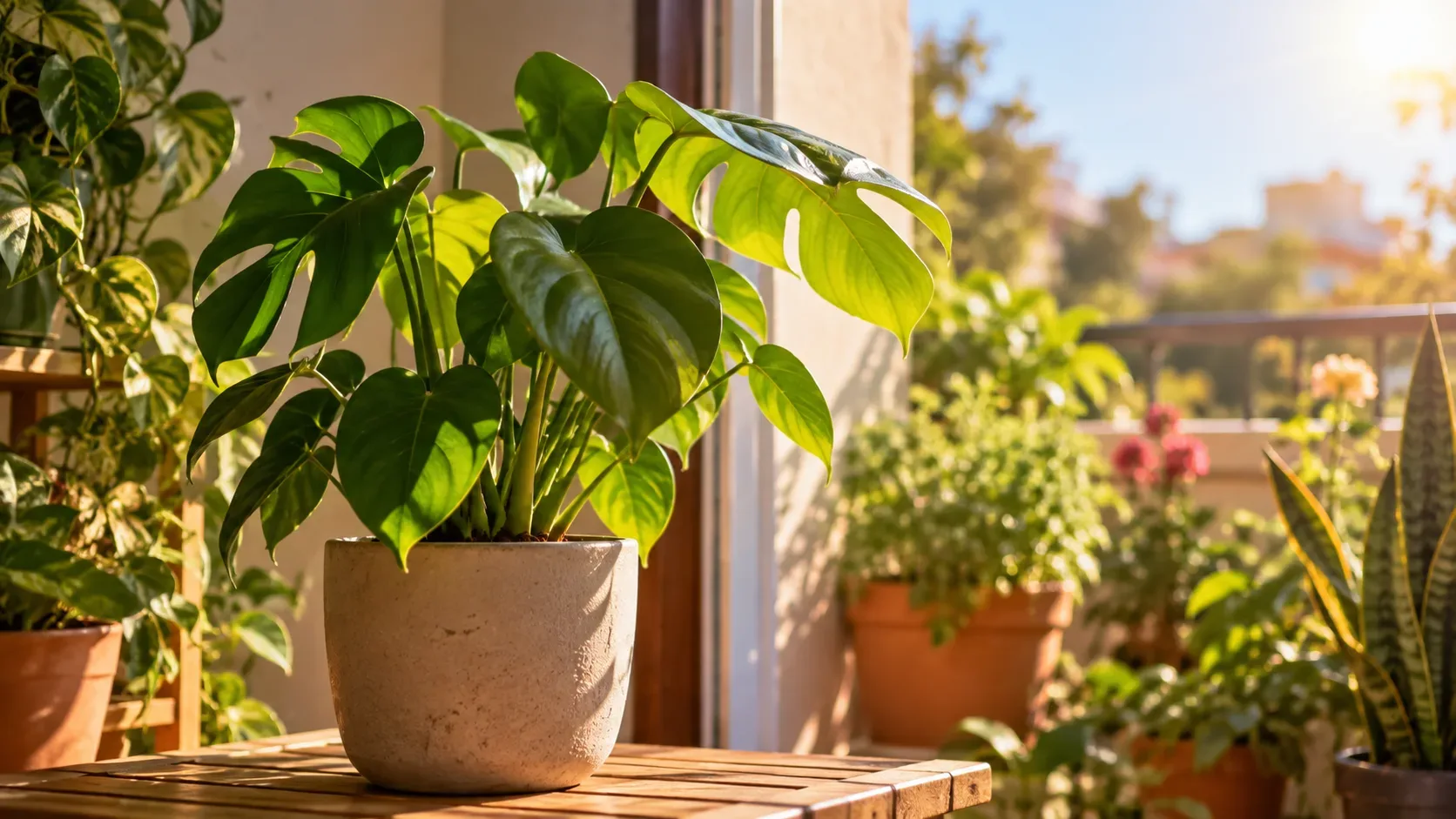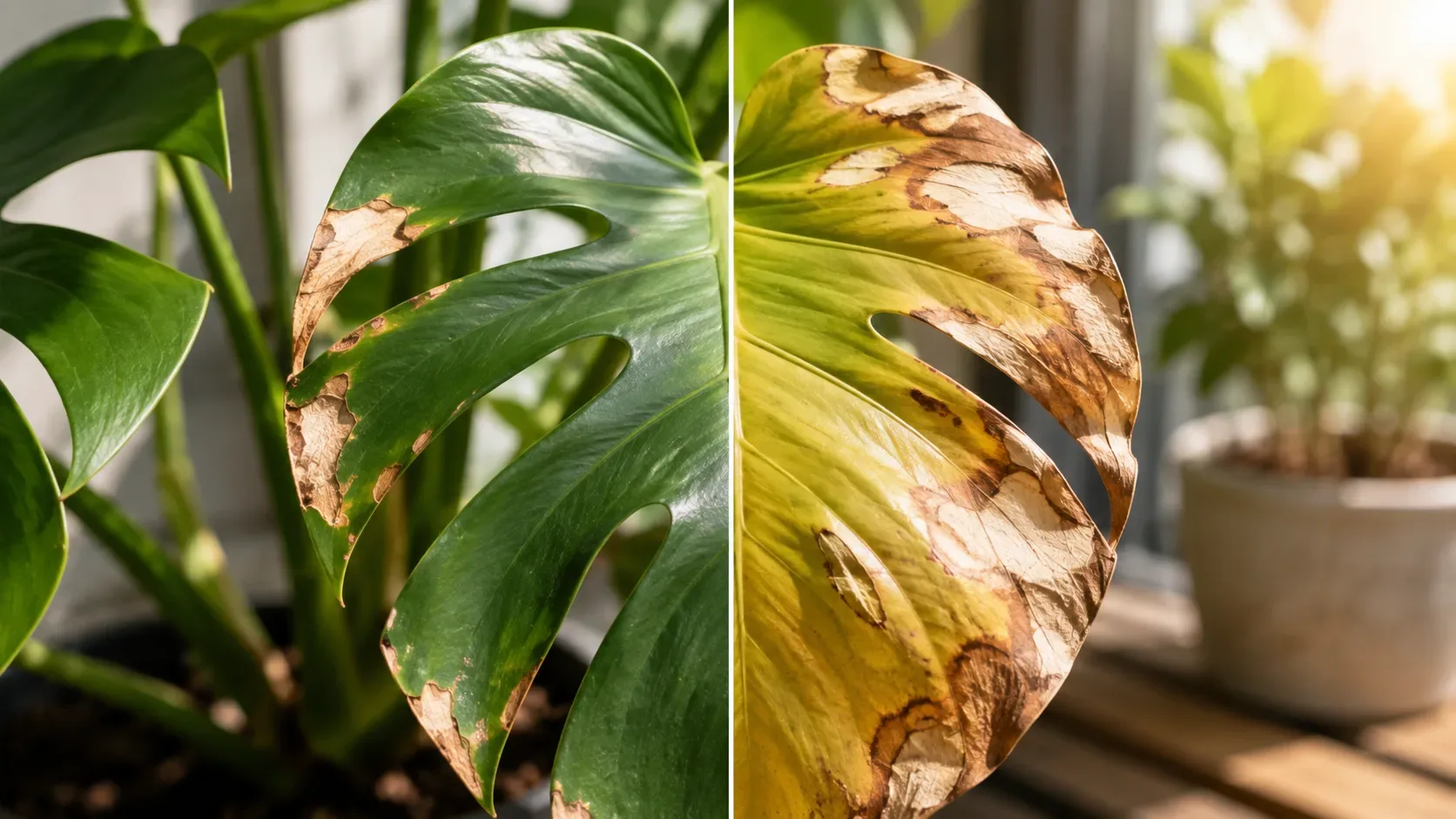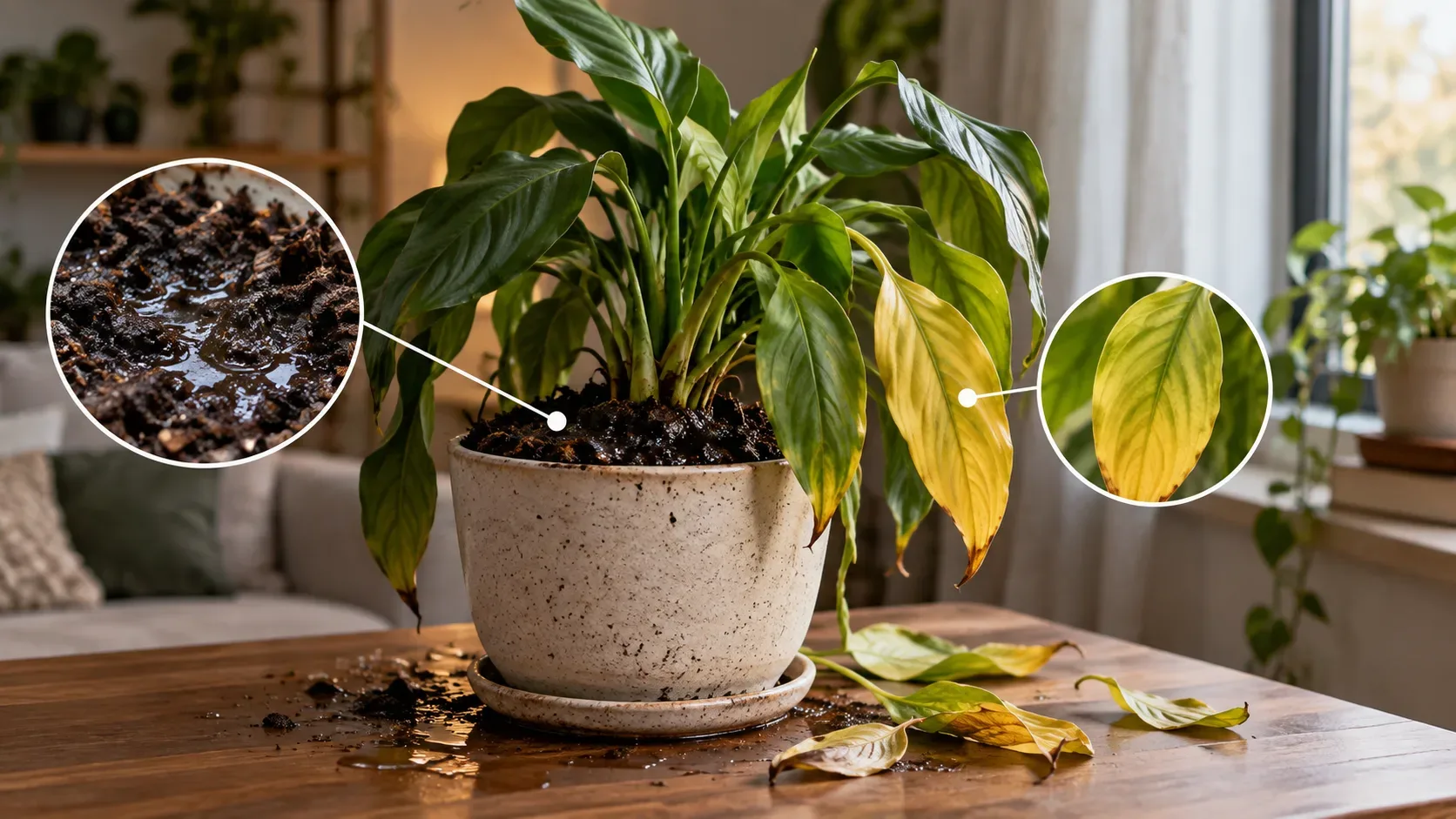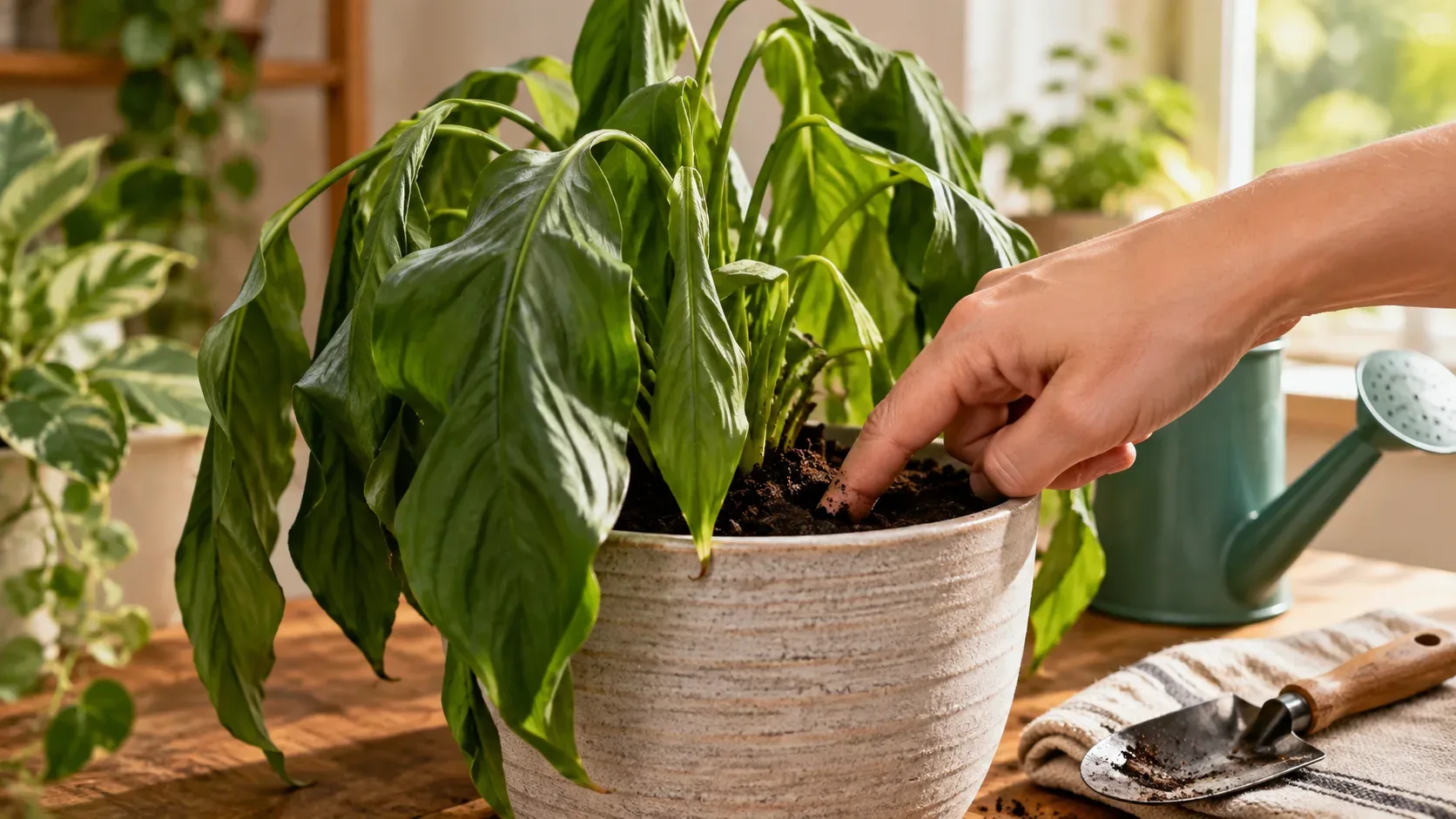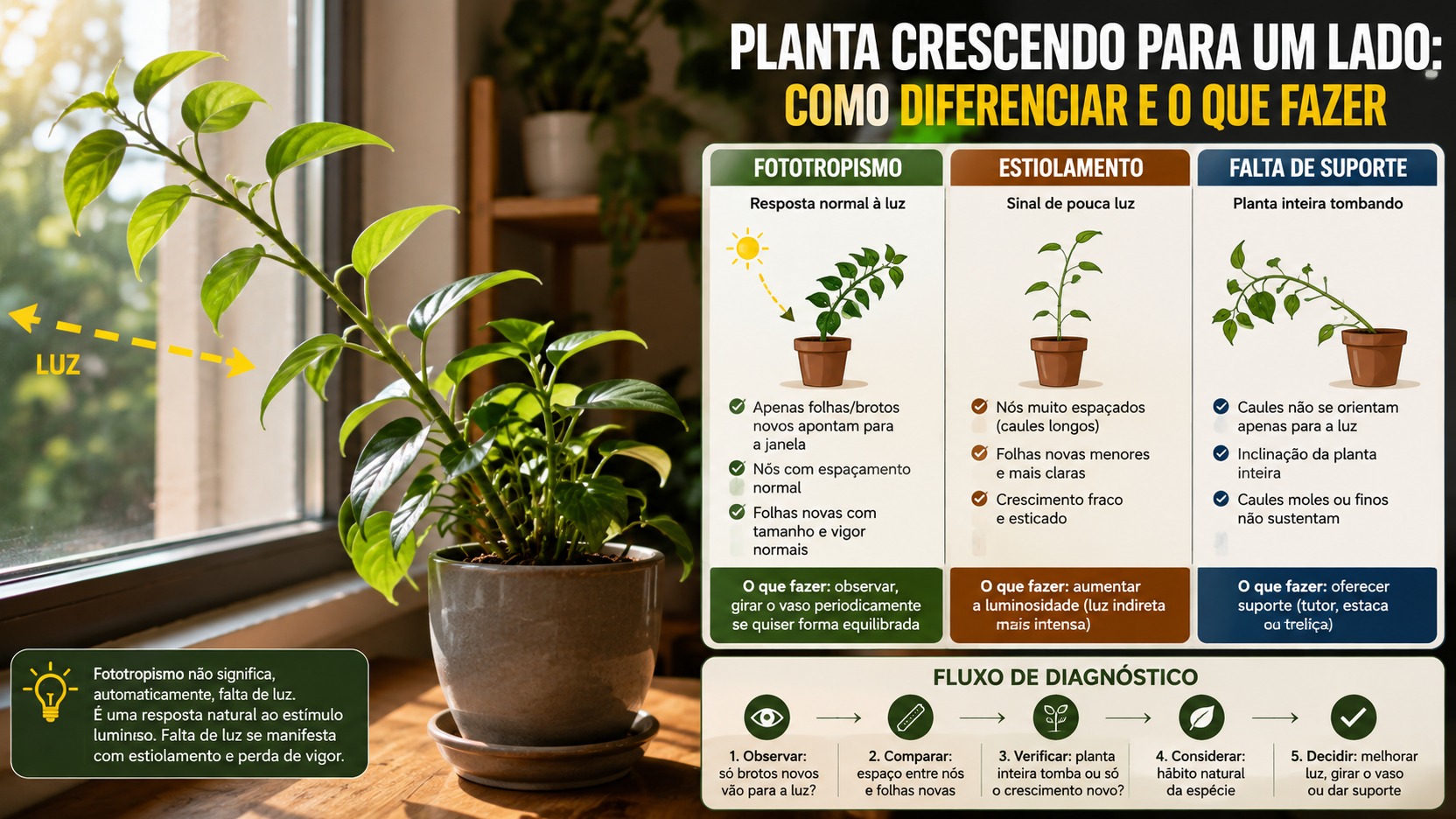
If an indoor plant starts to grow to one side, especially towards the window, the first suspicion is usually a lack of light. This hypothesis may be correct, but the slope alone does not confirm the diagnosis. A plant may be just responding to the direction of light, it may be receiving less light than it needs, it may have a naturally hanging or climbing habit, or it may be losing mechanical support.
The most useful way is to separate two questions. The first is: where is the new growth going? The second is: how is this new growth forming? Direction helps recognize phototropism. The shape of the stems, the distance between the nodes, the size and color of the new leaves and the stability of the plant help to understand whether there is also a lighting or support problem.
Growing towards the window does not automatically mean low light
Phototropism is growth oriented in response to light. When the main light source arrives from one side, shoots and stems may bend in that direction. In plants grown near windows, this can happen even when the total amount of light is sufficient to maintain healthy growth.
Therefore, direction and quantity of light are not the same thing. A plant can receive adequate but concentrated light from a single side and still orient its growth toward the window. The opposite can also happen: it leans towards the light and at the same time receives insufficient intensity. In this second case, the slope is accompanied by changes in the quality of growth.
NC State Extension describes that plants lit predominantly from one direction tend to lean toward the light source. The same manual separates this behavior from signs of inadequate light intensity, which include long internodes, pale leaves, and thin, elongated growth. This distinction is the key to diagnosis.
First diagnosis: note where the slope started
Only the young shoots point towards the window
If the base remains firm, the old stems maintain their shape and only new leaves, petioles or tips orient towards the lighter side, the pattern matches well with phototropism. In this scenario, there is no reason to immediately conclude that the plant is suffering.
Also note whether the new growth appears proportional to the old. Leaves with similar size, normal color for the species, firm stems and nodes with similar spacing to the previous ones indicate that the plant may just be adjusting the direction of growth.
If the asymmetrical appearance bothers you, rotating the pot can help visually distribute the growth. Rotation is a form tool, not a treatment for lack of light. When the plant is healthy, the decision to rotate may be primarily aesthetic.
The entire plant is falling over
When the pot, root ball or base of the stem appears to be shifting rather than just the new growth, the question changes. Check if the substrate is firm, if the plant has become too heavy for its structure, if there has been long and weak growth or if the species naturally needs to support itself.
A climbing plant can produce long stems that look for a support point. A pendulous species can grow laterally without this being a defect.. A plant that was previously erect and starts to fall with thin stems deserves a joint assessment of light and support.
Offering a stake, stake or trellis can correct the position when there is a mechanical need, but it does not correct weak growth caused by low light. If the stem continues to form very long internodes and increasingly weaker leaves, sustaining without revising the light only masks the symptom.
Second diagnosis: compare the new growth with the old
Comparison within the plant itself is often more useful than looking for a universal measurement. Different species have very different internode lengths, leaf sizes, and growth habits. What is important is to understand if there was a consistent change after the plant started to grow in that location.
Distance between nodes
Nodes are the points on the stem from which leaves, buds or branches emerge. The section between two nodes is the internode. When new growth has clearly longer internodes than old ones, forming a thinner, more widely spaced stem, the suboptimal light hypothesis gains strength.
The University of Missouri Extension uses exactly this type of signal to recognize insufficient lighting in indoor plants: Long internodes and smaller leaves are among the signs that a healthy plant is not getting enough light. NC State Extension also associates low light intensity with long internodes, paler coloration, and a slender appearance.
In domestic use, this aspect is often called etiolation. In botany, the term classically describes the development of seedlings in the dark, with strong elongation before finding light. In indoor gardening, however, it is common to use "etiolated" more broadly for a plant that becomes excessively elongated and weak in insufficient light. The important thing for practical diagnosis is to recognize the set of
signs, and not depending on the label.
New leaves and vigor
Look at the most recently emerging leaves. If they are forming smaller than the standard of the plant itself, paler, more spaced out or accompanied by thin stems, the inclination towards the window is no longer just a question of direction. There is now evidence that the amount of light may be less than necessary.
It's also worth observing the general pace. A plant that grows slowly, loses density, and produces weak new tissue may be just tolerating the site, not actually thriving. The University of Maryland Extension points out that some species can withstand low light conditions, but this does not mean they maintain the same vigor. Philodendrons, for example, can remain alive in low light and still become slimmer.
Third diagnosis: consider the natural habit of the species
Not all asymmetry needs to be corrected. Climbing philodendrons, boa constrictors and other long-stemmed plants naturally move forward, hang down or look for support. The University of Maryland Extension describes philodendrons with pendulous stems and boa constrictors as plants with a wine habit. In species like this, expecting a perfectly vertical canopy can create a false problem.
Before placing a stake, observe what the plant would do if it had space. If the stem naturally tends to droop, letting it fall may be the correct way to grow it. If the species is a climber, a support may allow it to express the climbing habit. If the plant is naturally upright and has begun to droop just after producing fine growth, return to light assessment.
This step avoids a common mistake: using support to force a hanging plant to remain vertical or, at the opposite extreme, accepting as a "natural habit" a stem that has become weak because the light has dropped.
When to rotate the vase
Rotating the pot makes sense when the plant is healthy, but the light comes mostly from one direction and you want a more uniform shape. NC State Extension recommends rotating plants to encourage more balanced growth when they receive light primarily from one side.
It is not necessary to turn the rotation into a continuous and aggressive correction. The goal is to gradually change the growth orientation, observing how the plant responds. Some species change the position of their leaves easily; others express the direction of light more clearly in buds that are still forming.
If, after turning, the new growth remains very elongated, with smaller or paler leaves, the problem is not simply the side of the pot. In this case, the priority should be to review the light intensity.
When to improve brightness
Increasing light makes more sense when several signs appear together: longer new internodes, thin stem, smaller or pale new leaves, loss of density, and growth that appears "stretched" toward the light source.
The first intervention is usually to bring the plant closer to an adequate source of light or improve the lighting in the environment. This does not mean placing any plant in direct sun. Many indoor plants are adapted to filtered light and can suffer burns if they are exposed.
abruptly transferred to intense exposure.
When moving a plant to a brighter location, make the transition gradually. The University of Maryland Extension recommends acclimatization when there is a change in light intensity, precisely to reduce the shock between very different environments. For species that cannot tolerate direct sun, more light may simply mean being closer to a well-lit window or receiving appropriate artificial lighting without increasing exposure to strong sun.
After the change, monitor the growth that will emerge. Old stems do not shorten and already formed internodes do not return to their previous size. The useful answer is in the next shoots: if they come out more compact, firm and with proportional leaves, the new condition is probably closer to ideal.
When to use a stake, stake or trellis
Support is indicated when there is a real structural need. It could be a plant's natural climbing habit, the weight of a long stem, the lack of rigidity of a stem, or the temporary need to keep the plant stable while it reorganizes itself.
Before attaching any stem, make sure the base is firm. A stake should not be used to hide root ball instability or a root problem. You should also not replace light correction when the new tissue is clearly weak and stretched.
When the plant is healthy and just needs support, tie the stems loosely enough to prevent strangulation. The support must follow the shape of the species, and not force the entire plant into an artificial position.
A simple flow to decide what to do
Start with the direction. If only new shoots and leaves point toward the window but growth remains compact and vigorous, observe or rotate the pot if you want more symmetry.
Then compare the structure. If the nodes are getting further apart, the new leaves are smaller or paler, and the stems appear thinner, treat light as the main hypothesis. Improve the light in a way compatible with the species and monitor the next sprouts.
Then evaluate the entire plant. If it droops as a group, but the growth does not show clear signs of low light, check the natural habit and need for support. If it is a vine or pendant, laterality may be part of normal behavior.
Finally, remember that more than one cause can exist at the same time. A plant can respond to the direction of the window and also be in a room that is too dark. It can be a climber and still produce weak stems due to lack of light. Diagnosis improves when you stop asking just "is she leaning?" and starts to observe how the new tissue is being constructed.
What to watch out for going forward
Don't expect the old part of the plant to straighten itself or for an already elongated stem to become compact. Use new growth as an indicator. Compare the distance between the next nodes, the size and color of the leaves, the firmness of the stems and the direction of the shoots.
If the new growth remains healthy and just orients toward the window, phototropism is probably the main phenomenon. If it becomes increasingly longer and weaker, increase your attention to the luminosity. If the structure is healthy, but the plant needs to support itself or
lean by nature, only offer support when it makes sense for the species' habit.
Slope alone is an incomplete signal. The diagnosis appears when direction, growth shape, vigor and natural habit are read together.