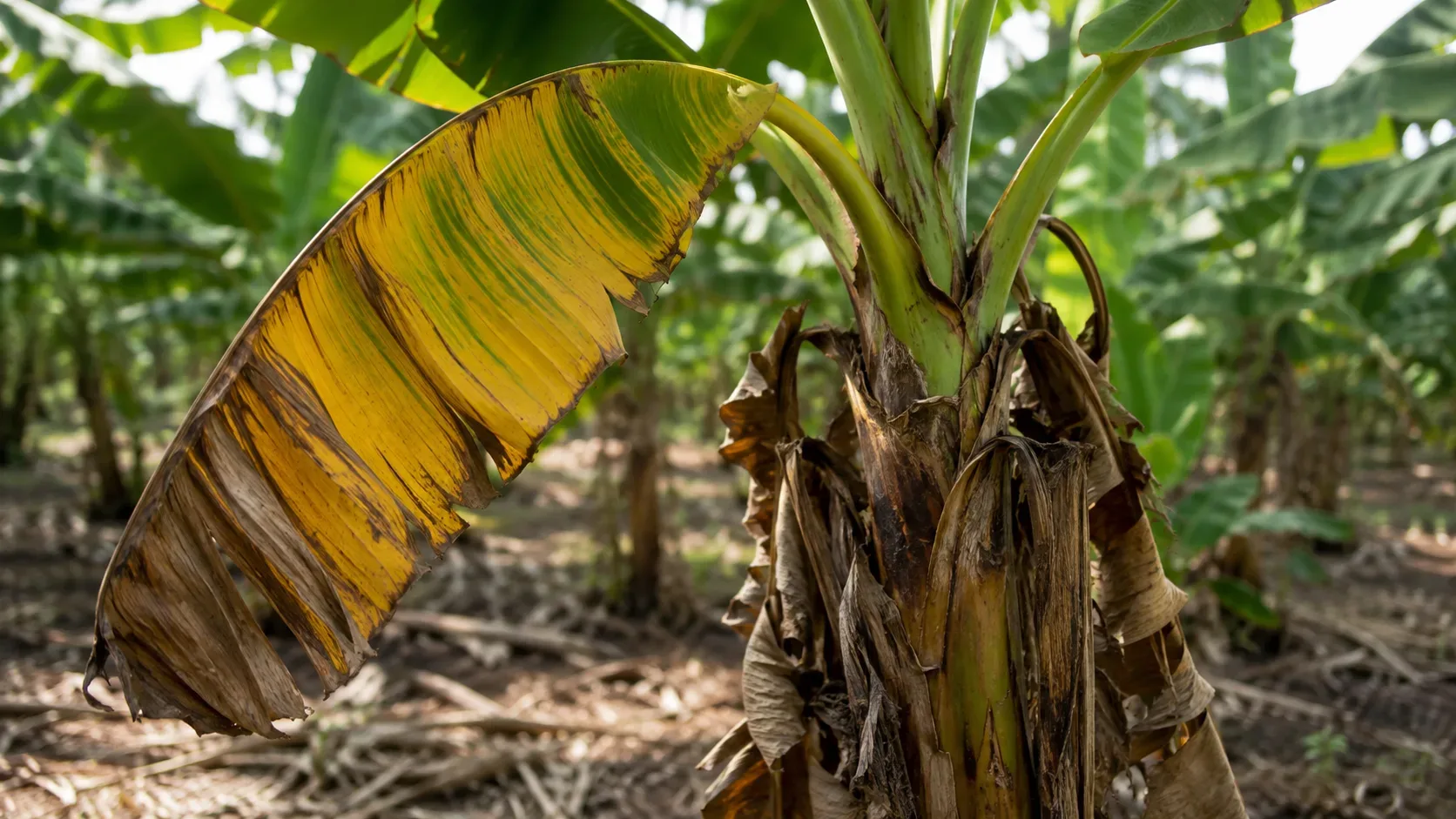
A yellow leaf on a banana tree may attract attention, but it is not enough to diagnose Panama disease caused by tropical race 4, Foc R4T. Yellowing can also appear in other situations, including fusariosis caused by other races of Fusarium and in problems such as potassium deficiency. Furthermore, the different races of the Fusarium wilt agent cannot be differentiated solely by the symptoms observed on the plant.
The distinction is especially important in Brazil. Panama disease, in a broad sense, already occurs in the country, but Foc R4T continues to be officially classified by the Ministry of Agriculture and Livestock (MAPA) as an absent quarantine pest. The official page dedicated to the pest, updated on May 26, 2026, maintains this status and informs that it is part of the list of Absent Quarantine Pests established by Ordinance SDA/MAPA No. 1,291, of May 22, 2025.
Therefore, faced with an unusual situation, the objective of the producer or anyone observing the plant should not be to make a diagnosis in the field. The most important thing is to recognize when there is a suspicion that deserves official investigation.
What is absent in Brazil is R4T, not all Panama disease
Banana fusariosis, traditionally known as Panama disease, is a vascular disease caused by members of the Fusarium complex associated with the crop. Known races of the disease occur in Brazil and cause symptoms in susceptible cultivars. Tropical race 4 is different because it expands the group of vulnerable banana trees, including cultivars from the Cavendish subgroup, such as Nanica and Nanicão.
This difference helps you understand why a symptom might be important without being conclusive. A banana tree with yellowed leaves may be presenting a known problem in the country, a nutritional deficiency or other change. Even when the set of symptoms resembles Fusarium wilt, the appearance of the plant does not allow us to say that it is specifically R4T.
Why the yellow leaf does not close the diagnosis
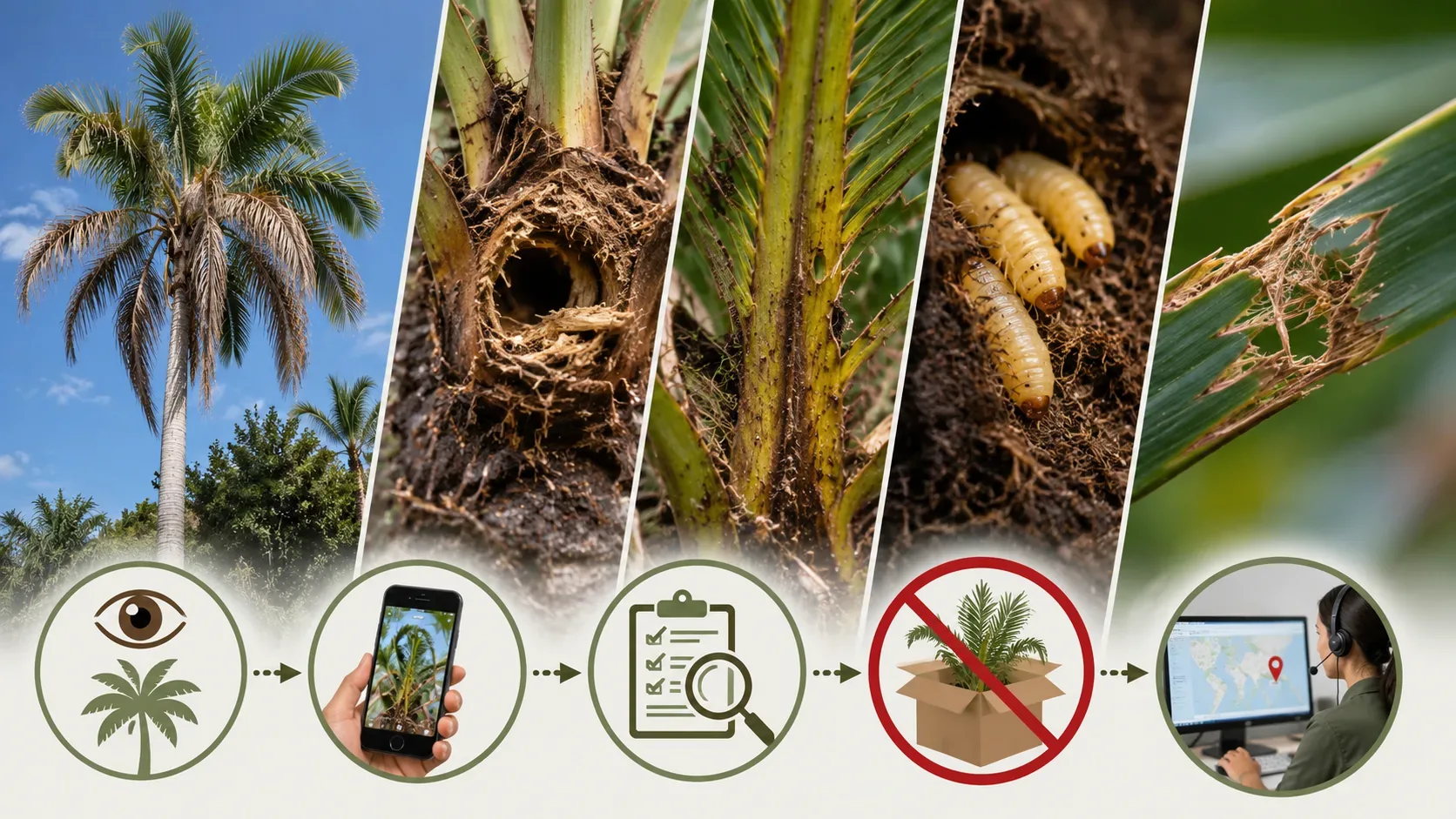
According to MAPA, infection by Foc R4T compromises the vessels that carry water and nutrients. Among the symptoms described are the yellowing of older leaves, followed by wilting and breaking at the base, causing the leaves to hang around the pseudostem. New leaves may appear pale, reduced, wrinkled or distorted, and the pseudostem may show longitudinal cracks.
The problem is that none of these signs, alone, identifies the tropical race. The plant health literature points out that R4T symptoms overlap with those caused by other races of Fusarium and even by other banana problems. Yellowing that begins at the margins of older leaves, for example, can also be confused with potassium deficiency.
In practice, some signals can increase attention:
- progressive yellowing that begins on older leaves;
- withering and subsequent collapse or breakage of leaves;
- new leaves that are abnormally pale, reduced or deformed;
- longitudinal cracks in the pseudostem;
- appearance of a condition similar to fusariosis in cultivars in which race 1 does not normally cause disease, such as those from the Cavendish group.
The set may justify a suspicion, but it is still not a confirmation of R4T. Technical verification and the eventual collection of material are part of the investigation carried out by the official plant defense services.
When the suspicion should be reported
There is no need to wait for laboratory confirmation to notify the official service. This is one of the most important guidelines of the surveillance channel maintained by MAPA.
The “Notification of Suspected Plague” page, updated on July 15, 2026, informs that situations with unknown or unusual symptoms, presence of exotic organisms or signs of possible introduction of pests that do not occur in the region or country must be reported. The Ministry itself clarifies that no prior technical confirmation is necessary to make the communication.
For Foc R4T, this means that the decision to notify does not depend on whether someone can prove, by looking at the plant, which race of fungus is present. If the behavior of the banana plantation is atypical and the situation raises a reasonable suspicion of an absent pest, the communication allows Agricultural Defense to investigate.
This precaution avoids two opposite errors: treating any yellow sheet as proof of R4T or failing to report an unusual occurrence because there is no diagnosis yet.
How to report a suspected Foc R4T
MAPA maintains the national channel alertapragas@agro.gov.br to receive suspected quarantine, exotic or emerging pests. Communication can also be made directly to the Federal Superintendence of Agriculture of the federation unit or to the state body responsible for Plant Health Defense.
When sent to the Pest Alert channel, the Ministry requests:
- description of the observed problem;
- city, location and date of observation;
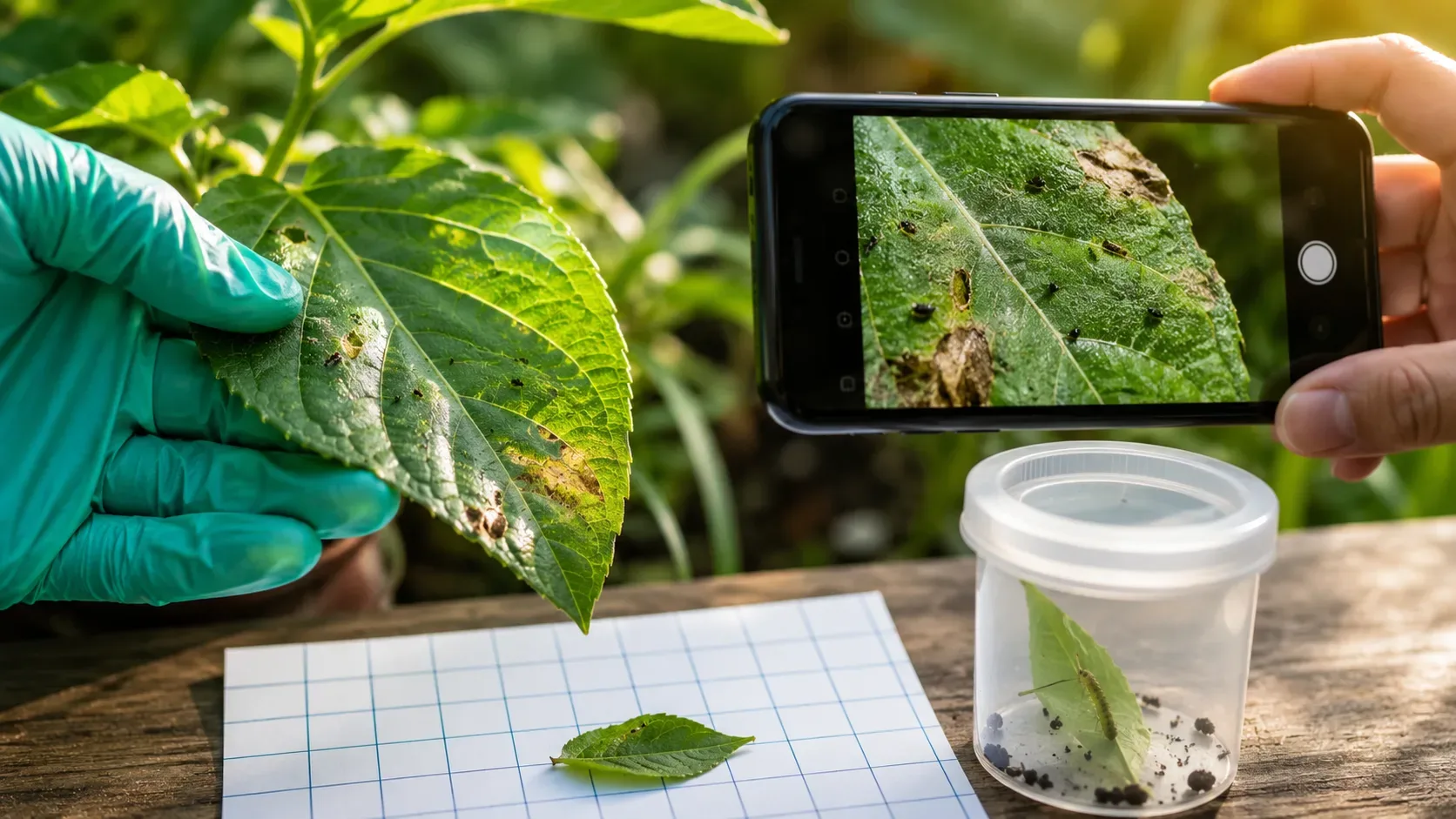
- images, when possible;
- additional information that may help with the analysis;
- contact details of the person communicating.
Upon receipt, the technical team evaluates the information and can activate surveillance units for on-site verification, official sample collection and other necessary procedures.
It is not necessary to destroy plants, apply products or attempt to produce confirmation yourself before notifying. The role of whoever identifies the suspicious condition is to record what was observed and report it to the official service. Measures that depend on diagnosis, containment or phytosanitary intervention must be defined by the competent bodies after the investigation.
The alert is on the pattern, not on an isolated sheet
The rule of thumb is simple: yellowing is a symptom; R4T is a diagnosis.
An isolated yellow leaf does not allow us to conclude that a banana plant is infected by tropical race 4. An unusual and progressive condition, compatible with Fusarium wilt and observed in a context that raises suspicion of an absent pest, deserves to be reported.
As Foc R4T remains officially absent from Brazil, surveillance depends precisely on suspicions reaching the defense service before anyone tries to transform them into certainties. To report, it is not necessary to prove the disease: it is necessary to clearly inform what was observed.