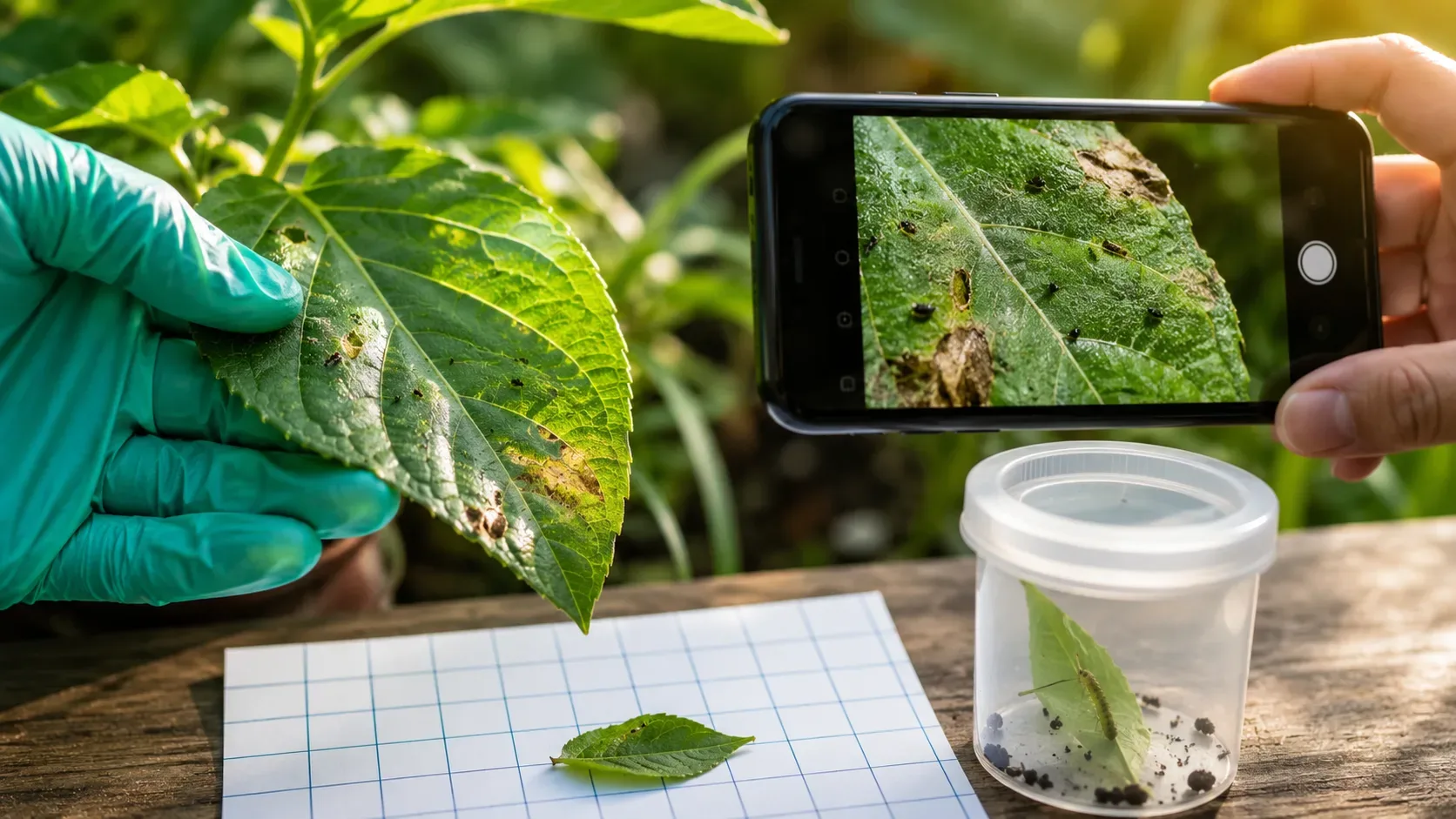
Not every spotted leaf, larvae or insect found in the garden represents an emergency. But it is also not safe to conclude, just by appearance, that the problem is a common pest and immediately apply detergent, oil, insecticide or another recipe found on the internet.
To identify a plant pest, the first step is not to choose a product. It involves preserving information: photographing the organism and symptoms, recording the host plant, noting the location and date, reducing the movement of material and checking whether the case presents signs that justify official communication.
The Ministry of Agriculture and Livestock, MAPA, informs that unknown or unusual symptoms, exotic organisms and signs of possible introduction of a pest that does not occur in the region or country can be reported. It is not necessary to obtain technical confirmation before submitting the suspicion. The official page with these guidelines was updated on July 15, 2026.
The rule of thumb is simple: not all pests call for poison — some call for evidence and notification.
Why controlling first can be a mistake
A hasty intervention can kill or remove the organism that needs to be identified, alter the plant's spots and lesions, spread contaminated material during pruning, or just temporarily hide a problem that will continue to advance.
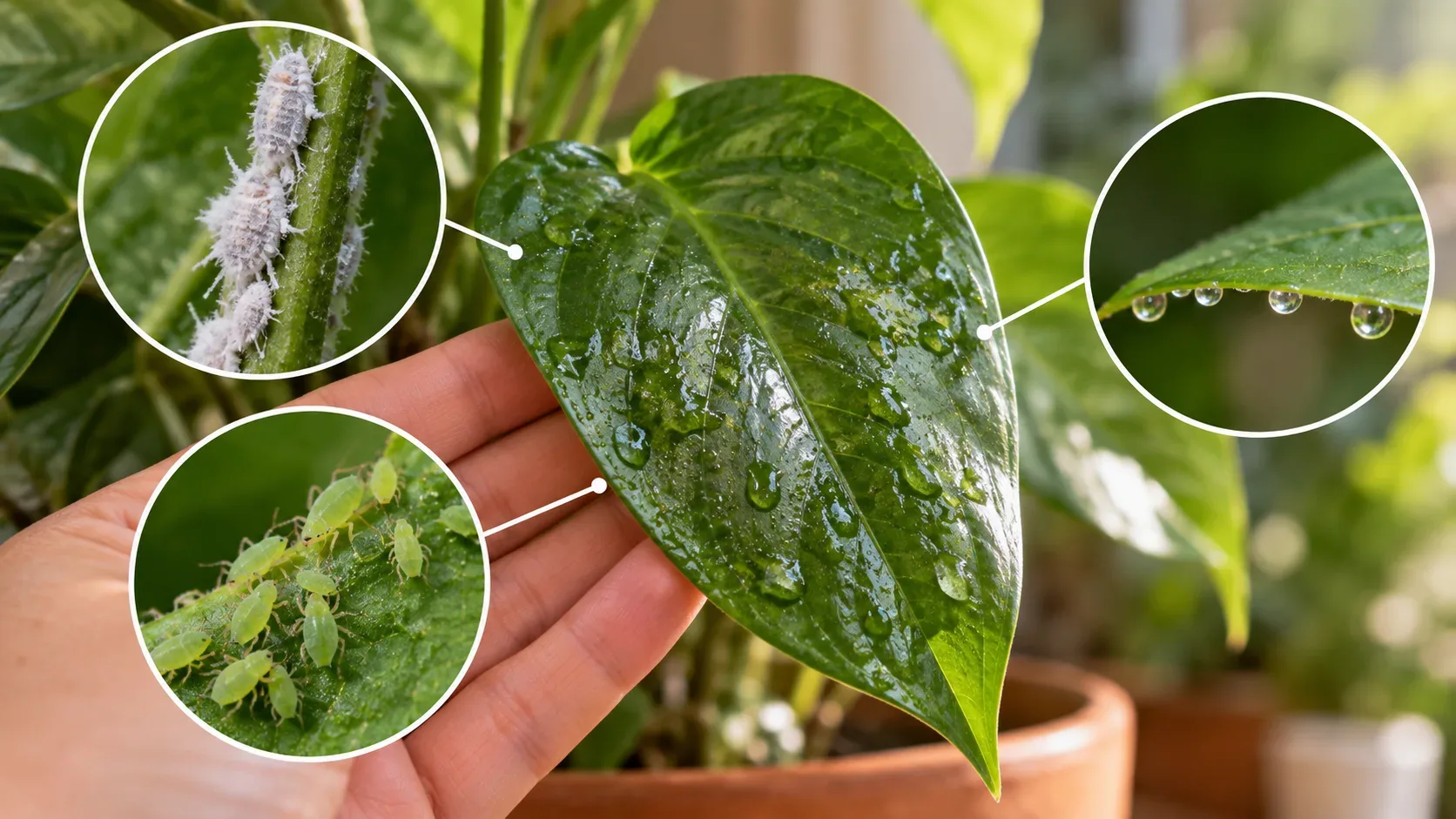
There is also the risk of confusing a pest with a beneficial organism. Integrated management considers the correct identification, the number of organisms, the damage observed, the condition of the crop and the presence of natural enemies before deciding on control. Some insects found on plants are predators or parasitoids of pests and can be harmed by indiscriminate spraying.
The problem becomes even more important when the organism can be quarantined, exotic or emerging. In these situations, the investigation, sample collection and possible movement restrictions must be conducted or guided by the responsible bodies.
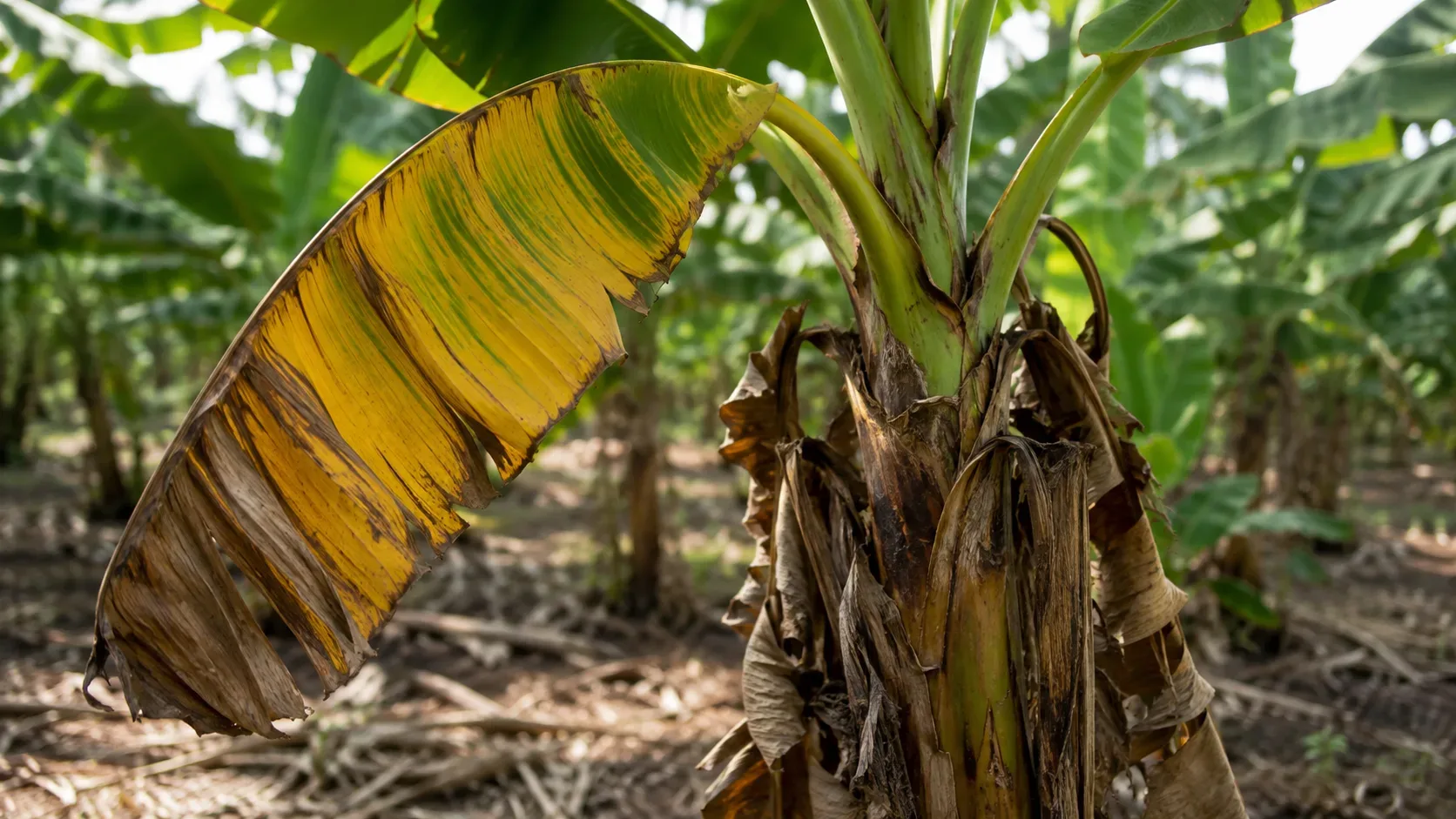
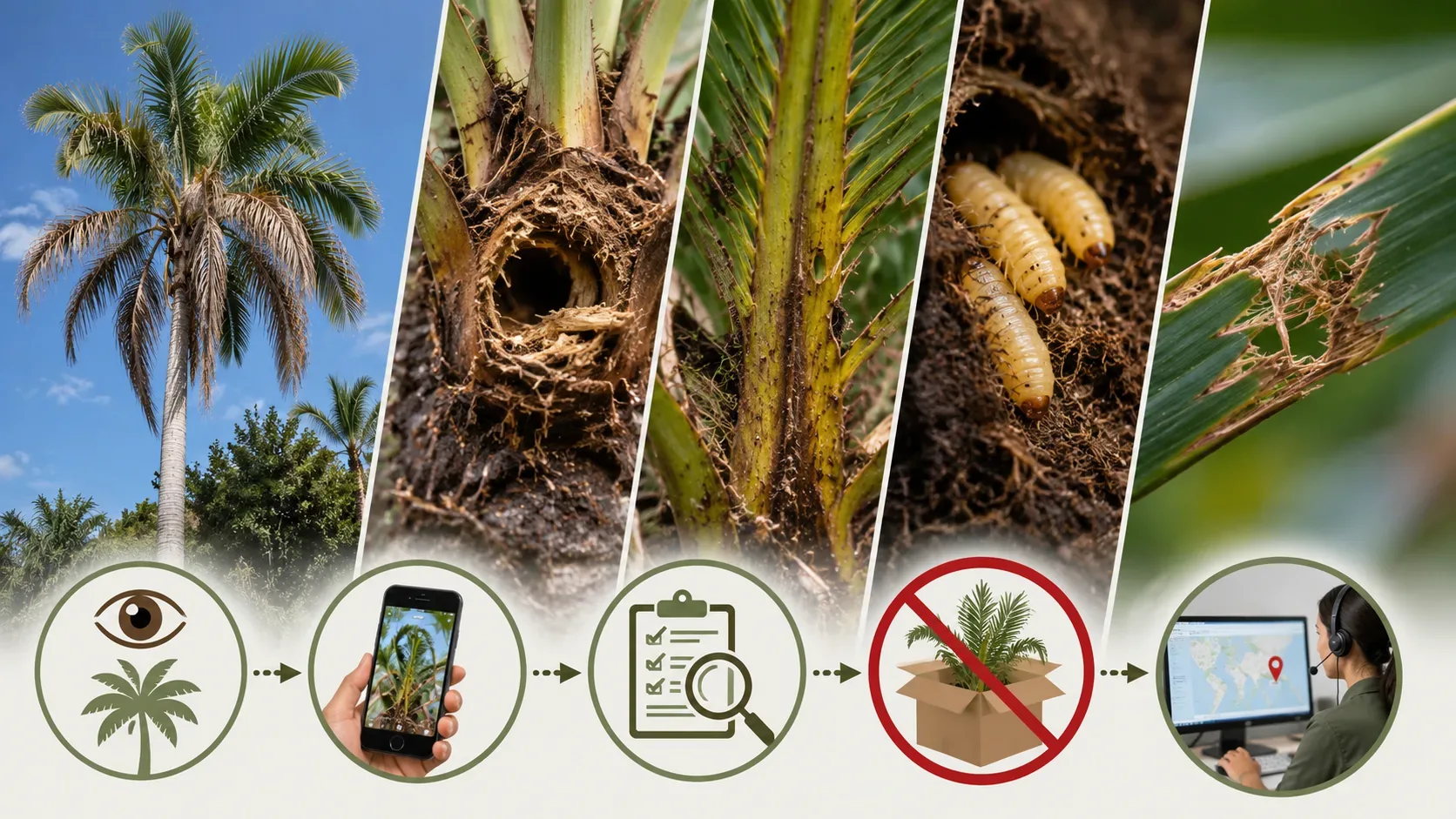
In the consultation carried out on August 5, 2026, MAPA's phytosanitary alerts page highlighted two threats: the fungus known as FOC R4T, or tropical Panama disease race 4, and the red palm weevil. The page had been updated on July 10, 2026.
The two examples show why there is no universal recipe. FOC R4T is a soil fungus for which MAPA reports that there is no fully effective chemical or biological control; its prevention depends, among other actions, on controlling the movement of soil, seedlings, tools and equipment. The red weevil develops its larvae inside palm trees, and the transport of infested seedlings is one of the main ways of spreading it.
The protocol before trying to identify or control
The following protocol is a precautionary measure. It does not replace an official quarantine, phytosanitary inspection or laboratory diagnosis.
1. Stop pruning, spraying and moving places
Before applying any substance, pruning the affected area, washing the plant or discarding leaves, make the initial record.
In pots, do not take the plant to another garden, nursery, property or residence. In fixed plants, avoid removing branches, fruits, seeds, soil or parts of the trunk. Do not share seedlings, cuttings or tools used on site.
For the specific suspicion of the red weevil, for example, MAPA expressly advises not to manipulate the plant or transport the suspected material. As a general precaution, this course of action is also appropriate while an unusual occurrence awaits evaluation.
If there is an immediate risk to people — such as the possibility of a bite, allergy or contact with an unknown substance — keep your distance and prioritize safety. Do not attempt to capture the organism.
2. Photograph the entire plant and the environment
Start with wide images:
- whole plant;
- pot, bed, plot or area where it is;
- neighboring plants, especially those showing symptoms;
- soil, substrate or base of the trunk;
- label, packaging or proof of origin of the seedling, when available.
The big picture helps distinguish a localized problem from a pattern that affects multiple plants.
Avoid filters, color editing or excessive cropping. Keep the original files, as they preserve the date, resolution and other data that may be useful.
3. Record symptoms closely
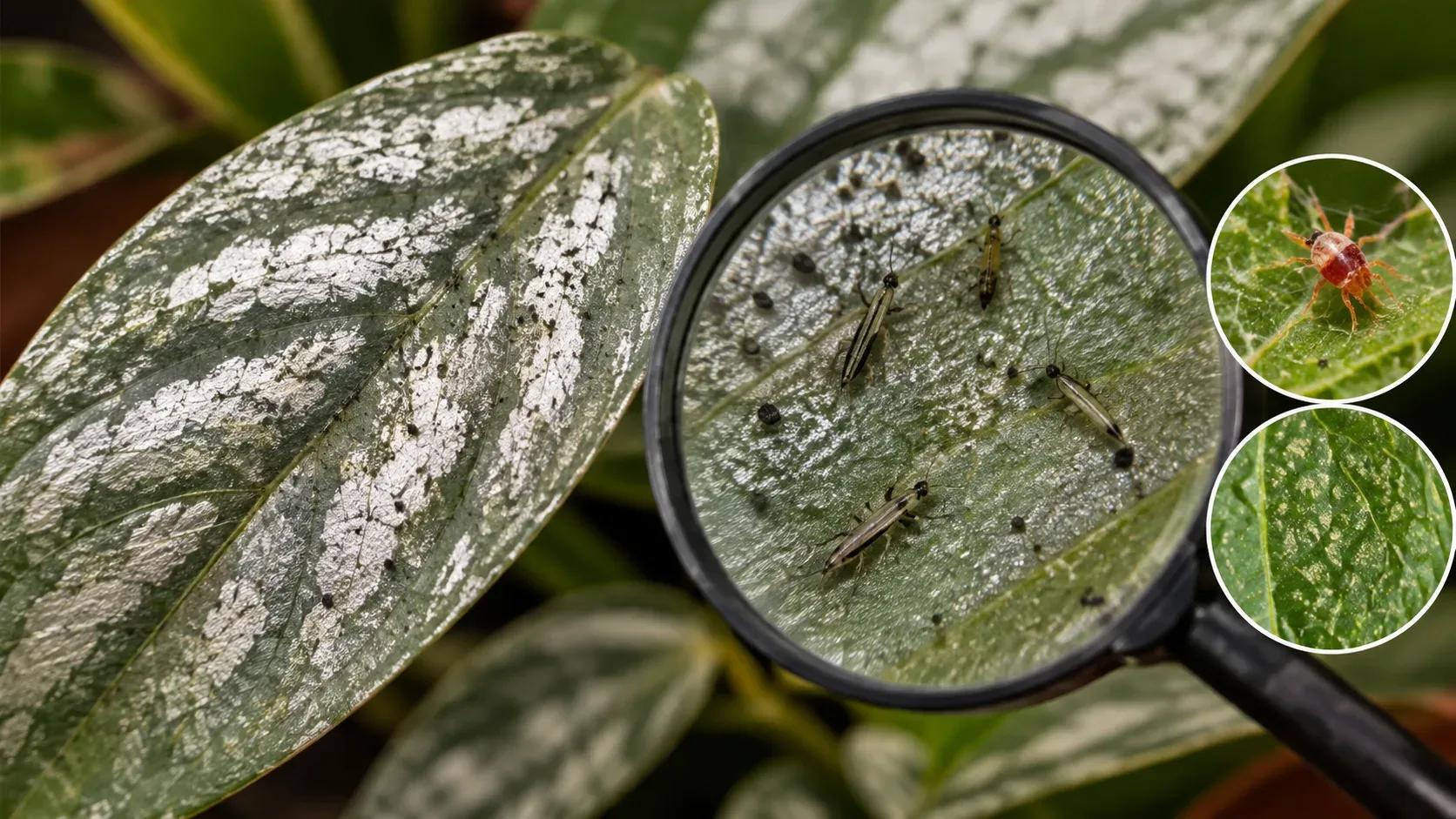
Photograph the affected parts and also an apparently healthy part for comparison.
In sheets, record:
- upper face;
- lower face;
- edges;
- ribs;
- point of connection with the petiole;
- transition between healthy tissue and injured tissue.
In stems and trunks, look for holes, galleries, cracks, exudation, sawdust, chewed fibers, rot or color changes. In fruits and flowers, photograph deformations, perforations, stains, premature falling and the presence of eggs, larvae or fungus-like structures.
Use a ruler, graph paper or other object of known size next to the organism, without touching it. An unscaled photograph can make an insect measuring just a few millimeters appear much larger.
MAPA requests images whenever possible, in addition to a description of the problem, location, municipality and date of observation. Official plant identification services also use photos and videos accompanied by property identification and description of symptoms for an initial assessment.
4. Photograph the organism from more than one angle
When this can be done without touching or disturbing the organism, record:
- top view;
- side view;
- head and antennae;
- wings;
- legs;
- design or coloring of the body;
- eggs, larvae, pupae or cocoons;
- exact position in which it was found.
A short video can help when walking, flying or eating is relevant.
Do not crush the copy to get an image. Also do not place an unknown organism in a container and transport it to another location without guidance.
5. Note the context of the occurrence
Photographs are much more useful when accompanied by this information:
- popular name and, if known with certainty, scientific name of the plant;
- part of the affected plant;
- municipality, federation unit and approximate location;
- date and time of observation;
- number of affected plants;
- approximate number of organisms;
- first date on which symptoms were noticed;
- apparent speed of advancement;
- origin of the seedling, seed, substrate or plant material;
- recent trips or movements of the plant;
- products applied in the previous days or weeks;
- changes in irrigation, fertilization, light or temperature;
- presence of the same signal in neighboring plants;
- existence of commercial cultivation, nursery or agricultural area nearby.
Do not make up the name of the organism. “Dark beetle measuring approximately 12 millimeters” is more useful information than a taxonomic identification made solely by visual similarity.
How to carry out precautionary isolation
Isolation serves to reduce contact and movement while the case is evaluated. It does not mean that the plant is officially quarantined.
When the plant is in a pot
If it is possible to move it without knocking over soil, leaves or organisms:
- move the pot away from other plants;
- place it in an area protected from wind and circulation;
- do not let leaves or drainage water reach other pots;
- suspend exchanges, donations and removal of seedlings;
- reserve exclusive tools for this plant;
- keep children and animals away.
Do not take the plant to another property. The goal is to reduce exposure within the same location, not transfer the problem.
When the plant is in the ground
Avoid walking, weeding, mowing or pruning in the immediate surrounding area. Mark the point and prevent equipment, boots, tools or plant residue from being taken to another area until the suspicion is clarified.
Some pests can be spread by plants, soil, substrates, tools or vehicles. The pathways vary depending on the organism; Therefore, biosecurity procedures should not be improvised as if they were equally applicable to any pest.
What to do with fallen leaves and parts
Do not place the material in the compost bin, in the collective green waste or in another place. Also do not burn, bury or chemically treat yourself.
Keep it in place without unnecessary handling until instructed. If an authority or laboratory requests a sample, follow the collection, packaging and transportation instructions exactly. MAPA itself informs that its team can activate surveillance units for field verification and sample collection.
When to observe, seek diagnosis or report
This screening is not an official classification, but it helps you choose your next step.
| Situation observed | Initial behavior |
|---|---|
| Known problem, recurrent in the plant and not uncommonly disseminated | Record and seek routine diagnosis before control |
| Known insect, no relevant damage and possible natural enemies nearby | Monitor and prevent automatic spraying |
| Unknown symptom, very different from usual or with rapid progression | Photograph, isolate cautiously and seek technical assessment |
| Organism that appears exotic or does not normally occur in the region | Preserve evidence and notify |
| Plant, seedling, fruit or substrate recently brought from another country or region | Do not move again and communicate the origin to the evaluator |
| Several plants or species affected in a short interval | Register distribution and consider notification |
| Similarity to an official phytosanitary alert | Do not try to confirm it yourself; notify the suspect |
| Exposure of person or animal to chemical product | Stop use and seek toxicological advice or health care |
According to MAPA, unknown or unusual symptoms, exotic organisms and signs of possible introduction of pests that do not occur in the region or in Brazil must be reported. The channel does not require prior technical confirmation.
A phytosanitary alert corresponds to a suspicion, indication or initial detection that requires investigation and rapid communication. A phytosanitary emergency, in turn, involves a confirmed occurrence with potential for relevant damage and may require containment, eradication, movement restrictions, inspections and official sample collection.
How to report a suspicion to MAPA
The suspicion can be forwarded to alertapragas@agro.gov.br. It is also possible to look for a Federal Superintendency of Agriculture or the state plant health defense agency.
Include in message:
- objective description of the problem;
- affected plant or crop;
- city, state and location of observation;
- date the signal was found;
- photographs and videos;
- known origin of the plant or material;
- approximate number of plants affected;
- products already applied;
- your contact details.
A functional message subject would be:
Suspected pest — [plant] — [municipality/UF] — [data]
In the body, avoid declaring that this is a “new plague in Brazil”. State that it is a suspicion and describe what was actually observed. Confirmation depends on technical analysis.
Description template
Host plant:
Location of observation:
Date:
Affected part:
Description of organism or symptom:
Number of plants affected:
Origin of seedling or plant material:
Products applied previously:
Attached files:
Name and contact of communicator:
All messages sent to the channel are evaluated by MAPA's technical team, which may request additional information or trigger surveillance for inspection and collection.
Limits for homemade recipes and chemicals
Do not apply a mixture just because its ingredients are common at home. Detergents, disinfectants, alcohol, bleach, household oils and acids do not automatically become safe for plants, people, animals or beneficial organisms.
Anvisa warns that the combination of cleaning products can generate toxic substances and recommends using products regulated according to the manufacturer's instructions, without reproducing “mixtures” published on social media.
In addition to the risk of exposure, a pre-registration application may:
- change the appearance of lesions;
- remove secretions, spores or residues;
- kill the organism that would be photographed;
- cause a new burn or stain;
- make it difficult to distinguish between the original damage and phytotoxicity;
- target predators and parasitoids that would help with natural control.
When a chemical control is actually indicated, confirm the identity of the problem, the plant or crop treated, the environment of use, and the authorized indication for the product.
AGROFIT is MAPA's public database that brings together registered phytosanitary products and allows consultation by trademark, active ingredient, crop, pest, toxicological classification and environmental classification. The existence of a product in the base does not mean that it can be used on any plant or against any organism: the specific indication and instructions on the label and leaflet must be respected.
The evaluation of pesticides considers risks for operators, workers, residents and people who circulate in treated areas. Therefore, agricultural cases, nurseries, food crops or extensive infestations must be evaluated by an agronomist or other legally qualified professional.
If poisoning is suspected, stop exposure and seek assistance. The Poison Hotline answers the number 0800-722-6001 and forwards the call to a toxicological information and assistance center. Have the packaging or label of the product used on hand.
Apps help, but do not confirm a new plague
Image recognition tools can suggest similar groups, families, or species. They are useful for organizing hypotheses and finding comparison guides, but they are not a substitute:
- analysis of microscopic structures;
- taxonomic comparison;
- evaluation of plant symptoms;
- history and location of the occurrence;
- laboratory tests;
- confirmation by phytosanitary authority.
Use the results of an application as a clue, not as a report. A photograph can hide essential characteristics or produce wrong identification due to similarity in color and shape.
Checklist to save
Before attempting to control an unusual organism, confirm that you:
- photographed the entire plant;
- recorded the front and back of the pages;
- made approximate images with scale;
- photographed the organism from more than one angle;
- noted host plant, municipality and date;
- recorded the origin of the seedling or substrate;
- checked how many plants are affected;
- avoided pruning, spraying and disposal;
- reduced movement of plant and tools;
- checked the phytosanitary alerts;
- sought diagnosis or notification according to risk;
- waited for guidance before collecting or transporting samples.
What to do now
Save this protocol to use before any intervention. In case of relevant suspicion, consult the current phytosanitary alerts and forward the evidence to the official MAPA channel.
To delve deeper into the topic, see also the articles “Red Palm Weevil” and “Plant Suffering in Winter”. The first helps to recognize a specific quarantine alert; the second contributes to separating symptoms caused by cold and management of signs caused by organisms.