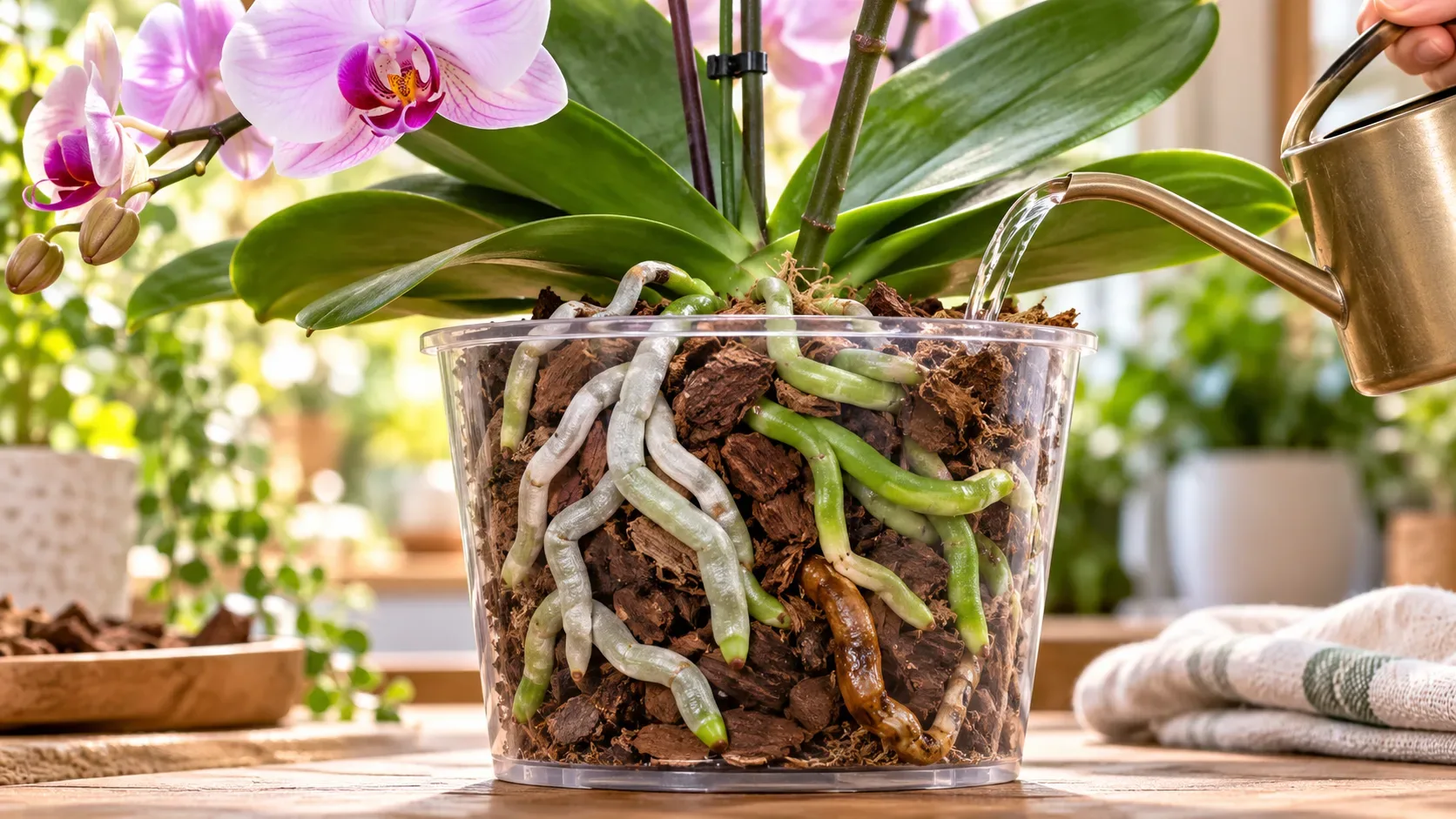
Silver roots and green roots can both be normal signs in an orchid, especially in Phalaenopsis grown in a clear pot. The color change occurs because the spongy layer covering many orchid roots, called velamen, changes appearance as it absorbs water. When dry, it tends to look white, gray, or silver; after watering, healthy roots may turn green. Color, however, should not be used by itself to decide when to water again or to diagnose rot.
The safest method is to combine signals: look at the visible roots, check whether the potting medium is still moist, feel the weight of the pot, and assess the texture of any suspicious roots. The University of Illinois Extension explains that, in clear pots, roots that looked whitish or gray can turn green after they become hydrated. The American Orchid Society recommends watering orchids as they approach dryness rather than following a fixed calendar.
What root color really tells you
In a healthy Phalaenopsis root, a silver appearance usually indicates that the outer velamen is dry. When this tissue absorbs water, it becomes more translucent and allows the green tissues underneath to show through. This makes color useful for tracking hydration, especially in clear pots where much of the root system can be seen.
But the signal has limits. An aerial root may be silver while the center of the pot is still moist. The opposite can also happen: roots touching the pot wall can stay green for a while even as parts of the medium begin to dry. So the question should not be only “is the root green or silver?” but “does the full set of signals show that the pot is close to drying out?”
When silver roots suggest it is time to water
Mostly silver roots are a useful sign that the plant has lost some of the available moisture around them, but the decision becomes more reliable when other indicators point in the same direction. The American Orchid Society lists practical checks such as observing the surface of the potting mix, noticing whether the pot feels lighter, and testing moisture inside the medium with a finger or a wooden skewer.
- Visible roots are silver or light gray: a sign of dry velamen, particularly useful in clear pots.
- The medium is nearly dry: bark usually dries faster; sphagnum moss can retain water longer.
- The pot feels lighter: comparing its weight just after watering with its weight several days later helps reveal water loss.
- No standing water in a decorative pot or saucer: orchids need drainage and air around their roots.
For Phalaenopsis, there is no need to wait for extreme dryness. The Missouri Botanical Garden notes that this group lacks water-storing pseudobulbs and should not remain completely dry for long periods. At the same time, the pot should not stay waterlogged.
When green roots mean it is better to wait
If most roots inside the pot are still green and the medium remains moist, there is usually no reason to add more water. Watering again before enough moisture has been lost extends the period during which the root system has poor aeration.
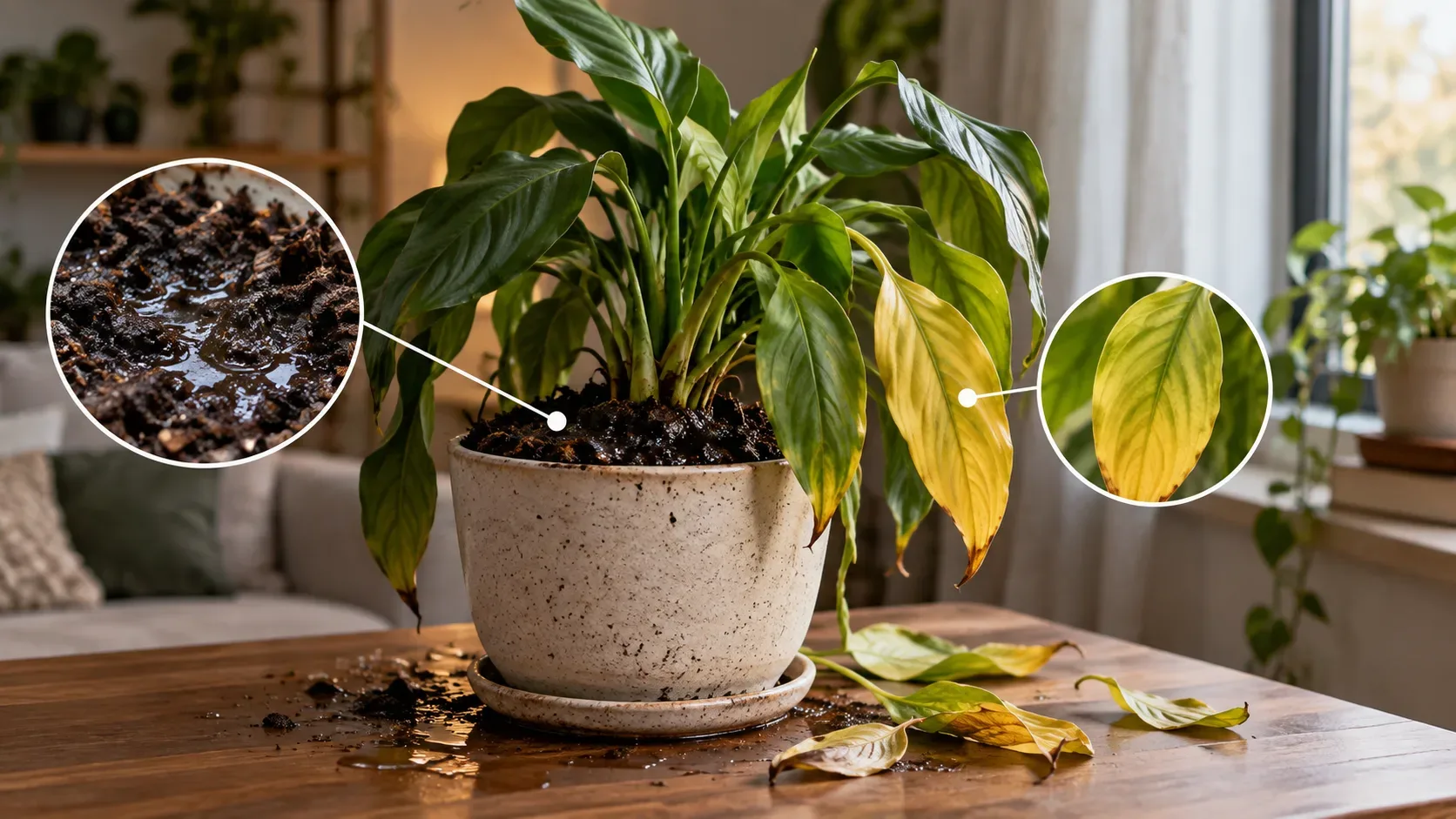
This matters because “overwatering” an indoor orchid does not simply mean applying a large amount of water at one time. The main problem is keeping the medium wet for too long. A thorough watering can be appropriate if the pot drains freely and then gradually dries. In contrast, small repeated amounts added to a compact medium can keep the roots continuously wet.
A silver root is not a rotten root
Rot is assessed mainly by texture and structural integrity, not by color alone. The American Orchid Society describes mushy or hollow roots as a sign of a cultural problem associated with media that stay wet too long. In another guide, the organization identifies brown, mushy roots as typical of roots damaged by excessive moisture.
A healthy dry root may be silver, firm, and still hold its shape. A rotten root tends to become brown or dark, soft, waterlogged, hollow, or to lose its outer layer when touched. There are also cases in which a darkened root remains firm; that should not automatically be treated as advanced rot. Diagnosis improves when texture, smell, medium condition, and progression of damage are considered together.
Practical matrix: water, wait, or investigate
| Combined signs | Likely interpretation | Most prudent action |
|---|---|---|
| Silver, firm roots; medium nearly dry; pot feels light | Plant is approaching watering point | Water thoroughly and let all excess water drain |
| Green, firm roots; medium still moist; pot feels heavy | Moisture is still available | Wait and check again later |
| Some aerial roots are silver, but the inside of the pot is moist | Uneven drying | Do not use one aerial root alone as the trigger to water |
| Brown, mushy, or hollow roots; medium constantly wet | Possible root loss or rot | Reduce continuous moisture and assess whether repotting is needed |
| Wilted leaves with brown, mushy roots | Dehydration caused by root loss, not necessarily by too little watering | Inspect roots before increasing watering frequency |
How to water without suffocating the roots
When the signs indicate that it is time to water, soak the medium thoroughly with room-temperature water and let the excess run freely out of the drainage holes. The goal is to hydrate the roots and medium and then allow air to return as the pot dries. The Missouri Botanical Garden recommends complete drainage and warns against leaving the bottom of the pot standing in accumulated water.
Frequency can vary greatly between homes and seasons. Temperature, ventilation, air humidity, pot size, root mass, and potting medium all change drying speed. Coarse bark usually loses water more quickly than compact sphagnum moss. That is why a rule such as “water every week” can work in one environment and fail in another.
Wilted leaves do not prove the orchid needs more water
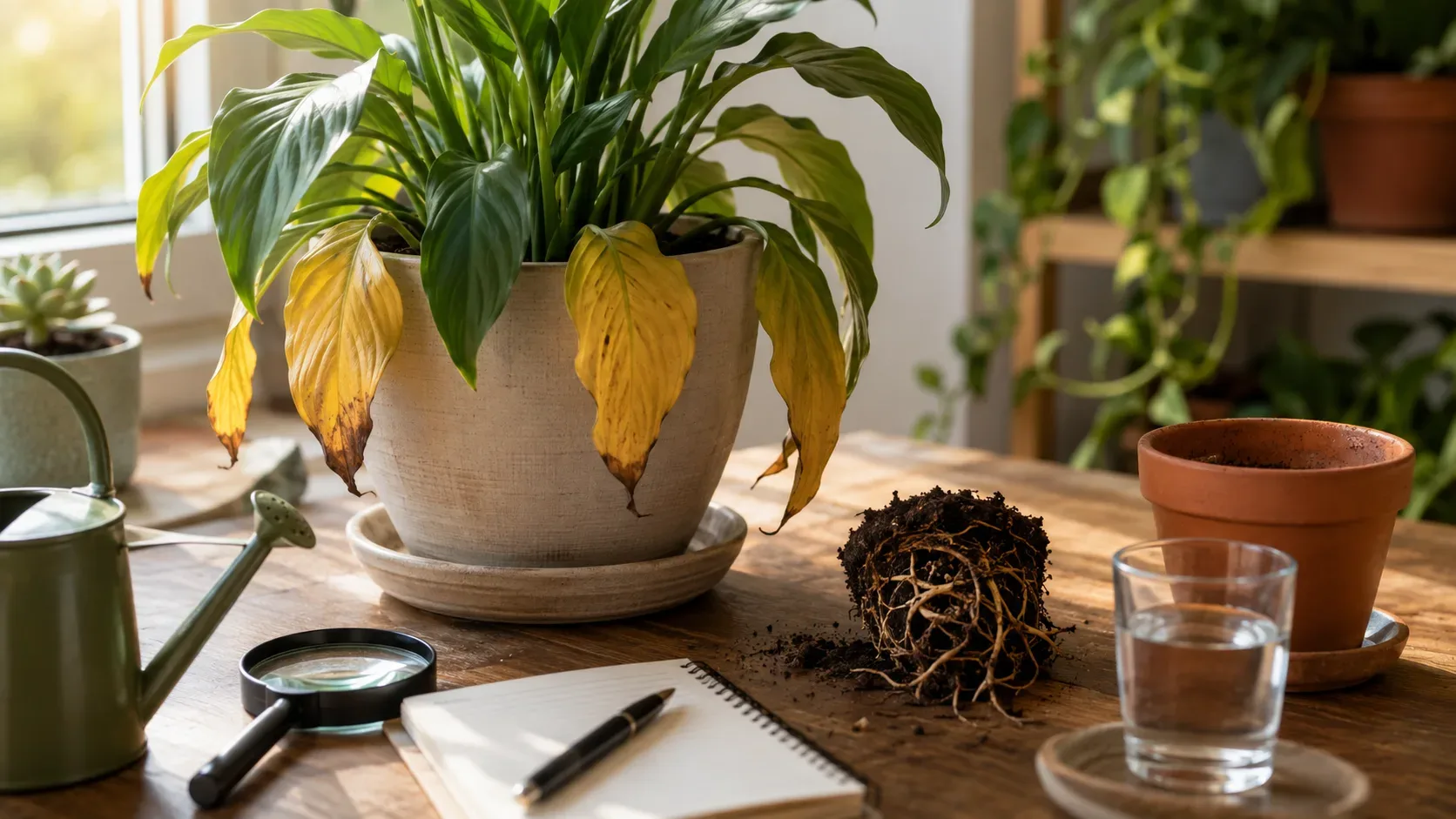
Soft or wrinkled leaves show that the plant is not receiving enough water in its tissues, but they do not reveal why. An underwatered orchid may have healthy roots and simply be dry. An orchid kept too wet may lose roots to rot and, even while surrounded by moisture, become unable to absorb water. The American Orchid Society stresses that symptoms of overwatering and underwatering can look similar, which makes root inspection essential.
When it is worth taking the plant out of the pot
You do not need to unpot the orchid every time there is a watering question. A full inspection is more appropriate when there are persistent signs of root loss, such as visibly mushy or hollow roots, severely degraded medium, an unpleasant smell, leaves that continue to wilt despite adequate moisture, or a major reduction in functional roots.
If rot is present, the underlying problem has to be corrected. The American Orchid Society guide to root rots links poor drainage, deteriorated potting media, and prolonged excessive moisture with root disease. During recovery, the goal is to preserve healthy tissue, use an airy medium, and restore a cycle in which the roots receive both water and oxygen.
A practical rule to avoid confusing color with disease
Use color as a hydration indicator, not as a diagnosis by itself. A silver, firm root is usually compatible with normal drying. A green, firm root usually indicates recent hydration or moisture still available. A brown, mushy, hollow, or decomposing root calls for investigation. Before watering, confirm at least one additional sign, such as nearly dry medium or a lighter pot. This combination reduces both the risk of letting the plant become too dry and the risk of keeping the roots wet for too long.