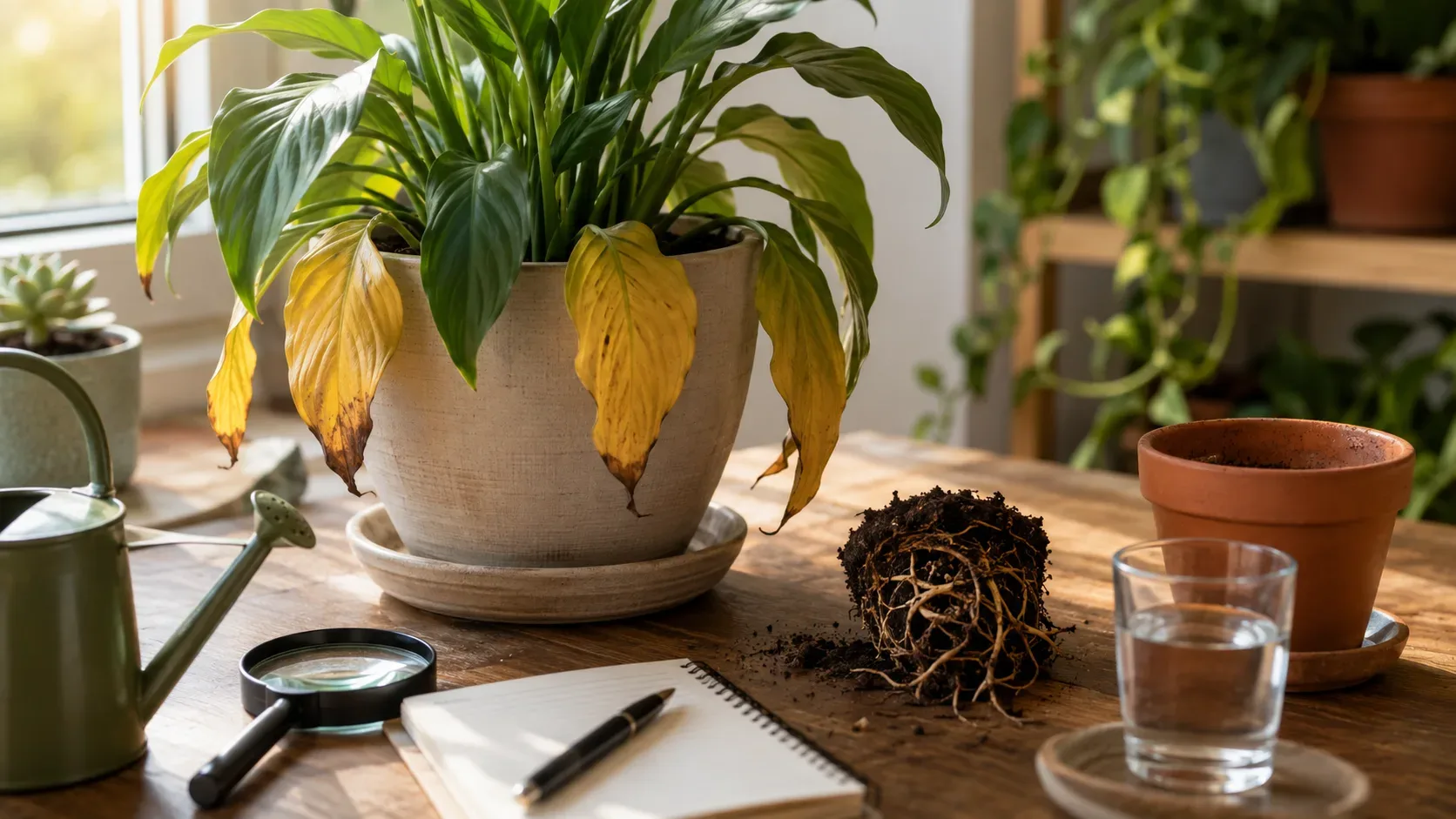
A plant that yellows, withers or loses leaves in winter is not necessarily “cold” — much less asking for more water. Low light, waterlogging, thermal shock, insufficient drainage and even two or more of these factors at the same time can produce similar symptoms.
The safest rule is not to treat “yellow leaf” as a single disease. Before watering, fertilizing or changing the pot, observe when the problem started, what the substrate is like, where the light is coming from and what temperatures the plant was exposed to. Horticultural sources highlight that yellowing and leaf drop can be associated with both low light and low temperatures and overwatering, poor drainage and root problems.
Why “winter” does not mean the same condition throughout Brazil
The winter of 2026 began on June 21st and ends on September 22nd. According to the National Institute of Meteorology, the season tends to be less rainy in the Southeast, Central-West and parts of the North and Northeast, while the northwest of the North Region, the east of the Northeast and parts of the South may concentrate more precipitation. Cold air masses can also cause frosts in the South, Southeast and Mato Grosso do Sul, in addition to episodes of cold in areas of the Center-West and the Amazon.
The August scenario reinforces that a national irrigation recommendation would be inadequate. In the forecast published on July 31, 2026, Inmet indicated above-average rainfall in areas of the North, Central-West and Rio Grande do Sul, but below-average volumes in parts of the North, Northeast and Central-South of the country. At the same time, temperatures tend to remain above average in much of Brazil.
This means that two plants of the same species can dry at very different rates. A vase exposed to the dry wind of a balcony in the Midwest can lose water quickly, while another, in a cold, humid and dimly lit environment in the South, can remain wet for many days.
Regional forecast provides context but is not a substitute for pot observation. Even when the monthly average is above normal, a short burst of cold air or a night by a frosty window can cause damage to sensitive plants.
Tolerance also varies between species. In a technical document from Embrapa Temperate Climate, ornamental and landscape plants are classified differently according to their resistance to frost, their need for light and their tolerance to moist or waterlogged soils. The strelitzia, for example, appears to be frost tolerant, while the jaguar ear is described as sensitive to intense frosts. These examples do not serve as a rule for all plants, but they demonstrate why the species needs to be part of the diagnosis.
Comparative table: cold, too much water or too little light?
| What to watch out for | Cold damage | Excess water | Poor light |
|---|---|---|---|
| How the problem usually starts | Suddenly, after a cold night, draft, transportation or contact with cold glass | Progressively, after frequent watering or water remaining in the cachepô | Gradually, after changing location, reducing day length or shading |
| Appearance of the leaves | Leaves fallen, darkened, browned or blackened; shoots may lose firmness | Yellowing, falling of new and old leaves, wilting even when the soil is moist | Leaves smaller, pale or yellowish; weak and spaced growth |
| Standard on plan | More intense on the side facing the window, door or cold wind | Can affect the entire plant, starting with the most fragile parts | Plant inclined towards the light source; elongated stems and larger internodes |
| Substrate condition | It can be dry, wet or normal; the cold does not depend on the vase being wet | Remains damp for many days, may have an unpleasant odor or accumulated water | Dries more slowly as growth and water consumption decrease |
| Root condition | May remain firm if damage is restricted to the aerial part | Roots may become brown, brittle, soft, or have a decaying odor | Generally firm, except when low light has already favored excessive watering |
| Most useful tip | Coincidence between the onset of symptoms and a cold event | Heavy pot, deep moist substrate and poor drainage | Stretched growth, leaning towards the window and lack of healthy shoots |
| First fix | Stabilize the temperature and move the plant away from cold drafts | Suspend new watering until moisture and drainage are assessed | Gradually transfer to species-compatible light |
The table must be interpreted as a set of evidence, not as an isolated test. The cold can cause leaf fall and browning; excess water can cause yellowing, wilting and deteriorated roots; and low light often shows up as weak growth, small leaves, yellowing and elongation of stems.
Diagnose before watering again
1. Reconstruct what happened in the last few days
Write down the approximate date the leaves started changing and look for an earlier event:
- the plant was taken into the house;
- spent a night on a balcony or laundry area;
- stood against a window;
- there was a sudden drop in temperature;
- changed room;
- a curtain began to block the light;
- watering frequency remained the same as in summer;
- the vase was placed inside a cachepot without drainage.
Sudden symptoms point more to environmental change or thermal shock. Problems that progress slowly, accompanied by consistently wet substrate, make excess water more likely. Elongated growth and persistent tilt toward the window favor the low-light hypothesis.
2. Check moisture beyond the surface
The top layer may be dry while the center of the root ball remains saturated. Before adding more water:
- touch the substrate a few centimeters below the surface;
- compare the weight of the pot with the weight it presents after complete watering;
- gently insert a wooden stick into the lump and observe if it comes out moist and with particles attached;
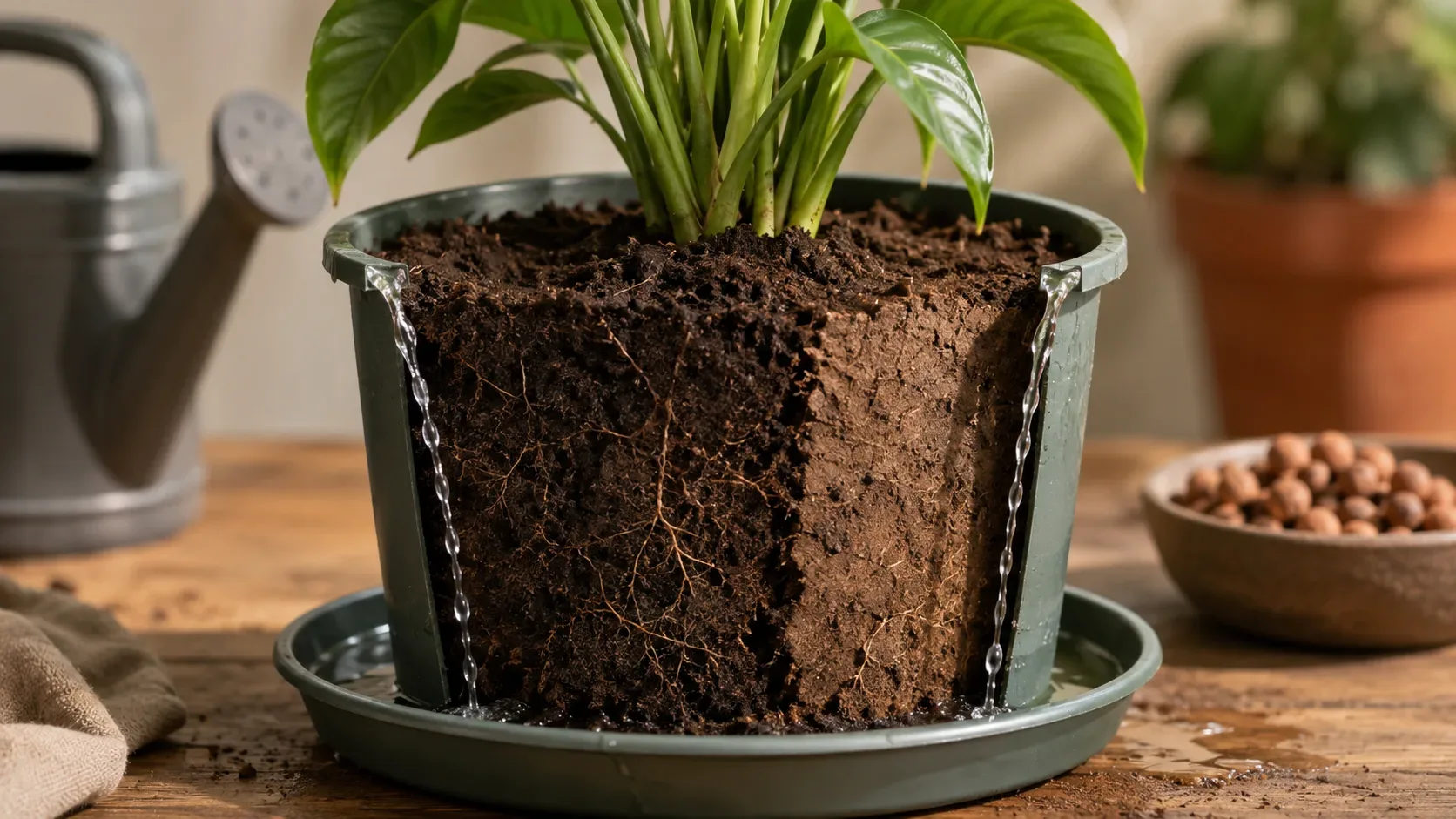
- check if there is water in the plate, cachepô or decorative packaging;
- confirm that the container has free drainage holes.
These methods are indicators, not a universal formula. The depth to which it must dry before watering depends on the species, the size of the pot, the material of the container and the type of substrate. The most important guideline is to not to water according to the calendar. University Extensions recommend evaluating humidity, pot weight, and drainage before deciding.
3. Check to see if the plant has wilted despite the wet soil
Wilting does not automatically mean lack of water. Roots kept in saturated substrate can lose the ability to supply leaves and stems, making the plant appear dry even when the pot is moist.
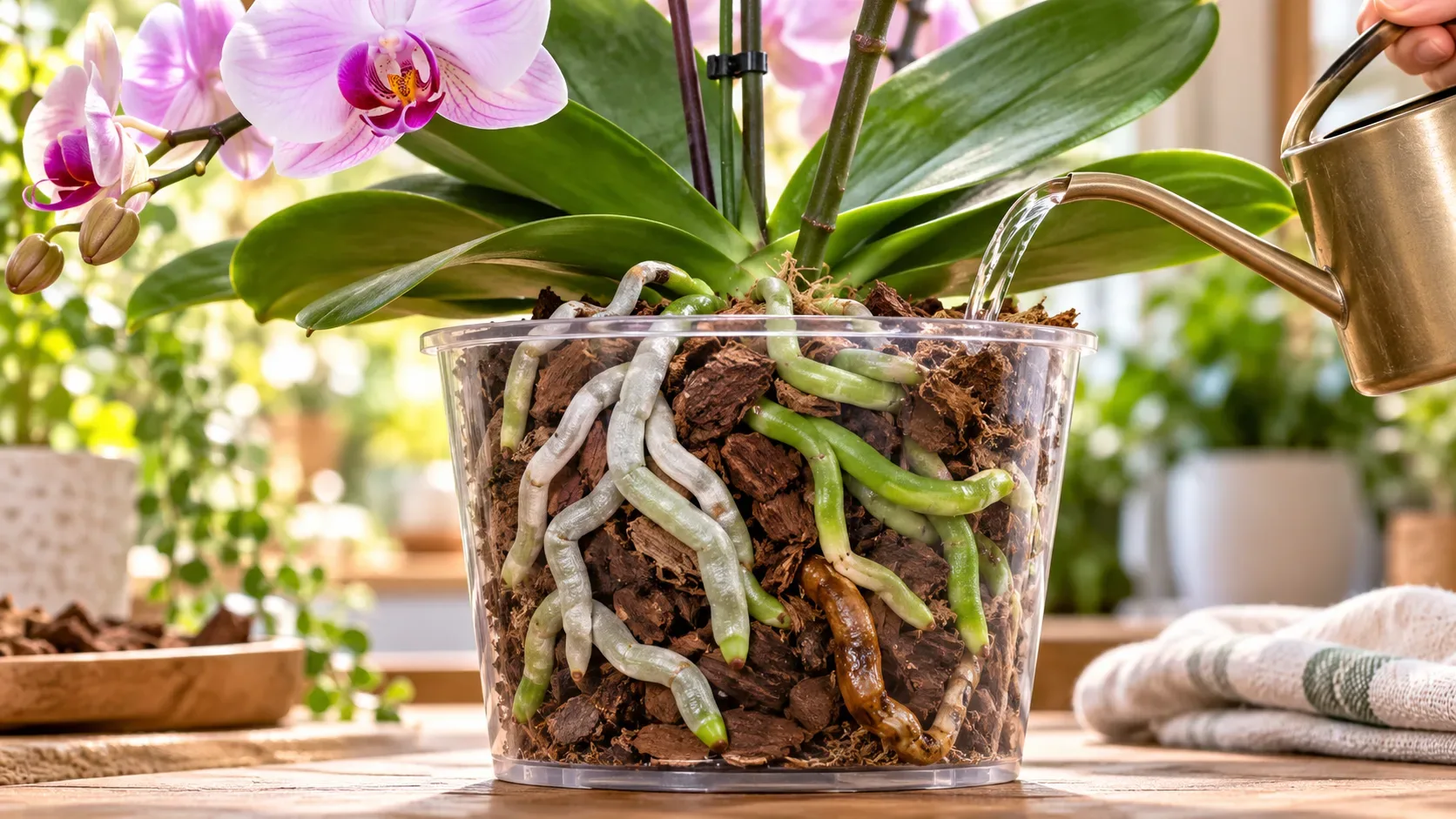
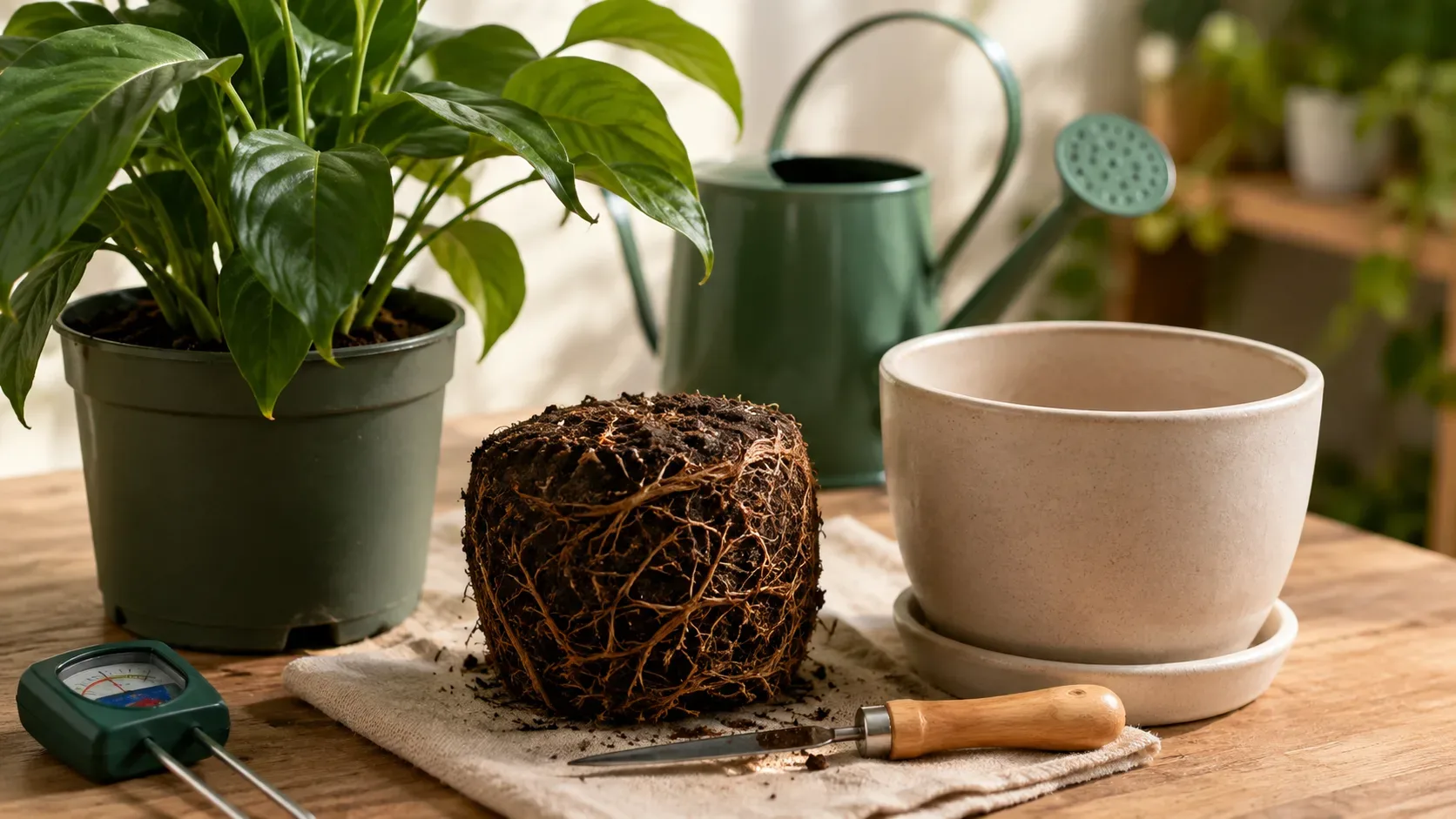
When there is persistent wilting, widespread yellowing, a softened stem base, or an unpleasant odor, remove the root ball carefully enough to inspect the roots. Healthy roots tend to be firm and flexible; Decayed roots may be brown, brittle, soft and have an odor.
The presence of small mosquitoes around the pot may also indicate a constantly damp substrate. These insects are associated with growing media rich in organic matter and kept wet, although their presence alone does not prove that root rot already exists.
4. Evaluate the light by the plant's response
A room that appears bright to a person may provide little light to a plant. Observe accumulated signals:
- new leaves smaller than old ones;
- absence or slowness of sprouting;
- long, thin stems;
- increasing distance between leaves;
- loss of color or variegation;
- tilt toward window;
- gradual leaf fall.
In winter, the position of the sun and the length of the day change. Windows that were sufficient in another season may no longer suit the plant. Reducing light also slows growth and, in many species, reduces water consumption. Therefore, too little light and too much watering often appear together.
5. Measure the microclimate, not just the city temperature
The data from the weather app does not show what happens between a curtain and the glass, next to an open door or on an exposed balcony. Place a simple thermometer near the plant and especially check the nighttime low.
Plants kept near windows, entrances and drafts may experience greater variations than the rest of the room. Sudden fluctuations in temperature can cause yellowing, wilting, browning and leaf fall.
How to act after identifying the most likely cause
When the problem is cold
Take the plant to a place protected from cold currents, without placing it against the glass at night. Keep the temperature as stable as possible and check the species' requirements before defining a new location.
Do not try to “compensate” for the cold with water or fertilizer. If the substrate is already damp, rewatering can transform localized thermal damage into a root problem.
Also, do not transfer a weakened plant directly from a dark spot to intense sunlight. Make light changes gradually to avoid a second source of stress.
When the problem is too much water
Stop watering until the substrate reaches the drying level appropriate to the species. Empty plates and containers, unclog the holes and check that the container can eliminate excess.
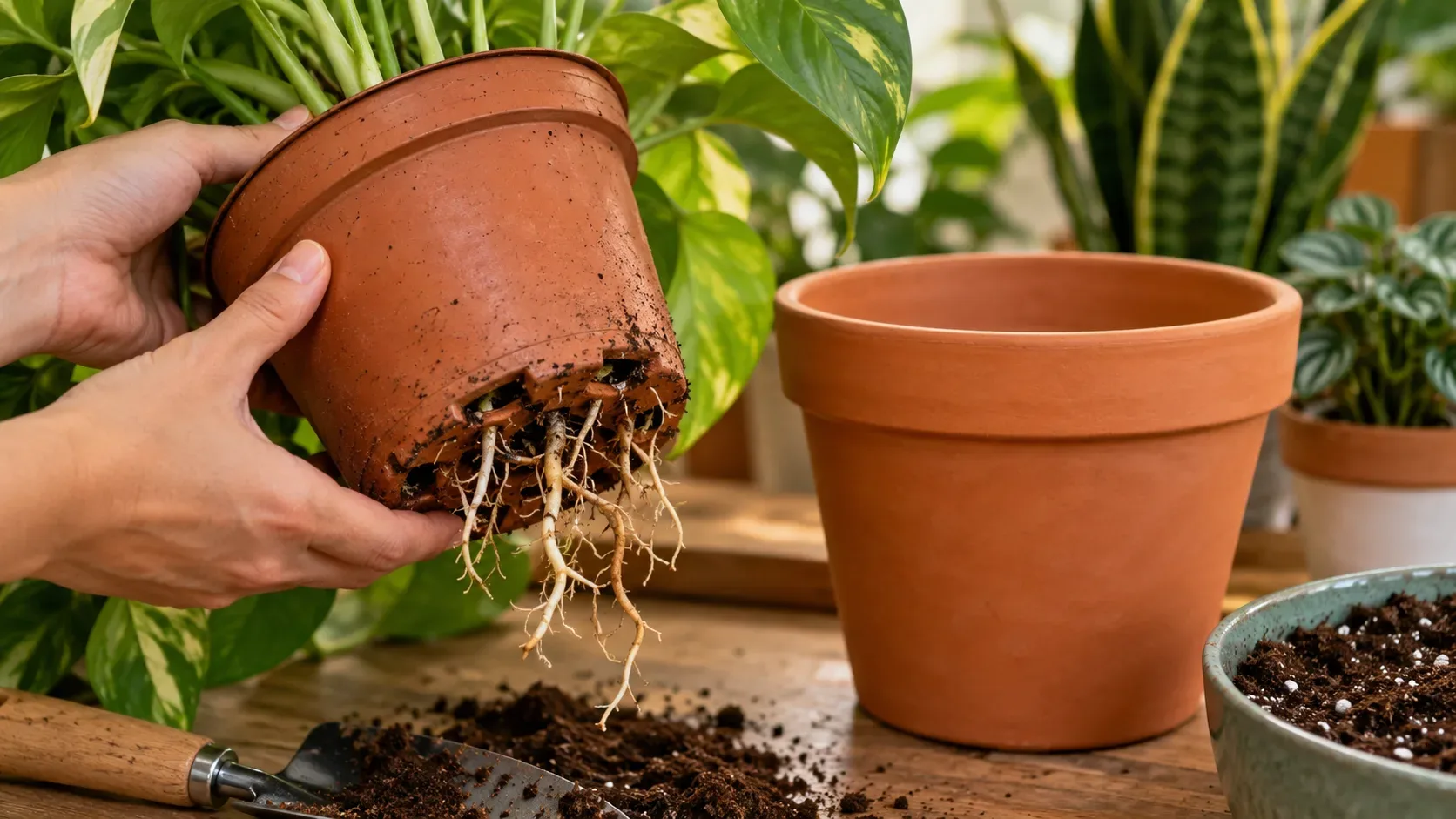
If the roots are firm and odorless, correcting the frequency and drainage may be sufficient. If there are brown, soft and deteriorated roots, remove only the compromised material and replant in a clean container, with holes and substrate appropriate to the species.
Do not apply pesticides, fungicides or homemade mixtures just because the leaves have turned yellow. A chemical product does not correct lack of light, cold, accumulated water or a pot without drainage.
When the problem is low light
Move the plant gradually to a brighter spot, respecting the species' tolerance to direct sun. Wipe excess dust off the leaves and observe the sun's path throughout the day.
When there is not enough natural light, grow lighting may be considered. The equipment, distance and time of use must follow the manufacturer's specifications and the plant's needs.
Increasing fertilizer does not replace light. In periods of slow growth, excessive fertilization can accumulate salts and worsen root damage.
Adjust the decision to the region and type of vessel
Areas subject to frost, freezing or very cold nights
Prioritize thermal protection of tropical plants, seedlings and specimens kept in small pots. The small volume of substrate makes the container adapt more quickly to changes in the environment.
Plants on balconies, hallways, garages and areas near glass deserve attention even when the average temperature of the month is above normal. Consult local alerts and forecasts from Inmet, not just the seasonal forecast.
Wet and rainy regions or periods
Vats protected from rain can also dry slowly when there is low light, humid air and little wind. Extend the interval between waterings depending on the substrate, but do not set a fixed number of days.
Cachepots, deep dishes, pots too large for the root system and compacted substrates increase the chance of prolonged water retention.
Dry, hot or windy regions
Don't automatically reduce watering just because it's winter. In areas with above-average temperatures, low humidity and wind, outdoor pots can dry out quickly. The forecast for August 2026 indicates above-average temperatures in a large part of the country and continued dry weather in areas of the Central-West, in addition to greater evaporative demand in different regions.
Under these conditions, evaluate the pot more frequently, without confusing “checking” with “watering”. Plants in small, clay, hanging or wind-exposed containers tend to require closer monitoring than large, protected pots.
Isolated yellow leaf or evolving problem?
An older leaf that turns yellow while the plant maintains firm shoots, healthy roots, and seasonal growth may be part of natural renewal. The alert increases when:
- several sheets change at the same time;
- new leaves also turn yellow;
- the stem loses firmness;
- the plant wilts in wet soil;
- dark and soft roots appear;
- damage progresses even after environmental correction;
- there are spots with halos, webs, sticky discharge, or insects visible.
In these cases, there may be a combination of inadequate management, pest or disease. Isolate the plant from the others while observing and seek technical advice when the specimen is valuable, the problem is advanced or the identification of the species is uncertain.
Plant observation sheet
Save this form and fill it out before making a new intervention:
- Common or scientific name:
- City and region:
- Environment: indoor, balcony, garden or covered area
- Exact location: window, door, hallway, wall or outdoor area
- Minimum temperature near the vessel:
- Recent cold weather event or change of location:
- Amount and direction of light:
- Last watering date:
- Moisture on the surface, in the middle and at the bottom of the root ball:
- Pot weight: light, intermediate or heavy
- Are there drainage holes?
- Is there water in the dish or cachepot?
- Roots: firm, light, brown, soft or odorous
- Affected sheets: new, old, or both
- Damage pattern: one side, base, top or entire plant
- Changes since last observation:
The goal is not to determine the cause based on the color of a leaf, but to gather enough signs to prevent the recovery attempt from worsening the problem.