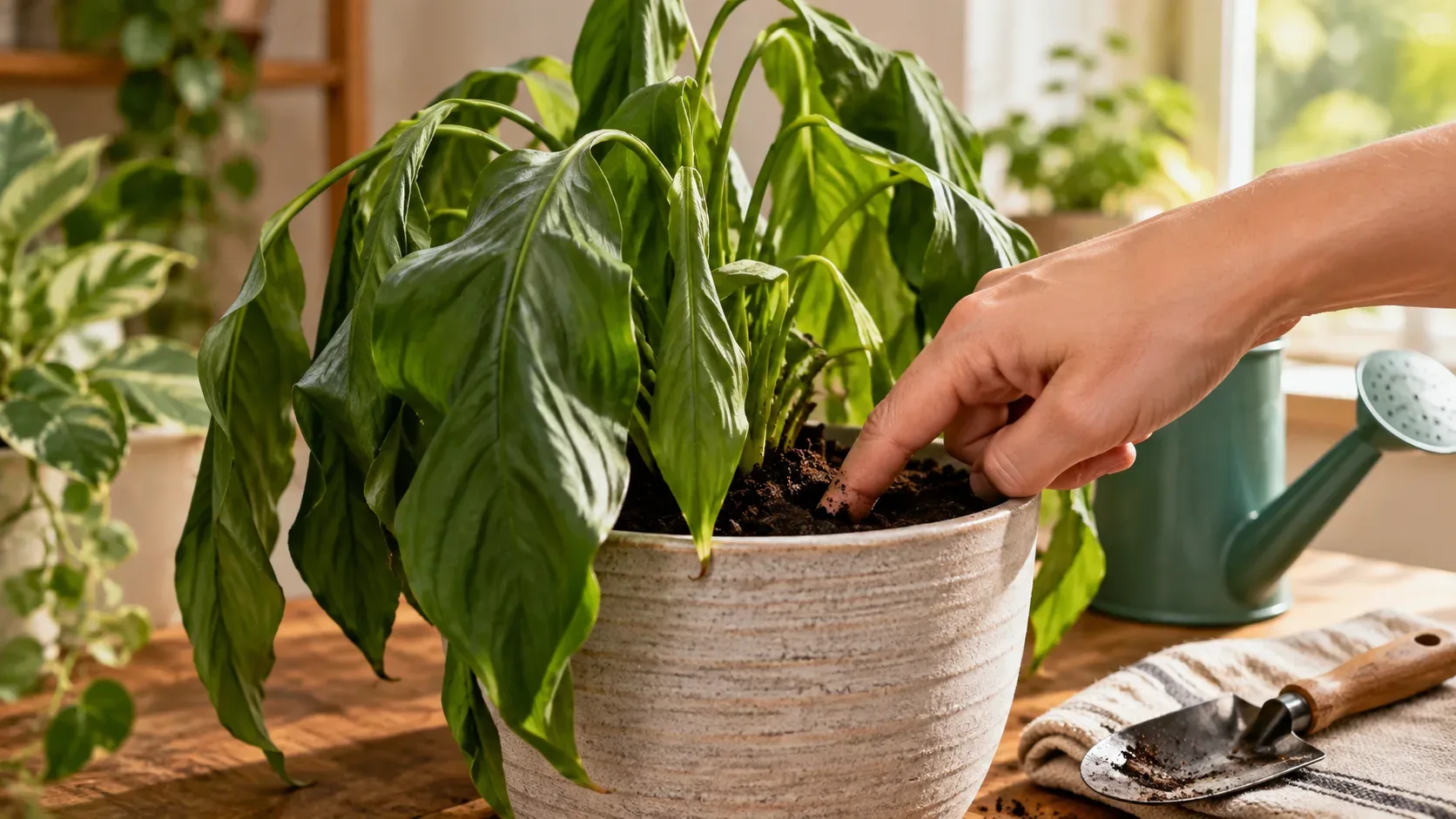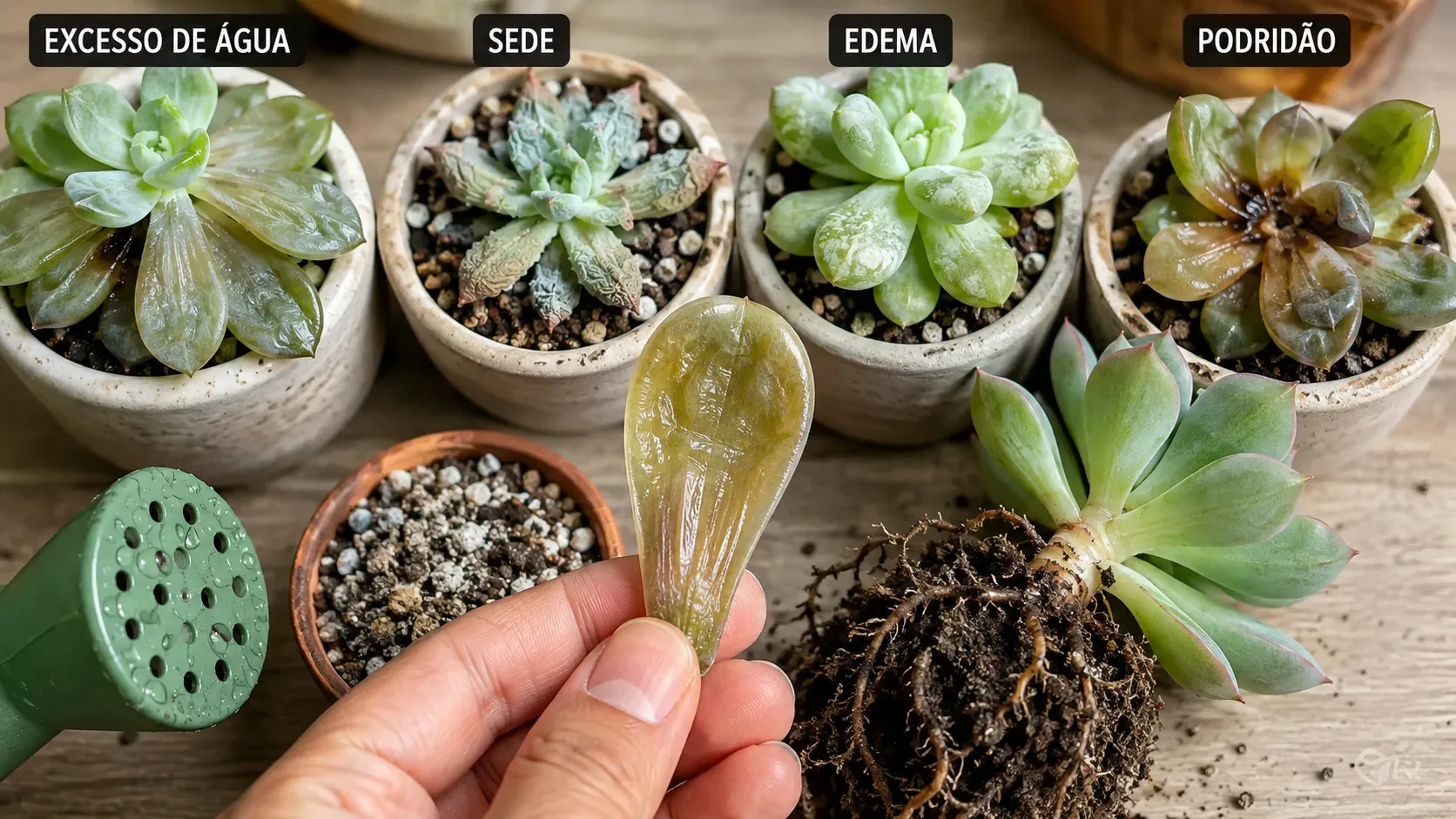
A succulent with soft or more translucent-looking leaves should not be watered automatically. The same “wilted plant” appearance can occur both when water is lacking and when roots have remained in waterlogged potting mix for too long. The distinction comes from the full set of signs: leaf texture, moisture in the mix, how easily leaves detach, and the condition of the roots.
In practical terms, the first question is simple: is the potting mix truly dry, or is it still moist? That answer changes the next step completely. University extension sources note that overwatered succulents tend to develop soft, mushy or yellowing leaves and stems, whereas underwatering more often causes wrinkling, drying and loss of volume. Root rot can be even more confusing because damaged roots stop taking up water, so the top of the plant may wilt even while the pot is wet.
How to tell the four situations apart quickly
| Main sign | Most likely cause | First action |
|---|---|---|
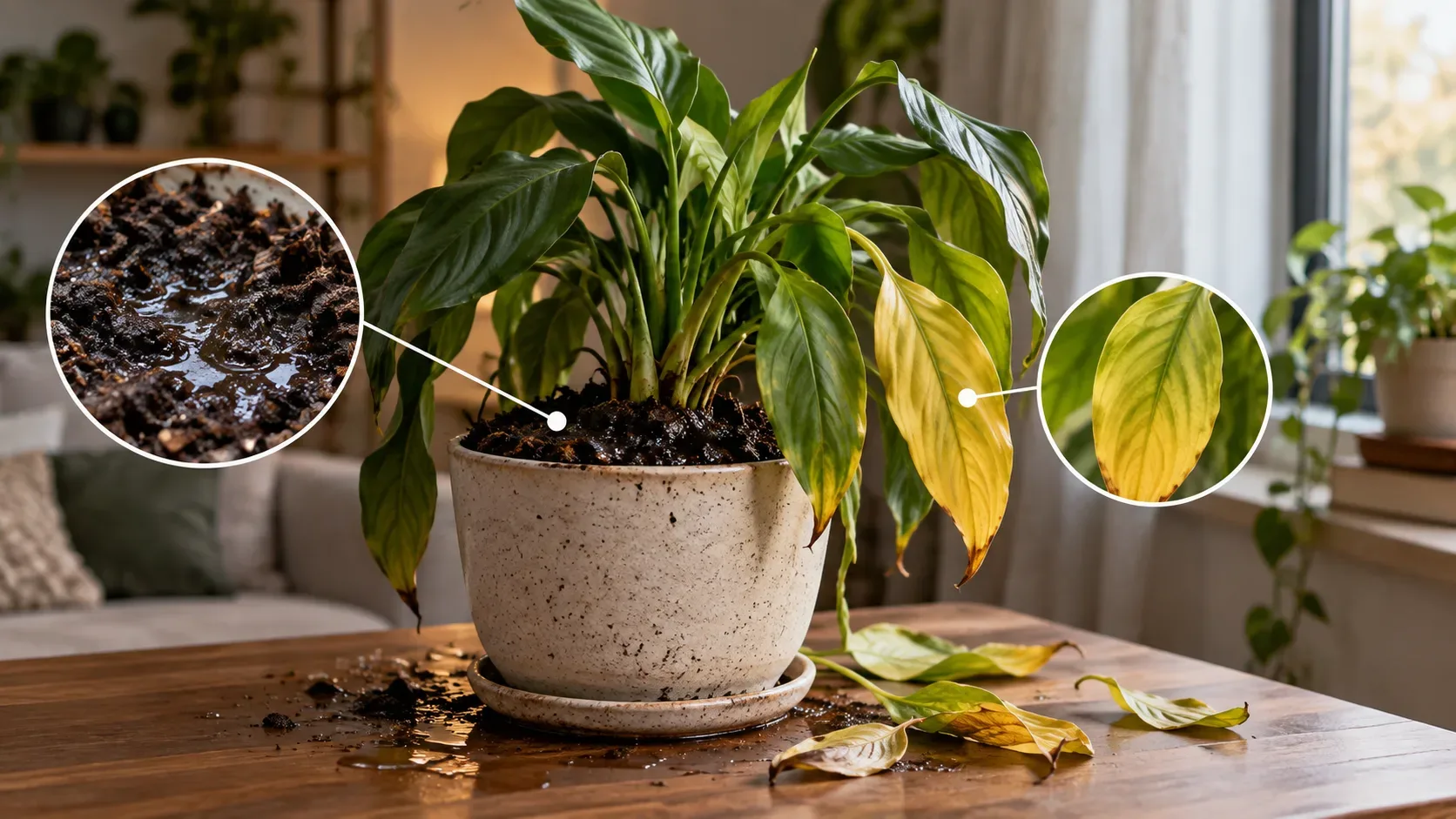
| Potting mix still moist, very soft or mushy leaves, yellowing or easy leaf drop | Overwatering | Stop watering, remove standing water and let the mix dry |
| Potting mix completely dry, pot very light, wrinkled or wilted leaves without dark mushy tissue | Underwatering | Water thoroughly and let excess water drain through the holes |
| Water-soaked areas, blisters or bumps that may later become rough or corky | Edema | Reduce excess moisture and improve drying and air circulation |
| Dark, soft, slimy roots or stem base, with tissue collapse | Root rot | Unpot the plant, inspect the roots and remove clearly rotten tissue |
1. Overwatering: soft leaves while the pot is still moist
Overwatering is not simply “giving too much water at once.” The problem develops when the potting mix stays moist for too long and the plant loses the normal wet-dry cycle. Iowa State University Extension lists soft or mushy leaves and stems, yellowing and leaf drop among common signs, usually alongside damp potting mix.
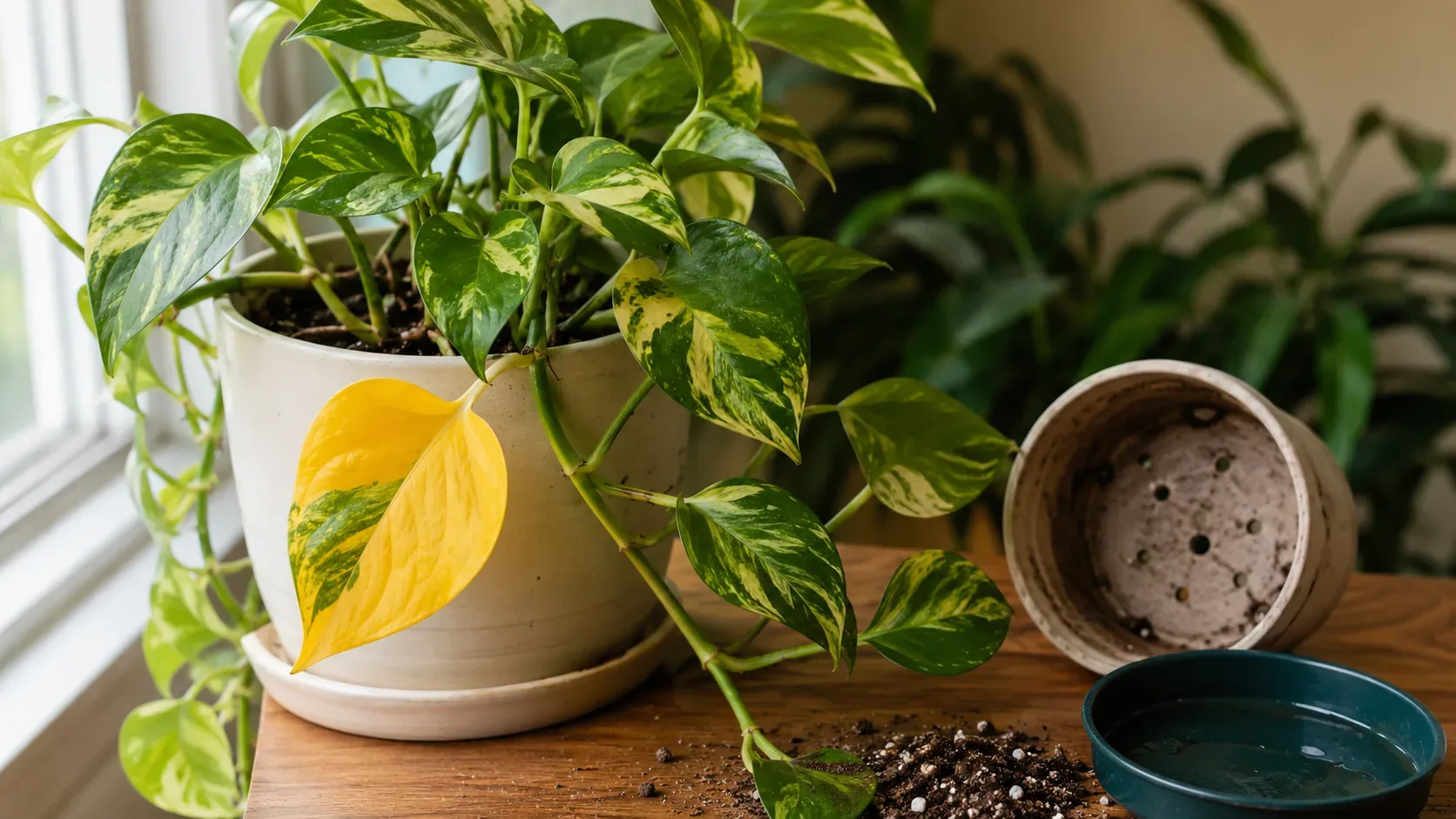
If the plant is firm at the base, there is no dark collapsing tissue and the roots do not show signs of rot, the first step is to avoid adding more water. Empty cachepots and saucers that hold water, confirm that the container has a drainage hole, and allow the mix to dry consistently before watering again.
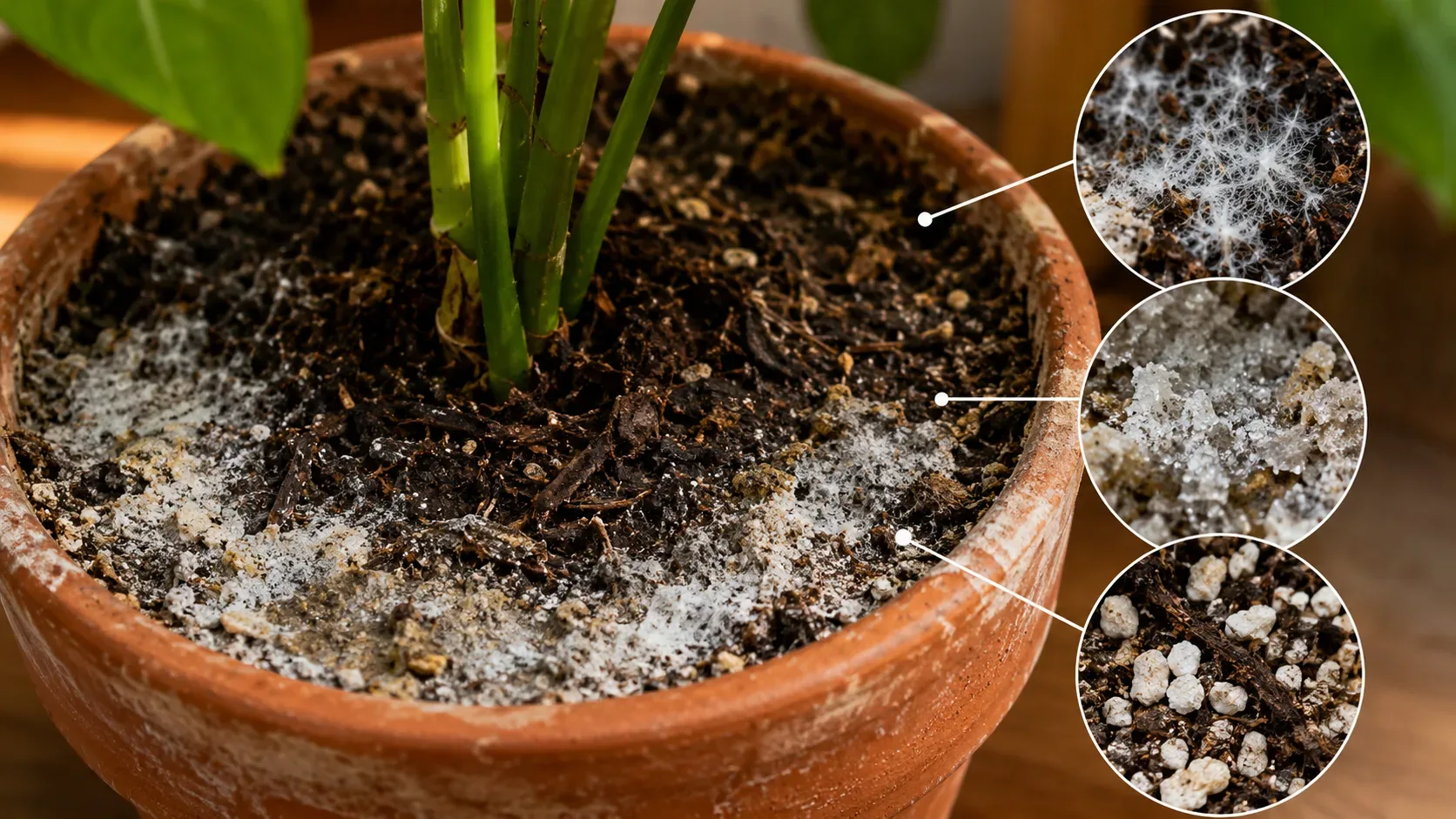
Also assess the potting mix itself. Very fine or highly organic mixes can stay wet too long. The Royal Horticultural Society (RHS) recommends a very free-draining, gritty medium for cacti and succulents to prevent waterlogging.
2. Underwatering: wrinkled leaves in genuinely dry mix
Water shortage tends to remove volume from succulent leaves. They may become wrinkled, thinner, wilted or dry at the edges. Iowa State University Extension notes that underwatered succulents can show wrinkling, yellowing, browning and leaf drop; with prolonged drought, roots can also die back.
The decisive clue is the pot: if the mix is dry deeper down and there are no signs of rotting tissue, the plant probably needs water. In that case, water thoroughly until water exits the drainage holes, then return to a drying cycle. Frequent small sips often wet only part of the pot and are not a substitute for a complete watering.
Avoid turning a fixed frequency — “once a week,” for example — into a universal rule. Light, temperature, airflow, pot size, container material, species and season all change how quickly the mix dries. The best trigger is the condition of the mix and plant, not the calendar.
3. Edema: when tissue looks water-soaked or blistered
Edema is not the same thing as rot and is not necessarily an infection. It is a physiological disorder in which roots take up water faster than leaves can lose it through transpiration. The RHS explains that excess water can rupture cells and produce water-soaked patches, especially on the undersides of leaves; these areas can later become corky.
In succulents, edema may appear as small blisters, bumps, translucent or watery-looking patches that later become rough, brownish or scarred. Management is environmental: allow more drying between waterings, reduce persistently wet conditions and improve air circulation. The University of Maryland Extension likewise links edema to water uptake exceeding water loss through leaves.
That is why a topical “recipe” does not correct the cause. Diagnosis should focus on water, drainage, temperature, air humidity and ventilation. Home remedies, including baking soda, do not replace those changes and may add salts or cause damage without fixing the water imbalance.
4. Root rot: when it is time to take the plant out of the pot
Root rot should move to the top of the list when the plant keeps wilting despite moist mix, the stem base softens, leaves detach easily, or tissues darken and collapse. Healthy roots are generally firm and light-colored; diseased roots often become dark and soft. The University of Maryland Extension recommends removing a plant from its pot to inspect for root discoloration and softness when rot is suspected.
If you find clearly rotten roots, remove affected material with a clean tool and repot the healthy portion in a container with drainage and suitable potting mix. The RHS also advises using repotting as an opportunity to trim off soft, rotted roots.
When rot has advanced into the stem base or affected much of the plant, recovery may no longer be possible. In that situation, Iowa State University Extension advises discarding severely affected plants or propagating only healthy-looking sections.
Do translucent leaves always mean too much water?
No. “Translucent” is a visual description, not a diagnosis. In some succulents, translucent areas are normal features. The RHS, for example, notes that some Haworthia species such as Haworthia cooperi naturally have translucent leaf tips.
The sign is more concerning when translucency is new and appears together with softness, a water-soaked look, blisters, yellowing, leaf drop or a mix that takes a long time to dry. If the plant has always had translucent “windows,” remains firm and continues to grow normally, that may simply be a species characteristic.
A safe checklist before watering or repotting
- Check moisture deeper in the pot. Do not rely only on the surface. If the inside is still moist, postpone watering.
- Compare texture. Wrinkled, less plump leaves fit underwatering better; watery, extremely soft or mushy leaves fit overwatering or deterioration better.
- Inspect the base and leaf drop. Dark, soft tissue or leaves that detach with a light touch increase suspicion of rot.
- Look for blisters or corky areas. That pattern favors edema, especially after persistently damp conditions.
- Inspect roots when the signs do not match. If the plant wilts in a moist pot or worsens quickly, unpotting it can be more informative than watering again.
What to avoid
- Do not water just because a leaf is soft. Rotten roots can also cause wilting.
- Do not leave water sitting in saucers or cachepots. The container needs to drain freely.
- Do not try to “fix drainage” only by adding rocks to the bottom. A drainage hole and a porous, appropriate potting mix matter more.
- Do not use baking soda as an automatic answer. Overwatering, edema and rot require correcting growing conditions and, when needed, removing damaged tissue.
- Do not follow a rigid schedule. Water according to real drying of the mix and the needs of the species.
In short: water, dry out, or inspect the roots?
If the pot is dry and the leaves are wrinkled, the most consistent action is to water deeply and let excess drain. If the pot is moist and leaves are soft, yellowing or watery, stop watering and improve drying. If there are blisters or water-soaked areas that become corky, consider edema. And if the plant wilts while the mix is wet or has dark, soft roots or stem base, inspect the roots before adding any more water.
The diagnosis becomes reliable when the signs are combined. In succulents, leaf texture alone is rarely enough to decide whether to add water or withhold it.