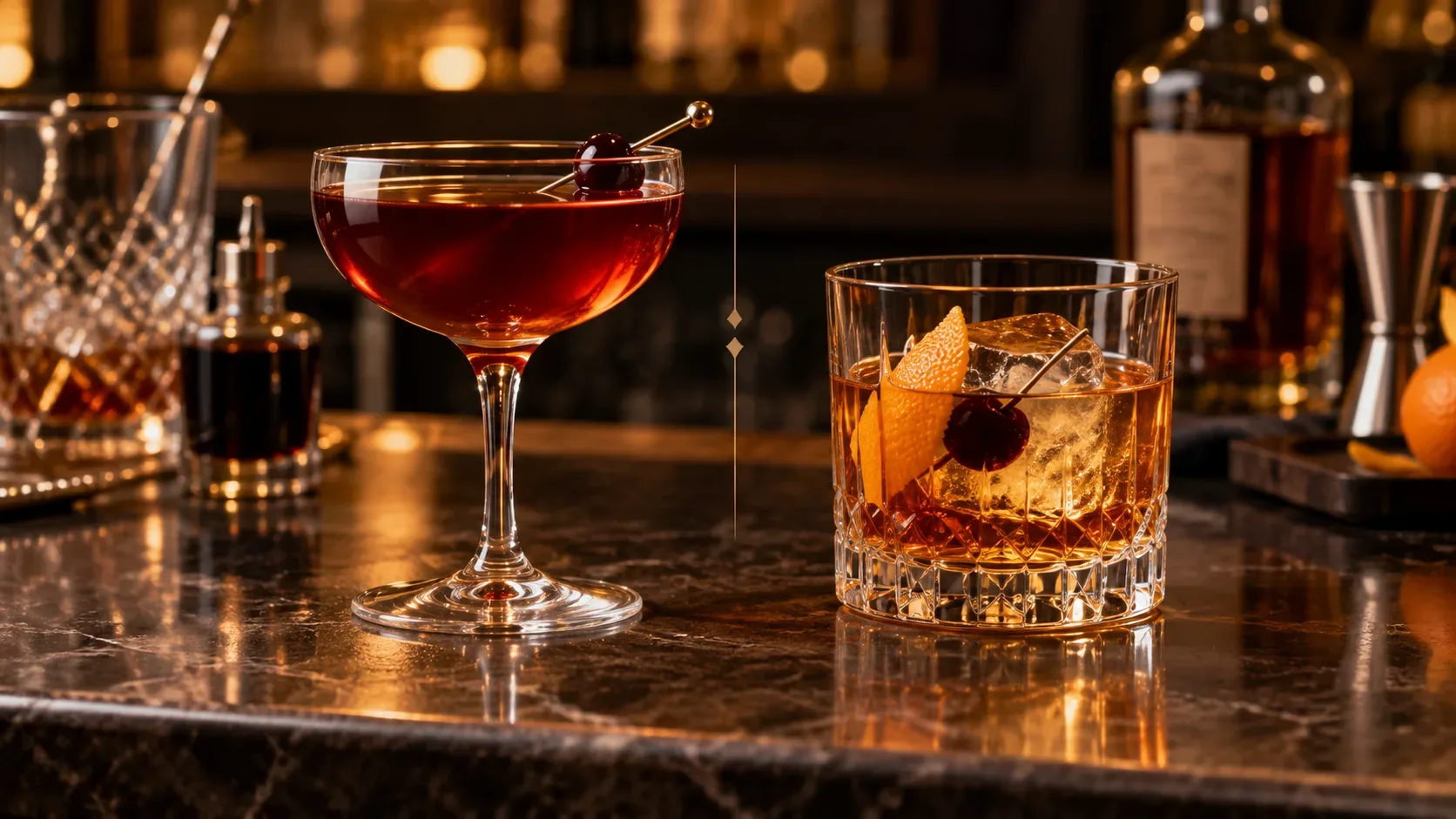
The Manhattan and Old Fashioned start from a similar idea: whiskey, sweetness, bitters and controlled dilution. Even so, they do not deliver the same experience. The biggest dividing line is how sweetness and modification are introduced. In a Manhattan, sweet vermouth adds sugar, fortified wine, herbs and spices. In an Old Fashioned, sugar is added directly, leaving the whiskey more exposed.
That structural difference changes aroma, texture, service and even the way the drink evolves in the glass. So the most useful question is not which one is "better", but which profile fits the moment and the drinker's preference.
What is the main difference between a Manhattan and an Old Fashioned?
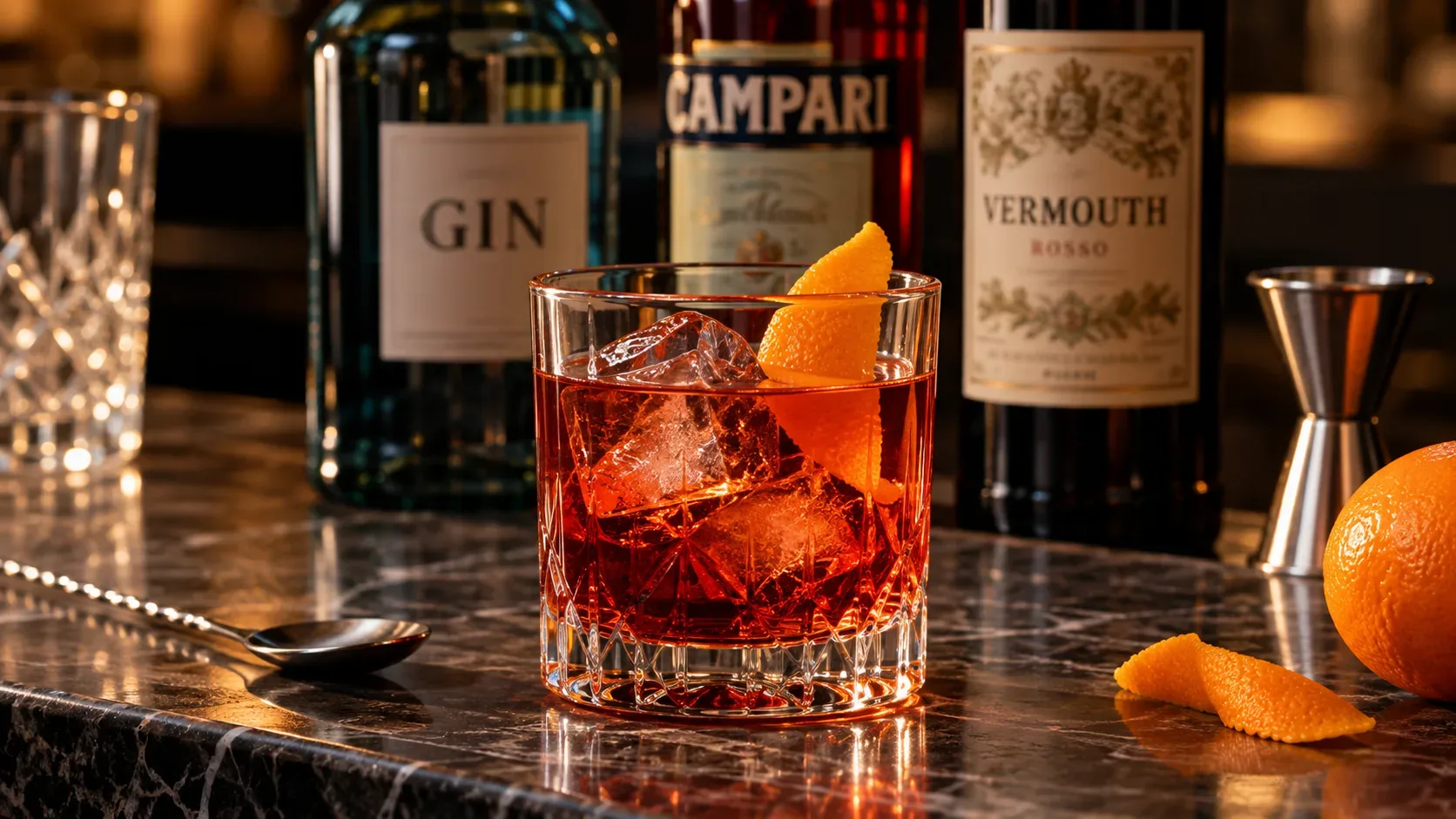
The International Bartenders Association (IBA) lists the Manhattan with rye whiskey, sweet red vermouth and Angostura bitters. The ingredients are stirred with ice and strained into a chilled cocktail glass, with a cherry as garnish.
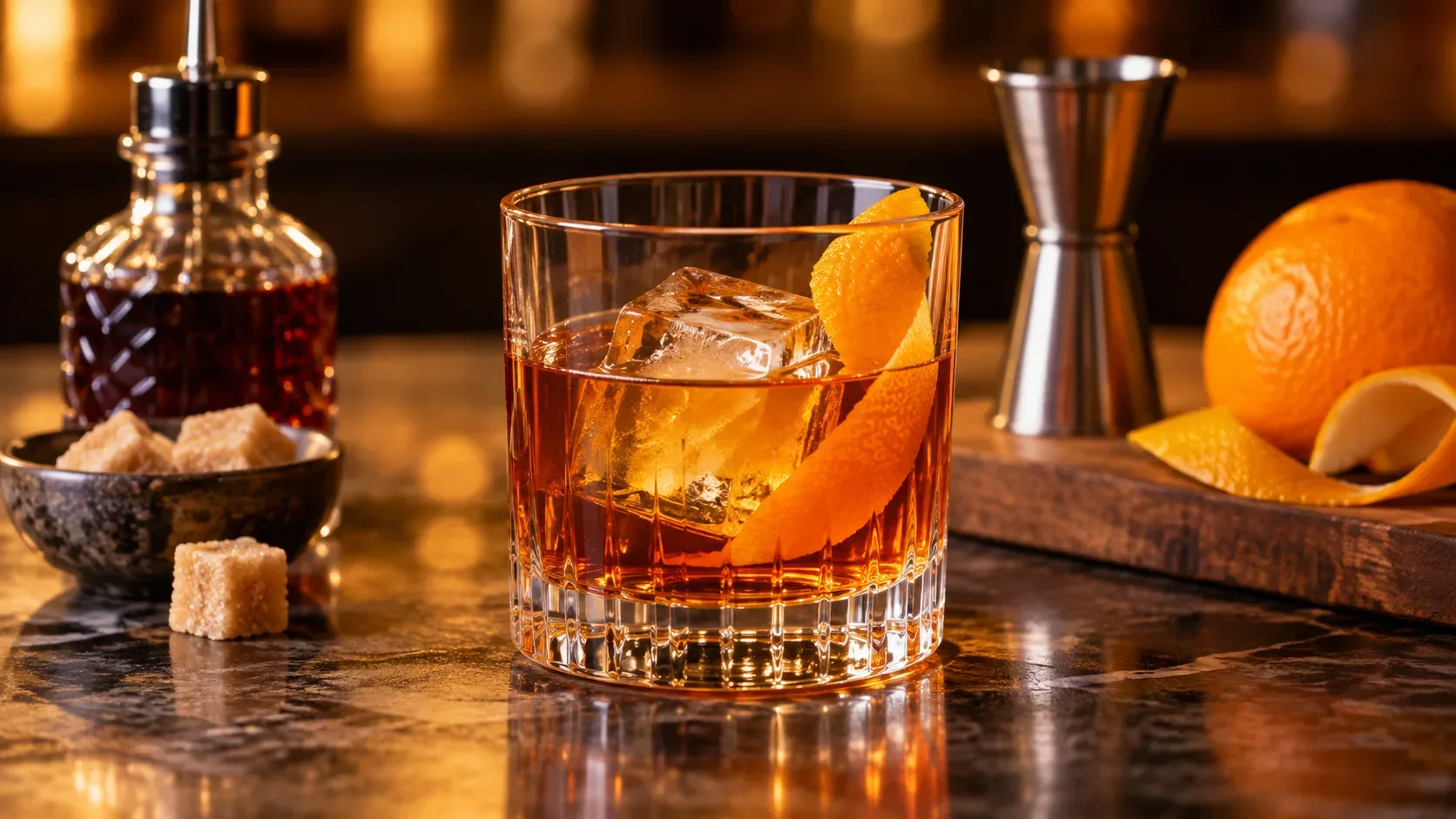
The IBA Old Fashioned uses bourbon or rye whiskey, a sugar cube, Angostura bitters and a little water. It is prepared in the rocks glass itself with ice, and the garnish may include orange and cherry.
In other words, both use whiskey and bitters, but the Manhattan gets a major aromatic modifier, sweet vermouth. The Old Fashioned uses sugar and water without adding a second alcoholic ingredient with a wine-based, herbal profile. That distinction explains why the two can look similar on paper and still taste quite different.
Quick comparison: base, modifier, sugar, bitters and service
| Criterion | Manhattan | Old Fashioned |
|---|---|---|
| Base | Whiskey, traditionally rye in the IBA specification | Bourbon or rye whiskey |
| Modifier | Sweet vermouth | No modifier equivalent to vermouth |
| Source of sweetness | Mainly sweet vermouth | Sugar cube or, in many modern recipes, simple syrup |
| Bitters | Angostura bitters | Angostura bitters |
| Technique | Stirred with ice, then strained | Built and stirred in the serving glass |
| Service | No serving ice, in a chilled cocktail glass | In a rocks glass with ice |
| Typical garnish | Cherry | Orange and, depending on the recipe, cherry |
| General profile | More wine-like, herbal, aromatic and layered | More direct and whiskey-centered, with sweetness and bitters in support |
How does the flavor change in practice?
Manhattan: vermouth creates a second flavor layer
In a Manhattan, sweet vermouth does more than provide sugar. It adds herbal, spicy, fruity and fortified-wine notes that vary by brand. This broadens the whiskey's aromatic range and tends to create a more complex drink with an obvious integration between base spirit and modifier.
The comparison published by Liquor.com highlights this point: vermouth adds depth and earthy, spiced notes, while the Old Fashioned keeps a more stripped-down structure. The same source notes that both drinks can be made with bourbon or rye, although rye is more closely associated with the Manhattan and bourbon appears frequently in the Old Fashioned.
Old Fashioned: the whiskey stays more exposed
In an Old Fashioned, sugar, bitters and water are there to adjust the spirit without covering it with a modifier as broad in flavor as vermouth. Sugar softens the perception of alcohol and rounds the texture. Bitters add aroma and spice. Water and ice control strength, temperature and dilution.
The result tends to make the character of the chosen whiskey easier to notice. Bourbon can push the drink toward sweeter, rounder notes, while rye often brings a drier, spicier impression. Those differences do not change the cocktail's identity, but they can strongly affect the final experience.
Why does service also change the experience?
A Manhattan is stirred with ice and strained into a chilled glass. It reaches the drinker already diluted and cold, but without ice in the serving glass. An Old Fashioned remains over ice in a rocks glass. As a result, it continues to receive some dilution as the ice melts.
This creates different drinking rhythms. A Manhattan tends to preserve the prepared ratio for longer while its temperature gradually rises. An Old Fashioned may become slightly lighter and less concentrated over time. Ice size and quality, starting temperature and drinking pace all affect how noticeable that difference will be.
Which should you choose if you prefer drier, sweeter or more aromatic flavors?
- If you want to taste the whiskey with fewer layers in the way: the Old Fashioned tends to be the more direct choice.
- If you enjoy herbal, wine-like and spiced notes: the Manhattan usually offers more layers because of sweet vermouth.
- If you prefer sipping slowly over ice: the Old Fashioned's service fits that rhythm better.
- If you like cocktails served up without ice: the Manhattan follows that classic presentation.
- If you want more apparent sweetness: the cocktail name alone is not enough. Bourbon, rye, vermouth ratio, sugar amount and dilution can all change the perception significantly.
Rye or bourbon: does that change which one you should order?
It changes the profile, but it does not create an absolute rule. The IBA specification uses rye in the Manhattan and accepts bourbon or rye in the Old Fashioned. In bars, however, legitimate variations are common. A bourbon Manhattan tends to feel rounder and sweeter, while rye can emphasize spice and dryness. In an Old Fashioned, the same swap changes the center of the drink without changing its basic structure.
If the bar lists its house whiskey, that detail can matter as much as the cocktail name. Someone looking for spice and firmness may prefer rye. Someone looking for vanilla, caramel and a rounder impression may lean toward bourbon, keeping in mind that the actual profile depends on the bottle being used.
Is there a winner between the Manhattan and Old Fashioned?
There is no universal winner because the drinks solve different problems. The Manhattan transforms whiskey through the prominent role of sweet vermouth. The Old Fashioned makes a smaller intervention, using sugar, bitters, water and ice to frame the spirit.
If the priority is aromatic complexity and a more wine-like, herbal profile, the Manhattan tends to fit better. If the priority is keeping whiskey at the center and noticing how sugar, bitters and dilution shape the spirit, the Old Fashioned usually makes more sense.
A simple way to order at the bar
Think of the Manhattan as whiskey plus sweet vermouth and bitters, strained and served up. Think of the Old Fashioned as whiskey adjusted with sugar, bitters, water and ice, served in a rocks glass. Both are strong, stirred whiskey classics, but they take different routes to balance.
For recipe and method references, see the official IBA Manhattan and IBA Old Fashioned entries, as well as the Liquor.com comparison.