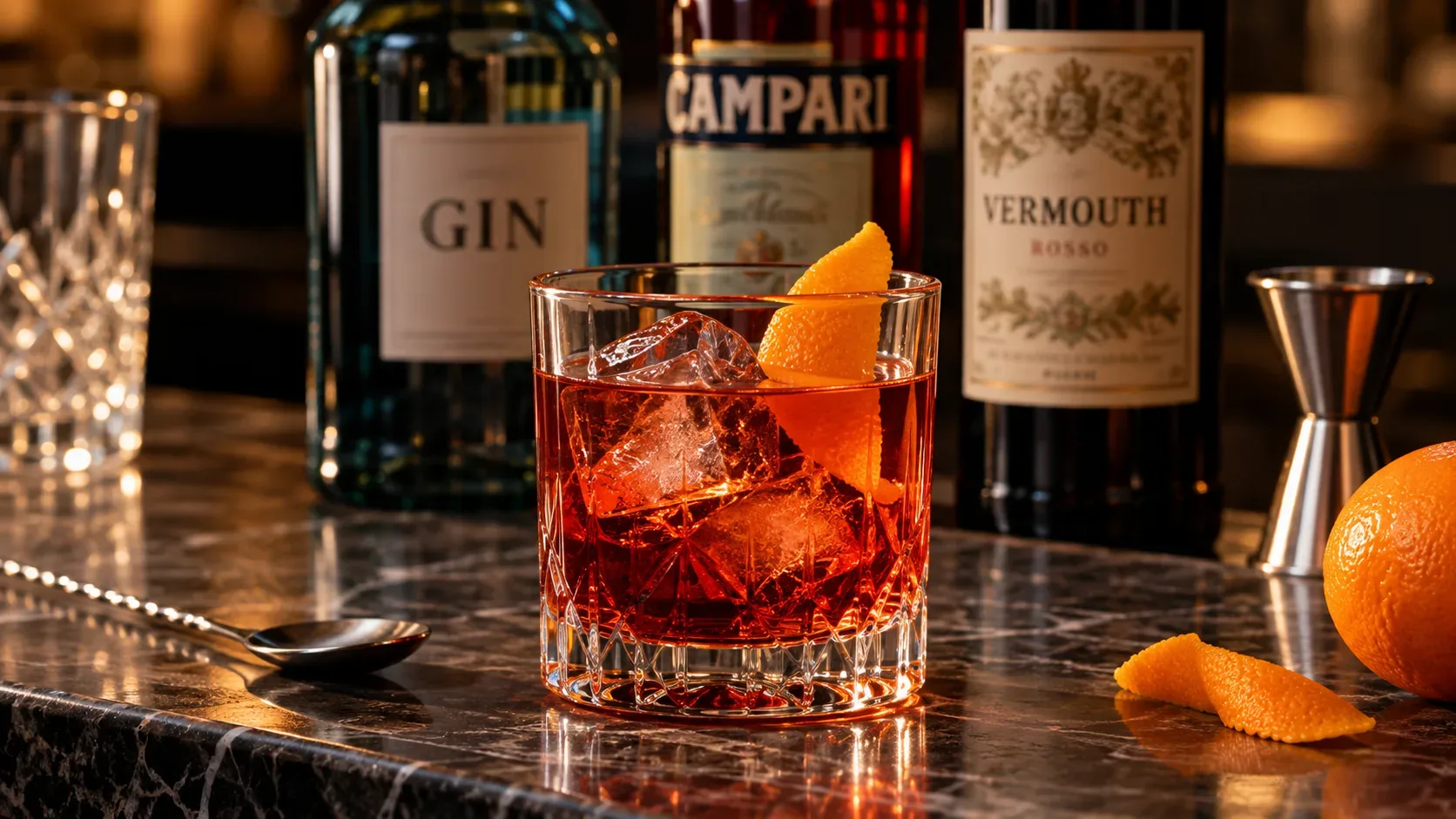
If the question is “what is the official International Bartenders Association (IBA) Negroni?”, the answer is straightforward: the reference recipe uses 30 ml gin, 30 ml Bitter Campari and 30 ml sweet red vermouth. That is a 1:1:1 ratio. The IBA also instructs bartenders to pour the ingredients directly into a chilled old fashioned glass filled with ice, stir gently and garnish with half an orange slice.
That does not mean every Negroni served in every bar must use equal parts. It means that once a bar changes the proportions, it moves away from the IBA’s canonical formula and into a house interpretation. The shift may be small, but it changes the balance among alcohol, botanicals, bitterness, sweetness and, depending on the service, the way dilution shows up in the glass.
What the official IBA recipe actually fixes
On the official IBA Negroni page, the three components are listed in identical volumes:
- 30 ml gin;
- 30 ml Bitter Campari;
- 30 ml sweet red vermouth.
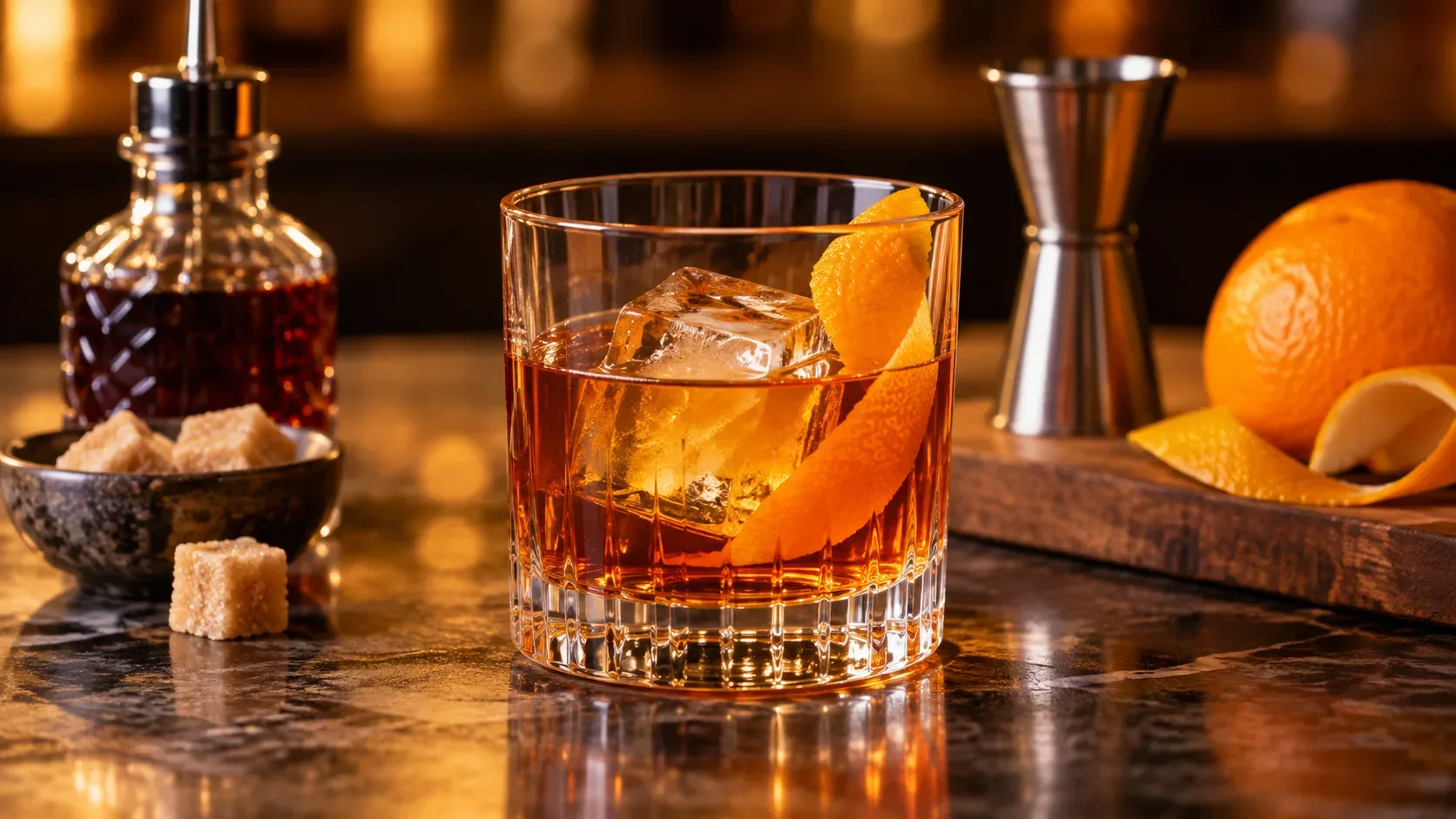
The method is also part of the reference: the ingredients are poured directly into a chilled old fashioned glass filled with ice, then stirred gently. The specified garnish is half an orange slice. Campari’s own Negroni recipe presents the same equal-parts structure.
So “1:1:1” is not merely a memory shortcut invented by bars: it is the ratio in the IBA’s current official entry. What the IBA does not say is that every bar interpretation must preserve that ratio in order to exist. The entry describes the canonical version; it does not create a sensory cutoff beyond which a drink automatically stops being called a Negroni.
Why 1:1:1 creates such a recognizable balance
The Negroni works because three ingredients with different roles occupy the same space in the formula. Gin provides alcohol and a botanical core, often with juniper and citrus showing to a greater or lesser degree. Campari contributes bitterness, sweetness and its own aromatic profile. Sweet red vermouth adds sweetness, vinous body and a layer of herbs and spices.
At equal parts, none of those axes has a numerical advantage. That does not mean perception is mathematically equal: 30 ml of each ingredient does not translate into one-third perceived bitterness, one-third sweetness and one-third alcohol. Aromatic intensity, alcohol content, sugar and each brand’s profile differ. The equality is one of volume, while sensory balance emerges from the interaction among the ingredients.
1:1:1, gin-forward and bitter-forward: what changes
To compare ratios without confusing the effect with serving size, it helps to imagine recipes with the same total pre-dilution volume. The ratios below are teaching examples, not new official formulas.
| Structure | Example ratio | What gets more space | Likely effect |
|---|---|---|---|
| IBA reference | 1:1:1 | No ingredient | Classic balance among botanicals, bitterness, sweetness and alcoholic structure. |
| Gin-forward | 1.5:1:1 | Gin | More juniper and other botanicals; generally a drier impression and, if the gin has a higher ABV than the other components, greater alcoholic strength. |
| Bitter-forward | 1:1.5:1 | Campari | More obvious bitterness and a more assertive profile; the bitter’s own sweet fraction also increases, so “more Campari” does not simply mean “less sweet”. |
There are also vermouth-forward recipes. In that case, the cocktail tends to gain more vinous, herbal and sweet character, with a smaller relative contribution from the gin. But “tends” is the important word: changing the vermouth or gin can alter the result as much as changing a few milliliters.
More gin usually means more alcohol — but there is no rule without the labels
When total recipe volume is held constant, increasing the gin share will usually raise the alcohol content of the liquid before dilution, because gins generally have a higher ABV than sweet vermouths and often a higher ABV than bitter aperitifs. The exact result, however, depends on the specific bottles and the market in which they were sold.
That is why a responsible comparison should not turn “gin-forward” into an automatic synonym for a specific alcohol percentage. The structural effect is clear — there is more base spirit in the mix — but final ABV can only be calculated when the strength of each ingredient, the volumes and the water incorporated during preparation are known.
Bitterness and sweetness do not move in only one direction
It is tempting to assume that more Campari simply makes the drink more bitter and more vermouth simply makes it sweeter. In practice, all three components are complex. Campari is bitter, but it is also sweetened; sweet vermouth contains sugar, but it can also bring bitterness and herbal notes; gin adds no meaningful sugar to the traditional formula, but its botanicals can change the perception of dryness, citrus and bitterness.
That is why a bar can reduce the vermouth slightly and still produce a Negroni perceived as rounded, or increase the gin and fail to make the result feel “dry” if it chooses a highly aromatic gin and a rich vermouth. Ratio guides the balance; the actual brands complete the equation.
Dilution is another variable — and it should not be confused with ratio
A 1:1:1 recipe can reach the table with more or less dilution. The ratio among gin, Campari and vermouth remains 1:1:1 even after water from the ice enters the cocktail; what changes is the concentration of the whole. Likewise, a 1.5:1:1 Negroni can be lightly or heavily diluted.
When a cocktail is stirred with ice, some ice melts as the liquid cools. Dave Arnold’s cocktail-science work emphasizes that temperature and dilution are linked and that there is no single ideal dilution percentage for every drink. In a Negroni served over ice, dilution can also continue slowly while the drink is being consumed. See the technical discussion in Cocktail Science in General: Part 2.
This matters because water and temperature can soften alcoholic heat and change the perceived intensity of bitterness, sweetness and aroma. Comparing two bars only from the written recipe can therefore be misleading if one stirs longer, uses a different amount of ice or serves the drink differently.
How to test ratios without hiding the effect behind technique
To understand what a ratio change actually does, the best approach is to control the other variables. A simple test can follow four rules:
- Keep the same total volume before dilution, so “more gin” does not simply mean “a bigger drink”.
- Use the same brands of gin, Campari and vermouth in every sample.
- Standardize the ice and stirring time, reducing differences in temperature and added water.
- Change one thing at a time: first the ratio; later, if desired, the gin, vermouth or technique.
This method separates a preference for ratio from a preference for brand or dilution. It is especially useful because the Negroni is sensitive to small changes in the gin-vermouth combination; bartender recipes and commentary often treat 1:1:1 as a starting point rather than the end of experimentation.
When is a variation still called a Negroni?
The IBA entry does not contain a tolerance percentage saying that 1.1:1:1 is still “a Negroni” while 1.2:1:1 is not. The official recipe simply defines the reference: gin, Bitter Campari and sweet red vermouth, 30 ml of each.
In bar practice, a house may adjust the ratio and continue to call the drink a Negroni, especially when the three core ingredients remain recognizable. Once components are substituted — another spirit for gin, another bitter or another type of aromatized wine — it becomes clearer that the drink is a riff or variation. The menu name, however, is an editorial decision by the bar, not an automatic classification created by the IBA.
Short answer: does a Negroni “have to” be 1:1:1?
To reproduce the IBA’s current official recipe, yes: the reference is 30 ml gin, 30 ml Campari and 30 ml sweet red vermouth. To create or serve a bar interpretation, no: the ratio can be adjusted, as long as it is understood that the result departs from the canonical formula.
- More gin tends to bring more botanicals, a drier impression and often greater alcoholic strength.
- More Campari tends to increase bitterness and bittersweet character, not bitterness alone.
- More vermouth tends to increase vinous, herbal and sweet character.
- More or less dilution changes concentration, temperature and perception, but it is a separate variable from the ratio among the three ingredients.
The 1:1:1 formula is valuable because it provides a common reference. Variations become easier to understand precisely because the starting point is clear.