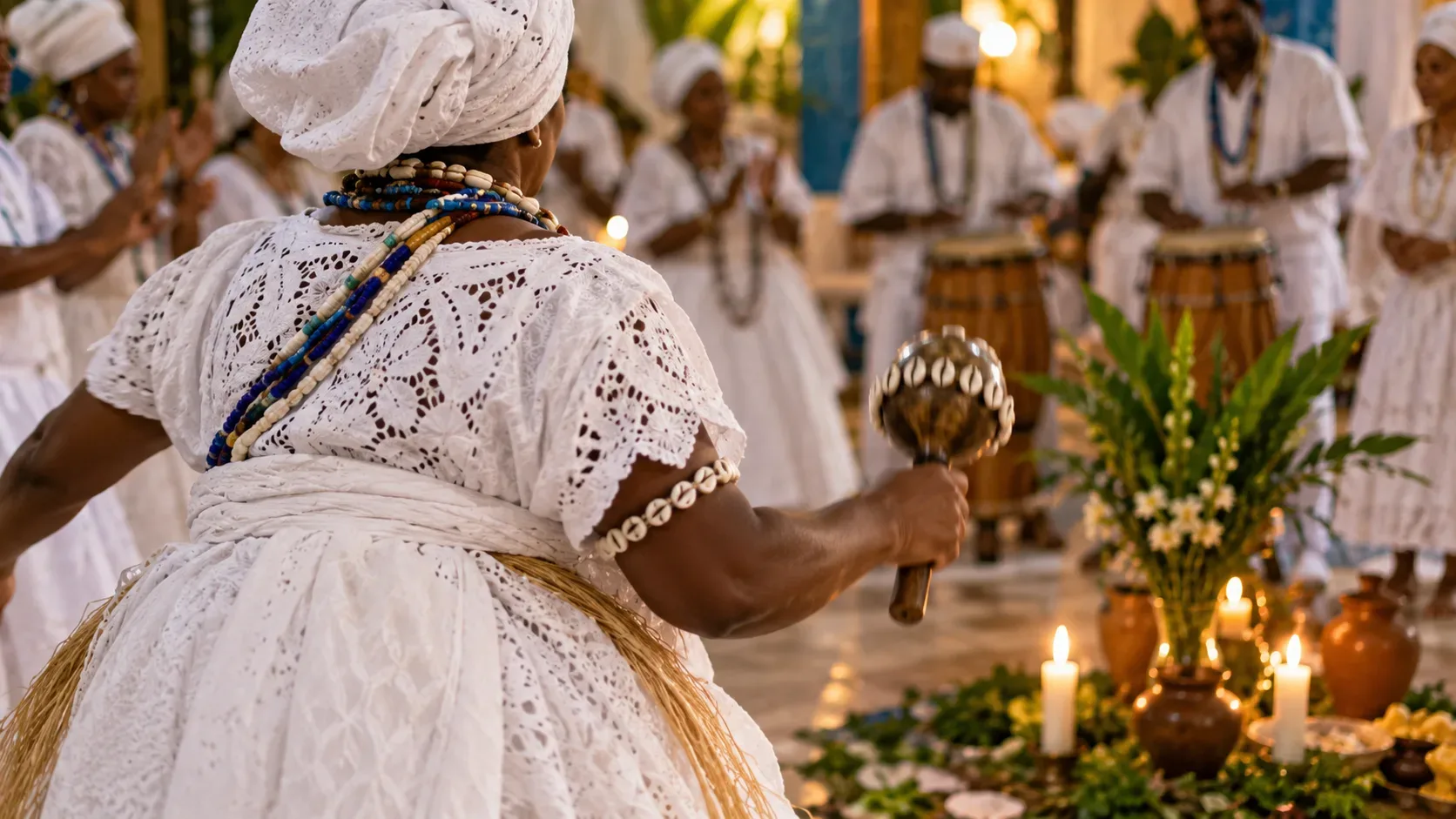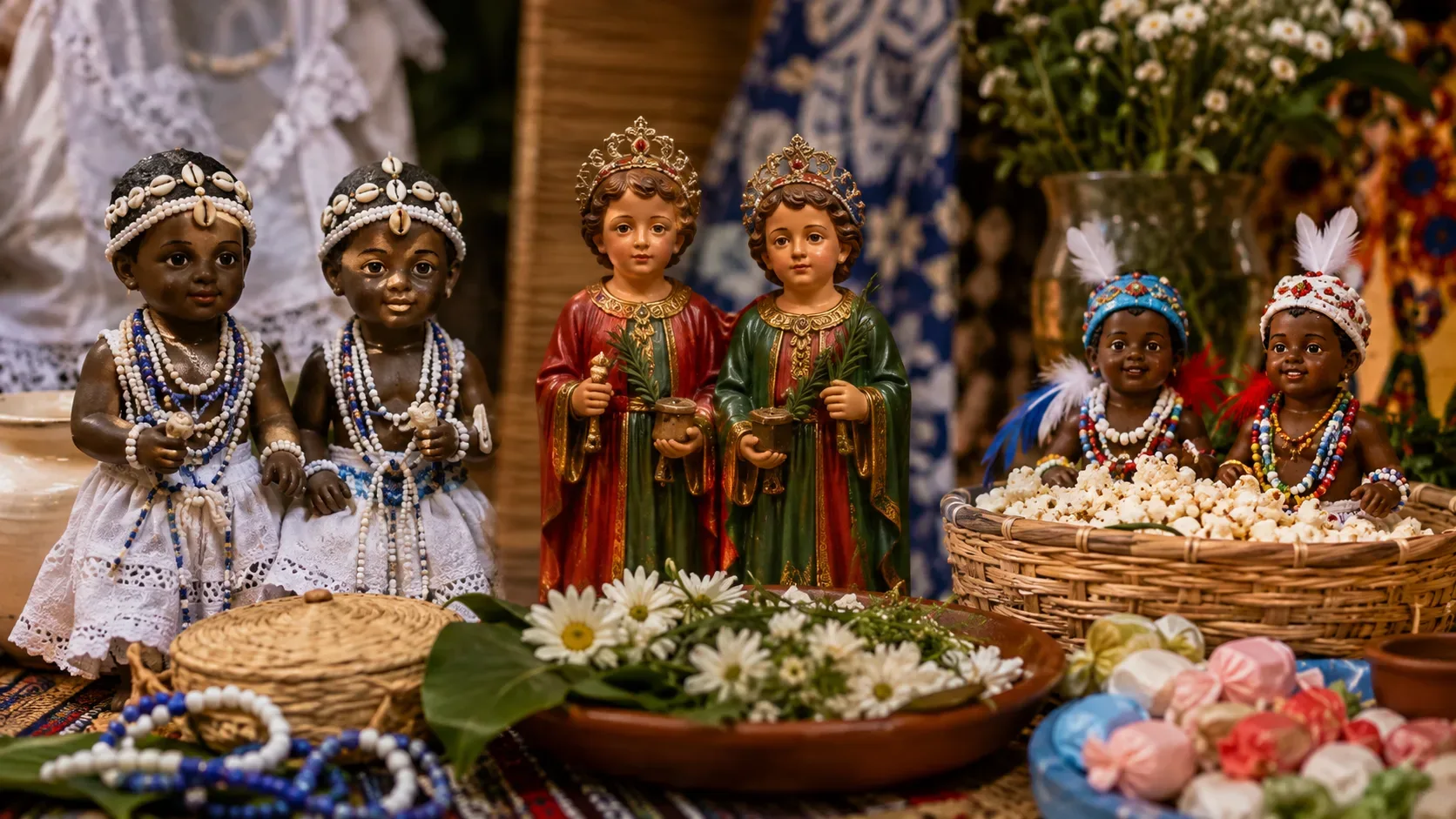
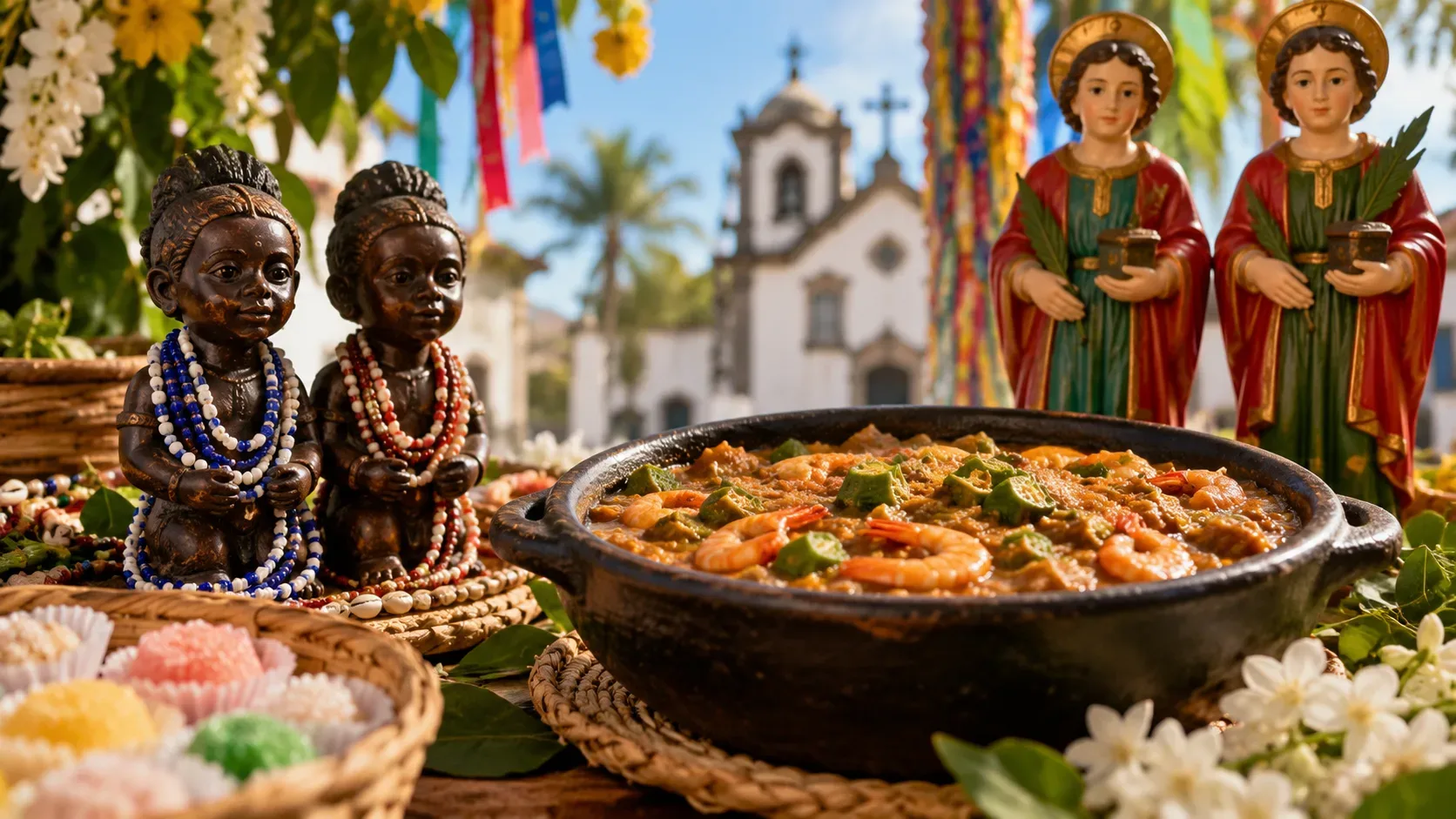
Across much of Bahia and in other parts of Brazil, September 27 brings together caruru, sweets, children, devotion to Cosmas and Damian, and references to the Ibeji. These practices meet historically, but they do not mean the same thing. The key to understanding the date is to separate the traditions: Cosmas and Damian belong to Catholic devotion; the Ibeji are twin divinities in African-derived religious traditions; and caruru can be food, an offering, a vow-related practice, a family celebration, or a community feast, depending on the context.
There is also an important calendar distinction. In the current Roman Catholic calendar, the Church commemorates Saints Cosmas and Damian on September 26. September 27, however, remained deeply rooted in Brazil's popular calendar—especially in Bahia—as a date for caruru gatherings and celebrations associated with the saints and the Ibeji. That is why simply saying that “September 27 is the day of Cosmas and Damian” hides a more complex history.
What each element of this tradition means
| Element | What it means | What to avoid |
|---|---|---|
| Cosmas and Damian | Martyr saints venerated in Christianity, traditionally presented as brothers and associated with caring for the sick. | Treating them as the Catholic names for the Ibeji. |
| Ibeji | Twin divinities connected to Yoruba and Afro-Brazilian traditions, associated with twinhood and, in many contexts, childhood. | Saying they are simply “the same as” Cosmas and Damian. |
| Caruru | A dish with a strong presence in Afro-Bahian cuisine and also the name of celebrations in which food may be part of vows, offerings, sharing, and ritual. | Assuming every caruru has the same religious meaning or ritual form. |
| September 27 | A deeply established date in Bahia's popular calendar for these celebrations, although the current Catholic liturgical memorial of the saints is September 26. | Confusing the popular calendar with the official liturgical calendar. |
Cosmas and Damian: the Catholic tradition does not begin with caruru
In Catholic tradition, Cosmas and Damian are venerated as Christian martyrs from antiquity. Devotional memory presents them as figures connected to medicine and the free care of the sick. Vatican News records their liturgical celebration on September 26 and highlights their reputation as benefactors and caregivers of the sick.
This differs from the way the saints came to appear in Brazilian popular celebrations. Sweets, food served to children, and caruru do not derive directly from the Christian biography attributed to the martyrs. They belong to a religious and cultural history built in Brazil, especially in regions where Catholic and African traditions coexisted, came into tension, and transformed one another.
Ibeji: sacred twins, not a translation of Catholic saints
In African-derived traditions, the Ibeji are connected to twinhood. In Bahia, the historical association between the Catholic twin saints and African twin divinities became one of the best-known expressions of religious syncretism. The Bahia state government itself, when documenting the heritage recognition of the celebration, describes the Ibeji as twin divinities of Afro-Brazilian religions and notes the correspondence historically built between the two forms of worship.
“Correspondence,” however, should not be understood as identity. Each tradition has its own cosmology, ritual language, and history. Saying that the Ibeji “are Cosmas and Damian” erases precisely the differences that syncretism placed in relation to one another. A more accurate formulation is: in certain Brazilian contexts, Cosmas and Damian were historically associated with the Ibeji.
It is also prudent not to use “Ibeji” and “erês” as automatic synonyms. Studies linked to the Federal University of Bahia record that the terms can occupy distinct places in Afro-Brazilian traditions, even though they may appear close together in celebrations, narratives, and practices related to childhood. Definitions vary by religious house, nation, and context, so rigid generalizations tend to create errors.
Why caruru became a bridge between religion, family, and culture
In Bahia, “caruru” can refer to the okra dish prepared with ingredients such as palm oil, dried shrimp, and cashews or peanuts, but it can also name the entire event: preparing, offering, serving, praying, receiving guests, gathering children, fulfilling a vow, and celebrating. That is why two people can say they are “making a caruru” while referring to different forms of celebration.
In some practices, children are served first; in others, seven children or “seven boys” are present; some households include Catholic prayers, others make explicit references to African-derived religions, and some celebrations combine elements from more than one tradition. The Bahia state government emphasizes this diversity, mentioning caruru celebrations with samba, prayers, family participation, and both Catholic and Afro-Brazilian ritual practices.
For that reason, there is no single ritual recipe that can classify every September caruru in the same way. The food is a visible material link, but its meaning depends on who offers it, why it is offered, to whom it is dedicated, and how the celebration is conducted.
So why does September 27 concentrate these practices?
Because the popular calendar does not always coincide with the official liturgical calendar. September 27 became established in Brazil as a reference date for Cosmas and Damian and, through historical association, for celebrations connected to the Ibeji and caruru. This continuity is strong enough that cultural institutions still use the date as a landmark.
In 2025, for example, the National Center for Folklore and Popular Culture, linked to Iphan, scheduled a traditional Cosmas and Damian caruru for September 27 and described the occasion as connected to the saints historically syncretized with the Ibeji. The CNFCP/Iphan record shows how the date functions today as a cultural reference regardless of the Catholic liturgical calendar's placement of the memorial on September 26.
What recognition as cultural heritage actually means
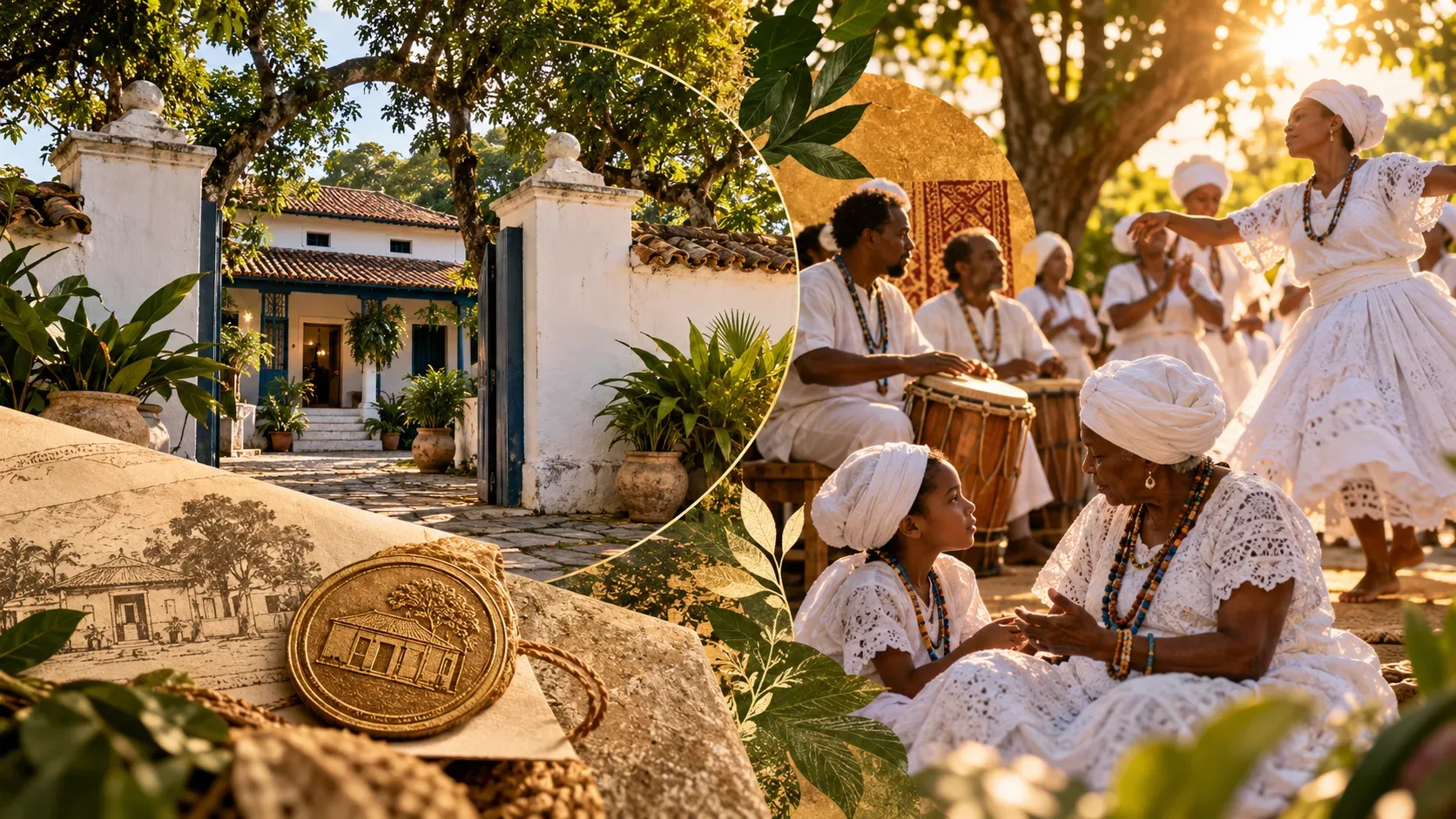
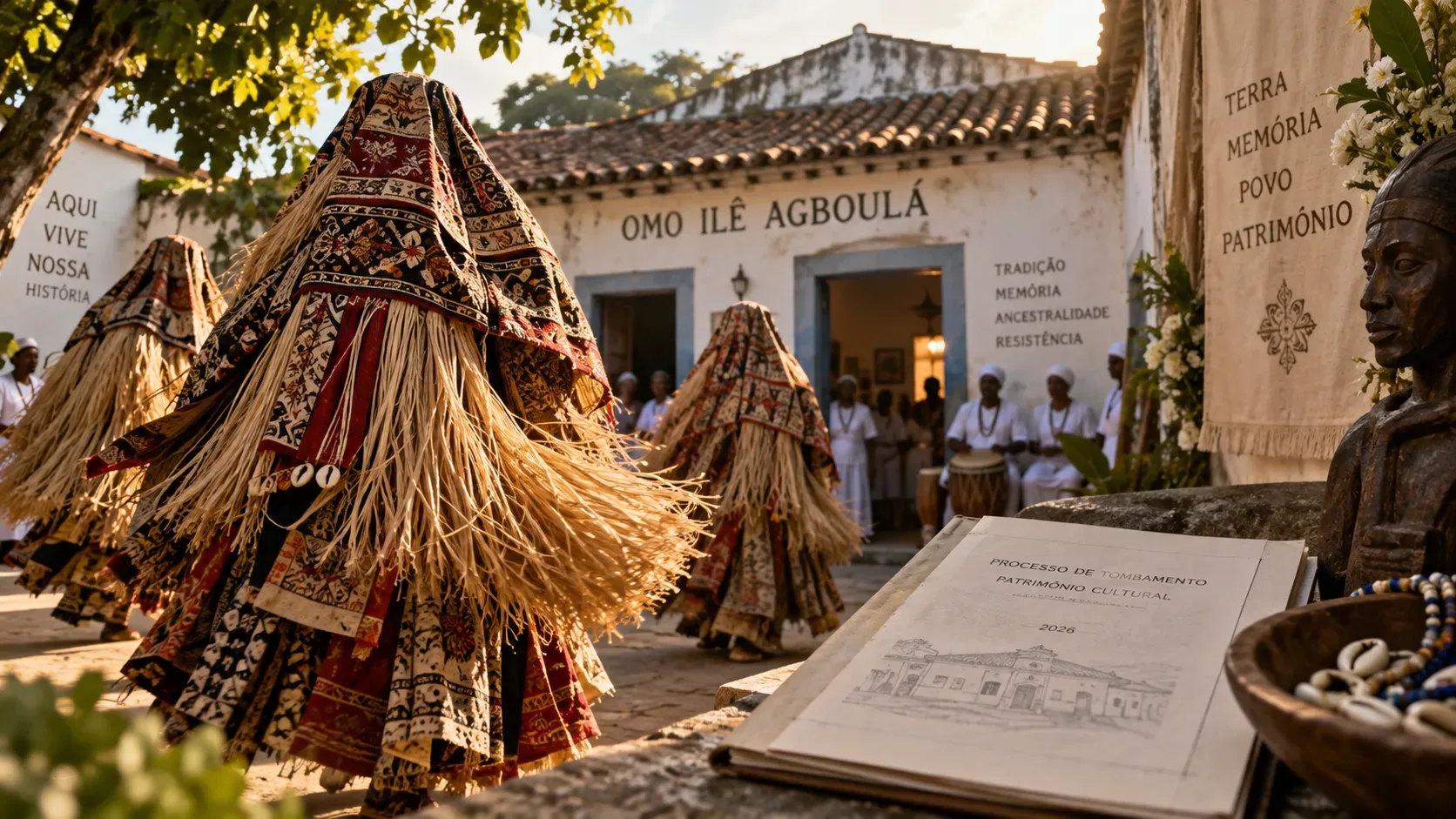
In September 2024, Bahia's State Council of Culture approved the Special Registration of the Caruru de São Cosme e São Damião celebration as Intangible Cultural Heritage of Bahia. The IPAC later began listing the caruru both in the Special Register of Events and Celebrations and in the Special Register of Knowledge and Ways of Making.
This recognition does not decide which religious interpretation is “correct,” nor does it turn saints and divinities into equivalents. Cultural heritage recognition protects the social relevance of a practice: its ways of making, memories, celebrations, community relationships, culinary knowledge, and forms of transmission between generations. It is a useful documentary bridge precisely because it allows caruru to be observed as a cultural phenomenon without erasing differences of faith.
How to talk about Cosmas and Damian, Ibeji, and caruru without mixing everything together
- Name the tradition. Say whether you are discussing Catholic devotion, Candomblé, Umbanda, family tradition, popular celebration, or cultural heritage.
- Prefer “associated” to “the same.” Syncretism brings symbols and forms of worship into relation, but it does not erase their distinct origins and meanings.
- Do not universalize the ritual. Caruru, sweets, seven children, prayers, and offerings may appear in different combinations.
- Separate the calendars. The current Catholic liturgical celebration is on September 26; September 27 continues as a popular and cultural landmark in many Brazilian communities.
- Consider each community's own voice. Terms, rites, and interpretations vary among terreiros, churches, families, and localities.
September 27 is a historical encounter, not a religious equivalence
The strength of September 27 comes precisely from overlapping layers: Catholic devotion, Afro-Brazilian cosmologies, ritual food, childhood, vows, neighborhood celebration, and cultural heritage. These layers can coexist in the same home, on the same street, or around the same table, but they still have their own histories.
Understanding the date requires replacing a simple explanation—“it is all the same celebration”—with a more precise reading: different traditions met in Brazil and created shared cultural forms. Caruru became one of the most visible expressions of that encounter; Cosmas and Damian and the Ibeji remain distinct references, connected by a history of syncretism, devotion, and cultural reinvention.