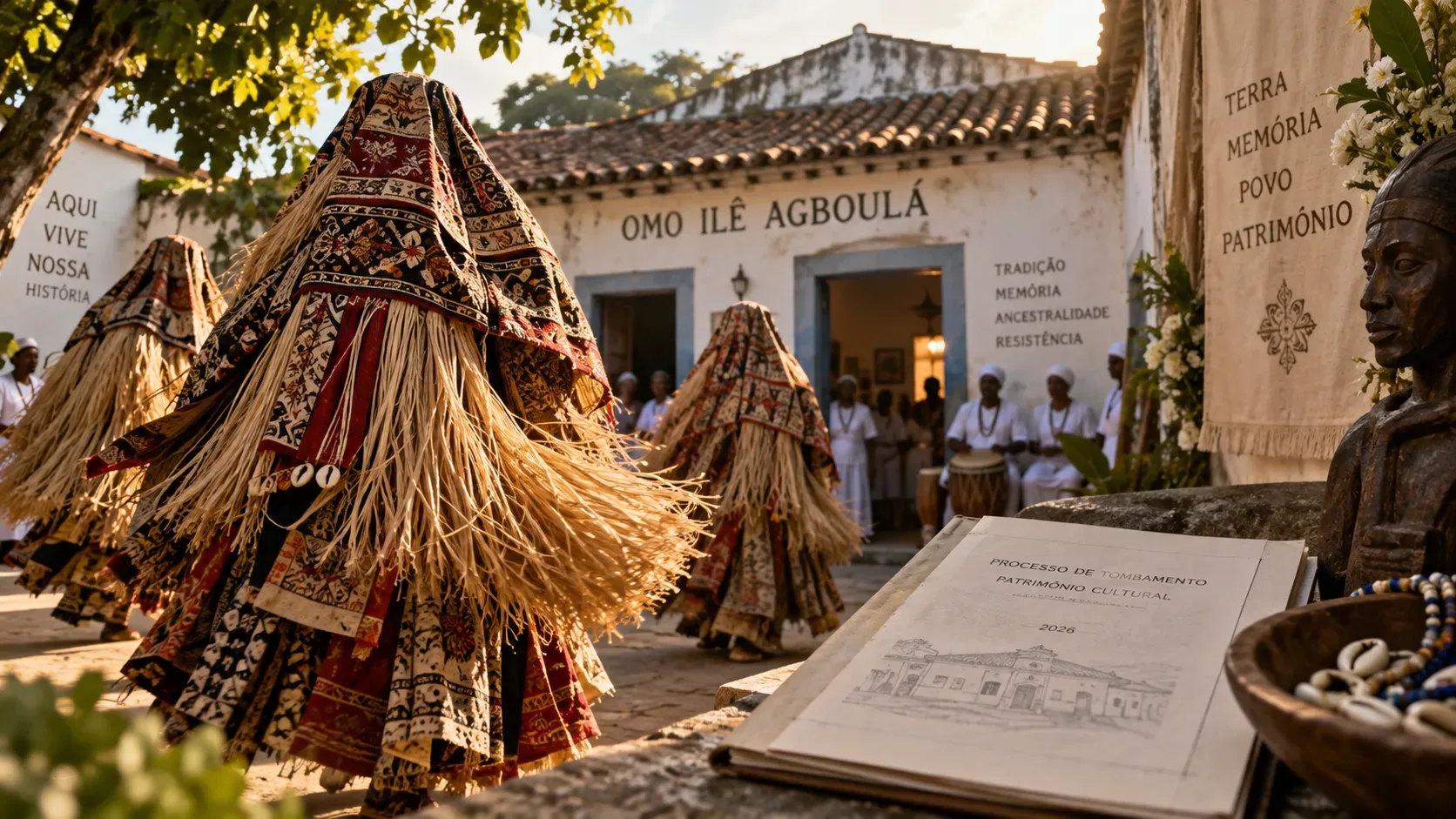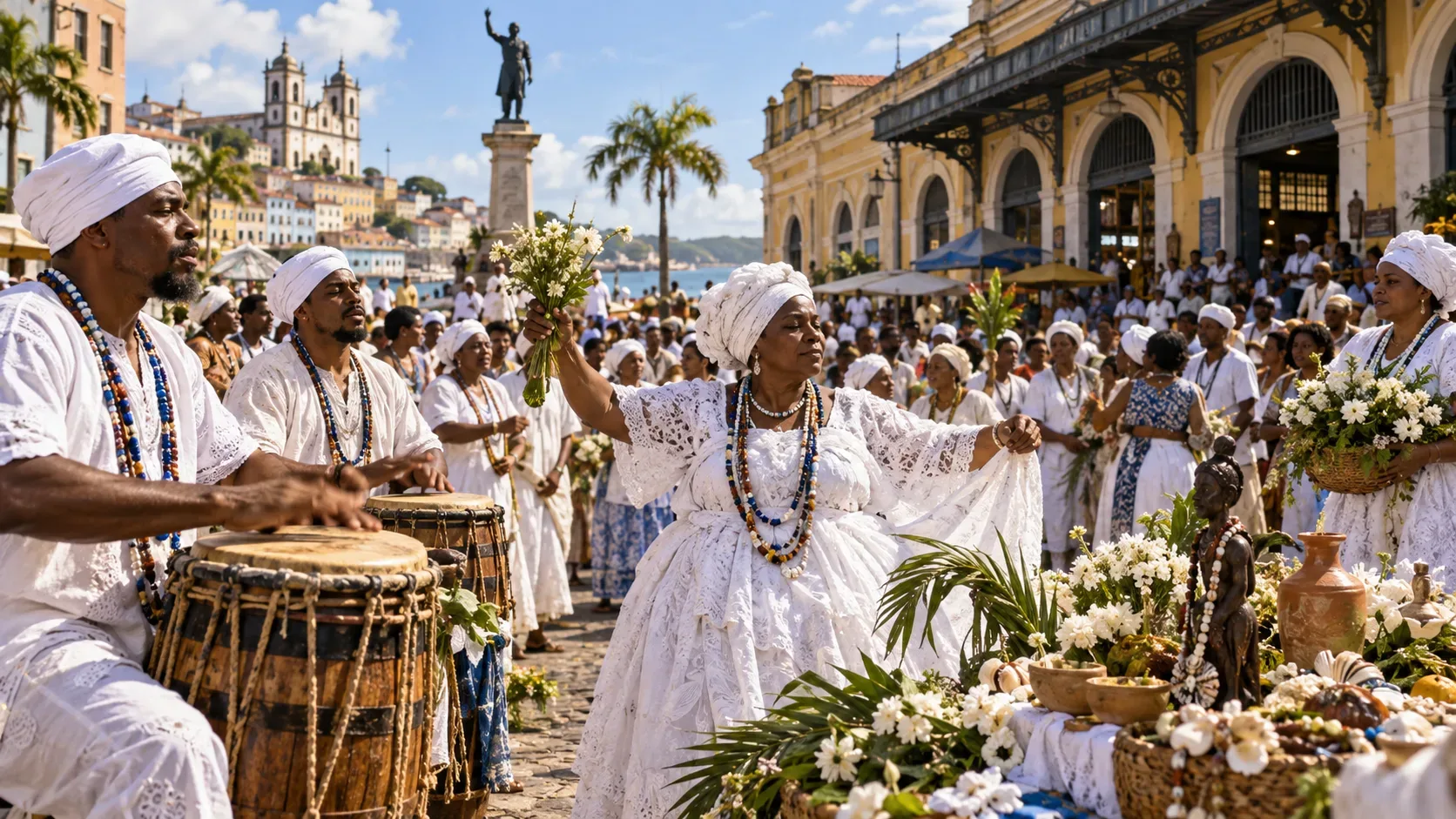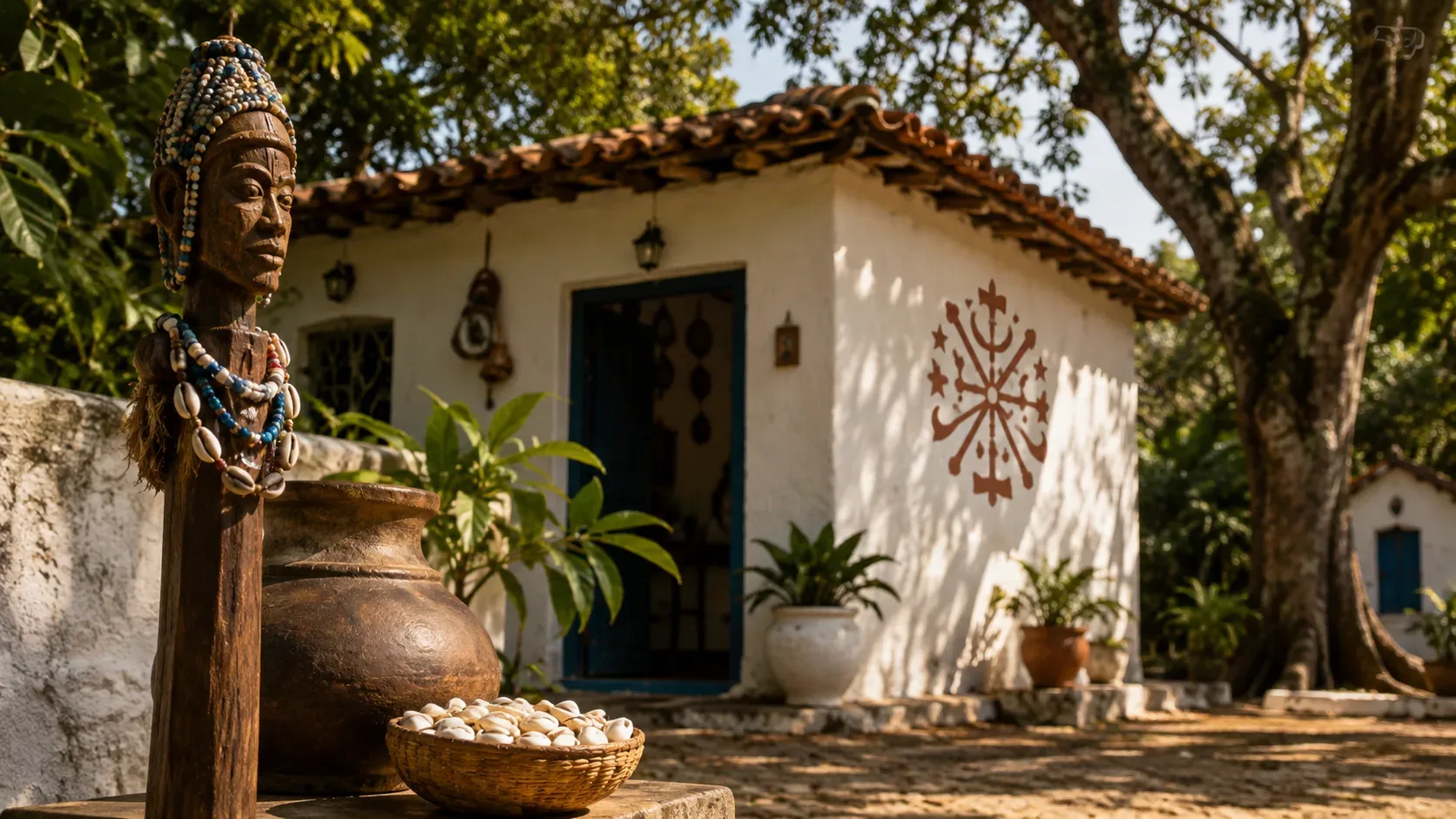
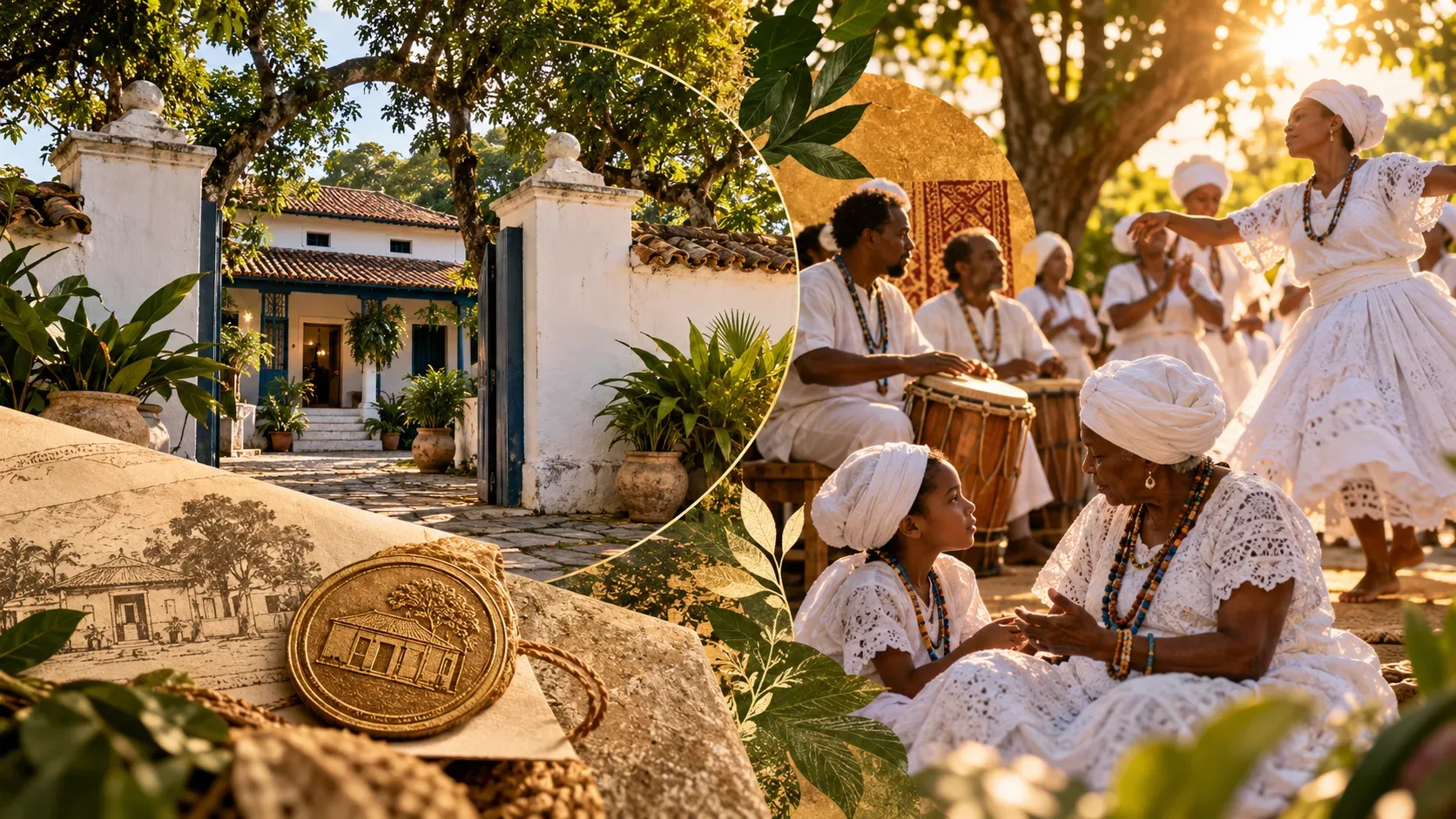
Heritage listing and intangible heritage registration are not the same form of protection. At the federal level in Brazil, listing (tombamento) applies to a material asset and its recognized attributes, such as buildings, courtyards, trees, springs and a terreiro’s relationship with its territory. Intangible heritage registration recognizes a living cultural reference, such as knowledge, celebrations, forms of expression or places of collective practice, and guides action to keep it being transmitted. A terreiro can encompass both dimensions, but one recognition does not automatically grant the other.
Article 216 of the Brazilian Federal Constitution includes tangible and intangible assets in cultural heritage and provides for public protection in collaboration with communities. The federal instruments have different legal bases: Decree-Law No. 25/1937 for listing and Decree No. 3,551/2000 for intangible registration.
What it means to list a terreiro
Listing identifies and protects a tangible cultural asset. For a terreiro, this may cover more than the worship hall: buildings, courtyards, vegetation, springs and other elements of the grounds may form part of the values set out in the case file. The actual scope depends on the defined boundaries and expressly recognized attributes, not just on the site’s architectural appearance.
According to the Iphan guidance on listed properties, protection seeks to prevent destruction and mutilation and includes oversight. Under federal listing, works and alterations affecting the protected asset require prior review and authorization from the Institute; the procedural rules are set out in Iphan Ordinance No. 289/2025. Heritage authorization does not replace other applicable permits.
Listing does not mean that the government becomes the owner of the terreiro. The asset remains subject to its applicable ownership or possession arrangements, alongside conservation duties and restrictions on changes. Nor does the designation by itself settle land-tenure disputes, automatically fund every repair or replace the community’s religious organization.
What it means to register a tradition
Registration under Decree No. 3,551/2000 recognizes intangible cultural assets on the basis of historical continuity and national relevance. Its registers cover Knowledge, Celebrations, Forms of Expression and Places. The last category includes spaces where collective cultural practices are concentrated or reproduced, but registering a place is not the same as listing the real property.
The subject of registration is a cultural reference enacted by people and communities, not a requirement to repeat a ritual forever in one unchanging form. Intangible heritage is transmitted and recreated over time; documentation and safeguarding should respect its context and the knowledge and decisions of its bearers. Registering a tradition does not automatically register every practice of one particular terreiro.
Under the decree, recognition entails documentation and promotion, and Iphan reassesses registered assets at least every ten years to consider renewal of the designation. Iphan explains that safeguarding actions may include mobilizing bearers, supporting the conditions for transmission and developing plans with community participation.
Listing and registration: a direct comparison
| Question | Tangible heritage listing | Intangible heritage registration |
|---|---|---|
| What is recognized? | A physical asset and the cultural attributes defined in the case file. | A practice, knowledge, expression, celebration or place as a living cultural reference. |
| Where is it formalized? | One or more Livros do Tombo (listing registers), as applicable. | One of the Livros de Registro (intangible heritage registers), as applicable. |
| Main effect | Conservation of the asset, review of alterations and oversight. | Documentation, recognition and safeguarding for continuity and transmission. |
| Community role | Take part in decisions about the place and meet applicable conservation responsibilities. | Set safeguarding priorities and approaches to transmission with partners. |
| What does it not do by itself? | It does not transfer ownership or guarantee automatic restoration funding. | It does not list the physical premises or freeze rituals and knowledge. |
Responsibilities and community autonomy
Conserving the site
The community responsible for a terreiro needs to understand the protected boundaries and attributes in the listing file, maintain dialogue with the heritage authority and submit intervention plans before carrying them out where required. Conservation management must take account of religious use, including the relationship between buildings, natural areas and everyday practices. Iphan reviews cultural protection; it does not take over the spiritual leadership of the house.
Keeping practices alive
In intangible heritage work, the bearer community is not merely a research subject. According to the Iphan Dictionary of Cultural Heritage, work should be based on prior and informed consent and dialogue with the groups concerned. A safeguarding plan can link appropriate documentation, transmission between generations, material conditions for practice and institutional cooperation, in line with agreed priorities.
This also calls for a distinction between cultural promotion and unrestricted access. Heritage recognition does not automatically make ceremonies, restricted spaces or internal knowledge public, nor does it authorize third parties to record or reproduce practices without respecting the community’s decisions and rights. The participation of bearers should guide what can be documented and shared.
The public authorities’ role
The heritage authority must prepare and decide cases within its jurisdiction, set conservation rules and oversee protected assets. For registration, public authorities document and promote the cultural reference and coordinate safeguarding with its bearers. The Constitution calls for collaboration with the community; that must not be mistaken for a transfer of religious authority to the state.
The Icimimó terreiro case in the Recôncavo region of Bahia
In February 2024, Iphan reported that its Consultative Council had approved the listing of Ilê Axé Icimimó Aganjú Didê, in Cachoeira, Bahia. The report highlights that the terreiro’s significance involves the relationship between the house, the land, water springs, cultivated areas, vegetation and other features of its sacred landscape. The case shows why material protection of a terreiro goes beyond preserving a façade.
The report describes Council approval, a stage that should be distinguished from ratification and final inscription in the listing registers, as explained in Iphan’s guidance on listing notices. It also does not establish that all Icimimó rituals were registered as intangible assets: that would require a separate registration decision and documentation.
How to check the scope of an announced protection
- Identify the instrument: tangible heritage listing, intangible heritage registration or another form of recognition, such as an inventory. Similar heritage terminology can refer to legally different measures.
- Check whether the responsible authority is federal, state or municipal, and consult the file, protected boundaries, applicable registers and status of the decision. An announced approval should not be treated as final inscription without verification.
- Ask what is protected and what actions have been agreed: conservation of spaces and landscapes on one side; conditions for transmitting knowledge and practices on the other. One measure does not replace the other.
- Consult the terreiro’s representatives about use, restricted areas and appropriate documentation. Heritage protection should be compatible with community participation and autonomy.
The practical distinction is this: listing protects the tangible attributes of a place; registration recognizes and supports the continuity of a living cultural reference. Where place and practice depend on each other, the instruments can complement one another, each with its own process, scope and obligations.
Sources and references
- Brazilian Federal Constitution, Article 216
- Decree-Law No. 25/1937, protection of tangible heritage
- Decree No. 3,551/2000, intangible heritage registration
- Iphan, approval of the Icimimó terreiro listing (2024)
- Iphan, Listed Properties
- Iphan, Intangible Heritage
- Iphan, Promotion and Sustainability of Cultural Assets
- Iphan Ordinance No. 289/2025, intervention procedures
- Iphan, Listing Notices
- Iphan, Heritage Dictionary: Intangible Heritage