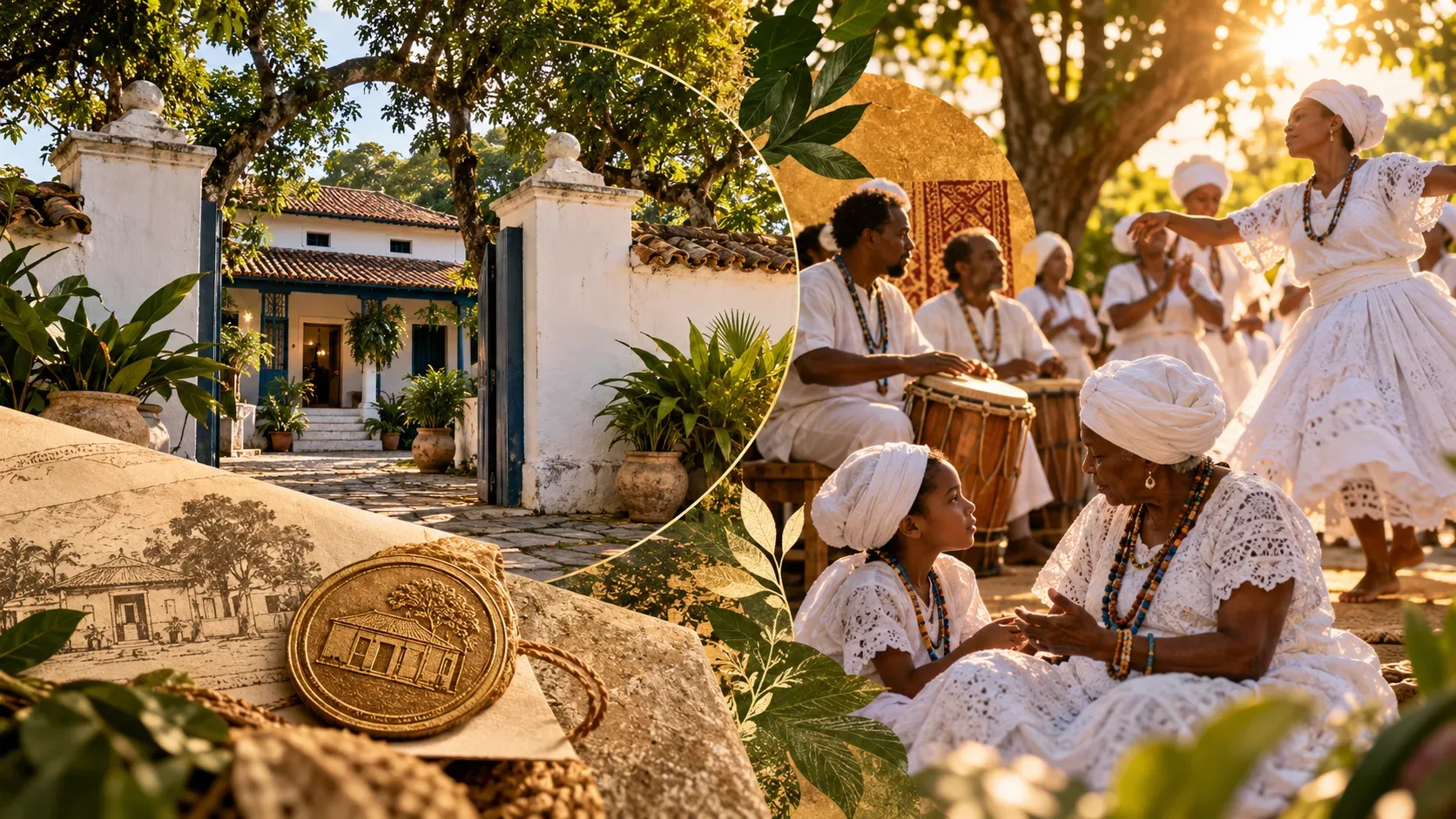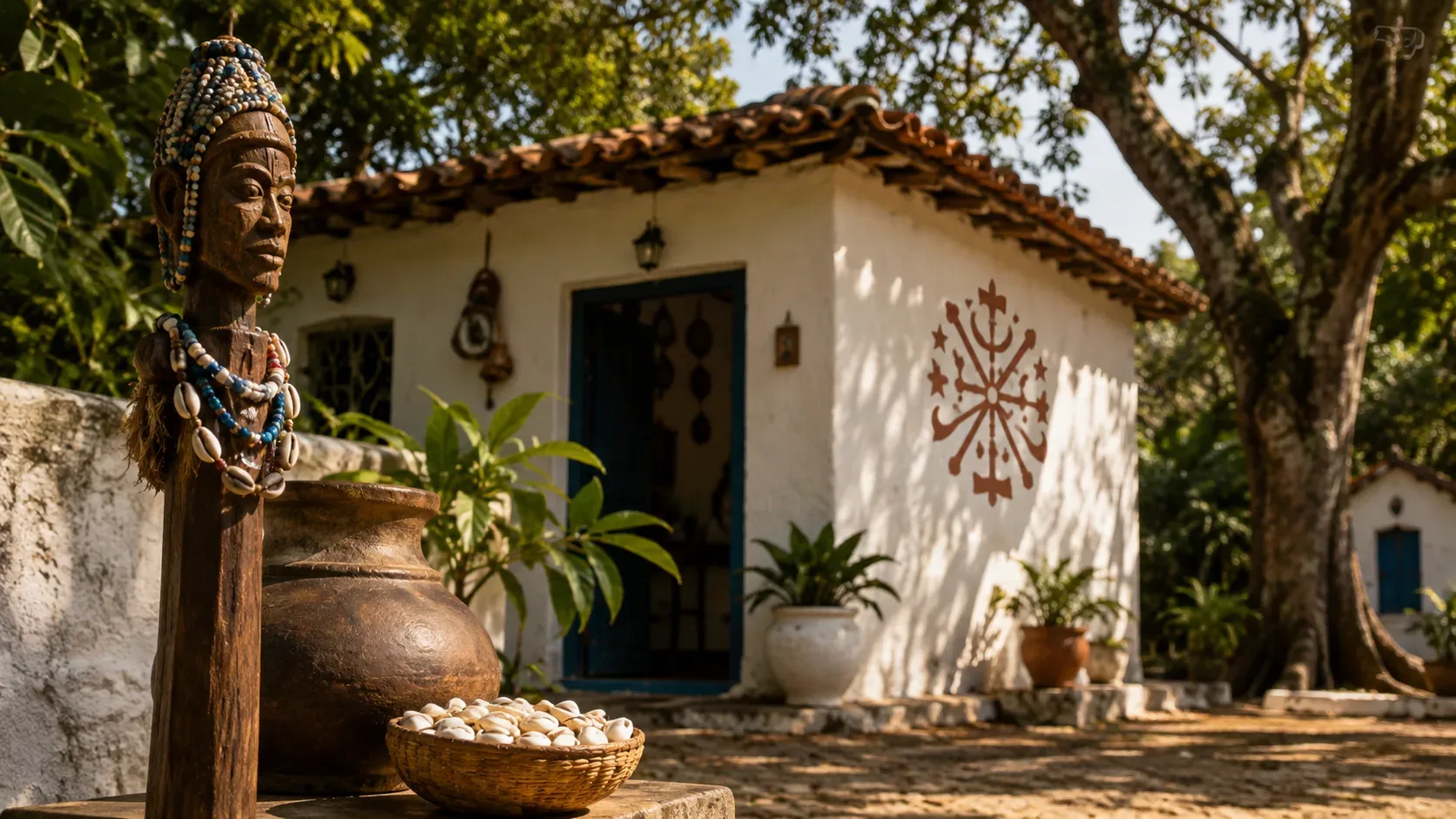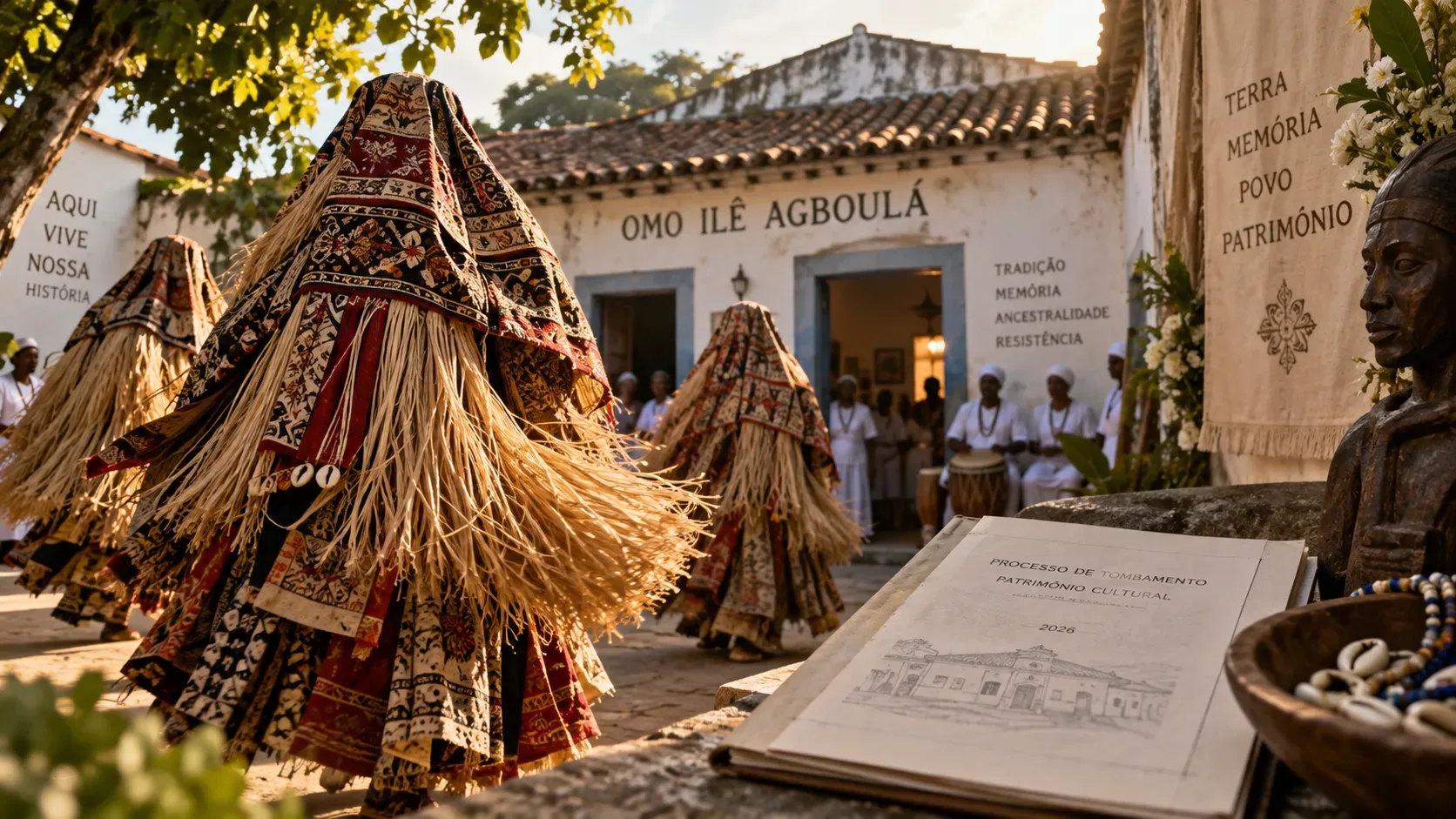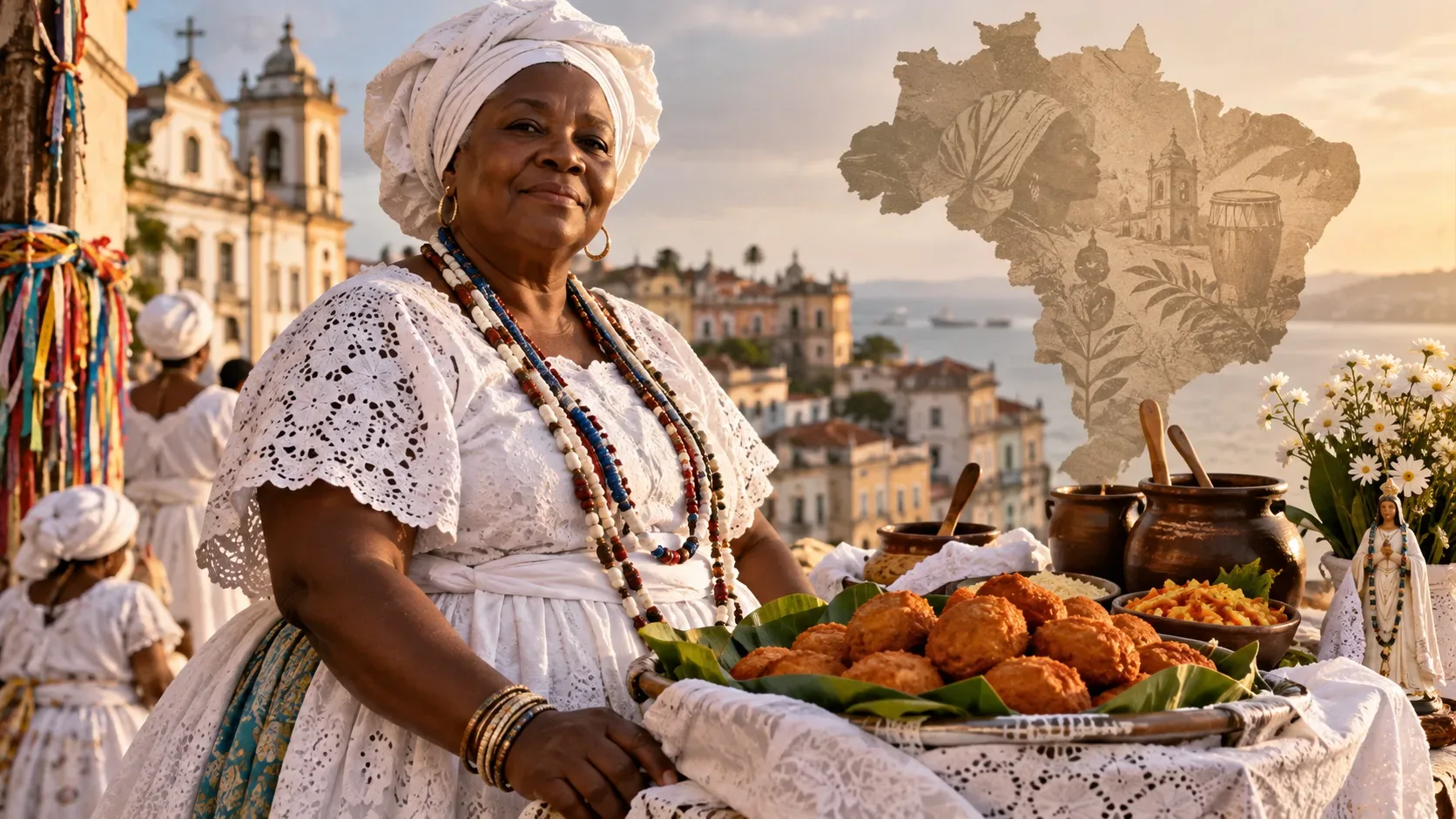
May 13 became the center of the Bembé do Mercado because Black residents and Candomblé communities in Santo Amaro turned the first anniversary of Abolition, in 1889, into a public affirmation of freedom. Rather than treating the date only as a civic commemoration, the community brought Candomblé into the open space of the Market Square, with atabaque drums, rituals, encounters among terreiros and offerings to the water divinities. This combination of abolition memory, occupation of public space and religious continuity helps explain why the Bembé became a cultural reference in Bahia's Recôncavo and later an intangible heritage recognized by the state of Bahia and by Iphan.
1888 legally ended slavery; 1889 marked the first Bembé
Law No. 3,353 of May 13, 1888, known as the Golden Law or Lei Áurea, declared slavery extinct in Brazil. The legal change was decisive, but it was not accompanied by a broad program of social inclusion, reparations, access to land or material guarantees of citizenship for the newly freed Black population. Part of the Bembé's historical force lies in this gap between legal freedom and lived freedom.
According to heritage documentation and oral history preserved in Santo Amaro, the first Bembé took place on May 13, 1889, exactly one year after Abolition. Bahia's Institute of Artistic and Cultural Heritage (IPAC) records that local memory attributes the initiative to João de Obá, an African man of Malê origin, who is said to have gone into the streets with his religious community. A palm-covered shelter was erected, drums were played and the Candomblé celebration continued for three days, ending with an offering to the Mãe d'Água, the Mother of the Waters.
This origin should be read with the same precision required by the sources themselves: João de Obá's role is transmitted as community oral history, not as a detail established by a single surviving document from 1889. What is solidly confirmed by the heritage records is that the Bembé dates back to the first anniversary of Abolition and became a collective celebration led by Candomblé communities.
Why “street Candomblé” means more than a ritual held outside a terreiro
Calling the Bembé a “street Candomblé” does more than identify the ceremony's location. The Market Square is part of the celebration's meaning. By occupying a central public area of the town, the religious practice becomes visible, shared and territorial: freedom is no longer only a legal idea but something exercised through bodies, sounds, rituals and community relationships in urban space.
This dimension matters because African-derived religions have faced a long history of repression, stigma and religious racism in Brazil. In the Bembé, public space is not merely a backdrop. It becomes a place of memory and affirmation where different Candomblé houses can renew bonds, celebrate ancestry and reaffirm their presence in Santo Amaro's social life.
IPAC sources also describe the Bembé as a moment for renewing axé and restoring the city's vital force. The celebration includes expressions of gratitude to Iemanjá and Oxum and is connected to the fishermen's tradition of presenting gifts to the Mãe d'Água. Its religious character, therefore, is not a folkloric accessory to a cultural program: it is the organizing core of the celebration.
What happens during the Bembé and the role of the terreiros
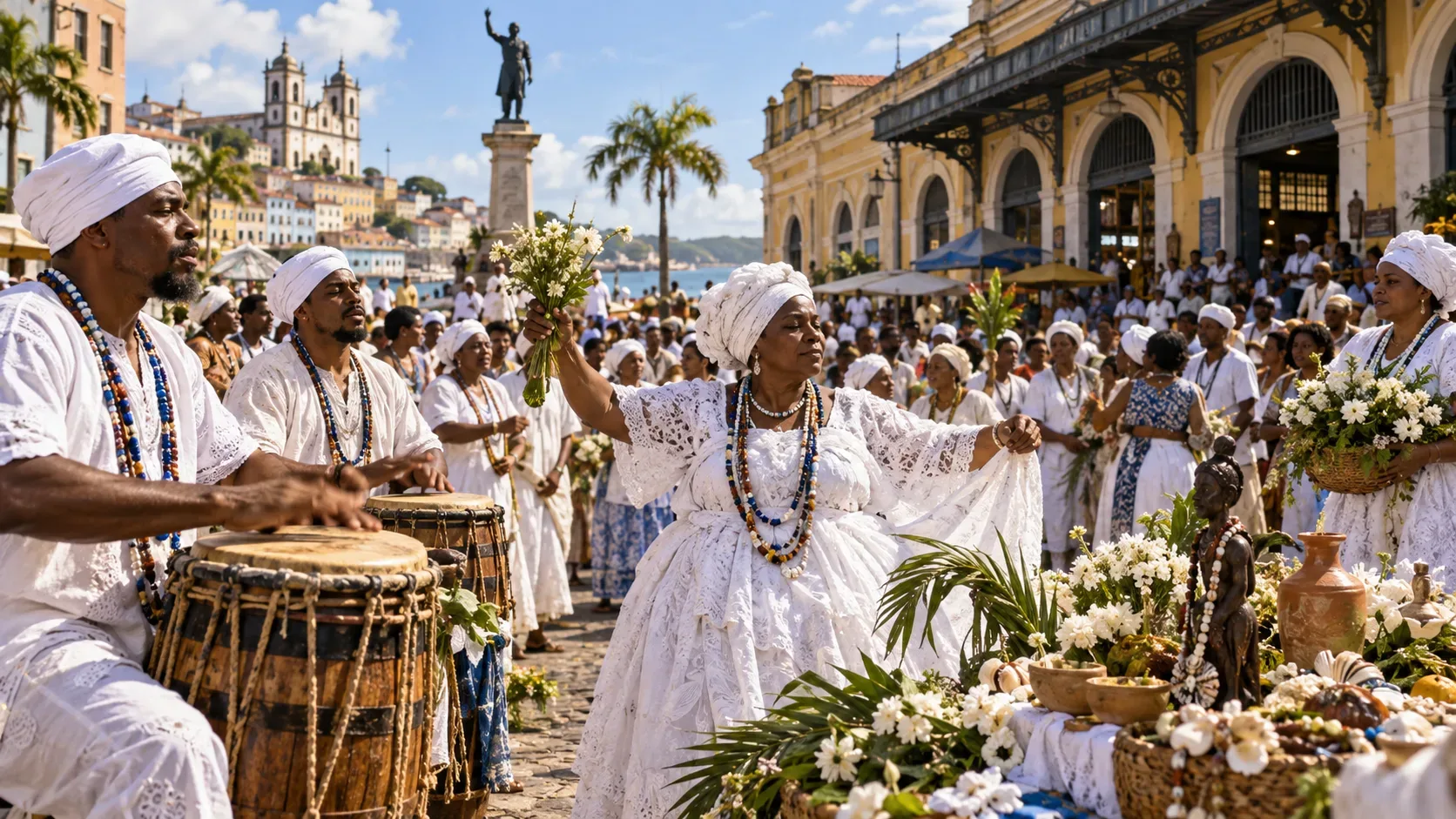
The Bembé is a collective celebration, not a ceremony belonging to a single terreiro. Over time, dozens of Candomblé houses and religious leaders have taken part in its organization and rituals. Recent programs include religious ceremonies in the Market pavilion, processions, drum rhythms and Candomblé rites, as well as the departure of the offering for Itapema Beach, where it is delivered to the Mãe d'Água.
Traditions such as samba de roda, capoeira, maculelê, puxada de rede and Nego Fugido are also associated with the Bembé. They broaden the public dimension of the event and reveal connections with other Afro-Bahian traditions of the Recôncavo. This does not mean that there is an unchanging script. Programs can vary from year to year, while certain cores — the memory of May 13, the participation of Candomblé communities, the rituals and the relationship with the waters — provide continuity to the cultural practice.
This leadership by the terreiros is central to understanding intangible heritage. What is preserved is not a frozen performance but a living practice transmitted and recreated by its bearers. Continuity depends precisely on the community's ability to adapt forms of organization without losing references that it recognizes as fundamental.
The Bembé's May 13 is not a naive celebration of Abolition
May 13 carries contested meanings in Brazilian memory. The signing of the Lei Áurea ended legal slavery, but it did not eliminate inequality, racism or barriers to citizenship. Interpreting the Bembé simply as gratitude for the law therefore reduces the meaning of the celebration.
In Santo Amaro, the first anniversary of Abolition was appropriated by a Black community that gave the date its own religious and political language. The Bembé celebrates freedom, but it also recalls that freedom had to be exercised and defended in everyday life. The choice of the street, the gathering of terreiros and the survival of the celebration across generations turn May 13 into an active memory of the post-abolition period.
This reading avoids a false opposition between “celebrating” and “criticizing” May 13. In the Bembé, both dimensions can coexist: there is celebration of the legal break with slavery and affirmation by a population that continued to face exclusion after 1888.
How the Bembé became cultural heritage
Heritage recognition came in layers. In 2012, the government of Bahia registered the Bembé do Mercado as intangible cultural heritage of the state through State Decree No. 14,129. The state recognition formalized the celebration's importance to Bahian memory and identity and opened a new stage for documentation, debate and safeguarding.
On June 13, 2019, Brazil's National Historical and Artistic Heritage Institute (Iphan) registered the Bembé do Mercado as Cultural Heritage of Brazil in the Register of Celebrations. The application was submitted by the Associação Beneficente e Cultural Ilê Axé Ojú Onirè, and the process considered historical continuity, the bond with the bearer communities, the connection with Santo Amaro's urban space and the celebration's relevance to the history of Brazil's Black population.
Federal registration does not mean that the state “created” the tradition or became its owner. In intangible heritage policy, the purpose is to recognize a cultural reference already maintained by a community and to create conditions for safeguarding it. This can include documentation, transmission of knowledge, support for the organization of bearers, public visibility and protection of the conditions that allow the practice to continue.
In 2026, Iphan itself highlighted that the Bembé was the first cultural asset of African religious matrix entered in the Register of Celebrations. That point helps explain why federal recognition goes beyond local interest: the Bembé has also become a national reference for Black presence, religious freedom and the occupation of public space.
The Market and the square also matter for safeguarding
Although the Bembé is intangible heritage, it depends on concrete places. The Market Square and the Municipal Market are tied to the celebration's history, circulation of people and public visibility. Preserving the Bembé therefore does not mean caring only for rituals and memories; it also means considering the urban and physical conditions in which it takes place.
In January 2026, restoration work began on the Municipal Market together with the requalification of the Bembé fair area, with an announced investment of R$28.5 million from Brazil's New PAC program and technical oversight by Iphan. This material intervention is separate from the Bembé's intangible registration, but it shows how the two dimensions can meet in heritage policy: built space supports practices, gatherings and circuits of memory.
That same year, IPAC monitored the 137th edition of the celebration to gather documentation and testimony for the process of revalidating the state recognition. Periodic review matters because intangible heritage does not mean immobility. Public institutions need to understand how the practice has changed, what risks it faces and which safeguarding actions make sense to its bearers in the present.
Timeline: from 1888 to the present
| Date | What happened | Why it matters |
|---|---|---|
| 05/13/1888 | The Lei Áurea legally abolishes slavery in Brazil. | It creates the historical milestone later reinterpreted through the Bembé. |
| 05/13/1889 | The first Bembé is held in Santo Amaro on the first anniversary of Abolition. | Freedom is celebrated publicly through Candomblé and community action. |
| 2012 | The Bembé do Mercado is registered as intangible heritage of Bahia. | The state formally recognizes its cultural value and adds a new layer of safeguarding. |
| 06/13/2019 | Iphan enters the Bembé in the Register of Celebrations. | The celebration becomes Cultural Heritage of Brazil. |
| 2026 | The 137th edition is accompanied by state revalidation work and by the requalification of the Market and Bembé fair area. | It shows that preservation remains a living process tied to both community and place. |
Why the Bembé is heritage — in one sentence
The Bembé do Mercado became heritage because Black communities in Santo Amaro have maintained, transmitted and renewed across generations a celebration that turns May 13 into their own experience of freedom, faith, ancestry and public presence.
Its value lies not only in the age of the celebration. It lies in the connection among post-abolition memory, Candomblé terreiros, ritual use of the street, traditions of the Recôncavo and community continuity. The 2012 recognition and the 2019 federal registration came later: they did not inaugurate the Bembé, but institutionally recognized something its bearers had already preserved for more than a century.
Sources for further reading
- Iphan — Bembé do Mercado in the Registered Cultural Assets database
- Iphan — 137 years of Bembé do Mercado, 2026
- IPAC — Bembé do Mercado and the state heritage registration
- IPAC — ritual elements and the relationship with Iemanjá, Oxum and the Mãe d'Água
- Iphan — restoration of the Municipal Market and requalification of the Bembé fair area, 2026
- Government of Bahia — monitoring for state revalidation, 2026