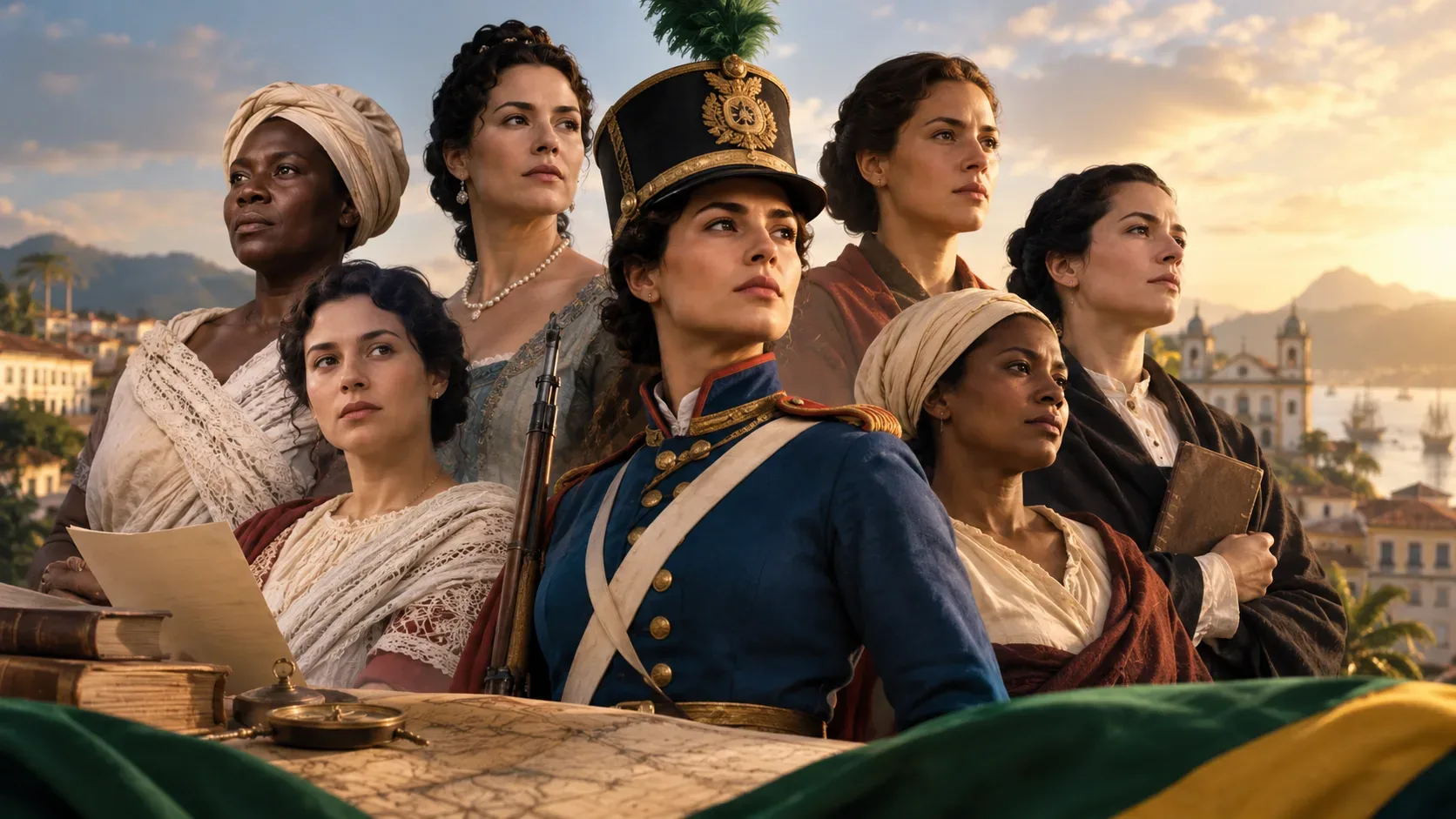
On September 7, 2026, Brazil’s Ministry of Women published a list of seven women associated with the country’s struggles for political emancipation: Hipólita Jacinta Teixeira de Melo, Bárbara de Alencar, Urânia Vanério, Maria Felipa de Oliveira, Maria Quitéria de Jesus, Maria Leopoldina, and Ana Lins. The selection matches the seven lives gathered in the book Independência do Brasil: as mulheres que estavam lá, presented by Brazil’s Chamber of Deputies in 2022. The key point, however, is that these biographies do not reach us with the same kinds or amounts of documentation.
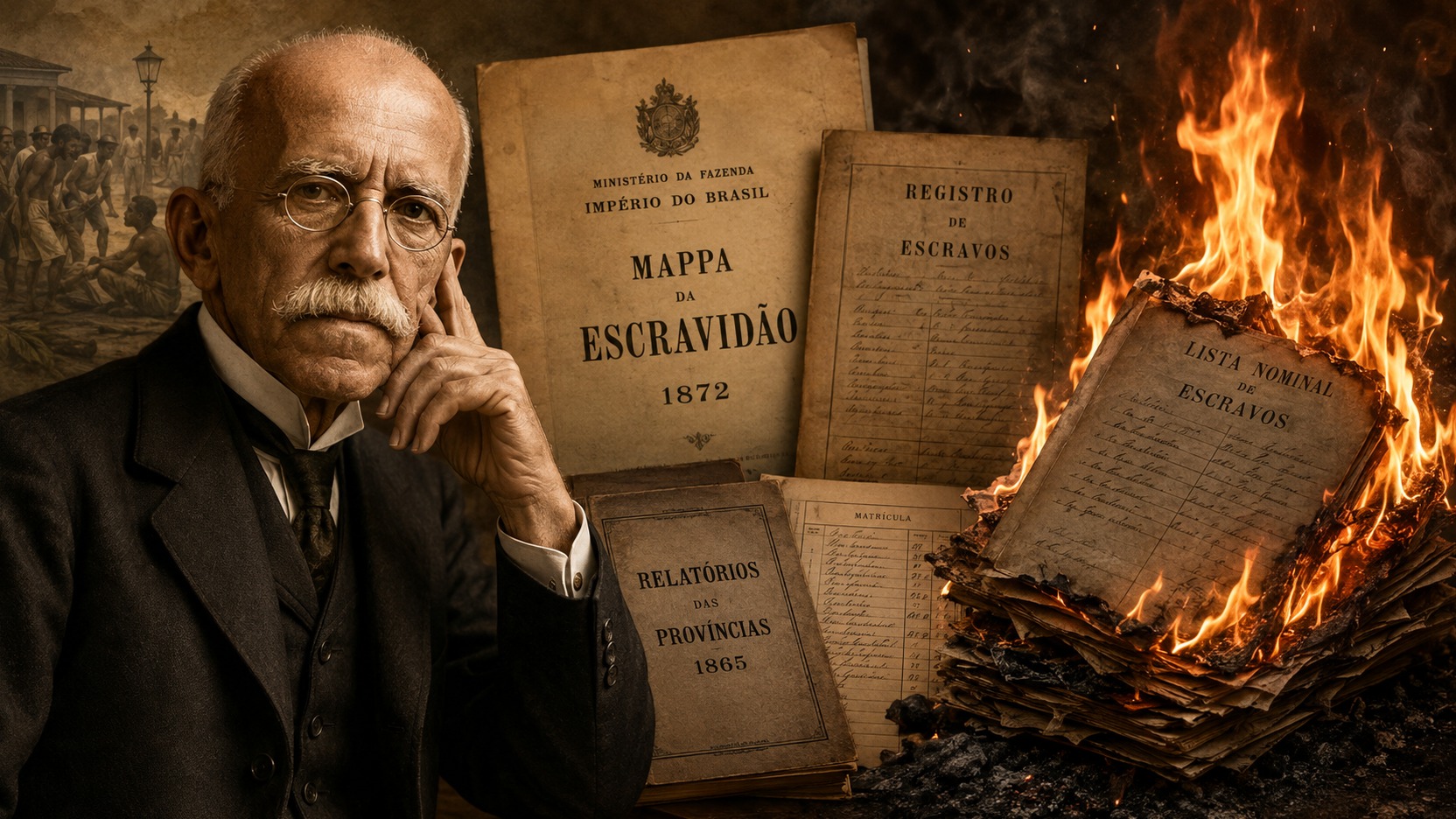
That changes how the story should be told. In some cases, decrees, official correspondence, military records, letters, or texts produced during the events survive. In others, reconstruction relies on later court files, regional historiography, oral tradition, or identifications made by researchers two centuries afterward. Distinguishing those levels does not diminish any of the women; it prevents memory, hypothesis, and documented fact from being treated as the same thing.
How to read the seven lives without flattening different kinds of evidence
In this article, “high documentary support” means that contemporary or near-contemporary records substantiate the core claims about a woman’s actions. “Reconstructed support” means that a claim depends on later historical cross-checking. “Memory with clues” means that a strong tradition exists and some documents relate to the person, but there is no direct proof for every deed later attributed to her. These labels are an editorial guide, not a definitive academic score.
| Woman | Safest role to state | Level of support | Main caution |
|---|---|---|---|
| Maria Quitéria | Fought in the wars of Independence in Bahia and received military and imperial recognition | High | Avoid repeating later heroic episodes as fact without a source |
| Maria Leopoldina | Served as regent, presided over the Council of State on September 2, 1822, and supported the break with Portugal | High | “Signed Independence” oversimplifies a more complex documentary and political process |
| Urânia Vanério | Is credited with writing Lamentos de uma Baiana, an 1822 pamphlet denouncing Portuguese military violence | High for the text; reconstructed for authorship | The author’s identity was established by recent historical research |
| Hipólita Jacinta | Took part in the political coordination of the Minas Conspiracy and in communications among conspirators | High/reconstructed | Her movement dates to 1789; tying her directly to September 7, 1822 would be anachronistic |
| Bárbara de Alencar | Was involved in the 1817 Revolution in Ceará and was imprisoned | Good | The extent of her direct activity in 1824 appears more strongly in later biography and memory |
| Ana Lins | Is associated by Alagoas historiography with the republican network around the Sinimbu sugar estate in 1817 and 1824 | Moderate | Many details come from later regional syntheses rather than abundant personal documentation |
| Maria Felipa | Is a central figure in Itaparica’s popular memory of resistance in 1822-1823 | Memory with clues | Documents help discuss her possible historical existence but do not prove every military deed attributed to her |
Maria Quitéria: the battlefield life with the strongest direct documentation
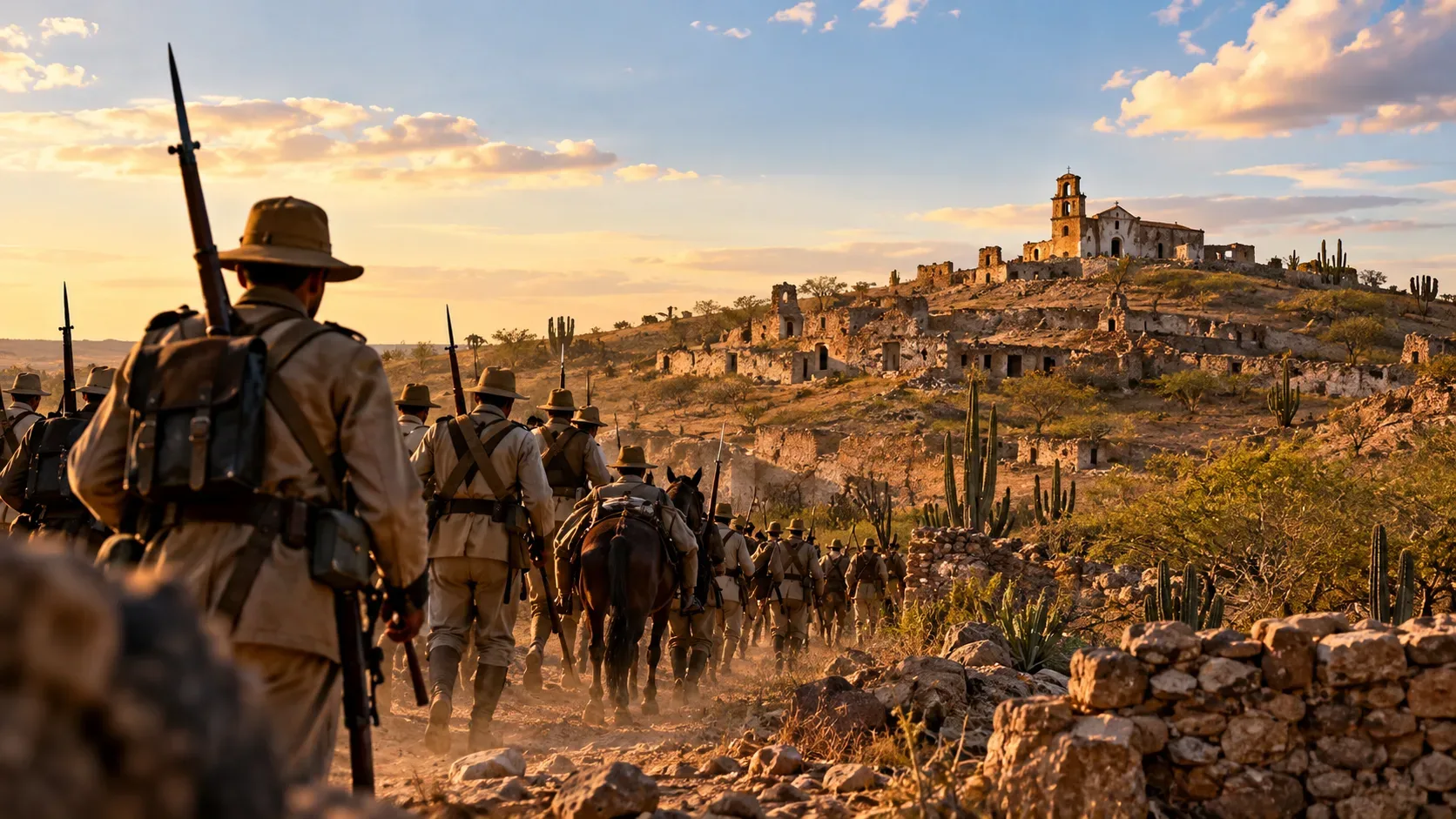
Among the seven, Maria Quitéria is one of the best documented cases of direct military participation. Brazil’s National Archives preserves the act of August 20, 1823 granting her the insignia of Knight of the Imperial Order of the Southern Cross for services in the restoration of Bahia. Military correspondence from 1823 also describes her as a combatant and records cadet honors.
The tradition that she enlisted in male clothing under the name “Medeiros” is also supported by documentation and by a near-contemporary account. The traveler Maria Graham met Quitéria in Rio de Janeiro in August 1823 and recorded their conversation in her journal. Later documentary studies, such as the article published by the Portuguese Review of Military History, cross-reference Graham’s account with uniform orders, official correspondence, and period news.
Caution is warranted with highly specific details repeated in popular biographies—an exact number of prisoners, formal command of a women’s unit, or battle scenes presented as certain when the records are uneven. The secure core is strong: Quitéria enlisted, fought in the Bahia campaign, was recognized as a cadet, and received an imperial decoration.
Maria Leopoldina: documented political agency without reducing it to a single “signature”
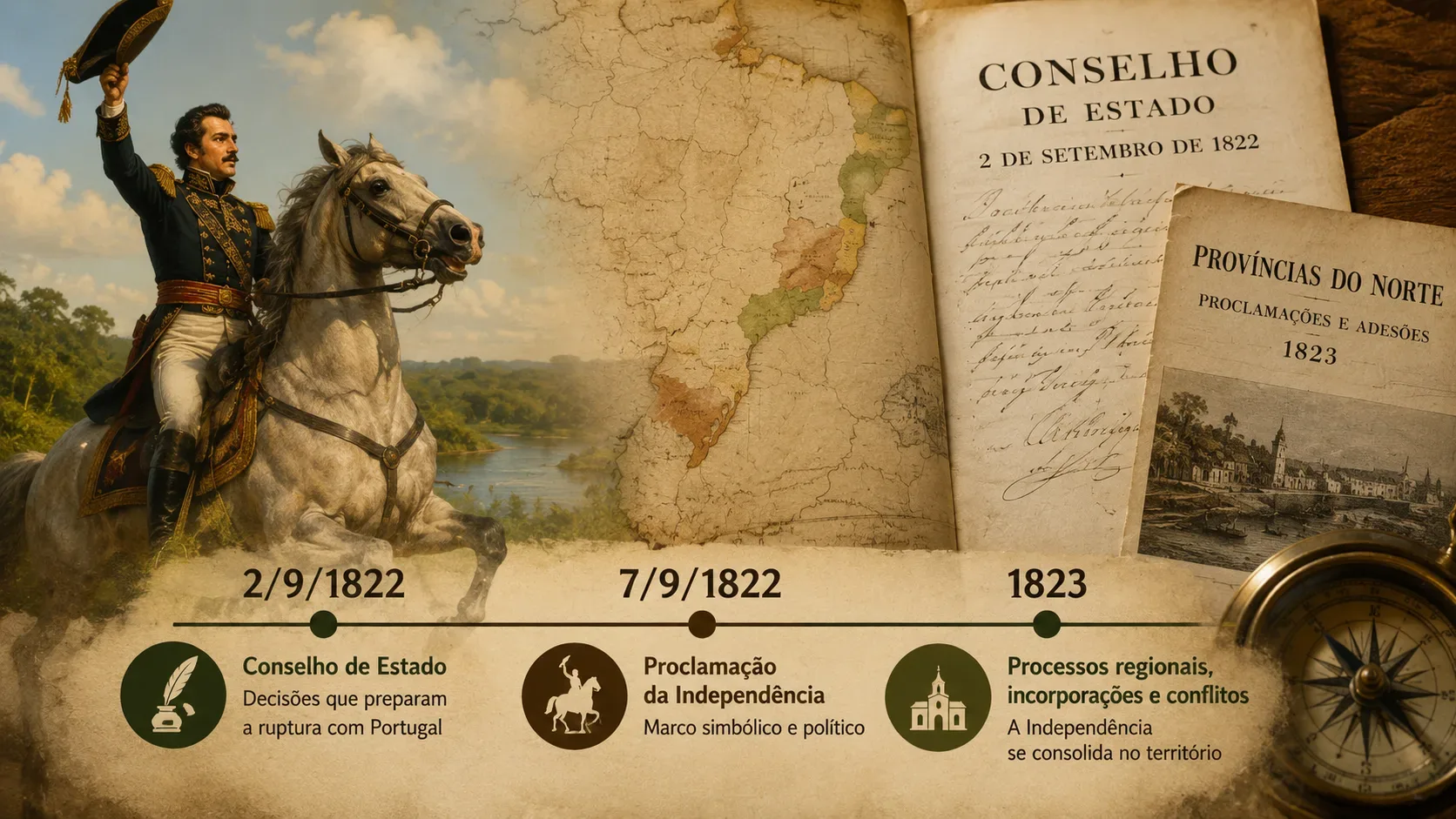
Maria Leopoldina stood at the center of political decision-making in September 1822. While D. Pedro was away, she exercised the regency in Rio de Janeiro. The Brazilian National Digital Library records that on September 2 she presided over an extraordinary meeting of the Council of State that advised the prince not to obey new orders from Lisbon. The correspondence sent to D. Pedro was also central to the episode.
A letter attributed to Leopoldina and held in a collection linked to the Imperial Museum, reproduced by Correio IMS, urges immediate action in the face of the crisis. It is therefore solid to state that she served as regent, took part in the deliberation, and pressed for a break with Portugal.
It is more prudent to avoid the formula “Leopoldina signed Independence” as though there were a single document equivalent to a modern declaration of independence. Institutional sources use different wording for the September 2 session. The historically safer statement is the broader set of actions: regency, presidency of the Council, political deliberation, and decisive correspondence sent to D. Pedro.
Urânia Vanério: an 1822 pamphlet whose author was recovered two centuries later
Lamentos de uma Baiana is an 1822 political document written amid Salvador’s military crisis and known to historians before its author was identified. The major shift came with research by historian Patrícia Valim, who attributed the text to Urânia Vanério, then 10 years old. Valim presented the archival reconstruction in 2022, and the identification was later incorporated by institutions such as Brazil’s Chamber of Deputies.
The distinction is straightforward: the pamphlet’s existence and its anti-Portuguese political content are documentary facts from 1822; the link between the text and Urânia is a recent historical attribution built through archival research. That does not make it weak, but it should be presented as the result of investigation rather than as information known continuously since the nineteenth century.
Hipólita Jacinta: real participation in the Minas Conspiracy, but in an earlier stage of the colonial crisis
Hipólita Jacinta Teixeira de Melo belongs to a chronology earlier than the 1822 process. Her actions are tied to the Minas Conspiracy of 1789. Research by UFMG’s Projeto República highlights her role in circulating messages and attempting to mobilize conspirators after arrests and betrayals. UFMG summarizes this reconstruction on the basis of the conspiracy records and later scholarship.
Institutional recognition has also advanced: Law No. 15,086 of January 3, 2025 entered Hipólita’s name in Brazil’s Book of Heroes and Heroines of the Nation.
The chronological caveat is essential. She did not participate in the Independence events of 1822. Her inclusion makes sense only when “Independence” is treated as a broader arc of challenges to colonial rule and competing political projects from the late eighteenth to early nineteenth centuries. Without that explanation, a list can misleadingly suggest that all seven women acted in the same historical episode.
Bárbara de Alencar: strong evidence for 1817, more caution when extending her activity to 1824
Bárbara de Alencar appears in institutional sources connected to the Pernambuco Revolution of 1817 and the attempt to extend the movement to Crato, Ceará. A biography in Brazil’s National Archives on Tristão Gonçalves de Alencar states that he joined the movement alongside his mother Bárbara, an uncle, and a brother. The National Library Foundation likewise describes José Martiniano de Alencar as participating in the 1817 Revolution and the Confederation of the Equator alongside his brothers and his mother.
There is therefore good support for placing Bárbara in the revolutionary network of 1817 and in the repression that followed. More famous formulas—“Brazil’s first political prisoner,” president of a republic in Crato, or a direct leader of the Confederation of the Equator—should be accompanied by their specific source because biographies, legislative tributes, and regional memory state them with different degrees of precision.
Ana Lins: an important figure in Alagoas republican memory, with more dispersed documentation
Ana Maria José Lins, known as Ana Lins, is associated with the Sinimbu sugar estate in São Miguel dos Campos and with the adhesion of part of the local elite to the Pernambuco Revolution of 1817. A study published in the Journal of the Historical and Geographical Institute of Sergipe describes the estate as a center for spreading revolutionary information and links Ana Lins and her husband, Manuel Vieira Dantas, to the protection of supporters of the cause.
The municipal memory of São Miguel dos Campos also preserves a detailed narrative of her involvement in 1817 and 1824, while calling her a “legendary figure.” That phrase is useful for readers: the core association between Ana Lins and regional republicanism is recurrent, but detailed episodes of fighting, imprisonment, and leadership depend heavily on later historical syntheses.
As with Hipólita and Bárbara, including her in a list of “women of Independence” requires a concept broader than September 7: these were disputes about sovereignty, republicanism, provincial autonomy, and relations with Portugal that crossed the period.
Maria Felipa: when memory is strong but direct proof of the deeds remains limited
Maria Felipa de Oliveira is the case in which the separation between memory and proof needs to be most explicit. She holds a central place in Itaparica’s tradition as a Black woman connected to resistance against Portuguese troops. Bahia and federal institutions have incorporated her into public narratives of the July 2 Independence celebrations. The Legislative Assembly of Bahia itself distinguishes documented figures from people “remembered in memory,” citing Maria Felipa in Itaparica.
Research took an important step when Milton Moura and Felipe Peixoto Brito analyzed an 1834 criminal case. Their article in Veredas da História identifies a poor and illiterate Maria Felippa acting as a complainant in Itaparica and discusses whether she may correspond to the woman preserved in local tradition. The record strengthens the possible historicity of the figure, but it does not automatically prove that this woman carried out the military deeds attributed to Maria Felipa in 1822-1823.
For that reason, claims such as “led 40 women,” “burned 40 or 42 vessels,” “seduced Portuguese soldiers,” or “used stinging nettles against sailors” should not be presented as settled facts without explaining the nature of the source. The more accurate wording is that tradition attributes leadership in Itaparica’s popular resistance to Maria Felipa and that recent research has located documents compatible with the existence of a woman by that name, while proof of specific episodes remains open.
What changes when historiography makes uncertainty visible
The seven women help dismantle the idea that Brazilian Independence was the work of one man, one day, or one region. But the historical gain does not come from replacing a gallery of male heroes with an equally simplified gallery of female heroes. It comes from showing how different actors entered politics through different routes—arms, letters, pamphlets, family networks, estates, governing councils, and popular resistance—and how the production and survival of sources were themselves unequal.
Maria Quitéria and Leopoldina left richer documentary trails because they were connected to the Army, the Court, and institutions that generated and preserved records. Urânia could be recovered because a text survived and archives allowed historians to reconstruct its authorship. Hipólita, Bárbara, and Ana Lins require attention to movements earlier than or parallel to September 7. Maria Felipa most clearly exposes the challenge of studying Black and working-class women whose collective memory survived more strongly than official files.
The most productive question, then, is not simply “were these women heroines?” but “what exactly can we demonstrate about each one, from which sources, and with what limits?” That shift preserves their importance while giving readers the precision that history requires.
Main sources consulted
- Brazil’s Ministry of Women — seven women in the Independence process, Sept. 7, 2026
- Chamber of Deputies — presentation of Independência do Brasil: as mulheres que estavam lá
- National Archives — Maria Quitéria’s decoration
- Brazilian National Digital Library — the 1822 Independence process and Leopoldina
- UFMG — research on Hipólita Jacinta
- Veredas da História/UFBA — 1834 court case related to Maria Felipa