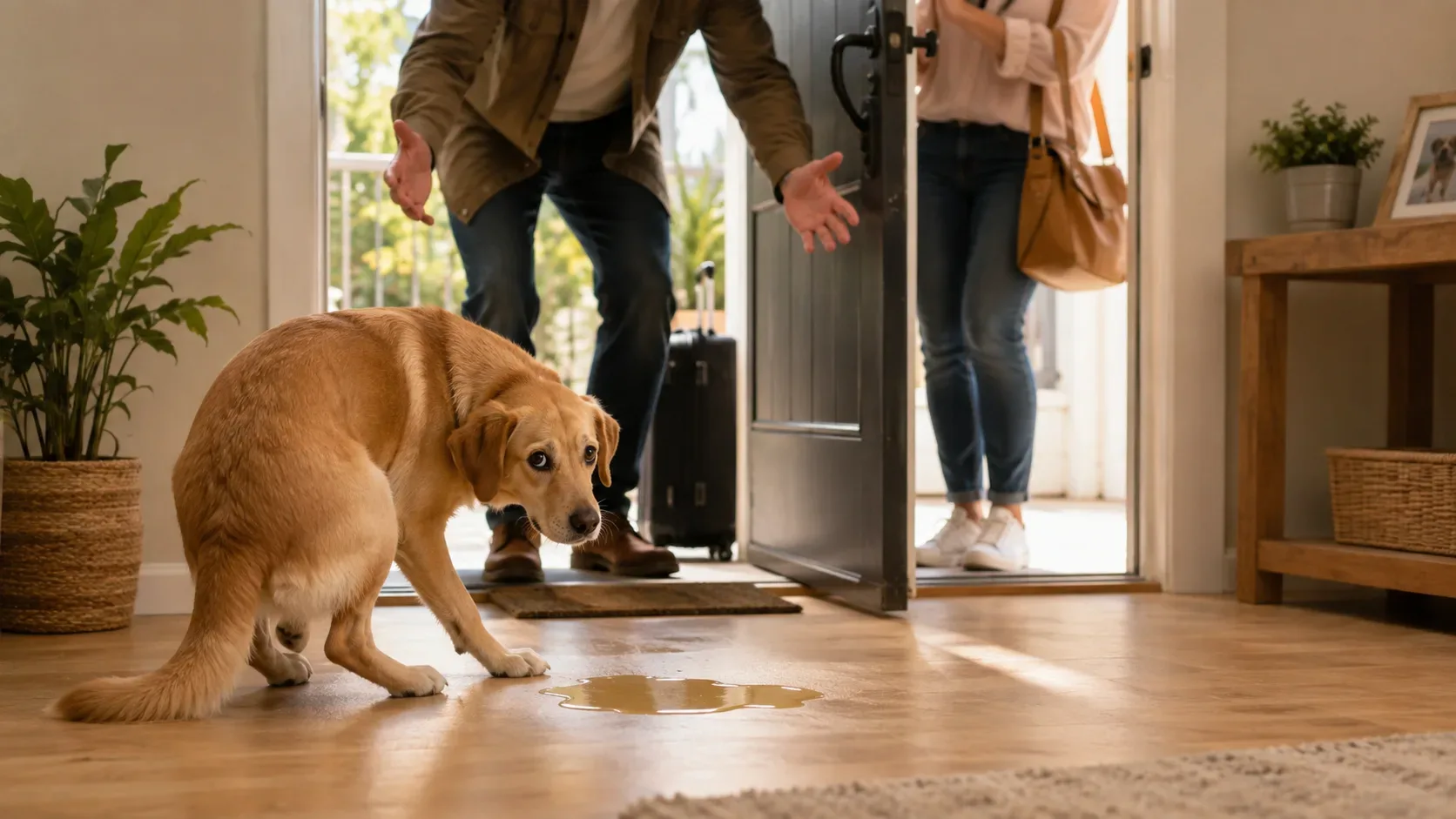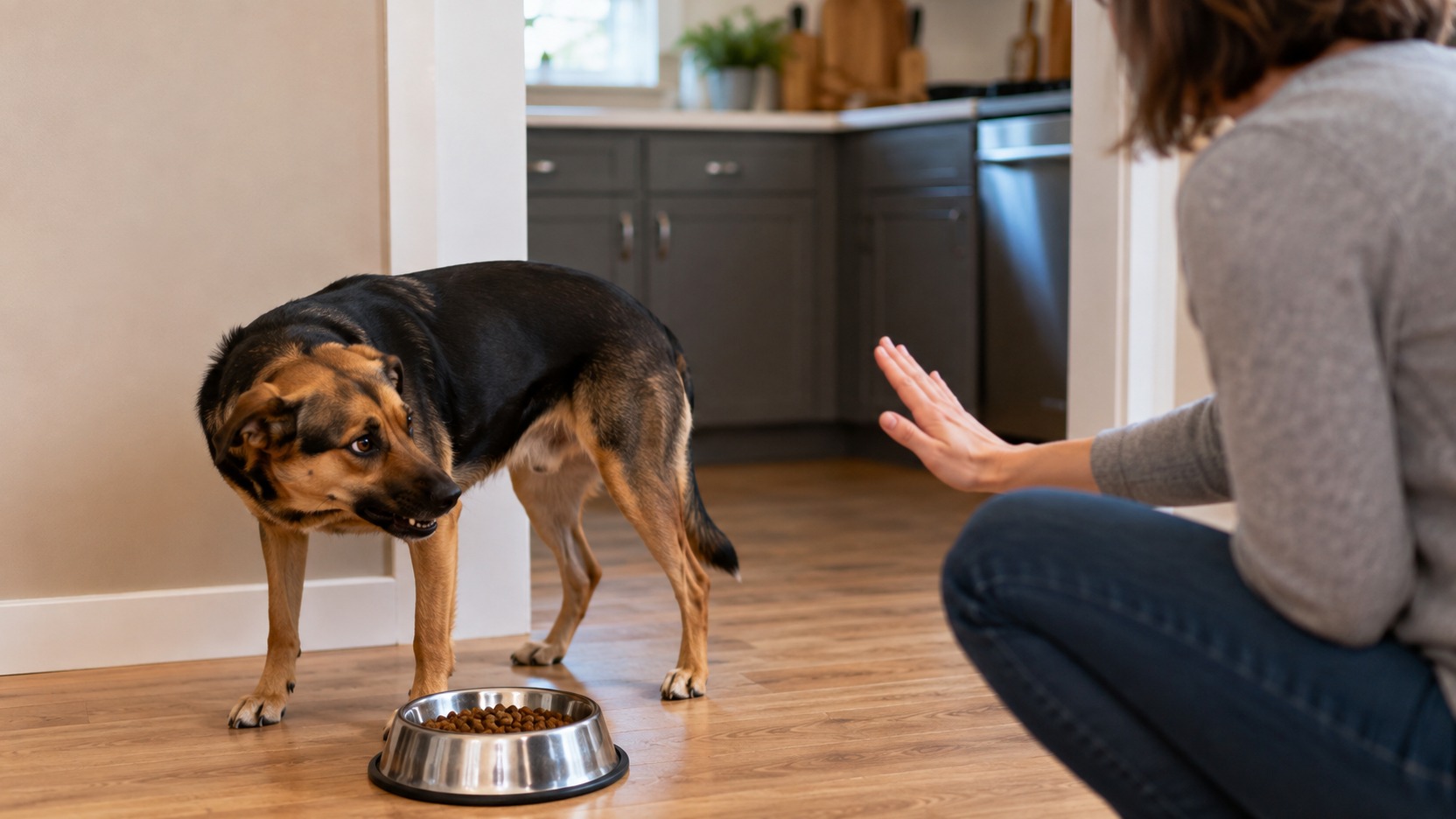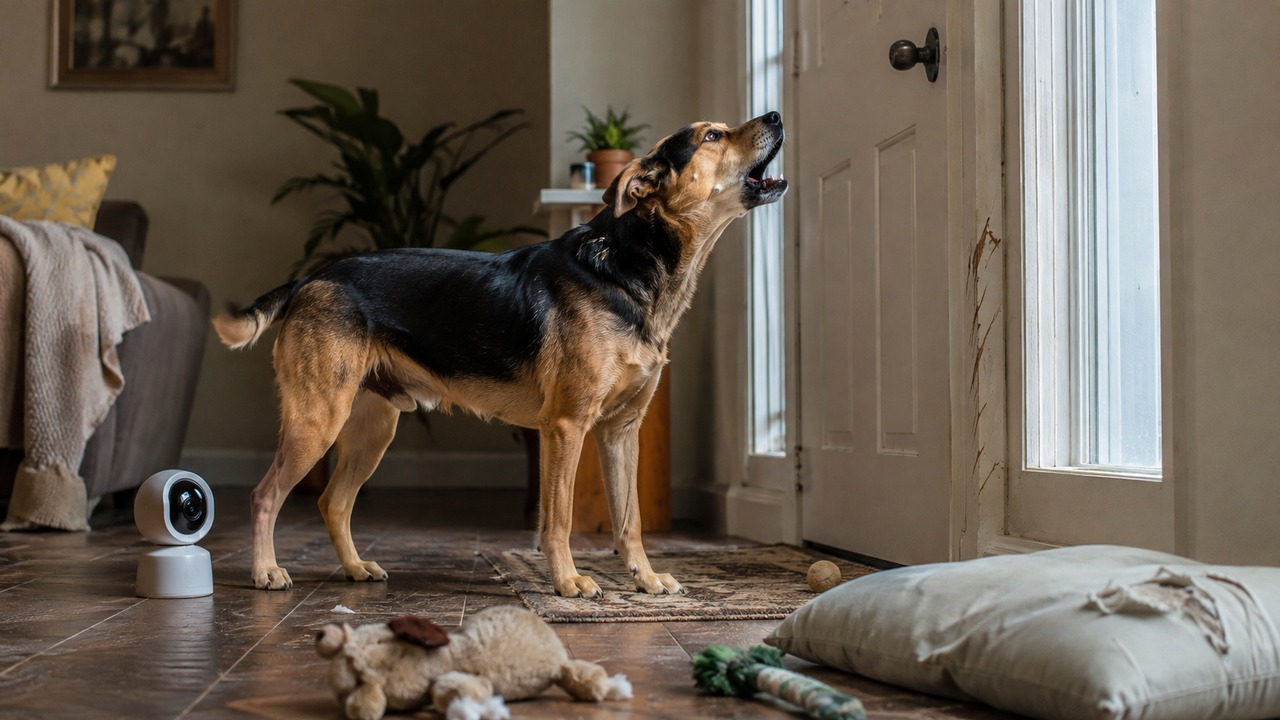
Barking, crying, howling, scratching at the door or destroying objects when the house is empty may be compatible with separation anxiety, but none of these signs alone confirm the diagnosis. The same visible behavior may arise for different reasons, such as a reaction to external noise, discomfort with confinement, exploration, frustration, unmet environmental needs, or other health and behavioral problems.
Therefore, the most useful step before concluding that the dog “has separation anxiety” is to transform an impression into an observable sequence. A simple camera, with audio, can show when the behavior begins, what happens immediately before, whether the dog manages to calm down and which environmental stimuli coincide with the worsening. This record does not replace the veterinary evaluation, but it can make the consultation much more informative.
Barking and destruction are signs; the pattern is what gives context
In veterinary behavioral medicine, behaviors that arise when a dog is left alone are often treated first as separation-related problems. This name is useful because it describes the circumstance without assuming a single cause. Research shows that this group of complaints is heterogeneous: different dogs may vocalize, destroy or try to escape due to different emotional states and triggers.
The Merck Veterinary Manual describes, in cases of distress related to separation, signs such as vocalization of distress, destruction especially near exits, salivation, restlessness, pacing, inability to rest, elimination in the house and repetitive behaviors. It also highlights that the diagnosis requires excluding alternative explanations, including external stimuli, aversion to noise, confinement anxiety, exploration and failures in health training.
That changes the question. Instead of “my dog destroyed the pillow, so he has separation anxiety?”, the investigation becomes “what happens from before I leave until the moment he destroys the pillow?”.
The first important piece of information is when the signals start
In many dogs with separation-related distress, signs appear early, often within the first 15 to 30 minutes after leaving. Some start even earlier, when they notice signs that the owner is leaving, such as picking up keys, putting on shoes or walking towards the door. This makes the timeline more important than the photograph of the damage found hours later.
When filming, try to record a few minutes of the routine before leaving. The goal is to find out if there is a change in behavior before the door closes. Does the dog start to follow the owner insistently? Stop interacting with food or toys? Does he pant, walk aimlessly, vocalize or stare at the door? These details can be more informative than just counting how many times he barked.
After leaving, note the time until the first clear signal and what comes next. A dog may bark for a few minutes at a sound in the hallway and then go to sleep. Another may begin an escalating sequence of whining, repetitive pacing, watching the door, attempts to escape, and inability to rest. They both “bark alone”, but the behavioral pattern is very different.
How to film without turning your house into a stress test
The camera should be used to observe a normal and safe absence, not to deliberately provoke a crisis. The American Animal Hospital Association recommends that behavioral videos not be staged when doing so could cause physical or emotional harm to the animal. If the dog has already injured itself trying to escape, destroys bars, bleeds paws, breaks teeth or goes into intense panic, there is no need to repeat the situation just to get a better recording.
Position the camera at a point that allows you to see the area where the dog usually stays and, if possible, the door or the path to it. Audio is important because it can reveal horns, voices in the hallway, construction, elevator, doorbell, thunder or barking from other dogs that coincide with the reaction. In large houses, a second camera can help, but a simple recording is much better than relying solely on the memory of what was found when you return.
As signs may appear early on, ensure that at least the initial period of absence is recorded. If there is storage capacity, extend the recording until the dog rests or until the time when the problem usually occurs. Instead of choosing only the most dramatic section, also preserve the beginning and calm intervals. They help compare intensity, duration and recovery.
Record a timeline, not just “he got anxious”
When reviewing the video, avoid vague labels. Write down observable behaviors with approximate times. For example: departure at 8:10 am; first whimper at 8:12 am; three trips to the door until 8:15 am; scratched the door at 8:17 am; went to bed at 8:23 am; started barking again after noise in the hallway at 8:31 am. This type of description allows us to see relationships that a phrase like “he gets desperate” does not show.
A resource used in behavioral medicine is ABC reasoning: antecedent, behavior and consequence. The antecedent is what happens immediately before; the behavior is what the dog actually does; the consequence is what changes immediately afterwards in the environment. In an absence recording, this may reveal, for example, that the dog was lying down, heard an elevator, ran to the door and barked for 40 seconds, then went back to rest. This pattern points to a different hypothesis of a dog that initiates continuous vocalization immediately after leaving and is unable to settle.
Observe if the dog can regulate itself and rest
The ability to download activation after an event is a valuable asset. A dog may notice you leave, walk around the house for a few minutes, and then sleep. Another remains in motion, alternating between doors and windows, panting, salivating, vocalizing, scanning the environment and not finding a period of rest. Persistent inability to settle weighs more heavily in the assessment than a single short episode of barking.
It is also worth recording the relationship with food and toys, without turning this into a diagnostic test. Some dogs accept a filling food at first and then abandon it; others do not eat while alone. Refusal of food may accompany distress, but alone does not prove separation anxiety. The important thing is to see how it fits into the rest of the sequence.
If the dog falls asleep, write down how long it took. If you wake up and restart the behavior, record what happened immediately before. AAHA highlights that video can reveal onset, duration, repetition of episodes and environmental triggers, as well as alternative or coexisting causes.
Door, window and confinement deserve separate attention
Destruction concentrated in doors, windows, railings and exit points may occur in situations related to separation, but may also reflect specific difficulties with confinement. This distinction is important because placing the dog in a transport box, pen or closed room “so it doesn't destroy it” can worsen the suffering of some animals.
Compare, when this is already part of the normal routine and is safe, how the dog behaves in different forms of stay. Does he do well alone, but panics when a room door closes? Do you stay calm behind a gate while seeing movement in the house, but try to escape when confined without vision? These differences should be reported to your veterinarian. Do not introduce sudden confinement just to make this comparison.
External noises can imitate or worsen the problem
Aversion to noise and problems related to separation can coexist. A dog that reacts to thunder, fireworks, construction, honking horns, or sounds from neighbors may seem “anxious because he was left alone” when, in fact, the absence of his owner has removed a source of support during a frightening event. In other cases, separation and noise are two independent problems that add up.
Video helps because it puts sound on the same timeline as behavior. If crises always begin after a specific noise, this changes the focus of the investigation. If the dog is already restless before any sound and the noise only intensifies the situation, the interpretation also changes. This is exactly why the camera should capture audio whenever possible.
Boredom and exploration are not the same on video
Tearing paper, picking up objects, rummaging through trash and chewing items can be part of normal exploration, especially when the dog is unsupervised and without suitable alternatives. The destruction associated with suffering is usually accompanied by other signs of activation or occurs in a way that is directed towards specific outputs and objects; exploration tends to show looser sequences, with pauses, interest in smells, food or toys and the ability to rest.
This difference is not absolute and should not be used as a home diagnosis. The benefit of the video is to show whether the destruction is an isolated event in a dog that, for the rest of the absence, is regulated, or whether it is part of a sequence of suffering that begins with the exit.
Following the tutor around the house does not prove “hyperattachment”
It is common to attribute separation anxiety to the fact that the dog follows the person from room to room. This association seems intuitive, but it is not a reliable diagnostic marker. The Merck Veterinary Manual notes that proximity behaviors alone do not indicate an increased risk of separation anxiety.
What matters is what happens when the separation actually occurs. A dog very close to its owner can be left alone without suffering. Another, who appears independent while the person is at home, may experience intense distress when the door closes. Therefore, filming absence is often more useful than just evaluating coexistence when everyone is together.
Sudden change requires clinical attention, especially in elderly dogs
If the dog has always been alone without problems and suddenly starts vocalizing, destroying or walking restlessly, avoid assuming that there was just a behavioral change. Pain, illness, sensory changes and, in older dogs, cognitive dysfunction can manifest as changes in routine, sleep, restlessness, fear or anxiety.
Veterinary evaluation is especially important when new behavior is accompanied by changes in appetite, thirst, elimination, mobility, sleep, orientation in the environment
environment, touch tolerance or social interaction. In older dogs, changes in the sleep cycle, disorientation, loss of learned habits, change in activity and increased anxiety may be part of cognitive dysfunction, but other illnesses need to be ruled out.
What to take to the veterinary appointment
Video is most useful when it is accompanied by context. Record when the problem started, whether there was a change of home, routine, job, family composition or period of constant presence of the guardian; how often it occurs; how long it lasts; if there are better and worse days; whether it happens to anyone leaving or just a specific figure; and how the dog reacts when another person remains in the house.
Also take information about which strategies have already been tried and what happened. If food toys were offered, say whether the dog used them. If there was an attempt at confinement, describe whether you became calmer or more agitated. If the behavior appears before exit, report what signs seem to anticipate it. If you suspect external noise, take a section where the sound is audible.
The objective is not to deliver a “perfect dossier”, but to allow the professional to see the real standard. Merck and AAHA highlight video as a valuable tool because it reduces reliance on subjective descriptions and helps identify concomitant cues and environmental triggers.
What to avoid while you're still investigating
Avoid punishing the dog when you return home. In addition to delayed correction not teaching what should have been done during the absence, aversive methods can increase fear and anxiety. Also avoid quickly increasing the period of absence as a way of “getting used to it”. In desensitization protocols, progression usually needs to occur below the threshold at which the dog becomes distressed; Speeding up too much can make the process difficult.
Do not use a transport box, pen or closed room as an automatic solution if the dog is not previously comfortable in that space. AAHA warns that confinement can worsen suffering in some animals. Likewise, do not introduce medications, sedatives or supplements on your own. When pharmacological treatment is indicated, it must be defined by a veterinarian within a management and behavioral modification plan.
When to seek help faster
Seek veterinary evaluation without delay if there is self-injury, intense attempts to escape, injuries to paws or mouth, destruction of fences and doors with physical risk, prolonged inability to rest, persistent refusal of food during absences, sudden change in behavior or progressive worsening. AAHA includes injury during escape attempts, sudden change, and distress that persists despite gradual attempts among the signs that warrant professional help.
It is also worth seeking a veterinarian who specializes in behavior or referring you to a specialist when the condition significantly interferes with the dog's well-being or the family's routine. Treatment is individual: what helps a dog with sensitivity to noise may not be the same as what helps another dog suffering from the absence of a specific person or suffering from confinement anxiety.
Before the label, look for a repeatable pattern
The question “is it separation anxiety?” is not usually answered by the object destroyed or by the number of barks. It begins to be answered by the sequence: what the dog notices before leaving, how long it takes for the first sign to appear, which behaviors appear together, if there are external triggers, if confinement worsens the condition and, above all, if he manages to regain his calm.
A well-made recording transforms scattered signals into useful clinical information. It doesn't replace diagnosis, but it helps avoid two common mistakes: calling any mess separation anxiety or, at the opposite extreme, treating persistent distress as a "trick." The safest next step is to observe without provoking, record accurately and take this pattern for a veterinary evaluation when there is distress, risk, sudden change or relevant doubt.