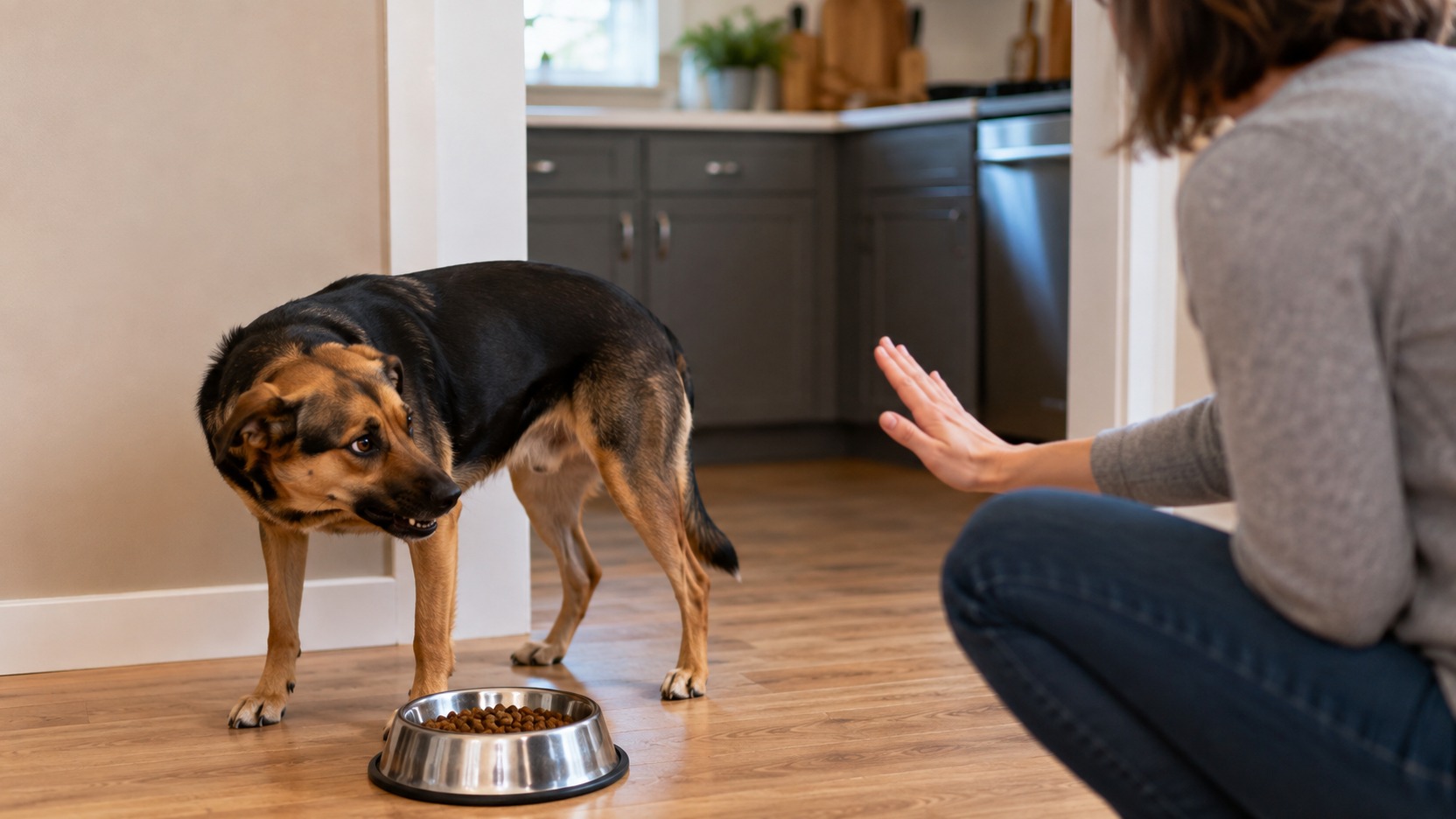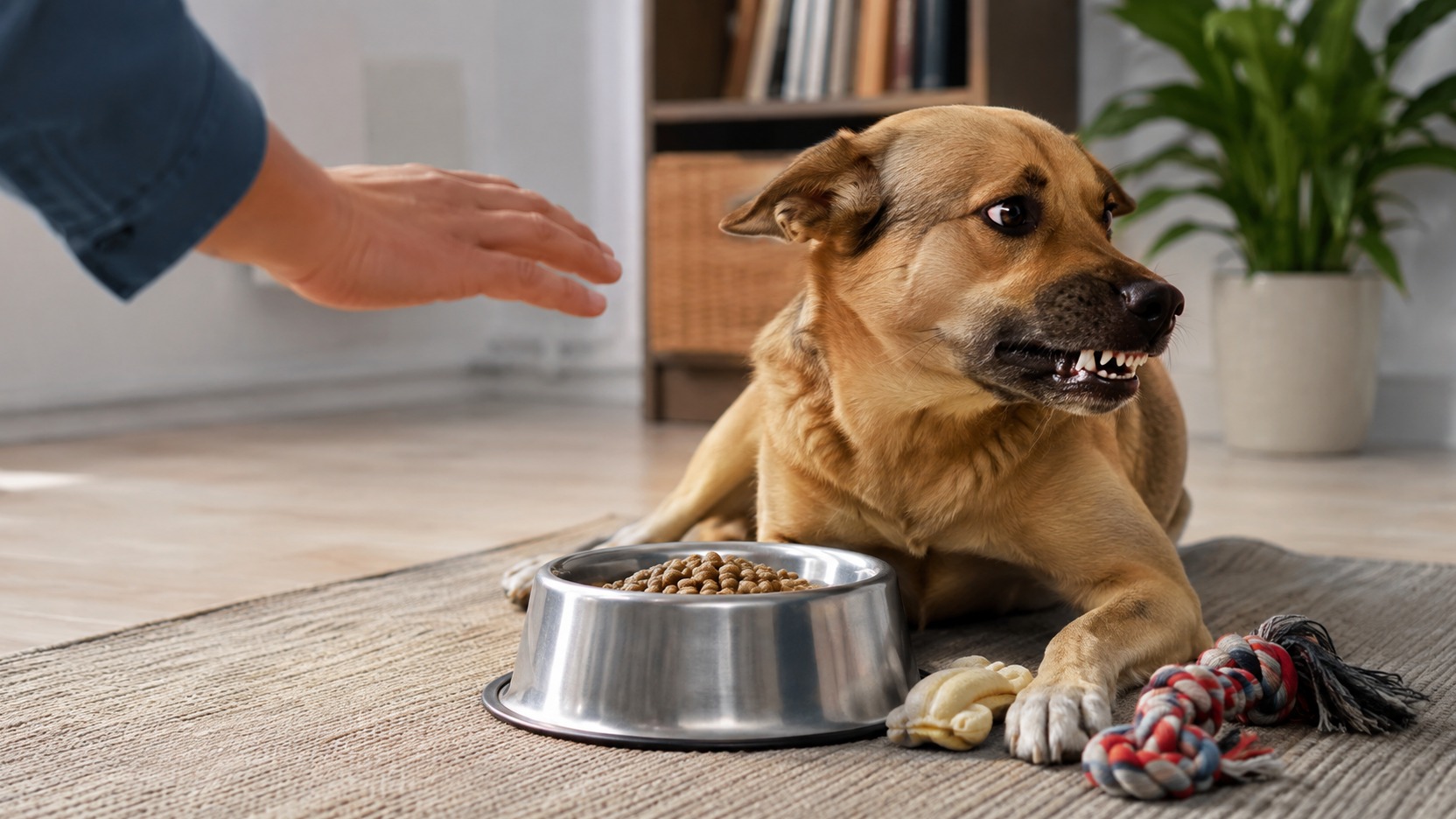
When a dog growls because someone approaches its bowl, a bone, a treat, or a toy, the first goal is not to “show who is boss.” It is to keep the situation from escalating. Growling often works as a request for distance and may be part of what is known as resource guarding, a behavior in which the dog tries to maintain access to something it considers valuable.
This does not mean that every growl will end in a bite, or that every case requires the same treatment. The intensity can range from subtle signs, such as becoming stiff, eating faster, or covering the object with the body, to baring teeth, lunging, snapping, or biting. What matters is reading the context and responding in a way that reduces conflict, rather than turning a person’s approach into confirmation that the resource really will be taken away.
What resource guarding is
Resource guarding is the term used for behaviors intended to keep another person or animal away from something the dog values. Food is a common trigger, but it is not the only one. Toys, objects found outdoors or at home, long-lasting chews, resting places, and even proximity to a person can become guarded resources.
The tendency to protect something valuable is part of the normal behavioral repertoire of dogs, but it becomes a household problem when it creates fear, conflict, or a risk of aggression. The ASPCA describes a spectrum that ranges from running away with an item or growling when someone comes close to chasing or biting to drive the approaching person away. The Merck Veterinary Manual also describes possessive aggression as a response that appears when a person or another animal approaches a resource the dog wants to retain.
It is more useful to think in terms of value, perceived threat, learning, and emotion than to automatically interpret the episode as “dominance.” The position of the American Veterinary Society of Animal Behavior, the AVSAB, itself warns against hierarchy-based explanations that lead to confrontation and recommends behavior-modification methods grounded in learning and reinforcement of desirable responses.
Growling is a warning that deserves attention
A dog that growls is still communicating that it wants space. Before the sound, less obvious signs may appear: a tense body, side-eye, the head lowered over the bowl, a frozen posture, blocking access with its own body, moving away with the object, or speeding up chewing and eating. If those signals do not create distance, the dog may resort to clearer threats.
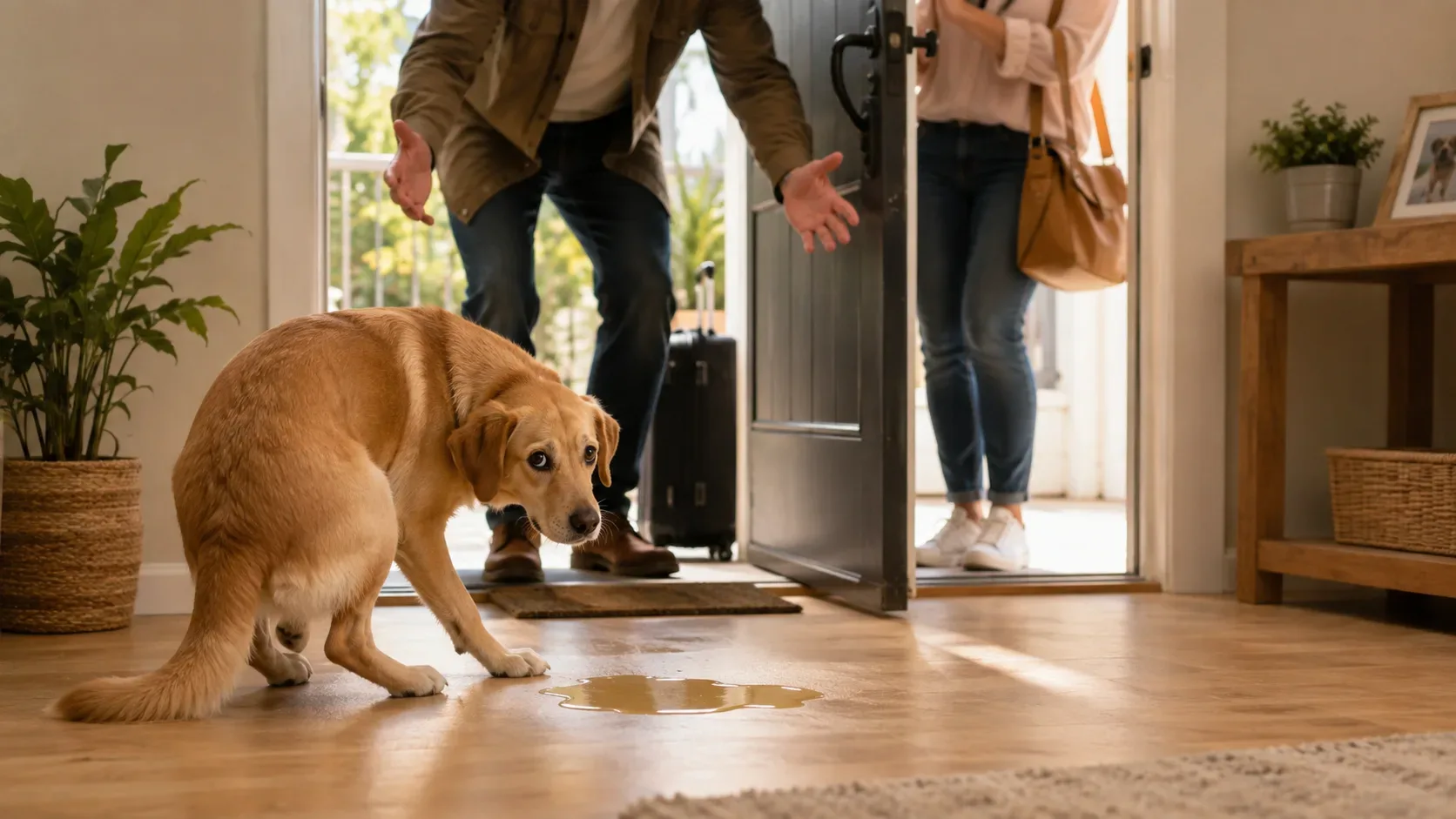
Punishing a growl may reduce that sound in some situations, but it does not necessarily change the discomfort that produced it. This is dangerous because the guardian may lose an important warning while the emotion driving the reaction remains. Organizations such as Dogs Trust and specialized veterinary sources recommend respecting the warning, creating distance, and addressing the cause without intimidation.
What to do when the dog growls
The safest immediate response is to stop approaching and give the dog space. Do not move your hand forward to “test” whether it will really bite, do not try to restrain it, and do not wrestle over the object. If the resource is not dangerous, the simplest management in that moment is often to let the dog finish and reorganize the environment afterward, without confrontation.
If it has food or a safe object
Move away calmly and avoid surrounding the dog. Children, visitors, and other animals should stay out of the area while the resource is available. At future meals, it may be safer to offer food in a quiet place without people passing through and to pick up the bowl only after the dog has left the area.
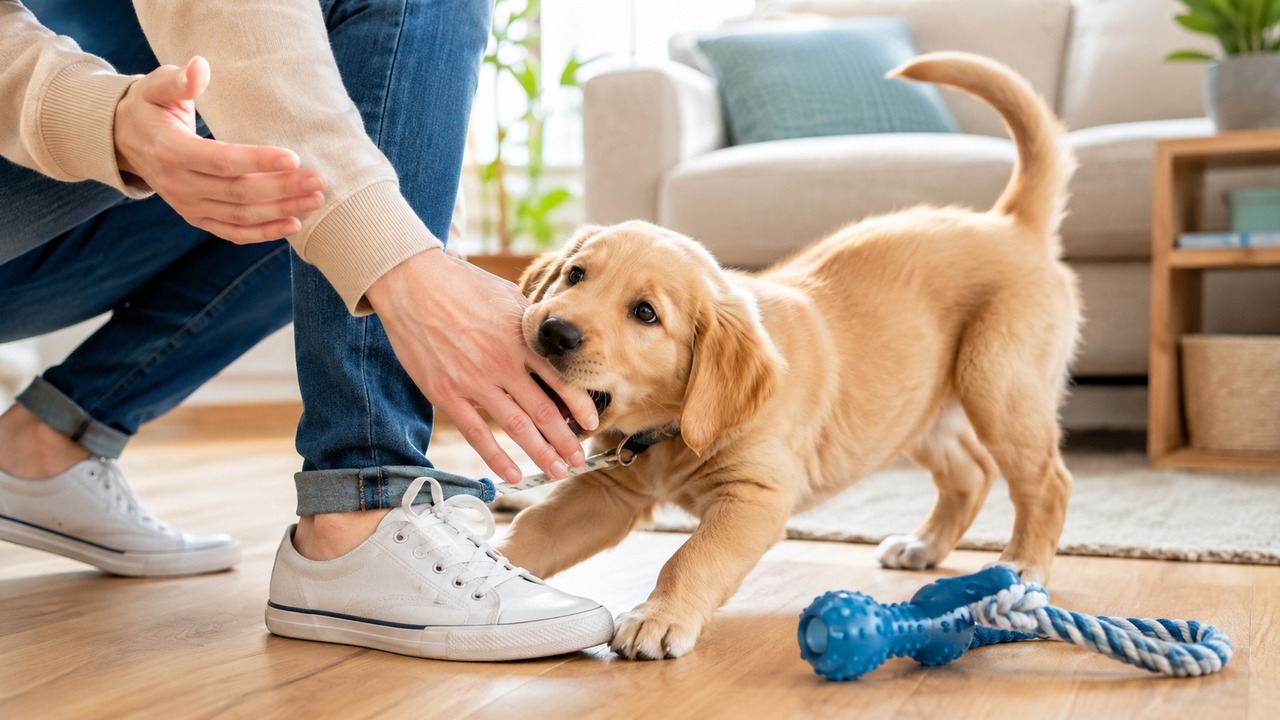
The same reasoning applies to toys or chews already known to be triggers. If their presence creates repeated situations of tension, it is better to control when and where they are available than to let the conflict repeat several times a day.
If it has picked up something dangerous
When the dog has an object that could cause poisoning, obstruction, or injury, the priority changes: the item needs to be recovered without turning the situation into a physical struggle. Trying to pull it from the dog’s mouth, chasing the dog, or cornering it can increase the chance of a bite and can also make the dog swallow the object quickly so it will not lose it.
One emergency strategy found in behavioral guidance is to create distance between the dog and the item by using a higher-value reward, calling the dog away or tossing treats farther away and, once there is safe space, using a door or barrier before picking up the object. This does not replace training or professional assessment. If the dog swallowed something potentially dangerous, the next step is to seek veterinary guidance, not to continue the struggle at home.
What not to do with a dog that guards resources
Do not put your hand into the bowl to “get the dog used to it,” do not repeatedly take food away to prove authority, and do not punish the dog for growling. It is also not advisable to use yelling, leash jerks, choke collars, shock collars, physical restraint, or submission techniques in an attempt to eliminate the reaction.
The logic of confrontation can worsen the very association you are trying to change. If a person’s presence near food predicts scolding, loss of the resource, or pain, the dog has more reason to try to keep that person away. The ASPCA warns that intimidating or “dominating” a dog that guards food is unnecessary and can aggravate the problem. The AVSAB reiterates that reward-based methods should be used in training and in the modification of behavior problems, and that aversive methods pose risks to welfare and to the human-animal relationship.
It is also inappropriate to insist on contact when the dog is already stiff, staring, covering the object, or trying to move away with it. These behaviors are information. Ignoring them in order to reach the object increases pressure in the situation.
Management comes before training
Management means organizing the routine to reduce opportunities for conflict while the behavior is being assessed and addressed. This may include feeding the dog separately from other animals, using doors or gates to create space, putting away highly contested items when there is no supervision, and preventing children from accessing the dog during meals or chewing.
This type of prevention does not “cure” resource guarding, but it reduces the number of episodes in which the dog practices threatening behavior to keep an item. It also protects people and other animals while a more complete plan is being developed.
In homes with more than one dog, it is worth observing whether the guarding occurs only between the animals or also in the presence of people. Meals, long-lasting treats, and high-value toys may need to be offered in separate spaces. Real or perceived competition for resources is a relevant factor and can make the household more unstable.
Trading and positive association: why they work better than forced removal
The behavioral goal is not to make the dog “accept losing” through force, but to change what a person’s approach means to the dog. In a well-conducted plan, human presence begins to predict something better, and the dog learns alternative responses, such as moving away from the item, releasing it, or leaving it when asked.
With dogs that do not show intense signs of aggression, professionals may use gradual desensitization and counterconditioning exercises. One conceptual example is to approach only to a distance at which the dog remains relaxed, add something of high value, and move away again. Progress should be slow and guided by the animal’s behavior, not by a fixed schedule.
The same caution applies to teaching “drop it” or “leave it.” Training usually begins with low-value items and better rewards, before any attempt is made with the resource that already triggers guarding. If the dog freezes, growls, lunges, or has a history of biting, it is not appropriate to turn this exercise into an at-home test.
When the case is no longer a matter of home management
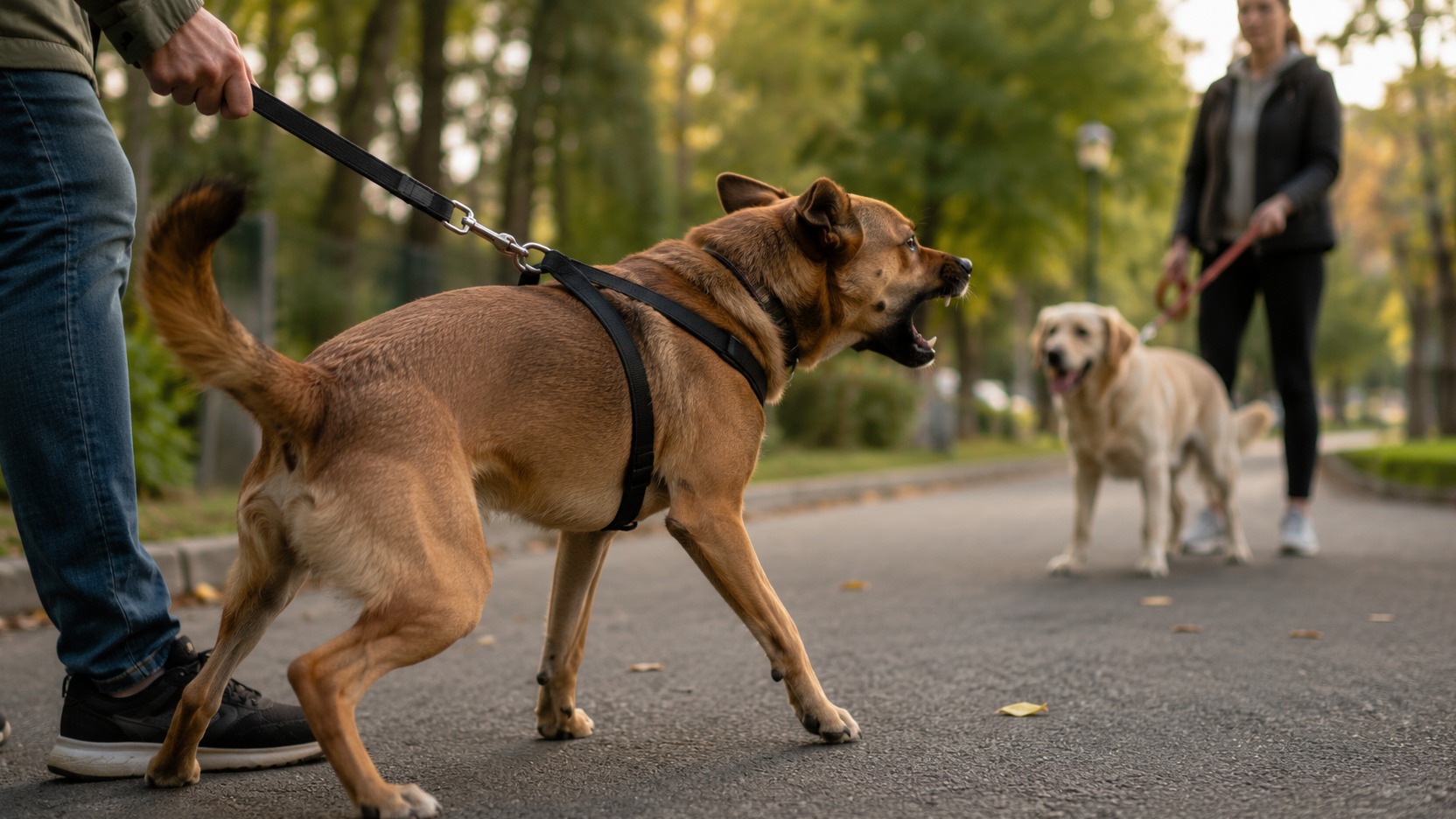
The threshold for seeking help should be low when there is a risk of biting. The ASPCA advises that people who believe their dog may bite, especially when there has already been an attempted bite or a previous bite, should not try to resolve resource guarding on their own. Lunging, snapping, biting, chasing to drive people away, and a rapid increase in intensity are signs that the case needs professional assessment.
The presence of children also changes the level of risk. Children tend to recognize subtle warning signals less reliably and may approach unpredictably. In these homes, physical separation during meals, treats, and access to valuable objects should be treated as a safety measure, not as an optional step.
A dog that suddenly begins guarding resources without a similar history also deserves professional attention. Pain, discomfort, and other health changes can reduce tolerance and intensify defensive responses. The Merck Veterinary Manual notes that pain and illness can contribute to aggression and that medical causes need to be considered. For that reason, a veterinary evaluation is especially important when the change is new, abrupt, or accompanied by other physical signs.
What kind of help to seek
A veterinarian can be the starting point, particularly when the behavior appeared recently, changed in intensity, or there is suspicion of pain. In cases involving aggression, it is useful to seek a professional who works with behavior or a specialist who collaborates with the veterinarian.
For training and behavior modification, look for someone with real experience in resource guarding and aggression who explains the plan and uses safety management, desensitization, counterconditioning, and reinforcement of alternative behaviors. Be cautious with proposals centered on “being the alpha,” “correcting dominance,” provoking the dog so
it “learns,” or using pain and fear as primary tools.
The AVSAB maintains as its current position that reward-based methods should be used even in the treatment of behavior problems. In 2025, the organization again clarified that its 2021 position remains its current statement on humane dog training and that it does not support aversive methods.
What to expect from improvement
Resource guarding is not a behavior that should be measured by whether someone can put a hand into the dog’s bowl without a reaction. Progress appears when the environment becomes more predictable, the dog shows less tension during necessary approaches, can move away from or trade items safely, and people no longer need to provoke the problem in order to live with the dog.
Some cases can be managed with simple changes in routine. Others require weeks or months of behavior work and follow-up. Bite history, the range of resources guarded, the presence of children, the intensity of the responses, and possible medical causes all influence the plan and prognosis.
The practical rule is simple: growling is not an invitation to confrontation. It is information. Responding with distance, prevention, and a reward-based plan reduces immediate risk and creates better conditions for changing the behavior without turning food, toys, and human approach into a contest.